2027 Fastest Online MBA Programs in Environmental Management

Co-Founder and Chief Data Scientist
A fast online MBA in environmental management is designed for professionals who want graduate-level business training with a sustainability focus, but do not want to spend two years away from career momentum. The degree can be especially relevant for managers, analysts, consultants, engineers, operations professionals, and career changers who want to work at the intersection of business performance, environmental responsibility, compliance, and ESG strategy.
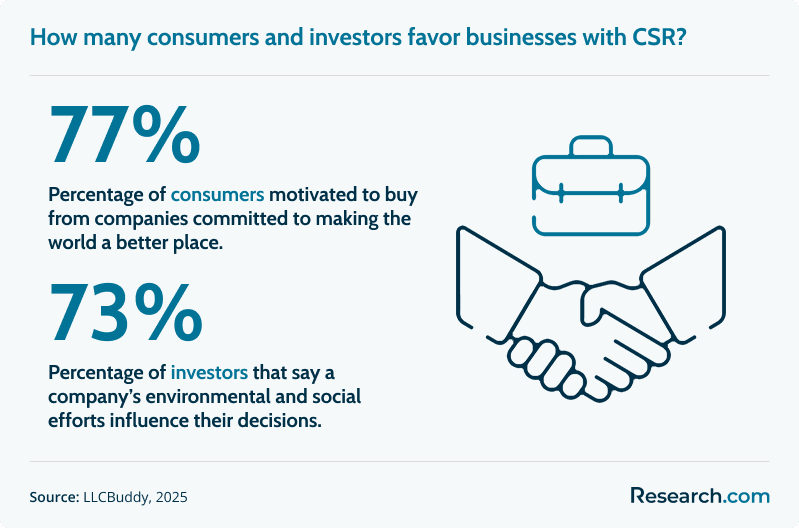
The decision matters because organizations are under growing pressure from customers, investors, regulators, and employees to show credible environmental and social performance. Reported consumer and investor attitudes reflect that pressure: 77% of consumers are motivated to buy from companies committed to making the world a better place, and 73% of investors say environmental and social efforts affect their decisions. For business professionals, that creates demand for leaders who can translate sustainability goals into budgets, operations, risk controls, reporting systems, and measurable outcomes.
This guide explains what to expect from the fastest online MBA programs in environmental management, how long they take, what they cost, how online programs compare with campus options, what careers they can support, and how to choose a program without overpaying or overlooking accreditation.
Quick answer: Is a fast online MBA in environmental management worth considering?
A fast online MBA in environmental management can be worth considering if you already have professional experience and want to move into sustainability leadership, environmental compliance, ESG consulting, sustainable operations, or green business strategy. Many accelerated programs can be completed in 12 to 18 months, which may help working adults gain credentials faster while continuing to earn income.
The degree is not automatically the best choice for everyone. If you want a technical environmental science role, a policy research career, or a licensed legal career, another graduate path may fit better. However, if your goal is to manage people, budgets, strategy, risk, or operations in sustainability-focused settings, an MBA with an environmental management concentration can provide a practical business-oriented route.
What are the main benefits of an online MBA in environmental management?
- Career flexibility: Graduates may pursue roles such as environmental compliance manager, sustainability director, operations manager, ESG analyst, or energy consultant.
- Business plus sustainability training: The curriculum typically combines finance, marketing, analytics, leadership, and strategy with environmental policy, compliance, sustainability reporting, and green operations.
- Online access for working adults: Accelerated online formats often allow students to complete coursework while maintaining full-time employment and family responsibilities.
- Potential access to management salaries: Environmental scientists and specialists earned a median annual wage of $80,060 in May 2024, while general and operations managers earned $101,280 in May 2023.
- Faster completion: Some fast-track programs allow motivated students to graduate in as little as 12 to 18 months, depending on credit load, transfer policies, course availability, and pacing.
What can I expect from an online MBA in environmental management?
An online MBA in environmental management blends traditional MBA coursework with applied sustainability and environmental decision-making. Students usually complete core business classes in accounting, economics, finance, marketing, organizational leadership, analytics, and strategy. The environmental component may cover sustainability frameworks, environmental law, climate risk, renewable energy, resource management, ESG reporting, green supply chains, corporate responsibility, and environmental compliance.
The strongest programs do more than discuss sustainability as an ideal. They teach students how to evaluate trade-offs, build a business case, comply with regulations, measure environmental performance, manage stakeholder expectations, and align sustainability initiatives with financial goals. Many programs also include case studies, consulting projects, simulations, or capstone experiences that require students to solve real organizational problems.
Online delivery varies by school. Some programs are mostly asynchronous, meaning students can watch lectures and complete assignments on their own schedule. Others require live virtual classes, team meetings, or residencies. Accelerated programs often use shorter academic terms, heavier course loads, or multiple annual start dates to help students finish faster than a traditional two-year MBA.
| Program feature | What it usually means for students | Why it matters |
| Accelerated pacing | Courses are compressed into shorter terms or scheduled back-to-back. | Students may graduate sooner, but weekly workload can be demanding. |
| Environmental management concentration | Students take sustainability, policy, compliance, or resource-focused electives. | The specialization helps connect business leadership with environmental challenges. |
| Online delivery | Coursework may be asynchronous, live online, or a mix of both. | Format affects flexibility, networking, and time management. |
| Capstone or applied project | Students solve a business problem related to sustainability or environmental strategy. | Applied work can strengthen a portfolio for career changes or advancement. |
| Business accreditation | The business school or program has been reviewed by a recognized accreditor. | Accreditation can affect perceived quality, employer confidence, and transferability. |
Where can I work with an MBA in environmental management?
Graduates can work in organizations that need managers who understand both business operations and environmental responsibility. Common employment settings include energy companies, manufacturers, construction firms, agricultural organizations, consulting firms, transportation and logistics companies, technology firms, financial services organizations, and corporations with ESG or sustainability departments.
Public-sector and mission-driven employers may also value this background. Government agencies, nonprofit environmental organizations, international development groups, and policy-focused organizations need professionals who can evaluate environmental programs through a financial, operational, and stakeholder lens.
In private companies, graduates may contribute to ESG reporting, climate risk planning, supply chain sustainability, environmental audits, regulatory compliance, facilities management, corporate responsibility programs, and sustainable product or service development. In startups, the degree can support roles connected to renewable energy, clean technology, water conservation, circular economy models, or sustainable operations.
How much can I make with an MBA in environmental management?
Earnings depend on role, industry, experience, geography, employer size, and whether the position is technical, managerial, consulting-focused, or executive-level. The MBA itself does not guarantee a specific salary, but it can help professionals qualify for business-facing sustainability and management roles.
For salary context, environmental scientists and specialists earned a median annual salary of $80,060 in May 2024. This category is not identical to MBA-level environmental management, but it provides a useful benchmark for environmentally focused professional roles. For broader business leadership roles, general and operations managers earned a median salary of $101,280 in May 2023.
Professionals who move into sustainability leadership, ESG consulting, environmental program management, compliance management, or operations roles may earn more or less than these benchmarks depending on responsibilities and employer. Compensation may also include bonuses or incentives in some corporate and consulting roles, but those benefits are not universal.
- Fastest online MBA programs in environmental management for 2027
- How long does a fast online MBA in environmental management take?
- Online vs. on-campus MBA in environmental management: which format fits best?
- How much does a fast online MBA in environmental management cost?
- What financial aid can online MBA students use?
- What admissions requirements should applicants expect?
- What courses are included in an environmental management MBA?
- What sustainability specializations are available?
- How should you choose the fastest online MBA in environmental management?
- Why do accreditation and quality standards matter?
- What challenges should online MBA students plan for?
- What careers can graduates pursue?
- What is the job outlook for environmental management MBA graduates?
- What is the ROI of an online MBA in environmental management?
- Sources and references
List of the Fastest Online MBA Programs in Environmental Management for 2027
How do we rank schools?
Choosing an accelerated MBA is a high-stakes decision because the fastest option is not always the best value. A strong program should be fast, but it should also be accredited, affordable for your situation, relevant to your career goals, and realistic for your schedule.
This ranking was created to help prospective students compare fast online MBA programs with environmental management, sustainability, or closely related concentrations. Research.com’s team reviewed program characteristics using a structured evaluation process and data-informed criteria.
Sources used in the review process include the IPEDS database, Peterson’s database and its Distance Learning Licensed Data Set, the College Scorecard database, and the National Center for Education Statistics (NCES). To understand the broader ranking approach, visit the Research.com methodology page.
1. University of North Carolina Wilmington
UNC Wilmington offers a fully online MBA for professionals who want business leadership training with an environmental management focus. The program pairs standard MBA coursework with sustainability-oriented study, including topics such as environmental law and sustainable business practices.
The university began offering online MBA programs in 2015. Its asynchronous structure is intended for working adults who need flexibility, and the accelerated pacing allows many students to finish in just over a year.
- Program Length: As few as 12 months
- Tracks/concentrations: Environmental Management
- Cost per Credit: $306 (in-state); $1,102 (out-of-state)
- Required Credits to Graduate: 36
- Accreditation: Association to Advance Collegiate Schools of Business (AACSB)
2. University of Houston-Clear Lake
UHCL provides an online MBA that combines managerial preparation with environmental policy and sustainability-related coursework. The format is designed for mid-career professionals who want to make stronger business decisions in regulated or environmentally complex settings.
The online MBA was introduced in 2014 and uses video lectures, interactive assignments, and collaborative coursework. The environmental management concentration gives students exposure to subjects such as pollution control, environmental law, and sustainability reporting.
- Program Length: 14 to 16 months
- Tracks/concentrations: Environmental Management
- Cost per Credit: $437 (resident); $892 (non-resident)
- Required Credits to Graduate: 36
- Accreditation: AACSB
3. Southern New Hampshire University
SNHU offers a fully online MBA with a sustainability and environmental compliance track. The program is built for accessibility and schedule flexibility, which can appeal to working adults who need a self-directed format.
SNHU has delivered distance education since the early 2000s. Its MBA concentration emphasizes environmental compliance, risk assessment, and energy efficiency, making it a possible fit for students interested in regulatory, operations, or ESG-related roles.
- Program Length: 12 to 15 months
- Tracks/concentrations: Sustainability and Environmental Compliance
- Cost per Credit: $627
- Required Credits to Graduate: 30
- Accreditation: Accreditation Council for Business Schools and Programs (ACBSP)
4. University of Wisconsin-Whitewater
The UW-Whitewater online MBA includes a sustainability emphasis within a flexible business program. The online format began in 2008 and uses video-based instruction, online discussions, and faculty support.
The program is aimed at business professionals who want to strengthen managerial skills while studying environmental ethics, sustainable operations, and corporate responsibility.
- Program Length: 14 to 18 months
- Tracks/concentrations: Sustainability
- Cost per Credit: $678
- Required Credits to Graduate: 36
- Accreditation: AACSB
5. University of Denver
The University of Denver delivers a fully online MBA through the Daniels College of Business with an option to focus on sustainability. The program is designed for working professionals and aspiring leaders who want to connect ethical business practices with environmental responsibility.
Launched online in 2018, the program combines live virtual classes with asynchronous coursework. The sustainability concentration includes topics such as environmental economics, sustainable supply chains, and social impact strategy. Students may also benefit from career support, small class environments, and alumni connections.
- Program Length: As few as 21 months (with accelerated pacing available)
- Tracks/concentrations: Sustainability
- Cost per Credit: $1,383
- Required Credits to Graduate: 60
- Accreditation: AACSB
6. Presidio Graduate School
Presidio Graduate School offers an MBA in Sustainable Solutions with an emphasis on systems thinking, ecological literacy, and values-based leadership. The hybrid-online program launched in 2009 and is built around sustainability as the central focus rather than a minor add-on.
Most instruction is delivered online, while optional in-person intensives can support networking and applied learning. The program may appeal to students interested in mission-driven organizations, sustainability consulting, and social impact leadership.
- Program Length: 18 months
- Tracks/concentrations: Sustainable Solutions
- Cost per Credit: $1,169
- Required Credits to Graduate: 53
- Accreditation: WASC Senior College and University Commission (WSCUC)
7. University of Massachusetts Dartmouth
UMass Dartmouth offers an online MBA that allows students to customize a concentration, including environmental policy. The university began offering the MBA online in 2012 and has built a virtual campus model for distance learners.
Courses are taught by full-time faculty and may include areas such as sustainability analytics, public policy, and green operations. This option can fit students who want to connect public-sector concerns, environmental policy, and business management.
- Program Length: 15 to 18 months
- Tracks/concentrations: Customizable; includes Environmental Policy
- Cost per Credit: $620
- Required Credits to Graduate: 30 to 39
- Accreditation: AACSB
8. Bard College
Bard offers an online MBA centered on sustainability leadership. The program uses live online evening classes, which can help students interact with faculty and classmates in real time while continuing to work.
Since 2012, the program has emphasized environmental economics, leadership, and climate policy. Students often remain employed while enrolled, and the curriculum includes consulting projects with real clients.
- Program Length: 21 months (with accelerated options)
- Tracks/concentrations: Sustainability
- Cost per Credit: $1,100
- Required Credits to Graduate: 60
- Accreditation: Middle States Commission on Higher Education (MSCHE)
9. Oregon State University
OSU offers an MBA in Sustainable Business through Ecampus. The program connects Oregon State’s environmental strengths with business fundamentals in management, innovation, and strategy.
Launched in 2016, the online format includes four start dates per year and can support both part-time and accelerated study. Coursework includes renewable energy systems, corporate ethics, and sustainable innovation.
- Program Length: 21 months (with faster options)
- Tracks/concentrations: Sustainable Business
- Cost per Credit: $1,024
- Required Credits to Graduate: 45 to 60
- Accreditation: AACSB
10. Colorado Technical University
Colorado Technical University offers an MBA with a concentration in Environmental and Social Sustainability. The program is structured for full-time professionals and uses adaptive learning tools and mobile-accessible coursework.
The school has offered online MBAs since 2007. Courses address sustainability frameworks, regulatory environments, and ethical leadership, making the program career-oriented for students who want a fast business credential with a sustainability focus.
- Program Length: As few as 12 months
- Tracks/concentrations: Environmental and Social Sustainability
- Cost per Credit: $610
- Required Credits to Graduate: 48
- Accreditation: ACBSP
How long does it take to complete a fast online MBA in environmental management?
Many accelerated online MBA programs in environmental management can be completed in 12 to 18 months, although the actual timeline depends on the number of credits required, course sequencing, transfer credit rules, whether the student enrolls full time, and how often courses are offered. Some programs use short terms and multiple start dates so students can move through coursework more quickly.
A shorter timeline can be valuable for professionals who want to act on rising employer demand for sustainability, ESG, compliance, and climate-related business expertise. However, faster is not always easier. A 12-month MBA may require a heavy weekly workload, frequent deadlines, and limited breaks between terms.
If you are comparing sustainability-related academic routes beyond the MBA, review environmental policy degree programs to see whether a policy-focused curriculum better matches your long-term goals.
| Completion pace | Best fit | Trade-off |
| As few as 12 months | Highly organized students with strong time availability and clear career goals | Fastest route, but workload can be intense |
| 14 to 18 months | Working adults who want acceleration without the most aggressive pace | Balances speed with more manageable scheduling |
| 21 months or longer with accelerated options | Students who value live classes, networking, or deeper applied projects | May offer more interaction but takes longer to complete |
How does an online MBA in environmental management compare to an on-campus program?
Flexibility and convenience
Online MBA programs are often the better fit for students who cannot relocate, commute, or attend classes at fixed times every week. Asynchronous courses are especially useful for professionals with irregular work schedules, caregiving responsibilities, or travel-heavy jobs. Live online formats can provide more structure, but they require students to be available at set meeting times.
The same flexibility is valuable in other advanced leadership fields. For example, students who want education administration training may compare the fastest online education specialist degrees in leadership to see how accelerated graduate formats work in another professional area.
Curriculum and academic expectations
At accredited institutions, online and campus MBA programs often share the same faculty expectations, learning objectives, and academic standards. Students should still verify whether the environmental management concentration is available online, whether all electives rotate frequently enough for accelerated completion, and whether any campus visits are required.
Networking and student engagement
Campus programs can offer easier access to face-to-face networking, local employer events, and spontaneous interaction. Online programs can still build meaningful professional networks through virtual team projects, discussion forums, live sessions, alumni events, and career services. The difference is that online students usually need to be more intentional about showing up, asking questions, and building relationships.
If you are considering a different business specialization with online flexibility, a program such as an online MBA in HR may be a better match if your main interest is people operations rather than environmental strategy.
| Factor | Online MBA | On-campus MBA |
| Schedule | Usually more flexible, especially with asynchronous courses | More structured, with set class times and campus attendance |
| Location | No relocation required for fully online programs | Best for students who can live near or commute to campus |
| Networking | Requires proactive participation in virtual events and projects | Offers easier in-person interaction and local campus events |
| Learning style | Works well for independent, organized learners | Works well for students who prefer face-to-face structure |
| Speed | Often available in accelerated formats | May follow a more traditional academic calendar |
What is the average cost of a fast online MBA in environmental management?
Tuition varies widely by institution, residency status, accreditation, program length, and credit requirement. According to NCES, average graduate tuition and required fees are:
- Public institutions: $12,596
- Private nonprofit institutions: $29,931
- Private for-profit institutions: $14,161
Environmental management MBA programs may fall within or above these figures, especially if they are offered by business schools with specialized accreditation or higher per-credit pricing. Some schools charge by credit, while others use flat-rate tuition. Students should calculate total program cost rather than comparing tuition rates alone.
Common extra costs include technology fees, books or digital materials, exam proctoring fees, application fees, graduation fees, and any required travel for residencies or intensives. Online students may save on relocation and commuting, but those savings do not erase tuition differences between programs.
If your long-term plan includes doctoral-level business study, you can also compare the most affordable online DBA programs to understand how graduate business costs change at the doctoral level.
| Cost factor | What to check before enrolling | Why it affects value |
| Per-credit tuition | Multiply the rate by required credits. | A lower credit price can still be expensive if the program requires more credits. |
| Residency pricing | Confirm whether online students pay in-state, out-of-state, or universal tuition. | Residency status can create a major cost difference at some public universities. |
| Fees | Ask about technology, proctoring, course, and graduation fees. | Fees can raise the true cost beyond advertised tuition. |
| Course materials | Review book, software, and case-study costs. | Materials can add recurring expenses each term. |
| Time to completion | Ask whether accelerated pacing reduces or increases total cost. | Finishing faster may reduce opportunity costs, but not always tuition. |
What are the financial aid options for students enrolling in an online MBA in environmental management?
Online MBA students may be eligible for several forms of graduate funding. Availability depends on citizenship status, enrollment intensity, school policies, academic record, employer benefits, and program eligibility.
- Federal student aid: Eligible U.S. citizens and permanent residents can complete the FAFSA to determine access to federal graduate aid.
- Institutional scholarships and grants: Some universities offer merit-based or need-based support for MBA students. Similar institutional aid models may also be available in other accelerated graduate fields, such as a fast-track online homeland security master’s degree.
- Graduate assistantships: These are less common for online MBA students, but some schools may offer remote research, administrative, or teaching support roles.
- Employer tuition reimbursement: Many working professionals reduce MBA costs by using employer education benefits, especially when the program supports current job responsibilities.
- Private loans and payment plans: These may help fill funding gaps, but students should compare interest rates, repayment terms, and total repayment cost carefully.
Before committing, contact both the admissions office and the financial aid office. Ask whether aid is available to fully online students, whether accelerated pacing affects eligibility, and whether scholarships renew automatically or require a separate application.
What are the prerequisites for enrolling in a fast online MBA in environmental management?
Admissions requirements differ by school, but most accelerated online MBA programs expect applicants to show academic readiness, professional maturity, and clear goals. Environmental management tracks usually do not require an undergraduate major in environmental science, although relevant professional experience can strengthen an application.
- Bachelor’s degree: Most programs require a bachelor’s degree from an accredited institution.
- Professional experience: Many MBA programs prefer applicants with at least two to three years of work experience.
- GMAT or GRE scores: Some programs require test scores, while others offer waivers for qualified applicants.
- Recommendations: Applicants may need letters from supervisors, faculty members, or professional contacts.
- Statement of purpose or admissions essay: Schools often ask applicants to explain their career goals and interest in environmental management.
Applicants come from many backgrounds, including business, engineering, public administration, environmental science, social sciences, and operations. If your interests combine workplace behavior, organizational performance, and social impact, you may also want to learn how to become a business psychologist and compare that pathway with an MBA.
What courses are typically in a fast online MBA in environmental management?
Fast online MBA programs in environmental management usually cover two skill sets: general business leadership and sustainability-specific decision-making. The business core helps students understand how organizations operate financially and strategically. The environmental track teaches students how to manage risk, policy, compliance, stakeholder expectations, and sustainability performance.
Like the best accelerated online bachelor’s degree programs in supply chain management, fast MBA programs depend on careful course sequencing. Students should confirm that required environmental electives are offered often enough to support accelerated graduation.
Common core business courses
- Financial Accounting
- Marketing Management
- Strategic Leadership
- Business Analytics
- Managerial Economics
Common environmental management courses
- Environmental Law and Policy
- Sustainable Operations and Supply Chains
- Corporate Social Responsibility
- Renewable Energy and Resource Management
- Climate Change and Business Strategy
Some programs also require a capstone, practicum, consulting assignment, or applied project. These experiences can be useful for students who want to demonstrate sustainability leadership skills to employers.
What types of specializations are available in online MBA programs in environmental management?
Environmental management is a broad field, so concentrations can differ significantly. Some programs focus on compliance and regulation, while others emphasize sustainable innovation, ESG strategy, supply chain transformation, or corporate responsibility. Choosing the right specialization matters because it determines the type of portfolio, vocabulary, and expertise you will bring to employers.
Professionals who want to combine sustainability work with messaging, reputation management, or stakeholder communication may also compare an accelerated online master’s degree in public relations with an MBA concentration.
- Sustainable Supply Chain Management: Focuses on reducing environmental impact across sourcing, production, distribution, transportation, and supplier management.
- Environmental Compliance and Risk Management: Prepares students to interpret regulations, reduce environmental liabilities, and manage compliance systems.
- Green Business and Innovation: Supports students interested in sustainable ventures, renewable energy, clean technology, and environmentally responsible product development.
- Corporate Social Responsibility: Examines how companies address ethical governance, social impact, environmental responsibility, and stakeholder expectations.
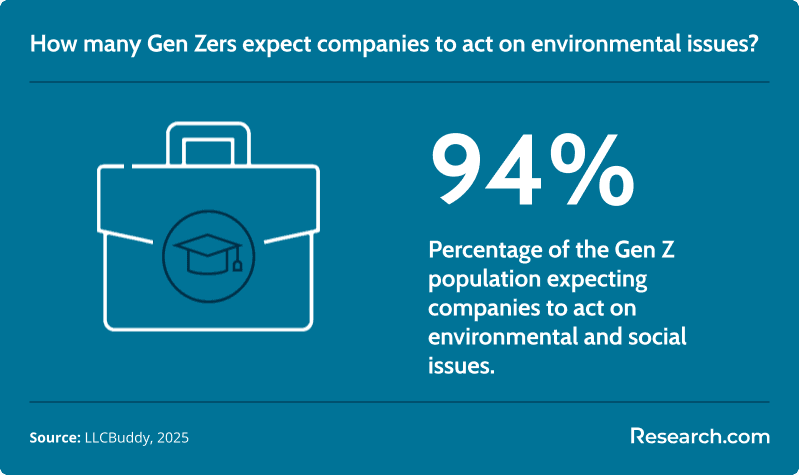
The relevance of these specializations is reinforced by reported expectations among younger consumers and workers. Close to 94% of Gen Z expects companies to take meaningful action on environmental and social issues. Related communication-focused programs, including the fastest online social media marketing degree programs, may also address CSR communication and digital engagement in response to these expectations.
How do you choose the fastest online MBA in environmental management?
Do not choose an accelerated MBA based on speed alone. The right program should match your career target, budget, schedule, learning preferences, and need for credibility. A 12-month program can be attractive, but it may not be the best choice if it lacks the courses, support, accreditation, or pacing you need.
- Confirm accreditation: Check institutional accreditation and business accreditation. You can also review guidance on agencies that accredit MBA programs, including AACSB and ACBSP.
- Calculate total cost: Compare per-credit tuition, required credits, fees, residency pricing, books, and any travel requirements.
- Match the curriculum to your target role: Compliance, ESG consulting, sustainable operations, and green entrepreneurship may require different electives and projects.
- Ask about course rotation: A program may advertise a fast completion time, but missing one required elective can delay graduation.
- Evaluate career support: Look for resume help, networking events, employer connections, alumni access, and sustainability-focused career advising.
- Check workload expectations: Ask how many hours students typically spend each week and whether full-time work is realistic during accelerated terms.
- Review faculty and industry connections: Faculty experience, applied projects, and employer partnerships can affect how practical the program feels.
Accelerated models exist in many career-focused disciplines. If you are comparing fast business-adjacent programs, the fastest online hospitality management degree programs show how other fields structure flexible leadership training.
| Question to ask | Why it matters |
| Is the environmental management concentration available fully online? | Some schools offer the MBA online but restrict certain electives to campus students. |
| Can I finish in the advertised accelerated timeline? | Fast completion may depend on full-time enrollment, course availability, and start date. |
| What is the total program cost, not just the per-credit rate? | Required credits and fees can change the true price significantly. |
| Does the curriculum fit my career goal? | ESG consulting, compliance, supply chain, and operations roles require different strengths. |
| What career services are available to online students? | Online learners should have access to meaningful career support, not only academic advising. |
| How interactive is the online format? | Networking, mentoring, and peer collaboration can affect the overall value of the MBA. |
How do accreditation and quality standards influence program value?
Accreditation helps students evaluate whether a school or business program meets recognized academic and quality standards. Institutional accreditation is especially important because it can affect financial aid eligibility, credit transfer, and employer confidence. Business-focused accreditation, such as AACSB or ACBSP, can provide an additional signal that the curriculum, faculty qualifications, and academic processes have been externally reviewed.
Quality also depends on more than accreditation. Students should review graduation requirements, faculty experience, student support, online learning design, assessment methods, course availability, and employer connections. Programs in related management areas, such as the fastest online construction management programs, can offer useful comparisons for evaluating how applied graduate programs balance speed, rigor, and career preparation.
What are the potential challenges of pursuing an online MBA in environmental management?
A fast online MBA can be convenient, but it is not low-effort. Accelerated courses often require consistent weekly study, quick turnaround on assignments, and strong self-management. Students who underestimate the workload may struggle, especially while balancing full-time work, family responsibilities, or travel.
Online students may also need to work harder to build relationships. Without campus routines, networking requires deliberate participation in virtual events, group projects, office hours, and alumni activities. Technical reliability matters too. A weak learning platform, limited library access, or slow support response can make an accelerated program more stressful.
Before enrolling, compare student services, career support, faculty access, and online learning expectations. For a broader view of credible online MBA options, review Research.com’s guide to accredited online MBA programs.
Common mistakes to avoid
- Choosing only by shortest completion time: A faster program is not useful if it lacks the specialization or support you need.
- Ignoring accreditation: Always verify institutional accreditation and, when relevant, business accreditation.
- Comparing tuition without required credits: A low per-credit price may not mean a lower total cost.
- Assuming online means self-paced: Many online programs still have fixed deadlines, live sessions, group work, and term schedules.
- Overlooking employer reimbursement rules: Some employers require grades, preapproval, or continued employment after reimbursement.
- Expecting guaranteed salary outcomes: Career results depend on experience, market conditions, location, networking, and job fit.
- Not asking about elective availability: Limited course rotation can delay graduation even in an accelerated program.
What career paths are available for graduates of online MBA programs in environmental management?
Graduates are usually best positioned for roles that require business judgment and sustainability knowledge rather than purely technical lab or field science work. The degree can support advancement in corporate sustainability, environmental compliance, operations, ESG reporting, consulting, public-sector management, and nonprofit leadership.
- Sustainability Director
- Environmental Compliance Manager
- CSR Executive
- ESG Analyst or Consultant
- Environmental Policy Advisor
- Operations or Facilities Manager with a sustainability focus
BLS data show that environmental scientists and specialists held about 84,600 jobs in 2023. The largest employers were:
- State government, excluding education and hospitals: 28%
- Management, scientific, and technical consulting: 19%
- Local government, excluding education and hospitals: 14%
- Engineering services: 11%
- Federal government, excluding postal service: 7%
These employment settings are relevant for MBA graduates who can connect environmental knowledge with budgets, operations, contracts, reporting, and organizational change. Students interested in legal advocacy or regulatory practice should compare this MBA path with the education required for environmental law; Research.com’s environmental lawyer salary and career guide explains that route in more detail.
Students who enjoy analytics-heavy work may also compare sustainability roles with other data-driven graduate paths, including the fastest online master’s programs in sports analytics, because both fields reward data interpretation, reporting, and strategic decision-making.
| Career path | Typical focus | When this path may fit |
| Sustainability leadership | Corporate sustainability goals, reporting, strategy, and stakeholder engagement | You want to lead organization-wide environmental initiatives. |
| Environmental compliance | Regulations, audits, risk controls, documentation, and corrective action | You prefer structured work tied to laws, standards, and operational risk. |
| ESG consulting | Client advising, sustainability reporting, benchmarking, and performance improvement | You enjoy project-based work, analysis, and client communication. |
| Sustainable operations | Facilities, supply chains, energy use, procurement, and process improvement | You want to reduce environmental impact through day-to-day business systems. |
| Policy and nonprofit leadership | Programs, advocacy, grants, public engagement, and environmental initiatives | You want management responsibilities in mission-driven or public-sector settings. |
What is the job market for graduates of an online MBA in environmental management?
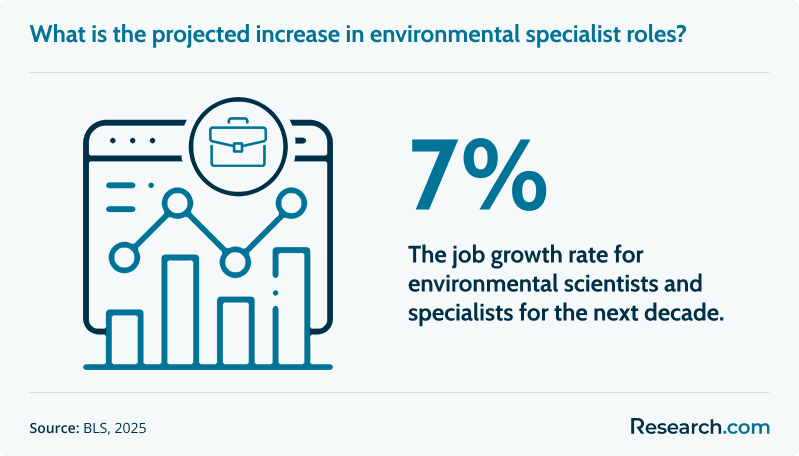
The labor market for environmental and sustainability professionals is shaped by regulation, corporate risk management, climate adaptation, investor expectations, consumer pressure, and operational cost control. BLS projects employment for environmental scientists and specialists to grow by 7% from 2023 to 2033, with about 8,500 job openings each year.
An MBA in environmental management can be especially useful for professionals who want to move beyond technical support into planning, budgeting, reporting, consulting, compliance leadership, or operations management. Employers often need people who can communicate with technical teams, executives, regulators, suppliers, and community stakeholders.
If you are interested in environmental work tied more closely to public safety, enforcement, and natural resource protection, compare this business-focused path with Research.com’s conservation officer career guide.
What is the return on investment for an online MBA in environmental management?
The ROI of an online MBA in environmental management depends on total cost, time to completion, financial aid, whether you can keep working while enrolled, and how directly the degree supports your next career move. A fast program may improve ROI if it reduces time away from work and helps you qualify sooner for higher-responsibility roles. However, a higher-priced program may still be difficult to justify if it does not improve your career prospects or provide meaningful support.
Use a practical ROI calculation before enrolling. Estimate tuition, fees, materials, loan interest, and any travel or lost work time. Then compare that number with realistic salary expectations for your target roles, not only broad national medians. Consider whether the program gives you career services, relevant projects, employer connections, and a network in sustainability or environmental management.
If affordability is your top concern, compare program prices with Research.com’s guide to affordable online MBA programs.
ROI questions to ask before applying
- What job title am I targeting after graduation?
- Does this program offer coursework or projects directly related to that role?
- Can I continue working while enrolled?
- What is the full cost after scholarships, employer aid, fees, and materials?
- How much debt would I need, and what would repayment look like?
- Does the school provide career support for online MBA students?
- Do graduates work in sustainability, compliance, ESG, consulting, or operations roles I would want?
Key Insights
- A fast online MBA in environmental management is best for professionals who want to apply sustainability knowledge to business leadership, compliance, ESG, operations, consulting, or corporate responsibility roles.
- Many accelerated programs can be completed in 12 to 18 months, but the fastest option may require a demanding workload and careful course planning.
- Salary outcomes vary by role and experience. For context, environmental scientists and specialists earned a median wage of $80,060 in May 2024, while general and operations managers earned $101,280 in May 2023.
- Program cost should be evaluated by total price, not just per-credit tuition. NCES reports average graduate tuition and required fees of $12,596 at public institutions, $29,931 at private nonprofit institutions, and $14,161 at private for-profit institutions.
- Accreditation, course availability, environmental specialization depth, career support, and online student services are major indicators of program value.
- Do not assume every online program is self-paced or that every sustainability concentration fits the same career path. Compliance, ESG, sustainable supply chain, and green innovation tracks can lead to different opportunities.
- BLS projects employment for environmental scientists and specialists to grow by 7% from 2023 to 2033, with about 8,500 job openings each year, but individual career outcomes depend on experience, location, networking, and job market conditions.
References
- Bennett, S. (2025, March 19). Corporate Social Responsibility (CSR) statistics. LLCBuddy.
- BLS. (2025, April 18). Environmental scientists and specialists. bls.gov.
- BLS. (2024). Occupational Employment and Wages, May 2023: 11-1021 General and Operations Managers. bls.gov.
- NCES. (2023). Average and percentiles of graduate tuition and required fees in degree-granting postsecondary institutions, by control of institution: Academic year 1989-90 through 2021-22. nces.ed.gov.
Other Things You Should Know About the Fastest Online MBA Programs in Environmental Management
The fastest online MBA programs in Environmental Management in 2027 typically require around 36 to 48 credit hours for completion. This varies by program, and understanding the credit requirement is crucial for planning your study timeline effectively.
In 2027, the fastest online MBA programs in Environmental Management can be completed in as little as 12 to 18 months. These accelerated programs offer flexible scheduling while maintaining rigorous content, catering to professionals seeking quick career advancement in the environmental sector.
Many 2027 fast online MBA programs in Environmental Management waive the GMAT for applicants with a bachelor’s degree from an accredited institution. Some schools still require it for lower GPAs, while others accept GRE scores, professional experience, or a completed quantitative prerequisite instead.