2027 Voice and Swallowing Disorders: Best Online Master’s Specializations

Co-Founder and Chief Data Scientist
Choosing an online master’s program in speech-language pathology with focused training in voice and swallowing disorders is a high-stakes decision. The program must prepare you for clinical work with patients who may have dysphonia, dysphagia, neurological disease, airway complications, head and neck cancer, or post-surgical communication and swallowing needs.
The need for this expertise is clear in 2027. An estimated 1 in 8.5 adults are affected by voice disorders, and 1 in 17 adults experience swallowing disorders in the U.S. alone. These conditions can affect nutrition, airway safety, employability, social participation, and quality of life, which is why trained speech-language pathologists play an important role in hospitals, rehabilitation centers, outpatient clinics, schools, and specialty practices.
This guide explains what is driving demand, how to evaluate online master’s options, what accreditation matters, which courses and clinical experiences to expect, and what career paths may be available after graduation. It is designed for prospective SLP graduate students who want a practical, decision-focused overview before comparing programs.
Key Things You Should Know About Master's Degrees for Voice and Swallowing Disorder Specialists
- A master’s degree in speech-language pathology (MS or MA) is the minimum requirement to become a licensed voice and swallowing disorder specialist.
- Programs typically include coursework in speech science, laryngeal anatomy, dysphagia management, and evidence-based clinical practice.
- Accredited programs also provide supervised clinical hours, which are essential for ASHA certification and state licensure eligibility.
What is driving the growing demand for voice and swallowing disorder specialists?
The demand for voice and swallowing disorder specialists is increasing because these conditions are common, clinically complex, and strongly connected to aging and medical recovery. In the United States, about 11.7% of adults (29.9 million) experience voice problems, while 5.9% (15.1 million) report swallowing difficulties.
Those numbers become more significant among older adults and medically fragile patients. Stroke, Parkinson’s disease, dementia, respiratory illness, head and neck cancer, prolonged intubation, and surgery can all affect voice production, airway protection, and swallowing safety. As more patients survive serious medical events and require rehabilitation, SLPs with medical and specialty training are needed to support recovery and reduce complications.
The broader speech-language pathology workforce is also expanding. Employment is projected to grow 15% from 2024 to 2034, and healthcare employers increasingly need clinicians who can evaluate both communication and swallowing function. Hospitals, rehabilitation centers, long-term care facilities, and outpatient clinics often rely on SLPs to work alongside physicians, nurses, dietitians, occupational therapists, physical therapists, and respiratory therapists.
Technology is also changing the field. Diagnostic tools such as videofluoroscopy, fiberoptic endoscopic evaluation of swallowing, laryngeal imaging, acoustic analysis, and telepractice platforms allow clinicians to identify problems earlier and monitor treatment more effectively. For students, this means the best master’s programs are not limited to theory; they also build competence in evidence-based assessment, interprofessional care, ethics, and supervised clinical decision-making.
What are the best online master’s specializations in voice and swallowing disorders in 2027?
The best program is the one that is accredited, meets your state licensure needs, provides strong clinical placement support, and includes enough coursework and supervised practice in voice, dysphagia, anatomy, motor speech, medical SLP, and evidence-based intervention. Many students begin by comparing fully or largely online master’s speech pathology programs that include medical SLP training rather than looking for a program labeled only as a “voice and swallowing” degree.
When reviewing programs, pay close attention to how clinical placements are arranged. Online coursework can be flexible, but SLP licensure and certification still require supervised clinical experiences. Ask whether the school helps secure placements near your location, whether medical placements are available, and how the program supports students interested in dysphagia or voice-focused practice.
Online master’s programs with relevant voice and swallowing training
| Program | Format and length | Relevant preparation for voice and swallowing practice |
| Emerson College – Online M.S. in Communication Disorders | Fully accredited online program that can be completed in either 20 months (accelerated) or 36 months (flexible) | Covers voice disorders, swallowing difficulties, and related communication challenges while preparing students for ASHA certification. |
| New York University (Steinhardt) – Online M.S. in Communicative Sciences & Disorders | Online SLP program with virtual simulations and supervised clinical placements | Emphasizes clinical assessment and intervention for speech, language, and swallowing disorders across age groups. |
| Maryville University – Online M.S. in Speech-Language Pathology | 57-credit program | Focuses on evidence-based approaches to diagnosing and treating speech, language, and swallowing disorders, with clinical practicums for pediatric and adult populations. |
| Pennsylvania Western University – Online M.S. in Speech-Language Pathology | 60-credit online program with full-time and part-time options | Blends academic instruction with real-world clinical training in communication and swallowing disorders. |
| Pepperdine University – Online M.S. in Speech-Language Pathology | 53-credit program | Includes foundational courses such as Anatomy and Physiology for Speech, Hearing, and Swallowing, supporting preparation for voice and swallowing disorder management. |
Before applying, confirm each program’s current accreditation status, clinical hour structure, campus visit requirements, placement policies, tuition and fees, and state authorization for your location. A program may be academically strong but still be a poor fit if it cannot support the type of clinical experience you need.
What accreditation should you look for in a voice and swallowing disorders master’s program?
Accreditation is one of the most important filters when choosing an online master’s program in speech-language pathology. In the U.S., employers and state licensing boards typically expect graduates to come from SLP online programs accredited by the Council on Academic Accreditation in Audiology and Speech-Language Pathology (CAA) of the American Speech-Language-Hearing Association (ASHA).
As of 2027, there are over 300 accredited SLP master’s programs nationwide, most offering specializations in medical speech pathology, voice, or swallowing disorders. However, not every accredited program offers the same depth of clinical exposure in dysphagia, voice assessment, medical instrumentation, or adult neurogenic disorders, so accreditation should be your starting point rather than your only criterion.
Accreditation and authorization checklist
- CAA Accreditation (ASHA): Confirms that the program meets academic and clinical training standards tied to professional preparation and eligibility for the Certificate of Clinical Competence in Speech-Language Pathology.
- Regional Institutional Accreditation: Confirms that the university itself is recognized by a regional accrediting body, such as the Middle States Commission on Higher Education or WASC. This can affect federal financial aid eligibility, transfer considerations, and employer recognition.
- State Licensure Alignment: Verify that the curriculum and clinical practicum structure meet your state’s licensing board requirements. Some states, like California and Texas, have specific clinical practicum or coursework mandates beyond CAA standards.
- Online Delivery Approval: For online programs, confirm that the institution has distance education authorization under the State Authorization Reciprocity Agreements (SARA) framework or another applicable authorization process for your state.
A strong program should be able to clearly explain how it supports ASHA certification, state licensure, clinical hour documentation, and supervised practicum requirements. If admissions staff cannot answer these questions clearly, ask to speak with a program director, clinical placement coordinator, or licensure specialist before enrolling.
Which core courses are included in an online master’s program specializing in voice and swallowing disorders?
Students comparing accelerated speech pathology programs online should look beyond course titles and examine whether the curriculum builds a clear path from anatomy and physiology to diagnosis, intervention, documentation, and clinical judgment. Voice and swallowing work requires a strong understanding of the aerodigestive system, neurology, respiration, phonation, resonance, airway protection, and nutrition-related risk.
Common courses in online SLP master’s programs
- Anatomy & Physiology for Speech, Hearing, and Swallowing: Builds knowledge of the biological systems involved in voice production, resonance, swallowing, respiration, and airway protection.
- Voice & Fluency Disorders: Covers the causes, assessment, and treatment of voice problems, including dysphonia, as well as fluency disorders such as stuttering.
- Dysphagia (Swallowing Disorders): Examines swallowing anatomy and physiology, clinical assessment, intervention planning, and instrumental methods including videofluoroscopy (MBS) and fiberoptic endoscopic evaluation of swallowing (FEES).
- Motor Speech & Upper Airway/Voice Disorders: Addresses conditions such as dysarthria, apraxia, and voice changes linked to upper airway or neurological pathology.
- Research Methods & Evidence-Based Practice: Teaches students how to evaluate clinical research, interpret evidence, and make treatment decisions that reflect patient needs and current best practices.
- Clinical Practicum / Methods & Treatment Techniques: Provides supervised opportunities to apply assessment and intervention skills through placements, simulations, labs, or other structured clinical experiences.
Students interested in medical SLP careers should also review whether the program includes adult neurogenic communication disorders, counseling, professional ethics, multicultural practice, augmentative and alternative communication, and interprofessional collaboration. These areas often overlap with voice and swallowing care in real clinical settings.
How do master’s programs prepare students to assess and treat voice and swallowing disorders?
SLP accelerated programs and traditional online master’s programs prepare students through a combination of academic coursework, skills practice, supervised clinical training, and competency-based feedback. The goal is not only to teach what voice and swallowing disorders are, but to help students make safe, evidence-informed decisions with real patients.
Training usually starts with anatomy and physiology. Students learn how the larynx, respiratory system, oral and pharyngeal structures, cranial nerves, and neurological pathways contribute to voice production and swallowing. From there, coursework moves into assessment, differential diagnosis, treatment planning, documentation, and referral decisions.
Skills students should expect to develop
- Case history and interview skills: Learning how to gather information about symptoms, medical history, diet, medication, vocal demands, respiratory status, and patient goals.
- Clinical assessment: Observing voice quality, resonance, articulation, cough strength, oral motor function, swallowing signs, and communication patterns.
- Instrumental assessment awareness: Understanding when tools such as videofluoroscopy, laryngeal endoscopy, and FEES may be appropriate and how findings inform treatment.
- Treatment planning: Selecting interventions that match the patient’s diagnosis, safety needs, functional goals, and medical condition.
- Interprofessional collaboration: Coordinating with physicians, nurses, dietitians, occupational therapists, physical therapists, and caregivers.
One important issue is the uneven depth of training in some specialty areas. According to a study published in PubMed, over 90% of graduate SLP students receive fewer than 20 hours of instruction in pediatric swallowing and feeding. Students who want to work in dysphagia should therefore ask specific questions about course hours, simulation experiences, pediatric and adult clinical opportunities, and faculty expertise.
Strong programs use supervised practicums to bridge the gap between coursework and independent practice. Under licensed speech-language pathologists, students may observe and participate in assessment, treatment, counseling, documentation, and care coordination for patients with dysphonia, dysphagia, and related disorders. The more targeted and well-supervised these experiences are, the better prepared graduates are for clinical fellowship and entry-level practice.
How can students build a strong application for an online voice/swallowing disorders master’s specialization?
Admissions committees look for evidence that applicants can handle graduate-level science, communicate professionally, complete clinical requirements, and understand the responsibilities of speech-language pathology. For applicants interested in voice and swallowing disorders, the strongest applications connect academic readiness with a clear clinical purpose.
Application strengthening tips
- Maintain a strong GPA: Most programs require a minimum cumulative GPA of around 3.0 on a 4.0 scale, but competitive applicants often present GPAs of 3.5 or higher.
- Complete prerequisite coursework: Make sure you have completed required foundational courses such as biology/human anatomy, physical sciences (physics or chemistry), statistics, and social/behavioral sciences.
- Gain relevant observation or clinical experience: Many programs expect applicants to have completed clinical observation hours, such as 25 or more, under a certified SLP. If possible, observe in medical, rehabilitation, ENT, voice clinic, or dysphagia-related settings.
- Write a focused personal statement: Explain why voice and swallowing disorders interest you, what patient populations you hope to serve, and how the online program supports your goals. Avoid vague claims about wanting to “help people” unless you connect them to specific experiences and career plans.
- Choose strong recommenders: Letters should come from professors, supervisors, researchers, or clinicians who can discuss your academic ability, professionalism, communication skills, reliability, and readiness for clinical training.
- Demonstrate evidence of specialization interest: Highlight coursework, volunteer work, research, observation, employment, or practicum exposure related to voice, swallowing, dysphagia, voice disorders, medical SLP, aging, neurology, or rehabilitation.
- Apply early and to a balanced list of programs: Given that acceptance rates hover around 40% and programs often receive thousands of applications, submit complete materials ahead of deadlines and include a mix of reach, match, and safety programs.
Common mistakes include applying before prerequisites are complete, submitting generic essays, underestimating clinical placement requirements, and failing to check whether the online program can accept students from your state. A careful application strategy can save time, money, and frustration.
What career paths are available after completing an online master’s in voice and swallowing disorders?
A master’s specialization in voice and swallowing disorders can support several clinical and academic pathways within speech-language pathology. Graduates typically still enter the profession as SLPs and build advanced expertise through clinical fellowship, mentorship, continuing education, employer-based training, and, in some cases, specialty certification.
Career options often depend on clinical placement experience, state licensure, ASHA certification status, patient population, and comfort with medical decision-making. Students who want medical roles should prioritize programs and placements that expose them to dysphagia, voice disorders, neurogenic communication disorders, instrumental assessment, and interprofessional care.
Potential career paths
- Voice and Swallowing Specialist: Evaluates and treats disorders such as dysphagia, dysphonia, and vocal fold paralysis, often using or interpreting advanced clinical techniques like FEES and videofluoroscopy within the appropriate scope and setting.
- Clinical Research Specialist: Supports or conducts research on treatment outcomes, rehabilitation methods, assessment tools, and emerging technologies for swallowing and voice restoration.
- Voice Rehabilitation Specialist: Works with individuals recovering from vocal injury, surgery, chronic vocal strain, or occupational voice demands, including professional voice users such as singers, actors, and teachers.
- Dysphagia Specialist: Focuses on swallowing disorders in medical, rehabilitation, or long-term care settings and helps develop treatment plans to support safety, nutrition, hydration, and quality of life.
- Speech-Language Pathology Educator or Supervisor: Trains graduate students, mentors clinical fellows, or oversees interns while supporting adherence to ASHA and CAA standards.
- Telepractice or Virtual Care SLP: Provides online assessment, consultation, coaching, or therapy for appropriate clients with mild to moderate voice or swallowing-related needs, subject to licensure, safety, and clinical suitability.
Not every role is available immediately after graduation. Many advanced medical or specialty positions require post-graduate experience, facility-specific competency checks, additional training in instrumentation, and demonstrated ability to manage complex cases safely.
Where do specialists in voice and swallowing disorders work?
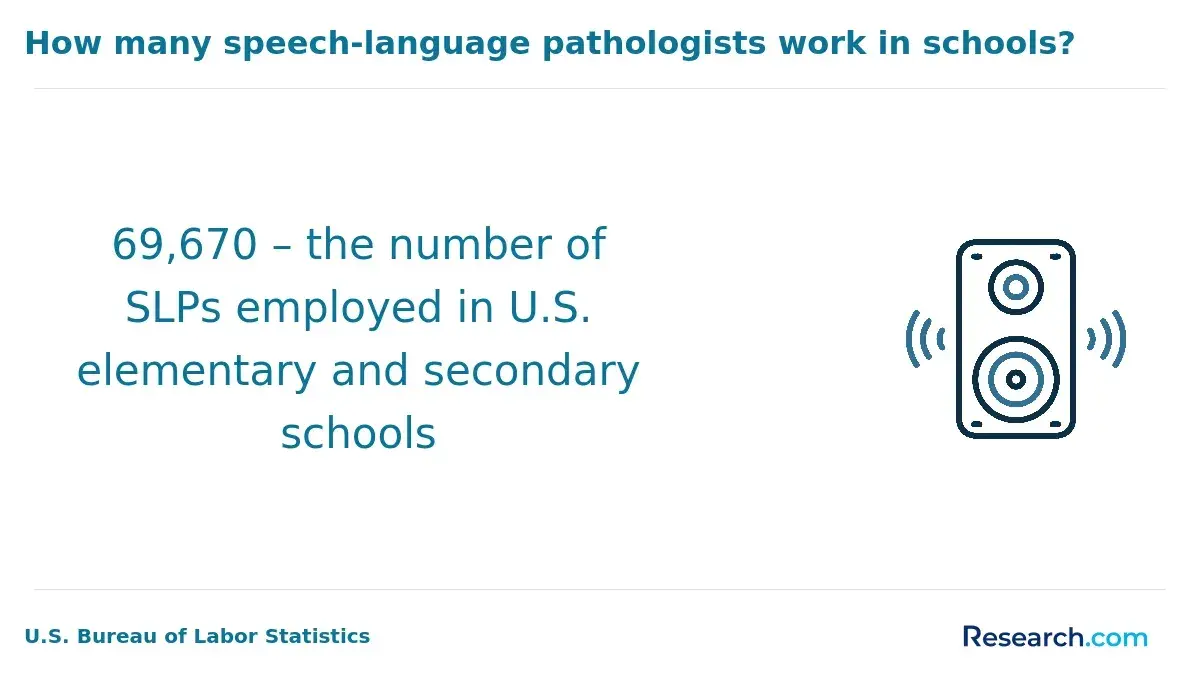
Specialists in voice and swallowing disorders work wherever patients need help with communication, airway protection, swallowing safety, feeding, or vocal function. According to ASHA, roughly 56% of all SLPs work in educational settings, while about 35% are employed in health-care-related facilities.
For students comparing settings and researching where SLPs make the most money, it is important to understand that pay and duties vary by employer, region, patient population, productivity expectations, and level of specialization. Medical settings may offer more exposure to dysphagia and complex voice cases, while schools and early intervention settings may involve broader communication caseloads with selected feeding or voice needs.
Common employment settings
- Hospitals & Acute Care: SLPs may work in general hospitals, trauma centers, neurology units, stroke units, oncology services, and intensive care settings. Cases often involve swallowing and communication issues after surgery, stroke, respiratory compromise, or head and neck cancer.
- Outpatient Clinics & Rehabilitation Centers: These settings support patients recovering after acute illness, neurological injury, surgery, or progressive disease. SLPs may provide voice therapy, dysphagia management, patient education, and ongoing rehabilitation.
- Long-Term Care Facilities: Skilled nursing and assisted living facilities employ SLPs to manage swallowing, feeding, cognition, communication, and voice concerns related to aging, neurological decline, and chronic illness.
- Voice & Swallowing Specialty Clinics: SLPs may work in private practices, ENT-affiliated clinics, university clinics, or multidisciplinary centers focused on dysphagia, professional voice, laryngeal disorders, or telepractice services.
- Educational & Early Intervention Settings: Schools, early-intervention programs, and university clinics may serve children with feeding, swallowing, resonance, or voice-related concerns. While many school-based SLPs handle broad speech and language caseloads, specialized training can be valuable for specific student needs.
The right setting depends on your tolerance for medical complexity, preferred age group, pace of work, documentation demands, schedule expectations, and long-term career goals.
How much do speech-language pathologists specializing in voice and swallowing disorders earn?
Speech-language pathologist salaries vary by setting, geography, experience, employer type, credentials, and caseload complexity. On average, speech-language pathologists in the U.S. have a median annual wage of $95,410. SLPs working specifically in health-care settings, where voice and swallowing specialists are often employed, report median salaries of around $87,000 to $89,000.
Those figures should be interpreted carefully. A “specialization” does not automatically guarantee higher pay, especially for early-career clinicians. However, SLPs with strong medical experience, advanced competencies, leadership responsibilities, or specialized caseloads may become more competitive for higher-level clinical roles in hospitals, outpatient centers, specialty clinics, or rehabilitation programs.
Experience also affects earning potential. According to a 2023 survey by ASHA, SLPs with 1-3 years tended to earn approximately $74,000, while those with 10 or more years can make $100,000 or higher. Senior clinicians may supervise clinical fellows, train staff, lead quality-improvement initiatives, manage specialty programs, or contribute to interdisciplinary care pathways.
Advanced credentials, like BCS-S, may also support career growth because they signal deeper expertise in swallowing and swallowing disorders. Still, compensation depends on employer policies, local labor markets, role expectations, and demonstrated clinical value.
What are the career trends for professionals trained in treating dysphonia and dysphagia?
Career opportunities for professionals trained in dysphonia and dysphagia are being shaped by healthcare complexity, aging populations, technology, and growing recognition of the SLP’s role in patient safety and rehabilitation. The strongest candidates will be those who combine clinical skill with adaptability, evidence-based practice, and collaboration.
Key trends to watch
- More interdisciplinary care: Voice and swallowing cases often overlap with neurology, otolaryngology, oncology, pulmonology, nutrition, nursing, and rehabilitation. SLPs who can communicate clearly across disciplines are increasingly valuable.
- Greater use of telepractice: Remote therapy and follow-up care are expanding access for some patients, especially in underserved areas. However, not every swallowing or voice case is appropriate for virtual care, so clinical judgment remains essential.
- Demand for medical SLP expertise: Hospitals, rehabilitation centers, outpatient clinics, and long-term care facilities continue to need clinicians who understand dysphagia risk, voice rehabilitation, documentation, and patient-centered treatment planning.
- Need for educators and clinical leaders: As programs train future SLPs, experienced clinicians are needed to supervise students, mentor clinical fellows, and teach evidence-based approaches to assessment and intervention.
- Interest in advanced certification: Professionals may pursue credentials such as the Board Certification in Swallowing and Swallowing Disorders (BCS-S) to document expertise and qualify for more specialized clinical or leadership opportunities.
For students, the practical takeaway is to choose a master’s program that supports both licensure readiness and long-term specialization. Coursework matters, but clinical placements, mentorship, state licensure alignment, and post-graduate training opportunities often determine how quickly a graduate can move into advanced voice and swallowing work.
Other Things to Know About the Best Online Master's Specializations in 2027
Applicants typically need a bachelor's degree in a related field such as speech-language pathology, audiology, or a health science. Some programs may also require GRE scores or relevant clinical experience. Each institution sets its own specific requirements.
The typical program length for a 2027 online Master’s in Voice and Swallowing Disorders is 1-2 years. Programs generally require completion of 30-36 credit hours, and the duration may vary depending on part-time or full-time enrollment options.
Most programs require applicants to hold a completed bachelor’s degree and, for clinical practice tracks, active or eligible speech-language pathology certification or licensure. In the U.S., many online master’s options align with ASHA standards and expect a supervised clinical practicum before graduation.
References
- American Speech-Language-Hearing Association. (2024). 2024 ASHA SLP Health Care Survey: Workforce trends. ASHA. https://www.asha.org/research/memberdata/slp-health-care-survey/
- American Speech-Language-Hearing Association. (2024). Council on Academic Accreditation (CAA): Accredited programs in speech-language pathology. ASHA. https://caa.asha.org/programs/
- Bureau of Labor Statistics. (2024, September). Speech-language pathologists: Occupational outlook handbook. U.S. Department of Labor. https://www.bls.gov/ooh/healthcare/speech-language-pathologists.htm
- National Institute on Deafness and Other Communication Disorders. (2023). Voice, speech, language, and swallowing. National Institutes of Health. https://www.nidcd.nih.gov/health/voice-speech-and-language
- Parks, K. P., & Verdolini Abbott, K. (2024). Prevalence and characteristics of adult voice and swallowing disorders in the United States. American Journal of Speech-Language Pathology. https://pubs.asha.org/doi/10.1044/2024_AJSLP-23-00407
- U.S. News & World Report. (2025). Best online master’s programs in speech-language pathology 2025. U.S. News. https://www.usnews.com/education/online-education/speech-language-pathology-masters
- World Health Organization. (2024). Rehabilitation 2030: Strengthening health systems for voice and swallowing disorder management. WHO. https://www.who.int/initiatives/rehabilitation-2030
- Yale School of Medicine. (2024). Voice and swallowing disorders program overview. Yale University. https://medicine.yale.edu/ent/clinical-care/voice-swallowing/