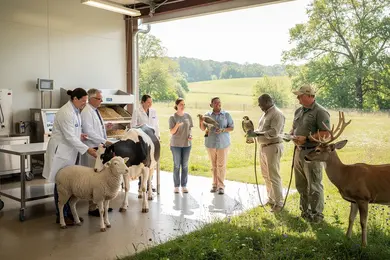
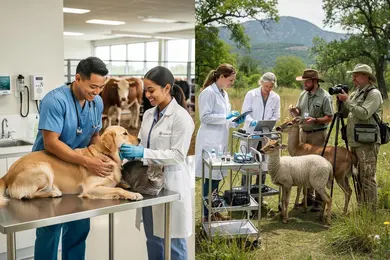
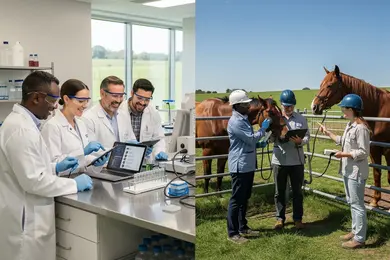
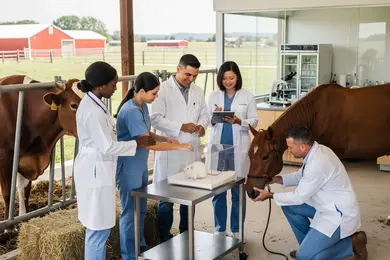
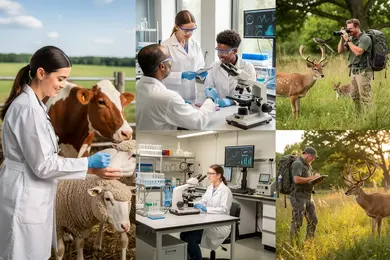
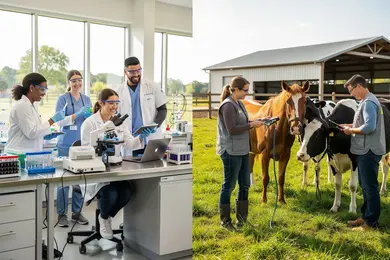
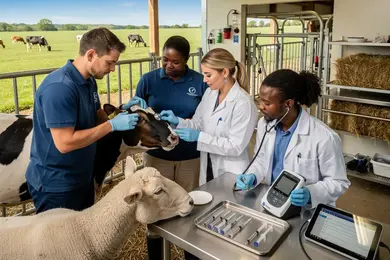
2027 Best Accredited Online Animal Science Bachelor's Degree Programs

Co-Founder and Chief Data Scientist
The main question for prospective animal science students is not simply whether a bachelor’s degree can be completed online. It is whether the program is accredited, academically credible, flexible enough for your schedule, and strong enough to support your next step in agriculture, veterinary-related work, animal nutrition, research, livestock management, conservation, or graduate study.
Accreditation matters because it affects financial aid eligibility, credit transfer, employer confidence, and admission to future programs. This is especially important in a field where students often need applied experience with animal systems, biology, nutrition, genetics, welfare, and production practices. With only 35% of online animal science degrees holding recognized accreditation, students need to verify quality before enrolling.
This guide explains how to evaluate accredited online animal science bachelor’s degree programs, what standards to look for, how online coursework compares with campus-based study, what costs to expect, which financial aid options may be available, and how graduates can use the degree in the job market.
Key Points About the Best Accredited Online Animal Science Bachelor's Degree Programs
- Students develop vital skills in animal biology, nutrition, and welfare, aligning directly with industry needs such as livestock management and veterinary support roles.
- Online programs reduce commuting and housing expenses, often costing 30% less than traditional on-campus alternatives, making education more accessible.
- Graduates gain access to diverse internships and research projects promoted by accredited institutions, enhancing job placements in agriculture, conservation, and animal care sectors.
What are the best accredited online Animal Science bachelor's degree programs?
The best accredited online animal science bachelor’s degree program is the one that matches your career goal, offers verified institutional quality, includes meaningful applied learning, and provides enough flexibility to finish without weakening the science foundation. Programs with high graduation rates—often exceeding 70%—may indicate stronger student support, clearer degree pathways, and better academic continuity.
When comparing programs, look beyond the school name. Review the curriculum, faculty background, internship or fieldwork options, online lab tools, transfer policies, and whether the program is designed for your intended path, such as livestock production, animal nutrition, pre-veterinary preparation, equine science, agricultural business, or conservation.
- Iowa State University: Accredited through its College of Agriculture and Life Sciences, this program is a strong option for students interested in livestock management, biotechnology, and modern agricultural systems. Its research environment and faculty expertise can be especially useful for students who want exposure to sustainable agriculture and production-focused animal science.
- Colorado State University: This accredited program is known for flexible online delivery through the Canvas platform and an applied approach to learning. Students interested in specialized areas such as equine science and animal nutrition should review available tracks carefully to confirm that the online format supports their goals.
- Oregon State University: Accredited by the American Society of Animal Science, this online degree emphasizes environmental stewardship, animal welfare, ecology, and animal production systems. It may be a good fit for students who want to connect animal science with sustainability and land-based resource management.
- North Carolina State University: This accredited program connects animal science with genetics and veterinary sciences. The use of the Labster virtual lab system gives online students access to laboratory simulations that can support science-heavy coursework, though students should still ask how practical or local hands-on requirements are completed.
- University of Nebraska-Lincoln: This accredited program offers a broad range of electives, including agricultural business. Access to extension services can be valuable for students who want community-based learning, applied agricultural knowledge, and stronger connections to livestock and rural industry networks.
Students considering animal science sometimes compare it with other flexible professional pathways. For example, those exploring healthcare-oriented online options may also review RN to BSN without clinicals programs. The key is to choose a program whose accreditation, curriculum, and applied requirements match the career you actually want—not just the fastest or most convenient option.
What accreditation standards should an online Animal Science bachelor's degree program meet?
An online animal science bachelor’s degree should meet recognized institutional accreditation standards and, when available, relevant program-level quality expectations in agriculture or animal science. Accreditation helps show that the school has been reviewed for academic quality, faculty qualifications, student support, assessment practices, and administrative integrity. Currently, fewer than 50 institutions hold accreditation for their online programs in this discipline.
Students should evaluate accreditation and program quality together. A school may be institutionally accredited, but the specific online animal science pathway still needs to offer appropriate science coursework, credible faculty, advising, and practical learning opportunities.
- Curriculum Rigor: The degree should include core animal science areas such as animal biology, nutrition, genetics, reproduction, welfare, and management practices. Review the course catalog rather than relying only on marketing language.
- Faculty Qualifications: Instructors should have advanced academic credentials and relevant professional experience in areas such as livestock production, animal health, welfare, genetics, nutrition, or agricultural systems. Faculty pages and accreditation reports can help verify this.
- Hands-On Learning Opportunities: A credible online program should explain how students complete applied work. This may include internships, field experiences, local partnerships, supervised projects, or approved practical assignments near the student’s location.
- Online Learning Resources: Strong programs provide access to virtual laboratories, simulation tools, research databases, library support, and technology platforms that support remote science learning.
- Student Support Services: Look for academic advising, technical support, tutoring, career services, transfer advising, and clear communication about graduation requirements. Online students need structured support, not just recorded lectures.
- Ongoing Curriculum Updates: Animal science changes as genetics, biotechnology, animal welfare standards, and sustainable agriculture practices evolve. Programs should show evidence that coursework is regularly reviewed and updated.
Accreditation is also important in adjacent fields. Students comparing quality assurance across disciplines may find it useful to examine how standards are applied in a online healthcare administration degree, where accreditation can also affect credibility, financial aid, and graduate options.
How can I check the accreditation status of an online Animal Science bachelor's program?
To check whether an online animal science bachelor’s program is accredited, verify the institution through official accreditation databases, confirm the accrediting agency is recognized, and ask the school for current documentation. Do not rely only on a program webpage, social media claim, or admissions email. Approximately 85% of students enroll in institutions with regional accreditation, which generally holds more recognition than national accreditation.
- Search the U.S. Department of Education database: Use the Database of Accredited Postsecondary Institutions and Programs (DAPIP) to confirm that the institution is listed and that its accreditation is current.
- Check CHEA recognition: Use the Council for Higher Education Accreditation resources to confirm whether the accreditor is recognized and reputable.
- Confirm the exact institution and campus: Some universities have multiple campuses, online divisions, or affiliated entities. Make sure the listed accreditation applies to the school offering the degree.
- Ask about program-specific review: Animal science degrees may not always have a separate programmatic accreditor, but any specialized endorsement, agricultural review, or discipline-specific recognition should be documented clearly.
- Request written confirmation: Contact admissions, the registrar, or the accreditation liaison and ask for current accreditation documentation. Save the response for your records.
- Check transfer and graduate school acceptance: If you plan to transfer credits or apply to graduate school, ask receiving institutions whether they accept credits or degrees from the program you are considering.
A graduate of an accredited online animal science bachelor’s program described the verification process as confusing at first because different websites made conflicting claims. His advice was simple: cross-check official databases and ask school officials for formal proof before committing tuition money.
As he explained, it was not enough to read what appeared on a school website. Confirming the information through multiple trusted sources gave him confidence that the degree would be recognized and helped him avoid a costly enrollment mistake.
Why is it important to check if an online Animal Science bachelor's program is accredited?
Checking accreditation protects the value of your degree. It can affect whether you qualify for federal financial aid, whether your credits transfer, whether graduate schools consider your application, and whether employers trust your educational background. About 85% of credits from accredited programs transfer smoothly between institutions, making accreditation especially important for students who may change schools or continue into advanced study.
- Financial Aid Access: Federal loans and grants are generally tied to eligible accredited institutions. If a school lacks recognized accreditation, students may have fewer legitimate funding options.
- Credit Transferability: Accredited coursework is more likely to be reviewed favorably by other colleges and universities. This matters if you later change programs, add a minor, pursue a second degree, or apply to graduate school.
- Career Credibility: Employers may use accreditation as a quick signal that your degree came from a school with reviewed academic standards. This can be important in animal nutrition, livestock management, genetics, research support, and regulatory roles.
- Graduate and Professional Pathways: Some graduate programs, certifications, internships, or professional opportunities may require or strongly prefer degrees from accredited schools.
- Consumer Protection: Accreditation does not guarantee a perfect program, but it reduces the risk of enrolling in a degree with weak academics, poor transfer value, or limited recognition.
Students evaluating affordability should be careful not to choose a program solely because it is inexpensive. A low-cost degree that lacks recognized accreditation can be more expensive in the long run if credits do not transfer or employers question the credential. For comparison, students looking at aid-supported online training in another field can review medical billing and coding online schools that offer financial aid.
Does the online Animal Science curriculum mirror the rigor of on-campus programs?
An accredited online animal science curriculum can match the rigor of an on-campus program when the same learning outcomes, qualified faculty, science requirements, assessments, and applied experiences are in place. The difference is usually not what students study, but how they access lectures, labs, advising, collaboration, and field-based work.
| Area | Online animal science programs | On-campus animal science programs |
| Core coursework | May use the same textbooks, learning objectives, and assessments in animal biology, nutrition, genetics, and management. | Typically follows the same academic standards through in-person lectures, labs, and seminars. |
| Laboratory learning | Often uses virtual simulations, remote assignments, or locally arranged lab and field experiences. | Usually provides direct access to campus labs, animal units, and equipment. |
| Applied experience | May require internships, supervised local placements, or approved practical projects. | May offer easier access to campus farms, research barns, clinics, and faculty-led fieldwork. |
| Student interaction | Depends on live sessions, discussion boards, virtual advising, group projects, and student initiative. | Provides face-to-face interaction before, during, and after class. |
Students should ask specific questions before enrolling: Are labs fully online, hybrid, or locally arranged? Are internships required? Who approves fieldwork sites? How are animal-handling competencies assessed? Are exams proctored? These details reveal whether the online format is academically serious or simply convenient.
A graduate of an accredited online animal science bachelor’s degree said the workload and expectations were comparable to those of traditional students. He noted that keeping up with assignments while working was difficult, but the flexibility and applied projects helped him connect coursework to real animal science problems. His experience shows that online rigor often depends on both program design and student discipline.
How much does it cost to attend an accredited online Animal Science bachelor's degree program?
The cost of an accredited online animal science bachelor’s degree includes more than tuition. Students should calculate tuition, required fees, lab-related costs, textbooks, technology, transfer credit policies, and any travel needed for fieldwork or internships. Tuition alone is typically between $9,000 and $15,000 annually for in-state students.
| Cost category | Typical amount stated | What to check before enrolling |
| Tuition | $9,000 and $15,000 annually for in-state students | Confirm whether online students pay in-state, out-of-state, or separate online tuition rates. |
| Technology fees | $100-$400 per semester | Ask whether fees cover learning platforms, exam proctoring, software, or technical services. |
| Virtual lab fees | $200-$600 per course | Check which science courses carry lab fees and whether any in-person components add costs. |
| Digital textbook subscriptions | $300-$700 yearly | Find out whether materials are included in tuition or billed separately. |
| Student services fees | $150-$350 | Review whether online students have full access to advising, tutoring, library, and career services. |
Online programs generally offer tuition savings of about 15-30% compared to traditional campus-based courses. Students may also save on commuting, parking, relocation, and campus housing. However, online study is not automatically inexpensive. Science courses, virtual labs, proctoring, software, and required field experiences can add meaningful costs.
Before choosing a program, request a full cost-of-attendance estimate and ask how many credits are required after transfer evaluation. A program with a lower advertised tuition may cost more if it accepts fewer transfer credits or requires additional prerequisites.
What financial aid options are available for Animal Science students?
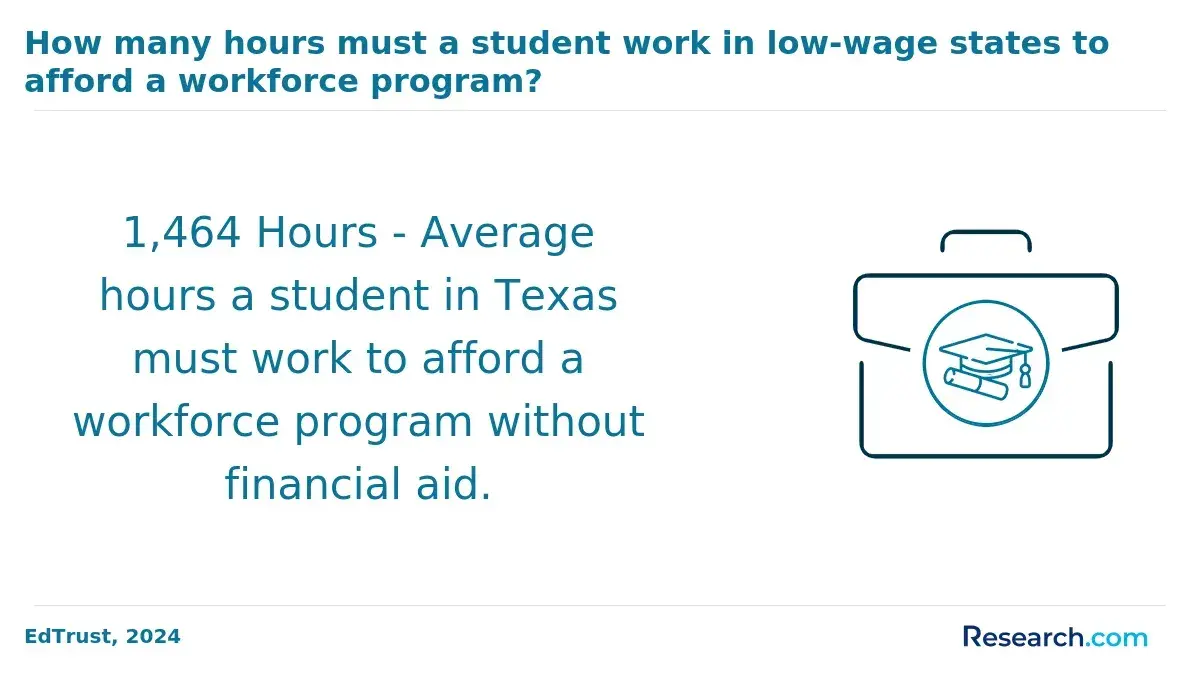
Animal science students may qualify for federal aid, state aid, institutional scholarships, work-study, and discipline-specific awards. Nearly 85% of undergraduate students in the US receive some form of financial aid, with federal programs distributing over $120 billion annually. For online students, the first requirement is usually enrollment in an eligible accredited institution.
- Federal Grants: Need-based grants such as the Pell Grant do not require repayment. Students generally begin by completing the FAFSA and meeting eligibility requirements.
- Federal Student Loans: Loans can help cover remaining costs after grants and scholarships, but they must be repaid. Compare borrowing limits, interest, and repayment obligations before accepting the full amount offered.
- Discipline-Specific Scholarships: Organizations such as the American Registry of Professional Animal Scientists (ARPAS) may offer scholarships for students committed to animal science careers. Requirements often include academic performance, enrollment status, or career focus.
- State and University Scholarships: Agricultural colleges, land-grant universities, and state agencies may provide merit-based or need-based aid for students in agriculture, animal science, or related fields.
- Work-Study Programs: Eligible students may earn money through approved part-time work. When possible, seek roles connected to animal care, research, agriculture, extension, or laboratory support.
- Professional Association Grants: Livestock, agriculture, equine, dairy, poultry, and conservation organizations may offer grants or tuition assistance for students entering specific areas of the animal science workforce.
To reduce debt, apply early, track scholarship deadlines, ask the department about animal science-specific awards, and compare net price rather than sticker price. Also confirm whether online students qualify for the same institutional aid as campus-based students.
What are the career outcomes for graduates of online Animal Science bachelor's degree programs?
Graduates of accredited online animal science bachelor’s degree programs can pursue roles in agriculture, livestock production, animal nutrition, research support, conservation, regulatory inspection, and veterinary-adjacent settings. Career outcomes depend on the student’s concentration, internship experience, technical skills, location, and whether the role requires additional certification, licensure, or graduate education.
| Career path | How the degree may help | Important consideration |
| Animal Nutritionist | Coursework in biology, chemistry, nutrition, and production systems can support work designing diets for livestock or companion animal settings. | Advanced roles may prefer graduate study or specialized credentials. |
| Wildlife Biologist | Training in animal behavior, ecology, data analysis, and environmental science can support conservation-related work. | Some wildlife biology roles require field experience or graduate-level preparation. |
| Veterinary Technician | Animal science coursework can strengthen knowledge of anatomy, animal care, and handling. | A bachelor’s in animal science may not replace specific veterinary technology education or credentialing requirements where those are required. |
| Research Assistant | Graduates may support studies in animal health, breeding, genetics, nutrition, or agricultural innovation. | Lab methods, data skills, and internship experience can be important for competitiveness. |
| Agricultural Inspector | Knowledge of livestock systems, animal health, anatomy, and regulations can support inspection and compliance work. | Government or regulatory roles may have additional hiring requirements. |
Students who want broader career flexibility sometimes compare animal science with healthcare training pathways. For example, a MA to LPN bridge program online may appeal to learners interested in patient care rather than agriculture or animal systems.
The strongest career outcomes usually come from pairing the degree with practical experience. Students should pursue internships, undergraduate research, animal facility work, extension projects, industry certifications when appropriate, and networking with employers in their target sector.
What is the employer perception of online Animal Science graduates?
Employer perception of online animal science graduates has improved as accredited online education has become more common. A survey from the National Association of Colleges and Employers found that 78% of employers trust the credibility of accredited online programs. For most hiring managers, the important questions are whether the institution is reputable, whether the degree is accredited, and whether the candidate can demonstrate relevant skills.
In animal science, employers often care less about the delivery format and more about evidence of competence. Strong candidates can explain animal biology concepts, understand welfare and management practices, work with data, communicate clearly, and show applied experience through internships, fieldwork, research, farm work, laboratory support, or industry projects.
Online graduates may also bring workplace-ready habits that employers value, including self-direction, digital communication, remote collaboration, project management, and technical adaptability. Experience with tools for genetics tracking, nutrition planning, livestock monitoring, data management, or virtual lab work can strengthen a resume when it is connected to real assignments or projects.
To reduce skepticism, graduates should make the accreditation status clear, list relevant coursework, highlight hands-on experience, and describe measurable projects. A resume that simply says “online degree” is less persuasive than one that shows applied animal science skills and verified academic preparation.
How can I choose the best accredited online Animal Science bachelor's degree for my goals?
To choose the best accredited online animal science bachelor’s degree, start with your career goal and work backward. A student interested in livestock production needs a different curriculum than a student aiming for wildlife conservation, veterinary school preparation, animal nutrition, agricultural business, or research support. According to the National Center for Education Statistics, nearly 37% of undergraduates enrolled in at least one distance education course in the past, making online program quality and fit increasingly important.
- Confirm Accreditation First: Verify institutional accreditation through official sources before comparing tuition, course format, or admissions requirements.
- Match the Curriculum to Your Goal: Review whether the program includes genetics, nutrition, livestock management, animal welfare, reproduction, ecology, agricultural business, or other courses aligned with your intended field.
- Evaluate Hands-On Learning: Ask how internships, fieldwork, labs, local placements, or virtual simulations are completed. Animal science is applied, so practical experience matters.
- Check Flexibility Carefully: Determine whether courses are asynchronous, synchronous, part-time, full-time, accelerated, or cohort-based. Flexibility should help you finish—not leave you unsupported.
- Review Student Support: Online students should have access to advising, tutoring, library services, technical help, career counseling, and faculty communication.
- Compare Total Cost: Look at tuition, fees, lab charges, textbooks, technology costs, transfer credits, and financial aid. Net cost is more useful than advertised tuition.
- Ask About Outcomes: Request information about internship partners, graduate school pathways, employer connections, alumni roles, and career services for online students.
If you are comparing online education options beyond animal science, reviewing flexible graduate pathways such as the shortest post master's PMHNP online programs can help you understand how program structure, accreditation, and career alignment differ by field.
The right program should be accredited, affordable enough to complete, academically rigorous, and clearly connected to the work you want to do after graduation. Avoid choosing based only on convenience; choose based on recognized quality and career fit.
What Graduates Say About Their Online Bachelor's in Animal Science
-
: "
Choosing an accredited online animal science bachelor's degree was important because I wanted my education to meet recognized standards and be taken seriously by employers. The program’s affordability helped me continue working while studying and avoid overwhelming debt. Since graduating, the degree has helped me move into agricultural research and contribute to sustainable farming practices. — Ryker
"
-
: "
I needed an accredited online animal science program because flexibility was the only way I could balance school with family responsibilities. The reasonable tuition made it more realistic than a traditional on-campus option. Professionally, the degree strengthened my credentials and helped me advance in my role at a veterinary nutrition company. — Eden
"
-
: "
Enrolling in an accredited online animal science bachelor's degree was a strategic choice for improving my qualifications in zoological management. The cost-effective online format allowed me to invest in other career development at the same time. The degree gave me the scientific foundation and confidence to lead conservation projects. — Benjamin
"
Other Things You Should Know About Animal Science Degrees
2027 online animal science bachelor's degree programs often offer career support services like resume building workshops, internship placements, and access to job portals. These services aim to prepare students for successful careers in the animal science field after graduation.
Many online animal science programs offer concentrations or electives focused on subfields like livestock management, animal nutrition, or wildlife conservation. These specializations allow students to tailor their education to specific career goals. However, availability varies by institution, so prospective students should review course offerings carefully to ensure alignment with their interests.
Most 2027 online animal science bachelor's programs require a high school diploma or equivalent. Some may also need completed courses in biology or chemistry, and standardized test scores like the SAT or ACT, depending on the institution's admission criteria.
References
- Animal Science Degree- Best Schools, Major & Programs https://www.onlinedegree.com/bachelors/animal-science/
- Issue Collections https://nactaarchives.org/index.php/vol-62-1-mar-2018/2705-identifying-the-human-capital-employers-expect-graduates-from-animal-science-degree-programs-to-possess-in-the-workplace
- IAS: The International Accreditation Service https://www.iasonline.org/
- Online Animal Science Degree: What to Expect and How to Succeed https://animalia.bio/blog/online-animal-science-degree-what-to-expect-and-how-to-succeed
- Online Option for Animal Science Degrees - Peterson's https://www.petersons.com/blog/online-option-for-animal-science-degrees/
- Animal Science Degrees: Bachelors, Associates & Online Course Info https://learningpath.org/articles/Bachelor_Degrees_in_Animal_Science_Career_Info.html
- Accredited veterinary colleges | American Veterinary Medical Association https://www.avma.org/education/center-for-veterinary-accreditation/accredited-veterinary-colleges
- Animal Science Scholarships https://www.collegescholarships.com/major-degree/animal-science-scholarships