2027 Online Animal Science Bachelor's Degree Programs With Open Enrollment

Co-Founder and Chief Data Scientist
Many working adults seek flexible paths to earn a bachelor's degree in animal science but struggle to find programs without rigid application deadlines. Open enrollment online animal science programs address this barrier, offering continuous admission opportunities.
According to recent data, 42% of online animal science students are nontraditional learners balancing work and family while pursuing their degrees. This flexibility supports diverse students aiming to enter or advance in fields like livestock management, veterinary support, or conservation. This article explores available online animal science bachelor's programs with open enrollment, detailing how each meets the needs of flexible learners and informs informed enrollment decisions.
Key Benefits of Online Animal Science Bachelor's Degree Programs With Open Enrollment
- Flexible start dates allow students to begin their online animal science bachelor's program anytime, accommodating varying schedules and reducing delays in degree progression.
- Open enrollment simplifies admissions by removing strict deadlines and standardized test requirements, making education more accessible for diverse learners.
- Convenient online coursework supports working professionals and nontraditional students by enabling study without geographic or time constraints, boosting degree completion rates.
Who Qualifies for an Online Animal Science Bachelor's Degree With Open Enrollment?
Open enrollment policies in online animal science bachelor's degree programs aim to broaden access to higher education by accommodating a diverse range of applicants. Nearly 40% of undergraduates in the U.S. are nontraditional students, emphasizing the importance of flexible enrollment options.
These policies reduce barriers posed by traditional admission requirements, fostering greater inclusivity. Below are typical groups who meet the eligibility criteria for online animal science programs with flexible enrollment.
- Recent High School Graduates: Students fresh from high school often find open enrollment appealing because it offers a straightforward path to college without stringent academic prerequisites, aligning with less complex admission processes.
- Working Adults: Many adults balancing careers pursue online animal science degrees through open enrollment, which supports their need for adaptable schedules and self-paced study.
- Nontraditional Students: This group includes those who delayed college or are returning after a break, benefiting from the flexibility and lowered entry barriers that accommodate varying life circumstances.
- Prior College Credit Holders: Individuals with some college experience can continue toward an animal science bachelor's degree without the burden of reapplying through competitive admissions, facilitating smoother academic progress.
- Military Veterans and Service Members: Open enrollment policies support these individuals by providing accessible options to pursue education during or after their service.
By catering to such a broad cross-section of learners, online animal science programs with open enrollment help meet the evolving needs of students from different backgrounds. Prospective students considering these programs should also assess their readiness for the independent, self-directed learning environment typical of online education.
For those exploring accessible degree options, this model presents a valuable way forward. To learn more about flexible pathways in related fields, consider reviewing the easiest nursing programs to get into as an example of how open enrollment can enhance educational access across disciplines.
What Is the Difference Between Open Enrollment and Rolling Admission in an Online Animal Science Bachelor's Degree?
Open enrollment and rolling admission are two distinct approaches often confused when considering online animal science bachelor's degree programs. Nearly 40% of online postsecondary students in the U.S. take advantage of flexible admission models such as open enrollment, reflecting a shift toward accommodating nontraditional learners.
Exploring the differences between these options can help prospective students choose the model that best fits their needs.
Here is a closer look at both admissions approaches:
Open Enrollment
- Admission Flexibility: Students can register at virtually any time during the academic year without waiting for application evaluations, allowing immediate and continuous entry.
- Application Timing: Enrollments are accepted year-round, accommodating learners needing the ability to start education quickly and on their own schedules.
- Evaluation Process: Minimal to no formal application review is required, reducing barriers to starting the program.
- Enrollment Structure: Multiple start dates or continuous start options are common, promoting accessibility for flexible learners.
Rolling Admission
- Admission Flexibility: Applications are evaluated as they arrive, but acceptance leads to enrollment aligned with scheduled academic terms rather than immediate start.
- Application Timing: Applications are accepted during an extended but defined period, offering ongoing chances to apply without strict deadlines.
- Evaluation Process: A comprehensive review assesses qualifications to determine admission eligibility.
- Enrollment Structure: Students begin classes according to the academic calendar after acceptance, supporting a structured learning experience.
These different pathways shape how students plan their educational journey, particularly those seeking the benefits provided by online animal science bachelor's degrees with flexible scheduling. For those interested in programs that support healthcare career goals alongside animal science, exploring reputable online health administration programs may offer valuable options.
2026 Update: Checking Hands-On Learning Requirements Before You Enroll
For 2026, this update adds a closer look at the practical learning pieces that may be required in an online animal science bachelor’s degree, especially for students choosing open enrollment for flexibility.
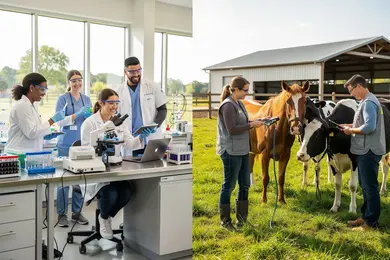
- Whether labs, fieldwork, practicums, or internships are required in addition to online courses.
- If students can complete hands-on experiences near home through approved farms, clinics, shelters, or animal facilities.
- How placement approval works and whether the school helps students find suitable sites.
- Any travel, weekend, or short campus visit expectations tied to animal handling or lab courses.
- What health, safety, vaccination, background check, or liability requirements may apply before field experiences.
- Whether current animal-related employment can count toward experiential learning requirements.
Reviewing these details early helps students choose an open enrollment program that fits not only their schedule, but also their location, work obligations, and career goals in animal science.
What Are the Admission Requirements for an Online Animal Science Bachelor's Degree With Open Enrollment?
Online animal science bachelor's degree programs with open enrollment offer more flexible admission requirements than traditional selective programs. Nationwide, about 60% of online degree options incorporate some form of open or nonrestrictive admissions, allowing a wider range of students to apply.
The following are typical elements applicants can expect when seeking admission.
- Proof of Prior Education: Most programs require evidence of completing secondary education, such as a high school diploma or an equivalent credential, to ensure foundational readiness for college-level work.
- Basic Application Materials: Candidates usually submit essential personal and educational information without needing extensive essays or standardized test scores, streamlining the process.
- Identity Verification: Legitimate documentation is necessary to confirm the applicant's identity and uphold academic honesty throughout the remote learning experience.
- Readiness for Online Learning: Students may be assessed to confirm their ability to successfully engage in virtual classrooms, highlighting skills like self-motivation and technical competence.
These admission criteria maintain academic quality while promoting inclusivity for students managing diverse responsibilities. One current student enrolled in an online animal science program shared that navigating the admission was straightforward but required some preparation.
He explained, "I worried at first about proving I could handle online coursework, but the readiness assessment helped me understand what tools I needed." He also appreciated that he did not have to submit lengthy essays, noting, "It felt like the focus was on making sure I was prepared, not just on paperwork." This approach allowed him to balance family commitments and pursue his degree with confidence.
Which Online Animal Science Bachelor's Degree Programs Have Open Enrollment?
Open enrollment options are increasingly common across various academic disciplines to expand accessibility for diverse learners, including working adults and those balancing family responsibilities. Currently, more than 40% of U.S. undergraduate students engage in some form of online education, underlining a significant shift toward flexible learning models.
These open enrollment pathways make it easier for many students to start or continue their studies without traditional admission barriers. Here are key areas within animal science bachelor's degrees that often provide this flexibility:
- Animal Biology and Physiology: These programs focus on understanding animal health and biological functions, offering essential knowledge for students interested in the science behind animal life.
- Animal Nutrition and Feed Management: Concentrated on dietary requirements and feed production systems, this specialization supports students planning careers in animal care or agricultural industries.
- Livestock Management: Covering sustainable farming, breeding, and day-to-day animal care, programs in this area often cater to those seeking practical skills for animal production fields.
- Wildlife and Conservation Biology: This field integrates ecological principles with habitat preservation, ideal for students passionate about environmental stewardship.
- Veterinary Technology Support: Designed for those pursuing careers in animal healthcare, these pathways include pre-veterinary coursework and technical training.
Flexible learners looking for fully online animal science bachelor's programs with open enrollment will find many options suited to their schedules. Additionally, individuals exploring online doctorate in nursing highlight the growing accessibility of online degrees across fields, reflecting a broader trend toward accommodating adult learners through similar enrollment structures.
How Do I Apply to an Online Animal Science Bachelor's Degree With Open Enrollment?
Applying for an online animal science bachelor's degree with open enrollment is generally designed to be simple and accessible for many students. The process often allows you to start whenever you're ready without facing strict deadlines.
Below is a typical sequence to follow when submitting your application:
- Create an Online Account: Begin by registering on the college's admissions platform. This account will be your main place for submitting materials and tracking your progress.
- Complete the Application Form: Fill out the required information, including your personal data and academic history. These forms are usually straightforward to accommodate diverse applicants.
- Submit Required Documents: Provide your high school diploma or GED, any college transcripts, and test scores if needed. Some programs might also ask for proof of identification or residency.
- Confirm Enrollment Details: Review your chosen program, tuition fees, and start dates. You may also be asked to complete orientation or technical readiness steps for online learning.
- Receive Follow-up Instructions: After submission, you'll get details about acceptance, course registration, and contact info for academic support to help ease your transition.
When discussing how to apply, a graduate from an online animal science bachelor's program recalled feeling initially overwhelmed by balancing work and school commitments. She appreciated how the flexible application timeline removed pressure, allowing her to take each step methodically.
"The orientation helped me get comfortable with the online system," she said. "Communication was clear, and having an advisor readily available made the process feel less daunting." Her experience highlights how these programs can accommodate busy adults pursuing their career goals in animal science efficiently.
Can I Start an Online Animal Science Bachelor's Degree at Any Time?
Many online animal science bachelor's degree programs with open enrollment provide flexible start dates, allowing students to begin their studies several times throughout the year. Around 70% of such programs offer multiple enrollment periods annually, which helps accommodate learners balancing education with other commitments.
However, the exact availability of these start times can differ based on the program's design and requirements.
Key factors to consider when determining if you can start an animal science degree at any time include:
- Continuous Enrollment: Certain programs permit students to register and begin courses immediately without waiting for a traditional semester, while others require enrollment only during designated periods.
- Multiple Start Dates: Many schools provide quarterly or monthly options, greatly increasing chances to start without delay and maintain academic momentum.
- Program Pacing: Self-paced or accelerated formats offer flexibility, enabling students to advance through coursework according to their own schedules and learning speeds.
- Processing Time: Even with open enrollment, application reviews and registration formalities may take several days or weeks before full course access is granted.
- Course Availability: Some core classes may be scheduled only in certain terms, which could affect when you are able to begin specific program requirements.
Is It Easier to Get Into an Online Animal Science Bachelor's Degree With Open Enrollment?
Online animal science bachelor's degree programs with open enrollment reduce many traditional admission barriers, making higher education more accessible to a broader range of students. These programs often eliminate strict GPA requirements, standardized test scores, and competitive selection processes.
This approach suits nontraditional learners, working adults, and those returning to school after a break. According to the National Center for Education Statistics, about 30% of undergraduate students attend schools with nonselective admissions, highlighting a significant trend toward inclusive access in higher education.
Although open enrollment simplifies entry, students must still meet basic college readiness criteria to enroll. This usually means having a high school diploma or an equivalent credential and completing an application that may include submitting transcripts or other documentation.
Some programs may offer orientation or placement assessments to ensure students are prepared for college-level work. While it is easier to gain admission, academic rigor remains, and students must maintain commitment to fulfill program requirements and graduate successfully.
How Much Does an Online Animal Science Bachelor's Degree With Open Enrollment Cost?
Costs for an online animal science bachelor degree with open enrollment vary widely depending on program design and institutional policies. On average, tuition for online bachelor's degree programs in the U.S. ranges from $15,000 to $20,000 per year.
Total program costs depend on multiple factors beyond tuition, including fees tied to technology and materials. Below are key cost components to consider when evaluating the cost of animal science degree programs online.
- Tuition Per Credit: Most programs charge between $300 and $600 per credit hour, which can significantly affect overall costs given that a bachelor's degree typically requires around 120 credits. Tuition is often the largest expense and varies between public and private institutions.
- Technology Fees: Online learning fees support digital platforms, software, and tech support essential for remote study. These fees commonly range from several hundred to over a thousand dollars annually.
- Course Materials: Textbooks, specialized software, and supplies add to expenses each semester. While many materials are moving to digital formats, students should still budget for these recurring costs.
- Administrative Charges: Registration, student services, and graduation fees represent smaller but notable expenses. Some programs might have additional fees related specifically to open enrollment or credit validation for prior learning.
Prospective students seeking flexible pathways may also explore other fields through resources such as health information management online programs, which can offer comparable online learning options and cost structures.
Are There Disadvantages to Open Enrollment Online Animal Science Bachelor's Degrees?
Open enrollment in online animal science bachelor's degree programs broadens access for many students, including nontraditional learners. However, this flexibility can also introduce challenges, as retention rates for fully online undergraduate programs remain relatively low at around 59%.
These limitations are important to understand before enrolling.
Potential disadvantages related to open enrollment challenges in online animal science bachelor programs include:
- Less Selective Admissions: The open enrollment model often means admitting students with varied academic backgrounds and preparedness. This diversity can make it difficult for instructors to address every learner's needs effectively.
- Limited Cohort Interaction: Students may face fewer opportunities for peer collaboration and networking, which are crucial in fields like animal science that benefit from shared experiences and practical learning.
- High Self-Discipline Requirements: Flexible admission animal science degrees demand strong time management and independent study skills, as students receive less regular in-person support and guidance.
- Restricted Access to Resources: Essential hands-on resources such as labs or fieldwork can be scarce or require extra arrangements, potentially limiting practical experience acquisition.
Students seeking flexibility might consider combining these programs with targeted support systems or preparing to develop robust self-motivation skills. Additionally, those exploring further education could look into options like a fast online master's in healthcare management for career advancement after completing a bachelor's degree.
How Do I Manage Time in an Open Enrollment Online Animal Science Bachelor's Degree?
Success in flexible, self-directed online animal science bachelor's degree programs relies heavily on managing time efficiently. Research from the National Center for Education Statistics highlights that 75% of online learners who consistently follow a study routine finish their courses successfully.
Implementing structured habits can greatly improve outcomes in this learning environment.
Try these approaches to enhance your time management skills:
- Consistent Study Schedule: Allocate fixed hours each week for coursework to build a reliable routine. This turns studying into a regular responsibility rather than an occasional task.
- Task Prioritization: Tackle assignments by urgency and difficulty, focusing on high-priority projects first to avoid last-minute stress and improve quality.
- Minimize Distractions: Choose a quiet, dedicated study area away from interruptions like social media, TV, or household noise to maintain focus.
- Progress Tracking: Use planners or digital apps to keep an eye on completed work and upcoming deadlines, helping you stay on track toward degree completion.
What Graduates Say About Online Animal Science Bachelor's Degree Programs With Open Enrollment
- Ryker: "Choosing an online animal science bachelor's degree with open enrollment was a game-changer for me because of the flexibility it offered alongside my full-time job. I appreciated how the program allowed me to start right away without worrying about admission deadlines, but balancing coursework and work commitments was definitely challenging. Earning my degree has since opened doors for me in the veterinary field that I never thought possible."
- Eden: "The decision to enroll in an online animal science bachelor's program with open enrollment came from my desire to study a subject I love without disrupting my family life. While the open enrollment meant fewer barriers to getting started, it also required a lot of self-motivation to stay on track with my studies. Ultimately, this degree has enhanced my expertise and credibility as a wildlife conservationist, making a real impact on my career."
- Benjamin: "Pursuing an animal science bachelor's online with open enrollment was a strategic move to quickly advance in agricultural research. The open enrollment process saved me months of waiting, but it demanded discipline to manage the independent learning format and complex scientific topics. Now, as a research analyst, I rely daily on the knowledge I gained, which has been invaluable for my professional growth."
Other Things You Should Know About Animal Science Degrees
A 2027 online animal science bachelor's degree program with open enrollment usually includes courses in animal biology, nutrition, genetics, and welfare. The curriculum might also cover topics in veterinary science, livestock management, and environmental sustainability. Electives may be available to tailor the program to specific interests like zoology or equine science.
While core theoretical content is delivered online, practical components such as lab work or hands-on animal experience are often arranged through partnerships with local farms, veterinary clinics, or research facilities. Some schools offer short on-campus residencies or virtual labs to help meet these requirements.
Yes, degrees earned through accredited online programs, even those with open enrollment, are typically recognized by employers and professional bodies within agriculture and animal care industries. Accreditation status and curriculum quality are key factors in employer acceptance, so students should verify these before enrolling.
References
- Can I Study Animal Science Courses Online? https://www.stonebridge.uk.com/blog/veterinary/animal-science-courses-online-or/
- Animal Biology https://apply.universityadmission.eu/courses/course/10968-bsc-hons-animal-biology
- Animal Scientists Respond To Yahoo’s “College Majors That Are Useless” https://www.beefmagazine.com/farm-business-management/animal-scientists-respond-to-yahoo-s-college-majors-that-are-useless-
- Animal and veterinary science | Production option (B.S.A.V.S.) | University of Idaho https://www.uidaho.edu/academics/degree-finder/animal-vet-science-production-bsavs
- Jordan College of Agricultural Sciences and Technology https://jcast.fresnostate.edu/asae/degrees-and-programs/index.html
- Online Training Modules for AZA's Animal Program Participants https://www.aza.org/online-training-modules
- Opportunities for Learning about Animal Welfare from Online Courses to Graduate Degrees https://www.academia.edu/104406604/Opportunities_for_Learning_about_Animal_Welfare_from_Online_Courses_to_Graduate_Degrees
- animal science https://talk.collegeconfidential.com/t/animal-science/135284
- Online Option for Animal Science Degrees - Peterson's https://www.petersons.com/blog/online-option-for-animal-science-degrees/
- Free Online Courses — Certificate & Lifetime Access | Elevify https://www.elevify.com/en-sl/courses/health-and-medicine/veterinary/animal-science-course-9bd20