2027 Self-Paced Online Animal Science Bachelor's Degree Programs

Co-Founder and Chief Data Scientist
Many working professionals with unrelated degrees face challenges balancing career demands while pursuing an animal science bachelor's degree. Traditional programs often lack flexibility, leading to high dropout rates. Self-paced online animal science programs offer a solution by allowing learners to set their own study schedules. According to recent data, 68% of students enrolled in self-paced online animal science programs reported improved time management and academic persistence compared to fixed-schedule courses.
This article explores the benefits, challenges, and key features of these programs, offering guidance to help prospective students select the best path for a successful career transition into animal science.
Key Benefits of Self-Paced Online Animal Science Bachelor's Degree Programs
- Self-paced online animal science programs allow working professionals to balance study with career and personal commitments, promoting continuous education without disrupting employment.
- These programs enable accelerated learning through competency-based models-students can master topics quickly, reducing overall time to degree completion.
- Cost-effective pathways often include transfer credits and prior learning assessments, lowering tuition expenses while securing an accredited bachelor's credential essential for career advancement.
What Are Self-Paced Online Animal Science Bachelor's Degree Programs, and How Do They Differ From Traditional Online Formats?
Self-paced online animal science bachelor's degree programs offer unmatched flexibility by letting students advance through coursework at their own pace rather than adhering to fixed calendars or group schedules. This approach contrasts with cohort-based or scheduled asynchronous courses where learners follow uniform deadlines and engage in time-bound virtual classes. Typically, self-paced programs feature open enrollment and milestone-based progression, allowing students to complete specific competencies or modules before moving forward.
The focus on competency-based animal science degrees online means students demonstrate mastery of subjects rather than merely logging classroom hours. This allows learners to accelerate through familiar material while dedicating more time to challenging topics. Such programs often incorporate transfer credit policies and prior learning assessments, making it easier for working professionals and returning students to customize their educational journey without repeating known material.
Key differences between self-paced and traditional online formats include:
- Time Management Freedom: Students decide when and how much to study, ideal for those juggling work and family responsibilities but requiring strong self-discipline.
- Faculty Interaction: Instructor contact tends to be consultative and less frequent compared to scheduled virtual classes commonly found in traditional programs.
- Student Accountability: Without fixed deadlines, learners must stay motivated and meet graduation requirements independently.
- Enrollment Flexibility: Open enrollment means students can start courses anytime rather than waiting for semester start dates.
This model suits non-traditional students and career advancers seeking convenience, supported by financial aid eligibility and institutional policies designed to enhance accessibility. For those interested in certifications with similar self-directed approaches, programs like medical coding and billing certification offer comparable flexibility alongside recognized credentials.
Which Accredited Institutions Offer Self-Paced Online Animal Science Bachelor's Degree Programs?
Several regionally accredited institutions offer self-paced online animal science bachelor's degree programs, designed to meet the needs of students seeking flexible learning schedules. These programs commonly use a competency-based education model, allowing learners to advance by demonstrating mastery instead of following traditional semester deadlines. This approach supports working professionals, non-traditional students, and first-time college enrollees interested in accelerating their studies while balancing other commitments.
- University of Wisconsin Flexible Option: Regionally accredited by the Higher Learning Commission (HLC), this program uses a subscription-based tuition model where students pay per 6-week term rather than per credit hour. It fosters competency-based pathways that enable many students to complete the degree within 18 months, depending on prior knowledge and dedication.
- Colorado State University Global: Also accredited by the HLC, CSU Global offers a self-paced animal science bachelor's with flat-rate tuition billed every 6-week session. The program's generous transfer credit and prior learning assessment policies help reduce time to degree completion, often taking about 24 months for motivated students seeking top universities offering online animal science bachelor's programs.
- Western Governors University: Accredited by the Northwest Commission on Colleges and Universities (NWCCU), WGU's fully competency-based model charges tuition monthly to encourage steady, accelerated progress. Students work at their own pace, frequently finishing within two to three years, depending on experience and study availability.
- Southern New Hampshire University: SNHU holds regional accreditation from the New England Commission of Higher Education (NECHE) and delivers a flexible, asynchronous online animal science degree. Tuition is charged per credit hour, with transfer credits and prior learning opportunities helping cut costs and shorten completion times-typically ranging from 2 to 4 years.
- Capella University: Accredited by the Higher Learning Commission, Capella's FlexPath program offers a competency-based, self-paced animal science bachelor's degree. With a flat tuition rate per six-month term, students can complete their studies in 18 to 24 months. The program includes financial aid options and credit transfer opportunities to enhance affordability and flexibility.
Prospective students researching self-paced accredited online animal science bachelor's degrees should also explore related areas such as nursing schools that dont require teas for additional flexible education pathways. Understanding tuition models, transfer policies, and accreditation is key to making informed decisions about advancing a career through education.
2026 Update: Checking Hands-On Learning Requirements Before Enrolling
This 2026 update adds a closer look at how self-paced online animal science programs handle practical training, since many courses still require applied work beyond recorded lectures and exams.
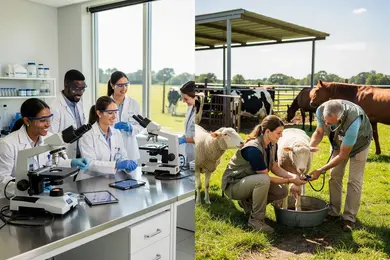
- Whether lab courses are fully online, kit-based, simulation-based, or require campus visits.
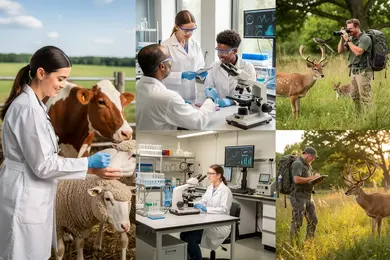
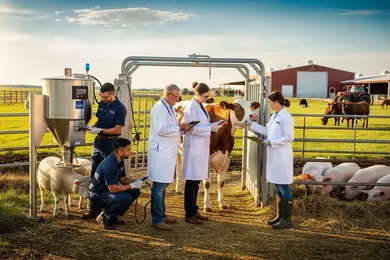
- If animal handling, livestock management, or veterinary-related activities must be completed at an approved local site.
- How students document hands-on work, such as supervisor forms, videos, portfolios, or skill checklists.
- Whether internships, practicums, or field experiences can be arranged near your home or workplace.
- Any safety, vaccination, background check, or liability insurance requirements before fieldwork begins.
- How flexible deadlines are for completing labs or site-based assignments in a self-paced format.
Reviewing these details helps students avoid surprises and choose a program that fits both their schedule and their access to animal care or agricultural settings.
How Long Does It Take to Complete a Self-Paced Online Animal Science Bachelor's Degree?
Completion times for self-paced online animal science bachelor's degrees can range from under two years to six years or more, depending on critical factors unique to each student's situation. Accelerated finishes often hinge on prior college credits or transfer coursework, which allow learners to skip foundational classes and dive straight into advanced material. The number of hours dedicated weekly also plays a major role; students engaging full-time-typically 30+ hours per week-can move through requirements faster compared to part-time learners balancing other commitments.
- Prior Credits and Transfer Coursework: Accepting previously earned credits, many programs reduce course loads, enabling quicker progression by focusing on animal science-specific classes.
- Weekly Time Commitment: Higher weekly study hours correlate with faster completion, while students with jobs or families often need extended timelines.
- Prior Learning Assessments: Earning credit through evaluations of relevant experience helps shorten the degree path by acknowledging existing knowledge and skills.
- Competency-Based Models: These allow learners to advance upon mastering skills rather than waiting for semester completion, benefiting self-motivated students who can demonstrate proficiency.
- National Benchmarks: According to NCES, the average bachelor's takes 4.5 to 6 years part-time, with full-time students finishing sooner; self-paced programs offer opportunities to improve upon this.
- Realistic Scheduling: Assessing personal obligations and creating manageable study plans are vital to maintain steady progress and avoid burnout.
- Support Resources: Academic advising, tutoring, and virtual communities provide essential guidance and encouragement throughout the learning journey.
A professional who enrolled in a self-paced online animal science bachelor's program shared that balancing work and family required deliberate weekly planning and occasional adjustments to avoid feeling overwhelmed. He described the flexibility as "a double-edged sword"-offering freedom to move at his own pace but demanding high self-discipline. Prior work experience translated into credit through assessments, significantly alleviating his course load. While challenging to stay consistently motivated, access to an online support network and regular check-ins with advisors helped him maintain momentum, noting that "the non-linear path was frustrating at times, but ultimately rewarding as I saw progress in chunks rather than semesters."
What Are the Admission Requirements for Self-Paced Online Animal Science Bachelor's Degree Programs?
Educational Credentials: Applicants typically need a high school diploma or GED equivalent to enroll in self-paced online animal science bachelor's degree programs. This fundamental requirement ensures readiness for college-level study and aligns with most transfer credit policies for online animal science degrees.
GPA Requirements: Many programs ask for a minimum GPA-commonly between 2.0 and 2.5 on a 4.0 scale-to show sufficient academic capability. However, flexible self-paced options often waive strict GPA thresholds, especially those with open-enrollment policies aimed at returning or non-traditional students.
Prerequisite Coursework: Some universities require foundational courses in biology, chemistry, or math before granting full admission. These prerequisites can frequently be fulfilled through transfer credits or placement exams to ensure a smooth transition into advanced animal science topics.
Admission Flexibility: Rolling admissions and open-enrollment models reduce entry barriers, letting students start their studies promptly. Selective programs usually enforce more rigorous admission standards and offer enhanced academic support like personalized advising, while open-access options demand greater self-direction from students.
Strengthening Applications: Candidates who fall short of minimum criteria can bolster their application by completing community college courses or obtaining relevant certifications. Demonstrated work experience-especially in agriculture or animal care-also serves as a strong asset.
Financial Considerations: Understanding transfer credit policies for online animal science degrees and exploring financial aid options is vital. Prospective students interested in affordability might also review resources on cheapest online dnp programs as comparative examples in online degree cost structures.
How Much Does a Self-Paced Online Animal Science Bachelor's Degree Cost, and What Affects Tuition?
Tuition for self-paced online animal science bachelor's degrees varies considerably based on the institution and payment structure. Programs often use per-credit fees, typically ranging from $200 to $600 or more, influenced by public versus private status and residency. Alternatively, some schools offer flat-rate subscription plans charging monthly fees between $1,500 and $3,000, enabling unlimited course enrollment during the payment period-advantageous for accelerated learners. Bundled fee arrangements combine tuition with services such as tech support and exam costs into one upfront payment, simplifying billing but sometimes raising initial expenses.
- Per-Credit Tuition: Charges depend on completed credits, making it economical for students taking fewer courses but potentially costlier for full loads.
- Flat-Rate Subscription: A fixed monthly price covers unlimited classes, benefiting students aiming to finish faster but possibly leading to higher total costs with slower pacing.
- Bundled Fees: Combines tuition, materials, and testing fees in a single payment, easing financial planning though sometimes increasing upfront costs.
- Hidden Costs: Additional charges for technology access, proctoring services, textbooks, and specialized software can add hundreds of dollars to the overall expense.
- Cost Versus Pace: The lowest upfront tuition isn't always cheapest overall-faster learners save money with subscription models, while slower students might pay more over time.
Reflecting on her experience, a professional who completed a self-paced online animal science degree shared that balancing coursework with work and family obligations was challenging but rewarding. She explained, "The flexibility allowed me to move at my own speed, which meant sometimes paying more monthly when life got hectic, but I could intensify study periods to graduate sooner." She also noted the importance of investigating all potential fees upfront to avoid surprises. Overall, her journey underscored that understanding how tuition models align with personal pace and finances is essential for maximizing both academic success and value.
What Financial Aid Options Are Available for Self-Paced Online Animal Science Bachelor's Programs?
Financial assistance for students in self-paced online animal science bachelor's programs comes from various federal, state, and institutional sources. Many competency-based education (CBE) programs rely on credit-hour equivalents to qualify for federal aid, making FAFSA eligibility contingent on how these equivalencies are established. According to the College Board's Trends in Student Aid report, roughly 85% of undergraduates receive some form of federal or state aid, though the timing of these funds may vary for online learners with flexible schedules.
Federal support, such as Pell Grants and Direct Loans, can be accessible if the program participates in Title IV funding; students should verify this with their institution. Additionally, some states provide grants or tuition assistance aimed specifically at online or career-focused study, which can benefit animal science majors. Institutional financial aid offerings vary, often including merit-based scholarships and need-based grants exclusive to online or competency-based students.
Several professional associations connected to animal science-like the American Society of Animal Science or the National Cattlemen's Foundation-offer scholarships that reward academic achievement, leadership in agriculture, and dedication to the field. Due to the flexible pacing of these programs, financial aid disbursements may not follow traditional semester timelines, so prospective students are advised to consult their financial aid offices early.
- Federal Aid Eligibility: Access depends on the institution's recognition of credit-hour equivalencies in their self-paced programs and FAFSA completion; direct confirmation with the school is essential.
- State and Institutional Grants: Many states and colleges offer tuition waivers or scholarships for online learners, especially those in career-oriented disciplines like animal science.
- Professional Scholarships: Discipline-specific awards from industry groups supplement traditional aid by supporting students demonstrating leadership and strong academic records.
- Disbursement Schedules: Flexible program formats can alter when financial aid is released, making early communication with aid offices critical for effective budgeting.
- Growing Federal Support: Federal aid for online degree programs has increased by 12% recently, highlighting expanding recognition of flexible education for adult and nontraditional students.
How Do Competency-Based Education (CBE) Models Work in Self-Paced Online Animal Science Programs?
Competency-based education (CBE) in self-paced online animal science bachelor's degree programs allows students to advance by demonstrating mastery of specific skills and knowledge rather than accumulating fixed seat time. This approach uses assessments such as projects, exams, or practical tasks to verify competency, replacing traditional credit-hour tracking. For financial aid eligibility, programs translate these competencies into credit-hour equivalents, ensuring students qualify for federal aid. Two primary CBE frameworks exist: direct assessment programs that measure progress solely through learning outcomes without relying on credit hours, and credit-hour-equivalent CBE programs that align competencies with established credit metrics.
Leading examples include Western Governors University and Southern New Hampshire University, which employ a blend of timed exams, applied projects, and faculty mentorship to assess mastery. These institutions provide personalized support through mentors or success coaches who guide students through their self-paced curricula. Both maintain strong employer recognition due to their accreditation and industry-informed content.
The CBE model demands a high level of self-discipline and time management, making it essential for learners to evaluate whether this independent, flexible approach suits their study habits. According to the National Center for Education Statistics, enrollment in flexibly paced online bachelor's programs has increased by over 15% in five years, reflecting growing demand among adult learners for competency-based options.
- Mastery Over Time: Students progress by demonstrating knowledge through assessments rather than merely logging classroom hours, enabling faster degree completion for prepared learners.
- Assessment Methods: Programs use project submissions, exams, and practical tasks tailored to animal science competencies to confirm student mastery.
- Credit Equivalency: Demonstrated competencies are converted into credit hours to meet federal financial aid requirements.
- Faculty and Support: Mentors and success coaches offer personalized guidance within self-paced learning environments.
- Student Suitability: Prospective students should assess their self-motivation and time management skills to thrive in the independent CBE setting.
What Accreditation Should a Self-Paced Online Animal Science Bachelor's Program Hold?
Accreditation heavily influences the value of a self-paced online animal science bachelor's degree program. Regional accreditation holds more prestige and acceptance among employers and graduate schools than national accreditation. The U.S. Department of Education recognizes six regional accrediting bodies: the Middle States Commission on Higher Education (MSCHE), New England Commission of Higher Education (NECHE), Higher Learning Commission (HLC), Northwest Commission on Colleges and Universities (NWCCU), Southern Association of Colleges and Schools Commission on Colleges (SACSCOC), and Western Association of Schools and Colleges (WASC). These regional accreditors oversee well-established institutions with rigorous academic standards.
Most self-paced online animal science bachelor's degree programs aim for regional accreditation, but some may also hold programmatic accreditation in agricultural or biological sciences, which adds an extra layer of credibility. National accreditation is commonly linked to vocational or for-profit schools and may cause issues such as poor credit transferability and diminished career advancement opportunities. This is particularly concerning in fields like animal science that require recognized academic credentials for licensure and professional growth.
Before enrolling, prospective students should confirm accreditation status using reliable resources like the U.S. Department of Education's accreditation database or the Council for Higher Education Accreditation's (CHEA) directory. Doing so ensures their investment supports career and educational goals. Professionals exploring flexible continuing education might also consider programs offering nutrition masters online as complementary fields.
- Regional vs. National Accreditation: Regional accreditation is more prestigious and widely accepted, enhancing employment and graduate study prospects compared to national accreditation.
- Recognized Regional Accreditors: Six regional bodies exist-MSCHE, NECHE, HLC, NWCCU, SACSCOC, and WASC-which oversee credible postsecondary institutions.
- Programmatic Accreditation: Some programs may also have specialized accreditation in agricultural sciences, adding credibility but less common in self-paced online formats.
- Risks of Lower Accreditation: Nationally accredited or unaccredited programs often struggle with credit transfers and may limit career growth, especially in scientific fields.
- Verification Resources: Use the U.S. Department of Education's database and CHEA's directory to confirm a program's accreditation before enrollment.
- Impact on Career and Education: Proper accreditation supports eligibility for licensure, graduate programs, and employer recognition, vital for advancing in animal science careers.
How Many Transfer Credits Can Be Applied Toward a Self-Paced Online Animal Science Bachelor's Degree?
Self-paced online animal science bachelor's degree programs maintain varied transfer credit policies that directly influence your path to graduation. Evaluations typically consider accreditation of the sending institution, comparability of coursework, and grades earned to ensure academic integrity. When seeking programs, focus on those with generous transfer credit allowances, especially those accepting up to 90 credits-the maximum transferable credits toward an online animal science bachelor's program. This flexibility can significantly reduce both time and cost to degree completion.
Many institutions incorporate military training credits through the American Council on Education (ACE) recommendations, giving veteran students a beneficial edge. Community college articulation agreements are another vital factor-these formal partnerships streamline transfers by guaranteeing course equivalencies, easing your transition between schools. Consult institutional transfer credit pages or articulation databases to identify schools with these agreements.
Requesting a formal transfer credit evaluation prior to enrollment is essential. Knowing exactly which credits transfer allows clearer understanding of your remaining coursework and overall financial investment. It also helps identify any prerequisite classes you may need. For working professionals exploring rapid credential advancement, some may also consider a 12-month fnp program online, illustrating how accelerated options exist across disciplines.
- Transfer Credit Limits: Many programs accept up to 90 transfer credits, shortening degree completion time.
- Military Credit Recognition: ACE recommendations allow crediting military training, benefiting veterans in the animal science field.
- Articulation Agreements: Partnerships with community colleges expedite credit transfer with guaranteed course equivalencies.
- Credit Evaluation: Prospective students should request an official evaluation to clarify transferability and remaining credit requirements.
- Course Compatibility: Transfer acceptance depends on matching coursework, accreditation, and grades to maintain academic standards.
Can Students Earn Credit Through Prior Learning Assessment in Self-Paced Online Animal Science Programs?
Prior Learning Assessment (PLA) enables self-paced animal science students to convert relevant work experience, military training, certifications, and independent study into academic credit. Common PLA methods include portfolio reviews-where students submit documented evidence of skills and knowledge-challenge exams that test subject proficiency, and standardized tests such as CLEP and DSST that align with animal science curricula.
Institutions like Thomas Edison State University and University of Wisconsin-Platteville offer some of the most accommodating PLA policies for affordable self-paced animal science programs. These schools typically permit students to apply between 30 and 60 credits through PLA, balancing credit transfer with essential core course completion. Submission processes generally require detailed portfolios or official test documentation.
The American Council on Education's recommendation system is vital for military personnel and working professionals, validating training for credit that fits into animal science degree programs. To maximize credit acceptance, students should carefully organize portfolios including narratives, employer verifications, certificates, and training transcripts, while consulting academic advisors prior to submission.
Current data indicate approximately 60% of adult online learners use PLA to accelerate their degrees, underscoring increasing acceptance of experiential learning in higher education.
- Portfolio Review: Involves compiling work samples, certifications, and letters that provide evidence of prior learning for faculty evaluation, particularly useful for subjective assessments.
- Challenge Exams: Allow students to demonstrate mastery in specific animal science topics and bypass related coursework.
- Standardized Tests: CLEP and DSST exams offer cost-effective credit options accepted by many programs tailored to animal science.
- ACE Credit Recommendations: Support translating military and professional training into academic credits relevant to degree requirements.
- Credit Limits and Policies: Most programs cap PLA credits between 30 and 60, ensuring a balance between prior learning recognition and core academic requirements.
What Concentrations or Specializations Are Available in Self-Paced Online Animal Science Bachelor's Programs?
Animal Nutrition: This focus area covers the nutritional needs and feeding strategies for livestock and pets, preparing graduates for roles such as animal nutritionists or feed specialists. Median salaries typically hover around $63,000. Some positions may necessitate certifications or completion of extra internships to meet industry standards.
Livestock Management: Concentrating on breeding, care, and production operations of farm animals, this track readies students for careers like farm managers or production supervisors. Median earnings are near $68,000. Although formal licensure is often not required, hands-on experience through internships is highly beneficial.
Animal Behavior and Welfare: This specialization explores psychological and ethical aspects of animal care, leading to work as behaviorists or welfare experts with median salaries around $55,000. Professional certification in behavior analysis or welfare enhances employability prospects.
Equine Science: Students focusing on horse biology, training, and management can pursue careers as equine trainers or managers, earning about $53,000 annually. Due to mandatory practical experience or certification courses, program completion may take longer.
Wildlife and Conservation Biology: Emphasizing wild species and habitat preservation, this track supports jobs such as wildlife biologists or conservation scientists, earning median salaries close to $66,000. Certain roles may require licensure and specified fieldwork hours beyond degree requirements.
Selecting a concentration affects degree duration since some require more hands-on training or certifications, potentially extending study time. Balancing one's interests with labor market demand and program flexibility is crucial for maximizing both career prospects and academic efficiency.
What Graduates Say About Self-Paced Online Animal Science Bachelor's Degree Programs
- Reece: "Choosing a self-paced online animal science bachelor's degree was essential for me because I needed the flexibility to continue working while studying. The program's affordability made it accessible without burdening me with excessive debt. Since graduating, I've been able to advance in my veterinary technician career more confidently and with a stronger scientific foundation."
- Riley: "I opted for the self-paced format because it allowed me to tailor my learning around my unconventional work hours on a farm. The cost savings compared to traditional degrees were a huge relief and let me invest in other career-building tools. This degree truly opened doors for me, leading to a rewarding position as an animal nutrition consultant."
- Benjamin: "Professionally, the structured yet self-directed nature of the online animal science degree helped me develop discipline and in-depth knowledge at my own pace. I was initially drawn by the program's reasonable tuition, making it a smart investment in my future. Now, I'm in a managerial role at a major animal research facility, fully confident that my education prepared me well."
Other Things You Should Know About Animal Science Degrees
Self-paced online animal Science bachelor's programs typically rely on advanced learning management systems (LMS) such as Canvas, Blackboard, or Moodle. These platforms facilitate access to multimedia lectures, interactive assignments, discussion boards, and assessments that students can complete on their schedule. Many programs also incorporate video conferencing tools for virtual labs or faculty office hours to enhance engagement despite the flexible pacing.
These programs offer flexible scheduling that allows students to study around work and family commitments. Many institutions provide resources such as academic advising tailored for adult learners, career counseling, and technical support to ensure accessibility. Additionally, credit transfer policies and prior learning assessments help accelerate degree completion for those with existing knowledge or experience in the field.
In 2027, enrolling in a self-paced online Animal Science Bachelor's Degree offers flexible scheduling, allowing students to manage studies alongside work or other commitments. It provides access to diverse digital resources and learning tools, enabling tailored study experiences. Online programs cater to various learning paces, promoting better comprehension and retention tailored to individual needs.
References
- A Comprehensive Guide to Competency-based Education https://www.edalex.com/guides/comprehensive-guide-to-competency-based-education/
- Online Option for Animal Science Degrees - Peterson's https://www.petersons.com/blog/online-option-for-animal-science-degrees/
- Can I Study Animal Science Courses Online? https://www.stonebridge.uk.com/blog/veterinary/animal-science-courses-online-or/
- Bachelor of Animal Science – BAnSci https://www.massey.ac.nz/study/all-qualifications-and-degrees/bachelor-of-animal-science-UBANS/
- Tuition - Animal Behavior Institute https://www.animaledu.com/tuition/
- Accreditation https://www.asas.org/services/accreditation.details
- Self-Paced Learning: What to Expect From a CBE Program https://www.umassglobal.edu/blog-news/self-paced-learning-expect-a-cbe-program
- Animal Science Bachelor Degree https://stage-old-tsugi.currikistudio.org/fulldisplay/79noa8/0FE014/AnimalScienceBachelorDegree.pdf
- Competency-Based Veterinary Education - AAVMC https://www.aavmc.org/resources/competency-based-veterinary-education/
- Warsaw University of Life Sciences - Study fees https://www.sggw.edu.pl/en/studies/study-fees/