
2027 Best Online Adult-Gerontology ACNP Graduate Certificate Programs

Co-Founder and Chief Data Scientist
The best online adult-gerontology ACNP graduate certificate programs prepare experienced nurses to advance into specialized roles caring for acutely ill adults and older adults. These post-graduate programs focus on advanced clinical skills—such as complex diagnostics, acute care pharmacology, and critical care management—while offering the flexibility of online learning. Designed for working RNs and nurse practitioners, they combine didactic coursework with supervised clinical practice, leading to eligibility for national AGACNP certification.
In this guide, we’ll highlight what sets the best online adult-gerontology ACNP graduate certificate programs apart, including accreditation, curriculum quality, clinical placement support, and career outcomes. By the end, you’ll know exactly how to compare programs, what prerequisites to expect, and how to choose the right option for your career goals.
What are the benefits of getting an online adult-gerontology ACNP graduate certificate?
- Graduates can work as adult-gerontology acute care nurse practitioners in settings like ICUs, step-down units, emergency departments, hospitalist teams, neurocritical care, cardiology, oncology acute care, palliative/complex chronic care, and telehealth. These advanced practice roles fill critical shortages in acute and geriatric care.
- Acute care NPs, including AGACNPs, typically earn between $120,000 and $145,000+ annually, with broader NP averages around $129,000 and some subspecialty/region premiums pushing higher. This represents a significant jump over RN compensation and reflects advanced responsibility.
- Nurse practitioner employment is projected to grow roughly 40–46% through the early 2030s, driven by aging populations, physician shortages, and expanding acute care needs—making the career path resilient and future-proof.
- Earning the certificate online lets working nurses continue full-time employment while completing required didactic coursework asynchronously, reduces relocation/commuting costs, and expands access to top programs regardless of geography. Many programs also help coordinate local clinical placements.
What can I expect from an online adult-gerontology ACNP graduate certificate program?
The online adult-gerontology acute care nurse practitioner (AGACNP) graduate certificate equips experienced nurses with advanced skills to manage critically ill adults and older adults. It focuses on acute care pathophysiology, pharmacology, diagnostic reasoning, and clinical management, paired with supervised practicum hours to build hands-on expertise. Candidates typically need a BSN or MSN, an active RN license, and prior acute care experience; some programs offer post-master’s bridge tracks. Online delivery lets working clinicians complete didactic coursework flexibly, while clinical placements are arranged locally with preceptors. Graduates become eligible for national AGACNP certification and move into high-demand roles in ICUs, hospitalist teams, emergency care, and complex chronic or palliative settings. The certificate is a targeted, faster route to specialization without committing to a full degree.
Where can I work with an online adult-gerontology ACNP graduate certificate?
Graduates of an online adult-gerontology ACNP graduate certificate most often work in acute care settings where complex adult and older adult patients require advanced assessment and management. Common employers include large health systems, tertiary-care hospitals, trauma centers, and academic medical centers. They staff intensive care units (medical, surgical, neuro, cardiac), step-down units, and emergency departments.
Many also join hospitalist teams or serve in specialty acute care roles like oncology, cardiopulmonary, and neurocritical care. These positions leverage their expertise in critical illness, multi-organ dysfunction, and complex chronic disease exacerbations.
Beyond traditional hospital floors, AGACNPs find roles in a variety of related sectors:
- Telehealth and virtual acute care services providing remote triage, follow-up, or specialist consultation.
- Post-acute and transitional care organizations managing complex discharges and readmission reduction.
- Palliative and symptom management teams in acute or inpatient hospice-adjacent care.
- Government and VA healthcare systems serving aging populations with acute needs.
- Clinical education and leadership positions training staff or overseeing quality improvement initiatives.
How much can I make with an online adult-gerontology ACNP graduate certificate?
Graduates with an online adult-gerontology ACNP certificate step into a strong salary market anchored by the broader nurse practitioner pay scale. The Bureau of Labor Statistics–based averages for NPs are around $128,000–$130,000 annually, with acute care NP roles typically paying between $120,000 and $130,000, and top performers or those in high-cost regions reaching $150,000+.
Specialized acute care settings—like ICU or trauma—can push compensation higher; for example, ICU nurse practitioners’ reported averages approach $172,000 in some aggregated data sources. Geographic location, employer type, and experience further widen the range, with states like California and Alaska often on the upper end.
Adult-gerontology–focused NPs earn comparably strong wages; gerontology NPs average roughly $128,000 annually, and experienced AGACNPs working inpatient or hospitalist acute care roles frequently exceed that, especially with shift premiums or critical care expertise.
Total compensation can also include bonuses, overtime, and differential pay, making effective annual earnings significantly higher than base salary alone. Even entry-level acute care NP roles offer a substantial premium over RN pay, making the certificate a fast track to both advanced clinical responsibility and upgraded financial return.
- Best Online Adult-Gerontology ACNP Graduate Certificate Programs for 2027 List of Programs
- How long does it take to complete an online adult-gerontology ACNP graduate certificate program? Completion Time
- How does an online adult-gerontology ACNP graduate certificate program compare to an on-campus program? How does an online adult-gerontology ACNP graduate certificate program compare to an on-campus program?
- What is the average cost of an online adult-gerontology ACNP graduate certificate program? Program Cost
- What are the financial aid options for students enrolling in an online adult-gerontology ACNP graduate certificate program? Financial Aid
- What are the prerequisites for enrolling in an online adult-gerontology ACNP graduate certificate program? Requirements
- What courses are typically in an online adult-gerontology ACNP graduate certificate program? What courses are typically in an online adult-gerontology ACNP graduate certificate program?
- What types of specializations are available in online adult-gerontology ACNP graduate certificate programs? What types of specializations are available in online adult-gerontology ACNP graduate certificate programs?
- How to choose the best online adult-gerontology ACNP graduate certificate program? How to choose the best online adult-gerontology ACNP graduate certificate program?
- What career paths are available for graduates of online adult-gerontology ACNP graduate certificate programs? Career Paths
- What is the job market for graduates with an online adult-gerontology ACNP graduate certificate? Job Outlook
- What emerging trends are shaping online adult-gerontology ACNP graduate certificate programs? What emerging trends are shaping online adult-gerontology ACNP graduate certificate programs?
- What challenges may I encounter in an online adult-gerontology ACNP graduate certificate program? What challenges may I encounter in an online adult-gerontology ACNP graduate certificate program?
Best Online Adult-Gerontology ACNP Graduate Certificate Programs for 2027
Choosing an online adult-gerontology acute care nurse practitioner graduate certificate is a high-stakes decision for experienced nurses. The right program can help you qualify for acute care practice with adults and older adults; the wrong fit can delay certification, increase costs, or create clinical placement problems. This guide is built for RNs, MSN-prepared nurses, APRNs, and nurse practitioners comparing post-graduate certificate options, especially those who need flexibility while continuing to work.
You will find a ranked program list, cost and timeline guidance, online versus campus comparisons, admission expectations, typical coursework, career paths, job market context, and practical questions to ask before enrolling. The goal is not just to name programs, but to help you identify which option is realistic for your credentials, schedule, budget, state licensure needs, and acute care career goals.
Quick answer: What is the best online adult-gerontology ACNP graduate certificate?
The best online adult-gerontology ACNP graduate certificate is usually a CCNE- or ACEN-accredited program that matches your prior nursing education, supports certification eligibility, provides clear clinical placement expectations, and fits your work schedule. For many applicants, the “best” program is not simply the highest-ranked school; it is the one that verifies eligibility in your state, offers the clinical experiences you need, and does not require unnecessary credits that increase cost and completion time.
How do we rank schools?
This ranking uses Research.com’s transparent ranking methodology and draws from established education data sources, including the Integrated Postsecondary Education Data System (IPEDS), Peterson's databases and Distance Learning Licensed Data Set, the College Scorecard, and the National Center for Education Statistics. We prioritize factors that matter to working nurses: accreditation, program format, required credits, completion time, tuition information, clinical expectations, and the usefulness of the credential for adult-gerontology acute care practice.
| Rank | School | Format | Best fit |
| 1 | George Washington University | Online, part-time | RN-prepared nurses seeking a structured post-master’s route into acute care practice |
| 2 | Duke University | Hybrid | MSN-prepared nurses who want simulation-intensive acute care training |
| 3 | Purdue University Global | Fully online with virtual skills labs | Master’s-prepared RNs seeking ANCC or AACN certification eligibility |
| 4 | University of Minnesota–Twin Cities | Hybrid online | APRNs with a master’s or DNP who can complete clinical hours in Twin Cities hospitals |
| 5 | University of Rochester | Hybrid | Nurses focused on adult-gerontology primary care rather than acute care |
1. George Washington University
George Washington University offers a part-time online Adult-Gerontology Acute Care NP certificate for RN-prepared nurses who want post-master’s preparation for acute care practice. The five-semester plan combines online coursework with a clinical practicum that students arrange in their own region. It is best suited to nurses with acute care experience who want deeper preparation in diagnostics, advanced pharmacology, complex patient management, and care of acutely ill adults and older adults.
- Program Length: 5 semesters (approximately 20 months)
- Program Cost: Total tuition is approximately $15,534 to $66,634.
- Required Credits to Graduate: 20 credit hours
- Accreditation: Commission on Collegiate Nursing Education (CCNE)
2. Duke University
Duke University delivers its Adult-Gerontology Acute Care NP Post-Graduate Certificate in a hybrid model, with most didactic content completed at a distance and required simulation or in-person learning experiences built into the program. The certificate is designed for MSN-prepared nurses who want to move into acute care specialization. Its strengths include advanced simulation, exposure to health equity concepts, and clinical networking opportunities.
- Program Length: 16 to 20 months
- Program Cost: $1,639 per credit
- Required Credits to Graduate: 25 credits minimum
- Accreditation: Commission on Collegiate Nursing Education (CCNE)
3. Purdue University Global
Purdue University Global offers a Post-Master’s AGAC-NP Certificate in a fully online format that includes virtual skills labs and VR simulation. The program is intended for master’s-prepared RNs who need coursework aligned with ANCC or AACN certification eligibility. Students study advanced assessment, pharmacology, critical care, and related clinical topics while completing locally arranged practicum requirements.
- Program Length: 18 months
- Program Cost: $420
- Required Credits to Graduate: 16 to 34 credit hours
- Accreditation: Commission on Collegiate Nursing Education (CCNE)
4. University of Minnesota–Twin Cities
University of Minnesota–Twin Cities provides a Post-Graduate Certificate in Adult-Gerontological Acute Care NP through a hybrid online structure for advanced practice nurses who already hold a master’s or DNP. The program may be completed in three semesters and includes 240–600 clinical hours in Twin Cities hospitals. It is a strong fit for nurses who want acute care certification preparation but can meet the program’s regional clinical requirements.
- Program Length: 1 year
- Program Cost: $1,172 per credit
- Required Credits to Graduate: 13-16 graduate credits
- Accreditation: Commission on Collegiate Nursing Education (CCNE)
5. University of Rochester
The University of Rochester offers an Adult-Gerontology Primary Care NP Advanced Certificate in a hybrid format. This option is different from an AGACNP certificate because it emphasizes adult and geriatric primary care rather than acute care practice. Students considering this program should confirm that its focus aligns with their certification and career goals before applying.
- Program Length: 4 semesters (part-time)
- Program Cost: $1,053.00 per credit
- Required Credits to Graduate: Minimum of 28 credits
- Accreditation: Commission on Collegiate Nursing Education (CCNE)
6. Rutgers University–New Brunswick
Rutgers University offers adult-gerontology acute care preparation within a graduate and doctoral pathway rather than a currently available standalone certificate option. For MSN-prepared nurses considering Rutgers, the key question is whether the DNP-based structure fits their timeline, cost expectations, and long-term leadership goals. The acute care track supports preparation for board certification and advanced clinical practice.
- Program Length: 5 semesters
- Program Cost: $747 to $1,166 per credit
- Required Credits to Graduate: Minimum of 19 credits
- Accreditation: Commission on Collegiate Nursing Education (CCNE)
7. University of Delaware
The University of Delaware offers an online AGACNP post-master’s certificate for advanced practice nurses who want to broaden their scope into acute care. Students complete online coursework, on-campus intensives, and precepted clinical experiences focused on adults and older adults with acute or complex conditions. Applicants should review whether they need an existing nurse practitioner certification and should verify all nursing accreditation and certification eligibility details before enrolling.
- Program Length: Four 10-week quarters per year
- Program Cost: $1,406 per credit
- Required Credits to Graduate: 29 credits
- Accreditation: Higher Learning Commission (HLC)
8. Stony Brook University
Stony Brook University offers a post-master’s Adult-Gerontology Acute Care Nurse Practitioner Advanced Certificate for nurses with graduate or doctoral preparation who want acute care specialization. The minimum requirement is 13 credits, with final coursework determined through advisement based on the student’s previous graduate study. The hybrid design includes distance learning, clinical requirements, and skills-based experiences that support preparation for state and national certification standards.
- Program Length: 2 semesters
- Program Cost: $1,068 per credit
- Required Credits to Graduate: 13 credit hours
- Accreditation: Commission on Collegiate Nursing Education (CCNE)
9. University of Missouri–Kansas City
University of Missouri offers a post-MSN Adult-Gerontology Nurse Practitioner certificate with preparation that may support primary or acute care certification depending on the selected path. The hybrid curriculum includes online courses, required campus-based clinical institutes, and local precepted clinical placements. It is designed for MSN-prepared practitioners who need a balance of online flexibility and structured hands-on learning.
- Program Length: 12 to 24 months
- Program Cost: Approximately $16,609.50
- Required Credits to Graduate: 18 credit hours
- Accreditation: Commission on Collegiate Nursing Education (CCNE)
10. Villanova University
Villanova University provides a post-master’s AGACNP certificate for practicing nurse practitioners who want additional acute care competencies. The hybrid structure combines asynchronous online coursework with required on-campus clinical lab experiences. Students study acute care theory, diagnostic reasoning, and evidence-based interventions for adult and older adult patients, with clinical placements often completed near the student’s location.
- Program Length: 20 months
- Program Cost: $1,037 per credit
- Required Credits to Graduate: Minimum of 22 credits
- Accreditation: The Commission on Collegiate Nursing Education (CCNE)
How long does it take to complete an online adult-gerontology ACNP graduate certificate program?
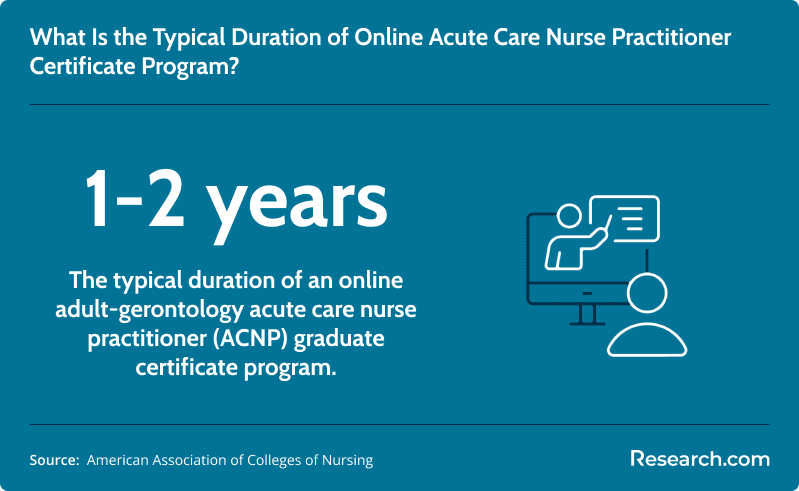
Most online adult-gerontology acute care nurse practitioner graduate certificate programs take 12 to 24 months. Your actual timeline depends on your prior graduate coursework, the number of required credits, clinical placement availability, enrollment pace, and whether the school requires campus intensives or prerequisite courses.
| Pathway | Typical duration | Course load | Best for |
| Full-time | 12 to 16 months | 2–3 courses per term, often 6–9 credits/term | Nurses who can reduce work hours or manage a heavier academic and clinical schedule |
| Part-time | 18 to 24 months | Usually 1 course per term, sometimes with a heavier clinical term | Working nurses who need more predictable pacing |
| Shortened post-master’s plan | Sometimes ~9–12 months full-time | Varies by waived courses and prior NP preparation | MSN-prepared NPs whose previous coursework satisfies core requirements |
Full-time pathway
- Duration: 12 to 16 months.
- Course load: 2–3 courses per term, usually 6–9 credits/term.
- Structure: Advanced pathophysiology, pharmacology, diagnostics, and clinical management courses are often followed or paired with practicum hours, often 500–700+ hours.
- Pacing: Some schools use year-round terms or compressed consecutive sessions to help students finish sooner.
Part-time pathway
- Duration: 18 to 24 months.
- Course load: Often 1 course per term, commonly 3–4.5 credits, with some variation during practicum courses.
- Structure: Students cover the same advanced content as full-time learners, but clinical and didactic requirements are spread across more terms.
- Pacing: Part-time study offers flexibility, but skipped terms or delayed preceptor approval can push completion beyond 24 months.
What can extend your timeline?
- Prior degree fit: Nurses with an MSN in a related NP track may receive waivers, while nurses missing advanced assessment, pharmacology, or pathophysiology may need additional coursework.
- Clinical placement: A shortage of qualified acute care preceptors can delay progress, particularly if the student is responsible for finding a site.
- Program calendar: Cohort-based programs may require students to wait for the next course sequence if they pause enrollment.
- State requirements: Licensure rules, clinical site approvals, background checks, or prerequisite documentation can add 1–2 terms if not completed early.
How does an online adult-gerontology ACNP graduate certificate program compare to an on-campus program?
Online and on-campus AGACNP certificate programs generally teach the same advanced clinical content, but the learning experience differs. Online programs are usually better for nurses who need schedule flexibility or live far from a campus. On-campus programs may be better for students who want frequent face-to-face faculty access, easier lab access, and more structured peer interaction.
This trade-off is similar to what nurses evaluate when comparing the best online nurse midwifery graduate certificate programs: flexibility matters, but clinical preparation and hands-on learning cannot be ignored.
| Factor | Online or hybrid certificate | On-campus certificate |
| Schedule | Often asynchronous or partly synchronous, easier to fit around nursing shifts | More fixed class and lab times |
| Clinical placement | May require students to identify local preceptors | School may have stronger local hospital placement networks |
| Skills labs | May use virtual simulation, short intensives, or campus visits | More regular access to physical simulation labs |
| Faculty access | Virtual advising, online office hours, and case conferences | More informal in-person mentoring |
| Cost considerations | May reduce commuting or relocation costs, but tuition may be similar | May add commuting, parking, or relocation expenses |
| Best fit | Self-directed working nurses with strong time management | Students who prefer a highly structured learning environment |
Online quality depends heavily on accreditation, faculty engagement, clinical oversight, and student support. Strong online programs may include live case discussions, digital library access, simulation tools, and dedicated clinical coordinators. Some online options also overlap with the appeal of the shortest nurse practitioner programs, especially for nurses seeking a faster route to an added specialty.
Before choosing either format, ask who secures clinical placements, how often campus attendance is required, whether the program is authorized in your state, and whether graduates are eligible for the certification exam you plan to take.
What is the average cost of an online adult-gerontology ACNP graduate certificate program?
The average cost of online adult-gerontology ACNP programs typically ranges from $12,000 to $30,000 in total tuition. Total price depends on per-credit tuition, required credits, residency rules, technology fees, lab fees, travel for intensives, books, background checks, and clinical compliance costs.
Many schools charge by the credit, often $500 to $1,000, and programs commonly require 18 to 30 credits. Some universities use a flat online tuition rate regardless of residency, which can make budgeting easier. Students comparing the best online general studies degree programs will recognize the same basic pricing pattern: total cost is usually driven by tuition per credit multiplied by credits required, plus fees.
| Cost item | Why it matters | Question to ask |
| Tuition per credit | This is the largest cost driver in most certificate programs | Is the rate the same for online, in-state, and out-of-state students? |
| Required credits | A lower per-credit price may not save money if the program requires more credits | How many credits will I personally need after transcript review? |
| Campus intensives | Travel, lodging, and missed work can increase the real cost | How many campus visits are required, and when are they scheduled? |
| Clinical compliance | Background checks, drug screening, immunizations, and liability insurance may be separate | Which clinical expenses are not included in tuition? |
| Preceptor requirements | Delayed clinical placement can add terms and tuition exposure | Does the school help secure placements, or must I find my own? |
Online study may reduce relocation, housing, and commuting expenses, but it does not eliminate all in-person costs. Budget for technology requirements, clinical documentation, simulation or lab charges, and any required travel.
Enrollment trends also matter. While entry-level baccalaureate nursing programs saw a 0.3% increase in enrollment in 2023, the AACN reported declines of 3.1% in PhD programs and 0.9% in master’s programs. These changes have raised concerns about whether nursing education can meet future demand for nurse educators, researchers, primary care providers, and advanced practice clinicians. Nurses seeking a shorter advanced practice path may also compare accelerated NP programs online.
Nurse practitioners come from several graduate education pathways. The Master of Science in Nursing (MSN) remains the traditional and most common degree, while many NPs pursue the Doctor of Nursing Practice (DNP) to deepen leadership, systems, and clinical expertise.
What are the financial aid options for students enrolling in an online adult-gerontology ACNP graduate certificate program?
Financial aid for online adult-gerontology ACNP certificate students may include federal loans, institutional aid, employer reimbursement, military benefits, nursing scholarships, payment plans, and private loans. Students researching a gerontology degree online should pay special attention to whether a graduate certificate qualifies for the same aid options as a full degree program.
Eligible students should complete the FAFSA to determine access to federal aid. Graduate certificate students may have limited grant options and may rely more heavily on Direct Unsubsidized Loans or Grad PLUS Loans. Hospitals and health systems sometimes offer tuition reimbursement for nurses who pursue advanced practice training, but reimbursement rules may require continued employment after graduation.
Nursing-specific funding sources to check
- American Association of Nurse Practitioners (AANP) Scholarship Program: Annual awards of about $2,500–$5,000 for licensed RNs enrolled in an accredited nurse practitioner graduate-level program; applicants must have completed at least one semester.
- AACN Foundation / AACN Scholarships: Includes options such as the NurseThink® Scholarship, Deborah E. Trautman Future Nurse Leader Scholarship, AACN-QGenda, Scrubin Uniforms/AACN, and Hurst Review/AACN scholarships.
- AfterCollege/AACN Nursing Scholarship Fund: Supports students in professional nursing education, including graduate-level study, with awards that have historically gone up to $10,000.
- National Black Nurses Association (NBNA) Scholarships: Offers multiple annual scholarships for Black nursing students, including advanced practice students; membership is required.
- American Association of Post-Acute Care Nursing (AAPACN) Scholarships: Provides scholarship opportunities for nurses pursuing advanced credentials, including geriatric and post-acute care pathways.
- Nurse Corps Scholarship Program: A federal service-obligation program that may cover tuition and fees when the student’s training track and service commitment meet program rules.
- NEF / Nurse Practitioner Education Funds: Privately endowed scholarship opportunities aimed at NP students and other graduate nursing students.
- Curated NP scholarship platforms: Scholarship lists can help students find demographic-specific, specialty-specific, and short-deadline awards.
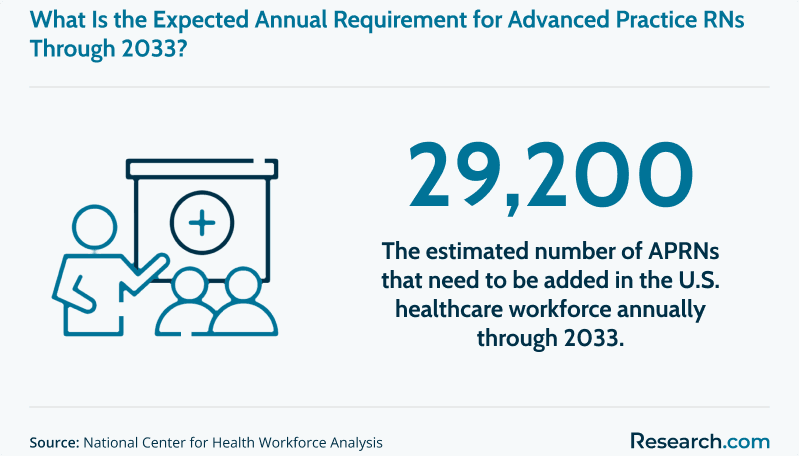
According to the BLS Occupational Outlook Handbook, the advanced practice registered nurse workforce is projected to grow by 40% from 2023 to 2033. The same source reports about 29,200 new APRNs will be needed annually, and APRNs are trained at the master’s or doctoral level.
What are the prerequisites for enrolling in an online adult-gerontology ACNP graduate certificate program?
Admission requirements vary, but most online adult-gerontology acute care NP certificate programs expect applicants to have advanced nursing preparation, active licensure, and relevant clinical experience. Requirements are similar in seriousness to those for the best online graduate certificate nurse education programs, though AGACNP programs place heavier emphasis on readiness for acute and complex care.
- An active, unencumbered RN license, often in the state where clinical practice will occur.
- A BSN or MSN, depending on whether the program is post-BSN, post-master’s, or post-graduate.
- A minimum GPA, frequently around 3.0 on a 4.0 scale.
- Clinical experience, with many programs preferring or requiring 1–2 years in acute care settings such as ICU, telemetry, emergency, or step-down units.
- A resume or CV showing nursing roles, certifications, leadership, and clinical background.
- A personal statement explaining acute care goals and specialty fit.
- 2–3 recommendation letters, often including at least one clinical supervisor or professional reference.
Some schools require prior coursework in statistics, advanced health assessment, advanced pharmacology, or pathophysiology. Others may allow bridge coursework if an applicant’s previous graduate study does not meet current requirements. Before applying, compare the academic investment with likely career outcomes, including information on gerontology careers and salary considerations.
Additional clinical readiness requirements
- Background check and drug screening
- Current immunizations and health documentation
- CPR or BLS certification
- Professional liability insurance
- Clinical site approval forms
- Possible admissions interview
- GRE scores in limited cases, especially when GPA is borderline
What courses are typically in an online adult-gerontology ACNP graduate certificate program?
An AGACNP certificate builds on prior nursing education and focuses on advanced assessment, diagnosis, treatment, and management of acutely ill adults and older adults. Students comparing this route with a broader online nurse practitioner program should confirm whether the curriculum is specifically aligned with adult-gerontology acute care certification.
| Course area | What students learn | Why it matters in acute care |
| Advanced Pathophysiology | Complex disease processes affecting adults and older adults | Supports rapid clinical reasoning in unstable patients |
| Advanced Pharmacology | Medication selection, interactions, dosing, and organ dysfunction considerations | Prepares NPs to manage high-risk medication decisions |
| Advanced Health Assessment and Diagnostic Reasoning | Comprehensive assessment, lab interpretation, imaging review, and differential diagnosis | Builds the foundation for acute care evaluation and treatment planning |
| Adult-Gerontology Acute Care Clinical Management I/II | Management of acute and critical conditions in adult-gerontology populations | Connects theory to inpatient and specialty practice |
| Clinical Practicum Sequence | Precepted hands-on practice, often 500–700+ clinical hours or up to 600 depending on program | Develops supervised competence in real clinical settings |
| Evidence-Based Practice and Role Development | Research use, professional standards, ethics, leadership, and NP role transition | Prepares graduates for accountable advanced practice |
| Capstone or Synthesis Practicum | Final integrative clinical experience | Helps students demonstrate readiness for advanced acute care responsibilities |
What types of specializations are available in online adult-gerontology ACNP graduate certificate programs?
Many AGACNP certificates do not offer formal concentrations, but students can often shape their experience through clinical placements, elective topics, or faculty-approved practicum settings. Common areas of emphasis include critical care, medical/surgical ICU, cardiology, oncology acute care, trauma and emergency care, neurocritical care, hospitalist medicine, surgical acute care, palliative care, and complex chronic disease management.
Some nurses also compare adult-gerontology acute care with other options among the easiest nurse practitioner specialties, but ease of admission should not be the deciding factor. AGACNP practice requires comfort with unstable patients, complex diagnostics, fast-changing treatment plans, and interprofessional collaboration.
This specialization can support strong earning potential when paired with experience, certification, location, and employer demand. In 2024, the median annual salary for gerontological nurse practitioners is $104,505. Earnings vary by role, state, setting, shift expectations, specialty area, and years of experience.
The chart below shows salary distribution for gerontological nurse practitioners by percentile and can help readers understand how pay may differ across experience levels, locations, and practice settings.
How to choose the best online adult-gerontology ACNP graduate certificate program?
To choose the right online AGACNP graduate certificate, start with certification eligibility and state authorization, not branding. A program can be well known and still be a poor fit if it does not meet your state’s requirements, requires clinical placements you cannot secure, or adds credits you do not need.
- Confirm accreditation. Look for nursing program accreditation from CCNE or ACEN when applicable, and verify that the program supports your intended certification pathway.
- Check certification alignment. Review the requirements for the adult-gerontology acute care NP credential you plan to pursue, including the adult-gerontology acute care nurse practitioner certification.
- Verify state authorization. Ask whether the school can enroll students from your state and whether clinical placements are approved where you live or work.
- Request a transcript evaluation. Do not rely only on published credit ranges. Ask exactly which courses you must take based on your prior MSN or NP preparation.
- Clarify clinical placement responsibility. Determine whether the school secures sites, provides leads, approves student-found preceptors, or leaves the process mostly to you.
- Compare total cost, not only tuition. Include fees, travel, intensives, clinical compliance, lost work time, and additional prerequisite courses.
- Review faculty and support. Look for acute care faculty, responsive advising, online library access, board preparation, and technical support.
- Ask about outcomes. Request certification pass rates, attrition data, and graduate employment information when available.
Common mistakes to avoid
| Mistake | Why it can hurt you | Better approach |
| Choosing based only on ranking | A highly ranked school may not fit your state, schedule, or clinical needs | Use rankings as a starting point, then verify fit |
| Ignoring accreditation and certification eligibility | You may finish coursework that does not support your intended credential | Confirm eligibility in writing before enrollment |
| Assuming online means no campus visits | Hybrid intensives can add travel costs and scheduling conflicts | Ask for all required in-person dates before applying |
| Underestimating clinical placement difficulty | Preceptor delays can extend completion time | Start placement planning before the first practicum term |
| Comparing only per-credit tuition | Lower tuition may be offset by more required credits or fees | Calculate total program cost after transcript review |
| Assuming salary outcomes are guaranteed | Pay depends on employer, region, experience, specialty, and scope laws | Research local job postings and talk with practicing AGACNPs |
What career paths are available for graduates of online adult-gerontology ACNP graduate certificate programs?
Graduates of online AGACNP certificate programs typically pursue advanced practice roles in hospitals, specialty clinics, critical care environments, and care coordination settings. The credential is most useful when it leads to certification eligibility and aligns with the nurse’s state scope-of-practice rules.
- Acute care nurse practitioner in ICU, step-down, telemetry, or medical-surgical units.
- Emergency department ACNP caring for adults with severe illness, injury, or unstable presentations.
- Cardiology or cardiopulmonary acute care NP managing heart failure, post-cardiac surgery patients, and complex cardiopulmonary conditions.
- Neurocritical care or neuroscience acute care NP supporting patients with stroke, traumatic brain injury, or post-neurosurgical needs.
- Oncology acute care NP treating cancer-related complications such as neutropenic fever or tumor lysis.
- Hospitalist NP coordinating inpatient treatment plans and transitions of care.
- Trauma or surgical critical care NP in trauma centers or surgical acute care units.
- Palliative care NP in acute settings, combining symptom management with goals-of-care communication.
- Clinical educator or preceptor for acute care nurses and NP students.
- Clinical leadership, quality improvement, utilization review, or acute care program coordination roles.
- Telehealth acute care NP supporting remote triage, follow-up, or specialty consultation for adult-gerontology patients.
Highly specialized credentials can open focused career paths in many fields; for example, graduates of the best online jewelry design and repair trade school programs pursue niche technical work. In nursing, AGACNP certificate holders similarly build specialized expertise, but their employment outcomes depend on certification, licensure, clinical competence, and employer demand.
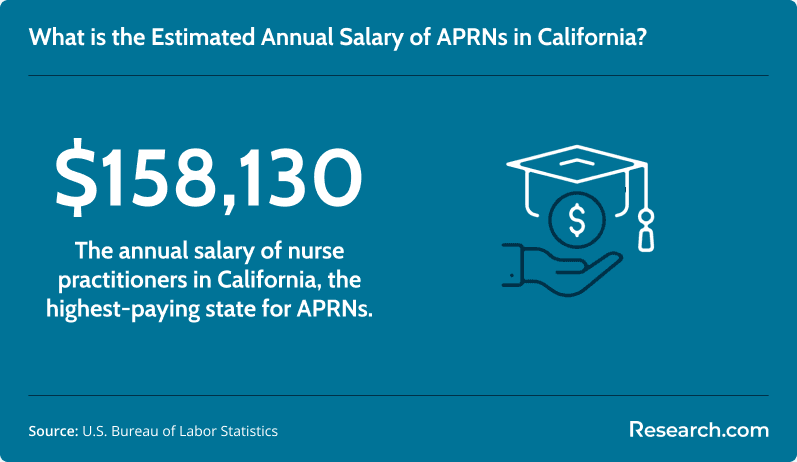
Pay can be strong in high-demand regions. California, for example, leads the nation with an average annual nurse practitioner salary of $158,130. Some nurses also use the certificate as a bridge toward DNP study, dual certification, or formal leadership roles.
What is the job market for graduates with an online adult-gerontology ACNP graduate certificate?
The job market for nurse practitioners is strong, and adult-gerontology acute care preparation can be especially relevant in hospitals, inpatient specialty services, step-down units, ICU environments, and transitional care. The BLS lists nurse practitioners among fast-growing healthcare occupations, with projected growth of 40% from 2023 to 2033.
Demand is supported by aging patient populations, complex chronic disease management needs, physician shortages in some settings, and expanded reliance on advanced practice providers. Acute care NPs may be hired by hospitals, trauma centers, cardiology groups, critical care teams, oncology services, and health systems focused on reducing readmissions and improving inpatient coordination.
Still, demand is not identical everywhere. Hiring depends on state scope-of-practice laws, hospital credentialing rules, specialty experience, certification status, and local competition. Nurses should review job postings in their target region before enrolling and ask programs how graduates perform on certification exams and where they typically work.
What professionals say about online adult-gerontology ACNP certificate programs
- : "The online format let me keep my full-time ICU position while building the acute care knowledge I needed. The program was demanding, but I could apply new assessment and management skills at work almost immediately. — Jasmine"
- : "My AGACNP certificate program required discipline, especially during clinical terms. The flexibility helped me protect family time, and the coursework gave me more confidence with complex inpatient cases. — Robert"
- : "I wanted expert faculty without relocating, and the online structure made that possible. Local clinical placements gave me practical experience while the virtual coursework kept me accountable. — Elena"
What emerging trends are shaping online adult-gerontology ACNP graduate certificate programs?
Online AGACNP certificates are becoming more technology-supported and more clinically integrated. Programs increasingly use virtual simulation labs, telehealth practice scenarios, remote case conferences, and digital assessment tools to strengthen clinical decision-making before students enter practicum settings. Some curricula also introduce data analytics and evidence-based practice applications so nurses can evaluate outcomes, quality metrics, and care processes in acute care environments.
These changes reflect a broader shift in nursing education from stepwise degree completion, such as the easiest nursing RN to BSN programs, toward flexible advanced credentials that allow nurses to add specialized competencies without leaving the workforce. However, technology cannot replace clinical judgment, supervised practice, or hands-on skills; the strongest programs combine online convenience with meaningful practicum oversight.
What challenges may I encounter in an online adult-gerontology ACNP graduate certificate program?
The biggest challenges are usually time management, clinical placement, and the transition from experienced RN or NP practice into the acute care provider role. Online learners must keep pace with advanced coursework while managing shifts, family responsibilities, and practicum requirements. Students coming from earlier pathways, including accelerated BSN nursing programs online, may need time to adjust to graduate-level diagnostic reasoning and independent study expectations.
- Clinical site delays: Start identifying possible preceptors early and ask the school about approval timelines.
- Heavy workload during practicum terms: Reduce work hours when possible or plan your schedule before clinical rotations begin.
- Technology demands: Confirm that your computer, internet connection, webcam, and clinical software access meet program requirements.
- Role transition stress: Seek faculty feedback, participate in case discussions, and use preceptor guidance intentionally.
- State licensing complexity: Verify authorization, clinical rules, and post-graduation certification expectations before accepting admission.
References
- American Association of Colleges of Nursing. ACNPC-AGs and ACNPCs by state.
- American Association of Nurse Practitioners. NP fact sheet infographic.
- American Academy of Nurse Practitioners Certification Board. Certification statistics.
- Bureau of Labor Statistics. Nurse anesthetists, nurse midwives, and nurse practitioners.
- Bureau of Labor Statistics. Occupational employment and wage statistics: Nurse practitioners.
- Zippia. Gerontological nurse practitioner career profile.
Key Insights
- An online adult-gerontology ACNP graduate certificate is best for experienced nurses who already have strong clinical foundations and want focused preparation for acute care practice with adults and older adults.
- The strongest programs are not always the fastest or most famous. Prioritize accreditation, certification eligibility, state authorization, clinical placement support, and total required credits.
- Most programs take 12 to 24 months, but missing prerequisites or delayed preceptor approval can extend the timeline.
- Total tuition commonly ranges from $12,000 to $30,000, but students should also budget for fees, travel, clinical compliance, technology, and potential lost work time.
- Online programs can be rigorous and credible, but they require self-discipline and early clinical planning. Hybrid intensives are common, so “online” does not always mean fully remote.
- Career opportunities are strongest when the certificate leads to certification eligibility and matches local employer needs in hospitals, specialty services, critical care, and inpatient coordination.
- Before enrolling, ask the school to confirm in writing: your required credits, clinical placement process, state eligibility, certification alignment, campus visit requirements, and graduate outcomes.
Other Things You Should Know About Adult-Gerontology ACNP Graduate Certificate Programs
Applicants typically need a Bachelor of Science in Nursing (BSN), a valid registered nurse (RN) license, and a minimum of one year of clinical experience. Some programs may also require completion of graduate-level anatomy and physiology courses.
Yes. Most online Adult-Gerontology ACNP graduate certificates include supervised clinical practicum hours, usually 500 or more, completed in approved acute care settings. Programs require a preceptor, site approval, and documentation before clinical work begins, and students must meet state and facility credentialing rules.


