
2027 Best Online Master's Programs in Clinical Mental Health Counseling

Co-Founder and Chief Data Scientist
Clinical mental health counseling is all about helping people navigate life’s challenges, whether they’re dealing with anxiety, depression, trauma, or simply feeling stuck. Counselors work one-on-one or with families and groups to provide a safe, supportive space where clients can talk openly, explore their emotions, and develop healthier ways to cope.
In this guide, I’ll explore the best online master's in clinical mental health counseling, highlighting flexible, accredited options that prepare you for licensure and a meaningful career helping others thrive.
What are the benefits of getting a degree in clinical mental health counseling?
- A master’s in clinical mental health counseling can lead to roles like licensed professional counselor, behavioral therapist, or mental health clinician.
- Professionals with this degree earn a median salary of around $53,710 per year, depending on experience and location.
- Earning your degree online offers flexibility for working students and allows you to complete clinical hours locally.
- This degree prepares you for state licensure, opening the door to independent practice and long-term career growth in a high-demand field.
What can I expect from a master's degree in clinical mental health counseling?
A master’s degree in clinical mental health counseling prepares students to become licensed professionals who help individuals with emotional, psychological, and behavioral challenges.
The curriculum typically includes courses in counseling theories, ethics, human development, multicultural counseling, assessment, and diagnosis. Students also complete supervised clinical experiences, such as practicums and internships, to apply their skills in real-world settings.
The program aims to develop strong therapeutic techniques, cultural competence, and the ability to work with diverse populations. Most programs meet state licensure requirements and can be completed in two to three years.
Whether completed on campus or online, this degree helps students make a meaningful impact on people’s lives.
Where can I work with a master's degree in clinical mental health counseling?
With a master’s degree in clinical mental health counseling, graduates are equipped to work in diverse professional settings that support individuals, families, and groups seeking mental health care.
Many find employment in:
- Community mental health centers
- Outpatient clinics
- Hospitals
- Residential treatment facilities
These settings allow counselors to support clients facing challenges such as anxiety, depression, trauma, substance use, and relationship issues.
Some counselors also work in schools or college counseling centers, helping students navigate academic stress and emotional well-being. Others choose private practice, typically after obtaining licensure and completing supervised experience.
How much can I make with a master's degree in clinical mental health counseling?
Earning a master’s degree in clinical mental health counseling can lead to a stable and rewarding career with solid income potential. Salaries vary based on factors such as work setting, location, licensure status, and years of experience. While entry-level counselors may start on the lower end, there is strong potential for higher earnings with career advancement and specialization.
Key salary insights for clinical mental health counselors:
- Median Salary: $53,710 annually, according to the U.S. Bureau of Labor Statistics (2023).
- Typical Range: $53,000 to $70,000 depending on setting and experience.
- Higher-End Salaries: $80,000 or more for licensed counselors in private practice.
Geographic location also plays a major role—counselors in urban areas or states with higher demand for mental health services tend to earn more. Overall, the degree offers solid earning potential along with meaningful, people-centered work.
- Best Online Master's Programs in Clinical Mental Health Counseling for 2027 List of Programs
- How long does it take to complete an online master's in clinical mental health counseling degree? How long does it take to complete an online master's in clinical mental health counseling degree?
- How long does it take to complete an online master's in clinical mental health counseling degree? Program Duration
- What is the average cost of an online master's in clinical mental health counseling program? Average Cost
- What are the financial aid options for students enrolling in an online master's in clinical mental health counseling program? Financial Aid
- What are the prerequisites for enrolling in an online master's in clinical mental health counseling program? Degree Requirements
- What courses are typically in an online master's in clinical mental health counseling program? What courses are typically in an online master's in clinical mental health counseling program?
- What types of specializations are available in online master's in clinical mental health counseling programs? What types of specializations are available in online master's in clinical mental health counseling programs?
- How to choose the best online master's in clinical mental health counseling program? How to choose the best online master's in clinical mental health counseling program?
- What career paths are available for graduates of online master's in clinical mental health counseling programs? Career Paths
- Should I Consider a Complementary Bachelor's in Psychology? Should I Consider a Complementary Bachelor's in Psychology?
- Should I Consider Forensic Psychology as a Complementary Specialization? Should I Consider Forensic Psychology as a Complementary Specialization?
- What is the job market for graduates with an online master's in clinical mental health counseling? Job Outlook
- Can Integrating Behavior Analysis Enhance Counseling Effectiveness? Can Integrating Behavior Analysis Enhance Counseling Effectiveness?
Best Online Master's Programs in Clinical Mental Health Counseling for 2027
Choosing an online master’s in clinical mental health counseling is not just a school decision. It affects your licensure path, clinical training options, schedule, debt level, and ability to serve clients after graduation. The right program should prepare you for supervised counseling practice, meet your state’s education requirements, and fit your life well enough that you can complete the degree.
This guide is for future licensed professional counselors, career changers, psychology and human services graduates, and working adults who need a flexible route into the mental health field. You will find ranked program options, cost and timeline expectations, online-versus-campus comparisons, admissions requirements, specialization choices, career outcomes, and practical questions to ask before enrolling.
Quick Answer: What Should You Look for in an Online Master’s in Clinical Mental Health Counseling?
The best online master’s in clinical mental health counseling programs combine recognized accreditation, licensure-focused coursework, supervised practicum and internship experiences, strong faculty support, and clear state authorization information. For most students, CACREP accreditation is one of the most important factors because many states and employers use it as a benchmark for counselor preparation.
Most online clinical mental health counseling master’s programs take two to three years, require around 60 credit hours or 90 quarter credits, and include supervised fieldwork. Online study can be a strong option if you need schedule flexibility, but you should verify residency requirements, internship placement support, total program cost, and whether the degree meets licensure requirements in the state where you plan to practice.
How Research.com Ranked These Programs
Research.com evaluates online counseling programs with the needs of prospective students in mind: academic quality, affordability, flexibility, accreditation, and student outcomes. Because counseling is a licensure-oriented profession, we also place special weight on whether a program clearly prepares students for supervised clinical practice and professional credentialing.
Our ranking process follows the Research.com methodology and uses multiple established education data sources, including the IPEDS database, Peterson’s database and its Distance Learning Licensed Data Set, the College Scorecard database, and the National Center for Education Statistics.
Use this ranking as a starting point, not as the only deciding factor. Before applying, confirm the program’s accreditation, field placement process, residency requirements, and licensure alignment with your state counseling board.
Best Online Master’s Programs in Clinical Mental Health Counseling
| Rank | School | Program Length | Credits | Estimated Total Cost | Accreditation |
| 1 | Capella University | 2 to 3 years | 90 quarter credits | Around $50,000 to $60,000 | HLC and CACREP |
| 2 | Walden University | 33 months | 90 to 96 quarter credits | Approximately between $50,890 and $64,735 | HLC and CACREP |
| 3 | University of West Alabama | 2 to 3 years | 60 credit hours | $25,740 | CACREP |
| 4 | Antioch University | Approximately 3 years (full-time) | 90 quarter credits | Around $60,000 to $70,000 | HLC and CACREP |
| 5 | Rivier University | Approximately 3 years | 63 credits | Around $44,856 | NECHE |
1. Capella University
Capella University offers an online Master of Science in Clinical Mental Health Counseling designed for students who want a flexible, licensure-oriented graduate path. The program is CACREP-accredited and emphasizes counseling theory, ethical decision-making, cultural responsiveness, wellness-based practice, and supervised clinical preparation.
Capella may be a good fit for working adults who want concentration choices and a structured online format. Students can focus their studies through Addiction Treatment and Recovery, Child and Adolescent Counseling, or General Clinical Mental Health Counseling, depending on the populations and settings they hope to serve.
- Program Length: 2 to 3 years
- Tracks/Concentrations: Addiction Treatment and Recovery, Child and Adolescent Counseling, General Clinical Mental Health Counseling
- Estimated Total Cost: Around $50,000 to $60,000
- Required Credits to Graduate: 90 quarter credits
- Accreditation: Higher Learning Commission (HLC) and Council for Accreditation of Counseling and Related Educational Programs (CACREP)
2. Walden University
Walden University provides a CACREP-accredited online MS in Clinical Mental Health Counseling for students preparing for ethical clinical practice and eventual licensure. The curriculum covers evidence-based counseling approaches, multicultural counseling, assessment, clinical skills, and supervised field experiences.
Walden stands out for students who want several concentration options and exposure to virtual simulations along with field-based learning. The program includes specialized options such as Trauma & Crisis Counseling, Telehealth & Private Practice, and Marriage, Couple & Family Counseling, as well as a general path.
- Program Length: 33 months
- Tracks/Concentrations: Trauma & Crisis Counseling; Telehealth Counseling, Private Practice & Supervision
- Estimated Total Cost: Approximately between $50,890 and $64,735
- Required Credits to Graduate: 90 to 96 quarter credits
- Accreditation: HLC and CACREP
3. University of West Alabama
The University of West Alabama offers a Master’s in Clinical Mental Health Counseling that prepares students to support individuals, couples, and families in counseling settings. The program is fully online, taught by licensed counseling professionals, and accredited by CACREP.
UWA may appeal to students looking for a lower listed total cost, rolling admissions, and smaller cohort structures. Because clinical mental health counseling programs can fill quickly, applicants should review admissions deadlines and apply early if the program fits their licensure goals.
- Program Length: 2 to 3 years
- Tracks/Concentrations: Theories and Treatment of Addiction, Family Issues in Counseling Addicted Clients, Distance Counseling with Special Populations
- Estimated Total Cost: $25,740
- Required Credits to Graduate: 60 credit hours
- Accreditation: CACREP
4. Antioch University
Antioch University offers a CACREP-accredited MA in Clinical Mental Health Counseling built around competency-based preparation, multicultural awareness, social justice, and clinical skill development. The program is delivered mostly online and includes two week-long in-person residencies.
This option may work well for students who want online flexibility but also value intensive face-to-face skills training. Coursework covers major counseling areas such as assessment, group counseling, human development, ethics, and professional practice.
- Program Length: Approximately 3 years (full-time)
- Tracks/Concentrations: Addiction Counseling, Trauma Counseling, LGBTQ+ Affirmative Counseling
- Estimated Total Cost: Around $60,000 to $70,000
- Required Credits to Graduate: 90 quarter credits
- Accreditation: HLC and CACREP
5. Rivier University
Rivier University offers an online M.A. in Clinical Mental Health Counseling in a low-residency format. Students complete online coursework, two short on-campus residencies, and a one-year, 700-hour internship.
The program is designed to help students meet New Hampshire licensure requirements and prepare for the National Clinical Mental Health Counseling Exam. It may be especially relevant for students who want transfer credit options, flexible start dates, and a program with a defined internship structure.
- Program Length: Approximately 3 years
- Tracks/Concentrations: Positive Psychology, Advanced Multicultural Perspectives, Social and Cultural Foundations
- Estimated Total Cost: Around $44,856
- Required Credits to Graduate: 63 credits
- Accreditation: New England Commission of Higher Education (NECHE)
How Long Does It Take to Complete an Online Master's in Clinical Mental Health Counseling Degree?
Most online master’s programs in clinical mental health counseling take two to three years to finish. The exact timeline depends on whether you study full time or part time, how the school schedules clinical courses, whether you enroll year-round, and how quickly you can secure an approved practicum or internship site.
| Enrollment Path | Typical Timeline | Best For | Important Trade-Off |
| Full-time standard path | About three years | Students who can manage a steady course load plus fieldwork | Less flexible for those with demanding jobs or caregiving responsibilities |
| Accelerated path | 2 years | Students who can study full time and continue through intensive terms | Clinical placement timing can still affect completion speed |
| Part-time path | 4 or more years | Working adults who need a lighter course load | Longer time to licensure and potentially more total fees |
- Standard Duration: Many programs are structured for completion in about three years, including coursework and a required internship, often around 600–700 hours.
- Accelerated Options: Some programs allow students to finish faster, usually in 2 years, when they enroll full time and study year-round.
- Part-Time Options: Students who reduce their course load may need 4 or more years, depending on the program sequence and fieldwork availability.
Before choosing a faster option, ask whether the program’s pace leaves enough time for supervised skills practice, internship applications, and state licensure documentation.
How Does an Online Master's in Clinical Mental Health Counseling Compare to an On-Campus Program?
An online master’s in clinical mental health counseling can lead to similar academic and licensure outcomes as a campus program when it is properly accredited and approved for your state. The main differences are delivery format, flexibility, networking style, field placement logistics, and residency requirements.
| Factor | Online Program | On-Campus Program |
| Schedule | Often better for working adults because courses may include asynchronous components | Usually follows set class times and campus-based schedules |
| Location | Allows students to complete didactic coursework from another location | Requires commuting or relocating for regular in-person attendance |
| Learning Format | May combine recorded lessons, live video classes, discussion boards, and virtual practice | Uses face-to-face lectures, classroom activities, and direct campus interaction |
| Faculty and Peer Interaction | Occurs through video meetings, online groups, messaging, and virtual supervision activities | Happens through classroom discussion, office hours, events, and campus community |
| Clinical Training | Usually completed at approved sites near the student’s location | Often arranged through sites connected to the campus region |
| Residencies | Some programs require short campus visits for skills training or orientation | In-person attendance is the normal format throughout the program |
| Technology | Requires a dependable computer, stable internet, webcam access, and comfort with learning platforms | Uses technology too, but classroom participation is less dependent on home setup |
When Online Study Makes Sense
- You need to keep working while earning the degree.
- You live far from a campus with an appropriate counseling program.
- You can manage independent learning and online communication.
- You are willing to take responsibility for understanding local practicum and internship requirements.
When Campus Study May Be Better
- You prefer in-person learning and immediate face-to-face feedback.
- You want campus-based networking, student organizations, or local clinical partnerships.
- You do not want to manage online learning technology or remote group work.
- You need a highly structured schedule to stay on track.
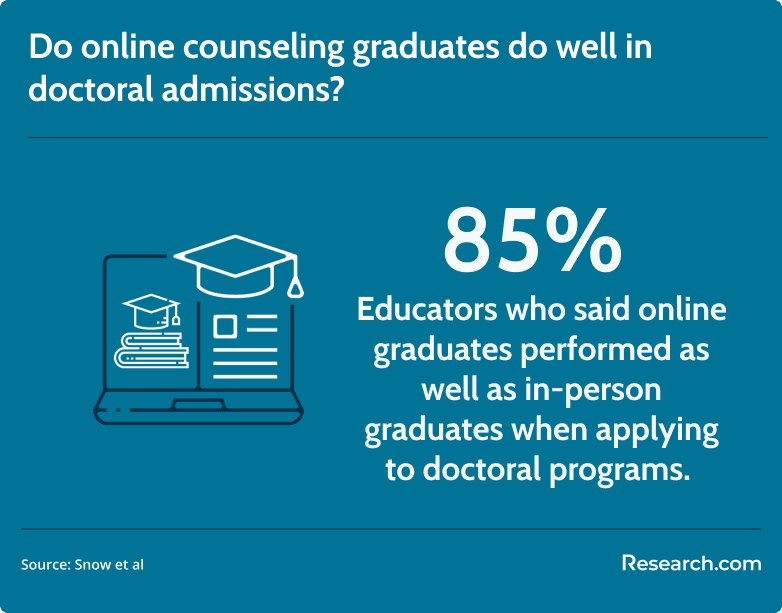
In a survey of counseling educators who taught both online and residential programs, 93% of respondents said online graduates were as successful as in-person graduates in obtaining clinical placements and licensure, while 85% reported comparable doctoral admission outcomes for online graduates.
What Is the Average Cost of an Online Master's in Clinical Mental Health Counseling Program?
The average total tuition for an online master’s in clinical mental health counseling commonly falls between $22,000 and $60,000. Costs vary by institution type, tuition model, credit requirement, residency fees, technology fees, and whether a school charges different rates by state residency.
Many counseling master’s programs require around 60 credits, and some schools charge per-credit tuition between $350 and $900. A lower per-credit rate does not always mean a lower total price, especially if one program requires more credits, includes residency travel, or adds clinical fees.
| Cost Factor | Why It Matters | Question to Ask |
| Tuition model | Per-credit, per-term, and quarter-credit pricing can make programs hard to compare | What is the full estimated cost to graduate, not just one term? |
| Residencies | Short campus visits may add travel, lodging, and time away from work | How many in-person sessions are required and where are they held? |
| Clinical placement costs | Students may need background checks, liability insurance, testing, or site-related fees | What expenses are students responsible for before practicum and internship? |
| Transfer credits | Accepted credits can reduce cost and completion time | How many graduate credits can transfer into the program? |
| Online fees | Technology and distance learning fees can add up over several terms | Are online program fees included in the published estimate? |
Students comparing counseling programs with other professional online degrees may notice similar pricing structures in areas such as online applied sciences programs, where credit load, specialized coursework, and program fees can significantly change the final cost.
Students interested specifically in substance use treatment can also compare online addiction counseling degree programs, especially if they want coursework and field experiences focused on recovery, relapse prevention, and treatment settings.
Online programs may help reduce commuting, housing, and meal costs, but they are not automatically cheaper. Always compare total cost of attendance, not tuition alone.
What Financial Aid Options Are Available for Online Clinical Mental Health Counseling Students?
Graduate counseling students can often combine several funding sources to manage tuition. The most common options include federal loans, scholarships, employer benefits, assistantships, fellowships, and loan forgiveness programs for qualifying public service work.
- Federal Financial Aid: Graduate students can submit the FAFSA to be considered for Direct Unsubsidized Loans and Graduate PLUS Loans.
- Scholarships and Grants: Universities, counseling associations, foundations, and mental health organizations may offer awards that do not require repayment.
- Employer Tuition Assistance: Some healthcare, nonprofit, education, and human services employers provide tuition reimbursement or partial tuition support.
- Graduate Assistantships or Fellowships: These are more common in campus programs, but some online students may qualify for tuition discounts or stipends tied to academic or administrative work.
- State Aid and Loan Forgiveness Programs: Students planning to serve high-need communities may qualify for state programs or the Public Service Loan Forgiveness (PSLF) program if they meet program rules.
When comparing the return on investment of counseling with other graduate-level public service careers, it can be useful to review adjacent career guides such as urban planning career options, where public-sector employment, graduate education, and loan forgiveness considerations may also shape career decisions.
Ways to Reduce the Cost Before You Enroll
- Ask for the total program cost in writing, including fees and residency expenses.
- Confirm whether the school accepts transfer graduate credits.
- Search for scholarships through the university, counseling associations, and local mental health organizations.
- Ask your employer whether counseling-related graduate study qualifies for tuition assistance.
- Compare part-time and full-time enrollment costs, since some fees are charged by term rather than by credit.
What Are the Prerequisites for Enrolling in an Online Master's in Clinical Mental Health Counseling Program?
Admission requirements vary by school, but most online master’s programs in clinical mental health counseling look for evidence that applicants can handle graduate study, communicate professionally, and understand the responsibilities of entering a helping profession.
- Bachelor’s Degree: Most programs require a bachelor’s degree from an accredited college or university. Psychology, counseling, social work, human services, and related majors can be helpful, but they are not always mandatory. Students comparing an addiction counseling degree vs psychology degree should consider whether they want a specialized substance use foundation or a broader behavioral science background.
- Minimum GPA: Many programs expect an undergraduate GPA around 2.75 to 3.0, though requirements differ.
- Prerequisite Coursework: Some schools may ask for prior coursework in psychology, statistics, human development, or related areas.
- Letters of Recommendation: Applicants often submit two to three references from professors, supervisors, or professionals who can speak to their readiness.
- Personal Statement or Essay: Most programs want to understand your career goals, motivation for counseling, and fit with the profession.
- Resume or CV: Volunteer work, crisis line experience, social services employment, mentoring, or behavioral health exposure can strengthen an application.
- Interview: Some schools include a virtual or phone interview to assess communication skills, maturity, and professional expectations.
The chart below shows the educational attainment of mental health counselors according to Zippia in 2025.
What Courses Are Typically Included in an Online Master's in Clinical Mental Health Counseling Program?
Clinical mental health counseling programs blend theory, ethics, diagnosis, counseling skills, research literacy, and supervised clinical experience. The goal is to prepare students to work with clients under supervision and progress toward licensure after graduation.
| Course Area | What Students Learn | Why It Matters for Practice |
| Counseling Theories and Techniques | Major counseling models and how to apply them | Builds the foundation for treatment planning and client sessions |
| Human Growth and Development | Developmental changes across the lifespan | Helps counselors understand age-related needs and challenges |
| Psychopathology | Mental health disorders, symptoms, and treatment considerations | Supports assessment, diagnosis, and referral decisions |
| Multicultural Counseling | Culturally responsive counseling with diverse clients | Improves ethical and effective care across communities |
| Ethics and Legal Issues in Counseling | Confidentiality, informed consent, professional boundaries, and legal responsibilities | Protects clients and prepares students for professional standards |
| Group Counseling | Group dynamics, facilitation, and therapeutic group methods | Prepares students for agency, school, and community settings |
| Assessment and Testing | Use and interpretation of counseling-related assessments | Supports informed treatment planning and documentation |
| Research Methods | How to evaluate counseling research and evidence-based practice | Helps counselors make informed clinical decisions |
| Internship and Practicum | Supervised counseling experience in real settings | Connects classroom learning to direct client work |
Students evaluating counseling programs should think about coursework the same way students in other healthcare-related fields evaluate curriculum and outcomes. For example, those researching an MSN nursing informatics salary often compare both skills gained and career direction, not just the degree title.
If speed is a major factor, compare the standard curriculum with a fast-track online master’s degree in clinical mental health counseling. Accelerated formats may be completed in as little as 18 to 24 months, but students should make sure the program still includes the clinical hours and licensure preparation they need.
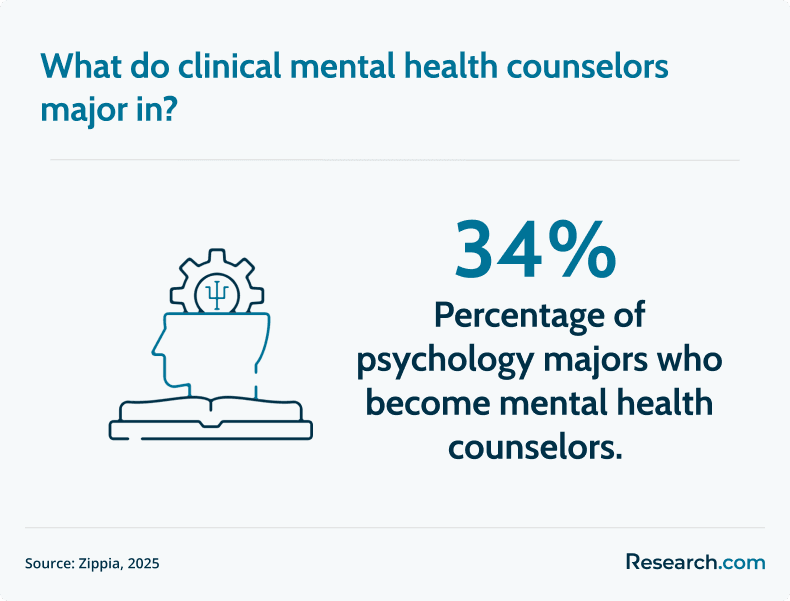
A related undergraduate background can help. According to Zippia, 34% of psychology majors become mental health counselors.
What Types of Specializations Are Available in Online Master's in Clinical Mental Health Counseling Programs?
Specializations help students focus their electives, fieldwork interests, and long-term career direction. Not every program offers concentrations, and a specialization does not replace state licensure requirements, but it can help you build competence with particular populations or clinical issues.
- Addiction or Substance Abuse Counseling: Focuses on substance use disorders, relapse prevention, recovery support, and treatment planning.
- Trauma and Crisis Counseling: Prepares students to support clients affected by trauma, grief, violence, disaster, or urgent psychological distress.
- Marriage, Couple, and Family Counseling: Emphasizes relationship patterns, family systems, communication, and relational therapy approaches.
- Child and Adolescent Counseling: Builds skills for working with youth facing developmental, behavioral, emotional, or family-related concerns.
- Military and Veterans Counseling: Addresses issues affecting service members, veterans, and families, including PTSD and transition challenges.
- Forensic or Correctional Counseling: Connects counseling knowledge with legal, correctional, and justice-involved settings.
Students planning advanced leadership or interdisciplinary human services work may also review a PhD human services online path to understand how doctoral-level specialization differs from master’s-level counselor preparation.
If your goal is to work in school settings rather than community mental health or private practice, an accelerated master’s in educational counseling online may be a better match. These programs can often be completed in 12 to 18 months and usually focus on academic, social, and emotional support for students, with state certification or licensure requirements varying by location.
How Should You Choose the Best Online Master's in Clinical Mental Health Counseling Program?
Start with licensure fit. A program can be reputable and still not meet the requirements for the state where you plan to practice. Review your state counseling board rules, ask the school for a licensure disclosure, and confirm whether the curriculum, clinical hours, and accreditation align with your goals.
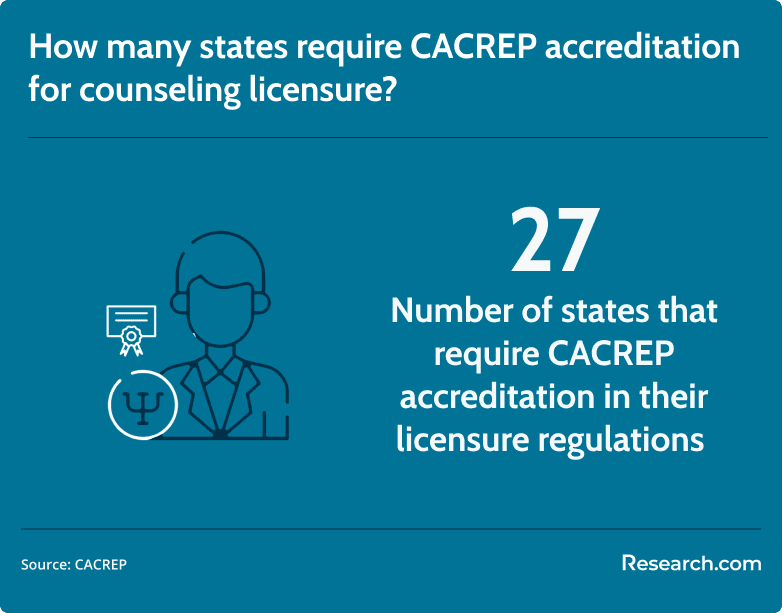
CACREP accreditation is especially important in this field. Currently, 27 states explicitly require CACREP accreditation in counseling licensure regulations, making it a key consideration for students who want a smoother path toward licensed professional counselor eligibility.
| Decision Factor | What to Check | Why It Matters |
| Accreditation | Institutional accreditation and, when available, CACREP accreditation | Can affect licensure eligibility, transferability, and employer confidence |
| State licensure alignment | Whether the program meets requirements in your intended practice state | Counselor licensure is state-regulated |
| Clinical placement support | How practicum and internship sites are approved and supported | Fieldwork delays can delay graduation and licensure progress |
| Residency requirements | Number, length, and location of in-person sessions | Travel costs and scheduling may affect feasibility |
| Total cost | Tuition, fees, travel, books, technology, and clinical expenses | The cheapest advertised tuition may not be the lowest total cost |
| Faculty and advising | Faculty credentials, advising access, and student support | Graduate counseling students need feedback, supervision, and guidance |
| Specializations | Available electives or concentrations in your interest area | Focused coursework can support career direction and field placement goals |
Questions to Ask Before Applying
- Does this program meet licensure education requirements in my state?
- Is the counseling program CACREP-accredited, institutionally accredited, or both?
- Who is responsible for finding practicum and internship sites?
- How many supervised clinical hours are required?
- Are there campus residencies, and what do they cost?
- What percentage of students complete the program on time?
- What support is available for licensure exams and post-graduate supervision planning?
- Can I speak with current students or recent graduates?
What Career Paths Are Available for Graduates of Online Master's in Clinical Mental Health Counseling Programs?
Graduates of online master’s programs in clinical mental health counseling commonly pursue roles in community agencies, outpatient centers, hospitals, schools, rehabilitation settings, nonprofit organizations, private practices, and behavioral health programs. Many roles require state licensure or post-graduate supervised experience, so students should understand the licensing sequence before choosing a career track.
| Career Path | Typical Work | Common Settings |
| Licensed Professional Counselor (LPC) | Provides therapy and treatment planning for clients facing concerns such as anxiety, trauma, grief, or relationship stress | Private practice, clinics, community agencies |
| Mental Health Clinician | Delivers counseling services and coordinates care with other professionals | Hospitals, nonprofits, community health centers |
| Rehabilitation Counselor | Supports people with disabilities, injuries, or chronic conditions in reaching personal and work-related goals | Vocational rehabilitation agencies, healthcare organizations |
| School or Academic Counselor | Helps students with emotional, social, academic, and crisis-related needs | K–12 schools, colleges, student support offices |
| Substance Abuse Counselor | Works with clients experiencing substance use disorders and recovery challenges | Treatment centers, clinics, rehabilitation programs |
| Behavioral Health Specialist | Assesses client behavior, supports intervention plans, and coordinates behavioral health services | Healthcare teams, community programs, social service agencies |
| Clinical Supervisor or Program Director | Supervises staff or trainees, manages programs, and supports clinical operations after gaining experience | Agencies, counseling centers, treatment programs |
Students who are more interested in relationship and family systems work may also compare the fastest online master’s programs in marriage and family counseling. These programs often emphasize couples, families, systemic therapy, and relational dynamics rather than the broader clinical mental health counseling framework.
Should You Consider a Complementary Bachelor's in Psychology?
A bachelor’s degree in psychology is not always required for admission to a counseling master’s program, but it can provide useful preparation in human behavior, research methods, abnormal psychology, development, and social science writing. If you are still early in your education and want a lower-cost foundation before graduate study, reviewing the most affordable online bachelor’s degree in psychology options may help you plan a more cost-conscious route into the mental health field.
Should You Consider Forensic Psychology as a Complementary Specialization?
Forensic psychology can complement clinical mental health counseling for students interested in legal settings, correctional environments, risk assessment, victim services, or justice-involved populations. It does not replace counseling licensure preparation, but it may broaden your understanding of how mental health, behavior, and legal systems intersect. Students comparing graduate credentials can review the most affordable online master’s degrees in forensic psychology to see whether that specialization fits their long-term goals.
What Is the Job Market for Graduates With an Online Master's in Clinical Mental Health Counseling?
The job market for counseling graduates is favorable, especially for those who complete licensure requirements and are willing to serve high-need populations. Rising demand for mental health services, expanded use of telehealth, and shortages in rural and underserved communities continue to shape hiring needs.
- Strong Projected Growth: Employment for substance abuse, behavioral disorder, and mental health counselors is projected to increase by 19% between 2023 and 2033, much faster than the average for all occupations, which is about 4%.
- Large Occupational Base: These roles are among the top 20 fastest-growing occupations in the U.S., increasing from approximately 450,000 workers in 2023 to over 534,000 by 2033.
- Median Pay: As of May 2024, the median annual wage for mental health and substance abuse counselors was $59,190. Hospitals reported around $61,930, while outpatient centers reported approximately $58,200.
- Geographic and Service Gaps: Rural and underserved areas often face greater shortages, which can create opportunities for licensed counselors.
- Telehealth Expansion: Online therapy and hybrid care models are creating more remote and flexible counseling roles, although licensure rules still apply by state.
If you want to support students specifically, compare clinical mental health counseling with the fastest online master’s in school counseling programs. School counseling programs generally prepare students for education settings, while clinical mental health counseling programs prepare graduates for broader mental health practice.
The chart below shows the projected change in employment in counselor occupations between 2023 and 2033.
Can Integrating Behavior Analysis Enhance Counseling Effectiveness?
Behavior analysis can strengthen a counselor’s ability to observe patterns, define measurable goals, and design structured interventions, particularly when working with behavioral challenges. It is not a substitute for counseling licensure or clinical supervision, but it can complement treatment planning in certain settings.
Students interested in this interdisciplinary direction can compare counseling coursework with affordable BCBA online programs. This may be especially useful for professionals who want additional behavioral assessment skills or who work with clients requiring structured behavior support.
What Graduates Say About Online Master's Programs in Clinical Mental Health Counseling
- : "The online format made it possible for me to keep my full-time job while completing graduate coursework. I still had to manage a demanding schedule, but the flexibility helped me stay enrolled while balancing family responsibilities and fieldwork preparation. — Marian"
- : "I expected online school to feel isolating, but the live sessions, discussion boards, and regular instructor feedback helped me stay connected. By the time I reached the licensure preparation stage, I felt much more confident. — Jaemelli"
- : "My program gave me access to trauma and substance use counseling courses that I could not find near me. That specialization helped me move into the type of clinical work I wanted to do. — Alyanne"
Common Mistakes to Avoid When Choosing an Online Counseling Master’s Program
- Ignoring state licensure rules: Do not assume that any counseling master’s degree will qualify you for licensure in every state.
- Looking only at tuition: Add fees, residency travel, textbooks, background checks, insurance, and clinical placement expenses before comparing programs.
- Assuming online means fully remote: Many programs require in-person residencies, local internships, or synchronous skills sessions.
- Overlooking clinical placement support: A program that leaves students with little help finding approved sites can delay graduation.
- Choosing speed over fit: Accelerated programs can be useful, but counseling training requires time for supervised practice and skill development.
- Relying only on rankings: Rankings can narrow your list, but licensure compatibility, accreditation, cost, and fieldwork support should drive your final decision.
- Assuming salary outcomes are guaranteed: Earnings vary by location, employer, license status, experience, and specialization.
Key Insights
- The best online master’s in clinical mental health counseling is the one that meets your state licensure requirements, fits your schedule, and provides credible clinical training support.
- CACREP accreditation matters because 27 states explicitly require it in counseling licensure regulations.
- Most programs take two to three years, though accelerated options may take 2 years and part-time study may take 4 or more years.
- Total tuition commonly ranges from $22,000 to $60,000, but fees, residencies, and clinical costs can change the real price.
- Online and campus programs can both prepare students for counseling careers, but online learners must pay close attention to field placement, state authorization, and technology requirements.
- The counseling job outlook is strong, with substance abuse, behavioral disorder, and mental health counselor employment projected to grow 19% between 2023 and 2033.
- Before enrolling, ask the school for written confirmation of accreditation, licensure alignment, total cost, clinical hour requirements, and internship placement procedures.
References:
- Bureau of Labor Statistics. (2024). Substance abuse, behavioral disorder, and mental health counselors. U.S. Department of Labor. https://www.bls.gov/ooh/community-and-social-service/substance-abuse-behavioral-disorder-and-mental-health-counselors.htm
- CNN News. (2024). Mental health jobs to grow 3 times the rate of all US jobs. https://edition.cnn.com/2024/09/07/health/mental-health-jobs-projections-dg
- LinkedIn. (2024). The mental health job market in 2025: Opportunities and trends [Post by Nick Ford]. https://www.linkedin.com/pulse/mental-health-job-market-2025-nick-ford-0lp1e
- ONET OnLine. (2024). Mental health counselors - Local employment trends. National Center for ONET Development. https://www.onetonline.org/link/localtrends/21-1014.00
- Sacred Heart University. (n.d.). Career outlook: M.A. in Clinical Mental Health Counseling Online. https://onlineprograms.sacredheart.edu/programs/masters-clinical-mental-health-counseling/career-outlook
- US BLS. (2025). Substance Abuse, Behavioral Disorder, and Mental Health Counselors. https://www.bls.gov/ooh/community-and-social-service/substance-abuse-behavioral-disorder-and-mental-health-counselors.htm
- Zippia. (2025). Best Colleges and Degrees for Mental Health Counselors. https://www.zippia.com/mental-health-counselor-jobs/education
- ZipRecruiter. (2024). Clinical mental health counseling salary. https://www.ziprecruiter.com/Salaries/Clinical-Mental-Health-Counseling-Salary
Other Things You Need to Know About Online Master's Programs in Clinical Mental Health Counseling
Admission requirements typically include a bachelor’s degree from an accredited institution, a minimum GPA of 3.0, letters of recommendation, and a statement of purpose. Some programs may also require relevant work experience or completion of prerequisite courses.
Most CACREP-accredited online clinical mental health counseling master's programs require at least 100 supervised practicum hours and 600 supervised internship hours. Students usually complete these placements in approved community agencies, schools, or clinics under a site supervisor and university faculty oversight.


