
2027 What NP Programs Are Open to Foreign Medical Graduates?

Co-Founder and Chief Data Scientist
Landing a medical residency in the U.S. remains a significant hurdle for many foreign medical graduates, prompting a strategic shift toward the highly-demanded nurse practitioner (NP) career. This career pivot leverages their extensive clinical knowledge while bypassing the highly competitive residency match.
The most common and viable route for foreign medical graduates is through accelerated NP programs, which are specifically designed for non-nursing degree holders. Understanding which NP programs are open to foreign medical graduates and the pathways they offer is crucial for a successful transition.
This article details the specific academic tracks and prerequisites available, giving readers the essential roadmap to convert their medical expertise into a U.S. advanced practice nursing credential.
What are the benefits of getting an NP program for foreign medical graduates?
- NPs are one of the fastest-growing roles in the U.S., leading to high job stability and competitive compensation. The median annual salary for nurse practitioners is approximately $126,260 (as of May 2024), which is immediately attainable after a 2- to 3-year accelerated program.
- The degree leads to Advanced Practice Registered Nurse (APRN) roles like Family NP (FNP), Adult-Gerontology Acute Care NP, and Psychiatric-Mental Health NP (PMHNP). Depending on the state, NPs can diagnose, treat, and prescribe medication, offering the clinical autonomy foreign medical graduates are seeking.
- The foreign medical graduate's foundational medical degree and clinical experience are highly valued. This background helps them excel in accelerated NP programs and makes them highly marketable to U.S. employers, often leading to rapid employment.
- Many accelerated direct-entry MSN programs offer online coursework for the theoretical portion. This flexibility is crucial for foreign medica graduates who may be managing visa logistics, needing to study around a Registered Nurse (RN) job, or seeking to remain in their current location until clinical rotations begin.
What can I expect from an NP program as a foreign medical graduate?
The core concept revolves around two main programs designed for non-nursing bachelor's holders: the Accelerated Bachelor of Science in Nursing (ABSN) and the Direct-Entry Master of Science in Nursing (MSN).
Both tracks allow the foreign medica graduate's evaluated medical degree to fulfill the non-nursing prerequisite. After completing the initial nursing education and obtaining an RN license, the Direct-Entry MSN focuses on advanced practice coursework, leading directly to NP certification and the ability to diagnose, treat, and prescribe. This route offers a faster, more stable path to a respected, autonomous, and financially rewarding career in U.S. healthcare.
Where can I work with an NP program?
Graduates who transition from being foreign medical graduates to becoming nurse practitioners enjoy a wide range of employment settings across the U.S. healthcare landscape, often leveraging their existing medical specialization.
The single largest employers are physician offices and general medical and surgical hospitals, where NPs work collaboratively to manage patient care, often in primary care roles like Family Nurse Practitioner (FNP). Beyond these traditional settings, NPs are in high demand at outpatient care centers and specialized facilities like psychiatric and substance abuse hospitals for those with a PMHNP specialization. These diverse industries benefit from the NP's expanded scope of practice and the dual clinical perspective brought by former foreign medical graduates.
The former foreign medical graduates who become NPs also find substantial opportunities in non-hospital and private sectors, frequently choosing settings that offer a higher degree of autonomy or specialized focus such as:
- Home Health Care Services
- Retail Clinics and Community Health Centers
- Specialty Private Practices
- Academia and Research
How much can I make with an NP program?
According to the U.S. Bureau of Labor Statistics (BLS), the median annual wage for nurse practitioners is approximately $129,210 per year. However, this figure varies widely by state, experience, and setting. New NP graduates, including former foreign medical graduates, can typically expect a starting salary range between $100,000 and $115,000, with top earners starting as high as $130,000 or more in high-cost-of-living areas.
Specialization is a primary factor in maximizing earning potential. Psychiatric-Mental Health Nurse Practitioners (PMHNPs), a common choice for former physicians, are among the highest paid, with salaries often ranging from $135,000 to over $170,000 annually due to high demand. Geographic location is also critical, with NPs in states like California and New Jersey earning mean annual salaries over $145,000, while some lower-paying states may have average salaries around $110,000.
- What NP programs are open to foreign medical graduates? NP Programs
- How are foreign medical credentials evaluated for US NP school applications? Credential Evaluation
- What are the core eligibility requirements for foreign medical graduates to get into NP programs? Eligibility Criteria
- What prerequisite courses do foreign medical graduates need for accelerated BSN or MSN programs? Program Requirements
- Are there specific bridge programs designed for foreign doctors to become NPs? Bridge Programs
- How long does it take for a foreign medical graduate to complete NP program prerequisites? How long does it take for a foreign medical graduate to complete NP program prerequisites?
- How long does it take to get licensed as an NP after graduating from a US program? How long does it take to get licensed as an NP after graduating from a US program?
- What's the difference between an MSN, DNP, and Post-Master's Certificate for foreign medical graduates? What's the difference between an MSN, DNP, and Post-Master's Certificate for foreign medical graduates?
- What should foreign medical graduates look for when choosing an NP program? What should foreign medical graduates look for when choosing an NP program?
- What are the key components of a successful NP school application for a foreign medical graduate? What are the key components of a successful NP school application for a foreign medical graduate?
NP programs for foreign medical graduates: realistic U.S. pathways in 2026
Foreign medical graduates often look at nurse practitioner programs after discovering that a medical degree earned outside the United States does not automatically lead to U.S. physician practice, RN licensure, or advanced practice nursing authority. The key issue is not whether your prior medical education has value. It does. The issue is whether it fits the legal nursing sequence required by U.S. schools, certifying bodies, and state boards of nursing.
For most internationally educated physicians, MBBS graduates, MD graduates, and other foreign medical graduates, the nurse practitioner route begins with credential evaluation and a pre-licensure nursing pathway. From there, the applicant must qualify for RN licensure, pass the NCLEX-RN, complete graduate NP preparation, earn national certification, and apply for state APRN licensure.
This guide explains which NP pathways are actually available, how foreign medical credentials are reviewed, which prerequisites may still be required, how long the process can take, and how to choose a program that will not block licensure later.
Quick answer: can a foreign medical graduate become a nurse practitioner?
Yes. A foreign medical graduate can become a nurse practitioner in the United States, but not by directly converting an international medical degree into NP licensure. The usual route is: evaluate the foreign degree, complete an accredited nursing program that leads to RN eligibility, pass the NCLEX-RN, finish an MSN, DNP, or approved NP specialty pathway, pass national certification, and meet state APRN licensure rules.
There are a few programs designed specifically for foreign-educated physicians, but they are not widely available. Most applicants use either an accelerated BSN followed by an MSN or DNP, or a direct-entry MSN program for non-nurses. Students interested in flexible formats can review online accelerated nurse practitioner program options, but they should verify clinical placement support, state authorization, and licensure eligibility before applying.
Main NP pathways available to foreign medical graduates
| Pathway | Best fit | How the route works | Decision risk to check |
| Foreign-educated physician bridge program | International physicians who want an FMG-focused academic sequence | The school reviews previous medical education and places eligible students into a BSN/MSN route that includes RN preparation and later NP coursework. | These options are limited, admissions can be selective, and clinical requirements may depend heavily on the state. |
| Accelerated BSN, then MSN or DNP | FMGs who want the most straightforward RN-first route | The student completes a BSN, takes the NCLEX-RN, applies for RN licensure, and then enters graduate nurse practitioner education. | This route may take more time than a direct-entry MSN, but it can provide stronger RN employment flexibility along the way. |
| Direct-entry MSN for non-nurses | FMGs seeking one program that begins at non-nurse status and moves into graduate nursing | The first stage covers pre-licensure nursing education and NCLEX-RN preparation; later stages may include graduate nursing and, in some programs, NP specialty study. | Some direct-entry MSN programs do not prepare students for NP certification, so the specialty outcome must be confirmed in writing. |
Dedicated FMG-to-nursing bridge programs
A small group of institutions has built nursing pathways for internationally educated physicians. These programs may acknowledge prior biomedical science and clinical training, but they still require the nursing content, supervised clinical experiences, RN eligibility, and NP-specific graduate preparation required for U.S. practice.
- Florida International University (FIU) - Nicole Wertheim College of Nursing and Health Sciences: FIU offers a Foreign Educated Physician to BSN/MSN track. The pathway is structured so eligible students can complete BSN-level preparation and continue toward MSN-level nurse practitioner study in approximately three years.
- Monroe College - School of Nursing: Monroe College has an International Medical Graduate option in its Bachelor of Science in Nursing program. It is intended for applicants who completed the equivalent of a bachelor's degree at an accredited medical school outside the United States.
Accelerated BSN and direct-entry MSN programs
For many foreign medical graduates, the more practical route is not a specialized FMG bridge program but a broader accelerated nursing pathway for people who already hold a non-nursing bachelor's degree. A course-by-course evaluation may show that the foreign medical degree meets the prior-degree requirement, but each nursing school decides how it will apply international credits to admission and prerequisite rules.
- Accelerated Bachelor of Science in Nursing (ABSN): ABSN programs commonly take 12 to 18 months and award a BSN. Graduates then take the NCLEX-RN, apply for state RN licensure, gain RN experience if desired or required, and apply to an MSN or DNP nurse practitioner program.
- Direct-Entry Master of Science in Nursing (MSN): These programs may be labeled Entry-Level Master's, Master's Entry Program in Nursing, or MEPN programs. They admit non-nursing graduates and typically start with pre-licensure nursing coursework before moving into graduate-level nursing study. Applicants must check whether the program includes an NP track or leads only to generalist nursing roles.
How U.S. nursing schools evaluate foreign medical credentials
Most nursing schools will not evaluate an international medical transcript informally. They typically require an official credential evaluation from an approved agency. This report converts foreign academic records into U.S. degree equivalency, course, credit, grade, GPA, and prerequisite information so admissions teams can make a consistent decision.
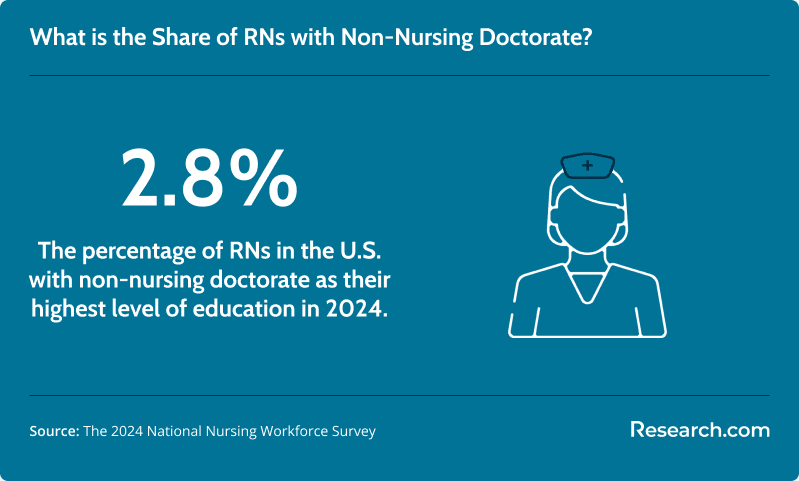
A credential evaluation is only an academic review. It does not make the applicant a registered nurse, does not waive NCLEX-RN requirements, and does not guarantee admission. It simply gives the school, and sometimes the state board of nursing, an official record to review. In 2024, 2.8% of registered nurses (RNs) reported holding a non-nursing doctorate as their highest credential, showing that some nurses enter the profession after advanced education outside the traditional nursing sequence.
Applicants who are also considering other healthcare or behavioral health careers may compare alternatives such as online master's programs in clinical counseling and applied psychology. Nurse practitioner education, however, has a separate licensure structure built around nursing accreditation, RN eligibility, certification, and state APRN approval.
Credential evaluation agencies applicants commonly encounter
Schools usually list the agencies they accept. WES and CGFNS are two common names, but applicants should not assume either one is acceptable for every program or every state board of nursing.
- World Education Services (WES): WES is commonly used for academic admission reviews and is accepted by many U.S. colleges and universities.
- Commission on Graduates of Foreign Nursing Schools (CGFNS) International: CGFNS specializes in health and nursing credential evaluation. Some nursing programs or boards of nursing may prefer or require CGFNS when the review is connected to licensure.
Applicants should check program instructions before purchasing an evaluation. If several agencies are accepted, compare processing time, delivery method, report reuse for licensure, and whether the program requires electronic submission. Students who later reach the graduate-nursing stage may compare shorter post-master's FNP certificate options, but those certificates are generally intended for nurses who already hold a graduate nursing degree.
Document-by-document vs. course-by-course evaluation
| Evaluation type | Information included | Usually sufficient for NP-related admission? |
| Document-by-document evaluation | Identifies the credential earned and provides a general U.S. equivalency. | No. Nursing schools usually need more detail to review prerequisites, credits, and grades. |
| Course-by-course evaluation | Shows individual courses, converted credits and grades, a U.S.-style GPA, and prerequisite-level detail. | Yes. This is the report most ABSN, direct-entry MSN, and NP-related pathways require. |
Credential evaluation steps for foreign medical graduates
- Check each school’s approved agencies. Review the international admissions page and confirm whether the program requires WES, CGFNS, ECE, or another evaluator.
- Select the right report type. Most FMGs need a course-by-course report. Fees typically range from $200 to $400 depending on the agency, delivery method, rush processing, and number of copies.
- Request official academic documents. Evaluators commonly require the diploma or degree certificate plus official transcripts or mark sheets listing courses, grades, and years of attendance.
- Follow the evaluator’s delivery rules. Many agencies require documents to be sent directly by the issuing medical university in a sealed official envelope or through an approved electronic process. Uploaded copies may not count as official.
- Provide certified translations when required. Records not issued in English usually need a certified literal translation submitted with the original-language document. Applicants should not translate their own records.
- Send official reports to programs. Once the review is complete, the agency sends reports to the selected schools and may provide the applicant with a copy.
Document collection can take weeks or longer when overseas universities must issue records. Applicants comparing other graduate admissions models, such as online counseling master's programs that do not require the GRE, should understand that nursing admissions are more dependent on prerequisite verification and licensure eligibility.
Core eligibility requirements for FMGs applying to NP pathways
A foreign medical degree can make an applicant academically strong, but it does not substitute for U.S. nursing education. The applicants who avoid delays usually identify missing prerequisites early, understand the difference between medical and nursing practice, and apply only to programs that match their current licensure status.
Many FMGs start by researching direct-entry master's in nursing programs for non-nurses because these programs are built for degree holders who are not yet registered nurses.
Eligibility requirements to review before applying
| Requirement | What foreign medical graduates usually submit | Why schools require it |
| Equivalent bachelor's degree | A course-by-course international credential evaluation showing U.S. degree equivalency and GPA. | Graduate and accelerated nursing programs must verify that applicants meet the prior-degree requirement. |
| Prerequisite coursework | Program-specific science, statistics, psychology, nutrition, and social science courses. | Schools need evidence that students are ready for nursing theory, labs, simulation, and clinical education. |
| English proficiency | TOEFL or IELTS results if the applicant’s prior education was not completed in English. | Nursing practice depends on safe communication with patients, families, instructors, and clinical teams. |
| RN licensure status | An active U.S. RN license for traditional NP programs, or enrollment in a pre-licensure pathway that leads to NCLEX-RN eligibility. | NP preparation builds on registered nursing education and scope of practice. |
| Clinical compliance | Immunization records, health clearance, background check, drug screening, CPR certification, and sometimes U.S. clinical exposure. | Clinical sites require documentation before students can participate in patient care. |
Equivalent bachelor's degree
Most NP-related routes require proof of a degree comparable to a U.S. bachelor's degree. For foreign medical graduates, this usually means submitting a course-by-course evaluation of an MBBS, MD, or comparable medical credential. Schools use the evaluation to determine U.S. equivalency, calculate GPA, and review prerequisite coverage.
Prerequisite nursing courses
Even extensive medical training may not satisfy every nursing prerequisite. Some programs require coursework completed within the last 5 to 7 years, and many require a minimum grade such as C or higher.
- Anatomy and Physiology
- Microbiology
- General Chemistry
- Statistics
- Developmental or Lifespan Psychology
- Sociology or another social science elective
- Nutrition
English language proficiency
If the medical degree was not taught in English, applicants usually need TOEFL or IELTS scores. Each school sets its own threshold, but competitive NP-related pathways often expect a TOEFL score of 100 out of 120 or an IELTS score of 7.0 or higher.
RN licensure requirements by program type
- Traditional MSN or DNP nurse practitioner programs: These programs usually require an active U.S. RN license before admission. An FMG typically needs to complete an ABSN or another approved RN pathway first.
- Accelerated BSN or direct-entry MSN programs: These programs are designed for non-nurses, so applicants generally do not need RN licensure when they apply. The program should lead to NCLEX-RN eligibility before students move into graduate NP coursework, if an NP specialty is included.
Nurse Practitioners (NPs) were most employed in physicians' offices (122,830), followed by general medical and surgical hospitals (58,080), and outpatient care centers (23,760). The following chart shows the top employers of NPs.
Prerequisite courses FMGs may need before ABSN or direct-entry MSN admission
Foreign medical graduates usually face the same prerequisite categories as other applicants with non-nursing degrees. The difference is documentation. A course on an international medical transcript may appear relevant, but the nursing school still has to verify credit value, lab hours, grade conversion, content match, and recency.
Before paying application fees, applicants should compare every prerequisite on the school’s checklist with the official credential evaluation and ask whether any course requires a separate review.
| Common prerequisite | Typical requirement | FMG-specific advice |
| Human Anatomy and Physiology I and II with lab | Often an 8-credit sequence completed over two terms. | Medical anatomy and physiology may be relevant, but the school may still require proof of lab equivalency. |
| Microbiology with lab | Usually 4 credits. | Ask whether medical microbiology is accepted or whether a U.S. college microbiology lab course is required. |
| Chemistry with lab | Often general chemistry; some programs expect organic chemistry or biochemistry content. | Find out whether medical biochemistry can meet part of the requirement. |
| Statistics | College-level general or inferential statistics. | This is often missing when the medical curriculum did not include a separate statistics course. |
| Human Growth and Development or Developmental Psychology | Lifespan coverage from birth through older adulthood. | Pediatrics or psychiatry coursework may not automatically replace a lifespan psychology course. |
| Nutrition | A human nutrition course. | Some schools require a standalone nutrition course even when nutrition topics appeared in medical training. |
Some programs require prerequisites to be completed within the last 5-10 years and with a minimum grade such as C or better. Because rules differ by institution, applicants should request a written prerequisite review whenever the school offers one.
Are there bridge programs for foreign doctors who want to become NPs?
Yes, but applicants should treat them as limited opportunities rather than the standard route. A true foreign medical graduate bridge program is designed around internationally educated physicians and may streamline parts of the transition into nursing. Even so, it does not remove the need for nursing coursework, supervised clinical education, RN eligibility, and NP preparation.
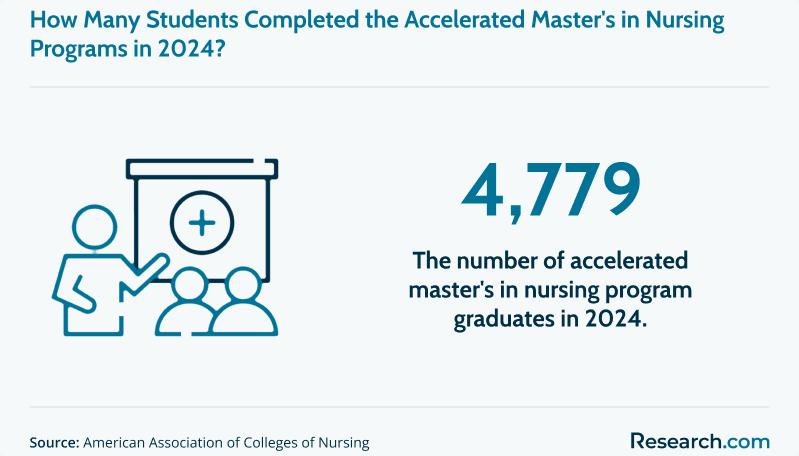
Accelerated master's in nursing programs produced 4,779 graduates in 2024, showing continued interest in fast-track nursing education. For some foreign medical graduates, nursing becomes an alternative to the long and uncertain U.S. physician residency process.
Foreign-educated physician to BSN/MSN pathway
A Foreign Educated Physician to BSN/MSN pathway is the most targeted option. FIU is a notable example. Programs like this are designed to recognize previous medical education while still building the required U.S. nursing sequence: BSN-level preparation, clinical training, NCLEX-RN readiness, RN licensure, and MSN-level nurse practitioner coursework.
General direct-entry MSN pathway
Many FMGs apply instead to direct-entry MSN programs that admit applicants with non-nursing bachelor's or advanced degrees. These programs typically start with pre-licensure nursing coursework, prepare students for the NCLEX-RN, and then continue into graduate nursing study. The crucial question is whether the program includes a nurse practitioner population focus, because some direct-entry MSN programs prepare graduates for RN, generalist, or clinical nurse leader roles rather than NP certification.
Applicants who still need the RN foundation may also explore online nursing degree pathways for non-nurses. Online and hybrid nursing programs should be reviewed carefully because clinical hours, in-person requirements, approved placements, and state authorization still matter.
When an FMG-specific bridge program may be the better choice
- The program has experience evaluating foreign medical school transcripts.
- You want advising designed for internationally educated clinicians.
- You prefer a planned academic sequence from BSN preparation into MSN-level NP study.
- You want to learn with other applicants who have similar medical backgrounds.
When a general ABSN or direct-entry MSN may be more practical
- There is no dedicated FMG bridge program in your state or region.
- You need more choices in format, location, schedule, or specialty.
- You want to work as an RN before choosing an NP population focus.
- You need part-time, hybrid, or online coursework where available and approved.
Some internationally educated physicians compare nursing with non-licensure graduate routes such as a PhD in management online. That type of degree may support leadership or academic goals, but it does not qualify a graduate for RN or NP licensure.
How long do NP prerequisites take for foreign medical graduates?
The prerequisite stage can be short or surprisingly time-consuming. Many foreign medical graduates finish missing requirements in three to 18 months. The timeline depends on how much prior coursework the school accepts, whether science courses are too old under program policy, how many non-science courses are missing, and whether the applicant studies full time or part time.
FMGs often have strong preparation in major sciences because medical curricula commonly include anatomy, physiology, microbiology, and chemistry. Still, a nursing school may require U.S. coursework if the evaluation does not document equivalent credits, labs, grades, or recency.
- Human Anatomy with lab
- Human Physiology with lab
- Microbiology with lab
- General Chemistry
Many schools use an official course-by-course transcript evaluation to decide whether international coursework satisfies individual prerequisites. Applicants should start this process early because one missing lab course can push admission back by an entire term.
Ways to reduce prerequisite delays
- Request a written prerequisite audit from each target school before enrolling in extra classes.
- Use regionally accredited U.S. institutions for missing courses when the nursing program requires U.S. credit.
- Schedule lab sciences first because they are often harder to complete quickly or fully online.
- Confirm whether online labs are accepted before registering.
- Avoid assuming that medical school coursework will automatically satisfy nursing school requirements.
How long does NP licensure take after completing a U.S. program?
After graduating from an approved U.S. nurse practitioner program, the final licensing process generally takes between 2 and 4 months, although state timelines vary. The pace depends on school transcript processing, national certification scheduling and results, background checks, and the state board’s APRN application review time.
- Program documents are submitted. The university sends official transcripts and proof of completion to the national certifying body and the state board of nursing. This may take several weeks depending on the school.
- The graduate completes national certification. The applicant takes the appropriate NP certification exam, such as FNP or AG-ACNP, through an approved certifying body. Certification confirms specialty readiness for state APRN review. Credential-based career progression exists in other fields as well, though requirements differ; for example, educators may assess the value of ABA training for special education teachers.
- The state board reviews APRN licensure. The board evaluates the application, transcript, certification, fees, background check, and any state-specific forms. This stage can take 4 to 12 weeks or more depending on the state and backlog.
Graduates should begin the state board process as soon as they are eligible. Common delays come from missing transcripts, mismatched names, incomplete background checks, unpaid fees, or certification results that have not yet been transmitted.
The top-paying state for NPs in 2024 was California, with an annual mean wage of $158,130, well above the national average. The next chart shows the top five highest-paying states.
MSN, DNP, or post-master's certificate: which NP credential should an FMG pursue?
Foreign medical graduates often see MSN, DNP, and post-master's certificate programs in NP searches and assume they are interchangeable entry points. They are not. The right credential depends first on whether the applicant already has U.S. RN licensure. An FMG without RN licensure usually cannot begin with a traditional NP MSN, DNP, or post-master's certificate. The immediate priority is becoming eligible for RN licensure; the advanced NP credential comes next.
| Credential | Intended student | Fit for foreign medical graduates | Likely result |
| MSN nurse practitioner program | Registered nurses preparing for advanced practice. | A good fit after the FMG becomes an RN, or through a direct-entry MSN that includes NP preparation. | Eligibility for national NP certification and state APRN licensure. |
| DNP nurse practitioner program | Registered nurses seeking a practice doctorate with clinical, leadership, systems, and evidence-based practice content. | Appropriate after RN eligibility is established; typically longer than the MSN route. | NP certification eligibility plus a practice doctorate. |
| Post-master's certificate | Nurses who already have a graduate nursing degree and want another NP specialty. | Usually not the first pathway for FMGs unless they already hold an MSN or equivalent graduate nursing credential. | Eligibility for certification in an additional NP population focus. |
Master of Science in Nursing
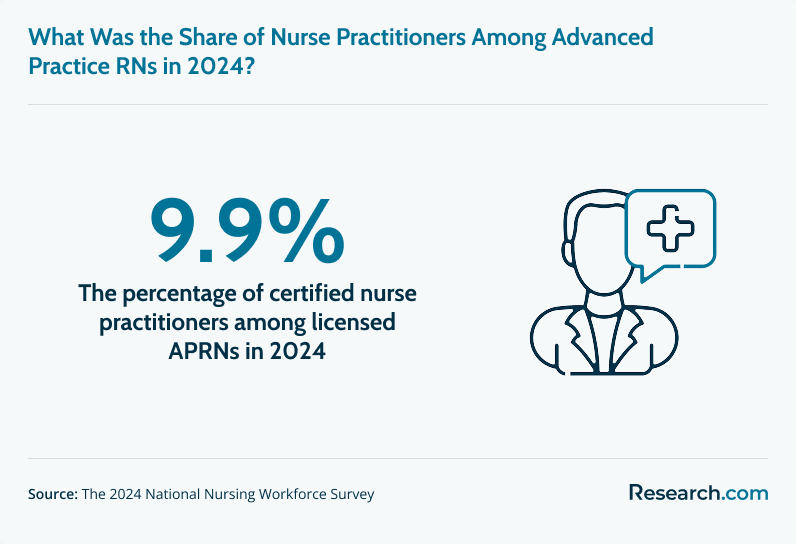
The MSN is a common graduate credential for nurse practitioner preparation. It includes advanced health assessment, pathophysiology, pharmacology, clinical reasoning, and population-focused care. Among licensed APRNs in 2024, only 9.9% were certified nurse practitioners, highlighting the relatively small proportion of certified specialists within the APRN workforce.
For an FMG in a direct-entry pathway, the total time to NP eligibility could be around 2.5 to 3 years, depending on the program structure, clinical scheduling, and state requirements.
Doctor of Nursing Practice
The DNP is a practice-focused doctorate. When designed as an NP track, it includes the clinical preparation required for certification, along with quality improvement, policy, systems leadership, and a scholarly practice project. A BSN-to-DNP pathway can take 3 to 4 years of full-time study, depending on the specialization.
Post-master's certificate
A post-master's certificate is usually for nurses who already hold a master's degree in nursing and want to add a new NP specialty. It is typically 1 to 2 years, but it is usually not the correct starting point for a foreign medical graduate who has not yet completed U.S. RN and graduate nursing requirements.
How foreign medical graduates should choose an NP program
For FMGs, choosing an NP pathway is a licensure decision, not just an academic decision. The wrong program can add time, increase costs, limit clinical placement options, or leave a graduate ineligible for the state where they want to practice. The right program must match the applicant’s current status, lead to the correct credential, include required clinical training, and satisfy state board expectations.
Some applicants look for the fastest possible option, including 12-month or 1 year NP programs. Speed should never be the first filter. A fast program is only useful if it is accredited, clinically viable, state-authorized, and appropriate for the applicant’s RN status.
NP program selection checklist for FMGs
| Selection factor | Questions to ask the school | Why this matters for FMGs |
| Correct entry route | Does the program admit non-nurses, foreign medical graduates, or only licensed RNs? | Applying to a program that requires RN licensure can lead to automatic rejection if the applicant is not yet an RN. |
| Accreditation | Is the nursing program accredited by a recognized nursing accreditor such as CCNE or ACEN? | Accreditation affects certification eligibility, licensure review, and employer acceptance. |
| State authorization | Can the program enroll students in your state, and does it meet that state board’s requirements? | Online and hybrid programs may not be authorized or clinically approved in every state. |
| Clinical placement support | Does the school arrange preceptors, or are students responsible for finding them? | FMGs may not have a U.S. clinical network, making placement support especially important. |
| NCLEX-RN preparation | If the route is pre-licensure, what NCLEX-RN preparation and outcomes does the school provide? | RN licensure is required before the applicant can move fully into advanced practice. |
| NP certification outcomes | What are the first-time pass rates for AANP or ANCC certification exams? | Certification outcomes can help applicants judge whether the program prepares students effectively. |
| Credit for previous education | Will the school review medical coursework for prerequisite credit or waivers? | Accepted prior coursework may reduce time and cost, but policies differ widely. |
Applicants comparing accelerated graduate routes may also review short online direct-entry MSN programs. Before enrolling, they should confirm whether the program leads to RN eligibility, NP eligibility, or a non-NP graduate nursing role.
Red flags that should make applicants pause
- The program cannot clearly state whether graduates are eligible for NCLEX-RN, NP certification, or APRN licensure.
- The school provides no written instructions for international transcript evaluation.
- Students are expected to find all NP preceptors without meaningful school assistance.
- The program promotes speed but does not clearly publish accreditation, clinical, or licensure information.
- Admissions staff cannot explain whether the program is for non-nurses or only for current RNs.
How FMGs can build a stronger NP school application
A strong FMG application should not simply list medical education. It should show why the applicant is intentionally moving into nursing, understands the NP role, and respects nursing as a distinct profession with its own model of care, scope, ethics, and patient-centered framework.
Applicants should be able to explain the differences between nurse practitioners and doctors in essays and interviews without sounding dismissive of either profession.
Documents commonly required
- Course-by-course foreign credential evaluation from an accepted agency.
- Official medical school transcripts and degree documents.
- Certified translations for records not issued in English.
- TOEFL or IELTS scores when required by the program.
- Completed prerequisites or a documented plan for finishing them before enrollment.
- Resume or curriculum vitae focused on nursing readiness and patient care.
- Letters of recommendation from academic, clinical, or U.S. healthcare supervisors when available.
Personal statement strategy
The personal statement should address a question admissions committees are likely to ask: why advanced nursing practice instead of U.S. physician licensure or residency? The best answer does not criticize medicine. It explains a thoughtful move toward the NP model, including continuity of care, patient education, prevention, access, and advocacy.
Applicants should include one or two specific clinical examples that demonstrate judgment, communication, and patient-centered reasoning. The essay should also show familiarity with U.S. nursing scope of practice, collaborative care, and the NP population focus the applicant wants to pursue.
Letters of recommendation and CV
Recommendation letters should confirm academic ability, clinical maturity, professionalism, and readiness for nursing education. Strong recommenders may include a former medical faculty member, a U.S. healthcare supervisor, a physician, an advanced practice provider, or an instructor from recent prerequisite coursework. The CV should emphasize patient care, leadership, research, language skills, community service, and any U.S. clinical exposure.
Common mistakes and better alternatives
| Mistake | Why it creates problems | Better approach |
| Assuming an MBBS or MD replaces nursing education | NP practice requires nursing preparation, RN eligibility, and state licensure. | Apply to a pathway that clearly leads to NCLEX-RN eligibility and NP preparation. |
| Buying the wrong credential evaluation | A document-only report may not provide enough detail for prerequisite review. | Order a course-by-course evaluation when the school requires it. |
| Comparing programs only by tuition | Clinical delays, relocation, repeated prerequisites, and licensure issues can cost more than tuition differences. | Evaluate total cost, timeline, state approval, and clinical placement support. |
| Choosing an online program without checking state rules | Some online programs cannot enroll students or place clinical students in every state. | Confirm state authorization and board of nursing acceptance before applying. |
| Writing an essay that undervalues nursing | Admissions committees want applicants who understand and respect nursing practice. | Explain how medical training supports, but does not replace, advanced nursing preparation. |
What foreign medical graduates say about choosing the NP pathway
- : "I chose the NP route because the holistic, patient-centered model felt close to the family medicine work I had done abroad. Prevention, education, and long-term trust with patients mattered to me. — Sofia"
- : "My physician background helped me clinically, but becoming a U.S. nurse practitioner gave me a sustainable career with autonomy and a healthier balance. I still make meaningful patient-care decisions without returning to constant burnout. — Miki"
- : "After years of uncertainty around residency, the accelerated NP pathway gave me a defined professional direction. As a Family NP, I have stability, room to grow, and a role that recognizes competence. — Deepak"
Key insights for foreign medical graduates considering NP programs
- Foreign medical graduates can become nurse practitioners, but they usually must complete the U.S. nursing sequence: RN eligibility, NCLEX-RN, graduate NP education, national certification, and state APRN licensure.
- A course-by-course credential evaluation is the first major step because schools need U.S.-style degree, GPA, credit, grade, and prerequisite information.
- Dedicated FMG bridge programs exist, but most applicants use accelerated BSN or direct-entry MSN pathways designed for non-nurses.
- Program choice should prioritize accreditation, state authorization, clinical placement support, and licensure fit over speed alone.
- Prerequisites can take three to 18 months depending on accepted prior coursework, recency policies, lab requirements, and missing non-science courses.
- After completing a U.S. NP program, national certification and state APRN licensure generally take between 2 and 4 months, with state board processing often creating the most variation.
- The strongest applications explain a clear transition from medicine to advanced nursing practice and show respect for the NP role as a distinct patient-centered profession.
References
- American Association of Colleges of Nursing. (n.d.). Fact sheet on accelerated baccalaureate and master's degrees in nursing.
- American Association of Nurse Practitioners. (2024). 2024 nurse practitioner practice report.
- American Association of Nurse Practitioners. (n.d.). NP student snapshot 2015-2024.
- American Association of Nurse Practitioners. (n.d.). Certification guidance for nurse practitioner students.
- Commission on Graduates of Foreign Nursing Schools International. (2024). 2024 nurse migration report.
- Florida International University, College of Nursing and Health Sciences. (n.d.). Foreign Educated Physician BSN/MSN program information.
- Nurse.org. (n.d.). Nurse practitioner survey resource.
- Smiley, R. A., Kaminski-Ozturk, N., Reid, M., & Burwell, P. M. (2025). The 2024 national nursing workforce survey, Journal of Nursing Regulation, 16(1), S1-S88.
- U.S. Bureau of Labor Statistics. (2023). Occupational employment and wages, May 2022: Nurse practitioners.
Other Things You Should Know About NP Programs for Foreign Medical Graduates
Yes. Some accelerated post-master’s bridge programs accept foreign medical graduates if they hold a recognized medical degree, meet an accredited U.S. or Canadian transcript evaluation requirement, and complete prerequisite nursing coursework. Most programs also require proof of English proficiency, a current RN license, and 500 to 1,000 supervised clinical hours.
After completing NP programs, foreign medical graduates must take the National Council Licensure Examination (NCLEX) to practice as a Nurse Practitioner in the U.S. States may have additional requirements, so it's advisable to check with state nursing boards for specific details.
In 2027, several NP programs actively accommodate foreign medical graduates by offering tailored support, such as additional language assistance and cultural integration services. These programs recognize the unique skills and perspectives that internationally trained graduates bring to the U.S. healthcare system, providing resources to facilitate a successful transition.


