2027 Best Online MBA Programs for Working Professionals

Co-Founder and Chief Data Scientist
Choosing an online MBA is usually a trade-off: you want stronger management credentials, broader career options, and higher earning potential, but you may not be able to pause full-time work to attend business school on campus. For many experienced professionals, the right online MBA can make that transition possible by combining graduate business training with flexible scheduling.
About 50 % of mid-career professionals report feeling stuck in roles that do not easily lead to broader leadership positions or industry changes. At the same time, the potential payoff can be meaningful: according to a 2023 survey from Graduate Management Admission Council, 77 % of MBA graduates confirmed that their degree increased their earning power.
This guide, prepared by career-planning experts with over 10 years of experience, explains how online MBA programs for working professionals are structured, what they cost, how long they take, what admissions committees look for, and how to evaluate whether a program fits your career goals and return-on-investment expectations.
Key Benefits of an Online MBA Program for Working Professionals
- Enables roles such as management consultant, operations manager, or C-suite executive across sectors including technology, finance and healthcare.
- Average annual salary of about US $165,372 for MBA holders, according to November 2025 data.
- Online delivery allows you to continue working full-time, apply new skills in real time and balance learning with professional and personal commitments
What makes an online MBA ideal for working professionals?
An online MBA is well suited for working professionals because it is designed around employment rather than as an alternative to employment. Students can usually continue earning income, apply business concepts immediately at work, and use their current organization as a setting for projects, leadership practice, and career growth.
The strongest online MBA programs do more than move campus lectures onto a learning platform. They give working adults a structured path to build skills in finance, strategy, operations, leadership, marketing, analytics, and decision-making while keeping enough flexibility to manage job and family responsibilities.
- Most students can stay employed while enrolled. GMAC’s Enrolled Students Survey (2022) reported 89% employment at graduation among professional MBA students, which reflects how commonly these programs serve learners who are already in the workforce.
- Online and hybrid formats have expanded. Online and hybrid MBA formats have grown since 2020. GMAC noted a sharp rise in interest in online delivery after 2019, and AACSB (2024) shows more business schools shifting master’s programs to online or hybrid formats to serve working learners.
- Employer support can reduce the net cost. The SHRM Employee Benefits Survey (2022) found 48% of employers offer tuition assistance for undergraduate or graduate studies. For working professionals, this can materially change the affordability of a program.
- Coursework can connect directly to current work. Many students use real workplace problems for class projects, strategy assignments, operations analyses, or leadership reflections. This can help the degree produce value before graduation.
- The format supports career transitions. Professionals who want to move from technical, clinical, military, nonprofit, or specialist roles into management can use the MBA to build business vocabulary, leadership credibility, and a broader network.
The main limitation is that flexibility does not mean the program is easy. Online MBA students still need disciplined time management, reliable technology, and a realistic weekly study plan. The best fit is usually a program whose pacing, live-session requirements, and support services match your work schedule.
How long does it take to complete an online MBA program for working professionals?
Most online MBA programs take two to three years to complete when students enroll part-time. That timeline works well for professionals who need to balance graduate study with a full-time job, travel, caregiving, or unpredictable work demands. Traditional two-year schedules remain common, but many online programs now offer more flexible pacing.
The fastest options are accelerated programs, which may be attractive if you already have business experience, can handle a heavier course load, and want to finish quickly. Some schools offer 1 year online MBA no GMAT programs for experienced candidates. These can save time, but they may require more intensive weekly study and fewer breaks between terms.
Program length usually depends on several factors:
- Enrollment intensity: Taking one course at a time usually extends the timeline, while taking multiple courses per term can shorten it.
- Credit requirements: Programs with more required credits or prerequisite courses may take longer.
- Course format: Short accelerated terms can help students progress faster, but they compress assignments and exams into a tighter schedule.
- Residency or immersion requirements: Some online MBAs include in-person sessions that may affect scheduling.
- Transfer credits or waivers: Prior graduate coursework or foundational business knowledge may reduce the number of courses required, depending on school policy.
Flexible program formats have grown steadily since 2020. AACSB’s State of Business Education Report (2025) highlights schools offering accelerated online options, and GMAC reports show increased demand for flexible delivery. Before applying, review each school’s posted curriculum, term calendar, maximum completion time, and median time-to-degree data through program pages or IPEDS so you can choose a pace that is sustainable.
What is the average cost of an online MBA program for working professionals?
The cost of an online MBA varies widely by institution type, residency status, program length, credit requirements, and fee structure. According to NCES/IPEDS data, the average tuition and required fees for full-time graduate students are around $20,000–$25,000 per year, though public in-state students often pay less, and private schools typically charge more.
For working professionals, the more useful figure is total program cost, not annual tuition. Some lower-cost public or bundled cheapest online MBA programs can total under $15,000, while top private programs can exceed $100,000. A program with a lower per-credit rate may still cost more if it requires more credits or charges significant fees.
When comparing costs, calculate the full price using the same method for every school:
- Tuition: Multiply the per-credit tuition by the number of required credits.
- Mandatory fees: Include technology, distance learning, student services, graduation, and course-specific fees.
- Residency costs: Add travel, lodging, meals, and time away from work if the program requires campus visits.
- Books and materials: Account for textbooks, case-study materials, software, and subscriptions.
- Opportunity cost: Consider whether the course load could limit overtime, consulting work, promotion availability, or job mobility while enrolled.
Do not assume online automatically means cheaper. Some online MBAs charge the same tuition as campus programs, while others use a flat-rate or bundled pricing model. The best value is a program that combines manageable cost with recognized accreditation, relevant concentrations, strong career support, and outcomes that fit your goals.
Working professionals often finance an online MBA through a combination of federal loans, employer tuition assistance, institutional scholarships, personal savings, and private loans. The right mix depends on program cost, household budget, employer benefits, credit profile, and how quickly you expect the degree to support career advancement.
Federal Loans
Graduate students can access Direct Unsubsidized Loans and Grad PLUS loans, which may be used for tuition and eligible education-related expenses while enrolled. Federal loans often provide borrower protections that private loans may not match, so they are commonly reviewed before private financing.
Employer Tuition Assistance
Employer tuition assistance can be one of the most valuable funding sources for working professionals. According to NCES/NPSAS data, nearly half of employers offer tuition assistance programs for graduate education, making it easier for some students to reduce out-of-pocket costs.
Before relying on this benefit, confirm the rules in writing. Some employers require you to earn a minimum grade, stay with the organization for a certain period after reimbursement, choose an approved program, or pay upfront and receive reimbursement later.
Institutional Scholarships and Grants
Business schools may offer merit-based scholarships, need-based grants, limited fellowships, or discounts for specific applicant groups. Awards vary by school and may depend on academic record, professional experience, leadership background, industry, military service, or application timing.
Ask whether scholarships are renewable, whether they apply to all terms, and whether online students compete for the same awards as campus students.
Private Loans
Private loans can fill funding gaps, but they require careful comparison. Interest rates, repayment terms, fees, co-signer requirements, and hardship options vary by lender. Because private loans may offer fewer protections than federal loans, compare them only after understanding your federal, school-based, and employer-funded options.
Practical funding checklist
- File required financial aid forms early and confirm school deadlines.
- Ask your employer about annual reimbursement limits and service commitments.
- Compare scholarship offers based on total program cost, not just first-term discounts.
- Borrow only what you need, especially if you are continuing to earn income while enrolled.
- Estimate monthly payments before accepting loans so the degree does not create avoidable financial strain.
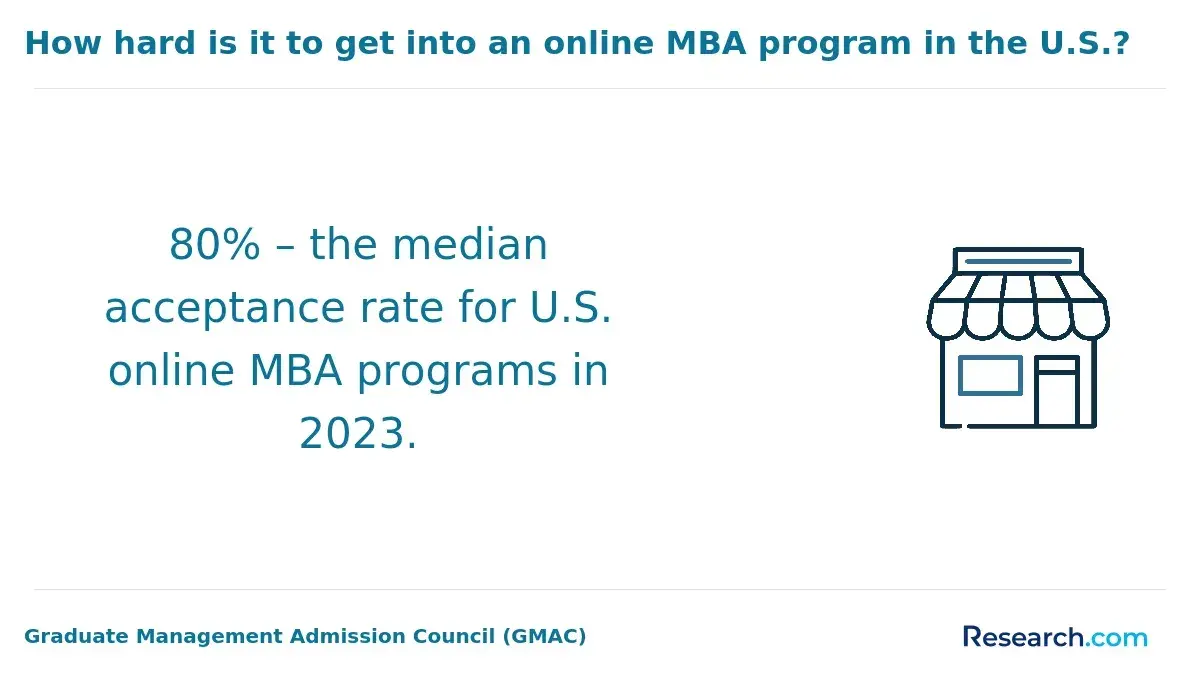
Online MBA admissions requirements vary, but most programs evaluate whether applicants are academically prepared, professionally experienced, and ready to contribute to a graduate business cohort. For working professionals, admissions committees usually look for evidence of leadership potential, career progression, quantitative readiness, and a clear reason for pursuing the MBA now.
- Bachelor’s degree: A four-year undergraduate degree from an accredited institution is typically required. The degree does not always need to be in business, but applicants from nonbusiness backgrounds may need to complete foundation work.
- GPA requirements: Many programs expect a competitive GPA, often around 3.0 or higher, though this varies by school. Applicants with a lower GPA may strengthen their application through strong work experience, test scores, quantitative coursework, or a clear academic explanation.
- Work experience: Professional experience is important, with many programs expecting 3–5+ years in relevant roles. Quality matters as much as length; leadership, project ownership, budget responsibility, client management, or supervisory experience can all help.
- Standardized tests: GMAT or GRE scores may be required, but many programs now offer test waivers or flexible policies. Waivers often depend on professional experience, prior graduate study, undergraduate GPA, quantitative background, or certifications.
- Supporting documents: Applicants usually submit a resume, letters of recommendation, and a statement of purpose. These materials should explain career goals, leadership experience, and why the specific program is a good fit.
- Quantitative prerequisites: Some programs require prior coursework in math, statistics, or accounting, or provide a bridge module. This is especially important for applicants without recent quantitative coursework.
A common mistake is treating the application like a job history summary. Strong MBA applications connect past experience to future goals. Your materials should show what you have done, what skills you need next, and how the program will help you move into management, change industries, or advance within your current field.
Online MBA specializations allow working professionals to align the degree with a specific career path. A general MBA can be useful for broad management development, but a concentration may provide clearer value if you are targeting a particular function, industry, or promotion track.
Finance and Marketing
Finance, accounting, and marketing concentrations remain common choices. Finance-focused tracks may support roles in corporate finance, investment analysis, budgeting, risk management, or financial leadership. Marketing tracks often emphasize customer strategy, brand management, digital marketing, analytics, and market research.
These specializations are most useful when they match your target role. For example, a professional moving toward a controller, finance manager, or corporate strategy role may benefit more from finance, while someone pursuing product marketing or growth leadership may prefer marketing.
Operations and Technology Management
Operations, supply chain, and technology management tracks help professionals build skills in process improvement, logistics, project execution, systems thinking, and organizational efficiency. These concentrations can be especially practical for professionals in manufacturing, retail, technology, consulting, transportation, or service operations.
Technology management may also be a strong fit for IT professionals who want to move from technical execution into product ownership, systems leadership, digital transformation, or cross-functional management.
Healthcare and Data Analytics
Healthcare management and business analytics are increasingly relevant for professionals working in complex, data-driven environments. Healthcare tracks may focus on healthcare operations, policy, finance, quality improvement, and organizational leadership. Business analytics tracks typically emphasize data interpretation, forecasting, performance measurement, and evidence-based decision-making.
These options can be valuable if you want to move into roles where business decisions depend on regulatory knowledge, operational data, or measurable performance outcomes.
Niche and Emerging Specializations
Some programs offer fintech, sustainability/ESG, or supply chain resilience concentrations. These can be helpful when they match a specific labor-market need or your current industry, but they should be evaluated carefully. A niche concentration is strongest when the school has relevant faculty expertise, employer connections, applied projects, and alumni working in that area.
If accreditation and specialization flexibility are priorities, consider reviewing AACSB accredited online MBA programs. Accreditation does not guarantee a specific job outcome, but it can help signal that the business school meets recognized quality standards.
Online MBA programs are generally more flexible than traditional campus formats, but the level of flexibility differs substantially by school. Some programs are almost entirely asynchronous, while others require live classes, group meetings, residencies, or set login times. The best choice depends on how predictable your work schedule is and how much structure you need to stay on track.
- Asynchronous coursework: Many programs allow students to access lectures and assignments on their own schedule. This is helpful for professionals who travel, work shifts, or manage family responsibilities.
- Synchronous sessions: Some programs include live online classes. These can improve interaction with faculty and classmates, but they require more schedule discipline.
- Part-time pacing: Students can extend their program over several years to fit around work and family obligations. This reduces weekly pressure but may delay graduation.
- Accelerated pacing: Faster tracks can shorten time to degree, but they usually require heavier weekly reading, assignments, and group work.
- Hybrid options: Some programs combine online learning with occasional in-person sessions or residencies. These may strengthen networking but add travel costs and scheduling constraints.
- Employer project integration: Professional MBA students often use work projects to meet course requirements, connecting learning to their current job.
- Student support services: Programs frequently provide academic coaching, career guidance, and mental health resources to support working parents and other busy learners.
- Time commitment: Weekly workload varies, so checking each program’s expected hours helps with planning.
Before enrolling, ask practical questions: Are exams proctored? Are group projects required? How often are live sessions held? Can you pause enrollment if work demands increase? Are courses offered every term, or only once per year? These details often determine whether a program is truly manageable for a working adult.
The job market for online MBA graduates is strongest for professionals who combine the degree with relevant experience, a clear specialization, and an active career strategy. The MBA can support advancement into management and specialist roles, but outcomes are not automatic. Program reputation, accreditation, networking, location, industry, and prior work history all matter.
According to GMAC, 86% of 2022 graduates were employed at graduation, showing continued demand for graduate business skills. Management occupations also remain financially attractive, with the BLS reporting a median annual wage of $122,090 in May 2024. Common target areas include marketing, finance, operations, healthcare management, consulting, analytics, general management, and technology leadership.
For working professionals, the strongest job-market advantage may come from combining the MBA with existing domain expertise. For example, an engineer may use the degree to move into product or operations leadership, a nurse may move toward healthcare administration, and a financial analyst may progress into management or strategy.
Before choosing a program, review each school’s career placement statistics, employer partners, alumni outcomes, and career services. Look for evidence that online MBA students receive meaningful career support, not just access to a general job board. Useful indicators include coaching availability, networking events, employer panels, alumni mentoring, resume support, and salary or placement reporting.
An online MBA can contribute to salary growth, but the size and timing of that increase vary. The degree is most likely to pay off when it helps you move into a higher-responsibility role, change to a better-paying function, enter a stronger-paying industry, or qualify for leadership opportunities that were previously out of reach.
- Pre- vs. post-MBA salary: Many employed students report notable compensation gains after completing their MBA. GMAC data show median increases for North American full-time MBA graduates. For online students, the increase often depends on whether they change roles, employers, industries, or levels of responsibility.
- Management occupations: BLS data indicate that management and specialist roles pay significantly more than the median wage, with a median annual wage of $122,090 as of May 2024.
- Industry impact: Salary growth depends on the sector; finance, healthcare, and technology often offer higher starting salaries post-MBA.
- Program cost: A large salary increase may still take time to offset tuition if the program is expensive. Lower-cost programs may produce a stronger ROI for students who stay employed and receive employer assistance.
- Career strategy: Students who begin networking, targeting roles, and building measurable achievements before graduation are usually better positioned than those who wait until the final term.
- Return on investment: Employer support, program cost, and post-MBA role influence overall ROI. Checking a school’s employment report helps estimate potential salary uplift. Consider evaluating online executive MBA cost when calculating ROI.
A realistic salary forecast should include your current compensation, expected tuition after aid, loan costs, employer reimbursement, target job titles, likely promotion timeline, and the strength of the school’s alumni and employer network in your field.
How do I choose the best Online MBA program for working professionals?
The best online MBA for a working professional is not simply the most famous, fastest, or cheapest option. It is the program that fits your career goal, schedule, budget, learning style, and need for professional credibility. Start by defining what you want the MBA to accomplish: promotion, industry change, leadership preparation, entrepreneurship, specialization, or a broader executive network.
- Accreditation: Confirm AACSB or other recognized accreditation to ensure program quality and credibility. Accreditation can be especially important if you want employer reimbursement, plan to pursue further education, or need a credential that travels well across industries.
- Career outcomes: Review employment rates, median salaries, top employers, and internship opportunities to gauge post-graduation success. When possible, look specifically for outcomes for online MBA students and working professionals.
- Alumni network and mentoring: Strong alumni connections and mentoring programs can help with job placement and career advancement. Ask whether online students have equal access to alumni events, career fairs, and networking opportunities.
- Program structure: Compare student-to-career-coach ratios, residency requirements, and asynchronous vs. synchronous course delivery. Make sure the calendar works with your job, not just your ideal schedule.
- Specializations: Choose a program with concentrations, electives, or applied projects that match your target role. Do not pay for a specialization unless it clearly supports your career plan.
- Faculty and course quality: Review who teaches online courses, how often courses are updated, and whether assignments use current business cases, analytics tools, team projects, or employer-based applications.
- Cost and ROI: Factor in tuition, fees, scholarships, and employer support to estimate the return on investment. Compare total program cost against realistic salary growth, not best-case outcomes.
Before applying, speak with admissions, career services, current students, and alumni if possible. Ask direct questions about workload, faculty access, job-search support, group projects, and outcomes. A strong online MBA should give you flexibility, but it should also provide structure, accountability, and a credible path toward the career result you want.
Other Things You Should Know About Online MBA Programs for Working Professionals
To gain admission into the top online MBA programs in 2027, working professionals typically need a bachelor's degree from an accredited institution, a competitive GMAT or GRE score, several years of relevant work experience, and strong letters of recommendation. Some programs may also require a personal statement or an interview.
In 2027, programs like Indiana University's Kelley Direct and Carnegie Mellon University's Tepper School of Business offer highly flexible schedules, allowing working professionals to tailor coursework around their commitments. These programs provide asynchronous classes, live sessions, and the choice to accelerate or decelerate the pace as needed.
Many online MBA programs in 2027 require either the GMAT or GRE, but some waive both for applicants with strong work experience, a prior graduate degree, or a high undergraduate GPA. Schools that allow waivers still usually require transcripts, a résumé, and references.
- AACSB. (2023, October). Why MBA entrance exams are getting shorter. Retrieved November 11, 2025, from https://www.aacsb.edu/insights/articles/2023/10/why-mba-entrance-exams-are-getting-shorter
- AACSB. (2024). Masters enrollment trends at AACSB schools. Retrieved November 11, 2025, from https://www.aacsb.edu/insights/reports/2024/masters-enrollment-trends-at-aacsb-schools
- AACSB. (2025). AACSB 2025 state of business education. Retrieved November 11, 2025, from https://www.aacsb.edu/-/media/publications/research-reports/aacsb-2025-state-of-business-education.pdf
- Bureau of Labor Statistics. (2023, May). May 2023 national occupational employment and wage estimates: Management occupations. Retrieved November 11, 2025, from https://www.bls.gov/oes/2023/may/oes110000.htm
- Bureau of Labor Statistics. (n.d.). Management occupations. Retrieved November 11, 2025, from https://www.bls.gov/ooh/management/
- GMAC. (2022). 2022 enrolled students survey summary report. Retrieved November 11, 2025, from https://www.gmac.com/-/media/files/gmac/research/enrolled-students/2022/2022_enrolled_students_survey_summary_report_final.pdf
- GMAC. (2022). Measuring program ROI: White paper on the value of graduate management education. Retrieved November 11, 2025, from https://www.gmac.com/-/media/files/gmac/research/measuring-program-roi/2022-gmac-white-paper-value-of-gme.pdf
- GMAC. (2022). 2022 GMAC prospective students survey summary report. Retrieved November 11, 2025, from https://www.gmac.com/market-intelligence-and-research/research-library/admissions-and-application-trends/2022-gmac-prospective-students-survey-summary-report
- National Center for Education Statistics. (n.d.). IPEDS trend generator. Retrieved November 11, 2025, from https://nces.ed.gov/ipeds/TrendGenerator/app/build-table/13/208
- National Center for Education Statistics. (2021). Digest of education statistics: Table 330.50, average graduate tuition and fees. Retrieved November 11, 2025, from https://nces.ed.gov/programs/digest/d21/tables/dt21_330.50.asp
- National Center for Education Statistics. (n.d.). National Postsecondary Student Aid Study (NPSAS). Retrieved November 11, 2025, from https://nces.ed.gov/surveys/npsas/
- OECD. (2024). OECD employment outlook 2024. Retrieved November 11, 2025, from https://www.oecd.org/content/dam/oecd/en/publications/reports/2024/07/oecd-employment-outlook-2024_abc8ad82/ac8b3538-en.pdf
- SHRM. (2022). SHRM releases 2022 employee benefits survey. Retrieved November 11, 2025, from https://www.shrm.org/about/press-room/shrm-releases-2022-employee-benefits-survey
- ZipRecruiter. (2025, November). MBA salary data. Retrieved November 11, 2025, from https://www.ziprecruiter.com/Salaries/Mba-Salary