2027 Best Part-Time Online MBA Programs for Busy Adults

Co-Founder and Chief Data Scientist
A part-time online MBA is built for professionals who want graduate business training without leaving the workforce. The decision is not simply “Which school is best?” It is whether a program fits your schedule, budget, career goals, learning style, and tolerance for debt while you continue managing full-time work and personal responsibilities. For many busy adults, that balance matters as much as brand name.
This guide explains how to compare part-time online MBA programs for 2027, including accreditation, affordability, test-waiver options, time to completion, concentrations, employer perception, financing, time management, and return on investment. It is designed for working professionals who want a practical way to narrow their choices, avoid costly mismatches, and choose a program they can realistically finish.
Demand for flexible MBA formats remains strong because many professionals are combining 40+ hours of job duties with family, financial, and career obligations. At the same time, MBA outcomes can be meaningful: recent data show that more than 80 % of MBA graduates found employment within three months of graduation. The strongest choice is the program that helps you turn that credential into measurable advancement without creating an unsustainable workload or debt burden.
Key Benefits of Getting Into Part-Time Online MBA Programs for Busy Adults
- You can continue working full time while you study, which helps you maintain your income and apply what you’re learning in real time.
- Graduates of MBA programs often see increased salary potential; for example, median MBA salaries approach or exceed six figures in many markets.
- The online delivery format gives you flexibility in schedule, location and pace, reducing commuting and allowing better work-life balance.
What are the best part-time online MBA programs for busy adults?
The best part-time online MBA programs for busy adults are typically accredited, flexible, career-oriented, and structured so students can keep working while progressing at a manageable pace. A strong program should offer clear course scheduling, accessible faculty, responsive advising, relevant concentrations, and career support that does not assume students are available during traditional campus hours.
Programs often considered strong options for working adults include:
- University of Illinois Urbana-Champaign – iMBA (online, part-time)
- University of Florida – Online MBA for working professionals
- Arizona State University – W. P. Carey Online MBA (part-time online)
- Indiana University (Kelley) Online MBA (for working professionals)
- University of North Carolina (Kenan-Flagler) Evening/Weekend or online hybrid MBA
- University of Maryland (Smith) Online MBA (FlexTrack)
- Washington State University Online MBA (Digital Marketing & Innovation)
- Temple University – Fox Online MBA for working professionals
- Auburn University – Harbert Online MBA for managers
- Northeastern University – D’Amore-McKim Online MBA for working professionals
These programs differ in cost, course delivery, concentration options, cohort structure, and completion timeline. Many part-time online MBA programs take 2-4 years, but the actual pace depends on course load, credit requirements, and whether the school allows students to pause or reduce enrollment during demanding work periods. If affordability is one of your main filters, compare programs carefully with resources on low-cost online MBA options.
How to compare programs as a working adult
- Accreditation: Prioritize recognized business school accreditation, especially AACSB when available, because it signals that the school has met external quality standards.
- Schedule design: Check whether courses are asynchronous, synchronous, or hybrid. Asynchronous courses are often easier for professionals with unpredictable schedules, while live sessions can provide more interaction and accountability.
- Workload transparency: Ask admissions staff how many hours students typically spend per course each week and whether assignment deadlines are predictable.
- Career relevance: Look for concentrations, electives, projects, or capstones that connect directly to your current role or target position.
- Student support: Review advising, tutoring, library access, career coaching, networking events, and technical support for online students.
- Total cost: Compare tuition, fees, required residencies, books, technology costs, and any travel requirements rather than judging by tuition alone.
A practical shortlist should include programs you can afford, programs you can complete with your schedule, and programs that have enough credibility in your target job market. The “best” program is not always the most selective or expensive one; it is the one most likely to help you finish and advance.
How do I find affordable AACSB-accredited online MBA programs for busy adults?
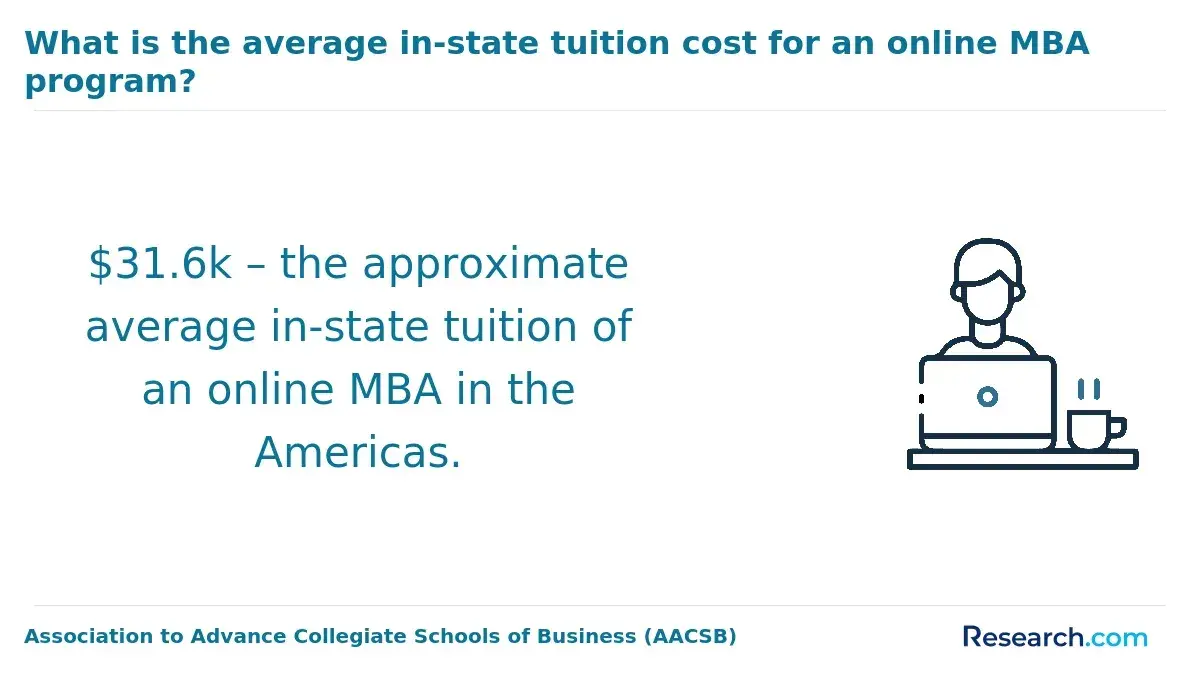
To find an affordable AACSB-accredited online MBA, start by confirming accreditation directly through the business school or AACSB, then compare the full cost of attendance instead of only the advertised tuition rate. AACSB accreditation from the Association to Advance Collegiate Schools of Business is widely used as a quality marker for business programs, but affordability varies significantly among accredited schools.
A good search process should include three steps: verify quality, calculate real cost, and test whether the program’s schedule works for your life.
What to check before applying
- Accreditation: Confirm that the business school has AACSB accreditation, not just general institutional accreditation.
- Total tuition and fees: Compare cost per credit, total credits, technology fees, program fees, graduation fees, books, and any required travel.
- Employer tuition assistance: Ask your employer whether tuition reimbursement, direct billing, professional development funds, or education benefits are available.
- Completion rules: Review minimum and maximum time limits, course sequencing, leave policies, and whether courses are offered often enough for part-time students.
- Online student access: Confirm that part-time online students receive the same academic advising, career services, library access, and networking opportunities as other MBA students.
Curated lists of affordable AACSB accredited online MBA programs can help you identify schools that combine recognized accreditation with lower tuition. Use those lists as a starting point, then verify current tuition and policies on each school’s official site before making a decision.
Common trade-offs in lower-cost programs
- Lower cost may come with fewer elective choices, fewer concentrations, or less frequent course availability.
- Very low cost may require more synchronous sessions, fixed course sequences, or less flexibility than busy professionals expect.
- A program with low tuition can still be expensive if it has high fees, required travel, or a long completion timeline.
- Affordability should be weighed against student outcomes such as graduation rate, time to completion, alumni network strength, and job placement.
The safest approach is to build a side-by-side comparison of accredited programs using the same cost categories for each school. This prevents a low advertised tuition rate from hiding extra expenses that matter to working adults.
What’s the difference between a part-time online MBA and EMBA for working professionals?
A part-time online MBA is usually designed for professionals who want broad business training while continuing to work, often with flexible pacing and a mix of early- and mid-career classmates. An executive MBA, or EMBA, is generally built for more experienced managers and senior professionals who want a cohort-based leadership program with a more intensive format.
The right choice depends on your career stage, work experience, budget, employer support, and how much schedule structure you want.
Part-Time Online MBA
- Designed for professionals who plan to keep working full time while studying.
- Often allows flexible pacing, commonly 1–2 courses per term.
- Frequently takes 2-4 years to complete, depending on course load and program rules.
- Typical work experience requirement is around ~3-5 years, though requirements vary by school.
- Often offers broad concentrations such as leadership, analytics, marketing, finance, or operations.
Executive MBA (EMBA)
- Designed for more senior professionals, often with 8+ years of experience and management responsibilities.
- Usually cohort-based, meaning students move through the program with the same peer group.
- May use accelerated schedules, intensive weekend sessions, residencies, or travel requirements.
- Often emphasizes executive leadership, strategy, organizational decision-making, and peer networking.
- May be more likely to involve employer sponsorship or significant employer support.
If you are comparing executive formats on cost, review options such as the most affordable online executive MBA programs.
Key Differences
- Career stage: A part-time online MBA usually fits early- or mid-career professionals. An EMBA is typically better for experienced managers or executives.
- Schedule: A part-time online MBA may offer a slower, more adjustable path. An EMBA often uses fixed cohorts and intensive blocks.
- Cost: EMBA programs often cost more, though some students receive employer funding because the degree is tied to leadership development.
- Peer group: EMBA classmates usually bring more senior leadership experience. Part-time online MBA cohorts may include a broader mix of industries and career stages.
- Learning goals: A part-time MBA may be stronger for career switching or skill building across business functions. An EMBA is often better for professionals already leading teams, business units, or strategic initiatives.
Choose a part-time online MBA if you need flexibility, are still building your management profile, or want to pivot into a new function or industry. Choose an EMBA if you already have substantial leadership experience, want an executive peer network, and can handle a more structured and often more intensive format.
Yes. Many online MBA programs either do not require the GMAT or allow qualified applicants to request a waiver. This is especially helpful for working professionals who have strong professional experience but limited time for standardized test preparation. However, “no GMAT required” does not mean admissions are automatic. Schools still review academic readiness, work history, leadership potential, and fit with the program.
Why Some Schools Waive the GMAT/GRE
- They may place more weight on work experience, undergraduate GPA, professional achievements, and evidence of quantitative ability.
- They recognize that working adults may already demonstrate business readiness through management experience, analytical responsibilities, or career progression.
- They may use essays, resumes, interviews, recommendations, or prior coursework to evaluate applicants instead of relying heavily on test scores.
What You Should Check
- Confirm whether the GMAT/GRE is fully optional, not required, or waived only for applicants who meet certain criteria.
- Ask whether your profile qualifies for a waiver; some programs may consider applicants with 3+ years’ work experience.
- Review official admissions requirements for online MBA programs with no GMAT required.
- Make sure you still meet the other requirements, including a bachelor’s degree, transcripts, resume, essay, letters of recommendation, and any interview requirements.
- Check whether the school requires prerequisite business, statistics, accounting, or quantitative coursework before enrollment.
How to Strengthen Your Application
- Use your resume to show measurable impact, promotions, leadership responsibilities, budget ownership, project results, or cross-functional work.
- In your essay, explain why you need an MBA now and how the program connects to a realistic career plan.
- Highlight quantitative or analytical experience, especially if your undergraduate record does not clearly show readiness for graduate business coursework.
- Choose recommenders who can speak to your judgment, work ethic, leadership potential, and ability to manage competing priorities.
- Show that you understand the demands of part-time study while working and have a plan to manage them.
A no-GMAT online MBA can be a strong option for busy adults, but you should still evaluate academic quality, accreditation, student outcomes, and cost. Do not choose a program only because the application is easier.
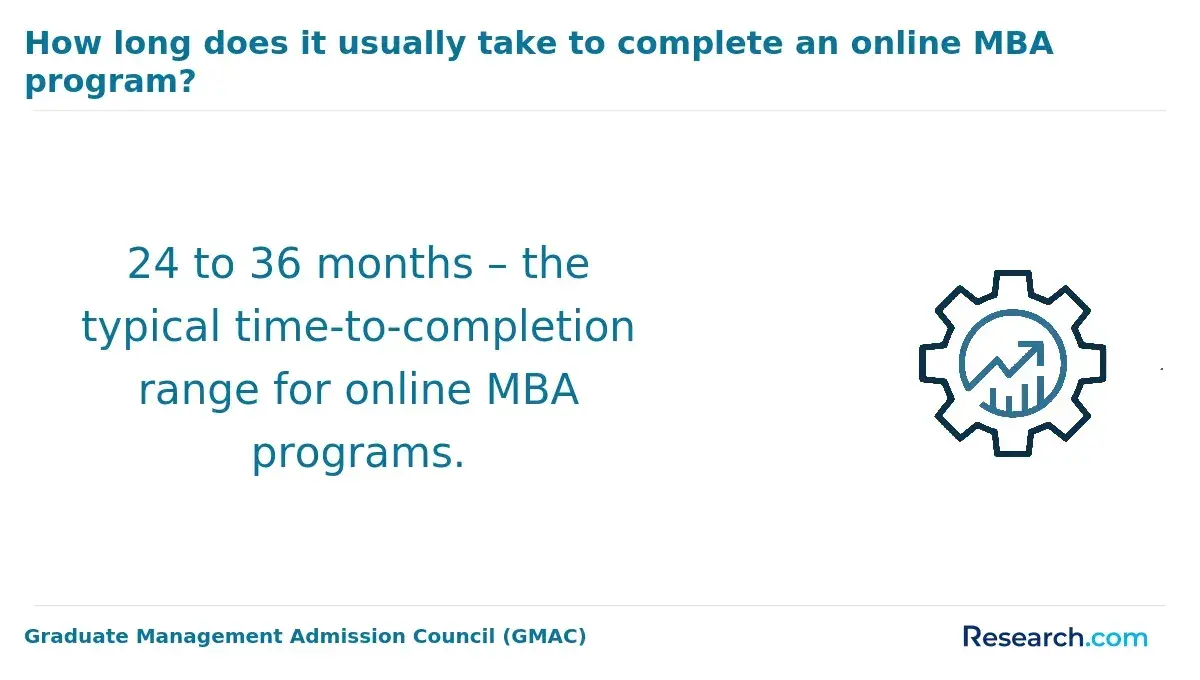
A part-time online MBA for working professionals typically takes about 2-4 years to complete. The exact timeline depends on the number of credits required, how many courses you take each term, whether the program has fixed course sequences, and whether you need to pause enrollment during busy periods at work or home.
Before enrolling, ask the program for a sample plan of study for a student working full time. This is more useful than relying only on the fastest advertised completion time, which may assume a heavier course load than many busy adults can sustain.
Factors That Affect Duration
- Course load: Taking one course per term usually extends the timeline, while taking two or more courses can shorten it but increase weekly workload.
- Credit requirements: Some programs require 30–60 credits, and programs at the higher end generally take longer unless courses are accelerated.
- Pacing flexibility: Some schools allow up to 6 years for part-time completion, while others expect students to move through a tighter sequence.
- Course availability: If required courses are offered only at certain times, missing one can delay graduation.
- Breaks or leaves: Family obligations, job changes, travel, health issues, or peak work seasons can affect progress, so review leave and reentry policies before enrolling.
- Residencies or live sessions: Even online programs may include required synchronous meetings, intensives, or campus components that influence your schedule.
Realistic Planning for Working Students
If you take one course, or about ~3 credits, every semester while working full time, you might finish in ~3 years. If you take a heavier load during less demanding work periods and reduce your load during busier terms, you might finish in ~2 years. The best timeline is one you can maintain without consistently sacrificing job performance, health, or family responsibilities.
Busy professionals should build a schedule around known constraints: budget cycles, tax season, product launches, school calendars, caregiving duties, travel, or major work deadlines. Treat MBA coursework like a standing professional obligation, but avoid planning every term at maximum capacity. A slightly longer timeline is often better than withdrawing after overcommitting.
The best online MBA concentration for a busy adult is one that supports a clear career goal and fits the time and skill demands you can manage while working. A concentration should not be chosen only because it sounds marketable. It should help you gain skills you can apply in your current job or use to move into a specific next role.
Popular Concentrations for Working Professionals
- Leadership/Management: A good fit for professionals moving into supervisory, department management, or general management roles. It often pairs well with existing industry experience.
- Business Analytics/Data Analytics: Useful for professionals who want to make data-informed decisions, move toward analytics-related management roles, or strengthen quantitative decision-making. This concentration may require more comfort with technical tools and analytical assignments.
- Marketing Strategy/Digital Marketing: Appropriate for professionals in sales, communications, product, customer experience, or marketing who want to move into strategy-focused roles.
- Operations/Supply Chain Management: Strong for professionals in manufacturing, logistics, procurement, healthcare operations, retail operations, or process improvement who want to advance into management.
Tips for Picking the Right Concentration
- Start with your target job title, not the course catalog. Then choose the concentration that best supports that path.
- Consider whether the concentration builds on your current experience or helps you make a credible pivot.
- Evaluate workload style. Analytics-heavy concentrations may require more quantitative preparation, while leadership or strategy courses may involve more reading, writing, and group work.
- Confirm that the concentration is fully available online and compatible with part-time pacing.
- Ask whether concentration courses are offered regularly enough to avoid delaying graduation.
- Review capstone, project, or experiential learning options that let you apply coursework to your current workplace.
If you are unsure, choose a concentration that expands your options without narrowing you too early. For example, leadership, management, analytics, and operations can be broadly applicable across industries. A highly specialized concentration can be valuable, but only if it aligns with a realistic job market and your experience.
Employers generally evaluate a part-time online MBA based on the quality of the school, the relevance of the program, and how the graduate applies the degree at work. The online format itself is usually less important when the institution is accredited, the business school has credibility, and the student can connect the MBA to stronger performance, leadership, or business results.
Credibility of Online MBAs
Online MBA programs from accredited institutions are increasingly accepted by employers, especially when the degree comes from a recognized business school and the curriculum is comparable to other MBA formats. Accreditation, faculty quality, student support, and alumni outcomes all matter. If a school is not transparent about accreditation, tuition, completion expectations, or outcomes, treat that as a warning sign.
Value of Studying While Working
Completing an MBA while employed full time can strengthen your professional story. It shows time management, persistence, discipline, and the ability to apply new ideas immediately in a workplace setting. Employers may value that practical connection more than coursework completed in isolation. Working full time while doing an online MBA can also demonstrate that you can manage competing priorities.
What Employers Look For
- Evidence that you have grown in responsibility during or after the program.
- Examples of how you applied MBA learning to improve processes, lead teams, analyze data, manage budgets, or support strategic decisions.
- A credible school with appropriate accreditation and a clear academic structure.
- Communication skills, leadership judgment, and business problem-solving, not just the credential itself.
- A clear explanation of why the MBA fits your career path and the employer’s needs.
To get the most employer value from a part-time online MBA, do not wait until graduation to use it. Apply course projects to workplace problems when appropriate, discuss new skills in performance reviews, seek stretch assignments, and document measurable results. The degree is most persuasive when it is paired with visible professional impact.
Financing a part-time online MBA requires more than finding a loan. Working adults should compare the full program cost, employer benefits, repayment obligations, and expected career value before enrolling. Because many part-time MBA students continue earning income, they may be able to reduce borrowing, but tuition can still be a major commitment.
Typical Costs
Tuition for part-time online MBA programs can vary widely — from $15,000 up to $150,000 depending on credits, school, and format. The advertised tuition may not include mandatory fees, books, software, travel for residencies, graduation fees, or the cost of reducing work hours during demanding terms.
Financing and Support Options
- Employer tuition assistance or reimbursement: Many working professionals use employer education benefits. Ask about annual limits, grade requirements, repayment obligations if you leave the company, and whether the program must relate to your job.
- Federal or private student loans: Graduate students may be eligible for loan options, but repayment terms, interest, and total debt should be reviewed carefully before borrowing.
- Scholarships and grants: Some business schools offer awards for part-time online students, working professionals, military-affiliated students, alumni, or students in specific industries.
- Internal payment plans: Payment plans can spread costs across terms and may reduce the need for larger loans.
- Personal savings or cash flow: Because part-time students often remain employed, some can pay for one term at a time and limit long-term debt.
Cost-Management Strategies
- Compare total program cost, not just per-credit tuition.
- Choose an accredited program that fits your budget instead of assuming a higher price automatically produces better outcomes.
- Use employer support before taking on loans when possible.
- Maintain working income while studying to reduce lost earnings.
- Avoid taking more courses than you can handle if failing or withdrawing would force you to repay tuition or delay graduation.
- Ask whether transfer credits, foundation course waivers, or prior graduate coursework can reduce the total cost, if allowed by the school.
Before applying, estimate your out-of-pocket cost by term and your likely borrowing amount. Then compare that figure with realistic career benefits such as promotion potential, expanded job options, and long-term earning growth. A manageable financing plan is one that supports your career goals without forcing you into debt that depends on unrealistic salary assumptions.
The best time-management strategy for a part-time online MBA is to make coursework visible, scheduled, and protected before the term begins. Busy adults rarely “find” extra time after work, family responsibilities, and commuting. They need a repeatable system for reading, assignments, group work, and deadlines.
Key Strategies
- Schedule dedicated study time: Block study periods on your calendar the same way you would protect a work meeting.
- Plan around your work cycle: If you know certain weeks are demanding, start assignments earlier rather than relying on deadline week.
- Use downtime smartly: Read during lunch, review notes between meetings, or listen to audio lectures during a commute when appropriate.
- Communicate with your employer and family: Let them know when your workload will be heaviest and what support or boundaries you need.
- Preview the syllabus early: Identify major assignments, exams, group projects, and overlapping deadlines as soon as the course opens.
- Limit course overload: Taking more classes may shorten the program, but it can also increase the risk of burnout, weaker grades, or withdrawal.
Staying Motivated and On Track
- Break large assignments into smaller tasks with mini-deadlines.
- Apply what you are learning at work so the material feels immediately useful.
- Join peer groups or virtual study teams for accountability.
- Set a weekly review time to check deadlines, discussion posts, readings, and group commitments.
- Use school support early, including tutoring, writing help, faculty office hours, and advising.
- Protect recovery time. Sustainable progress matters more than short bursts of overwork.
The most successful working students treat the MBA as a long project, not a series of emergencies. They build routines, communicate early, and adjust course loads when life or work demands change.
How do I measure the ROI of a part-time online MBA for busy adults?
To measure the ROI of a part-time online MBA, compare the total cost of the degree with the career benefits you reasonably expect to gain. ROI is not only salary. It can include promotion, stronger job security, a career pivot, leadership responsibilities, business skills, and professional network growth. For busy adults, the calculation should also include time, stress, and how the program affects work and family life.
Metrics to Consider
- Salary increase: Compare your previous salary with your post-MBA salary. Studies show MBA graduates often earn more than those with only a bachelor’s.
- Promotion or added responsibilities: Track whether the MBA helps you move into a higher role, manage larger teams, lead strategic projects, or qualify for leadership tracks.
- Career switch: Evaluate whether the degree gives you access to the industry, function, or employer type you wanted.
- Skill application: Consider whether you can use the coursework to improve performance in finance, analytics, management, marketing, operations, or strategy.
- Network value: Assess access to alumni, classmates, faculty, recruiters, mentors, and industry connections.
- Debt burden: Compare expected monthly repayment with realistic income changes, not best-case assumptions.
Time Horizon and Cost-Benefit
Factor in tuition and fees, living costs, and opportunity cost if you reduce work hours. Then compare those costs with increased earnings, career flexibility, skill development, employer support, and non-monetary gains such as confidence, network, and leadership readiness.
Because part-time online MBA students often continue working, the opportunity cost may be lower than in a full-time MBA. However, the time cost is still real. Even if you keep your salary, you are investing evenings, weekends, and personal energy over multiple terms.
What Busy Adults Should Watch For
- If you continue full time at work, your opportunity cost may be lower than it would be in a full-time MBA program.
- A realistic completion timeframe is often 2-4 years, with perhaps 1-3 years post-graduation for full ROI.
- Choose a program aligned with your actual career goals, not only with general prestige.
- Be cautious about high debt if your target role does not require an MBA or does not typically produce a meaningful pay increase.
- Ask programs for employment outcomes, alumni examples, and career support details for online and part-time students specifically.
The strongest ROI usually comes from a program that is affordable, accredited, finishable, and directly connected to a career move you can realistically make. Before enrolling, define what success looks like: a promotion, a salary increase, a new field, a stronger leadership path, or better business skills. Then choose the MBA that best supports that outcome.
Other Things You Should Know About Part-Time Online MBA Programs for Busy Adults
Most part-time online MBA programs require 30 to 54 semester credits, with many standard programs built around 36 credits. Busy adults often take 6 to 12 credits per term and finish in about 2.5 to 4 years, depending on transfer credit, course load, and program pacing.
Most part-time online MBA programs in 2027 offer career services like personalized coaching, resume workshops, and virtual career fairs. They may also provide access to alumni networks and job placement assistance to help students transition to or advance in their desired industries.
- AACSB. (n.d.). Master of Business Administration. aacsb.edu.
- Coursera. (2025, March 16). How long does it take to get an MBA? Coursera. coursera.org.
- GMAC. (n.d.). Survey projects demand for business school graduates to rebound in Post-Pandemic era. Graduate Management Admission Council. gmac.com.
- Prestianni, T. (2025, September 30). 71 MBA Statistics and Trends for 2025 | National University. National University. nu.edu.
- Princeton Review. (n.d.). What MBA Program Length is Right for You?. princetonreview.com.