2027 Online MBA vs Master’s in Management: What to Pick

Co-Founder and Chief Data Scientist
Key Benefits of Learning About The Difference Between Online MBA vs Master’s in Management
- Understanding the differences between an Online MBA and a Master’s in Management helps you target the right career path, whether it’s entry-level management roles for MiM graduates or senior leadership and executive positions for MBA holders.
- Knowing which degree fits your experience and goals can maximize your earning potential, with MBA graduates often earning significantly higher median salaries compared to MiM graduates.
- Choosing the right program ensures you gain the skills and knowledge most relevant to your career stage, from foundational management principles to advanced strategic leadership.
- Opting for an online format provides flexibility, allowing you to balance work, study, and personal commitments while accessing quality education from top institutions.
What is the main difference between an online MBA and an online Master’s in Management degree?
The main difference is career stage. An online MBA is built for professionals who already have work experience and want to move into higher-level leadership, strategy, management, consulting, or executive roles. A Master’s in Management, often called a MiM, is built for recent graduates or early-career professionals who need a structured foundation in business before moving into management-track roles.
An online MBA usually assumes students can connect coursework to real workplace challenges. Classes often ask students to analyze company strategy, lead teams, manage budgets, evaluate markets, and make decisions from a manager’s point of view. The degree is often used to accelerate a career, change industries, or qualify for broader leadership responsibility.
A MiM is more of an entry-level graduate business degree. It helps students who may have strong academic backgrounds but limited professional experience learn the language of business: accounting, management, economics, marketing, operations, data analysis, and organizational behavior. It is often used to enter business roles rather than to advance from an established management track.
- Choose an online MBA if you already have professional experience and want career advancement, leadership mobility, or a strategic career pivot.
- Choose a MiM if you are early in your career and need broad business training before competing for analyst, associate, or junior management roles.
Put simply: an MBA is typically for career acceleration; a MiM is typically for career entry and early skill-building.
How long does it take to complete an Online MBA vs a Master’s in Management?
An Online MBA typically takes 18 months to 3 years to complete, depending on the school, course load, and whether the student studies full-time or part-time. Many online MBA students continue working while enrolled, so programs are often designed with flexible pacing, evening coursework, asynchronous classes, or longer completion windows. Some universities also offer accelerated tracks that can be finished in as little as 12 months.
That flexibility is one of the main advantages of the online MBA format, but it can also extend the timeline if students reduce their course load during busy work periods. Before enrolling, compare total tuition, program length, weekly workload, and scheduling format. Students focused on cost can review affordable MBA programs to identify options that better match their budget.
A Master’s in Management usually takes 10 months to 2 years. MiM programs are often more structured because they are commonly designed for recent graduates who can study on a more traditional academic schedule. They also tend to be shorter because the curriculum focuses on foundational management knowledge rather than advanced executive decision-making.
- Online MBA timeline: usually longer, more flexible, and better suited to working professionals.
- MiM timeline: usually shorter, more structured, and better suited to students entering the business workforce.
If speed is your top priority, a MiM may be the faster route. If you need to keep working while earning the degree, an online MBA may offer more practical scheduling flexibility.
What are the admission requirements for an Online MBA vs MiM programs?
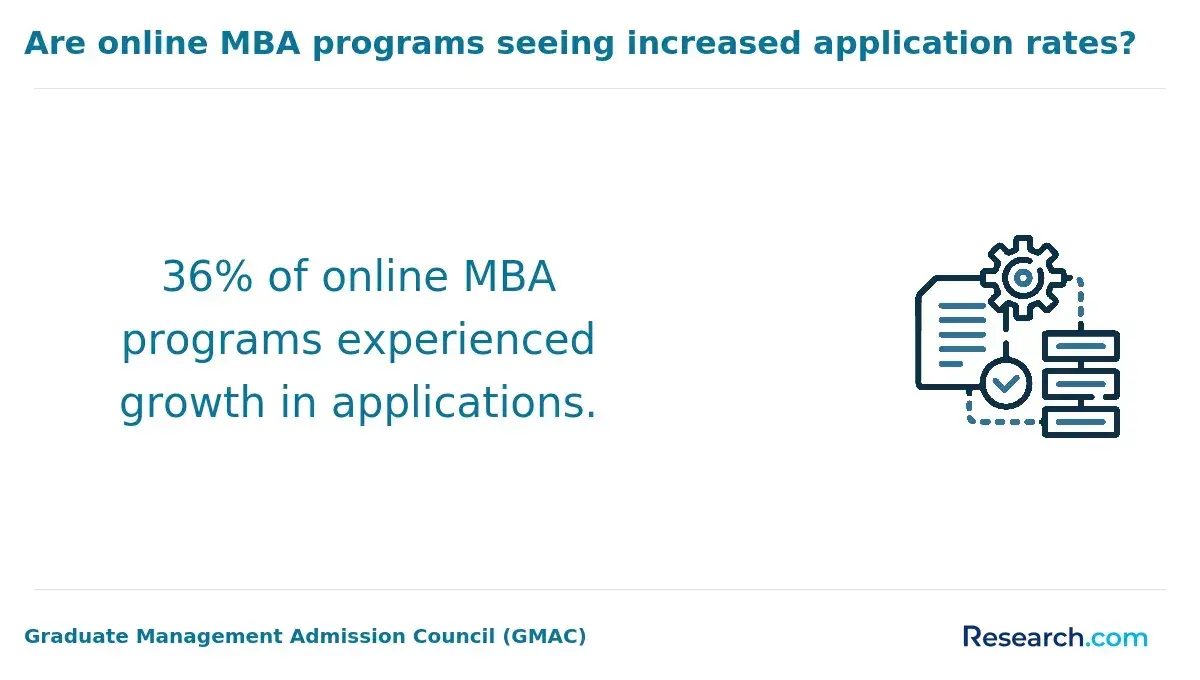
Online MBA admissions usually place strong weight on professional experience. Most programs require a bachelor’s degree from an accredited institution and several years of work experience—typically between 2 to 5 years. Schools use that experience to assess whether applicants are ready for graduate-level business discussions involving leadership, strategy, finance, operations, and organizational decision-making.
Common online MBA application materials include academic transcripts, a resume, letters of recommendation, a statement of purpose or personal essay, and sometimes an interview. Many schools also ask for GMAT or GRE scores, although some waive test requirements based on work history, prior academic performance, or other evidence of readiness. Applicants comparing cost and accreditation may want to research affordable online MBA programs that combine flexible study with a recognized business curriculum.
MiM programs usually focus more on academic potential than managerial experience. Applicants generally need a bachelor’s degree in any field, transcripts, and a competitive GPA. Some schools may request GMAT or GRE scores, but these tests are often optional. International students may also need to submit English proficiency scores such as TOEFL or IELTS.
What admissions committees are usually looking for
- Online MBA programs: evidence of professional maturity, leadership potential, career progression, and readiness for applied business coursework.
- MiM programs: academic strength, motivation for a business career, quantitative readiness, communication skills, and early leadership potential.
A common mistake is applying to an MBA too early when a MiM would better fit the applicant’s background. The opposite can also be true: experienced professionals may find a MiM too introductory if they already manage projects, people, budgets, or clients.
An Online MBA generally costs more than a Master’s in Management because MBA programs are designed for experienced professionals and often include advanced coursework, specialized electives, executive-level instruction, career services, and broader networking opportunities. Cost varies widely by institution, program reputation, length, and delivery model.
- Online MBA: Tuition typically ranges from $20,000 to $80,000, depending on the university’s reputation, program length, and level of flexibility. Prestigious business schools can charge over $100,000 for their online MBAs.
- Master’s in Management: Costs are usually $15,000 to $50,000, with many European programs on the lower end and U.S. programs slightly higher.
Tuition is only one part of the cost comparison. Students should also consider fees, books, technology costs, travel requirements for residencies or immersions, lost income if they reduce work hours, and the time it may take to earn a return on the degree. A lower-priced program is not automatically the better value if it lacks the curriculum, accreditation, employer recognition, or career support needed for your goals.
An Online MBA may be worth the larger investment for professionals who can use the degree to move into higher-paying leadership, consulting, finance, operations, or executive roles. Students seeking advanced leadership education at a lower cost can also compare affordable EMBA programs. A MiM can be the more cost-conscious option for recent graduates who want graduate business training without committing to the higher price of an MBA before they have significant work experience.
Yes, both an Online MBA and a Master’s in Management can potentially be financed through federal student loans if the program is offered by an accredited U.S. institution that participates in federal aid programs. The degree format alone does not determine eligibility; accreditation, institutional participation, enrollment status, and student eligibility matter.
For an Online MBA, eligible graduate students commonly use Direct Unsubsidized Loans and Graduate PLUS Loans to help cover tuition and qualified education-related expenses. These federal loans usually have fixed interest rates and may offer income-driven repayment options, which can be useful for working professionals managing tuition alongside other financial obligations.
For a MiM, the same general federal loan options may apply if the program is a graduate-level degree at an eligible U.S. school. However, students should be cautious with international programs, non-accredited providers, and online programs that do not participate in U.S. federal aid. Those programs typically do not qualify for U.S. federal student loans, even if the curriculum appears similar.
What to verify before borrowing
- Confirm that the institution is accredited and participates in federal student aid programs.
- Ask the financial aid office which loan types are available for the specific program.
- Compare federal loans with employer tuition assistance, scholarships, fellowships, payment plans, and private student loans.
- Borrow based on total program cost and realistic career outcomes, not only on the maximum loan amount offered.
Federal loans can fund either degree, but eligibility depends on the school and program—not just the name of the degree.
The courses differ in level, purpose, and how much professional experience they expect students to bring into the classroom. Online MBA coursework is usually more applied and strategic. MiM coursework is usually more foundational and designed to help students build a broad business base.
Online MBA courses often cover leadership, corporate strategy, finance, marketing, operations, analytics, global business, organizational behavior, and managerial decision-making. Students may work through case studies, simulations, consulting-style projects, and assignments based on real business problems. Many programs also allow electives or concentrations in areas such as entrepreneurship, data analytics, supply chain management, healthcare management, or finance. Applicants seeking flexible testing policies can compare best online MBA programs without GMAT while still reviewing curriculum quality carefully.
MiM courses usually focus on core business literacy. Students commonly study accounting, economics, organizational behavior, marketing, quantitative methods, operations, business communication, and introductory management. Team projects, internships, and applied assignments may be included, but the goal is usually to prepare students for early-career roles rather than senior leadership decisions.
Coursework comparison
- Online MBA: best for students who can apply course concepts to prior work experience and want advanced leadership or strategic training.
- MiM: best for students who need a first graduate-level business foundation before entering or growing in management-related roles.
If you already understand basic business functions and want to solve higher-level management problems, the MBA curriculum is usually the stronger fit. If you are still building core business knowledge, the MiM curriculum may be more appropriate.
Online MBA and MiM graduates often pursue different jobs because they usually enter their programs with different levels of work experience. Employers do not evaluate the degree title in isolation; they also look at prior experience, industry knowledge, technical skills, leadership record, internships, and professional network.
Online MBA graduates commonly target mid- to senior-level business roles. Possible positions include business development manager, operations manager, marketing director, management consultant, financial manager, and executive roles such as CFO or COO. The MBA can also support career pivots into consulting, technology, finance, healthcare administration, entrepreneurship, or general management, especially when paired with relevant experience.
MiM graduates are more likely to enter entry- to mid-level business roles. Common paths include management analyst, associate consultant, business analyst, marketing coordinator, project manager, or rotational leadership development programs. The MiM can help students without a business undergraduate degree show employers that they understand management fundamentals and are prepared for business-facing work.
How to match the degree to the role you want
- If you want a first business role: a MiM may provide the stronger entry point.
- If you want to move from individual contributor to manager: an online MBA may be more relevant if you already have experience.
- If you want consulting or finance: either degree may help, but competitiveness depends heavily on school reputation, internships, prior experience, and recruiting access.
- If you want executive leadership: an MBA is usually the more appropriate credential because it is designed for experienced professionals.
An Online MBA is generally stronger for leadership advancement. A MiM is generally stronger for building an early business career foundation.
Earnings differ because MiM and MBA graduates usually enter the job market at different career stages. A MiM graduate may be starting a first professional business role, while an MBA graduate often already has several years of experience and may be moving into management or strategy-focused positions.
Master’s in Management graduates, often early in their careers, typically earn an average starting salary of $50,000 to $80,000 per year in the U.S. Salaries can rise quickly with experience, especially in consulting, finance, or technology, reaching $100,000 or more after several years.
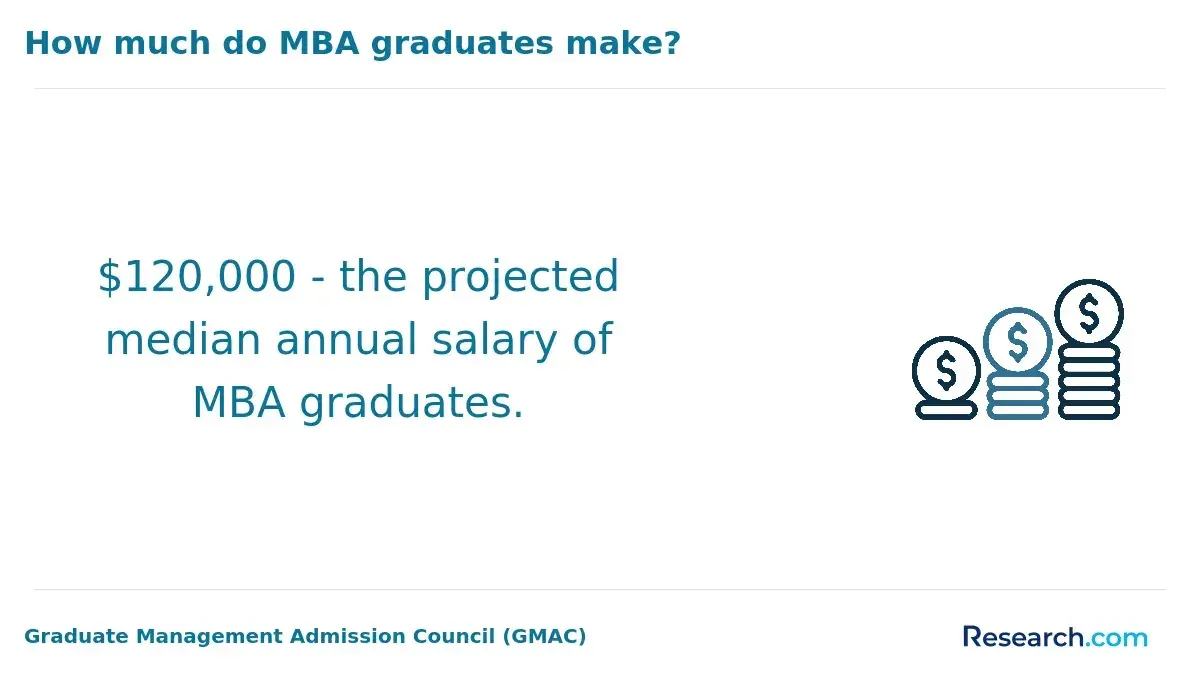
MBA graduates usually have higher immediate earning potential because the degree builds on prior work experience. The average salary for an MBA holder in the U.S. ranges from $90,000 to $150,000 per year, with top-tier schools and leadership roles offering $200,000+ including bonuses.
Salary outcomes depend on more than the degree. Industry, location, school reputation, pre-degree experience, internships, job market conditions, negotiation, and performance all affect compensation. A lower-cost MiM may produce a strong return for someone entering business early, while a higher-cost MBA may make sense for someone positioned to move into higher-paying leadership roles.
In general, MiM salaries start lower and grow with experience. MBA salaries tend to start higher because MBA students usually bring more experience and pursue more senior roles.
How to decide between an Online MBA and MiM based on career goals?
Choose between an Online MBA and a MiM by starting with your career stage, not the prestige of the degree name. The right program is the one that matches your experience level, target roles, budget, schedule, and expected return.
A MiM is usually the better fit if you are a recent graduate or early-career professional with limited work experience. It can help you build a foundation in accounting, economics, marketing, operations, analytics, and management before applying for entry-level or early management-track business roles. It may also be useful if your undergraduate degree was outside business and you want a structured bridge into corporate roles.
An Online MBA is usually the better fit if you already have several years of professional experience and want to move into leadership, strategy, consulting, entrepreneurship, or executive-track roles. It is also more appropriate if you want to keep working while earning the degree and need a flexible online format that supports part-time study.
Use this decision checklist
- Choose a MiM if: you have little work experience, want a shorter program, need business fundamentals, and are targeting entry- or early-career roles.
- Choose an Online MBA if: you have work experience, want advancement or a career pivot, need leadership training, and can connect coursework to real professional challenges.
- Be cautious if: you are considering an expensive MBA before gaining enough experience to benefit from it, or a MiM when you already qualify for more advanced management roles.
- Compare programs by: accreditation, curriculum, total cost, flexibility, employer recognition, career services, alumni network, and recruiting support.
The simplest rule is this: choose a MiM to start a business career; choose an Online MBA to accelerate, redirect, or expand an established career.
Other Things You Should Know On Choosing Between Online MBA vs Master’s in Management
In 2027, an online MBA typically offers broader career growth opportunities, particularly for those seeking leadership roles or industry switches. MiM programs are often more suitable for early career development, focusing on foundational business skills.
In 2027, ROI for an Online MBA or MiM depends on several factors: tuition costs, program duration, post-graduation salary increase, and career advancement opportunities. Online MBAs typically offer higher salaries post-graduation, but MiMs are shorter and more affordable. Ultimately, ROI varies by individual goals and financial situations.
- Admit Expert. (n.d.). MiM vs MBA – 9 Key Differences and how to choose.
- Crummer Graduate School of Business, Rollins College. (n.d.). MiM vs. MBA – what’s the difference?
- MBA.com. (n.d.). Master in Management vs MBA: What’s the difference?
- MBA & Beyond. (n.d.). MiM vs MBA – MBA & beyond.
- Pace University Online. (2023). MBA vs. Master’s in Management: What’s the difference?
- Yocket. (2025). MiM vs MBA: Which course is better to study in 2025?