
2027 Best Online MBA for Operations & Supply Chain Careers

Co-Founder and Chief Data Scientist
Many professionals with backgrounds outside business face challenges entering operations and supply chain management roles. Without targeted expertise, advancing in these competitive fields can be difficult. Finding an accredited, flexible program that bridges knowledge gaps while accommodating busy schedules is essential.
Online MBA programs offer a practical solution by providing specialized curricula and industry relevance, enabling career pivots with minimized disruption. This article evaluates top online MBA options focused on operations and supply chain careers, highlighting programs that combine comprehensive skill-building with accessibility to help readers make informed decisions for successful career transitions.
Key Things You Should Know
- Online MBAs in operations and supply chain emphasize digital tools and sustainability, reflecting 30% job growth projected by the U.S. Bureau of Labor Statistics from 2024 to 2034.
- Programs offer flexible pacing with 12 to 24-month durations, balancing foundational business skills and specialized supply chain management coursework.
- Graduates typically see salary increases averaging 20%, with enhanced roles in logistics, procurement, and global operations management across industries.
What Are the Best Online MBA Programs for Operations and Supply Chain?
The best online MBA programs for operations management blend core management education with specialized courses in logistics, procurement, and process optimization. Leading institutions like Arizona State University's W. P. Carey School of Business and Penn State's World Campus excel with comprehensive supply chain emphases and strong industry connections.
Coursework often covers supply chain analytics, inventory management, and global sourcing, key to addressing today's business challenges.
Data from Deloitte's 2025 Supply Chain Report reveals a 25% rise in logistics costs for U.S. firms due to global supply chain disruptions, underscoring the urgent demand for skilled professionals. Top online MBA degrees in supply chain management emphasize practical tools such as data-driven decision making and technology integration, including blockchain, IoT, and AI applications, to improve network resilience and efficiency.
Programs frequently offer flexible formats, like accelerated tracks or modular courses focused on global supply chains and operations strategy, benefiting working professionals. Prospective students should prioritize accredited programs featuring strong faculty expertise, industry partnerships, and access to simulations or consulting projects.
Michigan State University's Broad College of Business and North Carolina State's Jenkins Graduate School stand out for their direct connections to manufacturing and distribution.
Choosing the right online MBA program involves assessing curriculum rigor, practical exposure, and career services aligned with evolving industry needs. For those seeking cost-effective options, this list of inexpensive MBA programs offers valuable insights.
Why Pursue an Online MBA in Operations and Supply Chain Management?
An online MBA in operations and supply chain management equips professionals with advanced skills to optimize logistics, procurement, and production processes amid growing complexity in global supply chains. The U.S. Bureau of Labor Statistics projects an 18% job growth for supply chain managers from 2024 to 2034, fueled by expanding e-commerce, manufacturing advances, and demand for resilient supply networks.
Graduates gain expertise in inventory management, demand forecasting, supplier relationship management, and data analytics. These competencies are essential for roles such as logistics manager, procurement director, and operations consultant.
Many of the best online MBA operations management programs offer flexibility for working professionals, enabling career advancement without interruption through real-world projects and industry-relevant case studies.
Mastering supply chain risk management prepares students for disruptions caused by natural disasters or geopolitical tensions. Knowledge of sustainable sourcing supports compliance with environmental regulations and corporate social responsibility goals.
Employers highly value candidates who blend strategic thinking with technical competence, a direct outcome of top online MBA supply chain management degrees.
Professionals seeking career transitions or leadership growth often find this degree enhances both marketability and salary potential. With the digitization of supply chains, MBA graduates frequently access executive roles focused on innovation and operational excellence. For those interested, an AACSB accredited online MBA no GMAT can be a viable option to consider.
What Curriculum Covers Online MBA Operations and Supply Chain Degrees?
Online MBA operations management curriculum often blends core business principles with targeted supply chain management courses in online MBA programs. Key subjects include accounting, finance, marketing, and organizational behavior, paired with specialized topics such as supply chain analytics, global logistics, inventory management, and operations strategy.
Typical coursework covers:
- Demand forecasting and capacity planning for optimized resource use
- Lean management and Six Sigma to enhance process efficiency and quality
- Procurement and supplier relationship management for cost control and risk reduction
- Technology applications including ERP systems and data-driven decision-making
- Project management methodologies tailored to operational workflows
Programs often integrate case studies and simulations to prepare students for real-world challenges like supply disruptions and coordinating multi-tier suppliers. Electives might focus on sustainability in supply chains or risk management, reflecting evolving industry needs.
The median annual salary for operations managers reached $122,080 in 2025, with top earners exceeding $200,000, underscoring the career value of advanced knowledge in this field. Prospective students should look for practical experiences like internships or capstone projects to develop essential analytical, strategic, and logistics skills.
Students seeking affordable options can explore the best affordable executive MBA programs for quality education that supports career growth in competitive sectors such as manufacturing, retail, and e-commerce.
Admission to online MBA supply chain programs generally requires a bachelor's degree from an accredited institution and a minimum GPA of 3.0, though some programs allow slightly lower GPAs if other qualifications are strong. Application requirements for online MBA supply chain management typically include official transcripts and a current resume highlighting relevant professional experience, particularly in operations or logistics.
Most programs ask for competitive GMAT or GRE scores, but many are increasingly flexible, waiving these for applicants with five or more years of supply chain or related work experience. Some schools also offer conditional admission or require extra coursework for candidates not meeting test benchmarks.
Applicants must provide letters of recommendation that emphasize leadership potential and analytical skills, often from supervisors or academic mentors, along with a clear statement of purpose outlining career goals and motivation for the supply chain focus. Practical experience is highly valued, so applicants without direct supply chain roles can strengthen their profiles by showcasing project management, data analysis, or strategic planning.
According to GMAC's 2025 Corporate Recruiters Survey, graduates of online MBA programs in supply chain management saw an average salary increase of 45% within one year. To access programs with strong outcomes, applicants should review each school's specific requirements as they vary in flexibility and documentation standards.
Prospective students interested in options with more relaxed testing policies may explore online MBA programs no GMAT required.
The duration of online MBA operations programs typically ranges from 18 months to 3 years, influenced by format, pacing, and structure. Accelerated tracks allow completion in as little as 12 months but require full-time focus. More commonly, part-time formats extend study time to 24 or 36 months, accommodating working professionals.
Program length is shaped by credit hour requirements, usually between 30 and 48 credits. Curricula emphasize supply chain management, logistics, operations strategy, and increasingly, technology skills like artificial intelligence (AI) and data analytics.
According to McKinsey's 2025 Supply Chain Talent Report, 85% of supply chain executives prioritize skills in AI and data analytics, up from 62% previously, which prompts many schools to integrate specialized modules that may impact course load and duration.
Flexible pacing options often allow students to speed up by taking more courses per term or slow down when balancing work or personal obligations. Credit transfer from previous coursework or certifications can further reduce time needed. International students might require additional time for language support or orientation.
When choosing a program length, consider career goals, job demands, and preferred learning style. Shorter programs enable rapid skill-building, while extended options offer deeper specialization and networking opportunities without giving up work hours.
Tuition for top online MBA programs specializing in operations and supply chain management varies widely, typically from $20,000 to over $80,000. Public universities offer more affordable options, usually between $20,000 and $40,000, which appeals to working professionals. Private institutions, known for prestige and specialized curriculum, set tuition between $50,000 and $85,000. Many programs price tuition per credit hour, ranging from $900 to $1,500, depending on the school's ranking and resources.
Additional costs such as technology fees, course materials, and potential residency requirements can increase overall expenses by several thousand dollars. Financial aid, employer tuition reimbursement, and scholarships help offset these costs but vary by institution.
Advanced technologies are increasingly integral to supply chain management. For example, the Gartner 2025 report highlights that 70% of global companies use digital twins to improve forecasting accuracy by up to 30%. Investing in an online MBA focused on supply chain technology and analytics aligns with these trends and can boost career prospects in competitive markets.
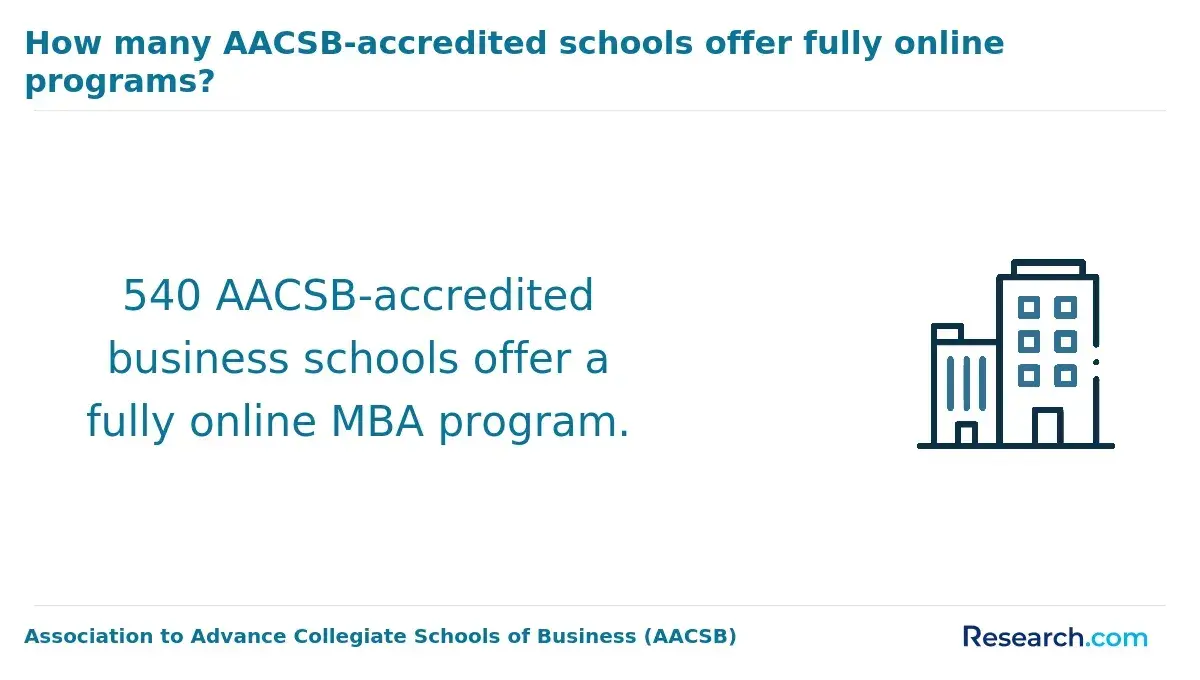
The Association to Advance Collegiate Schools of Business (AACSB) accreditation is the premier benchmark for evaluating online MBA programs in operations and supply chain management. This accreditation reflects rigorous academic standards and ongoing quality improvement, ensuring programs stay aligned with current business practices.
Employers highly value AACSB-accredited degrees, which can improve job prospects in competitive fields such as supply chain and operations roles.
While regional accreditations like the Middle States Commission on Higher Education or the Higher Learning Commission confirm institutional legitimacy, they do not guarantee the specialized quality of business programs the same way AACSB does. Specialized accreditations such as the Accreditation Council for Business Schools and Programs (ACBSP) or the International Accreditation Council for Business Education (IACBE) show a dedication to teaching but are generally less recognized by employers.
Enrollment in AACSB-accredited online MBA programs with supply chain concentrations rose 28% in 2025, highlighting growing employer demand amid talent shortages. Prospective students should:
- Check the program's accreditation directly on the AACSB website.
- Choose programs with supply chain or operations specialties under AACSB accreditation.
- Consider employers' recognition in their targeted industry to maximize career opportunities.
An online MBA in supply chain equips graduates with skills to manage the movement of goods, information, and finances across various industries. Typical career paths include supply chain manager roles, which oversee procurement, production, and distribution to enhance efficiency and reduce costs. Operations managers focus on streamlining internal processes and coordinating departments to boost productivity.
Graduates also qualify as logistics managers responsible for transportation, warehousing, and inventory control. Purchasing managers negotiate supplier contracts and uphold quality standards, while demand planners analyze market trends to accurately forecast inventory needs, preventing stockouts or excess.
Emerging positions include supply chain analysts who use data to identify bottlenecks and suggest improvements, and project managers who lead teams implementing new technologies or sustainability practices. Growing globalization increases demand for experts in international supply chain management, requiring knowledge of cross-border regulations and cultural negotiation.
Indiana University's online MBA in supply chain and operations alumni achieved a 92% employment rate within three months of graduation, highlighting strong industry demand. Professionals aiming for leadership roles should consider positions like director of supply chain or chief operations officer, which blend strategic planning with operational expertise.
Mastery of ERP software, data analytics, and supplier relationship management is essential for career advancement.
The salary outlook for operations and supply chain MBA graduates remains competitive, reflecting these roles' crucial impact across various industries. Median starting salaries typically range from $90,000 to $125,000 annually, influenced by industry, location, and prior experience.
Professionals with five or more years of supply chain experience see notably higher acceptance rates into top online MBA programs and often receive stronger job offers. According to Poets&Quants' 2025 MBA Admissions Trends, these experienced candidates had a 35% higher acceptance rate in 2025, demonstrating the value of a relevant background.
Mid-career roles like operations managers or supply chain directors can command salaries between $130,000 and $180,000, especially in sectors such as manufacturing, pharmaceuticals, and technology. Additional compensation through bonuses, profit sharing, or equity may add 10%-25% to a total package, particularly in regions with high corporate density like the Northeast and West Coast.
To boost earning potential post-MBA, candidates should showcase operational achievements and leadership skills during applications and negotiations. Earning certifications like Six Sigma or APICS often further enhances compensation outcomes in this competitive field.
What Is the Job Demand for Supply Chain Management MBA Holders?
The job market for supply chain management MBA holders is rapidly expanding, fueled by evolving business priorities and sustainability mandates. Roles focused on sustainable supply chains grew 40% year-over-year, reflecting environmental, social, and governance (ESG) influences reshaping procurement, logistics, and supplier management.
Employers value graduates who blend operational efficiency with sustainability strategies, such as developing supplier networks that reduce carbon footprints or adopting circular economy practices. The rise of e-commerce and global trade further enhances demand, requiring expertise in advanced analytics and risk management. Common roles include supply chain analysts, logistics managers, and chief operations officers overseeing sourcing and compliance.
Key skills that improve job prospects include knowledge of blockchain for traceability, AI for demand forecasting, and the ability to coordinate across departments like finance, marketing, and production. Supply chain management MBA holders should also be ready to navigate digital transformation and stricter regulations.
Opportunities span various industries-manufacturing, retail, pharmaceuticals, and technology-and locations from urban to suburban centers. Increasingly, remote and hybrid roles support flexible supply networks.
Other Things You Should Know About MBA
Yes, an online MBA in operations and supply chain management is widely respected by employers, especially when earned from an accredited institution. The focus on practical skills like logistics, procurement, and process optimization aligns closely with industry needs. Many organizations value the flexibility and discipline required to complete an online program alongside work experience.
Most online MBA programs in operations and supply chain management are designed to accommodate working professionals. Courses typically offer flexible schedules, including asynchronous lectures and part-time options, allowing students to balance work and study effectively. However, time management and self-motivation are essential to successfully complete the program.
In 2027, top online MBA programs for operations and supply chain management include Indiana University’s Kelley School of Business, the University of North Carolina at Chapel Hill’s Kenan-Flagler Business School, and the Pennsylvania State University's World Campus. These programs are highly regarded for their comprehensive curriculum and strong industry connections.
While many programs prefer applicants with some professional experience, it is not always mandatory. However, having prior experience in operations or related fields helps students better understand course content and apply concepts to real-world scenarios. Programs often encourage work experience to maximize learning and career advancement opportunities.
- NO GMAT Online MBA in Supply Chain Management [2026] - Best Accredited Easy and Low GPA MBA in Supply Chain Management https://www.careerherd.com/online-mba-supply-chain-management-no-gmat/
- The Importance of Business School Accreditation https://www.allbusinessschools.com/how-to-get-into-mba-program/accreditation/
- Online MBA Supply Chain Program: Jobs, Scope, ROI & Career Growth in 2026 https://www.onlinesrm.in/online-mba-supply-chain-program/
- Top Career Options After Online MBA in Logistics and Supply Chain Management https://www.careers360.com/courses-certifications/articles/top-career-options-after-online-mba-in-logistics-and-supply-chain-management
- What Accreditations Should One Look for Before Enrolling in an Online MBA Program? - Finance, Tech & Analytics Career Resources | Imarticus Blog https://imarticus.org/blog/what-accreditations-should-one-look-for-before-enrolling-in-an-online-mba-program/
- 2025 Best Online MBA in Supply Chain Management Programs https://www.supplychainguide.org/degrees/mba-in-supply-chain-management-online/
- Career Opportunities with an Online MBA in Logistics and Supply Chain Management https://www.dypatilonline.com/blogs/online-mba-in-logistics-supply-chain-management-career-opportunities
- Top 7 Reasons To Enroll In An MBA In Logistics & Supply Chain Management - Britts Imperial 2026 https://brittsimperial.com/top-7-reasons-to-enroll-in-an-mba-in-logistics-supply-chain-management/
- Online MBA in Operations Management: Review Top Schools https://www.onlinemastersdegrees.org/best-programs/mba-programs/operations-management/
























![2027 Best Advanced Standing Online MSW Programs [CSWE Accredited] thumbnail](/uploads/Online_Advanced_Standing_MSW_301dbd5368.jpg)


