2027 How Many Years Is a Master’s Degree? Costs & Job Opportunities

Co-Founder and Chief Data Scientist
Choosing a master’s degree usually starts with one practical question: how much time will it take? The answer affects your budget, work schedule, family plans, career timing, and return on investment. A master’s degree can take less than one year, one year, two years, or several years depending on the field, format, enrollment pace, transfer policies, thesis or capstone requirements, and how much time you can realistically devote each week.
This guide explains how long master’s programs typically take, what can speed up or delay graduation, and how to compare common graduate pathways such as the MBA, Master of Science in Data Science, Master of Science in Finance, and Master of Science in Computer Science. It also covers accreditation, affordability, online and accelerated formats, experiential learning, certifications, doctoral study, and the questions to ask before enrolling. If you are still deciding what degree to get, use this as a decision framework rather than a simple list of program lengths.
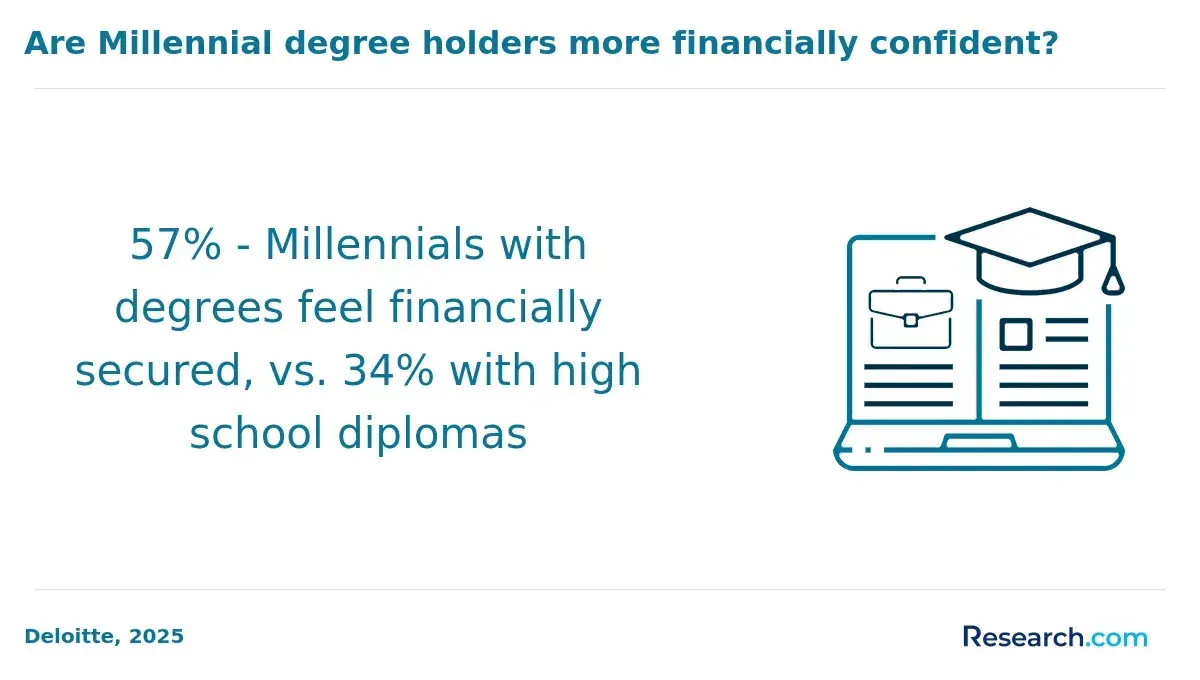
Master’s degrees remain a major part of graduate education in the U.S. In 2025, post-secondary institutions conferred about 1.067 million graduate degrees, including 864,457 master's degrees (81%) and 203,053 doctorate degrees (19%) (Education Data Initiative, 2026). The most common master’s fields overall were business, education, and health professions and related programs. Earnings also differ by education level: master’s degree holders earn a median weekly wage of $1,737 ($90,324 annually), which is higher than the earnings reported for bachelor’s degree holders (U.S. Department of Labor, 2025).
How Many Years Is a Master’s Degree Table of Contents
- Why study for a master’s degree?
- Factors That Affect the Length of a Master’s Degree
- Master of Business Administration (MBA)
- Master of Science in Data Science
- Master of Science in Finance
- Master of Science in Computer Science
- Experiential learning options that strengthen a master’s degree
- How to check a master’s program’s accreditation and quality
- How to choose an affordable online master’s program
- Is a Master’s Degree a Sound Financial Investment?
- Are Accelerated Credential Programs a Valuable Complement to a Master's Degree?
- The Benefits of Part-Time Master’s Programs for Working Professionals
- How Can an Associate Degree Enhance My Journey to a Master’s Degree?
- How Can Complementary Certifications Enhance Career Prospects?
- Which Master’s Specialization Best Meets Future Industry Demands?
- Is a Master’s Degree Worth the Investment?
- Should I Pursue a Doctorate After My Master’s Degree?
Quick Answer: How Long Does a Master’s Degree Take?
Most master’s degrees take about one to two years of full-time study. Accelerated programs may take 12-18 months, while part-time, online, thesis-based, dual-degree, or professionally focused programs can take longer. A full-time MBA is commonly two years, an executive MBA may be completed in about one year, and dual MBA programs can take around 4 years on average because students complete two graduate credentials.
| Program format | Typical completion time | Best fit | Main trade-off |
| Traditional full-time master’s | Usually one to two years | Students who can pause or reduce work commitments | Faster progress, but less income flexibility if you stop working |
| Part-time master’s | Often longer than full-time study | Working adults, caregivers, military personnel, healthcare workers, and others with fixed obligations | Lower weekly workload, but a longer path to graduation |
| Accelerated master’s | 12-18 months | Self-directed students who can handle compressed courses | Shorter timeline, but fewer breaks and heavier pacing |
| Executive MBA | Less than or slightly over one year in many formats | Experienced managers and executives sponsored or supported by employers | Intensive schedule and high expectations for immediate workplace application |
| Dual MBA or dual master’s | Around 4 years on average | Students who need expertise in two disciplines | Broader credential value, but higher time and cost commitment |
Why study for a master’s degree?
A master’s degree can make sense when it gives you access to work you cannot realistically reach with only a bachelor’s degree, helps you move into leadership, qualifies you for specialized roles, or provides structured retraining for a new field. It can also help you build advanced analytical, research, technical, and decision-making skills that are difficult to develop through short courses alone.
The value depends heavily on the field. In some careers, a master’s degree is a common requirement or a strong advantage. In others, employers may care more about a portfolio, license, certification, work history, or technical test performance. For example, a student in construction, engineering, project management, or real estate development may compare an MBA with a specialized option such as a master in construction management online.
A master’s program is worth considering if it clearly improves your career options, fits your schedule, is properly accredited, and has a cost you can justify based on realistic outcomes. It is not worth choosing simply because graduate education sounds prestigious.
Factors That Affect the Length of a Master’s Degree
The number of years required for a master’s degree is shaped by program design and by your life outside school. Before enrolling, look beyond the advertised completion time. Ask how often courses are offered, whether prerequisites are required, how capstones are scheduled, and whether the school allows pauses, transfer credits, or course waivers.
1. Program type and enrollment format
A full-time MBA commonly takes two years on average. A fast-track executive MBA is often structured as a one-year program for experienced company leaders who already bring business knowledge into the classroom. Because these students usually have management experience, EMBA programs may skip some introductory business foundations and move quickly into applied strategy, leadership, and capstone work.
A dual MBA program can take around 4 years on average because students earn an MBA and another graduate degree. This can be efficient compared with completing the two degrees separately, but it still requires more coursework, advising, planning, and tuition than a single master’s degree.
Online and hybrid programs vary widely. Some schools use synchronized term starts, fixed course sequences, and live class sessions, which can make the timeline more predictable but less flexible. Others allow asynchronous study and multiple enrollment windows, which may help students progress faster if they can handle the workload. Hybrid programs have also become more visible; 64% of U.S. business schools reported increased applications for online MBAs (GMAC, 2024).
2. Thesis, capstone, or final project requirements
A thesis or capstone can extend the timeline if the project requires outside partners, survey respondents, institutional approval, data access, or faculty review. A campus survey or online data project may be easier to complete quickly than a process-improvement project involving a hospital, government agency, or private company.
Before choosing a program, ask whether the final requirement is a research thesis, consulting project, portfolio, exam, practicum, or applied capstone. Also ask when students usually begin planning it. Waiting until the last term can cause delays.
3. Accelerated pacing
Students who want a faster path should compare different kinds of master’s degrees and identify whether the shorter timeline comes from fewer credits, shorter academic terms, year-round enrollment, waived prerequisites, or heavier course loads. Accelerated MBA programs may take 12-18 months and often rely on online delivery, night classes, intensive sessions, or shorter terms without long breaks.
This format works best for students who learn quickly, manage deadlines well, and can reduce outside obligations. It may be a poor fit for students who need more time to absorb quantitative material, build a portfolio, complete research, or manage unpredictable work schedules.
4. Work schedule and employer expectations
Students in healthcare, law enforcement, public safety, military service, logistics, and other fields may need asynchronous or part-time options because their schedules can change with little notice. These students may take longer to graduate, but a flexible format can prevent withdrawal or failed courses.
Employer-sponsored EMBA students often face a different pressure: they are expected to complete quickly and apply what they learn to company strategy, operations, finance, or leadership. If your employer is paying, clarify whether you must remain with the company after graduation and whether tuition support must be repaid if you leave.
5. Personal obligations and unexpected disruptions
Family responsibilities, health issues, relocation, job loss, financial hardship, and caregiving can change a graduate timeline. A realistic plan includes emergency savings, a backup course schedule, knowledge of leave-of-absence rules, and a clear understanding of refund deadlines.
6. Curriculum structure, prerequisites, and credit policies
Some programs allow students to waive foundational courses based on prior academic preparation, professional experience, or exams. For example, an accountant may not need a basic accounting course in some MBA curricula. Students with business backgrounds may also enter with stronger preparation if they previously completed an undergraduate business pathway such as an online bachelor’s degree in business administration.
Credit systems also differ by country. U.S. schools often price tuition by credit hour, while many European institutions publish a total program cost. This matters when comparing U.S., U.K., European, and international programs.
7. Internship, practicum, and placement requirements
Internships can add value, but they can also delay graduation if placements are competitive or if students wait too long to apply. If a program requires an internship, ask whether the school helps arrange placements, whether your current employer can qualify, and when students typically secure sites.
| Factor | How it can shorten the degree | How it can delay graduation |
| Prior coursework or experience | May qualify you for waivers or advanced standing | Weak preparation may require prerequisites |
| Online format | Asynchronous courses can fit around work | Fixed cohorts may limit course availability |
| Capstone or thesis | Early planning can keep the project on schedule | Data access, approvals, or partner delays can slow completion |
| Accelerated pacing | Compressed terms reduce total time | Failed or repeated courses can erase the time advantage |
| Part-time enrollment | Helps students stay enrolled while working | Fewer courses per term usually means a longer timeline |
Master of Business Administration (MBA)
An MBA is a graduate business degree designed for students pursuing management, consulting, entrepreneurship, investment, operations, finance, marketing, and executive leadership roles. It usually combines core business subjects with applied projects, leadership development, networking, and electives.
In 2024, 80% of all U.S. MBA programs surveyed reported application growth, with the largest share in a decade. Two-year programs experienced the highest increases and the highest competition as applications rose across MBA types (GMAC, 2024).
Academic Challenges for Freshmen College Students

Executive MBA programs had the lowest applications (median = 57) and class sizes (median = 50), which reflects their narrower audience of experienced executives and senior professionals. This does not mean EMBA programs are weaker; it means they serve a smaller and more specific market.
MBA career outlook and roles
The BLS states that management occupations are projected to grow faster than the average for all occupations from 2024 to 2034. About 1.1 million openings each year, on average, are projected in the U.S. to replace retirees and others who leave. The median annual wage of $102,950 in 2024 is the highest among all the major occupational groups (BLS, 2026).
Median salaries for selected managerial occupations include advertising, promotions, and marketing managers at $133,380; architectural and engineering managers at $152,350; compensation and benefits managers at $140,360; emergency management directors at $76,730; human resources managers at $126,230; natural sciences managers at $101,340; sales managers at $138,060; top executives at $102,950; and property, real estate, and community association managers at $59,230 (BLS, 2024).
| MBA career area | Examples of roles | When this path makes sense |
| Corporate leadership | Chief Executive, Chief Executive Officer, Chief Financial Officer, Chief Operating Officer, Chief Technology Officer, General Manager, Top Executive | Best for professionals with management experience who want broader strategic responsibility |
| Finance and accounting | Accountant, Accounting Manager, Certified Public Accountant, Financial Director, Financial Manager, Investment Banker, Management Accountant, Personal Financial Advisor, Risk Manager | Strong fit for students who combine quantitative skills with business decision-making |
| Operations and analytics | Budget Analyst, Business Intelligence Analyst, Business Operations Manager, Logistics Manager, Operations Manager, Operations Research Analyst, Project Manager, Purchasing Manager | Useful for students who want to improve systems, supply chains, workflows, or resource allocation |
| People, marketing, and growth | Advertising Manager, Human Resources Manager, Marketing Director, Marketing Manager, Product Manager, Promotions Manager, Sales Manager | Appropriate for students interested in customers, teams, talent, and revenue growth |
| Specialized management | Computer And Information Systems Manager, Healthcare Manager, Hospital Administrator, Medical And Health Services Manager, Policy Analyst, Property, Real Estate, and Community Association Manager | Best when paired with industry experience in technology, healthcare, government, or real estate |
Human resources manager
Human resources managers oversee hiring systems, employee relations, compensation coordination, retention policies, training priorities, and workforce planning. In many organizations, they also advise executives on organizational structure, culture, compliance, and talent strategy.
Investment banker
Investment bankers help corporations and governments raise capital, evaluate transactions, and manage major financial events such as initial public offerings, mergers, and acquisitions. The role requires financial modeling, market analysis, client communication, and high tolerance for demanding workloads.
Entrepreneur
Entrepreneurs create and grow new ventures. An MBA can support this path by strengthening finance, operations, marketing, negotiation, leadership, and investor-readiness skills. It does not guarantee business success, but it can provide a structured environment to test ideas and build a network.
Top U.S. MBA Programs
1. Harvard Business School
Harvard Business School offers a full-time two-year MBA built around general management and real-world application. Its learning model includes the CASE method, FIELD projects, technology simulations, reflective exercises, and student-led organizations. Entrepreneurship is a prominent part of the ecosystem, with over 50% of graduates launching ventures supported by Harvard Business School resources.
- Location: Boston, MA
- Duration: 2 years
- Tuition / Total cost: $73,440 per year / $112,764 total cost (single)
- Tracks/ specializations: Various; cross-registration with the Sloan School of Business at the Massachusetts Institute of Technology (MIT) and the Fletcher School of Law and Diplomacy at Tufts University graduate programs
- Financial aid options: Need-Based Tuition Assistance/scholarships, fellowships and student loans; 10% of student body receive full tuition scholarships; Summer Fellowships: summer internships; Career Support & Exploration: Financial assistance programs at graduation and/or beyond, including loan reduction and loan repayment assistance programs
2. Stanford Graduate School of Business
Stanford Graduate School of Business offers a 2-year MBA supported by 120 tenure-line faculty members and 120 industry practitioners. Stanford MBAs make up 20% of the Forbes 30 under 30 list, and Stanford MBA graduates have raised $1.4 billion in startup capital in the last 5 years.
- Location: Stanford, CA
- Duration: 2 years
- Tuition / Total cost: $76,950 annual tuition
- Tracks/concentrations: Various depending on electives
- Financial aid options: An average of $84,000+ in need-based fellowships was awarded over 2 years, and about $20M+ in fellowships are awarded annually.
3. Wharton School, the University of Pennsylvania
The Wharton School at the University of Pennsylvania offers a two-year MBA with extensive elective choice and multiple majors. Wharton Online was the world’s first recipient of the International Association for Continuing Education and Training (IACET)’s Accredited Provider status and was also the first program to offer certified Continuing Education Units (CEUs) to online adult learners.
- Location: Philadelphia, PA
- Duration: 2 years
- Tuition / Total cost: $84,874 annual tuition
- Tracks/concentrations: Business Analytics; Business Economics and Public Policy; Business, Energy, Environment and Sustainability; Diversity, Equity & Inclusion; Entrepreneurship & Innovation; Environmental, Social and Governance Factors For Business; Finance; Health Care Management; Individualized MBA Major; International Business; Management; Marketing; Marketing and Operations (Joint Major); Multinational Management; Operations, Information and Decisions; Organizational Effectiveness; Quantitative Finance; Real Estate; Social and Governance Factors For Business; Statistics; STEM Certified Major; Strategic Management
- Financial aid options: Wharton two-year fellowships, various other fellowships
Top U.K. MBA Programs
1. University of Cambridge
The University of Cambridge MBA is a one-year program with a class size of 200 composed of 47% women and 46 nationalities. The program emphasizes academic rigor, practical team-based work, lectures, seminars, workshops, small-group learning, digital resources, experiential learning, and three Cambridge MBA projects involving external companies and simulated boardroom presentations.
- Location: Cambridge, UK
- Duration: 1 year
- Tuition / Total cost: £64,000
- Tracks/specializations: Culture, Arts and Media Management; Digital Transformation; Energy and Environment; Entrepreneurship; Finance; Health Strategies; Marketing; Social Innovation; Strategy
- Financial aid options: Various highly-competitive scholarships and bursaries, external scholarships, and student loans
2. University of Oxford
The University of Oxford MBA offers a full-time one-year business education grounded in core business principles, leadership, global networks, and the role of business in society.
- Location: Oxford, UK
- Duration: 1 year, Full time
- Tuition / Total cost: £71,440
- Tracks/ specializations: Artificial Intelligence & Advanced Analytics in Marketing; Advertising & Retail; Business in China; Corporate Turnaround & Business Transformation; Entrepreneurial Finance Project; Financial Crises and Risk Management; Financial Management for Banks and Insurers; Global Strategy; Global Sustainable Business; Impact Investing; Political Economy for Business Leaders; Project Management, Regenerative and Circular Economy: How to do Business in a Climate Emergency
- Financial aid options: Scholarships from Saïd Business School, Oxford University and Colleges, or external sources
3. London Business School
London Business School offers an MBA in London with access to global businesses and start-ups. The recent MBA class had an average of 5 years of work experience and represented 74 nationalities. 91% accepted employment offers within three months of graduation. Students can choose from more than 80 electives, flexible exit points, and faculty expertise across Accounting, Economics, Finance, Management Science and Operations Marketing, Organisational Behaviour, and Strategy and Entrepreneurship.
- Location: In person London, UK
- Duration: 15 21 Months
- Tuition / Total cost: £109,700 for the 15-21 month program
- Tracks/ specializations: 80+ electives and flexible exit points
- Financial aid options: Various UK, EU, international, and external scholarships
4. Imperial College Business School
Imperial College Business School offers a one-year MBA emphasizing analysis, collaboration, technology use, consulting assignments, innovation projects, internships, and connections with employers in technology, consulting, and finance.
- Location: London, UK
- Duration: One year
- Tuition / Total cost: £61,500 for the whole program
- Tracks/ specializations: Analytics; Digital strategy and transformation; Entrepreneurship; ESG and stakeholder impact
- Financial aid options: externally funded scholarship, loans, employer scholarship, Imperial Loyalty Bursary
Master of Science in Data Science
A Master of Science in Data Science prepares students to collect, clean, analyze, model, and communicate insights from structured, unstructured, and semi-structured data. Organizations increasingly store large datasets in systems such as data lakes with vast amounts of historical data, and data scientists help turn that information into useful decisions.
Students should expect statistics, programming, databases, machine learning, data visualization, ethics, and applied projects. The field is demanding because employers often expect a strong mix of math, coding, domain knowledge, data judgment, and communication skills.
Data science career outlook and roles
According to the Bureau of Labor Statistics (BLS, 2024), data scientist jobs are projected to increase from 245,900 (2024) to 328,300 (2034), a 34% change. Related median salaries include actuaries at $120,000; computer and information research scientists at $155,880; economists at $115,260; financial analysts at $103,150; market research analysts at $78,880; mathematicians and statisticians at $112,110; operations research analysts at $95,820; and software developers, quality assurance analysts, and testers at $138,110 (BLS, 2025).
| Data science career cluster | Examples of roles | Key preparation needed |
| Analytics and business intelligence | Business Analyst, Business Intelligence Analyst, Data Analyst, Data Visualization Analyst, Marketing Analyst, Research Analyst | Statistics, dashboards, SQL, business communication, and decision support |
| Machine learning and AI | AI Engineer, AI Scientist, AI/Ml Researcher, Machine Learning Engineer, Data Science Engineer | Algorithms, programming, model training, model evaluation, and deployment |
| Data infrastructure | Big Data Architect, Cloud Solution Architect, Data Architect, Data Engineer, Data Warehouse Engineer, Database Administrator, Lead Data Engineer, Platform Engineer | Cloud systems, data pipelines, databases, distributed processing, and security |
| Healthcare and clinical data | Clinical Data Manager, Clinical Research Assistant (Cra), Clinical Research Project Lead, Clinical Trial Coordinator/Senior Clinical Trial Coordinator, Clinical Trial Data Coordinator, Senior Clinical Research Associate, Senior Clinical Research Coordinator, Senior Clinical Trials Coordinator | Clinical trial processes, regulated data, project coordination, and research methods |
| Specialized technical roles | Computer Network Analyst, Computer Systems Analyst, Credit Risk Modeler, Data Manager, Data Mining Engineer, Data Modeler, Data Modeler/Data Modeling Analyst, Data Quality Assurance Specialist, Data Security Analyst, Data Solutions Architect, Data Strategist, Freelance Data Scientist, Modeling Geologist, Processing And Analytics Engineer, Software Developer, Software Engineer, Solution Designer, Statistician | Role-specific domain knowledge plus advanced analysis and software skills |
Machine learning engineer
Machine learning engineers build, train, test, optimize, and deploy models that solve specific problems. They typically need strong preparation in programming, algorithms, data structures, statistics, machine learning, and software engineering.
Data modeler
Data modelers design the structures that organize and connect data for analytics, business systems, machine learning, and reporting. They translate raw information into usable schemas, document data relationships, and make sure decision-makers can interpret the results.
Clinical data manager
Clinical data managers coordinate data collection for clinical trials and prepare information for analysis by statisticians and research teams. Students interested in healthcare data may benefit from additional health-sector training, and those needing pharmacy-related technical knowledge may consider a pharmacy technician school online.
Data engineer
Data engineers build and maintain the pipelines, databases, and processing systems used by analysts and data scientists. Common technical tools and languages include Apache Spark, C++, Hadoop, Java, NoSQL, Python, R, and SQL.
Top U.S. MS in Data Science Programs
1. Carnegie Mellon University
Carnegie Mellon University, with the Pittsburgh Supercomputing Center, offers an M.S. in Data Analytics for Science (MSDAC). The curriculum includes applied linear algebra, programming, statistical methods, machine learning, neural networks, and a capstone course with industry partners.
- Location: Pittsburgh, PA
- Duration: 1 year
- Tuition / Total cost: $47,250
- Tracks/ specializations: based on electives
- Financial aid options: External sources, international funding opportunities, private loans
2. University of California, Berkeley
The University of California at Berkeley offers the Master of Information and Data Science (MIDS), a fully online professional degree using live synchronous sessions and asynchronous assignments. Students study research design, statistics, data engineering, applied machine learning, data visualization, ethics, and a final applied project.
- Location: Berkeley , California
- Duration: Accelerated path in 12 months, standard path (for working professionals) in 20 months, and decelerated in 32 months.
- Tuition: $2,780 per enrolled unit, a total of 27 units
- Tracks/ specializations: depends on capstone
- Financial aid options: Federal financial aid programs, corporate sponsorship, Veterans Benefits, private loans
3. Stanford University
Stanford University offers an M.S. in Statistics and Data Science for full-time study. Coursework covers Probability, Data Mining and Analysis, Applied Matrix Theory, Statistical Inference, Causal Inference, Software Development for Scientists and Engineers, and related topics. The program does not require a research component, although Independent Study may be used for elective credit.
- Location: Stanford, CA
- Duration: two-year, full-time residential
- Tuition / Total cost: 45 units, $1,400 per unit
- Tracks/ specializations: depends on electives
- Financial aid options: teaching/research assistantships, Veterans scholarships
Master of Science in Finance
A Master of Science in Finance focuses on financial theory, banking, corporate finance, risk management, financial engineering, portfolio analysis, investment strategy, and quantitative decision-making. It is generally more technical and finance-specific than a general MBA, making it a strong option for students targeting financial analysis, quant finance, asset management, trading, risk, or fintech.
Finance career options
| Finance career area | Examples of roles | Best fit |
| Investment and markets | Financial Markets Analyst, Financial Markets Trader, Hedge Fund Manager, Investment Fund Manager, Investment Manager, Portfolio Manager, Private Equity Analyst, Quantitative Analyst | Students comfortable with markets, valuation, statistics, and pressure-driven decisions |
| Corporate finance | Corporate Finance Manager, Corporate Financial Analyst, Financial Controller, Financial Planning and Analysis Manager, Treasury Manager | Students interested in budgeting, capital allocation, reporting, and business strategy |
| Risk, compliance, and regulation | Compliance Officer, Credit Analyst, Credit Manager, Credit Risk Analyst, Financial Examiner, Financial Risk Manager, Insurance Underwriter | Students who are detail-oriented and interested in risk models, rules, and financial controls |
| Advising and wealth | Financial Advisor, Financial Consultant, Financial Planner, Personal Financial Advisor, Tax Manager, Wealth Manager | Students who want client-facing financial planning, investment, estate, tax, or retirement work |
| Finance and technology | Financial Data Scientist, Financial Software Engineer, Financial Technology Analyst | Students combining finance with programming, analytics, or product development |
A notable example is the MIT Class of 2024 Master of Finance, which had a 100% employment rate in fields such as quantitative research, data science, IBD/transactions, quantitative trading, and portfolio management.
Financial analyst
A financial analyst evaluates investments, develops forecasts, studies market trends, and advises whether clients or organizations should buy, sell, or hold assets. The work often involves financial models, research reports, and data-heavy decision-making.
Insurance underwriter
Insurance underwriters decide whether applicants qualify for insurance and under what terms. They use actuarial and mathematical tools to estimate risk, set premiums, and balance customer coverage with insurer profitability.
Personal financial advisor
Personal financial advisors help individuals and families with investments, retirement planning, estate planning, tax planning, debt management, budgeting, and long-term financial decisions.
Top U.S. MS in Finance Programs
1. Massachusetts Institute of Technology (MIT)
The Massachusetts Institute of Technology (MIT Sloan School of Management) offers a STEM-designated Master of Finance centered on advanced financial and quantitative theory. Its Action Learning model places small teams of 3-6 students on business challenges with corporate partners and faculty advisers.
- Location: Cambridge, MA
- Duration: 18 months (accelerated program at 12 months)
- Tuition / Total cost: 18-Month Tuition: $118,470 /12-Month Tuition: $86,300
- Tracks/ specializations: Financial engineering; Capital markets; Corporate finance; Impact finance
- Financial aid options: Assistantships, fellowships, scholarships, MIT Master of Finance Fellowship (awarded upon admission)
2. University of Pennsylvania
The University of Pennsylvania offers the Wharton Finance MBA Program with two tracks: the Finance Major (FNCE) and the Quantitative Finance Major (QNFC). The Finance Major is broader and STEM-certified, while the Quantitative Finance Major focuses more directly on quantitative methods, derivatives, investment management, international financial markets, and cryptocurrencies.
- Location: Philadelphia, PA
- Duration: 2 years
- Tuition: $77,500 per year
- Tracks/ specializations: Finance Major (FNCE) and Quantitative Finance Major (QNFC).
- Financial aid options: Wharton fellowships, leadership and fellow opportunities, additional work options, paid summer internships, The Yellow Ribbon Program (YRB) (for veterans), company scholarships
3. New York University (NYU)
New York University (NYU) offers the one-year HKUST-NYU Stern MS in Global Finance Program through NYU Stern School of Business and Hong Kong University of Science and Technology Business School. Classes take place in Hong Kong, New York, and Shanghai, and the executive format is designed for working professionals who want immediate application of finance concepts.
- Location: New York, NY
- Duration: one year
- Tuition / Total cost: Total USD 83,000 / HKD 647,400
- Tracks/ specializations: N/A; track depends on terminal research project
- Financial aid options: Federal and/or Private student loans (U.S. citizens and permanent residents only), private / non-federal loans; Extended Non-means-tested Loan Scheme (HK citizens) from the HKSAR government
4. Columbia University
Columbia University offers a Master of Science in Financial Economics through Columbia Business School’s Finance Division. The two academic year STEM eligible program overlaps with doctoral-level work but is shorter and more industry-oriented. The average GRE quantitative score is 168 with an incoming class of 25, and 100% of graduates were employed in 6 Months. Students complete a faculty-supervised research project thesis.
- Location: Columbia, NY
- Duration: 2 years
- Tuition / Total cost: Year 1 tuition $66,584
- Tracks/ specializations: depends on research and electives
- Financial aid options: Teaching and research assistantships, federal or private loans, external scholarships
Master of Science in Computer Science
A Master of Science in Computer Science focuses on software, algorithms, computing systems, data structures, programming languages, security, artificial intelligence, human-computer interaction, and software engineering. It is a strong option for students who want advanced technical roles, research preparation, or a career pivot into computing.
Computer science career outlook and roles
Computer and information technology occupations are projected to grow much faster than average, producing about 377,500 new jobs through 2032. About 356,700 openings each year, on average, are expected to replace retirees and people who leave.
Selected median salaries include computer and information research scientists at $131,490; computer programmers at $98,670; computer systems analysts at $99,270; information security analysts at $102,600; network and computer systems administrators at $80,600; software developers, quality assurance analysts, and testers at $101,340; and web developers and digital designers at $78,300 (BLS, 2024).
| Computer science career area | Examples of roles | Skills to prioritize |
| Software development | Applications Developer, Computer Programmer, Mobile Application Developer, Software Architect, Software Engineer, Software Product Manager, Software Quality Assurance Analyst, Software Test Engineer, Web Developer | Programming, architecture, testing, debugging, version control, and product thinking |
| AI, data, and advanced systems | Artificial Intelligence Engineer, Big Data Engineer, Business Intelligence Analyst, Data Scientist, Robotics Engineer | Algorithms, statistics, machine learning, data systems, and applied modeling |
| Cybersecurity and infrastructure | Cloud Engineer, Cyber Security Analyst, Data Security Analyst, DevOps Engineer, Network Administrator, Network Engineer, Network Security Analyst, Systems Architect | Networks, cloud platforms, security controls, automation, and incident response |
| Systems and support | Business Systems Analyst, Computer Support Specialist, Computer Systems Engineer, Database Administrator, IT Project Manager, Systems Analyst, Technical Writer, UX/UI Designer | Systems analysis, databases, user needs, documentation, and cross-functional communication |
Software engineer
Software engineers design, build, test, deploy, and maintain applications and systems. They translate user needs into technical requirements and rely on programming, problem-solving, debugging, and computer science fundamentals.
Machine learning engineer
Machine learning engineers design, train, test, optimize, and deploy models for classification, prediction, recommendation, automation, and decision support. They need strong programming, data analysis, and problem-solving skills.
Cybersecurity analyst
Cybersecurity analysts identify vulnerabilities, assess threats, monitor systems, respond to incidents, and help protect organizations against attacks. Technical preparation often includes networking, security tools, scripting, hardware and software troubleshooting, and risk assessment.
Top U.K. MS in Computer Science Programs
1. University of Oxford
The University of Oxford offers an M.Sc. in Advanced Computer Science for computer science graduates and students from related mathematical disciplines. Course topics include Advanced Topics in Machine Learning, Quantum Computer Science, Categories, Proofs and Processes, Computational Complexity, Database Systems Implementation, Computational Learning Theory, and Probabilistic Model Checking. A dissertation begins in the third term (Trinity term), and Oxford also offers a 1+1 MBA option for students pursuing a second master’s degree.
- Location: Oxford, UK
- Duration: 12 months, full-time
- Tuition / Total cost: Home £14,410 (annual); Overseas £32,760 (annual)
- Tracks/ specializations: depends on electives and dissertation topic
- Financial aid options: Oxford scholarships, external funding, loans
2. University of Cambridge
The University of Cambridge offers an MPhil in Advanced Computer Science requiring five advanced taught modules, a mandatory research-skills course, and a two-term faculty-supervised research project. Module choices may include networking, systems measurements, category theory, natural language processing, and machine learning.
- Location: Cambridge, UK
- Duration: 9 months full-time
- Tuition / Total cost: Home: £ 16,209; Overseas: £ 39,708
- Tracks/ specializations: various depending on taught modules selection
- Financial aid options: University of Cambridge scholarships, Cambridge Trust, Gates Cambridge Trust, Harding Distinguished Postgraduate Scholars Programme (HDPSP), Research Councils (UKRI), colleges and departments
3. Imperial College London
Imperial College London offers an MSc in Computing for students building core computing skills, deepening existing knowledge, adding computing credentials, retraining for computing or IT work, or preparing for Ph.D. study. Required courses include Computer Architecture, Operating Systems, Introduction to C++ Programming, Object Oriented Design & Programming, and Integrated Programming Laboratory, along with an individual project capstone.
- Location: London, UK
- Duration: 1 year
- Tuition / Total cost: Home £21,000; Overseas £39,400
- Tracks/ specializations: electives available for advanced topics
- Financial aid options: studentships, bursaries, various company-sponsored scholarships
4. University College London (UCL)
University College London (UCL) offers a Computer Science MSc covering computer architecture, databases, data structures, algorithms, programming, human-computer interaction, application design, and software engineering. Students work in teams and small groups on software for industrial and research clients. The program is intended for non-Computer Science students rather than Computer Science graduates.
- Location: London, UK
- Duration: 1 year
- Tuition / Total cost: UK students £18,000 / International students £35,000
- Tracks/ specializations: functional programming; entrepreneurship; machine learning; etc.
- Financial aid options: UCL Engineering Dean’s Prize, China Scholarships Council, DeepMind Scholarship, Postgraduate Computer Science Excellence Scholarship, and many others.
What types of experiential learning opportunities can enhance my master’s degree?
Experiential learning matters because employers often want evidence that graduate students can apply theory under real constraints. The best option depends on your field, career goal, schedule, and whether you need research experience, client exposure, technical practice, or leadership opportunities.
| Experience type | What it adds | Best for |
| Internships and practicums | Industry exposure, references, workplace skills, and possible job leads | Career changers and students entering fields where experience is expected |
| Research assistantships | Faculty mentorship, research methods, data analysis, and academic publication exposure | Students considering a Ph.D., research career, or evidence-heavy role |
| Field studies and site visits | Observation of real operations, clients, and professional environments | Students in environmental science, business, social work, healthcare, and public policy |
| Capstone projects and simulations | Applied problem-solving and a concrete portfolio artifact | Students who need proof of practical skill for interviews |
| Industry partner projects | Client communication, deadlines, deliverables, and real organizational constraints | Students targeting consulting, analytics, operations, product, or nonprofit roles |
| Conferences and networking events | Professional visibility, trend awareness, and connections beyond the classroom | Students in fields where relationships and professional communities shape hiring |
How can accelerated programs impact your master's degree experience?
Accelerated master’s programs can be useful when your priority is speed and you can commit to a demanding academic schedule. Many are compressed into 12–18 months and require careful time management, strong preparation, and consistent weekly availability.
The benefit is obvious: you may finish sooner and return to a career goal faster. The trade-off is that accelerated formats can reduce time for internships, research, networking, reflection, and portfolio-building. Students considering specialized fields can compare options such as an accelerated master's in psychology online, but they should confirm whether the format supports licensure, supervised experience, or doctoral preparation if those are required.
How can you verify a master’s program’s accreditation and quality?
Accreditation is one of the first things to check because it can affect financial aid eligibility, credit transfer, employer recognition, licensure, and doctoral admissions. Do not rely only on marketing language. Confirm the institution’s accreditation through recognized accrediting bodies and, when relevant, check whether the specific program has field-specific accreditation.
Quality is broader than accreditation. Review faculty credentials, curriculum currency, graduation requirements, student support, placement data, alumni outcomes, employer partnerships, and whether the program’s claims are specific and verifiable. Some students researching lower-barrier options may also compare the easiest masters degrees, but “easier” should never mean unaccredited, low-quality, or misaligned with your goals.
How can you choose an affordable online master's program?
Affordable online master’s programs can reduce relocation costs and help students keep working, but the lowest tuition is not always the best value. Use affordable online masters programs as a starting point, then compare the full cost and academic fit.
- Confirm accreditation first: Verify institutional accreditation and any required program-level accreditation before comparing price.
- Calculate total cost: Include tuition, fees, books, technology costs, residencies, travel, exams, and lost work time.
- Review financial aid: Ask about scholarships, grants, employer sponsorship, assistantships, veterans benefits, and federal or private loan options.
- Check flexibility: Determine whether the program is asynchronous, synchronous, cohort-based, self-paced, full-time, part-time, or hybrid.
- Evaluate support services: Look for advising, library access, tutoring, career services, mentorship, and online student communities.
- Study outcomes carefully: Ask for completion rates, career outcomes, internship access, licensure exam performance if relevant, and alumni feedback.
- Compare faculty and curriculum: A strong online program should have qualified faculty, current courses, clear assessments, and applied learning opportunities.
Is a Master’s Degree a Sound Financial Investment?
A master’s degree is a financial investment only if the expected benefits justify the cost, risk, and time. Compare tuition and fees against your likely career path, not against the highest salary advertised by a school. Also include opportunity cost: income you may lose if you study full time, promotions you may delay, and debt you may carry after graduation.
Students focused on speed and lower total cost may compare online one year masters programs. These can be efficient, but only if the program has the right accreditation, employer recognition, academic support, and curriculum depth for your target role.
Are Accelerated Credential Programs a Valuable Complement to a Master's Degree?
Short credentials can be useful when they add a specific, job-ready skill that your master’s program does not fully cover. Examples include software tools, analytics platforms, project management methods, finance credentials, cybersecurity skills, healthcare compliance, or specialized business certificates.
They are most valuable when they are relevant, recognized, and timed well. A certificate should not distract from your graduate coursework or add debt without a clear purpose. Students exploring fast skill-building options can compare online degree courses alongside certificates, bootcamps, employer training, and graduate electives.
The Benefits of Part-Time Master’s Programs for Working Professionals
Part-time programs are often the most realistic route for adults who cannot pause their careers. They may take longer, but they can reduce financial pressure and make graduate school sustainable.
- Flexibility: Evening, weekend, online, and asynchronous options can fit around employment and family duties.
- Manageable pacing: Taking fewer courses per term can reduce burnout and help students maintain stronger academic performance.
- Immediate workplace application: Working students can often use class projects to solve real problems at their jobs.
- Continued income: Remaining employed can make tuition easier to manage and reduce reliance on loans.
- Professional networking: Part-time cohorts often include experienced classmates who bring practical insight and industry contacts.
- Alternative speed planning: Students seeking a quick college degree should compare whether full-time acceleration or part-time consistency is more realistic.
Cognition and Brain Performance Why Higher Degrees Matter
Graduate study can strengthen advanced reasoning, research habits, and disciplined problem-solving. In the peer-reviewed journal PLoS ONE, Guerra-Carrillo, Katovich, and Bunge analyzed data from 196,388 subscribers to an online cognitive training program. The subscribers, ages 1560, completed eight behavioral assessments of executive functioning and reasoning at least once. After controlling for demographic and engagement variables, the authors found that higher education levels predicted better performance across the full age range and affected some cognitive areas more than others, such as reasoning versus processing speed.
This does not mean a master’s degree automatically improves every cognitive skill or career outcome. It means sustained higher learning can be associated with stronger performance in certain areas. Students drawn to service-oriented graduate education may also compare the cheapest MSW programs online if social work aligns with their goals.
If you are planning your education over several stages, it may help to review the four college degree types and understand how associate, bachelor’s, master’s, and doctoral credentials connect.
How Can an Associate Degree Enhance My Journey to a Master’s Degree?
An associate degree can be a cost-conscious starting point for students who eventually want a master’s degree, especially if credits transfer smoothly into a bachelor’s program. It can help build academic confidence, complete general education requirements, and reduce the cost of the early college years.
The key is planning. Choose an accredited institution, confirm transfer agreements, and make sure your associate coursework supports the bachelor’s major you will need before graduate school. Students looking for flexible entry points can research easy online associate degrees, but they should still verify accreditation, transferability, and program rigor.
How Can Complementary Certifications Enhance Career Prospects?
Certifications can help when they prove practical skills that employers can immediately understand. They are especially useful in technology, finance, project management, healthcare, analytics, cybersecurity, and other fields where tools, regulations, and methods change quickly.
The best certifications reinforce your master’s specialization rather than adding unrelated credentials. Compare recognition in job postings, renewal requirements, exam costs, prerequisites, and employer demand. Students weighing certificate options can review the highest paid certificate programs while remembering that pay outcomes depend on experience, location, industry, and role.
Which Master’s Specialization Best Meets Future Industry Demands?
The strongest specialization is the one that connects your interests, prior experience, target industry, and labor-market direction. AI, automation, data analytics, cybersecurity, healthcare operations, finance technology, sustainability, and digital transformation are influencing many graduate curricula, but no specialization is automatically future-proof.
Before choosing, review course lists, employer partnerships, capstone topics, internship access, faculty research, and whether graduates enter roles you would actually want. Students comparing broad academic options can use guidance on majors in college to think about how undergraduate preparation connects to graduate specialization.
Is a Master’s Degree Worth the Investment?
A master’s degree can be worth it when it unlocks a target role, increases advancement potential, builds scarce skills, or helps you enter a regulated or specialized profession. It may not be worth it if the program is unaffordable, unaccredited, weakly connected to employers, or unnecessary for your goal.
Students should compare program cost with realistic career outcomes, not only best-case salaries. Lists of master degree high paying jobs can be useful for exploration, but salary is affected by field, geography, experience, employer, credentials, and economic conditions.
Should I Pursue a Doctorate After My Master’s Degree?
A doctorate may make sense if you want academic research, university teaching, high-level scientific inquiry, advanced clinical specialization, or expert leadership in a narrow field. It may not be necessary for many management, technology, finance, or applied professional roles where experience and measurable results matter more.
Before applying, ask whether the doctorate is required for your target career, how long it will take, whether funding is available, and what opportunity cost you will accept. Cost-sensitive students can compare the cheapest PhD programs in USA, but affordability should be weighed against research fit, supervision quality, accreditation, and career outcomes.
Common Mistakes to Avoid When Choosing a Master’s Program
| Mistake | Why it matters | Better approach |
| Choosing only by ranking or brand | A famous school may not fit your budget, schedule, specialization, or career target | Compare outcomes, curriculum, cost, support, employer links, and format |
| Ignoring accreditation | Unrecognized programs can create problems with financial aid, transfer, licensure, and employment | Verify institutional and program-level accreditation before applying |
| Looking only at tuition | Fees, travel, software, residencies, books, and lost income can change the real price | Calculate total cost of attendance and likely debt at graduation |
| Assuming online means easy | Online graduate work can be as rigorous as campus study and often requires strong self-management | Ask about weekly workload, live sessions, deadlines, and support services |
| Underestimating capstone or thesis time | Final projects can be delayed by data access, approvals, advising, or partner schedules | Start planning early and choose a feasible project scope |
| Assuming salary outcomes are guaranteed | Published salaries may reflect experienced graduates, specific regions, or selective fields | Use multiple labor-market sources and evaluate your own background honestly |
Questions to Ask Before Enrolling
- How many credits or units are required, and how often are required courses offered?
- Can I study full time, part time, online, hybrid, or asynchronously?
- What is the realistic completion time for students like me?
- Does the program require a thesis, capstone, internship, practicum, residency, or comprehensive exam?
- Is the institution accredited, and does the program have field-specific accreditation if needed?
- What are the full tuition, fees, technology costs, travel costs, and estimated living costs?
- What financial aid, scholarships, assistantships, employer benefits, or veteran benefits may apply?
- Do graduates enter roles I want, and are the outcome claims transparent?
- Will credits transfer if I change schools or later pursue a doctorate?
- Does the curriculum reflect current employer expectations, including AI, data, cybersecurity, compliance, or industry-specific tools where relevant?
Key Insights
- A master’s degree usually takes one to two years full time: Accelerated programs can take 12-18 months, while part-time, dual-degree, thesis-based, and highly flexible online programs may take longer.
- Program format matters as much as field: Full-time, part-time, online, hybrid, cohort-based, asynchronous, and executive formats create very different workloads and graduation timelines.
- ROI is personal: Master’s degree holders earn a median weekly wage of $1,737 ($90,324 annually), but your return depends on the program cost, field, experience, location, employer demand, and whether the credential is required for your goal.
- Accreditation is non-negotiable: Always verify institutional and program-level accreditation before comparing rankings, tuition, or completion speed.
- Applied experience strengthens the degree: Internships, assistantships, capstones, industry projects, and professional conferences can make a master’s program more valuable in the job market.
- Do not choose by speed alone: A one-year or accelerated master’s can be efficient, but only if it leaves enough time for learning, networking, career preparation, and any required supervised experience.
- The best master’s choice connects to a specific career plan: Compare the MBA, data science, finance, computer science, certificates, and doctoral options based on the roles you want, not simply on prestige or broad earning potential.
References:
- Amazon Web Services, Inc. (n.d.). What is a data lake? Amazon Web Services, Inc.
- BLS. (2025). Data Scientists: Occupational Outlook Handbook. U.S. Bureau of Labor Statistics.
- BLS. (2025). Field of degree: Computer and information technology: Occupational Outlook Handbook. U.S. Bureau of Labor Statistics.
- CFA Institute. (n.d.). What Is an Investment Banker? CFA Institute.
- IBM. (n.d.). What is Quantum Computing? IBM.
- NIH. (n.d.). Cognitive Health and Older Adults. National Institute on Aging.
- Oak Ridge National Laboratory. (n.d.). Machine Learning Engineer. Oak Ridge National Laboratory.
- Onetonline. (n.d.). 15-2051.02 Clinical Data Managers. Onetonline.
Other Things You Should Know About a Master’s Degree
In 2027, master's degree holders in the U.S. can expect to earn an average salary of approximately $75,000 to $120,000 annually. Salaries vary based on industry, location, and experience. Fields like engineering and business often offer the higher end of this salary range.
Requirements for admission to a master’s program in 2027 generally include a bachelor's degree from an accredited institution, a minimum GPA (often around 3.0), and possibly GRE or GMAT scores. Some programs may also require relevant work experience or specific undergraduate coursework.
A master’s program should hold accreditation from a recognized agency approved by the U.S. Department of Education or the Council for Higher Education Accreditation. For example, business programs may have AACSB accreditation, and nursing programs may require CCNE or ACEN approval.
Factors include the type of program, study mode (full-time, part-time, online), capstone or thesis requirements, work circumstances, personal circumstances, and whether the program offers accelerated options.
High-paying careers for master’s degree holders include management positions (e.g., HR manager, investment banker, CEO), data science roles (e.g., data scientist, machine learning engineer), finance positions (e.g., financial analyst, investment manager), and IT roles (e.g., software engineer, cybersecurity analyst).
Yes, many master’s programs are designed for working professionals, offering part-time, online, and hybrid options to accommodate work schedules. Time management and flexibility are crucial for balancing work and study.
Financial aid options include scholarships, grants, student loans, assistantships, fellowships, and employer sponsorship. Students should explore all available options to reduce the financial burden of their studies.
The number of credit hours required to complete a master's degree typically ranges from 30 to 60 in 2027, depending on the field of study and the specific program requirements. It's crucial to check with the university for precise requirements.
In 2027, the average cost of a master’s degree in the U.S. varies significantly depending on the institution and field of study. Public universities typically charge between $20,000 to $35,000 per year, while private institutions may range from $30,000 to $60,000 annually. These figures exclude additional expenses such as books and living costs.