
2027 Can You Go to Grad School with a Different Undergraduate Major?

Co-Founder and Chief Data Scientist
Some students want to pursue graduate school but worry their undergraduate major will hold them back. They face obstacles such as missing prerequisites, uncertainty about eligibility, confusion over admissions requirements, and concern that their past academic choices might limit future career opportunities.
In fact, national enrollment data show that nearly one-third of graduate students switch to a new field of study. This article will explore whether students can enter grad school with a different major in 2027, with insights from experts in career planning to guide readers through requirements, options, and strategies for overcoming these challenges.
Key Benefits of Going to Grad School with a Different Undergraduate Major
- Pursuing a graduate degree opens doors to roles in fields such as healthcare, business, education, and technology—even for those whose undergraduate degrees were in unrelated areas.
- Advanced degree holders earn a median weekly income of about $1,737, compared to $1,493 for those with just a bachelor’s degree, showing a clear boost in long-term financial prospects.
- A master’s degree equips students with specialized skills that strengthen professional credibility, support career transitions, and pave the way for leadership and advancement opportunities.
- What does it mean to pursue grad school with a different major? Overview
- Which graduate programs allow students from different majors? Graduate Programs
- What are the admissions requirements for switching fields? Admission Requirements
- How do prerequisites and bridging programs work? How do prerequisites and bridging programs work?
- What role does work experience play in grad school admissions? Work Experience
- How should you write your grad school application as a career changer? Application
- What are the benefits of pursuing a different field in grad school? Benefits
- How can students secure financial support when switching fields? How can students secure financial support when switching fields?
- What challenges do students face when switching majors for grad school? Challenges
- What alternative pathways exist besides grad school in a new field? What alternative pathways exist besides grad school in a new field?
- What does the future look like for interdisciplinary graduate education? What does the future look like for interdisciplinary graduate education?
Can you go to grad school for a different major?
Yes. You can apply to graduate school in a field that does not directly match your bachelor’s degree, but the difficulty depends on the program, prerequisites, licensing rules, and how well you explain your career change. Some graduate degrees are built for applicants from many academic backgrounds, while others require specific undergraduate coursework before admission.
This decision matters because a master’s degree can be expensive, time-intensive, and career-defining. Choosing a new field in graduate school can open doors to business, education, public health, social work, technology, policy, or healthcare administration, but it can also add prerequisite courses, delay completion, or increase debt if you choose without a clear plan.
This guide explains how switching fields for graduate school works, which programs are most flexible, what admissions committees look for, how prerequisites and bridge programs fit in, and how to decide whether a master’s degree, certificate, post-baccalaureate program, or second bachelor’s degree is the smarter path.
Quick answer: What does it mean to pursue grad school with a different major?
Going to graduate school with a different major means applying to a master’s, professional, or graduate certificate program outside your undergraduate field. For example, a psychology major may apply to an MBA program, an English major may pursue education, or a biology graduate may move into public health or data analytics. Admission is possible, but programs may ask for prerequisite courses, relevant work experience, a strong statement of purpose, or evidence that you can handle graduate-level work in the new subject.
The best candidates do not simply say they want a change. They show a logical connection between their past experience, the new program, and a realistic career goal.
Why students change fields for graduate school
Many applicants discover after earning a bachelor’s degree that their original major no longer fits their career goals. Others enter the workforce, identify a better direction, and need graduate-level training to qualify for new roles. Some want a stronger salary ceiling, more stable employment options, leadership preparation, or work that better matches their interests.
Graduate education also includes fields that commonly attract applicants from a wide range of undergraduate majors. Business accounts for 205,800 master’s degrees conferred (23%), followed by education (17%) and health professions (17%). Computer and information sciences (6%) and public administration (6%) also appear among major graduate fields. These figures show that many students use graduate school to pivot into fields with broad applicant pipelines rather than continue in the same undergraduate discipline.
However, flexibility is not the same as automatic admission. A student comparing LCPC and LCSW degree requirements, for instance, may find that counseling and social work programs can consider applicants without an undergraduate major in those areas, but licensure-focused tracks still have strict curriculum, supervised practice, and state-specific requirements.
| Question to ask | Why it matters | What to look for |
| Does the program require a related bachelor’s degree? | Some fields are open to career changers, while others screen for specific academic preparation. | Admissions pages that state accepted majors, prerequisite courses, or conditional admission options. |
| Will the degree qualify me for the job I want? | A graduate degree may not be enough if the career also requires licensure, certification, exams, or supervised experience. | Clear alignment between the curriculum and professional requirements in your state or industry. |
| How much extra coursework will I need? | Prerequisites can add cost and time before or during the program. | A written prerequisite review from the department or admissions office. |
| Can I prove readiness without the same undergraduate major? | Admissions committees need evidence that you can succeed in the new field. | Relevant work, volunteer experience, certifications, portfolio projects, strong recommendations, or high grades in prerequisite courses. |
Which graduate programs accept students from unrelated majors?
Graduate programs vary widely in how much undergraduate preparation they expect. Some programs are intentionally interdisciplinary and admit students from humanities, social sciences, STEM, business, healthcare, or liberal arts backgrounds. Others are more restrictive because the field requires technical foundations, clinical competencies, or licensure preparation.
Business and management
MBA and management programs are among the most common options for students changing direction. Applicants often come from engineering, communications, social sciences, healthcare, military service, nonprofit work, or the arts. Many programs weigh leadership potential, professional experience, communication skills, quantitative readiness, and career goals more heavily than an undergraduate business major.
Education and teaching
Graduate programs in education may serve future teachers, instructional designers, counselors, administrators, or education policy professionals. Some tracks accept non-education majors, but teaching licensure programs may require specific coursework, field placements, exams, or state approval. Applicants should confirm whether the program leads to initial certification, advanced certification, or a non-licensure education degree.
Public health, healthcare administration, and social work
Public health and healthcare administration programs often admit students from different undergraduate fields, especially when applicants can show interest in service, systems thinking, communication, or community impact. Social work programs may also consider varied backgrounds, though licensure outcomes depend on the degree type and state rules. Clinical healthcare programs are usually more restrictive because they often require science prerequisites.
Technology, cybersecurity, information systems, and data
Some technology-focused graduate programs are designed for career changers, especially in information systems, cybersecurity management, analytics, or applied data fields. Others, such as highly technical computer science programs, may require prior coursework in programming, mathematics, statistics, or computing fundamentals. Students from nontechnical majors should look for programs with bridge courses or beginner-friendly entry points.
Policy, international relations, environmental studies, and interdisciplinary fields
Programs in public policy, international affairs, sustainability, environmental management, and interdisciplinary studies often welcome students from multiple academic backgrounds. These degrees tend to emphasize writing, analysis, research, ethics, statistics, and problem-solving across sectors rather than one specific undergraduate major.
This flexibility means students from backgrounds as different as history, biology, communications, or fields connected to degrees for working with animals may be able to move into a graduate field that better matches their current goals.
| Graduate field | How friendly it is to career changers | Possible extra requirements | Best fit for |
| Business and management | Often flexible | Work experience, quantitative readiness, GMAT or GRE if required | Applicants seeking leadership, consulting, operations, finance, entrepreneurship, or management roles. |
| Education | Flexible in some tracks | Licensure exams, classroom placements, prerequisite education courses, state approval | Applicants moving into teaching, curriculum, school counseling, or education leadership. |
| Public health and healthcare administration | Often flexible | Statistics, biology, health policy, or work experience depending on the program | Applicants interested in health systems, population health, policy, operations, or community programs. |
| Social work and counseling | Possible, but licensure rules matter | Approved curriculum, supervised practice, fieldwork, state-specific requirements | Applicants who want human services, mental health, case management, or community practice roles. |
| Technology and data | Varies by technical depth | Programming, statistics, math, portfolio projects, or bridge coursework | Applicants willing to build technical foundations before advanced coursework. |
| Policy and interdisciplinary programs | Often flexible | Writing samples, statistics, research methods, professional experience | Applicants interested in government, nonprofits, global affairs, sustainability, or public leadership. |
What admissions requirements should career changers expect?
Admissions requirements for students switching fields usually focus on three questions: Can you handle the coursework? Do you understand the field you are entering? Can you explain why this program is the right next step? A matching undergraduate major can help, but it is not always required.
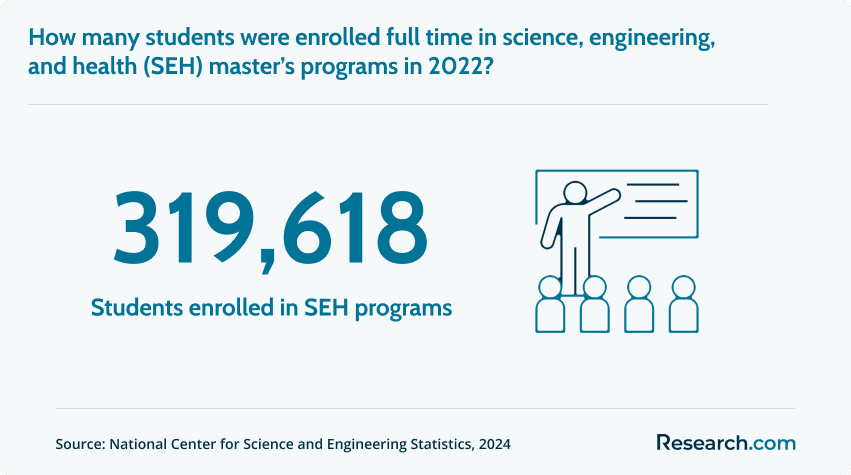
In 2022, more than 319,600 students were enrolled full time in SEH master’s programs. That figure reflects the scale of graduate study in science, engineering, and health fields, including areas where preparation and prerequisites can be especially important. Career changers applying to rigorous programs need to show evidence of readiness, not just interest.
Common admissions requirements
- Prerequisite coursework: Some programs require foundational classes before admission, before enrollment, or during the first part of the program.
- Academic record: A solid GPA, usually around 3.0 or higher, can help demonstrate graduate-level readiness, especially if your major is unrelated.
- Standardized tests: GRE, GMAT, or field-specific exams may be required by some programs, while others have test-optional or test-waiver policies.
- Professional or volunteer experience: Related work can help prove that you understand the field and have already tested your interest.
- Statement of purpose: Your essay should explain the career pivot clearly, connect your past background to your future plans, and show why the specific program fits.
- Recommendation letters: Strong letters should speak to your discipline, writing, analytical ability, leadership, technical aptitude, service orientation, or potential in the new field.
- Portfolio, writing sample, or interview: Some programs use additional materials to evaluate skill, motivation, or professional maturity.
Applicants should not assume requirements are identical across schools, even for the same degree. A student comparing graduate school costs and long-term earnings, much like someone reviewing Air Force nurse salary by state, should examine both admissions expectations and career outcomes before committing.
| Application component | What admissions committees want to see | How career changers can strengthen it |
| Transcript | Evidence of academic discipline and ability to complete demanding coursework. | Take prerequisite or related courses and earn strong grades before applying. |
| Resume | Relevant experience, progression, leadership, service, technical skill, or responsibility. | Highlight transferable accomplishments instead of listing every unrelated task. |
| Statement of purpose | A credible explanation for the switch and a clear career plan. | Explain the “why now,” the “why this field,” and the “why this program.” |
| Recommendations | Independent confirmation that you can succeed in graduate study. | Choose recommenders who can discuss skills relevant to the new discipline. |
| Test scores, if required | Additional evidence of quantitative, verbal, analytical, or field-specific readiness. | Use preparation strategically, especially if your transcript lacks related coursework. |
How do prerequisites and bridge programs work?
Prerequisites and bridge programs help students close academic gaps before moving into graduate-level work. They are especially common when the new field depends on technical, scientific, clinical, mathematical, or professional foundations that were not part of the applicant’s undergraduate major.
This matters for students changing into fields such as healthcare, business analytics, forensic science, education, or technology. Someone researching forensic scientist salary and career paths, for example, may also need to check whether a graduate program expects prior coursework in biology, chemistry, statistics, or criminalistics.
Prerequisite courses
Prerequisites are specific classes a program requires before admission, before enrollment, or early in the degree. A student applying to computer science without a STEM background may need introductory programming, discrete math, or statistics. A future healthcare applicant may need biology, anatomy, physiology, or other science courses depending on the program.
Prerequisites may be completed through the university, an approved online provider, a community college, or a post-baccalaureate option. Before enrolling, students should ask whether the program accepts courses from outside institutions and whether there is a minimum grade requirement.
Bridge programs
Bridge programs are more structured than individual prerequisites. They may combine foundational coursework, academic advising, skill development, and support designed to move students into graduate-level study. Some bridge programs function as conditional pathways, while others help applicants become more competitive before applying. The idea is similar to structured pathways into graduate study that help students prepare for a new academic level or field.
These programs typically last from a few months to a year. They can be useful, but they are not automatically worth the cost. Students should ask whether completion guarantees admission, whether credits count toward the degree, and whether less expensive prerequisite options are available.
| Option | What it does | When it makes sense | Questions to ask first |
| Individual prerequisites | Fills specific course gaps required by the graduate program. | You only need a small number of foundational courses. | Will the program accept this course, and what grade is required? |
| Bridge program | Provides a structured academic pathway into a new field. | You need several foundations plus advising or academic support. | Does completion improve admission chances or count toward the degree? |
| Post-baccalaureate program | Builds a stronger academic record after a bachelor’s degree. | You need extensive prerequisites or want to prepare for a competitive field. | Is this program designed for my intended graduate or professional path? |
| Graduate certificate | Offers focused graduate-level study in a specific area. | You want to test a field or add skills before committing to a full degree. | Can certificate credits transfer into a master’s program later? |
How important is work experience when applying outside your undergraduate major?
Work experience can be one of the strongest parts of an application when your bachelor’s degree is unrelated. It shows that your interest is grounded in real exposure, not just curiosity. It can also prove that you have transferable skills such as leadership, communication, research, analysis, client service, project management, technical problem-solving, or ethical judgment.
For example, students exploring how long a criminal justice degree takes may find that legal, public safety, corrections, policy, military, or community service experience can strengthen an application even if their undergraduate major was not criminal justice.
In applied fields such as business, healthcare administration, public policy, education leadership, and social work, experience can carry substantial weight. In some programs, it may be expected. In research-heavy programs, relevant experience in labs, fieldwork, writing, data analysis, or academic projects can help offset an unrelated major.
Education and earnings data also explain why many applicants pair work experience with graduate study. In 2022, individuals with a master’s or higher degree earned a median of $80,200, compared to $66,600 for those with a bachelor’s degree and $41,800 for high school graduates. These figures do not guarantee individual salary outcomes, but they show why applicants often evaluate graduate education as part of a broader career investment.
Types of experience that can help career changers
- Relevant employment: Paid work in or near the field you want to enter.
- Internships or practicums: Short-term exposure that confirms your interest and builds practical credibility.
- Volunteer service: Especially useful in education, social work, public health, nonprofit, and community-focused programs.
- Certifications or training: Evidence that you have already started building field-specific skills.
- Portfolio projects: Particularly valuable in technology, design, analytics, communications, and policy work.
- Leadership roles: Useful for MBA, public administration, education leadership, and management-oriented degrees.
How should career changers write a strong graduate school application?
A strong application does not apologize for a different undergraduate major. It explains why the change makes sense. Admissions committees want to see a thoughtful transition, evidence of preparation, and a realistic understanding of the field.
Before writing, clarify your target career and the credential it requires. Just as healthcare applicants may compare the differences between CPC and CCS certification before choosing a medical coding path, graduate applicants should understand how the degree connects to jobs, licensure, certifications, or advancement in their chosen field.
Build your statement of purpose around a clear career pivot
Your statement should answer four questions: What changed? What have you done to prepare? Why is this program the right fit? What do you plan to do after graduation? Avoid vague claims such as wanting to “help people” or “explore new opportunities” unless you connect them to specific experience, coursework, skills, and career goals.
Translate your previous major into transferable strengths
An unrelated major can still be valuable. English majors may bring writing and analysis. Psychology majors may bring research and human behavior insight. Engineering majors may bring systems thinking. Biology majors may bring scientific reasoning. The key is to connect those strengths directly to the graduate program’s expectations.
Show evidence, not just enthusiasm
Admissions committees are more persuaded by action than intention. Mention prerequisite courses, volunteer work, projects, job responsibilities, certifications, shadowing, informational interviews, or field exposure that helped confirm your decision.
Choose recommenders strategically
The best recommenders are not always the most prestigious people you know. Choose professors, supervisors, mentors, or project leaders who can describe your readiness for the new field with specific examples. A generic letter from a well-known person is weaker than a detailed letter from someone who knows your work closely.
| Weak approach | Stronger approach |
| “My undergraduate major was different, but I am passionate about this field.” | “My undergraduate training in research and writing, combined with my volunteer experience in community health, prepared me to pursue graduate study in public health.” |
| “I want a better job.” | “This degree supports my goal of moving from entry-level operations work into supply chain analytics and management.” |
| “Your program has a good reputation.” | “Your curriculum includes the policy analysis, applied research, and practicum experience I need for my intended role.” |
| “I am willing to work hard.” | “I completed prerequisite coursework and built a portfolio project to demonstrate readiness for graduate-level technical study.” |
Is it worth pursuing a different field in graduate school?
Changing fields in graduate school can be worth it when the degree is required for your target career, when it creates a credible path into a field you have researched carefully, and when the cost is reasonable compared with your expected opportunities. It is less likely to be worth it if you are using graduate school to avoid career uncertainty, if you have not checked licensure or job requirements, or if a lower-cost credential would achieve the same goal.
Benefits of changing fields in grad school
- Access to new careers: A graduate program can help you qualify for fields that your bachelor’s degree alone may not support.
- Specialized knowledge: You can build advanced skills in a field that better fits your current interests and goals.
- Professional credibility: A relevant graduate credential can help employers understand your career pivot.
- Leadership preparation: Some graduate degrees support advancement into management, administration, policy, or specialized practice.
- Career flexibility: Combining your undergraduate background with a new graduate field can create an interdisciplinary profile.
When a different graduate field may not be the best move
- You have not confirmed whether the degree is required for your target job.
- The program does not meet licensure, certification, or accreditation requirements for your career goal.
- You would need extensive prerequisites that make the path much longer or more expensive.
- A certificate, bootcamp, employer training program, or industry certification could provide the same career benefit.
- You are relying on broad salary averages instead of researching actual roles, locations, and employer expectations.
How can students pay for graduate school when switching fields?
Funding matters even more when you are changing fields because prerequisites, bridge programs, application fees, test preparation, lost work hours, and delayed graduation can increase the real cost. Do not compare programs by tuition alone. Compare the total price of attendance, required extra coursework, assistantship availability, employer support, and whether credits transfer if you start with a certificate.
Possible funding sources include scholarships, fellowships, graduate assistantships, employer tuition reimbursement, federal aid for eligible students, payment plans, and part-time study. Some students use a lower-cost credential first to test the field or strengthen an application. For example, affordable online graduate certificate programs may help students build targeted skills before deciding whether to pursue a full master’s degree.
| Funding option | How it can help | What to verify |
| Scholarships and fellowships | Reduce tuition without repayment. | Eligibility rules, renewal requirements, and whether career changers can apply. |
| Graduate assistantships | May provide tuition support, stipends, or professional experience. | Workload, availability for master’s students, and whether online students qualify. |
| Employer tuition reimbursement | Can lower out-of-pocket cost if your employer supports the degree. | Annual limits, grade requirements, repayment obligations, and approved programs. |
| Graduate certificates | Can offer a lower-cost way to build skills before a full degree. | Whether credits transfer into a related master’s program. |
| Part-time enrollment | Allows students to keep working while studying. | Program length, course rotation, financial aid eligibility, and workload. |
What challenges should students expect when changing fields for grad school?
Switching fields can be rewarding, but it often creates academic, financial, and emotional pressure. The students who handle the transition best usually plan for the gaps before they enroll.
Academic catch-up
The most obvious challenge is entering a classroom where some peers already know the field’s language, theories, software, lab methods, or professional standards. A student researching how to become a supply chain manager after majoring in an unrelated subject, for example, may need additional preparation in logistics, operations, analytics, or business fundamentals.
Longer timelines and higher total cost
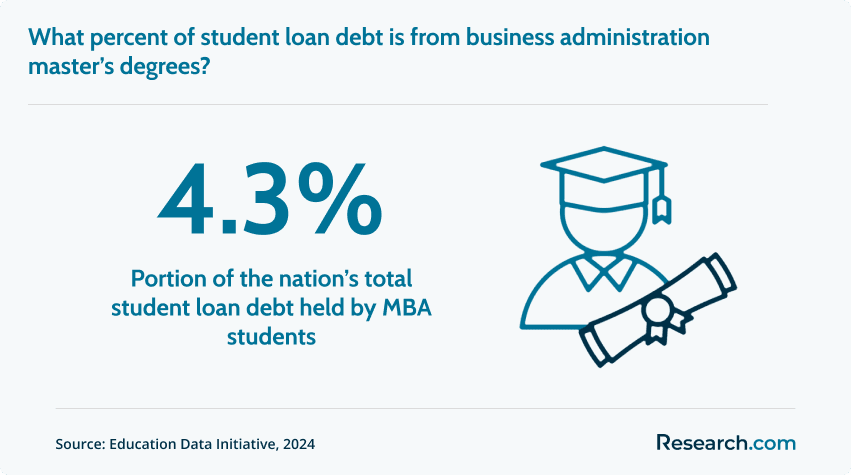
Prerequisites, bridge programs, and noncredit requirements can extend the path. Financial risk is not theoretical: business administration master’s degrees alone account for 4.3% of the nation’s total student loan debt, the highest of any master’s program. Students considering a career change into a new field should weigh cost, debt, job requirements, and realistic earnings before enrolling.
Confidence gaps
Career changers may feel behind classmates who studied the field as undergraduates. This can lead to unnecessary self-doubt. Advising, tutoring, office hours, peer study groups, and early preparation can make the transition more manageable.
Licensure and accreditation risks
Some students choose a program that sounds relevant but does not meet the requirements for the career they want. This is especially risky in counseling, social work, teaching, nursing, allied health, psychology, and other regulated fields. Always verify accreditation, state approval, field placement requirements, and exam eligibility before enrolling.
Higher attrition risk without support
A steep learning curve can increase the chance of stopping out if students lack academic support, financial planning, or a realistic workload. Before enrolling, ask what support exists for students without a related undergraduate background.
| Common mistake | Why it causes problems | Better approach |
| Choosing a program based only on title | Similar-sounding degrees can lead to different careers, licenses, or employer outcomes. | Match the curriculum to the exact job, license, or credential you want. |
| Ignoring accreditation or state approval | The degree may not qualify you for licensure or certification. | Verify accreditation and licensing alignment before applying. |
| Looking only at tuition | Fees, prerequisites, travel, books, lost income, and extra terms can change total cost. | Calculate the full cost of completion, not just per-credit tuition. |
| Assuming online programs work everywhere | Licensure, field placement, and state authorization rules can vary. | Ask whether the program serves students in your state and supports required placements. |
| Relying only on rankings | A highly ranked program may not fit your goals, budget, schedule, or background. | Prioritize fit, outcomes, accreditation, support, and affordability. |
| Using salary averages as guarantees | Earnings vary by location, role, employer, experience, and industry. | Research actual job postings and alumni outcomes for your target market. |
What alternatives can help you change fields without a full graduate degree?
A master’s degree is not always the fastest or most cost-effective way to change careers. In some fields, employers value targeted skills, certifications, portfolios, or experience as much as formal graduate study. Before committing to a full degree, compare alternatives based on cost, time, credibility, transferability, and whether they lead to the role you want.
Graduate certificates
A graduate certificate can provide focused study in a specific area such as analytics, project management, public health, education technology, cybersecurity, or healthcare administration. It may also help you test a field before enrolling in a full master’s program.
Post-baccalaureate programs
Post-baccalaureate study can help students complete prerequisites, improve academic readiness, or prepare for competitive graduate or professional programs. This option is common for students moving into healthcare, education, or science-related fields.
Industry certifications
Technology, finance, human resources, project management, and healthcare administration often include certifications that signal job-ready skills. These can be useful when a role does not require a master’s degree.
Microcredentials and online courses
Short online programs can help students build specific technical or professional skills while continuing to work. They are most useful when paired with projects, experience, or a clear employer demand.
Second bachelor’s degree
A second bachelor’s degree can make sense when the new field requires deep undergraduate preparation or when graduate programs will not admit applicants without a related academic foundation. It may be less efficient for fields where a certificate or prerequisite sequence is enough.
Healthcare career paths show why alternatives matter. Students asking whether they can get a medical assistant certificate online may be looking for a quicker entry point into healthcare before deciding whether to pursue a longer graduate route.
| Pathway | Best for | Main advantage | Main limitation |
| Full master’s degree | Careers requiring advanced study, licensure preparation, or leadership credentials. | Comprehensive training and stronger credential recognition. | Higher cost and longer commitment. |
| Graduate certificate | Students testing a field or adding a specialized skill set. | More focused and often less expensive than a full degree. | May not be enough for roles requiring a master’s. |
| Post-baccalaureate program | Applicants missing prerequisites for graduate or professional school. | Builds academic readiness in a structured way. | May add time before the actual graduate degree begins. |
| Industry certification | Fields where employers recognize skills-based credentials. | Can be practical and career-focused. | Value varies by industry, employer, and role. |
| Second bachelor’s degree | Fields requiring broad undergraduate preparation. | Provides a full foundation in the new discipline. | May be slower than prerequisites or a bridge option. |
What is the future of interdisciplinary graduate education?
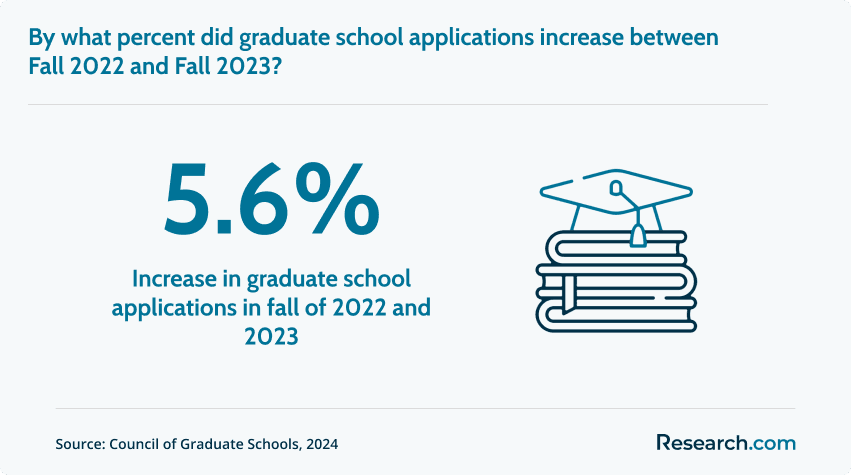
Graduate education is becoming more flexible as employers and universities respond to work that crosses traditional academic boundaries. Graduate school applications in the fall of 2022 and 2023 increased by 5.6%, and many programs now combine fields such as technology and healthcare, data and policy, business and sustainability, or education and behavioral science.
Interdisciplinary degrees are becoming more common
Modern workplace problems rarely fit inside one department. Programs that combine data analysis, ethics, management, communication, health systems, policy, or technology can help students build broader problem-solving skills.
AI and data skills are changing nontechnical fields
Artificial intelligence, automation, analytics, and digital platforms are influencing business, healthcare, education, public administration, social services, and communications. This does not mean every student needs to become a programmer, but it does mean many graduate programs are adding data literacy, technology awareness, and applied digital skills.
Employers may value hybrid skill sets
Students who combine two fields can sometimes stand out. A humanities graduate with analytics training, a healthcare worker with management preparation, or an educator with technology skills may bring a useful mix of domain knowledge and applied skills.
Online and hybrid formats can support career changers
Flexible programs can help working adults complete prerequisites, certificates, or degrees while staying employed. Students should still verify accreditation, state authorization, placement requirements, faculty access, and whether online coursework fits their learning style.
Interdisciplinary planning is especially visible in education and healthcare. Students exploring communication sciences may ask where an SLP can work because speech-language pathology can intersect with schools, clinics, hospitals, rehabilitation, early intervention, and research settings.
Questions to ask before applying to grad school in a different field
- Does this degree directly support the career I want, or am I choosing it because I feel uncertain?
- Does the program accept applicants from my undergraduate background?
- Which prerequisites do I need, and can I complete them before applying?
- Will the program meet licensure, certification, or accreditation requirements in my state?
- How much will the full path cost, including prerequisite courses and fees?
- Can I keep working while enrolled, or will I need to reduce my income?
- What academic support exists for students entering from another field?
- Do alumni from this program move into the roles I want?
- Would a certificate, certification, post-baccalaureate program, or second bachelor’s degree be more efficient?
- What evidence can I include in my application to prove readiness for the new discipline?
Key Insights
- You can go to graduate school for a different major, but the path depends on prerequisites, program flexibility, accreditation, licensure rules, and your ability to show readiness.
- Business, education, public health, healthcare administration, policy, social work, information systems, and interdisciplinary programs often provide more accessible entry points for career changers than highly sequenced technical or clinical fields.
- A strong application explains the career shift clearly and supports it with evidence: coursework, work experience, volunteer service, certifications, projects, or recommendations.
- Prerequisites and bridge programs can help close academic gaps, but students should verify whether credits count, whether completion improves admission chances, and whether lower-cost options exist.
- Graduate school is not always the best route. Certificates, post-baccalaureate study, industry certifications, microcredentials, and second bachelor’s degrees may be better depending on the career goal.
- Cost planning is essential. Tuition is only one part of the decision; extra coursework, lost income, debt, fees, and program length can significantly change the return on investment.
- Never assume an online or out-of-state program meets professional requirements. For licensed fields, confirm accreditation, state approval, supervised experience, exam eligibility, and placement support before enrolling.
References
- Council of Graduate Schools & Educational Testing Service. (2025). Graduate enrollment and degrees: 2013 to 2023 [Data report]. Council of Graduate Schools & Educational Testing Service.
- Hanson, M. (2024, August 28). Student loan debt by major. Education Data Initiative.
- National Center for Education Statistics. (2024, May). Annual earnings by educational attainment. In Condition of Education. U.S. Department of Education. National Center for Education Statistics.
- National Center for Education Statistics. (2024, May). Graduate degree fields. In Condition of Education. National Center for Education Statistics.
- National Science Foundation. (2024). Graduate education report: 2024 edition. National Science Foundation.
Other Things You Should Know About Going to Grad School with a Different Undergraduate Major
In 2027, many graduate programs welcome students from various undergraduate backgrounds. Options include interdisciplinary programs or prerequisite courses to bridge any knowledge gaps. Always check specific program requirements, as they can vary by institution and field.
Yes, in 2027, you can pursue graduate studies with an undergraduate degree in a different field. Many grad programs value diverse academic backgrounds and may offer prerequisite courses to bridge knowledge gaps. Be sure to research each program's specific requirements and expectations.
Yes, you can switch fields when applying for graduate school in 2027. Admissions committees often value diverse academic backgrounds for their unique perspectives. However, you may need to meet specific prerequisites or gain some foundational knowledge in your new field through bridge programs or additional coursework.


