
2027 Cost of Online Education vs. Traditional Education

Co-Founder and Chief Data Scientist
For full-time, in-state students at public four-year institutions, the average published tuition and fees for the 2024-2025 academic year was $11,610 (College Board, 2025). This figure is a baseline that is constantly changing for campus-based education, but it also provides a starting point for comparing the cost of earning a degree online.
As online modalities continue to expand across all degree levels, prospective students are increasingly focused on understanding the true financial impact of choosing a virtual classroom over a traditional one.
In this article, I will break down the per-credit tuition difference between online and traditional programs and evaluate savings on expenses like textbooks. I will also examine what specific technology expenses to budget for, how much employer tuition reimbursement can minimize final online education cost, and which degree levels show the largest cost disparity.
Key Things You Should Know About Online and Traditional Education Costs
- Online education cost models generally offer a single, universal tuition rate that eliminates out-of-state tuition hikes, unlike the traditional education cost structure.
- Traditional colleges often use large institutional grants to achieve a low net price, which online programs often cannot match.
- The largest financial benefit of online education is eliminating non-tuition costs like room and board (averaging $13,310−$15,250 annually) and mandatory campus fees (up to $2,000 annually).
Affordable Quick Online Degree Programs With High Acceptance Rates
1. Nursing
Nursing degrees train essential healthcare providers, from LPNs to RNs, with programs offered affordably at community colleges (ADN) or vocational schools (LPN certificate). These options minimize time and cost for rapid entry into the high-demand field. Certain institutions have high acceptance rates, making the start of a nursing career highly accessible.
2. Computer Science
Computer Science degrees focus on programming, algorithms, and AI to prepare graduates for high-salary tech roles. Affordable online programs use virtual labs and often have competitive per-credit costs. This offers a cost-effective path to careers in software development and cybersecurity.
3. Healthcare Administration
Healthcare Administration degrees prepare leaders to manage clinics, hospitals, and public health systems efficiently. Affordable options, particularly online ones, offer low tuition to accommodate working adults seeking career advancement. Many colleges offer these programs with widely accessible admission criteria, allowing easy entrance to administrative careers.
4. Management
A Management degree provides core business skills in leadership, operations, and strategic planning, useful across all industries. Affordable online programs emphasize critical thinking while minimizing total cost of attendance. Many university business schools offer open enrollment, supporting student access to general management education.
5. Management Information Systems
Management Information Systems (MIS) degrees blend business strategy with information technology, focusing on data and systems management. Affordable programs, often found online, are priced competitively to meet the high demand for tech-savvy business analysts. Accessible schools offer flexible entry standards, offering a clear path to high-value skills.
6. Economics
An Economics degree provides analytical skills centered on finance, market trends, and resource allocation. Affordable programs focus on delivering rigorous quantitative training and often lead to lucrative analyst roles. Certain accessible schools maintain wide-ranging enrollment policies, supporting student access to this analytical field.
7. Business Administration
A Business Administration degree is a versatile credential covering finance, accounting, and marketing. Highly affordable options, including online MBAs, allow career transitions with flexible payment options. Certain institutions maintain generally accessible admission pools, making this degree an inclusive foundation for various professions.
8. Social Work
Social Work degrees prepare compassionate professionals for direct practice and policy advocacy in mental health and community services. Affordable options support mission-driven careers, with many universities offering programs that streamline entrance for dedicated students. Accessible schools offer wide entry, supporting dedicated students into this essential field.
9. Accounting
An Accounting degree provides the necessary foundation in auditing, taxation, and financial reporting for CPA licensure. Affordable paths often start at community colleges or utilize generous transfer credit policies to reduce overall cost. Many institutions offer this degree through open enrollment, supporting accessible program entry.
10. Special Education
Special Education degrees train certified teachers to support students with diverse learning needs and meet state licensure requirements. Affordable online programs cater to working teachers seeking endorsement or career change, often with institutional support for in-person demonstration teaching.
- What is the per-credit tuition cost for online education programs vs. traditional programs? Online Tuition Vs. Traditional
- How much do students save on textbooks in online programs compared to traditional programs? Course Materials
- How much need is met by financial aid for traditional education cost vs. online education cost programs? Financial Aid
- What specific hardware and internet expenses must I budget for in online education cost considerations? Other Expenses
- What non-tuition expenses are completely eliminated by choosing a low-cost online education? What non-tuition expenses are completely eliminated by choosing a low-cost online education?
- Which degree level has the largest cost difference between online and traditional tuition? Which degree level has the largest cost difference between online and traditional tuition?
- What is the difference between a college’s net price and the advertised traditional education cost? What is the difference between a college’s net price and the advertised traditional education cost?
- How much can employer tuition reimbursement minimize final online education costs? How much can employer tuition reimbursement minimize final online education costs?
- What is the percentage earnings difference for online vs. traditional graduates? Earnings Difference
- What are the top microcredentials that can complement either traditional or online education degrees? What are the top microcredentials that can complement either traditional or online education degrees?
- How do online programs balance academic quality with cost savings? How do online programs balance academic quality with cost savings?
Online Education Cost vs. Traditional Education Cost: What Students Should Compare First
Choosing between an online degree and a campus-based program is not only an academic decision. It is a cost-of-attendance decision that affects tuition, fees, housing, transportation, technology, financial aid, employer reimbursement, and long-term return on investment. The cheapest advertised tuition is not always the lowest final price, and an online program is not automatically the best financial choice for every student.
This guide explains how online education costs compare with traditional education costs, where the biggest savings usually come from, which expenses online students must still budget for, and how to evaluate whether a lower-cost program is worth it. It is designed for undergraduate students, graduate students, working adults, career changers, and anyone comparing online and in-person programs before enrolling.
Quick Answer: Is Online Education Usually Cheaper Than Traditional Education?
Online education is often cheaper in total cost because students can avoid room and board, commuting, campus fees, and many textbook expenses. However, the final price depends on tuition per credit, financial aid, residency rules, program fees, technology costs, and whether the school offers institutional grants or employer-supported tuition benefits.
The most accurate comparison is not “online tuition vs. campus tuition.” Students should compare net price, which is the full cost of attendance after grants and scholarships are applied. A campus-based college with generous aid can sometimes cost less than an online program with a lower published tuition rate.
| Cost factor | Online education | Traditional education | What to check before enrolling |
| Tuition | Often charged at one rate regardless of state residency | May vary by in-state, out-of-state, public, or private status | Compare cost per credit, not only annual tuition |
| Housing and food | Often avoided if the student studies from home | Can be a major part of the full cost of attendance | Ask whether living expenses are required or optional |
| Course materials | More likely to use digital resources, rentals, inclusive access, or OERs | May still rely on print textbooks and access codes | Review the program’s course materials policy |
| Financial aid | Federal aid is generally available at accredited schools | Federal aid is generally available at accredited schools | Confirm accreditation and complete the FAFSA |
| Technology | Requires reliable hardware, internet, webcam, microphone, and software access | May rely more on campus labs and local technology resources | Budget for equipment and internet before classes start |
| Career value | Depends heavily on accreditation, school reputation, field, and employer perception | Depends heavily on accreditation, school reputation, field, and employer perception | Compare outcomes, licensure alignment, and employer recognition |
What is the per-credit tuition cost for online education programs vs. traditional programs?
Per-credit tuition is the first number students should calculate because it determines the base price of a degree before fees, aid, books, housing, and transportation are added. Traditional colleges often publish tuition in annual terms and may include mandatory fees, campus charges, and different rates for in-state and out-of-state students.
Online programs often use a simpler pricing model. Many charge one tuition rate for all online learners, which can remove nonresident tuition premiums and reduce campus-specific fees. That structure can make online education easier to budget for, but students still need to confirm whether the program adds technology fees, proctoring fees, clinical fees, graduation fees, or program-specific charges.
The current enrollment-weighted published tuition and fees for full-time undergraduate students are:
- Public Two-Year In-District: The average published price is $4,050 for the 2024-25 academic year, a $100 increase from 2023−24.
- Public Four-Year In-State: The average published price is $11,610 for 2024−25, up $300 from the previous year.
- Public Four-Year Out-of-State: The average published price is $30,780 for 2024−25, an increase of $940 from the prior year.
- Private Nonprofit Four-Year: The average published price is $43,350 for 2024−25, rising $1,610 over 2023−24.
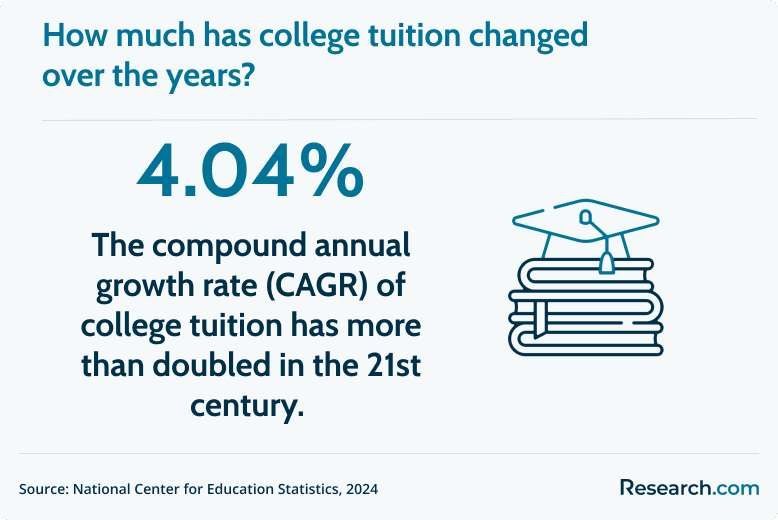
Published sticker prices for traditional campuses increased by 2.5% to 3.9% across sectors, but that does not tell the full story. A student comparing programs should convert every option into a total degree estimate: cost per credit multiplied by required credits, plus fees, materials, technology, travel, housing, and expected aid.
Students pursuing education-related careers should also consider where they plan to work after graduation. Degree cost matters, but job location can shape long-term return on investment, especially for graduates looking at states in high demand for teachers.
How to compare per-credit tuition correctly
| Question | Why it matters |
| Is tuition charged per credit or per term? | Per-credit pricing is easier to compare across schools, while term pricing may favor students who take heavier course loads. |
| Does the online program charge one rate for all students? | A universal online rate can be valuable for students who would otherwise pay out-of-state tuition. |
| Are mandatory fees included in the published tuition? | Some programs advertise tuition separately from technology, proctoring, course, or graduation fees. |
| How many credits are required to graduate? | A lower per-credit rate may not save money if the program requires more credits or does not accept transfer work. |
| Will transfer credits apply? | Accepted transfer credits can reduce both tuition and time to completion. |
How much do students save on textbooks in online programs compared to traditional programs?
Course materials are one of the easiest costs to overlook. Online programs often reduce this expense by using e-textbooks, embedded course materials, rentals, digital libraries, and open educational resources. Traditional programs may also use these options, but online courses are commonly designed around digital delivery from the start.
The main textbook and materials differences include:
- Average annual budget: Estimated full-time undergraduate budgets for 2024−25 include approximately $1,290 for books and supplies at four-year institutions, but increased use of digital materials has lowered many students’ actual out-of-pocket course material spending.
- Digital price advantage: Digital resources and e-textbooks are commonly priced 50% less than print versions because they avoid paper, printing, warehousing, and shipping costs.
- Inclusive access models: Some schools bundle digital materials into course fees so students receive immediate access, often through institutional bulk pricing.
- Open Educational Resources: OERs are free online textbooks and learning materials that instructors can integrate into courses to reduce or eliminate textbook purchases.
The biggest savings come when a program replaces print books and single-use access codes with digital materials, rentals, or OERs. Students should still check whether “inclusive access” fees are optional, whether they are charged per course, and whether they replace or add to other book costs.
Students comparing a correspondence course vs online course should pay close attention to materials delivery. Modern online programs often provide cloud-based access to readings, textbooks, learning tools, and assignments, while older correspondence-style models may still involve printing or mailing costs.
The following chart shows how much students spend on books and other supplies for college on average.
Questions to ask about textbook costs
- Are required materials included in tuition, billed as a course fee, or purchased separately?
- Can students opt out of inclusive access charges if they find a lower-cost alternative?
- Does the program use OERs or library-licensed materials?
- Are access codes required for homework platforms, labs, or quizzes?
- Will digital materials remain available after the course ends?
How much need is met by financial aid for traditional education cost vs. online education cost programs?
Financial aid eligibility is usually tied to the institution’s accreditation and a student’s aid profile, not simply whether classes are online or on campus. Students in accredited online and traditional programs can generally use major federal aid programs, but the amount of institutional and state aid can differ significantly.
The first step for both online and campus students is completing the Free Application for Federal Student Aid, commonly known as the FAFSA. The FAFSA determines eligibility for federal grants, loans, and work-study opportunities used across delivery formats.
General aid programs available for both formats
- Federal grants and loans: Need-based aid such as the Pell Grant of up to $7,395 for 2024−25 and Federal Supplemental Educational Opportunity Grants may be available, along with Direct Subsidized and Unsubsidized Loans. The total aid pool available to undergraduates, including grants and loans, was $190.1 billion in 2023−24.
- Federal Work-Study: Work-study has traditionally been campus-based, but some accredited online programs offer remote or virtual Federal Work-Study opportunities.
Where online and traditional aid packages can differ
- Traditional institutional aid: Campus-based colleges, especially private nonprofit four-year institutions, may use tuition discounts, scholarships, and endowed grants to reduce the final price for admitted students.
- Online institutional aid: Large online providers may offer scholarships, but many online programs provide less non-federal institutional grant aid than traditional colleges. This is especially important for career changers comparing options such as MA in education with teacher credentials programs.
- State-specific aid restrictions: Some state-funded grants are limited to students attending institutions physically located in that state or taking courses in specific formats, which can exclude some out-of-state online programs.
The key lesson is that a lower online tuition rate does not always mean a lower net price. A traditional college with strong institutional aid may reduce the final bill more than an online program with limited grant funding.
In the following chart, you can see the average in-district published tuition and fees of public two-year institutions by state. For comparison, the U.S. average sits at $4,050.
Financial aid checklist for online and traditional students
| Step | What to verify |
| Confirm accreditation | Make sure the school participates in federal student aid programs and holds recognized accreditation. |
| Submit the FAFSA | Federal aid cannot be evaluated without the FAFSA. |
| Ask for a full aid estimate | Compare grants, scholarships, loans, and work-study separately. |
| Check state aid rules | Confirm whether online, part-time, or out-of-state enrollment affects eligibility. |
| Calculate net price | Subtract only grants and scholarships from total cost; loans still need to be repaid. |
What hardware and internet expenses should online students budget for?
Online learning removes many campus-based costs, but it also shifts technology responsibility to the student. A reliable device, stable internet, audio and video equipment, and required software are not optional extras. They are part of the real online education cost.
The core technology expenses include:
- Computer hardware: A dependable laptop for general coursework typically costs between $700 and $800. Students in specialized fields such as Engineering or Arts may need to budget $1,000 or more. Many programs require a 2.4GHz processor or faster, at least 4GB of RAM, and a webcam and microphone for proctored exams.
- Internet service: Basic access for text-based course content may require only 1Mbps to 2Mbps. Live video classes, high-definition streaming, and large file transfers are more reliable with 25Mbps to 50Mbps.
- Software and peripherals: A webcam, headset, antivirus updates, and permission to install required programs may be necessary. Some colleges provide Microsoft Office at no additional cost, but students should confirm what is included.
Students should treat technology as a required academic expense, not a one-time convenience purchase. Device failure, weak internet, or missing software can affect participation, exams, group projects, and assignment deadlines.
Technology needs can also differ depending on whether someone is a full time vs part time student. Full-time students may spend more hours in learning platforms, attend more synchronous sessions, and place heavier demands on their devices and internet connection.
Online learning technology budget checklist
| Item | Why it matters | Cost risk if ignored |
| Laptop or desktop | Needed for assignments, exams, video meetings, and learning platforms | Emergency replacement costs or missed deadlines |
| Webcam and microphone | Often required for live classes, presentations, advising, and remote proctoring | Inability to complete required participation or exam steps |
| Reliable internet | Supports streaming lectures, uploading assignments, and accessing course systems | Dropped classes, failed uploads, or interrupted exams |
| Software access | May include productivity tools, statistical software, design tools, or lab platforms | Unexpected subscriptions or inability to complete coursework |
| Technical support plan | Students need a backup option if equipment fails | Lost time during exams or major assignments |
What non-tuition expenses can online education eliminate?
The strongest financial advantage of online education often comes from costs that disappear outside the tuition bill. Students who study from home can avoid many expenses tied to living on or traveling to a physical campus.
The largest eliminated or reduced expenses usually include:
- Room and board: Housing and food averaged $13,310 at public four-year colleges and $15,250 at private nonprofit four-year colleges (Ma, J. et al., 2024). Online students who live at home or maintain lower-cost housing can avoid this major part of the traditional cost of attendance.
- Transportation and commuting: Online study can remove parking permits, fuel, tolls, public transit, and campus commuting time. For commuters, these costs can add over $1,300 annually to the total education cost. This can matter for working professionals returning for advanced credentials such as the best online education specialist degrees in leadership.
- Mandatory campus fees: Campus-based tuition bills may include fees for facilities, athletics, recreation centers, health services, or other amenities. Online students are often charged fewer campus-based fees, though some programs still charge technology or distance learning fees.
These savings can be larger than the tuition difference itself. For many students, avoiding housing and commuting is the main reason an online degree becomes financially workable.
Costs online students may still need to pay
- Technology or distance learning fees
- Remote proctoring fees
- Course materials or inclusive access charges
- Licensure exam, certification, or background check fees
- Clinical, practicum, internship, or residency travel costs when required
- Graduation, transcript, or application fees
Which degree level has the largest cost difference between online and traditional tuition?
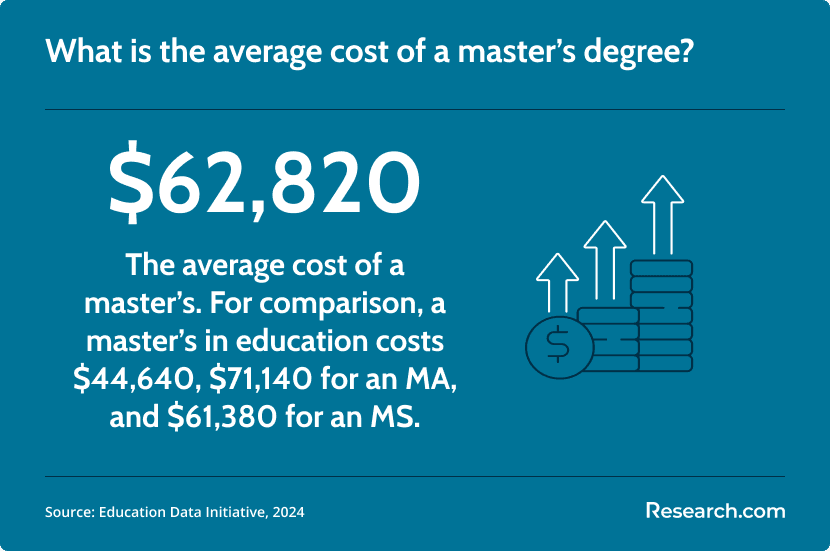
The largest cost difference between online and traditional tuition is most often seen at the master’s degree level, especially for students who would otherwise pay nonresident tuition. Undergraduate online tuition can be close to in-state tuition in some cases, but graduate students often see a wider gap because they may receive less non-service-based institutional grant aid.
For example, the 2024−25 average online rate is $337 per credit hour compared with an in-person rate of $325. At the graduate level, online options can become more financially attractive when they remove nonresident premiums, reduce campus fees, and allow students to keep working while enrolled (Hanson, M., 2025).
Graduate students also tend to carry more of the gross tuition and fee burden themselves. That makes tuition structure, employer reimbursement, schedule flexibility, and avoided relocation costs especially important in master’s degree comparisons.
Private nonprofit universities may show the largest total cost difference, including over $135,000 in total attendance savings for a full program. However, students should still compare accreditation, curriculum, faculty access, practicum requirements, and career outcomes before choosing the lowest-priced option.
Students asking is a master's in data science worth it can use the same decision logic. An online graduate program may reduce tuition and relocation costs, but the degree’s value depends on accreditation, employer recognition, curriculum quality, and whether the program builds marketable skills.
Degree-level cost comparison: what matters most
| Degree level | Where savings may come from | Main caution |
| Associate degree | Lower tuition, fewer commuting costs, ability to remain local | Public two-year in-district tuition may already be relatively low, so compare net price carefully |
| Bachelor’s degree | Reduced housing, commuting, and campus fee costs | Transfer credit policies can strongly affect final cost |
| Master’s degree | Avoided nonresident premiums, fewer campus costs, ability to keep working | Some fields require in-person labs, residencies, clinical hours, or licensure-aligned placements |
| Professional or licensure-focused programs | Flexible coursework and reduced relocation costs | Students must verify state authorization, licensure eligibility, and supervised fieldwork rules |
What is the difference between a college’s net price and the advertised traditional education cost?
The advertised price, often called the sticker price, is the college’s published cost of attendance for an academic year. It may include tuition, fees, housing, food, books, supplies, transportation, and other estimated expenses. The National Association of Student Financial Aid Administrators (NASFAA) explains that net price is calculated after subtracting grants and scholarships from that published cost.
Net price is more useful because it reflects what a student may actually need to cover through savings, earnings, payment plans, loans, or family support. Gift aid matters because it does not have to be repaid, unlike student loans.
This distinction can change the result of an online-versus-traditional comparison. A private nonprofit college with a high sticker price may offer enough institutional aid to compete with, or even undercut, a public or online option. Average grant aid per student can be over $20,000 at private nonprofit four-year colleges, compared to around $4,000 at public four-year institutions.
After adjusting for inflation, the average net tuition and fees paid by first-time, full-time students at public four-year schools fell to an estimated $2,480 in 2024−25.
A useful affordability example can be found among the most affordable historically black colleges and universities, where tuition control, federal funding, and institutional aid can help lower net prices while preserving academic value.
Sticker price vs. net price
| Term | What it includes | Why students should care |
| Sticker price | Published cost of attendance before aid | Useful for understanding the full listed cost, but not the final price for many students |
| Grant and scholarship aid | Federal, state, institutional, or private gift aid | Reduces cost without repayment |
| Net price | Sticker price minus grants and scholarships | Best starting point for comparing affordability |
| Loan amount | Borrowed money used to cover remaining costs | Helps pay the bill now but increases future repayment obligations |
How much can employer tuition reimbursement reduce final online education costs?
Employer tuition reimbursement can substantially lower the final cost of an online degree, especially for working adults who can study without leaving their jobs. Federal law allows employers to provide up to $5,250 in educational assistance benefits per employee per year that is excluded from the employee’s gross income and not subject to federal income or payroll taxes.
Some employers offer higher annual benefits, although amounts above the $5,250 federal limit are generally treated as taxable income. Graduate study may also be handled differently depending on the employer’s policy.
Online students may benefit more from reimbursement because their education spending is often concentrated on tuition, books, and required fees rather than commuting or campus housing. This can be especially useful for employees pursuing career-aligned credentials, including those exploring careers with an alternative teaching certification.
Typical reimbursement rules may require employees to maintain a minimum grade, often a 'C' or 'B', remain employed during or after the course, receive manager approval, and choose coursework related to their role or an approved degree plan.
Questions to ask your employer before enrolling
- What education expenses are eligible: tuition, books, fees, exams, or supplies?
- Is the benefit paid upfront or reimbursed after grades are submitted?
- What grade is required for reimbursement?
- Does the program need to relate directly to your current job?
- Are online programs treated the same as campus programs?
- Do you have to stay employed for a set period after receiving the benefit?
- How are amounts above $5,250 handled for tax purposes?
What is the percentage earnings difference for online vs. traditional graduates?
Graduate earnings are influenced more by accreditation, institution reputation, field of study, work experience, licensure, and skills than by course delivery format alone. An online degree from a respected, accredited institution may be viewed similarly to an in-person degree, while degrees from lesser-known or exclusively online institutions may face more scrutiny from some employers.
Key findings on salary and employer perception include:
- Starting salary parity: For employers that track degree format, the reported starting salary difference is effectively 0%. The National Association of Colleges and Employers found that 100% of surveyed employers reported paying online and in-person graduates the same wages.
- Accreditation and institutional reputation: Employer acceptance is stronger when an online degree comes from a university with a physical campus presence. Organizations view online degrees from brick-and-mortar schools favorably at a 92% acceptance rate, while favorability falls to 42% for degrees from institutions that operate exclusively online, regardless of accreditation.
- Early earnings differences: Some studies suggest graduates from solely online institutions may have lower earnings in the first years after graduation compared with graduates from campuses serving similar students. However, when online colleges are compared with campuses that primarily serve older students, online graduates often see 13% higher earnings and a faster return on investment.
- Hiring trends: Over 70% of organizations reported hiring applicants with an online degree in the last year, showing that online credentials are now common in hiring pipelines.
The practical takeaway is that students should not judge value by modality alone. They should verify accreditation, program outcomes, employer recognition, licensure alignment, internship access, and the school’s reputation in the target industry.
When an online degree is more likely to pay off
- The institution is properly accredited.
- The degree name does not differ from the campus version in a way that weakens recognition.
- The curriculum matches current employer expectations.
- The program includes projects, clinical experience, internships, practicums, or portfolios when relevant.
- The student can keep working while enrolled, reducing lost income.
- The total net price is meaningfully lower than comparable campus options.
What microcredentials can complement online or traditional education degrees?
Microcredentials can strengthen a degree by adding evidence of specific, job-ready skills. They are especially useful when a degree is broad, when a field changes quickly, or when employers expect proof of technical or professional competencies. Nearly 97% of higher education leaders believe microcredentials strengthen students’ long-term career prospects (AACSB, 2025).
High-value microcredential categories include:
- Technology and data skills: Options such as Google Data Analytics, Google Project Management, and IBM Data Science Professional Certificates can document practical competencies. Among completers, 75% reported a positive career outcome within six months of completion.
- Generative AI and cybersecurity: Short credentials in Generative AI and cybersecurity can help graduates demonstrate familiarity with digital infrastructure, data protection, and AI-enabled workflows.
- Stackable credentials for academic credit: Some institutions now accept selected external microcredentials for credit or build them into degree pathways. These credentials can support advancement for educators asking what can you do with an education specialist degree.
- Professional skill credentials: Focused credentials in strategic leadership, digital marketing, user experience design, and related areas can make a degree more career-specific. Credentials from providers such as Google, Meta, and IBM may be recognized by employers in relevant fields.
Microcredentials should not replace an accredited degree when a degree is required for licensure, advancement, or graduate admission. They work best as targeted additions that help students prove skills not fully reflected on a transcript.
How do online programs balance academic quality with cost savings?
Strong online programs reduce costs through delivery efficiencies, not by lowering academic expectations. A credible online degree should meet recognized accreditation standards, use qualified faculty, provide academic support, and offer meaningful interaction through learning platforms, advising, tutoring, library access, and career services.
Cost savings can come from lower facility needs, fewer campus-based fees, digital materials, flexible scheduling, and reduced relocation or commuting costs. But students should evaluate quality carefully. A low price is not a good deal if the program has weak support, poor graduation outcomes, limited employer recognition, or does not meet licensure requirements.
Students comparing cost-effective options can also review best online degrees to understand how program length, field of study, and career pathway can affect value.
How to evaluate online program quality
| Quality factor | What to look for |
| Accreditation | The institution should hold recognized accreditation, and programmatic accreditation should be confirmed when required in the field. |
| Student support | Online learners should have access to advising, tutoring, library resources, technical help, and career services. |
| Faculty access | Students should know how instructors communicate, how quickly they respond, and whether live interaction is available. |
| Outcomes | Review graduation, retention, employment, licensure, or salary information when the school publishes it. |
| Field experience | For education, healthcare, counseling, and other applied fields, confirm placement support and state eligibility rules. |
| Employer recognition | Ask whether graduates work in the roles and industries you are targeting. |
Online vs. Traditional Education: Who Should Choose Each Option?
The better choice depends on the student’s goals, schedule, learning style, financial aid package, and career requirements. Online education is often best for students who need flexibility and want to reduce non-tuition costs. Traditional education may be better for students who need campus-based labs, structured in-person support, residential life, or extensive face-to-face networking.
| Choose online education if... | Consider traditional education if... |
| You need to keep working while studying. | You want or need in-person labs, studios, clinics, or campus facilities. |
| You want to avoid relocation, commuting, or room and board costs. | You benefit from a highly structured campus schedule. |
| Your target program is accredited and accepted in your field. | Your field values campus-based networking, recruiting, or residency experiences. |
| You have reliable technology and can manage independent learning. | You prefer face-to-face instruction and immediate in-person support. |
| Your employer offers tuition reimbursement for online study. | A campus program offers enough institutional aid to lower your net price. |
Common Mistakes When Comparing Online and Traditional Education Costs
- Comparing sticker prices instead of net prices: Always subtract grants and scholarships before deciding which option costs less.
- Ignoring accreditation: A low-cost program can become expensive if credits do not transfer, employers question the credential, or licensure boards do not accept it.
- Looking only at tuition: Housing, food, commuting, books, technology, fees, and lost income can change the true cost.
- Assuming online programs always qualify for state aid: Some grants have residency, institution location, or attendance-format rules.
- Forgetting technology costs: Online students need reliable equipment and internet before the term begins.
- Overestimating employer reimbursement: Reimbursement may require approval, minimum grades, continued employment, and eligible coursework.
- Assuming salary outcomes are guaranteed: Pay depends on field, location, experience, employer, school reputation, and market conditions.
- Relying only on rankings: Rankings can be useful, but they do not replace program-specific cost, aid, accreditation, and outcome checks.
Step-by-Step: How to Compare the Real Cost of Online and Traditional Programs
- List the full tuition requirement. Calculate total credits required multiplied by cost per credit, or use the school’s full program estimate.
- Add all required fees. Include technology, course, proctoring, graduation, lab, clinical, internship, and student service fees.
- Estimate materials. Ask about textbooks, access codes, OERs, inclusive access fees, and software subscriptions.
- Include living and transportation costs. Compare housing, food, commuting, parking, public transit, and relocation costs.
- Add online technology costs. Budget for computer hardware, internet service, webcam, microphone, headset, and required software.
- Apply grants and scholarships. Use gift aid to calculate net price, but do not treat loans as discounts.
- Check employer benefits. Confirm whether tuition reimbursement applies and when it is paid.
- Verify accreditation and licensure alignment. This is essential for education, healthcare, counseling, accounting, and other regulated fields.
- Compare outcomes. Review employment, licensure, graduation, transfer, and salary information when available.
- Choose based on total value. The best option is the one that balances affordability, quality, flexibility, and career relevance.
Key Insights
- Online education often lowers total cost by reducing housing, commuting, campus fees, and course material expenses, but tuition alone does not determine affordability.
- Net price is the most important number. A traditional college with strong grants or scholarships may cost less than an online program with a lower sticker price.
- Graduate students often see the largest online cost advantage, especially when online programs avoid nonresident tuition premiums and allow students to keep working.
- Accreditation, institutional reputation, and program outcomes matter as much as price. A cheap program is not a good value if it weakens career, transfer, or licensure options.
- Online students should budget for technology, including a reliable computer, internet access, webcam, microphone, and required software.
- Employer tuition reimbursement can significantly reduce out-of-pocket cost, but students must understand eligibility rules, grade requirements, tax treatment, and repayment obligations.
- Microcredentials can improve career readiness when they add targeted skills in technology, data, AI, cybersecurity, leadership, or other employer-valued areas.
- The best decision comes from comparing total cost, aid, flexibility, quality, and career fit—not from assuming online or traditional education is always cheaper.
References:
- AACSB. (2024). How Microcredentials Are Changing Higher Education. https://www.aacsb.edu/insights/articles/2024/10/how-microcredentials-are-changing-higher-education
- Emeritus. (2021). The State of Employer-Funded Education | Tuition Reimbursement. https://emeritus.org/blog/the-state-of-employer-funded-education/
- Hanson, Melanie. (2025). “Average Cost of College Textbooks” EducationData.org. https://educationdata.org/average-cost-of-college-textbooks
- Hanson, Melanie. (2025). “Average Cost of College & Tuition” EducationData.org. https://educationdata.org/average-cost-of-college
- Hanson, Melanie. “Average Cost of a Master’s Degree” EducationData.org. https://educationdata.org/average-cost-of-a-masters-degree
- Ma, J., Pender, M., & Oster, M. (2024). Trends in College Pricing and Student Aid 2024. College Board. https://research.collegeboard.org/media/pdf/Trends-in-College-Pricing-and-Student-Aid-2024-ADA.pdf
- NACE. (2024). Employers See Online Degrees as Comparable to In-person Degrees. https://www.naceweb.org/talent-acquisition/candidate-selection/employers-see-online-degrees-as-comparable-to-in-person-degrees
- NASFAA. (2024). Sticker v. Net Price in 2024-25: The College Board Breaks Down What Students Actually Pay to Attend College. https://www.nasfaa.org/news-item/34985/Sticker_v_Net_Price_in_2024-25_The_College_Board_Breaks_Down_What_Students_Actually_Pay_to_Attend_College
- Octopus Intelligence. (2025). What Internet Speed Is Ideal for Remote Work and Online Learning? Tips and Insights. https://www.octopusintelligence.com/what-internet-speed-is-ideal-for-remote-work-and-online-learning-tips-and-insights/
- Texas A&M International University. (2025). Minimum Technology Requirements for Distance Learning. https://www.tamiu.edu/distance/students/technology-requirements.shtml
Other Things You Should Know About Online and Traditional Education Costs
No, fully online students usually do not pay campus activity fees if they are enrolled only in distance courses. Many institutions charge these fees only to students taking on-campus classes or using student facilities. The exact rule is set by the school’s fee schedule and enrollment status.
Technology fees can significantly impact online education costs in 2027. These fees often cover software licenses, digital resources, and virtual platforms, ranging from $50 to $200 per course, depending on the institution and program requirements.
Yes, several scholarships are specifically available for online education in 2027. These include federal scholarships, private grants, and school-specific awards, which can significantly reduce tuition costs. Eligibility often depends on factors like academic merit, financial need, and program focus.


