2027 Can You Transition from an AAS Degree to a Bachelor's Degree?

Co-Founder and Chief Data Scientist
Transitioning from an Associate of Applied Science to a bachelor’s is a smart, strategic move to advance your career. With a growing number of the best jobs requiring at least a four-year degree, having a plan to build on your technical skills is more important than ever. Think of your AAS as a powerful foundation, not a final destination.
The key is planning. You need a clear roadmap to make the process smooth and ensure your hard work pays off. The career planning experts who created this guide have 10 years of experience helping students like you navigate this exact path, turning an AAS degree into a launchpad for long-term success.
What are the benefits of transitioning from an AAS degree to a bachelor's degree?
- A bachelor's degree opens doors to leadership and management positions, especially in high-growth, impactful fields like healthcare, education, and professional services.
- It dramatically increases your lifetime earning potential, giving you access to the professional economy where 56% of bachelor's degree holders work, compared to just 23% of those with an associate's.
- Online bachelor's completion programs offer the flexibility to advance your education and increase your qualifications without having to leave your current job.
What can I expect from transitioning from an AAS degree to a bachelor's degree?
You can expect a process that involves a careful evaluation of your existing credits and a shift in academic focus. A four-year university will review your AAS coursework to see how it aligns with their bachelor's program requirements. This often means you will need to complete general education courses in areas like humanities, social sciences, and advanced math that weren't part of your technical AAS curriculum.
It is also wise to prepare for a different style of learning. Your AAS program was likely focused on developing specific, hands-on skills for a job. A bachelor's program will emphasize more theoretical knowledge, research, and writing. It's not necessarily harder, but it requires a different academic mindset. Success means being ready to adapt from a "how-to" approach to a "why-it-works" one.
Where can I work after transitioning from an AAS degree to a bachelor's degree?
After completing your bachelor's, you will be qualified for professional and leadership roles that are often out of reach with only an associate's degree. This includes positions in management, administration, planning, and research. Instead of being the technician, you can become the person who leads the technical team, manages the department, or develops new strategies for the company.
The specific jobs depend on your field. For example, an AAS in Nursing (ADN) followed by a Bachelor of Science in Nursing (BSN) can lead to roles like nurse manager or clinical supervisor. An AAS in Information Technology followed by a bachelor's can prepare you for positions like cybersecurity analyst or IT project manager. The transition positions you for the next level of responsibility and authority in your career.
How much can I make with a bachelor's degree after transitioning from an AAS?
You can expect to earn significantly more over your career. While the immediate pay bump varies by industry, the real financial advantage of a bachelor's degree is its long-term impact on your earning potential. It qualifies you for promotions into higher salary brackets and protects you from the wage stagnation that can affect those with less education.
Think of it as an investment. The cost and time you put into finishing your degree create a much higher ceiling for your future income. Rather than focusing only on the starting salary, look at the mid-career and senior-level positions that a bachelor’s degree makes possible. This is how leveraging your AAS degree to get a bachelor's truly pays off.
- Can you transition from an AAS degree to a bachelor’s degree? AAS to Bachelor
- Can you transfer an AAS degree into a Bachelor of Arts (BA) program? Program Transfer
- What steps should you take to transfer from an AAS to a bachelor’s degree? Transition Steps
- What is the typical transfer credit policy for AAS graduates? Credit Policy
- How does a Bachelor of Applied Science (BAS) build on an AAS degree? How does a Bachelor of Applied Science (BAS) build on an AAS degree?
- How long does it take to finish a bachelor’s degree after an AAS? Completion Time
- What is an articulation agreement for AAS transfer students? Articulation Agreement
- Are there online bachelor’s completion programs for AAS holders? Are there online bachelor’s completion programs for AAS holders?
- Can AAS graduates qualify for financial aid when pursuing a bachelor’s? Financial Aid
- Can supplemental certifications accelerate career advancement? Can supplemental certifications accelerate career advancement?
- Can you switch majors when moving from an AAS to a bachelor’s? Switching Majors
Can you transition from an AAS degree to a bachelor’s degree?
Yes. You can move from an Associate of Applied Science degree to a bachelor’s degree, but the process is different from a traditional transfer route. An AAS is built for job readiness, while many bachelor’s programs are built around broader general education, theory, and upper-division major coursework. That difference is why planning matters.
This guide is for AAS students, recent graduates, and working adults who want to know whether their technical credits can help them finish a four-year degree. You will learn which bachelor’s pathways usually work best, how transfer credit is evaluated, how long completion can take, what to ask schools, and when a Bachelor of Applied Science may be the most efficient option.
Quick answer: What is the best bachelor’s path after an AAS?
For many AAS graduates, the most direct route is a Bachelor of Applied Science because it is designed to accept applied and technical coursework. A Bachelor of Science may also work well when the major closely matches your AAS field. A Bachelor of Arts is possible, but it often requires more general education and liberal arts coursework, which may reduce the number of credits that transfer.
| Path after an AAS | Best fit | Main advantage | Main risk |
| Bachelor of Applied Science | Students who want to build on technical training and move into leadership, operations, or management roles | Often accepts more applied credits as a block or toward the degree plan | May not be available in every major or at every university |
| Bachelor of Science | Students staying in a related technical, healthcare, IT, engineering technology, or business-focused field | Can align well when the bachelor’s major builds on the AAS subject area | Science, math, or major prerequisites may add time |
| Bachelor of Arts | Students shifting toward humanities, social sciences, communication, public service, or interdisciplinary fields | Can support career changes and broader academic goals | Technical AAS courses may count only as electives or may not meet major requirements |
What makes an AAS different from an AA or AS?
An Associate of Applied Science is usually a two-year, career-centered credential. The curriculum focuses on practical, hands-on preparation for a specific occupation, such as nursing support roles, information technology, automotive technology, paralegal work, industrial systems, culinary arts, or allied health.
By contrast, Associate of Arts and Associate of Science programs are commonly designed with transfer in mind. They tend to include more general education courses that match the first two years of a bachelor’s degree. Field-specific differences matter as well; for example, the requirements for ADN, AAD, and AAS nursing-related pathways can vary depending on whether the program is primarily designed for workforce entry, transfer, or professional preparation.
Why AAS graduates often return for a bachelor’s degree
An AAS can be a strong way to enter the workforce quickly, but some graduates later find that advancement requires broader business, management, analytical, or leadership skills. In many organizations, supervisory, administrative, project management, and professional-track roles are more likely to require or prefer a bachelor’s degree.
The gap is visible in workforce data. Only 23% of associate’s degree holders work in the professional economy, compared with 56% of workers whose highest credential is a bachelor’s degree. For AAS graduates who want long-term mobility, the bachelor’s degree can become less about starting a career and more about removing a promotion barrier.
| Reason to pursue a bachelor’s after an AAS | What it can help with | What to verify before enrolling |
| Promotion into management | Prepares you for team lead, supervisor, operations, or department-level responsibilities | Whether the program includes leadership, budgeting, communication, and project management coursework |
| Changing specialties | Lets you move from a hands-on technical role into a related professional niche | Whether your AAS credits apply to the new major or only to electives |
| Meeting employer requirements | Helps qualify for jobs that list a bachelor’s degree as required or preferred | Whether the target job requires a specific major, license, or accreditation-backed program |
| Strengthening earning potential over time | May improve access to higher-level roles with broader responsibilities | Program cost, transfer credit, completion time, and realistic outcomes in your local job market |
Can you transfer an AAS degree into a Bachelor of Arts program?
You can transfer from an AAS into a Bachelor of Arts program, but this is often one of the less efficient options unless the BA major is closely related to your previous study or the university has a flexible transfer policy. The challenge is not that AAS coursework lacks value. The issue is that the coursework may not match what a BA program requires.
BA degrees usually emphasize liberal arts, communication, languages, humanities, social sciences, and broad general education. An AAS, on the other hand, is filled with applied courses tied to an occupation. A class in engine diagnostics, medical coding, welding processes, network administration, or culinary production may be valuable professionally, but it may not satisfy a BA requirement in literature, history, foreign language, or social science.
Why applied credits do not always match academic requirements
Transfer credit depends on course alignment. A university is not simply asking, “Was this course useful?” It is asking, “Does this course meet a specific requirement in this bachelor’s degree plan?” If the answer is no, the credit may transfer as a general elective, or it may not apply toward graduation at all.
That does not make the AAS a weak credential. In fact, many programs are among the associate degrees that can lead to strong early-career pay because they are designed around immediate workforce skills. The practical question is whether those credits fit the academic structure of the bachelor’s degree you now want.
| Bachelor’s option | How well it usually fits an AAS | When it makes sense |
| Bachelor of Applied Science | Strong fit | You want to keep your technical foundation and add leadership, operations, or professional skills |
| Bachelor of Science | Moderate to strong fit | Your AAS is related to the BS major, such as IT to cybersecurity or health technology to healthcare administration |
| Bachelor of Arts | Variable fit | You are intentionally changing direction and are willing to complete more general education or major prerequisites |
What steps should you take to transfer from an AAS to a bachelor’s degree?
The best transfer outcomes usually come from planning before you apply. AAS graduates should not assume that every credit will transfer or that every bachelor’s program will treat applied coursework the same way. Your goal is to identify the program that accepts the most relevant credits while still leading to the career you actually want.
- Start with the career, not the school. Look at job descriptions for roles you want in five to ten years. Note the required degree level, preferred major, certifications, licenses, software skills, and experience expectations.
- Choose a compatible bachelor’s field. A related major usually protects more of your AAS credits. A major change can still be worthwhile, but it may add prerequisites and time.
- Search for AAS-friendly transfer pathways. Prioritize Bachelor of Applied Science, degree-completion, transfer-friendly, and adult learner programs. These are more likely to understand applied coursework.
- Ask for a transcript review before committing. Do not rely on a general website statement. Ask the admissions or transfer office how each course will apply to your intended degree.
- Check accreditation, cost, schedule, and student support. A generous transfer policy is only useful if the program is credible, affordable, and realistic for your work and family responsibilities.
- Complete the application and aid process early. Gather transcripts, course descriptions or syllabi if needed, application materials, and FAFSA information before deadlines approach.
Use labor market direction to choose a practical target
A bachelor’s degree is a major investment of time and money, so it should connect to a field with real opportunity. Between 2021 and 2031, the three industries projected to expand employment the fastest are healthcare services at 20%, private education services at 17%, and professional and business services at 13%. If your AAS can connect to one of these areas, the bachelor’s path may offer stronger long-term mobility.
Support services also matter, especially for students balancing work, family, transfer stress, or documented learning needs. If you need structured advising, coaching, or accessibility support, reviewing colleges known for serving nontraditional learners and students with disabilities—such as those discussed in Research.com’s guide to colleges for students with learning disabilities—can help you identify what strong student support looks like.
| Transfer task | Why it matters | Best question to ask |
| Identify your target career | Prevents you from choosing a degree that does not match employer expectations | What bachelor’s major do employers in my target role usually request? |
| Compare degree types | Helps you avoid losing credits unnecessarily | Would a BAS, BS, BA, or another completion program accept more of my AAS credits? |
| Request a credit evaluation | Shows how many credits apply to graduation, not just how many are accepted | Which credits satisfy major, general education, elective, or upper-division requirements? |
| Review total cost | Tuition alone does not show the full price of completion | What will I pay after transfer credits, fees, books, technology costs, and aid? |
| Confirm delivery format | Work schedules can make some programs unrealistic | Are classes asynchronous, synchronous, hybrid, evening-based, or campus-based? |

What is the typical transfer credit policy for AAS graduates?
There is no single transfer rule for AAS degrees. Each university decides how to evaluate applied coursework, and even two programs at the same university may treat the same AAS differently. That is why a written credit evaluation is one of the most important documents you can request.
Some schools accept the AAS as a completed block of lower-division credit. Others review every class individually. Some accept technical courses only as electives, which may help you reach the total number of credits required for graduation but may not reduce major requirements. If a course does not transfer or does not apply to the degree plan, you may need to repeat similar content or complete additional prerequisites.
| Transfer policy type | How it works | What it means for AAS graduates |
| Block transfer | The receiving school accepts the AAS as a package | Usually the most efficient option when available because more credits apply at once |
| Course-by-course review | Each class is compared with the university’s requirements | Can work well, but you need a detailed evaluation to avoid surprises |
| Technical credits as electives | Applied courses count toward total credits but not specific major or general education requirements | May help with credit totals but still leave many required courses unfinished |
| Limited transfer | Few AAS courses match the bachelor’s curriculum | Often occurs when switching into an unrelated major or a highly prescribed program |
Questions to ask before you apply
Ask direct, specific questions. A general answer such as “we accept transfer students” does not tell you whether your AAS will shorten your path to graduation. Start with: “Do you have an articulation agreement with my community college for my exact AAS program?” Then ask: “Can I receive an unofficial degree audit showing where each credit will apply?”
You should also ask whether the school has a maximum number of transferable credits, whether technical credits count toward the major, whether older credits expire, and whether grades below a certain level are excluded. If you are considering remote options, Research.com’s list of online colleges that accept transfer credits can help you understand how transfer-friendly policies vary across institutions.
How does a Bachelor of Applied Science build on an AAS degree?
A Bachelor of Applied Science is often designed specifically for students who already have applied technical training. Instead of asking you to abandon your occupational background, a BAS uses it as the foundation for upper-level study.
In many BAS programs, your AAS credits may satisfy a substantial portion of lower-division requirements. The bachelor’s curriculum then adds advanced coursework in areas such as leadership, supervision, communication, project management, data-informed decision-making, finance, compliance, technology management, or organizational operations. This structure can make the BAS one of the most efficient bachelor’s completion options for AAS graduates.
| What you bring from the AAS | What the BAS often adds | Career value |
| Technical job skills | Management and leadership coursework | Prepares you to supervise people who perform the work you already understand |
| Hands-on industry experience | Business, budgeting, and operations concepts | Helps translate technical knowledge into workplace decisions |
| Applied problem-solving | Communication, ethics, policy, and project planning | Supports advancement into coordinator, lead, trainer, or manager roles |
| Career-specific foundation | Upper-division applied coursework | Allows specialization without starting from scratch |
Why the BAS can be a strong bridge into professional roles
The BAS is useful because it connects two skill sets employers often need together: technical fluency and organizational judgment. AAS graduates understand the work at the ground level. The bachelor’s degree can add the planning, communication, compliance, and leadership skills needed to guide teams and projects.
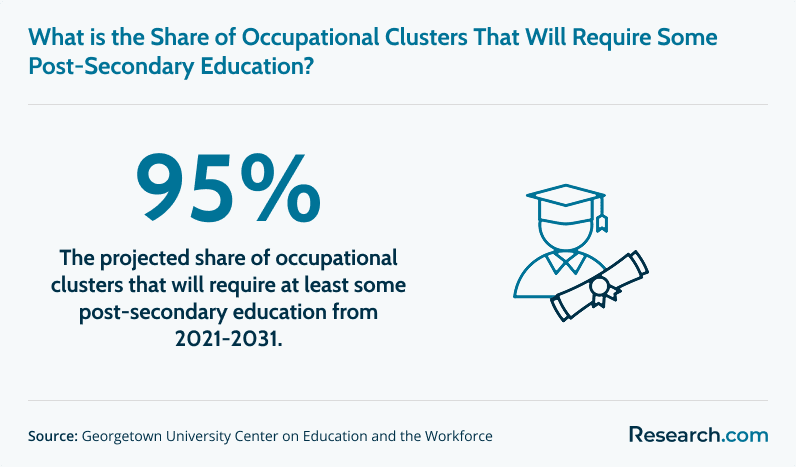
This matters because the professional economy includes five major occupational clusters: business and financial operations, management, computer and mathematical occupations, architecture and engineering, and education, training, and library occupations. Between 2021 and 2031, across these clusters, 95% of job openings will require at least some postsecondary education. Together, these five clusters are projected to account for 35% of total employment in 2031 and about 47% of all jobs for workers with postsecondary education.
Some AAS graduates also use a BAS or related bachelor’s program to add business depth to a technical background. That decision can resemble the planning process students use when evaluating what to consider before pursuing an accounting degree: the best choice depends on career goals, required coursework, and return on investment.
How long does it take to finish a bachelor’s degree after an AAS?
For a full-time student, completing a bachelor’s degree after an AAS often takes about two years. Depending on transfer credit, course availability, program format, and enrollment intensity, the timeline may be as short as 18 months or as long as three years.
| Factor | How it affects completion time | What to check |
| Number of credits accepted | More applicable transfer credits can shorten the degree plan | Ask how credits apply to major, general education, elective, and graduation requirements |
| Program format | Accelerated terms may allow faster progress than traditional semesters | Confirm term length, start dates, and whether required courses are offered often |
| Full-time or part-time enrollment | Part-time study can make school manageable but extend the calendar | Ask for sample plans for both full-time and part-time students |
| Major prerequisites | Missing math, science, language, or field-specific prerequisites can add courses | Request a degree audit before enrolling |
| Work and family schedule | Even a short program can become unrealistic if class times do not fit your life | Look for evening, online, hybrid, or asynchronous options if needed |
Accelerated education is increasingly popular, but students should read program claims carefully. Some resources discuss ways to earn an associate-level credential online in 6 months; those options are not the same as completing a bachelor’s after an AAS. For a bachelor’s completion plan, the key issue is not speed alone. It is how many credits apply and whether the remaining courses are available when you need them.
Is the extra time worth it?
For many AAS graduates, the additional time can be worthwhile when the bachelor’s degree clearly connects to promotion, a career change, licensure eligibility, or access to roles that require a four-year credential. The labor market comparison is significant: there are about 2.5 million annual job openings for workers with an associate’s degree, compared with 4.3 million for workers with a bachelor’s degree.
That does not mean every bachelor’s degree automatically pays off. The value depends on the field, school cost, debt level, transfer credits, local hiring conditions, and your ability to finish. A good program should reduce wasted credits and show a clear connection between your AAS background and your next career step.
What is an articulation agreement for AAS transfer students?
An articulation agreement is a formal arrangement between a community college and a four-year institution. It explains how credits from a specific associate program transfer into a specific bachelor’s program. For AAS students, this can be one of the safest ways to avoid losing credits.
Think of it as a pre-built transfer map. Instead of hoping the university will accept your courses later, you can see in advance which classes count, which requirements remain, and how long the bachelor’s degree should take if you follow the plan.
Why articulation agreements are especially valuable for AAS graduates
AAS coursework is more specialized than many transfer-degree courses, so a clear agreement can prevent confusion. When a university has created an AAS-specific pathway, it is signaling that the applied curriculum has been reviewed and matched to a bachelor’s plan.
| Benefit | Why it matters | What to confirm |
| Credit protection | Reduces the chance that technical courses will be rejected or treated only as electives | Whether the agreement covers your exact AAS program and catalog year |
| Clear course sequence | Shows which classes to take before and after transfer | Whether any required courses must be completed before admission |
| Lower total cost | Helps you avoid repeating coursework | Whether following the agreement keeps you on a two-year completion plan after the AAS |
| Less uncertainty | Makes it easier to compare schools using actual degree plans | Whether the agreement is still active and officially approved |
Affordability and predictability often go together. Students who are trying to reduce transfer risk may also compare flexible admission and low-cost options, including programs discussed in Research.com’s guide to affordable online colleges with open admissions. The same principle applies: do not choose based only on easy entry. Confirm credit transfer, accreditation, total cost, and graduation requirements.
Are there online bachelor’s completion programs for AAS holders?
Yes. Many universities offer online bachelor’s completion programs for students who already hold an associate degree, including AAS graduates. These programs can be especially useful for working adults who cannot pause employment or relocate to attend a campus program.
Online learning can make completion more realistic, but it does not automatically make a program better. The important questions are whether the school is properly accredited, whether your AAS credits apply, whether the class schedule fits your life, and whether the program supports your target career.
| Option | Best for | Strengths | Potential drawbacks |
| Fully online bachelor’s completion | Working adults, caregivers, military-connected students, and students far from campus | Flexible scheduling and no relocation requirement | Requires strong time management and careful accreditation checks |
| Hybrid program | Students who want online flexibility with some in-person support | Can combine remote coursework with labs, advising, or networking | Campus visits may be difficult if you live far away |
| Campus-based transfer program | Students who benefit from face-to-face classes, labs, and campus resources | More direct access to faculty, facilities, and peer networks | Less flexible for full-time workers |
Accreditation is nonnegotiable
Before enrolling, verify that the institution is accredited by an agency recognized by the U.S. Department of Education or the Council for Higher Education Accreditation. Accreditation affects credit transfer, employer recognition, financial aid eligibility, and future graduate school options.
If you are still at the associate-degree stage and want a remote pathway from the beginning, Research.com’s overview of online associate degree options can help you understand how online programs are structured. Whether you study online or on campus, the same rule applies: confirm that the credential will be recognized before you invest your time and money.
Can AAS graduates qualify for financial aid when pursuing a bachelor’s?
Yes. AAS graduates who transfer into a bachelor’s program may qualify for federal, state, institutional, and private financial aid, subject to eligibility rules. The main starting point is the Free Application for Federal Student Aid, or FAFSA.
Submitting the FAFSA can determine eligibility for federal grants, work-study, and student loans. Schools may also use FAFSA information when awarding their own grants or scholarships. If you plan to study online, make sure the institution participates in federal aid programs; Research.com’s guide to online colleges that accept FAFSA can help you understand what to look for.
How to reduce the cost of finishing your bachelor’s
- Maximize accepted transfer credits. Every applicable credit can reduce the number of courses you still need to pay for.
- Ask about transfer scholarships. Many schools have awards for community college graduates or adult learners.
- Compare total program cost, not only tuition. Fees, books, technology charges, commuting, childcare, and lost work hours can change the real price.
- Consider part-time enrollment carefully. It can protect your income, but it may extend the timeline and affect aid packaging.
- Avoid borrowing before you understand the degree plan. Do not take on debt for credits that may not apply to your program.
| Cost question | Why it matters |
| How many of my AAS credits apply to graduation? | This directly affects how many courses you still need to pay for. |
| What is the total estimated cost after transfer credits? | A low per-credit rate may not be the cheapest option if many credits do not transfer. |
| Are there scholarships for transfer or community college students? | These awards can reduce out-of-pocket cost without adding debt. |
| Will my enrollment status affect aid? | Part-time and full-time students may receive different aid packages. |
| Does the program require internships, labs, travel, or campus visits? | Extra requirements can add costs beyond tuition. |
Current trends affecting AAS-to-bachelor’s transfer students
Several trends make transfer planning more important in 2026. Employers continue to value technical ability, but many advancement roles also require communication, data use, leadership, compliance awareness, and cross-functional collaboration. That favors graduates who can combine the hands-on skills of an AAS with the broader professional preparation of a bachelor’s degree.
Online and hybrid completion programs have also expanded options for working adults. At the same time, students need to be more careful consumers. Not every online program accepts applied credits generously, and not every bachelor’s degree leads to the same outcome. AI and automation are changing job tasks in fields such as business, IT, healthcare administration, manufacturing, and education support, which makes adaptability and continuing education more valuable.
Can supplemental certifications accelerate career advancement?
Targeted certifications can strengthen your profile when they match your field and career goal. They are most useful when they validate a specific skill that employers recognize, such as project management, cybersecurity, cloud systems, healthcare compliance, accounting software, data analytics, or industry-specific safety standards.
Certifications should not be used as a substitute for a required degree, license, or accredited program. Instead, think of them as add-ons that can make your bachelor’s pathway more marketable. After completing a bachelor’s degree, some professionals also pursue an affordable online graduate certificate to build expertise in a specialized area without immediately committing to a full graduate degree.
Can you switch majors when moving from an AAS to a bachelor’s?
You can switch majors after earning an AAS, but the farther you move from your original field, the more likely you are to lose applicable credits or need extra prerequisites. A related pivot is usually manageable. A complete academic reset can add significant time and cost.
For example, an AAS in information technology may transfer well into cybersecurity, information systems, software development, or technology management. In that case, the original coursework still supports the new bachelor’s direction. By contrast, moving from culinary arts to accounting, or from automotive technology to psychology, may mean that many applied courses count only as electives.
How to decide whether a major change is worth it
Before switching, compare three things: your target job requirements, the number of credits that will apply, and the time needed to finish. Some high-demand fields justify additional coursework because the bachelor’s degree is central to career entry or advancement. In healthcare administration and STEM, over 50% of all job openings require at least a bachelor’s degree.
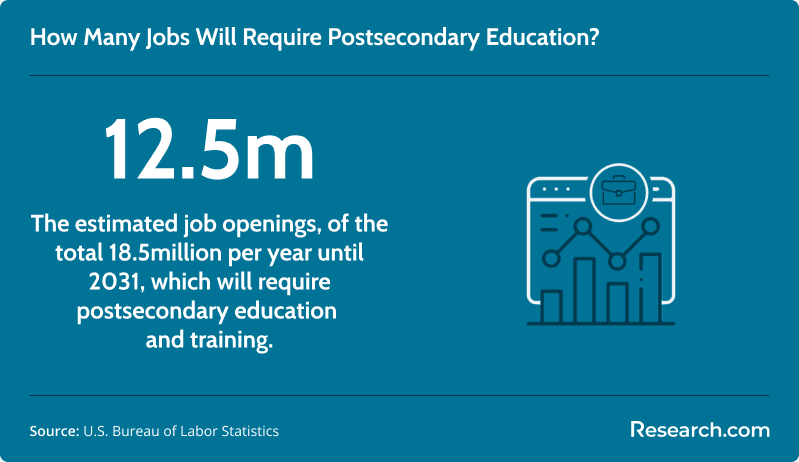
Program fit matters here. A student with technical experience who wants to enter software may consider options such as an accelerated online software engineering degree, but should still verify prerequisites, accreditation, portfolio expectations, and employer requirements. Across the broader labor market, of the 18.5 million annualized job openings, 12.5 million require workers with postsecondary education and training. The best major change is one that turns your AAS into a stronger platform, not one that forces you to start over without a clear payoff.
| Major switch type | Example | Likely transfer result | Decision advice |
| Closely related | AAS in network administration to bachelor’s in cybersecurity | Many technical credits may apply | Often a strong option if the new field matches your career goals |
| Moderately related | AAS in medical assisting to bachelor’s in healthcare administration | Some credits may apply, with added business or policy courses | Worth considering if you want to move from direct service into operations |
| Unrelated | AAS in culinary arts to bachelor’s in accounting | Credits may apply mostly as electives | Proceed only after reviewing total time, cost, and prerequisites |
Common mistakes AAS graduates should avoid
| Mistake | Why it causes problems | Better approach |
| Assuming all credits will transfer | Accepted credits may not apply to your major or graduation requirements | Request a written degree audit before enrolling |
| Choosing a school based only on tuition | A cheaper per-credit price can become expensive if you must retake many courses | Compare total cost to completion after transfer credit is applied |
| Ignoring accreditation | Unrecognized programs can create problems with employers, aid, transfer, or graduate study | Verify institutional accreditation through recognized sources |
| Switching majors without checking prerequisites | Missing required courses can add semesters | Review the full degree plan and ask which prerequisites remain |
| Relying only on rankings or advertising | Marketing does not show whether the program fits your AAS credits or career goal | Use rankings as a starting point, then verify credit transfer, outcomes, support, and cost |
| Assuming online means easier | Online programs can be rigorous and require strong self-management | Ask about course format, faculty access, tutoring, advising, and workload |
| Forgetting licensure or certification rules | Some fields require specific accredited coursework or supervised experience | Check state and industry requirements before choosing a program |
What graduates say about moving from an AAS to a bachelor’s degree
- David: "My AAS helped me get into a technical role quickly, but after a few years I could see the limit. I was trusted to solve problems, yet I was rarely part of planning meetings. The Bachelor of Applied Science made sense because it counted my hands-on background and added leadership, budgeting, and project management. After finishing, I moved into a team lead role within six months."
- Chloe: "I worried that choosing an AAS first would trap me in one path. It turned out to be the opposite. Once I found universities with clear transfer routes for applied degrees, I realized my technical coursework gave me a practical base that made upper-level classes easier to connect to real work."
- Sarah: "I started in network administration, then discovered that cybersecurity was the part of the field that interested me most. I thought changing direction would mean starting over, but I found an online bachelor’s program that built on my IT credits. I kept working while studying, which made the transition financially possible."
Key Insights
- An AAS can lead to a bachelor’s degree, but transfer success depends on credit alignment, not just the number of credits earned.
- A Bachelor of Applied Science is often the most efficient option because it is commonly designed for students with applied technical backgrounds.
- BA programs are possible after an AAS, but they may require more general education and liberal arts coursework than BAS or related BS programs.
- Articulation agreements are one of the best protections against lost credits because they show exactly how an AAS transfers into a bachelor’s program.
- Most full-time AAS graduates should expect bachelor’s completion to take about two years, though timelines can range from 18 months to three years.
- Online bachelor’s completion programs can work well for employed adults, but students must verify accreditation, transfer credit, course format, and total cost.
- Financial aid may be available to transfer students, but the smartest cost-saving move is maximizing credits that apply directly to graduation.
- Changing majors can be a smart career move when the new field builds on your AAS; an unrelated switch requires a careful review of added time, prerequisites, and return on investment.
References:
- Annenberg Public Policy Center & American Association of Colleges and Universities. (2024, July 1). Community college and civics report [PDF]. University of Pennsylvania.
- Belk Center (North Carolina State University). (2025, June). Applied associate of science degrees: Pathways for workforce and transfer [PDF].
- Bureau of Labor Statistics. (n.d.). Unemployment and earnings by education [Table]. U.S. Department of Labor.
- Georgetown University Center on Education and the Workforce. (2024, March 27; updated November 12, 2024). After everything: Projections of jobs, education, and training requirements through 2031 [Executive summary & report].
- Georgetown University Center on Education and the Workforce. (2024). Projections of jobs, education, and training requirements through 2031: Executive summary [PDF].
- National Center for Education Statistics. (n.d.). Annual earnings by educational attainment [Indicator]. In Condition of Education.
- Postsecondary Employment Outcomes (PSEO) Coalition. (2025, July). Community college bachelor’s degrees: How CCB graduates’ earnings compare to AAs and BAs [PDF].
- Utah Data Research Center. (2022, November). Workforce outcomes for Utah associate degree recipients [Overview & findings].
- U.S. Bureau of Labor Statistics. (2025, August 1). Employment level – some college or associate degree, 25 Yrs. & over (LNS12027689) [Data series]. FRED, Federal Reserve Bank of St. Louis.
Other Things You Should Know About Transitioning From an AAS Degree to a Bachelor's Degree
Yes. Many bachelor’s programs accept 60 or more AAS credits, but schools usually require at least 120 total credits for graduation. Acceptance depends on course equivalency, regional accreditation, and major fit, and some AAS technical courses transfer only as elective credit.
Yes, many institutions have articulation agreements that specify which credits from an AAS degree will transfer to a Bachelor's program. These can vary by institution, so it's crucial to consult with the admissions office for exact details in 2027.
In 2027, a strong GPA from your AAS degree can significantly impact your transfer to a bachelor's program. Many institutions have minimum GPA requirements and use your GPA to assess your preparedness for more advanced studies. A higher GPA may also qualify you for scholarships or advanced standing.