2027 How to Become a Functional Medicine Nurse Practitioner?

Co-Founder and Chief Data Scientist
Becoming a functional medicine nurse practitioner is not as simple as choosing a different NP specialty after graduation. You still need the same nursing foundation, graduate-level NP preparation, national certification, and state licensure required of nurse practitioners, then you add functional medicine training on top of that clinical base.
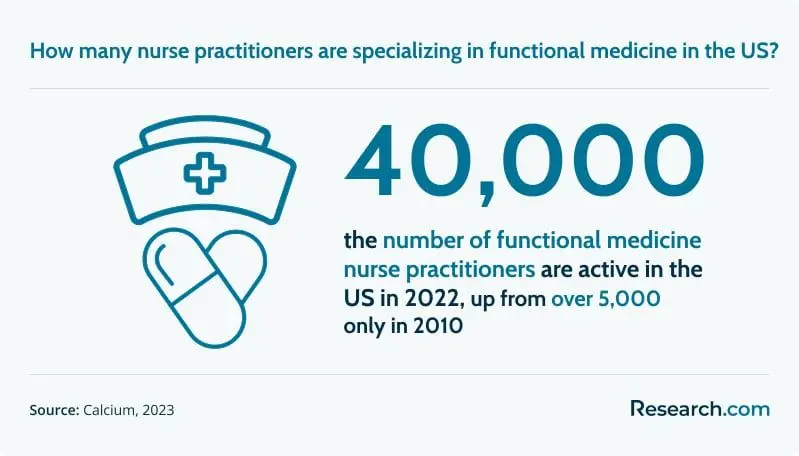
The appeal is clear: many patients are looking for longer visits, prevention-focused care, nutrition and lifestyle support, and help with complex chronic symptoms that do not always fit neatly into traditional visit models. Workforce figures cited for this guide show the field growing from just over 5,000 practitioners in 2010 to nearly 40,000 by 2020; another cited summary places the number at around 40,000 in 2022. Either way, the trend points to rising interest in root-cause, patient-centered care.
This guide explains what functional medicine nurse practitioners do, how the role differs from conventional NP practice, what education and certification are typically needed, how long the path can take, what salary and job outlook data suggest, and what to consider before investing in additional training or opening a practice.
Quick answer: How do you become a functional medicine nurse practitioner?
To become a functional medicine nurse practitioner, you generally need to become a registered nurse, complete an NP graduate program, pass a national NP certification exam, obtain state NP licensure, and then complete additional functional medicine education through a recognized training provider such as the Institute for Functional Medicine. Functional medicine certification is not standardized in the same way as NP board certification, so you should evaluate programs carefully before paying for training.
| Step | What it involves | Why it matters |
| Become an RN | Complete nursing education and pass the NCLEX-RN exam. | You need RN licensure before advancing into NP practice. |
| Earn an NP degree | Complete an MSN or DNP program in a recognized NP population focus. | Functional medicine does not replace standard NP education or licensure. |
| Get certified and licensed as an NP | Pass a national certification exam and meet state licensure rules. | This determines your legal scope of practice, prescribing authority, and independence. |
| Add functional medicine training | Complete coursework, case-based learning, and certification if desired. | This builds the root-cause, nutrition, lifestyle, and systems-based care skills used in the field. |
| Choose a practice setting | Work in an integrative clinic, primary care setting, wellness practice, or private practice. | Your setting affects salary, patient volume, insurance participation, and autonomy. |
Key things to know before choosing this path
- The field has expanded quickly. The number of functional medicine practitioners cited in this guide increased from just over 5,000 in 2010 to nearly 40,000 by 2020, with another cited figure noting around 40,000 in 2022.
- Pay can be competitive, but it is not guaranteed. Functional medicine nurse practitioners earn an average of $99,112 per year, with a typical salary range from $92,996 to $105,616. Earnings depend heavily on location, experience, employer type, business model, and patient demand.
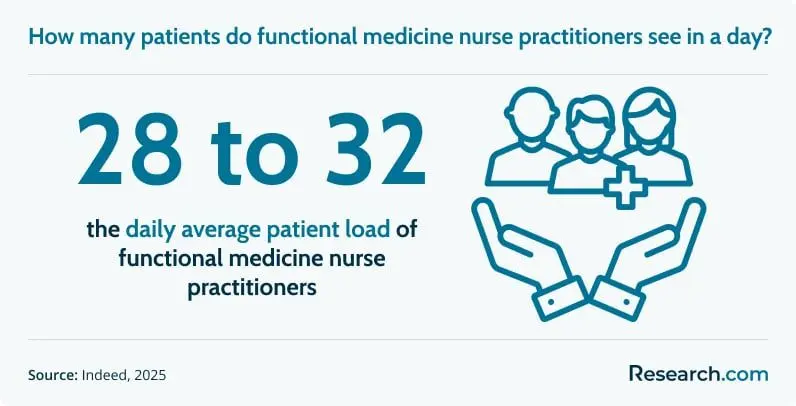
- The work can be time-intensive. Functional medicine NPs may see between 28 to 32 patients per day, and visits often require detailed histories, lab review, lifestyle counseling, and follow-up planning.
- Functional medicine remains a niche compared with common NP tracks. In 2019-2020, 65.3% of NP graduates specialized in family practice, while 12.9% pursued non-primary care certifications, a category that includes functional medicine and other focused areas.
- There is no single universal functional medicine credential. Many NPs pursue training through organizations such as the Institute for Functional Medicine, but state licensure as an NP and functional medicine education are separate issues.
- What does a functional medicine nurse practitioner do?
- How is a functional medicine nurse practitioner different from other NPs?
- What are the education and certification requirements to become a functional medicine nurse practitioner?
- How long does it take to become a functional medicine nurse practitioner?
- What is the average salary of a functional medicine nurse practitioner?
- What factors affect the salary of a functional medicine nurse practitioner?
- What is the job outlook for functional medicine nurse practitioners?
- Can you move to other specializations easily after becoming a functional medicine NP?
- How can advanced education boost a functional medicine NP’s career?
- Can non-nurses pursue a career in functional medicine?
- What advanced education pathways can optimize my functional medicine NP career?
- How can affordable education support a functional medicine career?
- Can additional certifications improve your functional medicine career options?
- What legal and regulatory considerations matter when starting a functional medicine practice?
- Can you transition from being a functional medicine nurse practitioner to becoming a physician?
- How do you start a private practice as a functional medicine NP?
- How can affordable specialized online education advance my functional medicine practice?
- How can functional medicine NPs stay current with emerging research and healthcare innovation?
- What are the biggest challenges functional medicine NPs face?
- What is the impact of affordable advanced education on a functional medicine NP career?
- What strategies can functional medicine NPs use for long-term career growth?
What does a functional medicine nurse practitioner do?
A functional medicine nurse practitioner evaluates patients through a whole-person lens. Instead of focusing only on a diagnosis or symptom list, the NP looks for patterns involving medical history, lifestyle, nutrition, stress, sleep, environment, medications, genetics, and chronic disease risk factors. The goal is to identify contributors to illness and build a practical treatment plan that may combine conventional care with lifestyle and integrative strategies.
The role of a functional medicine nurse practitioner commonly includes the following responsibilities:
- Detailed intake and assessment. FMNPs often spend more time reviewing health histories, symptoms, prior testing, medications, family history, diet, activity, sleep, and stress patterns.
- Personalized care planning. Treatment plans may include nutrition changes, lifestyle coaching, stress reduction, targeted supplementation, medication management when appropriate, and referrals to other clinicians.
- Care coordination. Many functional medicine NPs collaborate with physicians, dietitians, health coaches, therapists, pharmacists, and other professionals to support complex cases.
- Patient education. A major part of the role is helping patients understand why a plan is recommended, how to follow it, and how progress will be measured.
- Use of complementary approaches when appropriate. Depending on training, scope of practice, and state rules, an FMNP may incorporate integrative therapies or coordinate with clinicians who provide services such as acupuncture, herbal medicine, or hormone-focused care.
Functional medicine overlaps with holistic nursing because both emphasize prevention, individualized care, and patient participation. If you are comparing these paths, it may help to review how holistic nurse practitioner careers are structured so you can see where the roles align and where they differ.
How is a functional medicine nurse practitioner different from other NPs?
The main difference is not that functional medicine NPs ignore conventional medicine. They are still nurse practitioners and must practice within their licensed scope. The difference is how they frame patient problems, how much attention they give to root causes and lifestyle drivers, and how they build longer-term care plans.
| Area | Conventional NP practice | Functional medicine NP practice |
| Primary focus | Diagnosis, symptom management, screening, prescriptions, and guideline-based care. | Underlying contributors to illness, prevention, lifestyle change, and personalized interventions. |
| Visit style | Often shorter visits focused on the presenting concern and required follow-up. | Often longer assessments with detailed history-taking and broader lifestyle review. |
| Treatment approach | May rely mainly on standard medical protocols, medications, referrals, and monitoring. | May combine standard medical treatment with nutrition, sleep, movement, stress, and integrative strategies. |
| Training path | MSN or DNP, national board certification, and state licensure. | Standard NP preparation plus functional medicine coursework or certification. |
| Common fit | Primary care, urgent care, specialty clinics, hospitals, and community health settings. | Integrative clinics, wellness practices, private practices, chronic disease programs, and some primary care settings. |
- Root-cause orientation. FMNPs try to understand why symptoms are occurring, not only how to reduce them.
- Broader lifestyle assessment. Diet, movement, sleep, stress, toxin exposure, and social factors often receive more attention in functional medicine visits.
- More individualized patient plans. Two patients with similar symptoms may receive different plans based on history, labs, lifestyle, comorbidities, and goals.
- Additional training after NP preparation. An accelerated nurse practitioner program may help eligible nurses move faster into advanced practice, but functional medicine usually requires separate training after or alongside NP preparation.
- Prevention as a central theme. Functional medicine NPs often work with patients before disease progression becomes severe, especially when lifestyle risk factors are modifiable.
This path is a strong fit for NPs who enjoy patient education, chronic disease management, prevention, motivational interviewing, and systems-based thinking. It may be less appealing to clinicians who prefer brief problem-focused visits, highly protocol-driven care, or acute procedural environments.
What are the education and certification requirements to become a functional medicine nurse practitioner?
Functional medicine is an additional area of training, not a replacement for NP licensure. Before you can practice as a functional medicine nurse practitioner, you need the legal authority to practice as an NP in your state. That means completing nursing education, graduate-level NP preparation, certification, and licensure first.
- Earn RN licensure. Most candidates begin by completing nursing education and passing the NCLEX-RN exam. Many future NPs complete a BSN, although some online nurse practitioner programs may offer pathways for RNs with different educational backgrounds.
- Complete an NP graduate program. Aspiring functional medicine NPs commonly choose a population focus such as family practice or adult-gerontology because these areas align well with chronic disease, prevention, and longitudinal care.
- Pass national NP certification. Graduates must meet certification requirements through organizations such as the AANP or ANCC, depending on specialty and eligibility.
- Obtain state NP licensure. State rules determine your practice authority, prescribing privileges, collaboration requirements, and renewal obligations.
- Complete functional medicine education. Many NPs pursue additional coursework through the Institute for Functional Medicine or the School of Applied Functional Medicine.
- Consider functional medicine certification. The IFM Certified Practitioner credential is one of the best-known options, but it is not the same as state NP licensure or national NP board certification.
| Credential or training | Required to practice as an NP? | Required specifically for functional medicine? | Decision point |
| RN license | Yes | Indirectly, because it is part of the NP pathway | Choose an accredited nursing route that fits your background. |
| MSN or DNP NP program | Yes | Functional medicine training builds on this foundation | Select a population focus that supports your long-term practice goals. |
| National NP certification | Yes | No, but it supports legal NP practice | Confirm which exam matches your graduate program and state rules. |
| State NP licensure | Yes | No separate functional medicine license is typically described in the cited path | Check practice authority before planning employment or private practice. |
| Functional medicine certificate or coursework | No | Often expected by employers, patients, or integrative practices | Compare curriculum quality, cost, faculty, clinical relevance, and reputation. |
How long does it take to become a functional medicine nurse practitioner?
The timeline depends on where you are starting. A nurse who already has a BSN and RN license may be able to complete an MSN or DNP nurse practitioner program in two to four years. A student who has not yet become a nurse will need additional time for undergraduate nursing preparation, RN licensure, graduate school, certification, and state licensure.
Some students look for faster options, including a 12 month FNP program, but accelerated programs are demanding and may not be realistic for every working nurse. After NP graduation, national certification and state licensure can add several months. Functional medicine certification through organizations such as the Institute for Functional Medicine can add another year or more, depending on the practitioner’s schedule and program requirements.
For many people, the full route from nursing education to functional medicine NP practice can take five to seven years. Licensed NPs can move into functional medicine faster because they already hold the core credential needed for advanced practice.
| Starting point | Likely next steps | Approximate planning consideration |
| No nursing background | Complete nursing education, become an RN, earn an NP degree, get certified and licensed, then add functional medicine training. | This is the longest route and requires careful cost and time planning. |
| RN without BSN | Complete BSN or bridge pathway, then NP program and functional medicine training. | Bridge options may shorten the academic route if you meet admission requirements. |
| BSN-prepared RN | Complete MSN or DNP NP program, certification, licensure, and functional medicine education. | Two to four years for NP preparation is common in the cited pathway. |
| Already licensed NP | Add functional medicine training and adjust practice model. | This is usually the fastest transition into the specialty. |
What is the average salary of a functional medicine nurse practitioner?
The average annual salary cited for functional medicine nurse practitioners is $99,112, with a typical range between $92,996 and $105,616. This range reflects a specialized role that combines advanced nursing practice with integrative and prevention-oriented care.
For comparison, the cited labor and delivery nurse salary average is $82,900 per year, or about $40 per hour. That comparison does not mean every FMNP will out-earn every labor and delivery nurse. Pay varies by state, employer, work schedule, patient mix, benefits, business ownership, and demand for services.
| Role | Cited average salary | Important context |
| Functional medicine nurse practitioner | $99,112 per year | Typical range cited is $92,996 to $105,616. |
| Labor and delivery nurse | $82,900 per year | Approximate hourly rate cited is $40. |
When evaluating salary, look beyond the headline number. A private practice owner may have higher gross revenue but also more expenses. An employed NP may earn less in cash compensation but receive benefits, malpractice coverage, paid time off, and administrative support.
What factors affect the salary of a functional medicine nurse practitioner?
Functional medicine NP compensation is shaped by both healthcare labor market factors and business model choices. The same credential can lead to different earnings depending on how and where the NP practices.
- Location. Pay is often influenced by cost of living, local demand, competition, and whether patients in the area can afford services that may not be fully covered by insurance.
- Experience level. NPs with stronger clinical judgment, established referral networks, and experience managing complex chronic cases may command higher compensation.
- Practice setting. Integrative clinics, private practices, specialty wellness centers, primary care organizations, and community health settings may use very different pay structures.
- Functional medicine credentials. Training through a recognized organization can help with credibility, although it does not automatically guarantee higher pay.
- Service mix. NPs who offer longer consultations, group visits, chronic disease programs, wellness packages, or specialty services may have different revenue potential than those in standard visit-based employment.
- Scope of practice rules. State practice authority can affect independence, prescribing, collaboration costs, and business feasibility.
Some NPs increase marketability by combining functional medicine with a population focus. For example, learning how adult-gerontology nurse practitioner careers work can help clinicians who want to focus on aging adults, chronic disease prevention, and long-term wellness planning.
What is the job outlook for functional medicine nurse practitioners?
There is limited labor market data specifically for functional medicine nurse practitioners, so the best available context comes from the broader nurse practitioner profession. The U.S. Bureau of Labor Statistics projects 40% employment growth for nurse practitioners from 2023 to 2033, which is much faster than the average for all occupations. This projection is tied to demand for healthcare services, preventive care, and care for an aging population.
Functional medicine NPs may benefit from that broader NP demand, especially in settings focused on prevention, chronic disease management, integrative care, and personalized health planning. However, opportunity is not evenly distributed. In some markets, patient demand and employer interest may be strong. In others, functional medicine services may face reimbursement limitations, lower awareness, or competition from physicians, health coaches, dietitians, and wellness providers.
NPs who pair functional medicine with a defined clinical population may be better positioned. For instance, clinicians comparing specialty options may want to review how women’s health nurse practitioner roles are structured if they are interested in hormonal health, reproductive care, or preventive care for women.
The practical takeaway: the overall NP outlook is strong, but functional medicine job prospects depend on local demand, scope of practice rules, employer acceptance, patient affordability, and your ability to communicate evidence-based value.
Can you move to other specializations easily after becoming a functional medicine NP?
Functional medicine NPs can move into other areas, but the transition depends on their original NP population focus, certifications, clinical hours, and state licensure requirements. Functional medicine training alone does not qualify an NP for every specialty.
An FMNP who is already certified as a family nurse practitioner may have flexibility in primary care, wellness, integrative care, and chronic disease management. A shift into acute care, psychiatric-mental health, women’s health, or another regulated specialty may require a post-graduate certificate, additional clinical training, or a new board certification.
Some NPs also expand into business or administrative functions. For example, a clinician planning to operate a cash-pay or hybrid practice may benefit from understanding billing operations through a short online medical billing and coding course. That type of training does not replace clinical certification, but it can help practice owners understand documentation, revenue cycle basics, and administrative workflows.
| Transition goal | How easy is it? | What to check first |
| Primary care or integrative clinic role | Often easier if you hold an FNP or related primary care certification. | Employer requirements, patient population, and state scope of practice. |
| Adult-gerontology or age-specific care | Possible, but may require matching certification or additional education. | Population focus rules and certification eligibility. |
| Psychiatric or acute care NP role | Usually more difficult without formal specialty preparation. | Post-graduate certificate requirements and board certification. |
| Private practice ownership | Feasible in some states, more restricted in others. | Practice authority, collaboration rules, malpractice coverage, and business setup. |
How can advanced education boost a functional medicine NP’s career?
Advanced education can help functional medicine NPs move beyond individual patient care into leadership, evidence-based practice improvement, teaching, program development, or higher-level clinical specialization. A DNP may be especially relevant for NPs who want to evaluate outcomes, lead quality improvement projects, manage teams, or build scalable care models.
Flexible online DNP programs may appeal to working NPs who need to continue practicing while strengthening leadership, research translation, and systems-level decision-making skills.
Can non-nurses pursue a career in functional medicine?
Yes, but non-nurses cannot become functional medicine nurse practitioners without first entering nursing and completing the NP pathway. Functional medicine itself includes many types of professionals, but the NP title is legally tied to nursing education, certification, and licensure.
People with a bachelor’s degree in another field may explore online direct-entry MSN programs as a possible route into nursing. These programs are designed for students without prior nursing credentials, but applicants should confirm admission requirements, clinical placement expectations, licensure outcomes, and whether the program leads to RN preparation only or also supports advanced practice goals.
What advanced education pathways can optimize my functional medicine NP career?
The best education pathway depends on your current credential and your long-term role. A working RN needs a different plan than a licensed NP who already has a patient panel. Instead of choosing the fastest or cheapest option automatically, start by identifying the population you want to serve, the state where you plan to practice, and the type of setting you want to work in.
- RN-to-NP pathways. Nurses who want to move into advanced practice can compare RN to NP programs or bridge options that align with their current education level.
- DNP pathways. NPs seeking leadership, quality improvement, or academic roles may consider doctoral study.
- Functional medicine certification. This can strengthen credibility in integrative settings, but it should supplement—not replace—NP certification and licensure.
- Complementary specialty education. Nutrition, women’s health, adult-gerontology, health coaching, informatics, and practice management can all support a more focused career strategy.
How can affordable education support a functional medicine career?
Functional medicine training can add cost after nursing school, graduate school, exams, licensure, and continuing education. Choosing affordable education early can reduce debt pressure and give you more flexibility later, especially if you want to open a practice or work in a setting where reimbursement is uncertain.
Prospective nurses can compare accredited and cost-conscious options such as the most affordable online RN-to-BSN programs. Affordability should not be judged by tuition alone. Also compare fees, transfer credit policies, clinical requirements, graduation support, financial aid options, and whether the program meets licensure expectations in your state.
Can additional certifications improve your functional medicine career options?
Additional certifications can help when they match your patient population and services. They are less useful when they are collected without a clear practice strategy. For a functional medicine NP, the strongest certifications are usually those that deepen clinical competence, support legal scope, or improve patient outcomes in a defined area.
For example, NPs interested in older adult care may compare affordable online AGNP programs if adult-gerontology aligns with their scope and career goals. Before enrolling, confirm whether the program prepares graduates for the certification or licensure outcome you need.
| Certification or education choice | Best for | Question to ask before enrolling |
| Functional medicine certification | NPs who want credibility in root-cause and integrative care. | Is the curriculum evidence-informed, case-based, and respected by employers or patients? |
| Post-graduate NP certificate | NPs changing population focus or expanding into a regulated specialty. | Will this make me eligible for the certification and licensure I need? |
| DNP program | NPs seeking leadership, quality improvement, or advanced practice influence. | Does the program support my clinical, business, or academic goals? |
| Business or billing education | NPs planning a practice or leadership role. | Will this help me run a compliant and financially sustainable practice? |
What legal and regulatory considerations matter when starting a functional medicine practice?
Legal compliance is one of the most important parts of functional medicine practice. A strong clinical philosophy does not exempt an NP from state practice laws, documentation standards, prescribing rules, privacy requirements, or malpractice risk.
- State practice authority. Confirm whether your state allows full practice authority or requires physician collaboration or supervision.
- Scope of practice. Make sure all services, tests, prescriptions, supplements, and procedures fit within your NP license and training.
- Malpractice coverage. Carry coverage that reflects your actual services, not only your base NP credential.
- HIPAA and privacy compliance. Protect patient information across electronic health records, email, patient portals, telehealth, and payment systems.
- Documentation standards. Record assessment findings, clinical reasoning, patient education, informed consent, treatment plans, and follow-up.
- Advertising and claims. Avoid promises of cures, guaranteed outcomes, or unsupported marketing claims.
Students still comparing nursing entry options may find it useful to review nursing schools that may be easier to get into, but admission accessibility should never be the only factor. Accreditation, licensure outcomes, clinical quality, and state approval matter more for long-term practice rights.
Can you transition from being a functional medicine nurse practitioner to becoming a physician?
Yes, but there is no shortcut from functional medicine NP to physician. An FMNP who wants to become a physician must complete the medical education route, which includes prerequisite coursework, the Medical College Admission Test, medical school, residency training, and physician licensure. The process can take over a decade.
NP experience may help with patient care maturity and clinical perspective, but it does not replace medical school or residency. Some NPs strengthen related skills while continuing to practice. For example, those interested in technology-enabled care may explore online nursing informatics programs that may be easier to enter, although informatics education is not a medical school substitute.
Before making this transition, compare the cost, time, lost income, admissions competitiveness, residency requirements, and whether your real goal is physician scope, deeper clinical training, research, leadership, or business ownership.
How do you start a private practice as a functional medicine NP?
Starting a functional medicine practice requires more than clinical training. You need a compliant legal structure, a realistic revenue model, clear services, documentation systems, and a patient acquisition plan. The first question is whether your state allows you to practice independently or requires a formal physician relationship.
- Review state practice authority. Confirm whether you can diagnose, treat, prescribe, and operate independently as an NP in your state.
- Define your clinical niche. Decide whether you will focus on chronic disease, metabolic health, women’s health, gut health, wellness, prevention, or another patient population.
- Complete relevant training. Functional medicine education, NP specialty preparation, and continuing education should match the services you plan to offer.
- Build a business plan. Include pricing, insurance or cash-pay strategy, start-up costs, staffing, marketing, technology, and projected patient volume.
- Set up the legal and financial structure. Register the business, secure malpractice coverage, create compliant consent forms, and establish accounting and payment systems.
- Choose documentation and operations tools. Use systems that support HIPAA compliance, lab tracking, follow-up, billing, scheduling, and patient messaging.
- Create a referral and marketing strategy. Build relationships with local clinicians, dietitians, therapists, gyms, wellness organizations, and community groups while avoiding unsupported claims.
| Practice decision | Why it matters | Risk if ignored |
| Insurance-based, cash-pay, or hybrid model | Determines pricing, documentation, billing workload, and patient access. | Revenue problems or patient confusion about costs. |
| Independent vs. collaborative practice | Depends on state law and affects overhead and autonomy. | Scope violations or noncompliant practice structure. |
| Service menu | Keeps care focused and easier to explain. | Overpromising, unclear marketing, or services outside training. |
| Lab and supplement policies | Functional medicine often involves testing and treatment recommendations. | Conflicts of interest, poor documentation, or patient safety concerns. |
How can affordable specialized online education advance my functional medicine practice?
Specialized online education can help an FMNP expand services without leaving practice, but the program should be chosen for strategic fit. A course is most valuable when it supports a defined patient population, fills a real knowledge gap, or prepares you for a recognized credential.
For example, NPs interested in women’s health and integrative care may compare affordable online women’s health nurse practitioner programs. Before enrolling, verify clinical requirements, certification alignment, state authorization, and total cost.
How can functional medicine NPs stay current with emerging research and healthcare innovation?
Functional medicine NPs need a disciplined approach to continuing education because the field includes both evidence-supported interventions and claims that require careful evaluation. Staying current means reading critically, applying research cautiously, and measuring patient outcomes rather than adopting every new trend.
- Use peer-reviewed sources. Prioritize clinical guidelines, systematic reviews, and reputable journals.
- Attend targeted continuing education. Choose programs tied to your scope, patient population, and clinical gaps.
- Track outcomes. Monitor symptoms, labs, medication changes, quality of life, adherence, and adverse effects when appropriate.
- Collaborate with other professionals. Work with physicians, pharmacists, dietitians, behavioral health clinicians, and specialists when cases exceed your expertise.
- Stay alert to regulatory changes. Telehealth, prescribing, supplements, lab ordering, and collaborative agreements can all be affected by state rules.
Nurses strengthening their academic base while managing work obligations may also explore flexible options such as RN-to-BSN programs with no clinical hours required, where appropriate for their educational stage.
What are the biggest challenges functional medicine NPs face?
Functional medicine can be rewarding, but it has real professional and business challenges. NPs should understand these issues before investing in certification or launching a practice.
- Insurance limitations. Some functional medicine services may not be reimbursed, which can shift costs to patients.
- Patient affordability. Out-of-pocket costs can affect access, adherence, and retention.
- Regulatory restrictions. State practice laws may limit independence or require physician collaboration.
- Variable training standards. Functional medicine education is not standardized in the same way as NP board certification.
- Skepticism from conventional healthcare settings. Some clinicians may question functional medicine approaches, especially when claims are not clearly evidence-based.
- Time-intensive care. Detailed histories, coaching, lab review, and follow-up can be difficult to fit into high-volume workflows.
Team-based care can help reduce some of these pressures. NPs who manage support staff may benefit from understanding allied health roles, including what medical assisting courses typically cover, because medical assistants often support intake, documentation, patient communication, and office flow.
Common mistakes to avoid
| Mistake | Why it causes problems | Better approach |
| Choosing training based only on marketing | Some programs may sound impressive but have limited recognition or weak clinical depth. | Review curriculum, faculty, case requirements, credibility, and fit with your scope. |
| Assuming certification equals legal authority | Functional medicine certificates do not replace NP licensure or state scope rules. | Verify state practice authority and NP board certification requirements first. |
| Ignoring reimbursement realities | Patients may not be able to afford ongoing care if services are mostly cash-pay. | Build transparent pricing, offer clear care plans, and understand insurance limitations. |
| Overpromising outcomes | Guaranteed claims can create ethical, legal, and trust issues. | Use careful language and document informed consent and realistic expectations. |
| Opening a practice without business planning | Clinical skill alone does not cover operations, marketing, compliance, and cash flow. | Create a business plan before signing leases, buying systems, or hiring staff. |
| Relying only on rankings or speed | The fastest or cheapest program may not meet licensure, certification, or career needs. | Compare accreditation, outcomes, clinical placement, total cost, and state approval. |
What is the impact of affordable advanced education on a functional medicine NP career?
Affordable advanced education can improve career flexibility by reducing debt burden while helping NPs build leadership, evidence-based practice, and clinical specialization skills. This matters in functional medicine because many practitioners invest in multiple layers of education: nursing preparation, NP graduate study, functional medicine training, continuing education, and possibly business training.
A cost-conscious option such as a low-cost online Doctor of Nursing Practice program may be useful for NPs who want doctoral preparation without unnecessary financial strain. The key is to confirm that the program is rigorous, accredited, realistic for your schedule, and aligned with your career goal.
What graduates say about functional medicine nurse practitioner certification programs
"I wanted my practice to include more whole-person care, but I needed a structured way to learn it. Functional medicine training helped me think beyond symptom control and ask better questions about nutrition, stress, sleep, and chronic illness patterns. Being able to study online made it possible to keep working while building a new direction for my career." - Lisa
"After years in traditional nursing, I was ready for a model that gave me more time to understand patients’ stories. The coursework was practical, especially the case-based lessons. I now work with an integrative team and feel better prepared to support patients who need more than a quick visit." - Devon
"Functional medicine matched the kind of care I had always hoped to provide. The online format was more interactive than I expected, and the patient cases helped me apply the concepts right away. Moving into an integrative clinic gave me a stronger sense of purpose in my work." - Anton
What strategies can functional medicine NPs use for long-term career growth?
Long-term success in functional medicine depends on clinical credibility, business discipline, ethical communication, and continuous learning. The field rewards NPs who can combine compassionate care with evidence-informed decision-making and clear boundaries around scope.
- Build a defensible clinical niche. Focus on a population or condition area where your training, experience, and market demand align.
- Keep your NP credential strong. Maintain board certification, state licensure, continuing education, and documentation quality.
- Measure outcomes. Use patient-reported outcomes, appropriate labs, adherence data, and follow-up measures to refine care.
- Develop referral relationships. Earn trust with primary care clinicians, specialists, dietitians, therapists, and community organizations.
- Learn business fundamentals. Understand pricing, compliance, marketing ethics, staffing, billing, and patient retention.
- Consider advanced academic preparation. Programs such as the most affordable online BSN-to-DNP programs may support NPs pursuing leadership, doctoral preparation, or expanded clinical influence.
Questions to ask before pursuing functional medicine NP training
- Am I already licensed or on track to become licensed as an NP in a recognized population focus?
- Does my state allow the level of independence I want?
- Will this functional medicine program improve my clinical competence, or is it mainly a marketing credential?
- Can I afford the training without taking on debt that limits my career choices?
- Is there enough local or telehealth demand for the services I want to provide?
- How will I handle patients whose needs require conventional specialty referral?
- Will I work for an employer, join an integrative clinic, or build a private practice?
- How will I document outcomes, informed consent, treatment rationale, and follow-up?
Key Insights
- Functional medicine NP practice starts with standard NP preparation. You must first meet RN, graduate nursing, national certification, and state licensure requirements before adding functional medicine training.
- The field is growing, but it remains specialized. Cited workforce figures show growth from just over 5,000 in 2010 to nearly 40,000 by 2020, with another cited figure placing the field around 40,000 in 2022.
- Salary is attractive but variable. The cited average is $99,112 per year, with a range from $92,996 to $105,616, but earnings depend on practice setting, location, experience, patient demand, and business model.
- Certification is useful but not universally standardized. Programs such as IFM training can build credibility, but they do not replace NP board certification, state licensure, or scope-of-practice compliance.
- Private practice requires business and legal preparation. Before opening a clinic, confirm practice authority, malpractice coverage, HIPAA compliance, documentation standards, pricing, and patient acquisition strategy.
- The best career strategy is focused, not random. Choose education and certifications that support a specific patient population, care model, and state scope of practice rather than collecting credentials without a plan.
References:
- American Association of Nurse Practitioners. (2023). Functional Medicine Specialty Practice Group. Retrieved from https://www.aanp.org/membership/aanp-communities/functional-medicine
- Indeed Editorial Team. (2023). What is a functional medicine nurse practitioner? Retrieved from https://www.indeed.com/career-advice/finding-a-job/what-is-functional-medicine-nurse-practitioner
- Nurse Practitioner Online. (2023). Why choose a functional medicine nurse practitioner (FMNP). Retrieved from https://www.nursepractitioneronline.com/specialties/functional-medicine-nurse-practitioner/
- The Institute for Functional Medicine. (2023). Certification. Retrieved from https://www.ifm.org/certification
Other Things You Should Know About Functional Nurse Practitioners
A functional medicine nurse practitioner evaluates root causes of illness, reviews diet, sleep, stress, labs, and medications, and builds personalized treatment plans. The role is usually performed by an FNP, AGNP, or PMHNP who has completed a functional medicine certificate program and works within state NP scope-of-practice rules.
To become a Functional Medicine Nurse Practitioner in 2027, you must first obtain a registered nursing (RN) license and a Bachelor of Science in Nursing (BSN). Next, complete a Master of Science in Nursing (MSN) or Doctor of Nursing Practice (DNP) degree with a focus on functional medicine coursework, and obtain certification through an accredited functional medicine program.