2027 How Much Do Aesthetic/Cosmetic Nurses Make?

Co-Founder and Chief Data Scientist
Choosing aesthetic nursing is not just a salary decision. It is a decision about scope of practice, patient expectations, procedural risk, state regulations, and whether you want a nursing career centered on elective cosmetic care rather than acute illness or bedside hospital work. The field has grown alongside demand for injectables, laser treatments, skin rejuvenation, and cosmetic surgery support. In the U.S., there were 1.6 million surgical and 5.8 million nonsurgical procedures recorded in 2022, making it the top country for both types of procedures (Statista, 2023).
For registered nurses (RNs), nurse practitioners (NPs), career changers, and nursing students, aesthetic nursing can offer strong earning potential and a more scheduled clinical environment. However, it is also competitive, highly regulated, and dependent on hands-on skill, patient trust, and local market demand. This guide explains what aesthetic nurses do, how much they make, which states report the highest salaries, what qualifications are required, and how to decide whether this specialty fits your career goals.
Quick Answer: Is Aesthetic Nursing a High-Paying Nursing Career?
Yes, aesthetic nursing can be a well-paid nursing specialty, especially for nurses who gain experience with high-demand treatments, earn relevant certifications, work in strong cosmetic markets, or advance into nurse practitioner, educator, leadership, or business roles. According to ZipRecruiter’s latest data (2024), the average annual cosmetic nurse salary is $80,321. Glassdoor’s findings (2024) show an average range of about $86,000 to $155,000, while an aesthetic nurse practitioner’s income is around $139,152 (Salary.com, 2024).
| Question | Short answer |
| What does an aesthetic nurse do? | Provides or assists with cosmetic treatments such as injectables, laser therapies, skin procedures, and cosmetic surgery care. |
| Do aesthetic nurses need an RN license? | Yes. Most begin by earning a nursing degree, passing the NCLEX, and obtaining RN licensure. |
| Can nurse practitioners earn more in aesthetics? | Often, yes. Aesthetic NPs may qualify for broader clinical responsibilities and higher-paying roles depending on state law and employer requirements. |
| Is the field competitive? | Yes. Employers often look for hands-on procedural training, cosmetic medicine experience, strong communication skills, and patient-facing professionalism. |
What are the benefits of becoming an aesthetic or cosmetic nurse?
- Strong income potential: Aesthetic/cosmetic nurses often earn competitive salaries that range from $60,000 to $90,000 or more, with higher compensation possible for experienced specialists and advanced practice nurses.
- Specialized clinical growth: The work requires ongoing learning in injectables, skin science, devices, safety protocols, and cosmetic treatment planning.
- More predictable work settings: Many aesthetic nurses work in dermatology practices, medical spas, cosmetic clinics, or surgery centers rather than high-acuity hospital units.
- Patient-centered outcomes: The role involves helping patients make informed decisions about appearance-related treatments while protecting safety and realistic expectations.
- What aesthetic and cosmetic nurses do
- How aesthetic nursing compares with traditional nursing
- Aesthetic nurse salary: national averages and key factors
- Common workplaces for aesthetic nurses
- Highest-paying states and cities for aesthetic nurses
- Job outlook and demand drivers
- Career paths and procedure specialties
- Education, licensure, certifications, and skills
- Ethical responsibilities in aesthetic nursing
- Ways to increase an aesthetic nurse salary
- Career advancement options
- Legal and regulatory standards
- Building a professional brand
- Future trends shaping aesthetic nursing
- Managing risks and complications
- Soft skills that matter in aesthetic nursing
- Professional organizations and networking
- Common challenges in the profession
- Job satisfaction and work-life balance
- Advanced education options
- Technology in aesthetic nursing
- How non-nurses can transition into aesthetic nursing
- Key insights
What do aesthetic/cosmetic nurses do?
Aesthetic nurses are licensed nursing professionals who provide, support, or coordinate treatments intended to improve appearance, skin health, facial balance, body contour, or cosmetic surgical outcomes. Depending on state scope-of-practice rules, employer policies, and supervision requirements, they may perform procedures directly, assist physicians or advanced practice providers, educate patients, or provide pre- and post-treatment care.
This specialty combines clinical judgment with technical precision and patient counseling. Aesthetic nurses must understand anatomy, contraindications, infection prevention, product safety, device safety, wound healing, and emergency response. They also need to help patients separate realistic outcomes from marketing claims.
Typical responsibilities include:
- Tracking new developments in aesthetic medicine, products, devices, and treatment safety
- Coordinating appointments, preparing treatment rooms, and maintaining equipment and supplies
- Conducting intake assessments to understand patient goals, skin concerns, medical history, and contraindications
- Explaining skincare routines, treatment preparation, aftercare, and product use
- Assisting with cosmetic surgeries and providing pre-operative and post-operative nursing care
- Working with licensed aesthetic providers to create treatment plans aligned with patient needs and clinical limits
How does aesthetic nursing differ from traditional nursing?
Both traditional nursing and aesthetic nursing are grounded in patient safety, assessment, documentation, communication, and professional accountability. The main difference is the purpose and setting of care. Traditional nurses often treat acute illness, chronic disease, injury, rehabilitation needs, preventive care, or complex medical conditions. Aesthetic nurses primarily work with patients seeking elective appearance-related procedures.
Many nurses begin with a Bachelor of Science in Nursing (BSN), a degree path often considered one of the strong college majors for healthcare careers. After licensure, nurses can move toward aesthetic roles through procedural training, dermatology or plastic surgery experience, certifications, and employer-supervised practice.
Aesthetic nursing commonly involves treatments such as:
- Botox injections
- Laser therapies
- Dermal fillers
- Neck lifting
- Stretch mark removal
- Breast firming and augmentation
- Acne scar treatment
- Surgical and non-surgical facelift
- Anti-wrinkle treatment
- Hair restoration and removal
- Fat removal
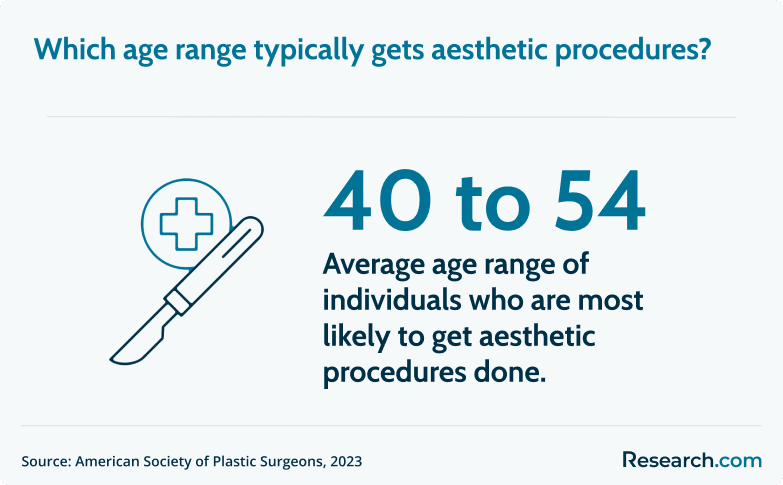
Patient population is another difference. Traditional nurses care for patients across all ages and acuity levels, while aesthetic nurses usually work with people pursuing elective treatments. Aesthetic nurses mostly work with patients aged 40 to 54, although younger generations have been getting procedures increasingly since 2020, according to a report from the American Society of Plastic Surgeons (2023).
The care team also differs. Traditional nurses may collaborate with hospitalists, primary care clinicians, specialists, therapists, and emergency teams. Cosmetic nurses more often coordinate with dermatologists, plastic surgeons, cosmetic surgeons, nurse practitioners, laser specialists, and medical spa directors.
| Factor | Traditional nursing | Aesthetic nursing |
| Primary focus | Illness, injury, prevention, recovery, and chronic care | Elective cosmetic procedures, skin health, and appearance goals |
| Common settings | Hospitals, clinics, long-term care, home health, public health | Dermatology clinics, medical spas, cosmetic surgery practices, outpatient centers |
| Patient expectations | Recovery, symptom control, disease management, safety | Visible improvement, natural-looking results, safety, satisfaction |
| Key risk | Managing medical acuity and complex health needs | Managing procedural complications, unrealistic expectations, and cosmetic dissatisfaction |
How much do aesthetic nurses make?
Aesthetic nurse salaries vary widely because compensation depends on licensure level, procedure mix, location, employer type, experience, certifications, and whether the nurse has sales, leadership, or advanced practice responsibilities. Cosmetic procedures are generally costly, ranging from $530 to $1,800 for minimally invasive treatments and $3,000 to $10,000 for surgical procedures (ASPS, 2023), but procedure pricing does not automatically translate into a guaranteed nurse salary.
According to ZipRecruiter’s latest data (2024), the average annual cosmetic nurse salary is $80,321. Glassdoor’s findings (2024) place the average range at about $86,000 to $155,000. Salary.com (2024) reports an aesthetic nurse practitioner’s income at around $139,152.
For context, the U.S. Bureau of Labor Statistics reports that traditional RNs make $94,480 a year, while NPs earn around $128,490 (BLS, 2024a; 2024b). These figures are not exact comparisons because aesthetic nursing roles may be categorized differently across employers and salary databases, but they help show how aesthetic compensation compares with broader nursing labor market data.
Another useful benchmark is travel nursing. If you are comparing flexible nursing specialties, see Research.com’s guide on how much travel nurses make by state. A traveling nurse's salary, approximately $83,200 annually, is roughly similar to the earnings of an aesthetic nurse.
| Salary source or role | Reported figure | How to interpret it |
| ZipRecruiter aesthetic/cosmetic nurse | $80,321 | A national average estimate that may include varied employer types and experience levels. |
| Glassdoor aesthetic nurse range | about $86,000 to $155,000 | A broad range that may reflect base pay, location differences, experience, and employer-reported compensation. |
| Salary.com aesthetic nurse practitioner | around $139,152 | Relevant for NPs with aesthetic responsibilities, not entry-level RNs. |
| BLS registered nurse | $94,480 a year | A broader RN benchmark across industries, not specific to aesthetics. |
| BLS nurse practitioner | around $128,490 | A broader NP benchmark across specialties, not limited to aesthetic medicine. |
The most important takeaway: salary estimates are useful for comparison, but your actual earning potential will depend on what procedures you are qualified to perform, local regulations, patient volume, employer compensation structure, experience, certifications, and negotiation.
Where do aesthetic nurses work?
Aesthetic nurses usually work in outpatient, specialty, or elective-care settings rather than emergency departments or inpatient units. Some work in public and private hospitals, especially under dermatology, plastic surgery, or reconstructive surgery departments. Others work in clinics or businesses where cosmetic procedures are the main service line.
Common employers include:
- Dermatology clinics
- Medical spas
- Private physician’s offices
- Outpatient surgery centers
- Cosmetic surgery practices
These settings may offer more predictable schedules than inpatient nursing, but they also bring different pressures: client satisfaction, repeat business, retail product discussions, procedure outcomes, and liability exposure. Nurses who want leadership, research, or administrative roles may consider doctoral study. Research.com’s resources on the most affordable doctorate programs and the most affordable online PhD in nursing programs can help nurses compare advanced academic options.
Which states do aesthetic nurses make the most money?
Aesthetic nurse pay is often highest in areas with strong demand for cosmetic procedures, higher cost of living, greater patient volume, or more competitive specialty practices. According to ZipRecruiter (2024), the top five states with the highest aesthetic nurse salary reports are Alaska, Maryland, Oregon, Massachusetts, and North Dakota.
The highest-paying cities for aesthetic/cosmetic nurses reported in the same source include:
- Dimondale, MI: $108,151
- Sunnyvale, CA: $103,097
- Livermore, CA: $103,044
- Redwood City, CA: $102,983
- Bellerose, NY: $101,982
- Corte Madera, CA: $101,148
- Hawi, HI: $99,994
- Vacaville, CA: $99,511
- Napa, CA: $97,087
- Berkeley, CA: $96,255
Use state salary data carefully. A high salary in one state may come with higher housing costs, stricter scope-of-practice rules, stronger competition, or employer expectations for advanced skills. Before relocating, compare total compensation, malpractice coverage, supervision rules, bonus structure, and cost of living.
Aesthetic Nurse Salary by State
| State | Estimated annual salary |
| Alaska | $89,771 |
| Maryland | $87,288 |
| Oregon | $86,441 |
| Massachusetts | $86,258 |
| North Dakota | $86,151 |
| Minnesota | $85,371 |
| District of Columbia | $85,327 |
| Hawaii | $84,411 |
| Ohio | $83,497 |
| Washington | $83,246 |
| Colorado | $81,958 |
| Nevada | $81,901 |
| South Dakota | $81,422 |
| California | $81,410 |
| Iowa | $80,456 |
| New York | $80,200 |
| Rhode Island | $80,065 |
| Tennessee | $79,724 |
| Connecticut | $79,482 |
| Utah | $78,960 |
| Mississippi | $77,960 |
| Delaware | $77,346 |
| Virginia | $76,348 |
| Illinois | $75,788 |
| Vermont | $75,632 |
| Louisiana | $74,534 |
| New Jersey | $73,685 |
| Pennsylvania | $73,474 |
| Nebraska | $73,425 |
| Kansas | $73,364 |
| Wisconsin | $73,069 |
| Missouri | $72,738 |
| Maine | $72,171 |
| South Carolina | $72,063 |
| New Hampshire | $71,395 |
| Oklahoma | $71,106 |
| North Carolina | $70,575 |
| Idaho | $70,509 |
| Wyoming | $70,364 |
| New Mexico | $70,168 |
| Texas | $69,964 |
| Indiana | $69,507 |
| Kentucky | $68,277 |
| Arizona | $68,070 |
| Michigan | $67,876 |
| Montana | $67,045 |
| Alabama | $66,207 |
| Arkansas | $64,671 |
| Georgia | $61,678 |
| West Virginia | $56,744 |
| Florida | $54,585 |
What is the job outlook of aesthetic/cosmetic nurses?
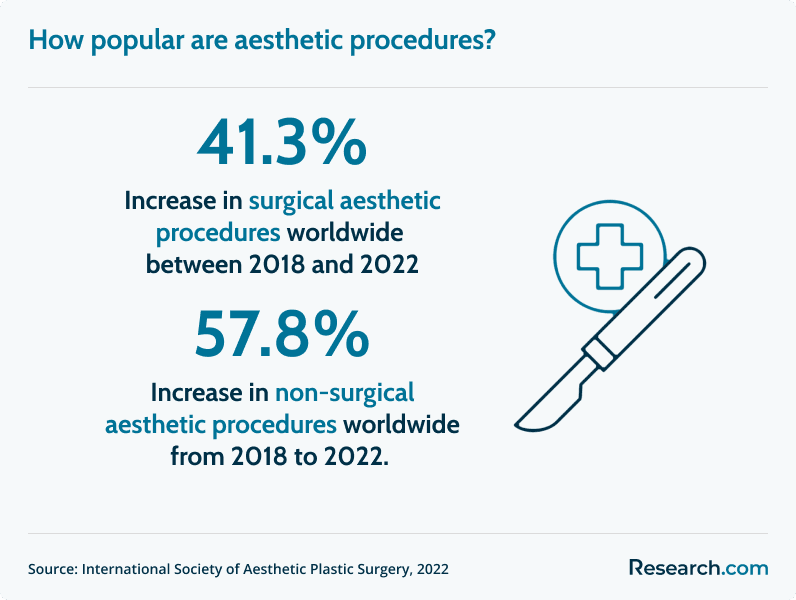
The outlook for aesthetic nursing is supported by several demand factors: growth in surgical and nonsurgical procedures, broader consumer interest in cosmetic care, aging patients seeking anti-aging treatments, and the expansion of medical spas and outpatient aesthetic clinics. From 2018 to 2022, the total number of surgical procedures worldwide increased by 41.3% while the number of non-surgical procedures rose by 57.8%, according to the International Society of Aesthetic Plastic Surgery (ISAPS, 2022).
Social media has also changed how people learn about cosmetic treatments, compare results, and evaluate providers. Research has discussed how social media has fueled greater interest in aesthetic treatments, but ethical clinicians should avoid exploiting insecurity or promoting unrealistic outcomes.
The broader market is also expanding. The global cosmetic surgery market is expected to reach $139.64 billion by 2032 from its estimated value of $70 billion in 2022 (Precedence Research, 2023). In nursing overall, RNs and APRNs are expected to gain a significant increase in job openings from 2022 to 2032. According to BLS reports, the job outlooks of both jobs are 6% and 38% respectively.
Even with these favorable indicators, aesthetic nursing is not a guaranteed-entry field. New nurses may need to build experience in dermatology, plastic surgery, perioperative care, women’s health, urgent care, or other patient-facing specialties before securing a strong aesthetic role.
What career paths are available for aesthetic/cosmetic nurses?
Aesthetic nursing is not one single job. Nurses can specialize in injectables, laser services, surgery support, skin procedures, body treatments, education, consulting, or clinical leadership. Salary can differ by specialty because some services require more advanced training, higher patient demand, or closer medical supervision.
- Laser Facial Nurse: Performs laser-based skin treatments intended to improve tone, texture, pigmentation, or signs of aging.
- Injectables Nurse: Administers or assists with injectable treatments such as Botox or dermal fillers, depending on scope-of-practice rules.
- Laser Hair Removal Nurse: Uses laser technology to reduce unwanted hair and educate patients about preparation and aftercare.
- Non-Surgical Body Treatment Nurse: Supports treatments such as CoolSculpting or laser fat reduction.
- Tattoo Removal Nurse: Performs laser tattoo removal procedures designed to fade or remove tattoos over a series of sessions.
- Chemical Peel Nurse: Assists with chemical peels used to address texture, pigmentation, and acne-related concerns.
- Cosmetic Surgery Nurse: Provides nursing support before, during, or after procedures such as facelifts, liposuction, and breast augmentation.
Globally, the most popular procedures were liposuction and breast augmentation for surgical procedures and Botox and hyaluronic acid injectables for non-surgical procedures (ISAPS, 2022). For nurses deciding on a specialization, these demand patterns can help identify services that may offer more consistent employment opportunities.
What qualifications are required to become an aesthetic nurse?
Most aesthetic nurses begin with the same foundation as other registered nurses: complete an approved nursing program, pass the National Council Licensure Examination (NCLEX), and obtain RN licensure. A BSN can be especially useful for nurses who want broader career mobility, leadership opportunities, or future graduate study.
After becoming licensed, aspiring cosmetic nurses usually need supervised experience. Working with a board-certified physician, dermatologist, plastic surgeon, experienced injector, or qualified aesthetic provider can help nurses develop procedure-specific skill, complication awareness, and patient assessment ability. Nurses who want advanced practice authority may pursue graduate education, including accelerated nurse practitioner programs.
Common aesthetic and dermatology-related certifications include:
- Certified Aesthetic Nurse Specialist (CANS)
- Certified Plastic Surgical Nurse (CPSN)
- Dermatology Nurse Certified (DNC)
- Dermatology Certified Nurse Practitioner (DCNP)
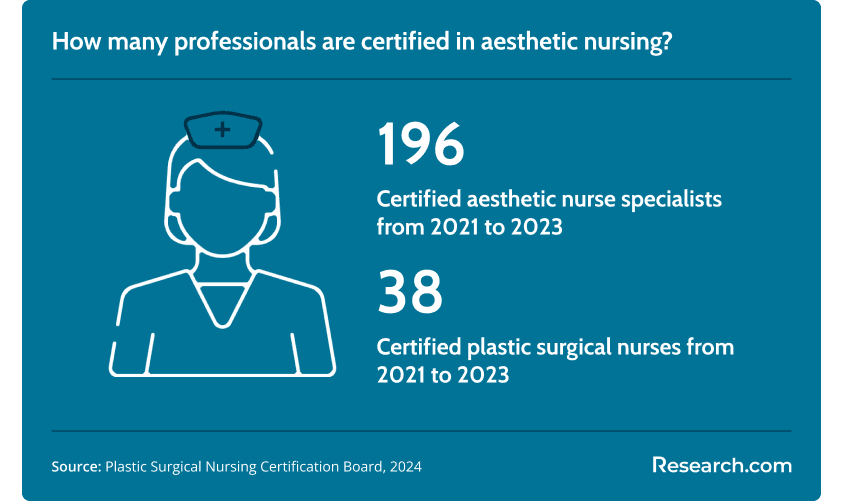
According to the Plastic Surgical Nursing Certification Board (2024), a total of 196 professionals passed the CANS certification while 38 earned their CPSN certification from 2021 to 2023. Board certification can signal specialized knowledge and commitment, but it should be paired with lawful practice, hands-on training, careful documentation, and continuing education.
Core skills aesthetic nurses need
- Clinical judgment: The ability to screen patients, identify contraindications, recognize complications, and follow safety protocols.
- Communication: Clear explanations of benefits, limitations, risks, aftercare, cost, and expected results.
- Cultural competence: Awareness that beauty standards, treatment goals, and healthcare decisions vary by background, identity, and lived experience.
- Interpersonal skill: The capacity to build trust, reduce anxiety, collaborate with providers, and respond professionally to dissatisfaction.
- Business understanding: Knowledge of documentation, consent, compliance, revenue models, scheduling, inventory, and ethical sales practices.
- Social media literacy: The ability to present accurate, compliant, privacy-protective information online without overpromising outcomes.
What are the ethical considerations for aesthetic nurses?
Aesthetic nursing requires strong ethical judgment because patients may be motivated by confidence, aging concerns, social pressure, insecurity, or unrealistic expectations. A nurse’s responsibility is not simply to perform a requested procedure; it is to help the patient make an informed, safe, and clinically appropriate decision.
Informed consent is central. Patients should understand what the procedure can and cannot do, likely recovery needs, possible complications, alternative options, expected maintenance, and financial implications. Consent should be documented before treatment, not treated as a rushed formality.
Expectation management is equally important. Ethical nurses should be willing to delay or decline treatment when a patient’s goals are unsafe, medically inappropriate, or unlikely to be satisfied by the procedure. Saying no can be part of responsible care.
Confidentiality also carries special weight in aesthetics because many patients consider cosmetic procedures private. Photos, testimonials, before-and-after images, and social media content should never be used without proper consent and privacy safeguards.
Nurses entering the profession quickly still need a complete and lawful path to licensure. If you are exploring nursing entry routes, Research.com’s guide to fast track RN programs can help you understand accelerated options and their limits.
How can aesthetic nurses increase their salaries?
Higher pay in aesthetic nursing usually comes from a combination of stronger skills, broader credentials, better market positioning, and more valuable responsibilities. The goal is not only to add certificates, but to become safer, more independent, more trusted, and more useful to employers or patients.
| Salary strategy | Why it can help | What to watch for |
| Earn additional certifications | Shows commitment to specialized aesthetic, dermatology, or plastic surgery knowledge. | Not every course is equally recognized; verify credibility before paying. |
| Pursue graduate education | Can support advanced practice, leadership, education, or clinical specialist roles. | Graduate school requires time, cost, and licensure planning. |
| Gain hands-on procedure experience | Employers value nurses who can safely support high-demand services. | Training should be supervised, lawful, and evidence-based. |
| Move to a stronger market | Some regions report higher aesthetic nurse salaries and greater procedure volume. | Compare cost of living, competition, and state practice rules. |
| Negotiate compensation | Experienced nurses may negotiate base pay, bonuses, training support, or schedule terms. | Understand productivity expectations and ethical boundaries around sales. |
| Develop business skills | Useful for clinic leadership, consulting, entrepreneurship, or management roles. | Business growth should not compromise patient safety or informed consent. |
Some nurses pursue advanced nursing degrees; others add business training through options such as accelerated MBA programs if they plan to manage or own a practice. Continuing education, conferences, mentorship, and supervised practice remain essential throughout the career.
What career advancement opportunities are available for aesthetic nurses?
After gaining experience, aesthetic nurses can move beyond entry-level procedural support into advanced clinical, educational, consulting, or leadership roles. Advancement depends on licensure, state law, employer need, clinical credibility, and business judgment.
- Aesthetic Nurse Practitioner: Provides more comprehensive assessment and treatment services after completing graduate preparation, such as online nurse practitioner programs, and meeting state requirements.
- Medical Aesthetics Educator: Trains nurses, providers, or clinic teams in procedure safety, skincare protocols, patient communication, and treatment workflows.
- Aesthetic Product Specialist: Educates clinics and providers on devices, injectables, skincare products, or treatment systems.
- Clinical Research Coordinator: Supports research studies, clinical trials, documentation, compliance, and patient follow-up in aesthetic medicine.
- Aesthetics Procedure Consultant: Advises clinics on service design, patient experience, safety protocols, procedure efficiency, or quality improvement.
What legal and regulatory standards must aesthetic nurses navigate?
Aesthetic nurses must understand that cosmetic procedures are still healthcare services when performed in a medical setting. State boards of nursing, medical boards, facility rules, delegation laws, prescribing rules, supervision requirements, and documentation standards can all affect what a nurse may do.
Key legal areas include scope of practice, consent, patient assessment, medication handling, laser use, injectable administration, medical director oversight, adverse event response, privacy, advertising, and malpractice insurance. Nurses should verify rules directly with their state board and employer rather than relying on social media training programs or informal advice.
Nurses seeking broader practice authority may consider bridge or graduate pathways. For example, Research.com’s guide to ADN to FNP bridge programs can help nurses understand one route toward advanced practice preparation.
How can aesthetic nurses build a strong professional brand?
In aesthetics, reputation matters. Patients often choose providers based on trust, visible expertise, referrals, before-and-after results, communication style, and online presence. A strong professional brand should emphasize safety, realistic outcomes, ethical care, and clinical training rather than exaggerated transformations.
- Maintain a professional online presence that follows privacy and advertising rules.
- Share educational content about procedure preparation, recovery, risks, and realistic results.
- Highlight valid credentials, supervised training, and areas of specialization.
- Network with dermatology, plastic surgery, wellness, and nursing professionals.
- Avoid misleading claims, edited results, or pressure-based marketing.
Some nurses combine aesthetics with adjacent wellness or specialty interests. If you are exploring broader advanced practice niches, you may also review Research.com’s guide on functional medicine nurse practitioner certification.
What future trends are shaping aesthetic nursing?
Aesthetic nursing is being shaped by technology, patient demand for less invasive options, more sophisticated imaging, telehealth-style consultations, and stronger expectations for transparency. Artificial intelligence may support personalized treatment planning, documentation, imaging analysis, or patient education, but it does not replace clinical judgment, licensure, consent, or hands-on procedural skill.
Noninvasive and minimally invasive procedures are likely to remain important because many patients prefer shorter recovery times and gradual-looking outcomes. At the same time, regulators and employers may scrutinize who performs treatments, how nurses are trained, and whether advertising accurately represents risks.
Nurses who want to remain competitive should combine clinical education with technology awareness, complication management, and business literacy. Those considering advanced practice may compare affordable graduate options, including affordable online nurse practitioner programs.
How do aesthetic nurses manage risks and complications during procedures?
Even minimally invasive aesthetic treatments can cause complications. Risk management starts before the procedure with screening, medical history review, medication review, contraindication checks, allergy assessment, skin evaluation, and a clear discussion of expected outcomes. During treatment, nurses must follow sterile or clean technique requirements, use correct products and devices, document accurately, and stay within their authorized scope.
After treatment, patients need written aftercare instructions and guidance on what symptoms require urgent attention. Clinics should have emergency protocols, escalation pathways, and medical oversight appropriate to the procedures offered.
Advanced education can strengthen clinical reasoning and leadership in patient safety. Nurses considering doctoral practice preparation can explore Research.com’s list of the most affordable online DNP programs.
What essential soft skills are crucial for aesthetic nursing success?
Technical skill is only part of aesthetic nursing. Patients need to feel heard, respected, and fully informed. Strong soft skills can also reduce conflict, improve satisfaction, and help nurses identify when a patient may not be an appropriate candidate for treatment.
- Active listening: Understand the patient’s goals before recommending a procedure.
- Clear explanation: Describe risks, benefits, alternatives, aftercare, and limitations in plain language.
- Boundary setting: Decline or delay procedures when expectations or safety concerns make treatment inappropriate.
- Empathy: Recognize that appearance-related concerns can be emotionally sensitive.
- Conflict resolution: Respond professionally when outcomes do not match a patient’s hopes.
If you are still at an early nursing-entry stage, practical nursing can be one possible starting point in the broader nursing pipeline. Research.com’s resource on affordable online licensed practical nurse programs can help you compare options, though RN licensure is typically needed for aesthetic nursing roles.
How can aesthetic nurses leverage professional organizations and networking?
Networking can help aesthetic nurses find mentors, learn safer techniques, understand changing regulations, and identify job opportunities. Professional groups, conferences, workshops, and specialty communities can also expose nurses to emerging research and standards of care.
Effective networking is not just collecting contacts. It means asking better clinical questions, learning from experienced providers, finding ethical training environments, and staying alert to changes in scope-of-practice rules. Nurses who plan to advance into provider roles can also compare flexible graduate routes, including online nurse practitioner programs with accessible formats.
What challenges do aesthetic nurses face in their profession?
Aesthetic nursing can be rewarding, but it is not an easy or risk-free specialty. Nurses must balance clinical safety, patient satisfaction, business pressure, and regulatory compliance.
- High patient expectations: Cosmetic results are subjective, and patients may expect outcomes that are not clinically realistic.
- Rapid technology changes: Devices, injectables, protocols, and skincare products evolve quickly, requiring ongoing education.
- Liability exposure: Complications can occur even with minimally invasive treatments, making documentation and emergency protocols essential.
- Emotional complexity: Patients may seek treatment because of insecurity, aging concerns, social pressure, or life events.
- Competitive job market: Entry-level roles may be harder to secure without dermatology, surgery, or procedural experience.
- Ethical sales pressure: Some workplaces may emphasize revenue, but nurses must prioritize safety and informed consent.
What is the job satisfaction and work-life balance like for aesthetic nurses?
Many aesthetic nurses value the specialty because it can offer more predictable hours, direct patient relationships, visible treatment outcomes, and a clinic-based environment. Compared with inpatient hospital nursing, roles in medical spas, dermatology offices, and cosmetic surgery centers may involve fewer overnight shifts and more structured schedules.
However, work-life balance depends on the employer. Some practices expect evening or weekend availability, retail sales support, social media participation, or productivity targets. Job satisfaction is often highest when nurses work in ethical clinics that invest in training, respect scope of practice, and do not pressure staff to oversell procedures.
For RNs who want stronger qualifications before entering a specialty, completing a BSN can improve career mobility. Research.com’s guide on affordable online RN to BSN programs can help licensed nurses compare budget-conscious options.
What advanced educational opportunities can aesthetic nurses pursue to further their careers?
Advanced education can help aesthetic nurses move into nurse practitioner practice, education, leadership, research, quality improvement, or business ownership. A Master of Science in Nursing (MSN) may support pathways such as nurse practitioner, nurse educator, administrator, or clinical specialist depending on the program and state requirements.
Before enrolling, nurses should ask whether the degree aligns with their target role, whether the program is accredited, how clinical placements work, and whether the credential supports licensure in their state. To compare graduate nursing pathways, review Research.com’s overview of the types of MSN degrees.
How is technology transforming aesthetic nursing?
Technology is changing how aesthetic nurses assess patients, document care, plan treatments, and communicate with clients. Advanced imaging can support before-and-after comparisons and treatment planning. Tele-aesthetic consultations may help with screening and education, though they do not eliminate the need for proper in-person assessment when procedures are performed. Automated records can improve workflow, but nurses still need accurate clinical judgment and documentation.
For people earlier in the nursing pathway, accelerated or practical nursing programs may help them enter healthcare sooner before progressing toward RN licensure. Research.com’s resource on fast track medical LPN courses can help prospective students understand entry-level options, but aesthetic nursing usually requires additional nursing education, licensure, and specialty training.
How to transition into aesthetic nursing as a non-nurse
If you are not already a nurse, the first step is not an injector course or a cosmetic certificate. It is nursing education and licensure. Aesthetic nursing is still nursing, which means you need the legal authority to practice before you can safely and lawfully move into cosmetic procedures.
- Choose an approved nursing program: Career changers may compare BSN options, including online BSN programs for non-nurses when appropriate.
- Pass the NCLEX-RN: Licensure is required before working as a registered nurse.
- Build general clinical experience: Dermatology, plastic surgery, perioperative care, wound care, and patient-facing roles can be useful foundations.
- Pursue supervised aesthetic training: Look for training that includes anatomy, safety, contraindications, complications, documentation, and hands-on practice.
- Check state rules: Scope of practice varies, especially for injectables, lasers, prescribing, and supervision.
- Consider certification after experience: Credentials such as CANS can strengthen credibility when you meet eligibility requirements.
Common mistakes to avoid when pursuing aesthetic nursing
| Mistake | Why it can hurt you | Better approach |
| Choosing training before checking state scope of practice | You may pay for skills you cannot legally use in your state or role. | Verify rules with your state board and employer before enrolling. |
| Focusing only on salary | High pay may come with sales pressure, weak supervision, or liability risk. | Compare pay, training, malpractice coverage, ethics, and clinic protocols. |
| Assuming all med spa roles are equal | Some workplaces invest in safety and education; others may not. | Ask about medical oversight, emergency plans, documentation, and onboarding. |
| Relying only on social media for career guidance | Online content may exaggerate income, minimize risk, or ignore regulation. | Use credible boards, certification bodies, employers, and nursing organizations. |
| Underestimating patient communication | Poor expectation management can lead to dissatisfaction and complaints. | Practice informed consent, plain-language education, and boundary setting. |
Questions to ask before accepting an aesthetic nurse job
- What procedures will I be expected to perform, and are they within my legal scope of practice?
- Who provides medical oversight, and how available is that provider during patient care?
- What training, mentorship, and competency validation are provided before independent practice?
- How does the clinic manage complications, emergencies, and adverse outcomes?
- Is malpractice insurance provided, and what does it cover?
- How are patient consent, photography, privacy, and social media handled?
- Is compensation based on salary, hourly pay, commission, productivity, or bonuses?
- Are there sales expectations, and how does the clinic protect ethical decision-making?
- What continuing education support is available?
- How does the practice respond when a patient is not a good candidate for treatment?
References
- American Society of Plastic Surgeons. (2022). 2022 ASPS procedural statistics release. https://www.plasticsurgery.org/documents/news/Statistics/2022/plastic-surgery-statistics-report-2022.pdf
- Glassdoor. (2024, April 22). How much does an aesthetic nurse make? Retrieved May 31, 2024, from https://www.glassdoor.com/Salaries/aesthetic-nurse-salary-SRCH_KO0,15.htm
- International Society of Aesthetic Plastic Surgery. (2022). ISAPS international survey on aesthetic/cosmetic procedures performed in 2022. https://www.isaps.org/media/a0qfm4h3/isaps-global-survey_2022.pdf
- Precedence Research. (2023, August). Cosmetic surgery market. https://www.precedenceresearch.com/cosmetic-surgery-market
- Salary.com. (2024, April 24). Aesthetic nurse practitioner salary in the United States. Retrieved May 31, 2024, from https://www.salary.com/research/salary/posting/aesthetic-nurse-practitioner-salary
- Statista. (2023). Countries with the highest number of surgical and nonsurgical cosmetic procedures in 2022, by procedure type. https://www.statista.com/statistics/293391/surgical-and-nonsurgical-cosmetic-procedures-by-country
- U.S. Bureau of Labor Statistics. (2024a, April 3). Occupational employment and wages, May 2023 - Registered nurses. Occupational Employment and Wage Statistics. https://www.bls.gov/oes/current/oes291141.htm
- U.S. Bureau of Labor Statistics. (2024b, April 3). Occupational employment and wages, May 2023 - Nurse practitioners. Occupational Employment and Wage Statistics. https://www.bls.gov/oes/current/oes291171.htm
- ZipRecruiter. (2024, May 23). Aesthetic nurse salary. Retrieved May 31, 2024, from https://www.ziprecruiter.com/Salaries/Aesthetic-Nurse-Salary
Key Insights
- Aesthetic nursing can be financially attractive, but salary depends on licensure level, location, experience, procedure mix, certifications, and employer compensation structure.
- ZipRecruiter reports an average annual cosmetic nurse salary of $80,321, while Salary.com reports an aesthetic nurse practitioner income around $139,152.
- The highest reported state salaries in the cited ZipRecruiter data are in Alaska, Maryland, Oregon, Massachusetts, and North Dakota.
- Strong candidates usually combine RN licensure, supervised procedural experience, aesthetic or dermatology training, safety knowledge, and excellent patient communication.
- Ethics matter in this specialty. Informed consent, realistic expectations, privacy, and the willingness to refuse inappropriate treatment are central to good practice.
- Before paying for a course or accepting a job, verify state scope-of-practice rules, supervision requirements, malpractice coverage, and clinic safety protocols.
- Advanced roles may include aesthetic nurse practitioner, educator, product specialist, clinical research coordinator, consultant, manager, or business owner.
- For non-nurses, the path starts with nursing education and RN licensure—not a cosmetic injection certificate.
Other Things You Should Know About Aesthetic/Cosmetic Nurses
In 2027, aesthetic/cosmetic nurses enjoy benefits such as flexible work hours and high demand for their skills, which can lead to lucrative incomes. However, they also face challenges like keeping up with rapidly evolving technologies and managing the physical demands of procedures that require precision and a steady hand.
In 2027, aesthetic/cosmetic nurses can expect to earn an average salary ranging from $70,000 to $100,000 annually. The salary may vary depending on factors such as geographical location, years of experience, and the specific healthcare facility or private practice where the nurse is employed.
In 2027, the salary of aesthetic/cosmetic nurses is influenced by factors such as geographical location, years of experience, level of education, and specific certifications. Nurses working in high-demand urban areas or specializing in sought-after procedures often command higher salaries.