2027 Average Neonatal Nurse Salary by State: How Much Do Neonatal Nurses Make?

Co-Founder and Chief Data Scientist
Neonatal nursing can offer strong pay, meaningful clinical work, and multiple advancement paths, but salary expectations are not simple. Pay varies by state, hospital type, NICU level, shift schedule, certification, degree level, and whether a nurse works as permanent staff or takes travel assignments. For nurses planning a move, negotiating a role, choosing between a BSN and MSN, or comparing NICU opportunities, looking only at one national salary number can lead to poor decisions.
This guide explains how neonatal nurse salaries are reported, what the available 2024 figures show, where pay tends to be higher or lower, and how neonatal nurses can improve their long-term earning potential. It is designed for registered nurses considering NICU work, current neonatal nurses planning their next step, and students comparing nursing career paths for 2027 and beyond.
Quick Answer: Neonatal Nurse Salary Snapshot
- The reported nationwide annual salary for neonatal and neonatal intensive care unit nurses in 2024 is $127,391.
- Pay can look very different depending on the source and job definition. Some figures refer to NICU staff nurses, while others include advanced practice neonatal roles, travel assignments, or specialized intensive care positions.
- The highest-paying states listed in the available data are the District of Columbia at $101,174, Washington at $93,014, and California at $90,871.
- The lowest-paying states listed are Iowa at $52,184, South Carolina at $54,074, and Hawaii at $57,058.
- Experience matters. Neonatal nurses with more than 20 years of experience are reported to earn the highest hourly figure at $41 per hour.
- High earners in neonatal nursing can reach as much as $183,000 per year, but this should not be treated as a guaranteed outcome.
- Average neonatal nurse salary
- Highest-paying work settings
- Highest- and lowest-paying states
- How neonatal nursing pay compares with other specialties
- Ways to increase earning potential
- Certifications that may support higher pay
- How a master’s degree affects salary
- Benefits, compensation, and retirement packages
- Career advancement options for 2027
- Student loan repayment options
- Job outlook for neonatal nurses
- Trends shaping neonatal nursing careers
- Integrative health and earning potential
- Factors that influence salary
- Ways to broaden neonatal nursing expertise
- Respectability of online nursing degrees
- Adapting to healthcare policy changes
- Using paramedic experience as a bridge to nursing
- Burnout prevention and work-life balance
- DNP benefits for neonatal nurses
- LPN programs as an early nursing foundation
- Online MSN programs and neonatal career growth
What neonatal nurses say about pay
-
: "
“The income helps support my household, but the work can be physically intense and emotionally heavy. Watching fragile newborns stabilize and go home is what keeps the role meaningful.” — Magnus
"
-
: "
“Compared with some nursing roles, NICU pay is competitive. Still, the strongest reward is being part of a family’s most vulnerable moments and helping a newborn through critical care.” — Sadie
"
-
: "
“The salary has helped me manage living expenses and student loans, but the level of skill required in neonatal care deserves careful recognition in compensation discussions.” — Carter
"
What is the average salary of a neonatal nurse?
The reported average annual salary for neonatal nurses in the United States in 2024 is approximately $127,391. This figure should be read as a broad salary estimate rather than a promise of what every NICU nurse will earn. Neonatal nurse pay can differ widely based on job title, clinical setting, state, degree level, certifications, shift differentials, overtime, and whether the role is a staff, travel, or advanced practice position.
Entry-level neonatal nurses are commonly reported in the $60,000 to $75,000 range, while experienced neonatal nurses may exceed $100,000. Top earners in the field can earn as much as $183,000 per year, though those earnings usually depend on a combination of experience, location, specialized responsibility, and employer demand.
Travel work can also change the pay picture. Neonatal nurses who accept travel assignments may earn more than some permanent staff roles because travel contracts may include higher hourly rates, housing stipends, bonuses, or short-term demand premiums. For broader context, Research.com also explains how much a traveling nurse makes a year, with travel nurse earnings noted at approximately $83,200 annually.
The chart below shows average annual salary figures for neonatal or NICU nurses across the fifty states.
How to interpret neonatal nurse salary data
Salary estimates for neonatal nurses can vary because different sources may group roles differently. One source may focus on RN-level NICU staff nurses, while another may include neonatal nurse practitioners, clinical nurse specialists, travel nurses, or nurses in high-acuity intensive care settings. Before using any salary figure to make a career decision, check what job title, experience level, geographic area, and employment type the data represents.
| Salary figure | What it may represent | How to use it wisely |
| $127,391 | Reported national annual salary for neonatal or NICU nurses in 2024 | Use as a broad benchmark, then compare with local job postings and employer pay scales. |
| $60,000 to $75,000 | Commonly reported entry-level neonatal nurse range | Useful for new graduates or RNs entering NICU practice, especially outside high-cost markets. |
| More than $100,000 | Potential earnings for more experienced neonatal nurses | More realistic for nurses with NICU experience, specialty credentials, leadership duties, or higher-paying locations. |
| $183,000 | Reported high-end earning potential | Treat as an upper-end possibility, not a typical salary expectation. |
What are the highest-paying work settings for neonatal nurses?
The highest-paying neonatal nursing roles are usually found where acuity, staffing demand, specialized skill, and cost of living are high. Nurses who work with critically ill newborns, accept hard-to-fill shifts, or take roles in large children’s hospitals and high-cost metropolitan areas may see stronger compensation than nurses in lower-acuity or lower-cost settings.
| Work setting | Why pay may be higher | Important trade-off |
| Neonatal intensive care units | NICU nurses care for premature, medically fragile, or critically ill newborns and must maintain strong assessment, medication, respiratory, and family-support skills. | The work can be emotionally demanding, especially in high-acuity units. |
| Hospitals in high-cost living areas | Hospitals in states such as New York and California may offer higher wages to compete for specialized nurses and offset local living costs. Reported annual averages include $155,090 and $153,029, respectively. | A higher paycheck may not translate into higher disposable income after housing, taxes, commuting, and childcare costs. |
| Private sector and specialized neonatal clinics | Private or specialized facilities may pay more for nurses with targeted neonatal experience. Reported annual ranges run from $70,000 to $168,210. | Benefits, retirement contributions, overtime rules, and staffing models can vary significantly by employer. |
| Travel neonatal nursing | Travel assignments may include higher hourly compensation, housing support, and contract incentives when demand is high. | Contracts can be temporary, benefits may differ from staff roles, and relocation can affect work-life balance. |
Some reported figures for NICU-related settings are very high, including references starting from $283,164. Because figures like this may reflect specialized roles, advanced practice responsibilities, unusual contract terms, or data-source differences, nurses should verify the exact job title and compensation structure before comparing them with staff RN salaries.
What are the highest and lowest paying states for neonatal nurses?
State-level salary comparisons are helpful, but they can be misleading if viewed without cost of living, local demand, hospital concentration, and benefits. A state with a higher salary may also have higher rent, transportation costs, and taxes, while a lower-salary state may offer a more affordable lifestyle or stronger employer benefits.
In the available 2024 data, the highest-paying areas for neonatal nurses include the District of Columbia, Washington, California, Pennsylvania, and Delaware. The District of Columbia leads the list at $101,174, followed by Washington at $93,014 and California at $90,871.
| Highest-paying state or district | Reported annual salary | Decision point for nurses |
| District of Columbia | $101,174 | Compare the salary with local housing and commuting costs before relocating. |
| Washington | $93,014 | Look closely at hospital systems, NICU level, and shift differential policies. |
| California | $90,871 | Evaluate both pay and cost of living, especially in major metropolitan areas. |
| Pennsylvania | $90,224 | Teaching hospitals and children’s hospitals may offer different opportunities than smaller facilities. |
| Delaware | $88,271 | Consider regional mobility and nearby labor markets when comparing offers. |
The lowest-paying states in the listed data include Iowa, South Carolina, Hawaii, North Dakota, and Oklahoma. Reported salaries fall around $52,000 to $57,000 annually. Lower pay may reflect local funding models, facility budgets, regional wage norms, and labor market differences. In Iowa, for example, one report notes that healthcare is highly dependent on state and federal funding.
| Lowest-paying state | Reported annual salary | Decision point for nurses |
| Iowa | $52,184 | Review benefit quality, overtime availability, and total cost of living. |
| South Carolina | $54,074 | Compare NICU roles by hospital size and local demand. |
| Hawaii | $57,058 | Pay should be weighed carefully against island living costs. |
| North Dakota | $57,204 | Rural and regional healthcare needs may affect staffing patterns and incentives. |
| Oklahoma | $57,290 | Ask about differentials, overtime, tuition assistance, and advancement tracks. |
How does the average neonatal nurse salary compare to other nursing specialties?
Neonatal nurses are reported to earn an average of $128,211 annually, which places the specialty above several other nursing roles in the figures cited. Pediatric nurses are reported at about $109,492 per year, while nurse educators are listed around $102,263 per year. The broader registered nurse average in the United States is about $81,220 per year.
Certified registered nurse anesthetists have much higher reported earnings, with CRNAs listed at $239,911 annually based on July 2024 data from the BLS. Students comparing high-paying healthcare education options may also review Research.com’s guide to the highest paying bachelor degrees and a separate overview of CRNA school requirements.
| Nursing role | Reported annual salary | What explains the difference? |
| Registered nurses overall | $81,220 | This figure covers a broad range of RN settings and specialties. |
| Nurse educators | $102,263 | Education roles may value graduate preparation and teaching experience. |
| Pediatric nurses | $109,492 | Pediatric nursing focuses on children broadly, not only high-acuity newborn care. |
| Neonatal nurses | $128,211 | NICU work requires specialized newborn critical care skills and high attention to clinical change. |
| Certified registered nurse anesthetists | $239,911 | CRNAs are advanced practice nurses with extensive graduate training and specialized anesthesia responsibilities. |
Graduate education can open additional nursing pathways, but it is not automatically the right move for every nurse. A doctoral pathway, for example, may suit nurses interested in advanced practice, leadership, research, or teaching. Nurses comparing long-term academic options can explore the cheapest online nursing PhD programs after completing the required prior degree preparation.
How can neonatal nurses increase their earning potential?
Neonatal nurses usually improve compensation by building specialized expertise, qualifying for higher-acuity work, moving into leadership or advanced practice, or choosing employers and locations strategically. The best path depends on whether the nurse wants more bedside specialization, more autonomy, management responsibility, or flexibility.
- Build deep NICU experience. Employers value nurses who can care for unstable newborns, respond quickly to complications, support families, and work well with neonatologists, respiratory therapists, pharmacists, and social workers.
- Add respected neonatal certifications. Credentials such as NRP, RNC-NIC, C-NPT, and CCRN-neonatal can show commitment to specialized practice and may improve competitiveness for higher-level roles.
- Target high-acuity units. Experience in Level III or IV NICUs, neonatal transport, or neonatal critical care can create stronger opportunities than lower-acuity settings.
- Consider travel nursing selectively. Travel assignments may raise earnings, but nurses should compare housing, insurance, tax implications, contract cancellation policies, and family needs before accepting.
- Earn a BSN or graduate degree when it matches the career goal. A BSN can support broader RN opportunities, while an MSN may be required for advanced practice roles. Nurses seeking a cost-conscious RN-to-BSN route can compare the cheapest online RN to BSN programs.
Best salary-growth path by career goal
| If your goal is... | Consider this path | Why it may help |
| Higher bedside pay | Specialty certification, high-acuity NICU experience, night or weekend differentials | These options can improve earning potential without leaving direct patient care. |
| More autonomy | MSN or doctoral preparation for neonatal nurse practitioner roles | Advanced practice roles typically require graduate education and certification. |
| Leadership | Charge nurse, unit educator, nurse manager, or healthcare administration preparation | Leadership roles may add responsibility for staffing, quality, budgets, and outcomes. |
| Flexibility and short-term pay | Travel neonatal nursing | Contracts may pay well, but they can involve relocation and less schedule stability. |
| Teaching or research | Graduate nursing education, clinical education experience, quality improvement projects | Academic and research paths often require advanced credentials and scholarly experience. |
What certifications can increase a neonatal nurse’s salary?
Certifications do not guarantee a raise, but they can strengthen a nurse’s qualifications, improve hiring competitiveness, and support advancement into specialized units or leadership roles. Nurses considering advanced clinical practice may also compare online nurse practitioner programs when graduate preparation becomes part of their plan.
| Certification | Focus | Why it matters for neonatal nurses |
| Neonatal Resuscitation Program certification | Stabilization and resuscitation of newborns immediately after birth | NRP is often expected in NICU environments and demonstrates essential emergency newborn care capability. |
| Certified Neonatal Intensive Care Nurse | Neonatal intensive care knowledge and practice | The RNC-NIC credential, offered by the National Certification Corporation, validates focused NICU expertise. |
| Neonatal Pediatric Transport | Transport care for critically ill neonates and pediatric patients | The C-NPT credential can support roles involving interfacility transfer and high-risk transport situations. |
| Critical Care Registered Nurse - Neonatal | Advanced neonatal critical care | The CCRN-neonatal credential from the American Association of Critical-Care Nurses reflects advanced skill in critical care for neonates. |
Questions to ask before paying for a certification
- Does my current or target employer recognize this credential in hiring, promotion, or differential pay decisions?
- Do I meet the clinical experience requirements before applying?
- Will my employer reimburse exam fees, renewal costs, or review courses?
- Does the certification align with bedside care, transport, education, leadership, or advanced practice?
Does a master's degree significantly impact neonatal nurse salaries?
A master’s degree can have a major impact when it qualifies a neonatal nurse for advanced roles such as neonatal nurse practitioner or clinical nurse specialist. Reported annual earnings for NNPs range from $89,000 to $135,000, which can exceed compensation for neonatal nurses without advanced nursing degrees.
A graduate degree is not only a salary decision. It also changes scope of practice, clinical responsibility, liability, schedule expectations, and long-term career direction. Nurses who are still completing undergraduate preparation may compare options such as an accelerated bachelor's degree before deciding whether an MSN or doctoral program is the right next step.
| Education path | Best fit | Salary relevance |
| ADN or diploma RN pathway | Entry into registered nursing where accepted by employers | May allow a nurse to begin gaining clinical experience, but some NICU employers prefer or require a BSN. |
| BSN | RNs seeking broader hospital opportunities and stronger long-term mobility | Can support access to competitive NICU roles and future graduate study. |
| MSN | Nurses pursuing advanced practice, clinical specialization, education, or leadership | Can qualify nurses for roles with higher salary potential, including NNP or CNS tracks. |
| DNP | Nurses interested in advanced clinical leadership, systems improvement, and practice-level expertise | May support senior clinical, leadership, or policy-oriented opportunities. |
The following chart shows common education levels among neonatal nurses in the United States.
What benefits are typically included in a neonatal nurse's compensation and retirement package?
Base salary is only one part of a neonatal nurse’s total compensation. A lower base salary with strong benefits, retirement matching, paid education, overtime availability, and premium differentials may be more valuable than a higher base salary with weaker support.
| Compensation area | Common benefit | What to verify before accepting an offer |
| Base and premium pay | Hourly or salaried base pay, overtime, night differentials, weekend differentials, holiday pay, bonuses, and incentive pay | Ask how differentials are calculated and whether overtime is optional, expected, or capped. |
| Health coverage | Medical, dental, vision, prescription coverage, mental health support, and wellness programs | Compare premiums, deductibles, network access, and family coverage costs. |
| Paid leave | Vacation days, sick leave, personal days, paid holidays, maternity leave, and paternity leave | Check accrual rates, waiting periods, and whether leave is separate or pooled. |
| Retirement | 401(k), employer matching, pension plans, 403(b) plans, and retirement planning services | Ask about vesting schedules and employer contribution rules. |
| Education support | Tuition reimbursement, certification reimbursement, conference funding, and continuing education support | Confirm annual limits, eligible programs, repayment obligations, and service commitments. |
| Additional protections | Life insurance, disability insurance, professional liability coverage, employee assistance programs, FSAs, childcare support, and transportation benefits | Consider which benefits reduce your real out-of-pocket costs. |
What career advancement opportunities are available for neonatal nurses for 2027?
Neonatal nurses can advance without leaving newborn care, but the right path depends on the kind of responsibility they want. Some nurses move deeper into advanced clinical practice. Others step into education, management, transport, quality improvement, or executive leadership.
| Advancement role | Typical preparation | Best fit for nurses who want... |
| Neonatal nurse practitioner | Master’s or doctoral nursing degree and NNP certification | Advanced clinical responsibility and direct management of high-risk newborn care. |
| Clinical nurse specialist in neonatal care | Advanced graduate preparation and specialty certification | Clinical consultation, staff education, quality improvement, and evidence-based practice leadership. |
| Nurse manager or supervisor | Leadership experience, management skill, and often graduate education | Staff oversight, budgets, scheduling, compliance, and unit-level performance improvement. An affordable online master's in healthcare administration may support this direction. |
| Chief nursing officer | Extensive leadership experience and advanced education | Organization-wide nursing strategy, operations, quality, and workforce planning. |
| Nurse educator | Clinical expertise and often graduate-level preparation | Teaching students, orienting new NICU nurses, developing competencies, and supporting continuing education. |
| Researcher | Advanced education and research experience | Improving neonatal care practices, outcomes, protocols, and family-centered care models. |
Are neonatal nurses eligible for student loan repayment programs?
Neonatal nurses may be eligible for student loan repayment or forgiveness programs, especially when they work for qualifying nonprofit, government, or shortage-area employers. Eligibility depends on loan type, employer type, repayment plan, work status, and program rules. Nurses who earned credentials through traditional programs or affordable online degrees should review requirements carefully before assuming they qualify.
Public Service Loan Forgiveness
Neonatal nurses employed full-time by a qualifying government or nonprofit organization may qualify for Public Service Loan Forgiveness. The program forgives the remaining balance on eligible Direct Loans after 120 qualifying monthly payments under a qualifying repayment plan while working for a qualifying employer.
National Health Service Corps Loan Repayment Program
The National Health Service Corps Loan Repayment Program primarily supports clinicians in primary care, but some nurses working in underserved or shortage areas may want to review eligibility. Requirements can be specific, so neonatal nurses should confirm whether their role and site qualify before building a financial plan around this option.
State loan repayment programs
Many states operate loan repayment programs for nurses who work in underserved areas or critical shortage facilities. Eligibility, award amounts, service commitments, and application windows vary by state, so nurses should check directly with state health departments or loan repayment offices.
Employer-sponsored repayment assistance
Some hospitals and health systems offer student loan repayment as a recruitment or retention benefit. This may include regular payments toward a loan balance or a lump-sum contribution. Nurses comparing employers should ask whether the benefit applies to undergraduate loans, graduate loans, traditional nursing programs, and online NP programs.
What is the job outlook for neonatal nurses?
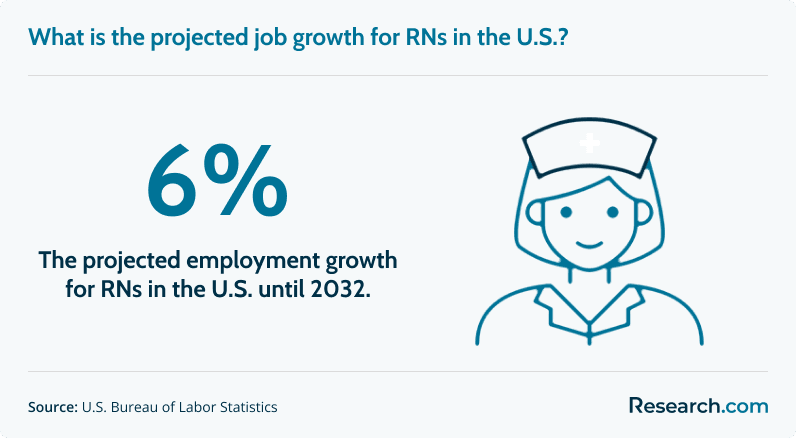
The job outlook for neonatal nurses is supported by the broader demand for registered nurses and by the specialized nature of newborn intensive care. The U.S. Bureau of Labor Statistics projects 6% growth for registered nurses from 2022 to 2032, which is faster than average. BLS attributes RN demand to factors including an aging population, chronic conditions, and healthcare technology that increases the need for skilled nursing care.
Neonatal nursing is a specialized part of the RN workforce, so local opportunities will depend on regional birth patterns, hospital service lines, NICU levels, children’s hospital access, staffing shortages, and the availability of advanced practice providers. Nurses with strong NICU experience, specialty certifications, and comfort with technology may be better positioned for competitive roles.
What emerging trends are shaping neonatal nursing careers?
Neonatal nursing is being shaped by technology, higher-acuity care, interdisciplinary practice, simulation-based education, and stronger attention to family-centered care. Telemedicine, remote consultation, and data-informed monitoring can support neonatal teams, especially when specialists are not immediately available on site. Simulation training is also increasingly important because NICU nurses must be ready for rare but high-risk emergencies.
Employer expectations are also shifting. Nurses who can combine bedside expertise with quality improvement, informatics awareness, precepting, and evidence-based practice may have more career flexibility. For nurses interested in moving faster toward advanced practice, accelerated NP programs may provide a structured route from earlier nursing preparation into graduate-level roles.
Can expanding into integrative health improve your earnings?
Integrative health can broaden a neonatal nurse’s perspective, but it should be approached carefully in NICU settings because newborn care requires evidence-based, medically supervised practice. Training in family support, lactation collaboration, developmental care, stress reduction, and patient-centered communication may complement neonatal practice when aligned with institutional policies and clinical evidence.
For nurses exploring adjacent advanced practice fields, Research.com’s guide to functional medicine nurse practitioner salary may provide additional context. However, neonatal nurses should not assume that integrative health training alone will increase salary. Employers are more likely to reward credentials, advanced degrees, leadership responsibilities, and specialized clinical competence that clearly match the role.
What are the key factors influencing neonatal nurse salaries?
Neonatal nurse salaries vary because employers price roles based on labor demand, acuity, geography, experience, credentials, and institutional resources. A nurse comparing two offers should evaluate total compensation, not only base pay.
| Factor | How it affects salary | What to ask |
| Cost of living | States with higher housing, transportation, and general living costs may offer higher wages. | Will this salary improve my real standard of living after local expenses? |
| Demand for neonatal care | Areas with more NICUs, higher birth rates, or staffing shortages may pay more for experienced neonatal nurses. | How hard is this employer recruiting NICU nurses right now? |
| Healthcare funding | State funding, public hospital budgets, reimbursement patterns, and private-sector resources can affect wages. | Is this facility financially stable, and does it have a history of competitive nursing pay? |
| Unionization and labor rules | Strong labor representation can influence wages, staffing ratios, benefits, and scheduling protections. | Is there a union contract or published pay scale? |
| Hospital type and size | Large hospitals, teaching hospitals, and specialized children’s hospitals may pay more because they handle complex cases. | What NICU level is the unit, and what patient acuity should I expect? |
| Experience and certifications | Specialty experience and credentials may improve competitiveness for higher-paying roles. | Does the employer offer certification pay, ladder advancement, or tuition support? |
How can neonatal nurses expand their expertise for diverse healthcare opportunities?
Neonatal nurses who develop skills beyond bedside NICU care can become more adaptable in a changing healthcare system. Related areas include education, case management, quality improvement, informatics, transport, leadership, and interdisciplinary care coordination. Understanding adjacent healthcare careers, including medical billing and coding salary benchmarks, can also help nurses see how clinical documentation, coding, reimbursement, and care coordination connect.
| Expansion area | Practical way to build it | Potential career value |
| Advanced neonatal emergency skills | Maintain or pursue NRP and pediatric advanced life support preparation where appropriate. | Supports readiness for critical events and high-acuity environments. |
| Healthcare informatics | Learn how electronic health records, dashboards, and patient data support NICU decision-making. | Can lead to workflow improvement, quality, and clinical technology roles. |
| Leadership and management | Join quality improvement initiatives, precept new nurses, and take leadership courses. | Builds a foundation for charge nurse, unit manager, and director roles. |
| Teaching and mentorship | Serve as a preceptor, clinical educator, or contributor to neonatal training materials. | Can support staff development, academic teaching, and hospital education positions. |
| Neonatal transport | Gain experience with stabilization, communication, and interfacility transfer protocols. | Prepares nurses for specialized transport roles involving critically ill newborns. |
| Case management | Develop discharge planning, family education, and resource coordination skills. | Can expand opportunities beyond direct bedside care while still serving neonatal families. |
Are online nursing degrees respected?
Online nursing degrees can be respected when they come from properly accredited institutions and include the clinical training required for the nursing role. The format alone is not the deciding factor. Accreditation, state authorization, clinical placement quality, licensure alignment, faculty qualifications, and employer recognition matter more.
Prospective neonatal nurses should be especially careful because bedside nursing cannot be learned fully online. Didactic courses may be delivered remotely, but clinical requirements must meet state board and program standards. For a deeper discussion, see Research.com’s guide: Are online nursing degrees respected.
How can neonatal nurses adapt to healthcare policy changes for career growth?
Healthcare policy affects staffing, reimbursement, documentation, quality reporting, patient safety standards, and scope of practice. Neonatal nurses who understand policy changes can respond more effectively to shifts in employer expectations and patient care models. Staying connected with professional organizations, hospital policy updates, continuing education, and state board communications can help nurses avoid surprises.
Nurses interested in advanced practice should also monitor how state scope-of-practice rules, certification requirements, and employer credentialing standards affect nurse practitioner roles. Those comparing graduate options can review resources such as the easiest nurse practitioner online programs, while still verifying accreditation, clinical placement requirements, and state authorization before enrolling.
Could a bridge program leverage your paramedic experience for neonatal nursing?
Paramedics bring valuable emergency assessment, stabilization, communication, and rapid-response experience to nursing. A bridge pathway can help convert that background into registered nursing preparation, but neonatal nursing still requires RN licensure, pediatric and newborn-specific training, and NICU clinical development.
A paramedic to RN bridge program online may be useful for experienced paramedics who want a structured transition into nursing. Before enrolling, candidates should confirm accreditation, state approval, clinical placement requirements, NCLEX preparation, transfer credit policies, and whether local NICU employers hire graduates from the program.
How can neonatal nurses manage burnout and maintain work-life balance?
Neonatal nursing can involve grief, uncertainty, high-stakes monitoring, difficult conversations, night shifts, and prolonged family stress. Burnout prevention is not a luxury in this specialty; it is part of career sustainability and patient safety.
- Use formal support early. Employee assistance programs, counseling, peer support, and debriefing after difficult cases can help nurses process stress before it becomes unmanageable.
- Watch shift patterns. Consecutive nights, frequent overtime, and rotating schedules can affect sleep, mood, and long-term health.
- Build boundaries around overtime. Extra shifts may raise income, but chronic overwork can reduce performance and increase exhaustion.
- Seek mentorship. Experienced NICU nurses can help newer nurses normalize stress, strengthen judgment, and avoid isolation.
- Use education strategically. Some nurses move into roles with different stress profiles, such as education, case management, or advanced practice. Nurses interested in mental health practice can also review the cheapest psych NP programs online.
What are the benefits of pursuing a DNP degree for neonatal nurses?
A Doctor of Nursing Practice can benefit neonatal nurses who want advanced clinical leadership, evidence-based practice expertise, quality improvement responsibility, policy involvement, or senior practice roles. A DNP is not necessary for every neonatal nurse, but it can make sense for nurses pursuing high-level advanced practice or systems leadership.
Potential benefits include stronger preparation in clinical decision-making, program evaluation, healthcare systems, leadership, and population-level thinking. Nurses considering this route should compare tuition, clinical requirements, accreditation, faculty neonatal expertise, and employer support. A cost-conscious starting point is Research.com’s list of affordable DNP online program options.
Can affordable LPN programs serve as a viable foundation for neonatal nursing careers?
An LPN program can provide early exposure to patient care, but it is not the final credential for NICU RN practice. Neonatal nurses typically need RN licensure, and many hospitals prefer or require a BSN for NICU positions. For students who need an affordable entry point into nursing, an LPN pathway may be a first step, followed by LPN-to-RN, ADN, BSN, or bridge options.
Students exploring cheap licensed practical nurse programs online should verify accreditation, state approval, clinical training, licensure outcomes, and transferability into RN programs. Choosing the cheapest program without checking these details can delay or limit a future neonatal nursing career.
What is the role of online MSN programs in advancing neonatal nurse careers?
An online MSN can help neonatal nurses move toward advanced practice, education, leadership, or clinical specialist roles while continuing to work. The flexibility can be valuable for nurses with rotating shifts, family responsibilities, or limited access to nearby graduate programs.
For neonatal nurses, the key is not simply whether the MSN is online. The program must match the intended career outcome. Nurses aiming to become neonatal nurse practitioners should confirm that the program offers the correct specialty preparation, appropriate clinical placements, faculty support, and eligibility for certification and state licensure. Nurses interested in leadership or education should compare curriculum focus, practicum expectations, and employer recognition.
Cost also matters. Graduate nursing education can be expensive, and salary gains are not automatic unless the degree leads to a role that uses the new credential. Nurses comparing options can start with the cheapest online MSN programs, then narrow the list by accreditation, clinical support, specialty fit, and state authorization.
Common mistakes to avoid when evaluating neonatal nurse salary
| Mistake | Why it can hurt your decision | Better approach |
| Comparing salaries from different sources without checking job definitions | One figure may refer to staff RN roles while another includes advanced practice or travel positions. | Compare salary data only when role type, location, and experience level are clear. |
| Focusing only on base pay | Benefits, differentials, overtime, retirement matching, and tuition assistance can change total compensation. | Ask for the full compensation package in writing. |
| Assuming a high-paying state always means a better financial outcome | High living costs can reduce the value of a larger paycheck. | Estimate rent, commuting, taxes, childcare, insurance, and savings potential. |
| Choosing a degree program without checking accreditation | Unaccredited or poorly aligned programs can create licensure, transfer, or employment problems. | Confirm institutional and nursing accreditation, state authorization, and clinical placement support. |
| Assuming online programs automatically meet local requirements | State boards and employers may have specific requirements for clinical hours and program approval. | Contact the program and state board before enrolling. |
| Using salary averages as guarantees | Individual pay depends on experience, employer, unit, shift, geography, and negotiation. | Use averages as benchmarks, then review local job postings and employer pay scales. |
Questions to ask before accepting a neonatal nurse job offer
- What is the base hourly rate or annual salary, and how often are raises reviewed?
- Are night, weekend, holiday, charge nurse, preceptor, or certification differentials available?
- What NICU level is the unit, and what patient acuity should I expect?
- What is the nurse-to-patient staffing model for typical and high-acuity shifts?
- How much orientation is provided for nurses new to NICU practice?
- Does the employer reimburse NRP, RNC-NIC, C-NPT, CCRN-neonatal, or graduate coursework?
- What retirement match, vesting schedule, health benefits, and paid leave are included?
- How often is overtime expected, and is it voluntary or mandatory?
- Are there clinical ladder, educator, transport, management, or NNP advancement pathways?
- How does the hospital support burnout prevention, debriefing, mental health, and schedule flexibility?
Key Insights
- The reported national neonatal nurse salary for 2024 is $127,391, but the number should be interpreted carefully because neonatal salary data may include different job titles, experience levels, and work settings.
- State pay varies substantially. The listed highest-paying locations include the District of Columbia at $101,174, Washington at $93,014, and California at $90,871, while Iowa, South Carolina, and Hawaii appear among the lowest-paying states in the cited data.
- Total compensation matters more than salary alone. Shift differentials, overtime, retirement matching, health benefits, tuition support, and certification reimbursement can significantly change the value of an offer.
- The strongest salary-growth strategies are specialized NICU experience, recognized neonatal certifications, high-acuity practice, selective travel assignments, and graduate education when it leads to advanced roles.
- An MSN or DNP can raise career potential for nurses pursuing NNP, CNS, leadership, education, or systems-level roles, but graduate school should be evaluated against cost, accreditation, clinical requirements, and career goals.
- Online nursing degrees can be respected when they are accredited, state-authorized, clinically sound, and aligned with licensure or certification requirements.
- Before relocating for higher pay, nurses should compare cost of living, employer benefits, NICU acuity, staffing conditions, advancement pathways, and burnout support.
References:
- Randall, K. (2023, December 18). Neonatal nurse salary guide for 2024 - Synapse Care Solutions. Synapse Care Solutions.
- U.S. Bureau of Labor Statistics. (2023). Registered nurses. U.S. Bureau of Labor Statistics.
- Trumble, P. (n.d.). Steps-to-Become a NICU nurse + salary + pros and cons. Nursingprocess.org.
- Zippia. (2024). What is a neonatal nurse and how to become one. Zippia.
Other Things You Should Know About the Average Neonatal Nurse Salary
In 2027, neonatal nurses often require certification from the National Certification Corporation (NCC). This involves passing the Neonatal Intensive Care Nursing (RNC-NIC) exam, which evaluates skills necessary for the specialty. Continuous education and recertification are also needed every three years to maintain the credential.
Most employers require at least 1 to 2 years of recent neonatal, pediatric, or labor-and-delivery nursing experience for NICU roles. To enter the field, nurses must also hold an active RN license and usually complete a neonatal orientation or residency program before working independently.
As of 2027, California offers the highest average salary for neonatal nurses, with an annual income of $130,000. This high salary is attributed to the state’s high cost of living and demand for specialized healthcare professionals.