
2027 How to Become a Behavioral Health Counselor

Co-Founder and Chief Data Scientist
Becoming a behavioral health counselor is a long-term education and licensure decision, not just a job choice. The field matters because mental health and substance use needs continue to outpace available care: nearly half of the United States population—47% or 158 million people—live in a mental health workforce shortage area. For students, career changers, psychology majors, social work students, and helping professionals, 2027 is a practical time to compare counseling pathways, understand state licensing rules, and decide whether the work fits your strengths.
This guide explains what behavioral health counselors do, what degree and license you typically need, how long the path can take, where counselors work, what salaries look like, and how to choose an education route without overpaying or missing licensure requirements.
Quick Answer: How Do You Become a Behavioral Health Counselor?
To become a behavioral health counselor, you usually start with a bachelor’s degree in psychology, social work, counseling, or a related field, then complete a master’s degree that meets your state’s counseling licensure requirements. After graduation, most states require supervised clinical experience, a licensing exam, and continuing education. The Bureau of Labor Statistics projects 19% growth in this field from 2023 to 2033, making it a strong option for people who want a service-oriented career with broad employment settings.
| Step | What It Involves | Why It Matters |
| Earn a bachelor’s degree | Study psychology, social work, human services, or a related discipline | Builds the academic foundation for graduate counseling study |
| Complete a master’s degree | Choose counseling, clinical mental health counseling, behavioral health, or a related program | Most states require graduate-level preparation for independent practice |
| Gain supervised experience | Complete required post-degree clinical hours under approved supervision | Develops real-world counseling judgment and prepares you for licensure |
| Pass the licensing exam | Take a state-approved exam such as the NCE or NCMHCE | Demonstrates professional competence in counseling practice |
| Maintain your license | Complete continuing education and follow ethical standards | Keeps your practice current, legal, and professionally accountable |
Key Things You Should Know About How to Become a Behavioral Health Counselor
- A bachelor’s degree can open entry-level behavioral health roles, but licensed counseling positions usually require a master’s degree in counseling or a closely related field.
- State licensure is essential for independent clinical practice and commonly includes supervised clinical experience, an approved exam, and continuing education.
- The most effective counselors combine clinical knowledge with empathy, active listening, ethical judgment, and strong documentation habits.
- Behavioral health counselors work in outpatient clinics, hospitals, schools, correctional settings, nonprofits, residential programs, and private practice.
- The Bureau of Labor Statistics projects a 19% growth in this field from 2023 to 2033, which is faster than many other occupations.
- What skills do behavioral health counselors need?
- What degree is required for behavioral health counseling?
- Do behavioral health counselors need a license?
- What does the career path look like?
- Where do behavioral health counselors work?
- How much do behavioral health counselors earn?
- What challenges should new counselors expect?
- What legal and ethical issues affect counseling practice?
- Which certifications can strengthen a counseling career?
- Why does accreditation matter?
- How can you pay for behavioral health counseling education?
- Can advanced degrees improve career options? Review education financing options
- Should you choose psychology or social work?
- How can networking and mentorship help?
- Is a doctoral degree useful for behavioral health counselors?
- Can organizational psychology support counseling work?
- How can counselors build cultural competence?
- How can counselors protect work-life balance?
- What trends are shaping behavioral health counseling?
- Is becoming a behavioral health counselor worth it? Read the FAQs
What are the key skills required to become a successful behavioral health counselor?
Behavioral health counseling depends on both evidence-based practice and human connection. Clients may come in during crisis, after relapse, with trauma histories, or while navigating anxiety, depression, family conflict, or major life stress. Technical knowledge matters, but the quality of the counselor-client relationship often determines whether clients stay engaged in care.
| Skill | How It Shows Up in Practice | Why Employers Value It |
| Communication | Explaining treatment goals, asking clear questions, and documenting sessions accurately | Reduces confusion and supports coordinated care |
| Empathy | Responding to clients without judgment while still maintaining professional boundaries | Helps build trust with people who may feel ashamed, guarded, or misunderstood |
| Active listening | Noticing tone, body language, avoidance, contradictions, and recurring themes | Improves assessment and helps counselors understand what clients may not say directly |
| Problem-solving | Creating realistic treatment plans, safety plans, referrals, and coping strategies | Supports practical progress rather than vague encouragement |
| Patience | Working through setbacks, ambivalence, relapse, or slow behavioral change | Prevents overreacting when clients do not improve quickly |
| Resilience | Managing emotionally intense work without becoming detached or overwhelmed | Helps counselors remain effective in high-need settings |
| Adaptability | Adjusting counseling approaches for age, culture, diagnosis, setting, and client readiness | Allows counselors to serve diverse populations responsibly |
| Commitment to learning | Keeping up with ethics, telehealth, trauma-informed care, and evidence-based methods | Protects clients and supports long-term career growth |
- Communication skills: Counselors must translate clinical concepts into language clients can use. If you are comparing counseling and therapy pathways, Research.com also explains the easiest therapist to become options and what those routes actually require.
- Ethical judgment: Counselors regularly make decisions involving confidentiality, safety, mandated reporting, documentation, and scope of practice.
- Clinical curiosity: Strong counselors keep asking what is behind a client’s behavior instead of assuming the first explanation is correct.
- Boundary management: Helping work can become emotionally consuming. Clear limits protect both the client and the professional relationship.
Many of these abilities also overlap with the requirements for licensed mental health counselor roles, especially when a counselor plans to provide independent clinical services.
What degree do you need to become a behavioral health counselor?
The right degree depends on the type of counseling work you want to do. A bachelor’s degree may qualify you for support roles in behavioral health, but independent counseling practice usually requires a graduate degree that satisfies state licensure rules. Students trying to control costs can compare most affordable online counseling degrees, but affordability should never be separated from accreditation, supervised training, and licensure alignment.
Bachelor’s Degree
A bachelor’s degree is the usual starting point. Common majors include psychology, social work, human services, sociology, public policy and social services, or social science. At this level, students learn how people develop, how social systems affect behavior, how research is interpreted, and how helping professionals communicate with clients and communities.
- Best for: Students preparing for graduate counseling study or entry-level behavioral health jobs.
- Common entry-level roles: Case aide, behavioral health technician, peer support role, program assistant, or case management support role, depending on employer requirements.
- Limitation: A bachelor’s degree alone generally does not qualify someone for independent clinical counseling licensure.
Master’s Degree
A master’s degree is the key academic credential for most licensed counseling paths. Programs may focus on clinical mental health counseling, counseling psychology, behavioral health, marriage and family therapy, addiction counseling, or related areas. The program should include supervised fieldwork, ethics, assessment, diagnosis, counseling theories, group counseling, multicultural counseling, and treatment planning.
- Best for: Students who want to become licensed counselors and provide clinical services.
- Licensure connection: Most states require a qualifying master’s degree before candidates can begin the supervised post-graduate licensure process.
- Training component: Practicum and internship experiences allow students to work with clients under supervision before entering the workforce independently.
| Education Level | Typical Purpose | Possible Outcome | Main Caution |
| Bachelor’s degree | Build a foundation in psychology, social work, or human behavior | Entry-level support roles or preparation for graduate school | Usually not enough for independent counseling licensure |
| Master’s degree | Develop clinical counseling skills and meet licensure coursework requirements | Pathway to licensed counselor roles after supervised experience and exams | Must match the requirements of the state where you plan to practice |
| Doctoral degree | Prepare for advanced clinical leadership, research, teaching, or specialized practice | Expanded career options in academia, supervision, or advanced clinical work | Requires major time and financial commitment |
Students interested in behavior analysis rather than counseling should compare requirements carefully. The pathway in how to become a BCBA or board-certified behavior analyst has overlap with behavioral science but is not identical to counseling licensure.
Do you need a license to become a behavioral health counselor?
Yes, if you want to provide professional counseling services independently, licensure is typically required. Licensing protects clients by confirming that counselors have completed the necessary graduate education, supervised practice, examination, and ethical training. Some students look at one year masters programs online for speed, but a fast program is only useful if it meets the academic and clinical requirements for your intended license.
- Supervised clinical hours: After completing the required degree, candidates commonly need between 2,000 and 4,000 hours of supervised clinical experience. These hours help new counselors move from classroom knowledge to real clinical decision-making.
- Licensing exam: States often require an approved examination, such as the National Counselor Examination (NCE) or the National Clinical Mental Health Counseling Examination (NCMHCE). These exams assess counseling knowledge, diagnosis, ethics, treatment planning, and professional practice.
- Continuing education: Licensed counselors must usually complete ongoing training to renew their licenses and remain current on ethical, legal, and clinical developments.
Licensure rules are state-specific. Before enrolling, check the licensing board in the state where you plan to work and confirm that the program’s curriculum, internship structure, and supervision model match that state’s requirements. As of 2023, California employs the highest number of substance abuse, behavioral disorder, and mental health counselors, with over 56,660 professionals in the field.
| Question to Ask Before Enrolling | Why It Matters |
| Does the program meet counseling licensure requirements in my state? | A degree that is acceptable in one state may not automatically meet another state’s rules. |
| How are practicum and internship placements arranged? | Clinical placement support can affect your ability to graduate on time. |
| Is the program accredited or recognized by the relevant professional bodies? | Accreditation can influence licensure eligibility, employer confidence, and transferability. |
| Will online students receive the same advising as campus students? | Licensure advising is especially important for distance learners studying across state lines. |
What is the career path for a behavioral health counselor?
The career path often begins with support roles, moves into supervised clinical practice after graduate school, and then expands into licensed counseling, specialization, supervision, administration, or private practice. The best route depends on whether you want direct client care, program leadership, addiction treatment, school-based work, or a specialized clinical population.
Early-Career Roles
- Case manager: Helps clients connect with housing, healthcare, treatment programs, benefits, transportation, and community support.
- Counseling assistant: Supports licensed professionals with treatment plan follow-through, client communication, documentation, and program activities.
- Behavioral health technician: Works in treatment environments where clients need structured support, monitoring, and skill-building assistance.
Skills Built in Entry-Level Work
- Client assessment: Learning how to gather information, identify needs, and recognize when a client requires a higher level of care.
- Case documentation: Writing clear, accurate, and timely notes that support continuity of care and compliance.
- Care coordination: Communicating with social workers, nurses, psychiatrists, schools, family members, courts, or community agencies when appropriate.
Licensed and Specialized Roles
- Addiction counselor: Works with clients managing substance use disorders, relapse prevention, recovery planning, and co-occurring mental health concerns.
- Trauma therapist: Helps clients address traumatic experiences using appropriate, evidence-informed treatment approaches.
- Child and adolescent counselor: Supports young people and families dealing with emotional, behavioral, school-related, or developmental concerns.
Advanced Career Options
- Clinical supervisor: Oversees developing counselors, reviews cases, supports ethical practice, and helps meet supervision standards.
- Program director: Manages staff, budgets, service delivery, quality improvement, and compliance for behavioral health programs.
- Private practice owner: Provides counseling independently while also managing billing, scheduling, referrals, compliance, and business operations.
Additional credentials, including the Certified Clinical Mental Health Counselor (CCMHC), may support advancement in careers in counseling, especially when paired with strong supervision, specialized experience, and a clear practice area.
Another related route is behavior analysis. Some professionals begin as registered behavior technicians, later pursue graduate education, and eventually move toward BCBA roles. The BCBA vs RBT salary comparison can help students understand how credential level affects career options.
What industries hire behavioral health counselors?
Behavioral health counselors are employed wherever mental health, substance use, crisis support, and behavior change services are needed. Your work environment affects schedule, caseload, pay, paperwork, supervision, safety protocols, and the types of clients you serve.
| Industry or Setting | Typical Clients | Work Environment | Good Fit If You Want... |
| Healthcare | Patients with mental health, substance use, or co-occurring conditions | Hospitals, outpatient centers, community clinics, and mental health facilities | Team-based care and coordination with medical providers |
| Education | Students dealing with emotional, academic, behavioral, or developmental issues | Schools, universities, and student support offices | Youth-focused work and collaboration with educators and families |
| Government | Public health clients, justice-involved individuals, veterans, or underserved populations | Public agencies, correctional facilities, social service departments, and military settings | Structured systems, public service, and high-need populations |
| Nonprofits | Community members facing trauma, poverty, addiction, domestic violence, or limited access to care | Advocacy organizations, shelters, outreach programs, and community agencies | Mission-driven work with vulnerable communities |
| Private practice | Individuals, couples, families, or groups seeking therapy | Independent or group practice settings | Autonomy, specialization, and business ownership |
According to a report by the U.S. Bureau of Labor Statistics, the majority of substance abuse, behavioral disorder, and mental health counselors are employed in outpatient mental health and substance abuse centers in 2023.
What is the average salary of a behavioral health counselor?
Behavioral health counselor pay varies by license level, state, employer, clinical specialty, years of experience, and whether the counselor works in an agency, government role, healthcare setting, or private practice. According to Glassdoor, behavioral health counselors in the United States typically earn between $53,000 and $88,000 per year.
The U.S. Bureau of Labor Statistics notes that counselors in government positions or private practice typically earn more than those in residential facilities. Behavioral health counseling is not always grouped with the highest paying jobs with a psychology degree, but it can offer stable employment and meaningful advancement for professionals who complete licensure, specialize strategically, and manage career moves carefully.
| Factor | How It Can Affect Earnings |
| Licensure status | Fully licensed counselors usually qualify for more independent and higher-responsibility roles than unlicensed staff. |
| Work setting | Government, healthcare, private practice, nonprofit, and residential settings may offer different pay structures. |
| Location | State demand, cost of living, and local workforce shortages can influence compensation. |
| Specialization | Experience in addiction, trauma, crisis care, child and adolescent counseling, or telehealth may improve competitiveness. |
| Business model | Private practice income depends on referrals, payer mix, billing, expenses, and caseload capacity. |
What are the common challenges faced by behavioral health counselors?
Behavioral health counseling can be fulfilling, but it is also demanding. New counselors should enter the field with a realistic view of caseload pressure, crisis work, documentation requirements, ethical complexity, and emotional fatigue.
- Emotional strain: Regular exposure to trauma, addiction, grief, abuse, suicidality, and severe distress can affect a counselor’s own mental health if support systems are weak.
- Complex client needs: Many clients face overlapping issues, such as substance use, housing instability, family conflict, medical problems, legal stress, or co-occurring diagnoses.
- Ethical dilemmas: Counselors must balance confidentiality, client autonomy, mandated reporting, safety concerns, and professional boundaries.
- Heavy documentation: Treatment plans, progress notes, assessments, insurance requirements, and compliance standards can take significant time outside sessions.
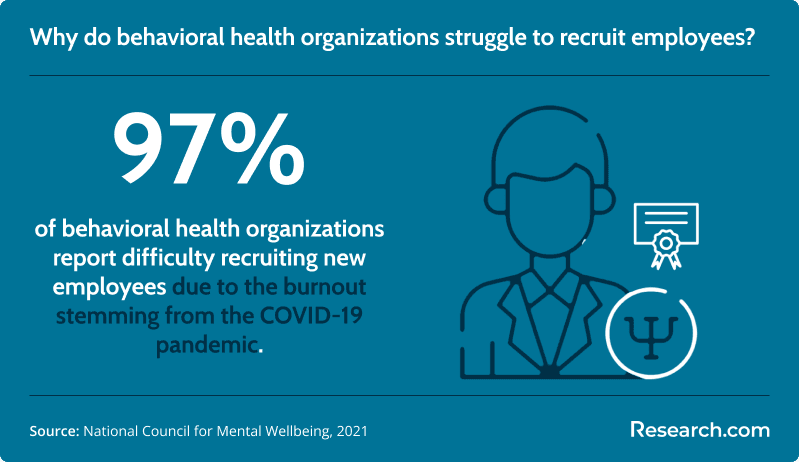
- Burnout: High caseloads and emotionally intense work can reduce effectiveness and increase turnover. According to a 2021 survey by the National Council for Mental Wellbeing, burnout is one of the primary reasons mental health organizations struggle to recruit and retain new employees.
| Common Mistake | Better Approach |
| Choosing the cheapest program without checking licensure alignment | Verify state requirements, supervised fieldwork, accreditation, and graduate outcomes before applying. |
| Assuming online programs automatically qualify for licensure everywhere | Ask the program and your state licensing board whether the curriculum meets your state’s rules. |
| Ignoring supervision quality | Look for strong clinical placement support and access to experienced supervisors. |
| Expecting salary outcomes to be guaranteed | Compare wages by location, setting, license level, and specialty before borrowing for school. |
| Entering the field without a burnout plan | Build supervision, peer consultation, boundaries, and self-care into your professional routine early. |
What are the legal and ethical considerations in behavioral health counseling?
Behavioral health counselors work with sensitive information and vulnerable clients, so legal and ethical competence is not optional. Counselors must understand confidentiality, informed consent, client records, mandated reporting, dual relationships, scope of practice, crisis response, and digital privacy. Telehealth adds additional concerns, including secure platforms, emergency planning, client location, and cross-state practice rules.
Strong programs teach ethics as an ongoing decision-making process rather than a single course requirement. Counselors who want a broader framework for relational, family, and systems-based practice may also compare marriage and family therapy programs online.
What additional certifications can enhance my career as a behavioral health counselor?
Certifications can help counselors document specialized training, but they should be chosen strategically. A credential is most useful when it matches your client population, employer needs, and state scope-of-practice rules. Addiction treatment, trauma-informed care, crisis intervention, telebehavioral health, and child and adolescent counseling are common areas for additional training.
For professionals who want to focus on substance use treatment, an addiction counseling certification can strengthen preparation for intervention planning, relapse prevention, recovery support, and work with co-occurring concerns.
How does accreditation enhance your career in behavioral health counseling?
Accreditation matters because it signals that a program has been reviewed against established academic and professional standards. For counseling students, accreditation can affect licensure eligibility, employer confidence, transfer options, internship quality, and access to a curriculum aligned with current professional expectations.
Students comparing online options should not rely on marketing claims alone. Ask whether the program is accredited, whether that accreditation is accepted by your state licensing board, and whether graduates have successfully completed licensure steps. Cost-conscious students can begin by reviewing CACREP-accredited online counseling programs.
How can I finance my behavioral health counseling education?
Graduate counseling education can be expensive, so financing should be part of the decision from the beginning. Compare total program cost, fees, books, travel for residencies, internship-related expenses, technology requirements, and the income you may lose if you reduce work hours during clinical placements.
- Federal financial aid: Complete the required aid applications and understand loan terms before borrowing.
- Scholarships and grants: Look for awards from universities, professional associations, community foundations, and workforce development programs.
- Employer support: Some behavioral health employers offer tuition reimbursement or schedule flexibility for employees pursuing counseling degrees.
- Affordable program comparison: Review the most affordable online counseling degrees while also checking accreditation and licensure fit.
- Debt-to-income planning: Compare expected salary ranges with loan payments before committing to a program.
How can advanced degrees accelerate career growth in behavioral health counseling?
Advanced degrees can support specialization, supervision, leadership, research, teaching, or movement into adjacent behavioral science fields. However, more education is not automatically better. The degree should connect to a specific career goal, such as clinical supervision, program leadership, applied behavior analysis, doctoral-level practice, or academic work.
Professionals interested in behavior-focused intervention and applied behavioral science may consider online applied behavior analysis master's programs as a related but distinct pathway from counseling licensure.
Should I pursue a psychology degree vs social work degree for behavioral health counseling?
Psychology and social work can both lead toward behavioral health careers, but they emphasize different perspectives. Psychology programs often focus more heavily on behavior, cognition, research, assessment, and mental processes. Social work programs typically place stronger emphasis on systems, advocacy, case management, policy, community resources, and person-in-environment practice.
| Path | Best Fit | Potential Strength | What to Verify |
| Psychology | Students interested in human behavior, research, assessment, and therapy-related graduate study | Strong behavioral and mental health foundation | Whether the degree leads to the counseling license you want |
| Social work | Students interested in counseling, advocacy, case management, policy, and community systems | Broad preparation for client support across social service settings | Whether the program and license align with your desired clinical role |
A detailed psychology degree vs social work degree comparison can help you decide which academic route better matches your counseling goals.
How can professional networking and mentorship accelerate career growth?
Mentorship can shorten the learning curve for new counselors. Experienced professionals can help you understand licensure steps, choose internships, handle ethical uncertainty, specialize wisely, prepare for interviews, and avoid early-career burnout. Networking is also important for referrals, supervision opportunities, continuing education, and learning about employers before applying.
- Join relevant professional associations and attend local training events.
- Ask faculty and internship supervisors for introductions to practitioners in your preferred specialty.
- Seek mentors who are licensed in the state and setting where you want to work.
- Use graduate school cohorts as a long-term peer consultation network.
Students considering additional graduate study can compare options such as the cheapest masters in clinical psychology while weighing cost, accreditation, and professional fit.
Is obtaining a doctoral degree beneficial for behavioral health counselors?
A doctoral degree can be valuable, but it is not necessary for most counseling roles. It may make sense if you want to teach, conduct research, hold senior clinical leadership roles, influence policy, or pursue advanced clinical training beyond master’s-level counseling. It may not be the best choice if your goal is simply to begin direct counseling practice as efficiently as possible.
Counselors considering doctoral-level clinical training can explore an online PsyD program, but they should compare cost, residency requirements, licensure implications, practicum expectations, and career return before applying.
Can integrating organizational psychology enhance my counseling practice?
Organizational psychology can help behavioral health counselors understand workplace behavior, team dynamics, leadership, communication patterns, burnout, and systems-level change. This knowledge is especially useful for counselors who supervise staff, manage programs, consult with organizations, or work in employee assistance, healthcare administration, or integrated care teams.
Professionals interested in leadership and systems improvement may find value in the cheapest masters in organizational psychology online, particularly when their goals extend beyond direct counseling sessions.
How can behavioral health counselors enhance their cultural competence?
Cultural competence requires more than good intentions. Counselors must understand how culture, race, language, disability, immigration status, religion, gender identity, socioeconomic status, family structure, and historical experiences shape a client’s relationship to mental health care. It also requires humility: the willingness to ask, listen, and correct assumptions.
- Complete training in multicultural counseling, implicit bias, disability awareness, and trauma-informed care.
- Use supervision to examine blind spots and countertransference.
- Learn about community-specific resources rather than expecting clients to adapt to one model of care.
- Use interpreters and culturally appropriate referral networks when needed.
- Review adjacent training models, including insights from MSW online programs, to better understand systems-based support.
How can behavioral health counselors maintain work-life balance?
Work-life balance is a professional responsibility in behavioral health counseling. Counselors who ignore fatigue, compassion stress, and boundary erosion may eventually provide lower-quality care. The goal is not to become emotionally unaffected; the goal is to stay grounded enough to remain useful, ethical, and healthy.
- Set firm boundaries: Define work hours, response times, caseload limits, and crisis procedures instead of constantly improvising.
- Use supervision consistently: Supervision and consultation help counselors process difficult cases and avoid isolated decision-making.
- Protect recovery time: Schedule rest, exercise, hobbies, relationships, and time away from clinical material.
- Take time off: Regular breaks and vacations help prevent chronic depletion.
- Monitor warning signs: Cynicism, emotional numbness, irritability, dread before sessions, and constant exhaustion should be taken seriously.
What are the emerging trends in behavioral health counseling?
Behavioral health counseling is changing as demand rises, technology expands access, and employers seek more integrated models of care. These trends create opportunities, but they also require counselors to stay current on ethics, privacy, and evidence-based practice.
- Preventive and early-intervention care: More organizations are trying to identify behavioral health needs earlier rather than waiting until symptoms become severe.
- Technology-supported care: Virtual platforms, digital screening tools, client portals, and AI-driven therapy apps are influencing how clients access services and track progress.
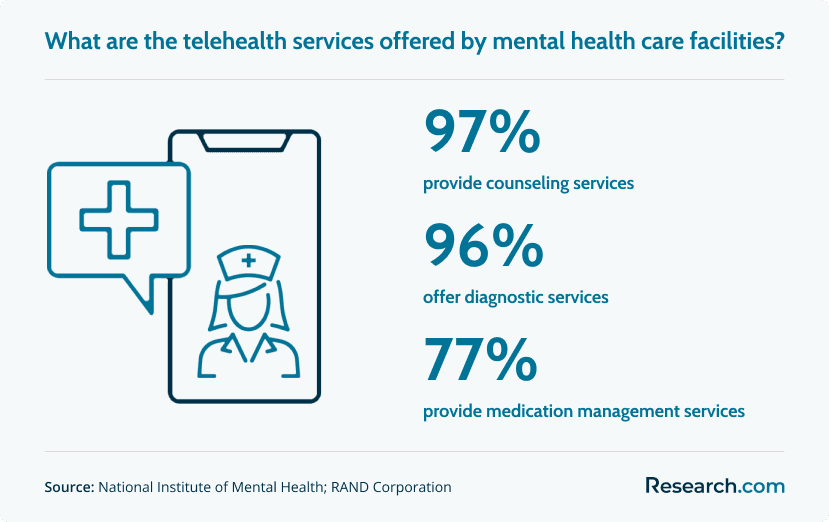
- Telehealth expansion: According to a study by the RAND Corporation, 80% of over 1,900 mental healthcare facilities across the U.S. offer telehealth services, including counseling, medication management, and diagnostic services. This became especially important during the COVID-19 pandemic.
- Culturally responsive practice: Counselors are expected to serve clients across diverse cultural, linguistic, socioeconomic, and identity-based contexts.
- Integrated care: Behavioral health services are increasingly coordinated with primary care, addiction treatment, social services, and community supports.
Is pursuing a behavioral health counseling career worth it?
Behavioral health counseling is worth considering if you want a career centered on helping people change patterns, stabilize their lives, manage mental health symptoms, recover from addiction, or cope with trauma and stress. It offers meaningful work and strong projected demand, but it also requires graduate education, licensure, emotional resilience, and ongoing professional development.
The demand for substance abuse, behavioral disorder, and mental health counselors is projected to increase by 84,500 between 2023 and 2033. That growth reflects broader recognition that mental health is part of overall health, but it does not mean every job will pay the same or that every graduate will have identical opportunities. Outcomes depend on state, license type, employer, specialty, experience, and local workforce needs.
For students who need flexibility, accredited online degree programs can make counseling education more accessible. The important step is confirming that the program meets licensure expectations before enrolling.
If your interest is specifically in behavior analysis rather than counseling, Applied Behavior Analysis may be another path to compare. Research.com’s guide to best ABA programs in the US can help you understand that adjacent field.
| This Career May Be a Good Fit If... | You May Want Another Path If... |
| You are comfortable discussing trauma, addiction, crisis, and emotional distress. | You want a helping career with minimal emotional exposure. |
| You are willing to complete graduate education and supervised clinical training. | You need to enter a fully independent career quickly without licensure steps. |
| You value long-term client progress, even when change is slow. | You prefer work with immediate, easily measurable outcomes every day. |
| You can maintain boundaries while showing compassion. | You tend to absorb others’ distress without support or recovery time. |
| You are interested in healthcare, schools, nonprofits, public service, or private practice. | You want a career with little documentation, compliance, or ethical oversight. |
Here’s What Graduates Have to Say About Becoming a Behavioral Health Counselor
- Choosing behavioral health counseling gave my work a purpose I could feel every day. The role can be difficult, but helping clients recognize their strengths and move through painful moments has made the effort worthwhile. Alissa
- The training process challenged me more than I expected, but it prepared me to build real therapeutic relationships and support people through meaningful change. I value both the stability of the field and the sense that my work matters. David
- Behavioral health counseling lets me combine compassion with structured, evidence-based care. The work pushes me to keep learning, but seeing clients make progress keeps me committed to the profession. Margaux
Other Things You Should Know About Becoming a Behavioral Health Counselor
Is a behavioral counselor the same as a therapist?
The terms may overlap in everyday conversation, but they are not always identical. A behavioral counselor often focuses on helping clients understand and change specific behaviors, coping patterns, or symptoms using structured interventions such as cognitive-behavioral strategies. A therapist may use a broader range of therapeutic approaches depending on training, license, and specialty. In practice, the title that matters most is the professional license and scope of practice in your state.
How long does it take to be a behavioral therapist?
The path commonly takes around six to eight years. Many students complete a bachelor’s degree in psychology, social work, or a related field, which typically takes four years. A master’s degree in counseling or a related discipline generally adds two to three years. After that, candidates complete supervised clinical hours, often ranging from 2,000 to 4,000 hours, and pass the required state licensing exam.
Why would someone see a behavioral therapist?
People may see a behavioral therapist to address anxiety, depression, addiction, phobias, stress, emotional regulation, relationship patterns, or behaviors that interfere with daily life. Behavioral therapy is often structured and goal-oriented, helping clients identify unhelpful patterns, practice new coping skills, and make changes that improve functioning.
Key Insights
- Behavioral health counseling usually requires a master’s degree and state licensure for independent clinical practice, although bachelor’s-level roles can help students gain experience before graduate school.
- Licensure rules vary by state, so students should verify degree requirements, supervised hours, exams, and telehealth rules before choosing a program.
- The field has strong projected demand: the Bureau of Labor Statistics projects 19% growth from 2023 to 2033, and demand is projected to increase by 84,500 professionals between 2023 and 2033.
- Salary expectations should be realistic. Glassdoor reports that behavioral health counselors in the U.S. typically earn between $53,000 and $88,000 annually, but pay depends on license level, setting, location, and specialty.
- Telehealth is now a major part of service delivery. According to a RAND Corporation study, 80% of over 1,900 mental healthcare facilities in the U.S. offer telehealth services, including counseling, medication management, and diagnostic services.
- The best counseling program is not simply the cheapest or fastest. It should be accredited, licensure-aligned, clinically strong, financially manageable, and appropriate for the state where you plan to practice.
- This career is most suitable for people who can combine empathy with boundaries, tolerate slow progress, handle documentation, and commit to lifelong ethical and clinical learning.
References:
- Guth, M., Saunders, H., Corallo, B., & Moreno, S. (2023, March 17). Medicaid coverage of behavioral health services in 2022: Findings from a survey of state Medicaid programs. KFF.org. Retrieved December 28, 2024.
- Glassdoor. (2024, June 6). How much does a behavioral health counselor make? Glassdoor.com. Retrieved December 29, 2024.
- HWI. (n.d.). Mental & behavioral health career pathways. Health Workforce Initiative. Retrieved December 29, 2024.
- NIH. (n.d.). Opportunities and challenges of developing information technologies on behavioral and social science clinical research. National Institute of Mental Health. Retrieved December 29, 2024.
- Saunders, H., Guth, M., & Eckart, G. (2023, January 12). A look at strategies to address behavioral health workforce shortages: Findings from a survey of state Medicaid programs. KFF.org. Retrieved December 28, 2024.
- U.S. BLS. (2024, August 29). Occupational outlook handbook: Substance abuse, behavioral disorder, and mental health counselors. U.S. Bureau of Labor Statistics. Retrieved December 28, 2024.
- U.S. BLS. (2024, August 29). Substance abuse, behavioral disorder, and mental health counselors: Pay. U.S. Bureau of Labor Statistics. Retrieved December 29, 2024.
Other Things You Should Know About Becoming a Behavioral Health Counselor
Most states require 2,000 to 4,000 supervised post-degree clinical hours before full licensure. The exact total depends on the state board, such as a counseling, social work, or behavioral health licensing board, and hours must usually be completed under an approved supervisor.
To become a behavioral health counselor in 2027, you typically need a master's degree in counseling, psychology, or social work. Programs generally require 60 credit hours, including supervised clinical experience, and are often accredited by bodies such as CACREP or CSWE.


