2027 How to Become a Nurse in Nebraska

Co-Founder and Chief Data Scientist
Choosing a nursing path in Nebraska means making several linked decisions: which license you want, which program fits your timeline and budget, how to meet Nebraska licensing rules, and whether the career outlook supports the investment. The process can feel confusing because the state has multiple nursing roles, several education routes, NCLEX testing requirements, background checks, continuing education rules, and compact-license options.
This guide explains how to become a nurse in Nebraska in a practical way. You will learn the steps from school selection to licensure, how ADN, BSN, LPN, MSN, and advanced practice routes compare, what Nebraska employers are looking for, how to evaluate program quality, and what mistakes to avoid before committing to a nursing program.
Quick Answer: How Do You Become a Nurse in Nebraska?
To become a nurse in Nebraska, you generally need to complete an approved nursing education program, pass the appropriate NCLEX exam, submit a licensure application to the Nebraska Department of Health and Human Services, complete a fingerprint-based background check, and meet ongoing renewal requirements. Registered nurses usually complete an ADN or BSN and take the NCLEX-RN, while licensed practical nurses complete a practical nursing program and take the NCLEX-PN. Nebraska also participates in the Nurse Licensure Compact, which can allow eligible compact-license nurses from other participating states to practice in Nebraska without obtaining a separate Nebraska license.
Key Things You Should Know About Nursing in Nebraska
- Nebraska is projected to need over 5,000 additional nurses by 2025, making workforce demand an important factor for students entering the field.
- The average salary for registered nurses in Nebraska is approximately $79,000 per year, although pay depends on location, experience, education, employer type, and specialty.
- Experienced nurses were reported as earning more than $5,000, so applicants should confirm salary details with current employer postings and official labor data before making financial decisions.
- The nursing employment outlook in Nebraska includes a projected growth rate of 8% over the next decade.
- Common pathways include Associate Degree in Nursing programs, Bachelor of Science in Nursing programs, practical nursing programs, bridge options, and graduate nursing routes for advanced practice roles.
- Steps to becoming a nurse in Nebraska
- Education requirements for Nebraska nurses
- Types of nurses allowed to practice in Nebraska
- Nebraska nursing licensing requirements
- Nursing license options in Nebraska
- Compact nursing practice in Nebraska
- Practicing nursing without a license in Nebraska
- The current nursing workforce in Nebraska
- Pharmacy as a related healthcare career option
- Paramedic-to-RN bridge options
- Nursing job outlook in Nebraska
- Professional associations for Nebraska nurses
- Alternative healthcare roles related to nursing
- LVN pathway advantages
- Online nursing programs in Nebraska
- How long Nebraska nursing licensure can take
- Choosing a nurse practitioner path in Nebraska
- Financing nursing and advanced practice education
- Assessing nursing program quality and outcomes
- Advancing into nurse midwifery in Nebraska
- Related decision points: program quality, education financing, NP pathway selection, and job outlook.
What are the steps to becoming a nurse in Nebraska?
According to the Nebraska Center for Nursing, Nebraska is projected to need over 10,000 new nurses by 2030. That demand does not remove the need for proper training and licensing, but it does make careful planning worthwhile for students who want a stable healthcare career in the state.
The right sequence depends on whether you want to become an LPN, RN, APRN, or nursing assistant. For most future nurses, the process follows this order.
- Choose the nursing role you want first. Decide whether your immediate goal is CNA, LPN, RN, or APRN. This choice determines the length, cost, entrance requirements, and licensing exam tied to your education.
- Select an approved education program. Many future RNs choose either an Associate Degree in Nursing or a Bachelor of Science in Nursing. An ADN usually takes two years, while a BSN generally takes four years. Some programs may include early-exit options that allow students to pursue LPN work after about one year.
- Complete classroom, lab, and clinical training. Nursing programs combine science coursework, patient-care skills, simulation, and supervised clinical experience. The early stages usually emphasize practical care and foundational knowledge, while later coursework may cover leadership, complex care, health assessment, and nursing management.
- Prepare for and pass the NCLEX. LPN candidates take the NCLEX-PN, and RN candidates take the NCLEX-RN. Nebraska pass rates have been reported as exceeding 85%, but individual outcomes depend heavily on program quality, preparation time, and student readiness.
- Apply for licensure through Nebraska. After meeting education and testing requirements, submit the required materials to the Nebraska Board of Nursing through the state licensing process. Advanced practice applicants typically need graduate education and national specialty certification.
- Maintain the license after approval. Nebraska nursing licenses must be renewed every two years. Nurses should track renewal dates, continuing education, competency requirements, and any specialty-specific obligations.
| Step | Decision to Make | Why It Matters |
| Pick a role | CNA, LPN, RN, or APRN | Your target role determines the program type, licensing exam, scope of practice, and career ceiling. |
| Choose a program | ADN, BSN, practical nursing, bridge, or graduate nursing | Program accreditation, clinical access, cost, and NCLEX outcomes affect licensure eligibility and job readiness. |
| Complete training | Full-time, part-time, online hybrid, or campus-based | The format must fit your schedule while still meeting clinical and licensing requirements. |
| Pass NCLEX | NCLEX-PN or NCLEX-RN | Passing the correct exam is required before you can receive the corresponding nursing license. |
| Apply for licensure | Initial license, endorsement, compact practice, or advanced practice license | Submitting complete documents reduces delays and helps you begin work sooner. |
What are the educational requirements for becoming a nurse in Nebraska?
Between 2018 and 2022, Nebraska’s nursing workforce decreased by 9.5%, equal to a loss of 12.5 nurses per 1,000 people. For students, this means nursing education is not only a personal career decision but also part of a broader workforce need across the state.
The two most common education routes for future registered nurses are the Associate Degree in Nursing and the Bachelor of Science in Nursing. An ADN generally takes two years and can be a faster route to RN eligibility. A BSN usually takes about four years and may be preferred for leadership roles, specialty practice, public health, hospital advancement, and graduate study. Students comparing the financial return of these pathways can also review how earnings differ by degree level, including information on associate degree in nursing salary.
Both ADN and BSN programs normally require general education and science prerequisites before students move into nursing-specific coursework. Typical nursing preparation includes anatomy, physiology, microbiology, pharmacology, health assessment, patient care fundamentals, and supervised clinical rotations.
Students who want to become nurse practitioners, nurse midwives, nurse anesthetists, or other advanced practice nurses should plan for graduate education. A Master’s degree in Nursing is essential for many advanced practice roles and commonly requires at least two more years of study beyond the BSN.
Accreditation should be a nonnegotiable part of program selection. Before enrolling, confirm that the school and nursing program meet standards recognized for licensure and that the program is acceptable to Nebraska licensing authorities. Accreditation matters because it can affect NCLEX eligibility, transfer credit, graduate school admission, employer recognition, and financial aid access.
Some Nebraska students may prefer accelerated, bridge, hybrid, or online nursing formats. These options can be useful for working adults, parents, career changers, and licensed nurses returning for a higher credential. However, online coursework does not eliminate clinical training requirements, so students must confirm how and where clinical placements are completed.
| Education Path | Typical Purpose | Best For | Key Caution |
| CNA training | Entry-level patient support | Students who want quick exposure to healthcare before committing to nursing school | CNA work is not the same as licensed nursing practice. |
| Practical nursing program | Preparation for LPN licensure | Students seeking a faster route into hands-on patient care | Advancement may require an LPN-to-RN bridge later. |
| ADN | RN preparation through an associate degree | Students who want a shorter RN pathway | Some employers may prefer or encourage BSN completion. |
| BSN | Four-year RN preparation | Students targeting broader advancement, leadership, or graduate school | It may cost more and take longer than an ADN. |
| MSN or doctoral nursing program | Advanced practice, leadership, education, or specialty preparation | RNs pursuing NP, nurse midwife, nurse anesthetist, or other advanced roles | Admission requirements, certification, and scope-of-practice rules vary by role. |
What types of nurses can legally practice in Nebraska?
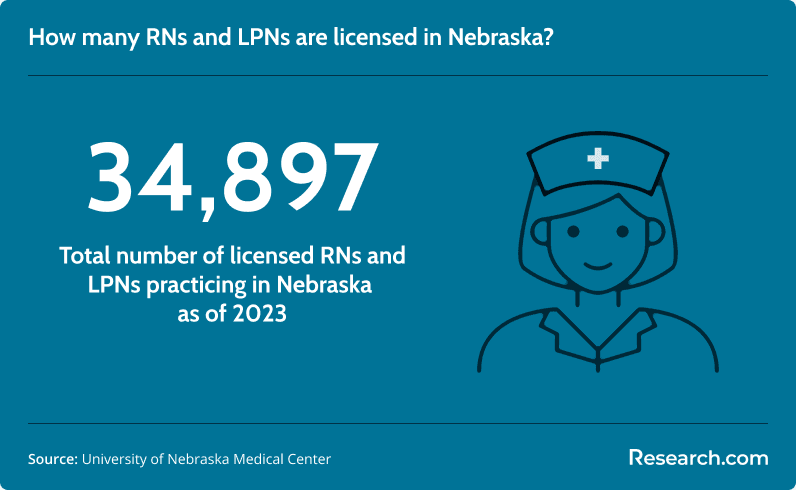
As of 2023, Nebraska had 34,897 licensed RNs and LPNs practicing in the state. Legal practice depends on holding the correct credential for the work being performed. Nebraska recognizes several nursing and nursing-support roles, each with its own education, testing, and supervision requirements.
- Registered Nurses: RNs provide patient assessment, medication administration, education, care coordination, documentation, and support for treatment plans. To become an RN in Nebraska, candidates usually complete an accredited ADN or BSN program and pass the NCLEX-RN. Students looking for efficient RN options can compare fastest RN degree programs, but speed should never outweigh accreditation, clinical quality, and licensure eligibility.
- Licensed Practical Nurses: LPNs deliver essential bedside care, monitor patient conditions, assist with daily care, and work under the supervision required by their setting and scope of practice. Nebraska LPN candidates complete a state-approved practical nursing program and pass the NCLEX-PN.
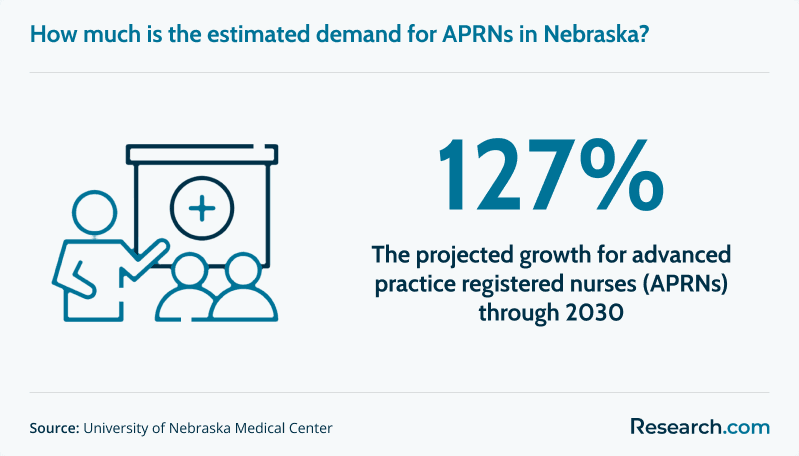
- Advanced Practice Registered Nurses: APRNs include nurse practitioners, clinical nurse specialists, certified registered nurse anesthetists, and certified nurse midwives. These roles generally require graduate nursing education and national certification in the specialty area. Because APRN scope and practice authority rules are role-specific and can change, applicants should verify current requirements directly with Nebraska licensing authorities before enrolling.
- Certified Nursing Assistants: CNAs are not licensed nurses, but they are important members of care teams. They assist with basic patient needs after completing approved training and passing a competency exam.
| Role | Typical Education | Exam or Credential | Common Work Settings |
| CNA | State-approved nursing assistant training | Competency exam | Long-term care, hospitals, rehabilitation centers, home care |
| LPN | Practical nursing program | NCLEX-PN | Clinics, long-term care, physician offices, hospitals |
| RN | ADN, BSN, or approved diploma route | NCLEX-RN | Hospitals, outpatient centers, public health, schools, specialty clinics |
| APRN | Graduate nursing degree | National specialty certification and state recognition | Primary care, anesthesia, women’s health, mental health, specialty practice |
What are the licensing requirements for nurses in Nebraska?
Nebraska nursing licensure starts with education. Candidates must graduate from an approved nursing program, such as a BSN, ADN, or diploma program that meets state expectations. The Bureau of Labor Statistics estimates at least 1,700 annual job openings for nurses in Nebraska through 2032, but those openings are available only to applicants who meet the licensing standards for the role.
After completing the education requirement, applicants must pass the correct National Council Licensure Examination. Registered nurse candidates take the NCLEX-RN, while practical nurse candidates take the NCLEX-PN.
Licensure also requires an application to the Nebraska Department of Health and Human Services. Applicants should be prepared to provide the following:
- Official proof that the required nursing education has been completed
- NCLEX results for the appropriate license type
- A completed fingerprint-based background check
- Any additional materials requested for endorsement, temporary licensure, or advanced practice recognition
The background check cost in Nebraska can range from $45 to $60, depending on the provider. Applicants should also plan for a licensing fee of approximately $100. Because fees can change, candidates should confirm the current amount with Nebraska DHHS before submitting an application.
What continuing education do Nebraska nurses need?
Continuing education helps nurses keep their knowledge current, maintain competency, and comply with renewal rules. Nebraska nurses should track renewal deadlines early instead of waiting until the end of the cycle.
- Required CEUs: Nebraska requires registered nurses to complete a minimum of 20 continuing education units every two years.
- Approved providers: Nurses should use providers accepted by the Nebraska Board of Nursing and choose courses that support safe, ethical, and current patient care.
- Specialty development: CEUs can also support movement into areas such as gerontology, critical care, mental health, and other high-need practice areas.
- Employer assistance: Some healthcare employers may offer reimbursement, paid training time, or access to continuing education resources.
The safest approach is to keep certificates, course descriptions, completion dates, and provider details in one place. That documentation can help if the state requests proof during renewal or audit.
What types of nursing licenses are available in Nebraska?
Nebraska offers several license and authorization routes for nurses at different career stages. The best option depends on whether you are entering the profession for the first time, moving from another state, or seeking advanced practice authority.
- Registered Nurse license: This license is for nurses who provide broader assessment, planning, medication, education, and care coordination services. RN candidates complete an approved nursing program and pass the NCLEX-RN.
- Licensed Practical Nurse license: This option can provide a shorter route into nursing care. LPNs monitor patients, assist with care needs, and perform duties allowed within their scope. Candidates must pass the NCLEX-PN. There were 5,5,32 LPNs employed in Nebraska as of 2023.
- Licensure by endorsement: Nurses already licensed in another state may be able to apply to practice in Nebraska without retaking the NCLEX if they meet Nebraska’s endorsement requirements.
- Temporary license: Nebraska may offer temporary licensure for eligible applicants pursuing permanent licensure by endorsement. This can help qualified nurses begin work while the full application is being reviewed.
Students comparing nursing with support roles may also want to review the average certified nurse assistant (CNA) salary by state to understand the earnings difference between nursing assistant positions and licensed nursing roles.
Can a Compact nurse practice in Nebraska?
Yes. Nebraska is a Nurse Licensure Compact member state. A nurse who holds a valid multistate compact license from another participating state may be able to practice in Nebraska without applying for a separate Nebraska nursing license, provided all compact conditions are met.
The compact can be especially helpful for travel nurses, telehealth nurses, military spouses, and nurses relocating from another compact state. However, compact eligibility is not automatic for every nurse. The nurse must hold a qualifying multistate license, maintain the proper primary state of residence, and follow the laws governing practice in Nebraska when caring for Nebraska patients.
- Mobility: The compact makes it easier for eligible nurses to work across participating states and can help healthcare systems respond to staffing needs.
- Administrative efficiency: Nurses and employers may avoid duplicate licensing steps when compact privileges apply.
- Patient access: Flexible licensure can support staffing in areas where nurses are harder to recruit, including rural and underserved communities.
Career changers who do not yet hold a nursing license should not confuse compact practice with entry into nursing. They still need approved education, NCLEX success, and licensure. Non-nurses considering graduate-entry pathways can explore online direct entry MSN programs for non-nurses as one possible route into the field.
Can you practice as a nurse without a license in Nebraska?
No. You cannot legally practice as a nurse in Nebraska without the required license or authorization. Nursing is regulated because patients rely on nurses for clinical judgment, medication safety, assessment, documentation, and timely response to changes in condition.
- Legal risk: Using a nursing title or performing nursing duties without authorization can violate Nebraska law.
- Patient safety risk: A license confirms that the nurse completed approved education, passed the required exam, and is accountable to professional standards.
- Career risk: Attempting to work outside legal boundaries can damage future licensure and employment prospects.
- Allowed alternatives: Unlicensed individuals may work in non-nursing support roles when properly trained and supervised. For example, orderlies had a median annual wage of $34,520 in 2022, but these positions do not carry the same authority as licensed nursing roles.
One Nebraska nurse described NCLEX success as the moment her education became a professional responsibility: “Passing the NCLEX did not just mean I finished a test. It meant patients could trust that I had met the standard to care for them safely.”
That distinction matters. Nursing licensure is not a formality; it is the state’s way of protecting patients and defining who is qualified to provide nursing care.
What is the state of nursing in Nebraska?
Nursing in Nebraska is shaped by three major realities: steady healthcare demand, rural staffing challenges, and a need for nurses who can work across different care settings. The Nebraska Department of Labor identifies healthcare as one of the state’s fastest-growing industries, and demand is influenced by an aging population and more patients living with chronic conditions.
Nebraska has over 30,000 licensed nurses, but statewide totals do not tell the whole story. Some hospitals, clinics, and long-term care settings have more difficulty recruiting than others, especially in rural communities. Reports have also pointed to shortages in certain specialties and geographic areas, which can increase pressure on the nurses already working there.
For prospective students, Nebraska can be appealing because the cost of living is generally lower than the national average. Housing, transportation, and daily expenses may be more manageable than in many higher-cost states, although personal budgets vary by city, family situation, and commuting needs.
Salary also varies. Registered nurses in Nebraska earn around $79,000 annually on average, while LPNs make approximately $56,000. Major healthcare employers, including CHI Health and Nebraska Medicine, create opportunities for clinical practice, specialization, leadership, and career mobility.
Current trends affecting Nebraska nurses
- Rural access needs: Rural hospitals and clinics may offer broad clinical exposure, but staffing shortages can increase workload and require flexibility.
- Telehealth and digital care: Nurses increasingly need comfort with electronic records, remote communication, patient education tools, and technology-supported care.
- Higher expectations for education: ADN graduates can enter RN practice, but BSN completion may support advancement or employer preference in some settings.
- Specialty demand: Aging and chronic disease trends can increase the value of skills in gerontology, mental health, care coordination, outpatient care, and chronic disease management.
Could Pharmacy Be a Complementary Healthcare Career Option in Nebraska?
Pharmacy can be a strong alternative or complementary healthcare path for people who are interested in medication safety, patient counseling, drug interactions, and therapeutic decision-making. While nurses focus broadly on patient assessment and care delivery, pharmacists specialize in medication management and collaborate with physicians, nurses, and other clinicians in hospitals, clinics, long-term care facilities, and community pharmacies.
This path may fit students who enjoy chemistry, detail-oriented problem solving, patient education, and clinical collaboration but do not want the same bedside-care responsibilities that nurses often carry. If you are comparing healthcare careers before committing to nursing school, review how to become a pharmacist in Nebraska to understand the education and licensing expectations for that profession.
What Are the Bridge Options for Paramedics to Transition to Registered Nursing?
Paramedics often enter nursing with valuable emergency care experience, patient assessment skills, and confidence in high-pressure situations. A paramedic-to-RN bridge program can help convert that background into a structured nursing education pathway by adding the coursework, clinical experiences, and nursing theory needed for RN licensure.
Before choosing a bridge program, paramedics should compare admission requirements, credit for prior learning, clinical placement support, program length, NCLEX preparation, and total cost. The best option is not always the shortest one; it is the one that prepares you for Nebraska licensure and safe RN practice. To compare route options, review paramedic to RN bridge programs.
What is the job outlook for nursing in Nebraska?
The job outlook for nursing in Nebraska is positive, with demand connected to population aging, chronic disease care, rural access needs, and healthcare system staffing requirements. The Nebraska Department of Labor projects 8% growth in nursing jobs from 2022 to 2032.
Registered nurses in Nebraska earn an average of $79,000 per year, though actual pay can differ by region, shift, specialty, employer, and education level. Nurses in outpatient care centers and specialty hospitals may earn higher salaries, sometimes exceeding $80,000. Nurse anesthetists are among the highest-paid nursing professionals, with salaries averaging over $150,000, while LPNs typically earn around $56,000.
Education can influence long-term earning potential. RNs who complete graduate study through options such as the shortest RN to MSN programs online may qualify for advanced roles that pay more than many baccalaureate-level positions. However, salary is never guaranteed, and students should compare tuition, debt, time away from work, local employer needs, and licensing requirements before enrolling.
| Career Factor | What It Means for Nebraska Nurses | Question to Ask Before Choosing a Path |
| Location | Rural and urban areas may offer different workloads, specialties, and recruitment needs. | Do I want broad rural practice exposure or a larger urban hospital system? |
| Education level | ADN, BSN, and graduate credentials can lead to different advancement options. | Will my target employer prefer a BSN or higher degree? |
| Specialty | Advanced and specialty roles may offer higher pay but require more training. | Am I willing to invest in certification or graduate education? |
| Schedule | Nursing may involve nights, weekends, holidays, on-call work, or rotating shifts. | Which settings match my family, health, and work-life needs? |
What Professional Associations Can Boost My Nursing Career in Nebraska?
Professional associations can help Nebraska nurses build relationships, find mentors, stay current on policy issues, access continuing education, and learn about specialty practice. Membership can be useful for students, new graduates, experienced bedside nurses, nurse leaders, and advanced practice nurses.
Associations are most valuable when you use them actively. Attend events, join committees, participate in continuing education, ask about advocacy priorities, and connect with nurses working in the specialties that interest you. Nurses who want to pair professional networking with academic advancement may also compare affordable RN to BSN programs to strengthen long-term career options.
What alternative healthcare roles can complement my nursing career in Nebraska?
Nursing is not the only healthcare path that can lead to stable work in Nebraska. Some nurses and nursing students also build skills in healthcare administration, informatics, quality improvement, case management, coding, compliance, or revenue cycle operations. These areas can be useful for nurses who want less physically demanding work, more predictable schedules, or a future move away from direct bedside care.
Medical billing and coding is one example of a healthcare-adjacent field that relies on accuracy, documentation knowledge, and understanding of healthcare operations. If you are considering a complementary credential or a backup healthcare pathway, review how to become a medical biller and coder in Nebraska.
What Advantages Does the LVN Pathway Offer for Launching a Nursing Career in Nebraska?
The LVN pathway can appeal to students who want a shorter, hands-on entry point into nursing-related care. It may be less expensive and faster than a full RN route, and it can help students gain patient-care experience before deciding whether to continue into a bridge program.
The trade-off is scope and mobility. LVNs and LPNs generally have more limited responsibilities than RNs and may need additional education to qualify for broader clinical roles, leadership opportunities, or advanced practice programs. Students should compare state terminology, program approval, and licensing rules carefully. For a step-by-step overview, see how to become an LVN in Nebraska.
Can Online Nursing Programs Enhance My Career in Nebraska?
Online nursing programs can help Nebraska students and working nurses complete coursework with more flexibility, especially for RN-to-BSN, MSN, and some bridge programs. Online delivery may reduce commuting and make it easier to keep working while studying.
However, nursing cannot be learned entirely online. Students must verify clinical placement requirements, state authorization, accreditation, simulation expectations, faculty access, and whether the program meets Nebraska licensure or advancement requirements. Prospective students comparing flexible options can start with the best online nursing programs in Nebraska.
How long does it take to complete the nursing licensure process in Nebraska?
The Nebraska nursing licensure process can take a few weeks to a few months after graduation, depending on how quickly the applicant submits complete materials, schedules the NCLEX, receives exam results, and clears the background check and state review.
The education portion takes longer than the licensing review itself. Practical nursing may be completed more quickly than RN education, an ADN typically takes two years, a BSN usually takes about four years, and advanced practice education requires additional graduate study. Once the program is complete, delays often come from missing transcripts, incomplete applications, background check timing, NCLEX scheduling, or unresolved documentation issues.
Applicants can reduce delays by reading the requirements for nursing licensure in Nebraska, ordering transcripts early, confirming legal name consistency across documents, completing fingerprints promptly, and checking the application portal regularly.
How to Choose the Right Nurse Practitioner Path in Nebraska
Choosing a nurse practitioner path in Nebraska should begin with the population you want to serve. Family practice, adult-gerontology, psychiatric-mental health, women’s health, pediatrics, and acute care pathways prepare nurses for different patients, settings, and certification exams.
Program selection matters because NP preparation affects clinical confidence, certification readiness, and employment fit. Look for accredited programs with strong faculty support, appropriate clinical placements, transparent costs, and coursework in advanced pharmacology, advanced health assessment, diagnosis, and patient management. To compare options, review the guide to the best np programs in Nebraska.
Students should also evaluate Nebraska’s healthcare needs. Family practice, geriatrics, and mental health may be especially relevant where aging populations and rural access gaps shape care demand. Before enrolling, talk with Nebraska employers, current NPs, and program advisors about which specialties are most employable in your region.
Scope of practice is another essential issue. Do not assume that every advanced practice role has identical autonomy, prescribing authority, or collaboration requirements. Confirm current Nebraska rules through official licensing sources before choosing a specialty or signing an enrollment agreement.
| NP Decision Factor | Why It Matters | What to Ask |
| Population focus | Your certification and job options depend on your specialty track. | Which patients do I want to care for every day? |
| Clinical placements | Weak placement support can delay graduation or limit readiness. | Does the program arrange placements or require students to find them? |
| Certification alignment | The curriculum must prepare you for the correct national certification exam. | Which certification exam do graduates take? |
| State practice rules | Legal authority affects prescribing, diagnosis, and practice ownership. | What are the current Nebraska requirements for this APRN role? |
What are the available options for nursing education in Nebraska?
Nebraska students can choose from practical nursing programs, ADN programs, BSN programs, RN-to-BSN programs, bridge pathways, graduate nursing degrees, and some online or hybrid options. The right choice depends on your starting point, budget, desired license, and long-term career goal.
Students seeking practical nursing should compare approved options carefully, including clinical access and NCLEX-PN preparation. Those interested in flexible practical nursing routes can review online LPN programs in Nebraska. Future RNs should compare ADN and BSN programs by accreditation, NCLEX outcomes, cost, transfer credit, clinical sites, faculty support, and employer reputation.
Here's what nurses say about becoming a nurse in Nebraska
“Nebraska’s smaller healthcare communities were one of the reasons I chose nursing here. In many facilities, coworkers know one another well, and that teamwork can make patient care feel more personal.” Noemi
“I expected rural nursing to narrow my options, but it gave me a wider range of experience than I anticipated. I have worked with emergency cases, telehealth, and patients with very different needs.” Mark
“Flexible scheduling has made a real difference for me and several colleagues. It has helped us continue school, spend time with family, and manage the stress that can come with nursing.” Dawn
How can I finance my nursing and advanced practice education in Nebraska?
Nursing school costs can include tuition, fees, textbooks, uniforms, supplies, background checks, immunizations, testing fees, transportation to clinical sites, licensing fees, and lost work hours. Graduate nursing programs may add even higher tuition and clinical travel costs.
Start with federal financial aid, then compare school scholarships, state grants, employer tuition assistance, work-study, payment plans, and loan forgiveness options for healthcare workers. If you already work for a hospital or clinic, ask whether the employer offers tuition reimbursement in exchange for continued employment.
Advanced practice students should also estimate the full cost of prerequisites, graduate coursework, certification, licensure, and reduced work time during clinical rotations. Those considering NP roles can review nurse practitioner education requirements in Nebraska to better understand the academic steps that may affect cost.
Common financing mistakes to avoid
- Comparing only tuition and ignoring fees, supplies, testing, and clinical travel
- Choosing the cheapest program without checking accreditation and licensure eligibility
- Assuming online programs have no in-person costs
- Borrowing for graduate school without comparing realistic salary outcomes in your region
- Missing scholarship deadlines because financial planning started too late
How can I assess the quality and outcomes of nursing programs in Nebraska?
A nursing program should be judged by more than convenience or price. Program quality affects NCLEX readiness, clinical confidence, licensure eligibility, and employer trust.
Review accreditation status, NCLEX pass rates, faculty qualifications, simulation resources, clinical placement partnerships, student support, graduation outcomes, transfer policies, and total cost. Ask whether recent graduates found work in Nebraska and whether the program has relationships with local hospitals, clinics, and long-term care facilities. A helpful starting point is Research.com’s guide to the best nursing schools in Nebraska.
| Program Quality Factor | Why It Matters | Red Flag |
| Accreditation | Supports licensure eligibility, transferability, and employer recognition. | The school cannot clearly explain its nursing accreditation status. |
| NCLEX performance | Shows how well graduates are prepared for licensure testing. | Pass-rate information is unavailable or consistently weak. |
| Clinical placements | Clinical experience is essential for safe practice. | Students must find placements with little support. |
| Total cost | Debt affects career flexibility after graduation. | Fees and required expenses are not clearly disclosed. |
| Student support | Tutoring, advising, and exam preparation can influence completion. | High-pressure admissions staff provide vague answers about outcomes. |
How can I advance my career by becoming a nurse midwife in Nebraska?
Nurse midwifery can be a strong advanced practice option for RNs interested in pregnancy, birth, reproductive health, newborn care, and patient education. The role requires specialized graduate education, supervised clinical experience, certification preparation, and compliance with Nebraska practice requirements.
Before choosing this path, confirm that the program is properly accredited, offers appropriate maternal and newborn clinical placements, prepares graduates for certification, and aligns with Nebraska regulations. Mentorship is especially valuable because nurse midwives need both advanced clinical judgment and strong communication skills. For a focused overview, see how to become a nurse midwife in Nebraska.
Related Articles for Nearby States
- 2027 How to Become a Nurse in Kansas
- 2027 How to Become a Nurse in South Dakota
- 2027 How to Become a Nurse in Iowa
- 2027 How to Become a Nurse in Colorado
- 2027 How to Become a Nurse in Missouri
- 2027 How to Become a Nurse in Wyoming
- 2027 How to Become a Nurse in Minnesota
- 2027 How to Become a Nurse in Oklahoma
- 2027 How to Become a Nurse in North Dakota
- 2027 How to Become a Nurse in Illinois
Common Mistakes to Avoid When Becoming a Nurse in Nebraska
- Enrolling before verifying accreditation: Always confirm that the nursing program supports Nebraska licensure eligibility.
- Choosing only by speed: A fast program is not helpful if it lacks strong clinical training or NCLEX preparation.
- Ignoring clinical placement logistics: Ask where placements occur, how far you may need to travel, and whether the school arranges sites.
- Assuming every online program works for Nebraska: Online and out-of-state programs may not automatically meet Nebraska requirements.
- Underestimating non-tuition costs: Budget for testing, uniforms, transportation, supplies, background checks, and licensing fees.
- Waiting too long to prepare for NCLEX: Build exam preparation into your final semesters instead of treating it as a last-minute task.
- Relying only on rankings: Rankings can help, but accreditation, outcomes, affordability, and fit matter more.
Key Insights
- Becoming a nurse in Nebraska requires approved education, NCLEX success, state licensure, a background check, and ongoing renewal compliance.
- The best pathway depends on your goal: LPN for faster entry, ADN for a shorter RN route, BSN for broader advancement, and MSN or higher education for advanced practice roles.
- Nebraska’s Nurse Licensure Compact participation can help eligible multistate-license nurses practice in the state, but it does not replace initial nursing education or NCLEX requirements.
- Nursing demand in Nebraska is supported by workforce needs, rural staffing challenges, an aging population, and chronic disease care, with projected nursing job growth of 8% from 2022 to 2032.
- Program quality matters. Before enrolling, verify accreditation, NCLEX pass rates, clinical placement support, total cost, and whether the program meets Nebraska licensing requirements.
- Salary outcomes vary. Registered nurses average around $79,000 annually in Nebraska, LPNs make approximately $56,000, and nurse anesthetists average over $150,000, but individual earnings depend on role, location, specialty, and employer.
- The most costly mistake is choosing a program before checking licensure eligibility, clinical requirements, and realistic return on investment.
References:
- Nebraska Department of Health and Human Services (n.d.). Nurse Licensing.
- nursejournal.org (2023). RN Requirements and Licensing in Nebraska.
- U.S. Bureau of Labor Statistics. (2023). Occupational outlook handbook - Nursing assistants and orderlies.
Other Things You Need to Know About Nursing in Nebraska
To become a Registered Nurse (RN) in Nebraska in 2027, you need to complete a nursing education program approved by the Nebraska Board of Nursing, pass the NCLEX-RN exam, and apply for licensure through the Nebraska Department of Health and Human Services. Continuing education is required for license renewal.
In 2026, the costs for nursing licensure in Nebraska include the application fee of approximately $123 and the NCLEX examination fee of $200. Additionally, there may be costs for background checks and continuing education credits that are required for maintaining your nursing license.