2027 Fastest Registered Nurse (RN) Degree Programs

Co-Founder and Chief Data Scientist
Choosing the fastest registered nurse (RN) degree is not just about finding the shortest calendar. The right program must also prepare you for clinical practice, qualify you for the NCLEX-RN exam, meet state licensure expectations, and fit your budget and schedule. A program that saves a few months but lacks strong clinical placements, accreditation, or student support can cost you time later.
This guide is for future nurses, licensed practical nurses, career changers, and current RNs comparing accelerated ADN, BSN, RN-to-BSN, LPN-to-RN, and bridge options. You will learn how fast RN programs work, how much they cost, what employers expect, which programs are listed among the fastest options for 2027, and how to choose a nursing pathway without overlooking accreditation, clinical training, or NCLEX-RN preparation.
Quick Answer: What Is the Fastest Way to Become an RN?
The fastest common route to becoming a registered nurse is usually an accelerated Associate Degree in Nursing (ADN), which can take about 18 to 24 months. Some accelerated BSN programs can take around three years, while RN-to-BSN programs for licensed RNs may take one to two years. Regardless of the route, graduates must meet state requirements and pass the NCLEX-RN exam before practicing as registered nurses.
What are the main benefits of earning an RN degree?
- Career mobility: An RN credential can lead to work in hospitals, clinics, long-term care, schools, home health, public health, and specialty units.
- Flexible learning options: Some online and hybrid RN programs make it easier for working adults to complete coursework while arranging in-person clinical training locally or through school partners.
- Strong earning potential: Registered nurses earn a median annual income of $86,070, with higher pay possible in certain states, specialties, and advanced roles.
What can I expect from the fastest RN degrees?
Fast RN degrees compress the path to nursing licensure by focusing on essential nursing science, clinical judgment, patient safety, communication, pharmacology, and hands-on care. Students should expect a demanding schedule that combines lectures, labs, simulation, exams, care plans, and supervised clinical rotations. Common courses include anatomy, physiology, microbiology, pharmacology, nursing fundamentals, medical-surgical nursing, mental health nursing, and maternal-child or pediatric care.
The average tuition is about $300 to $500 per credit hour, although total program pricing varies widely by school, location, program type, fees, and whether you qualify for in-district or in-state rates. An ADN can often be completed in about 18 to 24 months, while an accelerated BSN may take around three years. These programs are built for speed, but they still require clinical readiness and licensure preparation.
| RN pathway | Best for | Typical pace stated in this guide | Main decision point |
| Accelerated ADN | Students who want the quickest entry-level RN route | About 18 to 24 months | Confirm accreditation, NCLEX-RN outcomes, and clinical placement quality |
| Accelerated BSN | Students who want a bachelor’s-level nursing credential sooner | Around three years | Compare higher cost against broader employer preferences and future graduate study plans |
| RN-to-BSN | Licensed RNs who already hold an ADN or nursing diploma | One to two years | Look for flexible scheduling, transfer credit policies, and employer tuition support |
| LPN-to-RN bridge | Licensed practical nurses moving into RN practice | Varies by program | Check credit for prior nursing experience and state licensure alignment |
Where can I work with an RN degree?
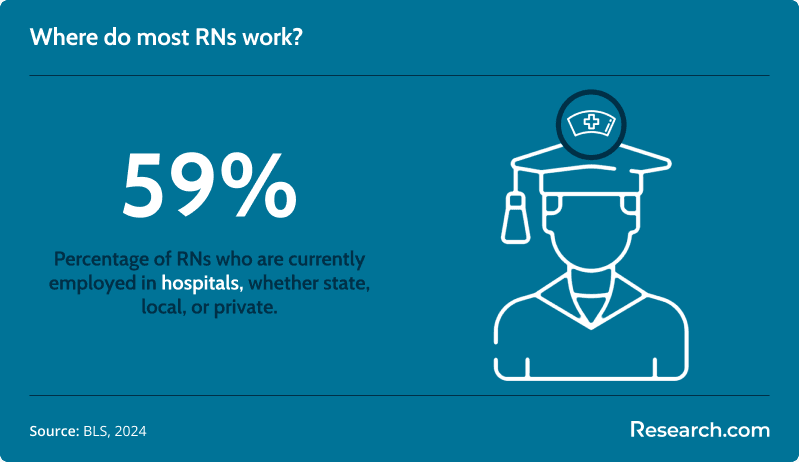
Registered nurses work wherever patients need assessment, monitoring, education, coordination, and hands-on care. Hospitals remain the largest employment setting, with opportunities in emergency departments, surgery, pediatrics, intensive care, maternity care, telemetry, and medical-surgical units. RNs also work in outpatient clinics, long-term care facilities, public health agencies, schools, government programs, home health, hospice, correctional healthcare, and community-based organizations.
Data published by the BLS in 2024 identified the largest employers of RNs as follows:
- Hospitals; state, local, and private (59%)
- Ambulatory healthcare services (18%)
- Nursing and residential care facilities (6%)
- Government (5%)
- Educational services; state, local, and private (3%)
How much can I make with an RN degree?
The annual median salary for registered nurses is $86,070. Entry-level RNs usually start at around $60,000 annually, but pay can rise with experience, location, shift differentials, specialty practice, and advanced education. RNs in California often make over $100,000 annually because of the high cost of living and regional labor conditions. Advanced roles such as nurse anesthetists or nurse practitioners require additional education but can lead to yearly salaries of $120,000 or more.
In 2024, the BLS reported these top-paying states for RNs based on annual median salaries:
- California ($137,690)
- Hawaii ($119,710)
- Oregon ($113,440)
- Washington ($111,030)
- Alaska ($109,210)
- Fastest Registered Nurse (RN) Degree Programs for 2027
- How long does it take to complete an RN degree?
- How does an online RN degree program compare to an on-campus program?
- What is the average cost of an RN degree?
- What are the financial aid options for students enrolling in an RN degree?
- What are the prerequisites for enrolling in an RN degree?
- What courses are typically in an RN degree program?
- What types of specializations are available in RN degree programs?
- How to choose the best RN degree program?
- What career paths are available for graduates of the fastest RN degree programs?
- Are there any challenges associated with fast-track RN programs?
- Which states host the best colleges for registered nurses?
- How can fast RN degrees pave the way for advanced practice roles?
- What is the job market for graduates with an RN degree?
- How do fastest RN programs balance an accelerated pace with comprehensive training?
- Which RN to BSN Program Offers the Fastest Track to Career Advancement?
- How does a strong biology background enhance success in fast-track RN programs?
- How do the fastest RN programs address healthcare technology trends?
- How can non-nurses transition to nursing?
- How do online RN programs prepare you for the future of nursing?
- Can LPNs Seamlessly Transition to an RN Role?
- Can an RN Degree Open Doors to Public Health Leadership?
- What skills do employers look for in registered nurses?
Fastest Registered Nurse (RN) Degree Programs for 2027
How do we rank our schools?
Research.com evaluates nursing programs using data from established education sources, including the IPEDS database, Peterson's database, the College Scorecard database, and the National Center for Education Statistics. The goal is to help readers compare accelerated RN options using transparent school and program information rather than marketing claims alone. You can review the broader ranking process on Research.com's methodology page.
1. Denver College of Nursing
Denver College of Nursing offers an Associate Degree in Nursing program at its main campus for students who satisfy prerequisite requirements. The 18-month curriculum combines nursing coursework, general education credits from accredited institutions, and practical learning experiences. Graduates who complete the ADN can sit for the NCLEX-RN® exam. The program emphasizes clinical skills, communication, decision-making, ethical practice, and the application of current nursing knowledge across patient populations.
- Tracks/Concentrations: ADN, BSN, RN-BSN
- Duration: At least 18 months for the ADN, 21 months for the BSN, at least 15 months for RN-BSN
- Tuition: $44,220 total cost for an ADN, $58,651 for BSN, $14,668.60 for RN-BSN
- Accreditation: Higher Learning Commission (HLC), Accreditation Commission for Education in Nursing (ACEN), Commission on Collegiate Nursing Education (CCNE)
2. University of Charleston
The University of Charleston offers a hybrid Associate Degree of Nursing designed for non-traditional learners preparing for RN practice. The 16-month format uses weekend classes, clinical experiences, and online coursework, with cohorts beginning in fall, spring, and summer. Students train in healthcare facilities and learn from faculty with varied nursing backgrounds. The program reports more than 3,000 nursing graduates across its 50-year history and prepares students for the NCLEX-RN exam.
- Tracks/Concentrations: ADN, BSN, RN-BSN
- Duration: At least 16 months for the ADN, 4 years for the BSN, at least 3 semesters for RN-BSN
- Tuition: $22,800 total cost for an ADN, $30,400 for BSN, $11,400 for RN-BSN
- Accreditation: HLC, ACEN
3. Howard College
Howard College provides a two-year ADN program for students seeking RN licensure. The second year includes online lectures, and the program is accredited by the Texas Board of Nursing and the Texas Higher Education Coordinating Board. Graduates may apply for the State Board Examination after completing program requirements. Howard College also emphasizes service to its 13-county region and supports economic, cultural, and personal development through nursing education.
- Tracks/Concentrations: ADN
- Duration: At least 24 months
- Tuition: $2,460 per 15 credit hours for in-district students, $4,320 for out-of-district students, $5,770 for non-residents
- Accreditation: ACEN
4. Midway University
Midway University offers an ADN program that combines classroom learning, modern facilities, experienced instruction, and clinical training in Central Kentucky. Students prepare for the NCLEX-RN exam and build a foundation for entry-level practice or continued study. Midway also offers an RN to BSN pathway for nurses who want to advance after earning RN licensure.
- Tracks/Concentrations: ADN, RN-BSN, BSN
- Duration: At least 64 credit hours for the ADN, at least 12 months for the RN-BSN, at least 120 credit hours for the BSN
- Tuition: $13,250 per semester for full-time students, $295 per credit hour for RN-BSN students
- Accreditation: ACEN
5. East Ohio College
East Ohio College's nursing program is designed to prepare students for patient care through hands-on labs, local clinical experiences, and nursing-focused instruction. The curriculum highlights health promotion, therapeutic communication, professional nursing values, clinical skills, critical thinking, and compassionate care. It may suit students who want a direct route into nursing practice and are prepared for a structured, career-focused program.
- Tracks/Concentrations: RN
- Duration: At least 18 months for the RN program
- Tuition: $20,085 total cost
- Accreditation: Accrediting Bureau of Health Education Schools (ABHES), Ohio Board of Nursing
6. Rasmussen University
Rasmussen University offers nursing pathways for students preparing for patient-centered RN careers. The program blends classroom instruction, experiential learning, faculty guidance, and clinical decision-making practice. NCLEX preparation begins early, and students gain hands-on exposure intended to build confidence before entering professional nursing settings.
- Tracks/Concentrations: ADN, BSN, RN-BSN
- Duration: At least 21 months for the ADN program, at least 33 months for the BSN, at least 12 months for the RN-BSN
- Tuition: $432 per credit hour
- Accreditation: HLC, CCNE, ACEN in select campuses
7. West Coast University
West Coast University’s ADN program uses simulation labs, tutoring support, and a streamlined curriculum to prepare students for RN licensure. The program is designed for career changers who already hold a bachelor’s degree or have practical nursing experience. Graduates may sit for the NCLEX-RN exam after meeting program requirements.
- Tracks/Concentrations: ADN, BSN, RN-BSN, LPN-BSN
- Duration: At least 20 months for the ADN program, at least 39 months for the BSN, at least eight months for the RN-BSN, at least 34 months for the LPN-BSN
- Tuition: $56,332 total cost for the ADN
- Accreditation: CCNE
8. ECPI University
ECPI University offers an ADN program for students preparing to become registered nurses after passing the NCLEX-RN exam. The curriculum addresses legal, ethical, and regulatory responsibilities, clinical judgment, leadership, interdisciplinary collaboration, holistic care, healthcare technology, and professional development. Graduates may pursue roles such as charge nurse or floor nurse after gaining experience and meeting licensure requirements.
- Tracks/Concentrations: ADN, RN-BSN, Accelerated BSN, BS to BSN
- Duration: At least 18 months for the ADN program, at least 12 months for the RN-BSN, at least 2.5 years for the accelerated BSN, at least 11 months for the BS to BSN
- Tuition: $9,900 per semester for the AND, $250-$444 per credit hour for RN-BSN, $9,000 per semester for the accelerated BSN, and $10,912.50 per quarter for BS to BSN
- Accreditation: ACEN
9. Herzing University
Herzing University offers an accelerated ADN pathway intended to prepare students for RN practice in two years or less. Coursework focuses on nursing fundamentals, health assessment, evidence-based care, and career-ready clinical skills. The program supports non-traditional students through flexible scheduling, face-to-face faculty instruction, rolling admissions, student services, and career coaching.
- Tracks/Concentrations: ADN, BSN, Accelerated BSN, LPN-BSN, RN-BSN
- Duration: At least 20 months for the ADN program, at least 20 months for the accelerated BSN, at least 16 months for the LPN to BSN, at least 12 months for the RN-BSN,
- Tuition: $695 per credit hour, cost varies per location
- Accreditation: ACEN
10. Hartwick College
Hartwick College's nursing program combines liberal arts learning with nursing preparation in communication, critical thinking, therapeutic care, professionalism, teamwork, evidence-based practice, and ethical decision-making. Students prepare to work in changing healthcare environments and use evolving healthcare technologies while developing the habits needed for lifelong learning.
- Tracks/Concentrations: Accelerated BSN
- Duration: At least 3 years for the accelerated BSN
- Tuition: $1,725 per credit hour
- Accreditation: CCNE
What Graduates Say About Accelerated RN Degrees
-
: "
"The quickest RN degree I found was demanding, but the pace kept me focused. Clinical practice, theory, and skills labs all connected to what I now do with patients every day." - Selena
"
-
: "
"I chose a fast RN program after comparing several options. It was challenging, but the faculty support and organized schedule helped me finish sooner and feel prepared for nursing work." - Gregory
"
-
: "
"My accelerated RN program changed my career direction. The workload was heavy, but the structure and hands-on training gave me the confidence to enter practice." - Emilda
"
Key Findings
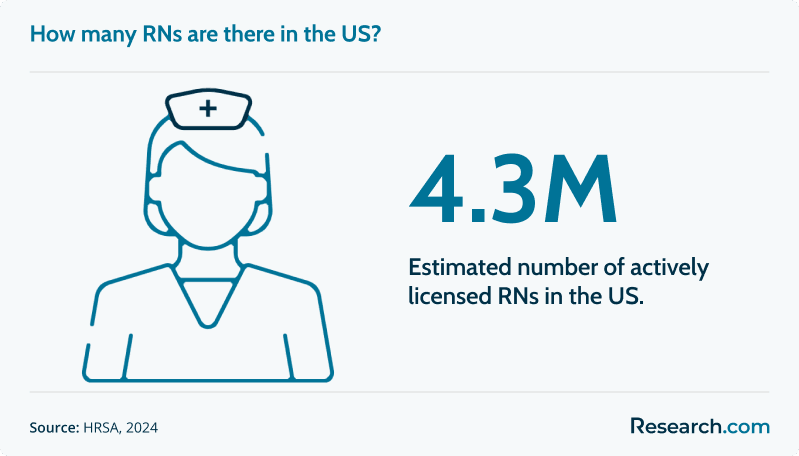
- There are approximately 4.3 million registered nurses in the US.
- An associate's degree is the most common degree for RNs, with 46% holding this qualification.
- The NCLEX-RN pass rate for first-time, US-educated nurses in 2024 is 94.15%.
- The job outlook for registered nurses is projected to grow by 6% from 2022 to 2032.
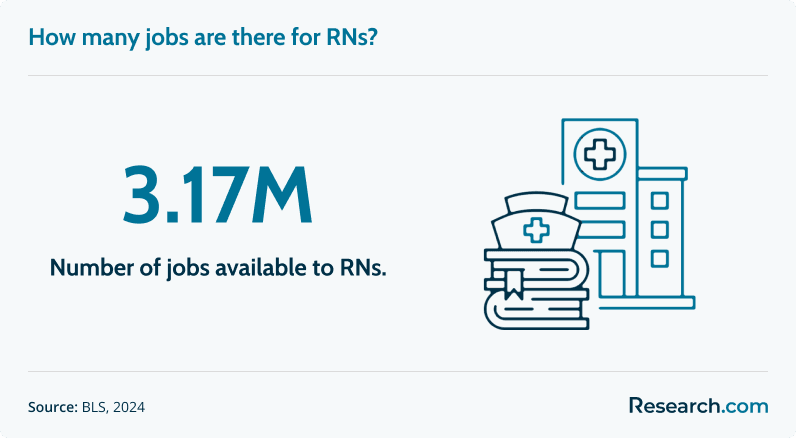
- There are currently 3.17 million jobs for registered nurses in the US.
How long does it take to complete an RN degree?
An RN degree can take 1 to 4 years depending on your starting point and credential goal. An ADN is usually the shortest direct route, often taking 18 to 24 months. An accelerated BSN can take about three years, while an RN-to-BSN pathway for nurses who already hold RN licensure may take one to two years.
Students who already work as nurses may compare the cheapest RN to BSN options to reduce cost while upgrading their credentials. Some accelerated BSN programs for students with a prior bachelor’s degree can be completed in 12 to 18 months, depending on the program structure and prerequisite completion.
How does an online RN degree program compare to an on-campus program?
Online and hybrid RN programs can be convenient, but nursing cannot be completed entirely through self-paced online coursework. Students still need labs, simulations, and supervised clinical training. The best format depends on your schedule, learning style, location, and access to approved clinical sites.
| Factor | Online or hybrid RN program | On-campus RN program |
| Flexibility | Often better for students balancing work, family, or long commutes | More structured class times and campus-based routines |
| Clinical training | Still required in person through approved sites or school-arranged placements | Often coordinated through nearby healthcare partners |
| Cost | May reduce commuting and relocation costs, though tuition varies | May include additional campus, transportation, and housing expenses |
| Support | Requires strong online advising, tutoring, and technology access | Provides face-to-face access to faculty, labs, and peer support |
| Best fit | Self-directed learners who need scheduling flexibility | Students who prefer in-person instruction and frequent campus contact |
- Flexibility: Online coursework can help students complete lectures and assignments around jobs or caregiving responsibilities.
- Cost-Effectiveness: Some online RN pathways reduce travel or relocation expenses, but students should compare total cost rather than tuition alone.
- Accessibility: Online options can widen access for students who do not live near a nursing campus. Nurses planning graduate study can also compare options such as the cheapest online MSN programs.
- Accelerated Pace: Some online and hybrid formats offer accelerated schedules, but faster does not mean easier.
- Technology Integration: Online programs often use digital tools, simulations, electronic learning platforms, and virtual case studies that mirror technology used in healthcare.
What is the average cost of an RN degree?
The average cost of an RN degree ranges from $6,000 to $80,000, depending on program type, school, residency status, fees, supplies, and clinical requirements. An ADN typically costs between $6,000 and $30,000 for the entire program. Accelerated BSN programs generally cost more, ranging from $40,000 to $80,000.
| Cost item | Why it matters |
| Tuition and mandatory fees | This is the largest visible cost, but it may not include every program expense. |
| Books, uniforms, supplies, and equipment | Nursing students often need scrubs, lab kits, stethoscopes, background checks, testing fees, and learning materials. |
| Clinical travel | Clinical sites may require commuting, parking, fuel, childcare, or schedule adjustments. |
| NCLEX-RN and licensure-related costs | Graduates should budget for exam and state licensure steps after finishing the program. |
| Lost income or reduced work hours | Accelerated programs can make full-time work difficult, which affects affordability. |
What are the financial aid options for students enrolling in an RN degree?
RN students may use a mix of grants, scholarships, federal loans, employer support, state aid, and military benefits. Before borrowing, compare total program cost, graduation requirements, NCLEX-RN preparation, and expected work hours during school.
- Federal Grants: Pell Grants provide need-based aid that does not have to be repaid.
- Scholarships: Nursing organizations such as the American Association of Colleges of Nursing (AACN) and the National Student Nurses' Association (NSNA) offer scholarships for eligible students.
- Federal Student Loans: Direct Subsidized and Unsubsidized Loans from the U.S. Department of Education may offer repayment protections and deferment options while enrolled.
- State Grants and Scholarships: Many states support residents pursuing nursing education. The Texas Nursing Scholarship Program is one example for students enrolled in nursing programs in Texas.
- Work-Study Programs: Eligible students can earn part-time income through federally supported work opportunities.
- Employer Tuition Reimbursement: Healthcare employers may help employees pay for nursing education, especially for workers already in patient care roles.
- Private Loans: Private loans can fill funding gaps, but they often cost more than federal loans and should be compared carefully.
- Military Benefits: The GI Bill and scholarships from organizations such as the Military Nurse Corps Association can support eligible military-connected students.
The chart below illustrates the most common education levels for RNs in 2024.
What are the prerequisites for enrolling in an RN degree?
Most fast RN programs require academic preparation, health and safety documentation, and evidence that you can handle a compressed nursing curriculum. Requirements vary, so always confirm details with the school and your state board of nursing.
- High School Diploma or GED: RN programs generally require proof of secondary education or an equivalent credential.
- Prerequisite Courses: Common prerequisites include anatomy, physiology, microbiology, and chemistry. Students who completed training through the most affordable medical billing and coding online schools may have useful healthcare exposure, although nursing prerequisites are usually still required.
- Minimum GPA: Many programs require a GPA around 2.5 to 3.0.
- Entrance Exams: TEAS or HESI scores may be used to evaluate readiness for nursing coursework.
- Background Check: Criminal background screening is commonly required for clinical placement and patient safety compliance.
- CPR Certification: Many schools require current CPR certification before clinical participation.
- Letters of Recommendation: Some programs request recommendations from instructors, employers, or healthcare professionals.
- Personal Statement or Essay: Applicants may need to explain their motivation for nursing and their career goals.
What courses are typically in an RN degree program?
RN programs combine science, nursing theory, clinical reasoning, patient care, and professional practice. Even accelerated programs must prepare students for safe nursing care and the NCLEX-RN exam.
- Anatomy and Physiology: Students study body systems and how structure relates to function.
- Microbiology: Coursework examines microorganisms, infection, disease processes, and prevention.
- Pharmacology: Students learn medication classes, effects, safety considerations, and administration principles.
- Nursing Fundamentals: This course introduces assessment, basic care, documentation, safety, hygiene, mobility, and patient communication.
- Medical-Surgical Nursing: Students learn to care for adults with acute and chronic medical conditions.
- Pediatric Nursing: Coursework addresses care for infants, children, and adolescents, including development and common illnesses.
- Mental Health Nursing: Students learn principles of psychiatric nursing, therapeutic communication, and care for patients with mental health disorders.
- Community Health Nursing: This area focuses on prevention, population health, and community-based care, which can connect to public health pathways such as the cheapest MPH online programs.
What types of specializations are available in RN degree programs?
Most entry-level RN degrees focus on generalist preparation, but students may encounter specialty clinical rotations or later pursue specialty practice through work experience, certifications, or advanced education.
- Pediatric Nursing: Care for infants, children, and adolescents in hospitals, clinics, and schools.
- Geriatric Nursing: Care for older adults in long-term care, hospice, home health, and acute care settings.
- Critical Care Nursing: Care for patients with life-threatening conditions in ICUs and emergency departments.
- Oncology Nursing: Support patients receiving cancer treatment in hospitals, outpatient clinics, and cancer centers.
- Psychiatric Nursing: Provide nursing care in mental health facilities, psychiatric hospitals, and community programs.
- Neonatal Nursing: Care for newborns, including medically fragile infants in NICUs and maternity units.
- Surgical Nursing: Assist with preoperative, intraoperative, and postoperative patient care in surgical settings.
How to choose the best RN degree program?
The best fast RN program is the one that gets you to licensure efficiently without weakening clinical preparation. Do not choose only by speed. A slightly longer program with strong accreditation, clinical partnerships, NCLEX-RN preparation, and student support may be the better decision.
| Question to ask | Why it matters |
| Is the program accredited by ACEN or CCNE? | Accreditation can affect licensure, transfer credit, employer recognition, and graduate study options. |
| Does the program qualify graduates for the NCLEX-RN exam? | Passing the NCLEX-RN is required for RN licensure. |
| Where are clinical placements held? | Quality clinical sites help students build real patient care experience. |
| What are the NCLEX-RN pass rates? | Strong outcomes can indicate effective preparation, though pass rates should be viewed with other evidence. |
| What is the total cost, not just tuition? | Fees, supplies, travel, testing, and reduced work hours can change affordability. |
| How does the schedule work? | Accelerated programs may require daytime, evening, weekend, or full-time availability. |
| What support is available? | Tutoring, advising, simulation labs, remediation, and career services can affect completion. |
- Accreditation: Look for recognized nursing accreditation from ACEN or CCNE when applicable.
- Program Length: Fast-track programs may take 12-18 months in some cases, but verify whether prerequisites are included in that timeline.
- Cost: Compare tuition, fees, books, supplies, commuting, and clinical-related expenses.
- NCLEX-RN Pass Rates: Review outcomes for the NCLEX-RN exam before applying.
- Clinical Experience: Confirm that the program offers enough supervised experience across relevant care settings.
- Location: Even online programs may require in-person labs or clinical placements.
- Support Services: Ask about tutoring, academic coaching, job placement help, and remediation policies.
The chart below details the latest NCLEX-RN pass rates in 2024 by education level.
What career paths are available for graduates of the fastest RN degree programs?
Graduates of fast RN programs usually begin in entry-level RN roles and then build specialized, leadership, or advanced practice careers through experience, additional education, and certification.
- Registered Nurse (RN): Provide direct patient care, administer medications, monitor changes, educate patients, and coordinate with healthcare teams.
- Charge Nurse: Oversee nursing activity on a unit or shift after gaining clinical experience.
- Nurse Manager: Handle staffing, quality improvement, budgeting, operations, and policy implementation.
- Advanced Practice Registered Nurse (APRN): With graduate education, RNs may become nurse practitioners, clinical nurse specialists, nurse anesthetists, or nurse midwives. Students interested in family practice can compare affordable online FNP programs.
- Nurse Educator: Teach nursing students or train clinical staff after developing advanced expertise.
- Nurse Researcher: Study healthcare practices and patient outcomes in academic, hospital, or research settings.
- Public Health Nurse: Focus on prevention, health education, outreach, and community health programs.
Nursing is not the right fit for every student. The work can be physically demanding, emotionally intense, and highly regulated. If you are still comparing career directions, you may also review affordable fastest online business degrees, fastest online EdD programs, quickest online tech degrees, and quickest online psychology master's degree programs.
Are there any challenges associated with fast-track RN programs?
Fast-track RN programs can reduce time in school, but they also create pressure. Students may face heavy weekly reading, frequent exams, limited schedule flexibility, long clinical days, and little room to recover after poor performance. Clinical rotations may be compressed, so students need strong preparation before entering patient care settings.
Before enrolling, check accreditation, clinical site quality, faculty availability, remediation policies, and student support. Comparing structures such as an accelerated associates degree online can also help you decide whether a condensed format fits your learning style and responsibilities.
| Common mistake | Better approach |
| Choosing the shortest program without checking accreditation | Verify nursing accreditation and state board recognition before applying. |
| Looking only at tuition | Calculate fees, supplies, travel, testing, uniforms, and lost work income. |
| Assuming online means fully remote | Ask where labs, simulations, and clinical rotations take place. |
| Ignoring NCLEX-RN outcomes | Review pass rates and ask how the school supports students who struggle. |
| Underestimating the workload | Plan study time, clinical days, childcare, transportation, and backup support before classes begin. |
Which states host the best colleges for registered nurses?
State location can influence clinical opportunities, employer connections, licensure expectations, and access to healthcare systems. Programs in areas with strong hospital networks may offer broader clinical exposure, but students should still compare accreditation, outcomes, cost, faculty support, and state board approval.
State-by-state comparisons can help applicants understand regional differences in program quality, clinical access, and career potential. To compare options by location, review Research.com's guide to the best colleges for registered nurses.
How can fast RN degrees pave the way for advanced practice roles?
A fast RN degree can be the first step toward advanced nursing practice, but it is not the final credential for roles such as nurse practitioner, clinical nurse specialist, nurse anesthetist, or nurse midwife. Students who start with an ADN may later pursue BSN completion, MSN study, or bridge programs that build on their RN license.
Programs such as ADN to nurse practitioner programs can help nurses understand how an associate-level entry point may connect to graduate-level practice over time.
What is the job market for graduates with an RN degree?
Employment for registered nurses is expected to grow by 6% from 2022 to 2032, faster than the average growth rate of 3% for all occupations. About 193,100 job openings for registered nurses are projected each year, on average, over the decade. Demand is shaped by healthcare needs associated with an aging population, preventive care, chronic conditions such as diabetes and obesity, medical technology, and the broad role nurses play across care settings.
How do fastest RN programs balance an accelerated pace with comprehensive training?
Strong accelerated RN programs do not simply remove content to finish faster. They use structured sequencing, simulation labs, clinical partnerships, faculty monitoring, skills checkoffs, and NCLEX-RN preparation to keep students progressing toward safe practice. Accreditation and external review also help ensure that speed does not replace competence.
Licensed RNs who want to advance after an ADN can compare the fastest RN to BSN program options to strengthen leadership, evidence-based practice, and bachelor’s-level nursing knowledge.
Which RN to BSN Program Offers the Fastest Track to Career Advancement?
Accelerated RN-to-BSN programs are designed for working registered nurses who want a bachelor’s degree without stepping away from practice. The best option is not always the shortest; it should also recognize transfer credits, fit shift work, offer responsive advising, and support leadership or graduate school goals. To compare accessible options, review which school has the which school has the easiest RN to BSN program pathway for your needs.
How does a strong biology background enhance success in fast-track RN programs?
Students with a solid background in anatomy, physiology, microbiology, and related biological sciences may adapt more quickly to accelerated nursing coursework. Biology knowledge can make pharmacology, pathophysiology, assessment, and clinical reasoning easier to understand. Students who need to strengthen their foundation before nursing school may compare online biology degrees as a preparatory option.
How do the fastest RN programs address healthcare technology trends?
Modern nursing requires comfort with digital systems, patient monitoring tools, telehealth workflows, and simulation-based learning. Fast RN programs increasingly incorporate technology to prepare students for clinical environments where documentation, safety checks, remote care, and interdisciplinary communication depend on accurate digital use.
Electronic Health Records (EHR) Training
Students learn how to document patient information, navigate health record systems, protect privacy, and use digital records to support safe care.
Telehealth and Remote Care Practices
RN programs may introduce virtual assessment, remote monitoring, patient education through digital platforms, and telemedicine communication skills.
Simulation-Based Learning
Simulation labs and virtual scenarios allow students to practice emergencies, medication administration, communication, and clinical decision-making before working with patients.
Medical Device Proficiency
Students may train with infusion pumps, ventilators, monitors, and other equipment used in hospitals and clinical settings.
How can non-nurses transition to nursing?
Non-nurses can enter the profession through ADN, accelerated BSN, or direct-entry graduate pathways, depending on their prior education and career goals. An ADN is often a practical route for students starting from scratch because it prepares graduates for the NCLEX-RN exam and entry-level registered nursing practice.
Online ADN programs for non-nurses may offer flexible coursework, but students still need in-person clinical training. These programs typically take 2 to 3 years to complete, depending on prior coursework, enrollment pace, and program requirements. Students study anatomy, physiology, nursing fundamentals, pharmacology, and clinical care while completing supervised practice in healthcare settings.
Career changers should compare prerequisites, acceptance rates, clinical placement support, total cost, and licensure eligibility before applying. To explore entry routes, review online ADN programs for non nurses.
How do online RN programs prepare you for the future of nursing?
Online RN programs prepare students for modern nursing by combining flexible coursework with clinical competencies, digital tools, and current healthcare concepts. The strongest programs teach more than textbook nursing; they help students practice communication, documentation, interdisciplinary teamwork, evidence-based care, and technology-supported decision-making.
- Healthcare Technology: Students may use electronic health record practice systems, virtual simulations, and digital case studies.
- Telehealth Training: Programs may introduce remote assessment, patient coaching, virtual communication, and remote monitoring concepts.
- Advanced Specializations: Some programs offer elective or progression pathways in areas such as geriatric nursing, family health, and psychiatric care.
- Collaborative Learning: Online discussion, group cases, and interdisciplinary assignments can build teamwork skills used in real clinical practice.
- Adaptation to Healthcare Trends: Students may study patient-centered care, evidence-based practice, cultural competence, and quality improvement.
Students from non-nursing backgrounds who want an advanced route may also compare online MSN programs for non nurses, which can lead to graduate-level nursing preparation in less time for eligible applicants.
Can LPNs Seamlessly Transition to an RN Role?
Licensed Practical Nurses often bring bedside experience, patient communication skills, and familiarity with healthcare workflows. LPN-to-RN bridge programs build on that foundation with more advanced assessment, clinical reasoning, leadership, pharmacology, and RN-level patient management. Students should confirm whether prior LPN coursework transfers, how clinical hours are arranged, and whether the program meets state licensure requirements. For an accelerated bridge option, review the LPN to RN bridge program online.
Can an RN Degree Open Doors to Public Health Leadership?
An RN degree can support a move from bedside care into population health, prevention, education, outreach, and health systems work. RNs interested in broader community impact may later pursue graduate study in public health nursing, community health, or health leadership. To understand how nursing and public health intersect, explore what can you do with an MSN degree in public health.
What skills do employers look for in registered nurses?
Healthcare employers look for RNs who can provide safe clinical care, communicate clearly, manage time, use technology, and respond calmly under pressure. Technical knowledge matters, but bedside judgment and teamwork often determine day-to-day success.
- Clinical Expertise: Employers expect competence in assessments, medication administration, documentation, patient monitoring, and care planning.
- Communication Skills: Nurses must explain information clearly to patients, families, physicians, and other healthcare team members.
- Critical Thinking and Problem Solving: RNs need to recognize changes in patient condition, prioritize care, and act quickly when safety is at risk.
- Empathy and Compassion: Patient trust depends on respectful, attentive, and emotionally aware care.
- Adaptability and Time Management: Nurses often manage multiple patients, changing priorities, and unexpected clinical events.
- Technology Proficiency: Familiarity with electronic health records, monitoring systems, and clinical devices is increasingly important.
RNs who want to advance with a bachelor’s degree while continuing to work may compare online RN to BSN programs without clinicals, especially if they want a coursework-focused completion pathway.
Key Insights
- The fastest common route to RN licensure is often an accelerated ADN, commonly taking about 18 to 24 months, but graduates must still meet state requirements and pass the NCLEX-RN exam.
- Speed should not outrank accreditation, clinical placement quality, NCLEX-RN preparation, and student support.
- RN degree costs vary widely, from $6,000 to $80,000 depending on program type and school, so compare total cost rather than tuition alone.
- Online and hybrid RN programs can improve flexibility, but in-person labs and clinical rotations remain essential.
- Registered nurses earn a median annual income of $86,070, and employment is projected to grow by 6% from 2022 to 2032.
- Fast RN programs work best for students who can handle compressed coursework, strict schedules, and intensive clinical preparation.
- Students planning long-term advancement should consider how an ADN, BSN, RN-to-BSN, LPN-to-RN, or bridge program connects to future leadership, public health, or advanced practice goals.
References:
- Bureau of Labor Statistics (BLS). (2024a). 29-1141 Registered Nurses. Occupational Employment and Wage Statistics. BLS.
- Bureau of Labor Statistics (BLS). (2024b). Registered Nurses. Occupational Outlook Handbook. BLS.
- Health Resources & Services Administration (HRSA). (2024). 2022 National Sample Survey of Registered Nurses Snapshot. HRSA.
- National Council of State Boards of Nursing (NCSBN). (2024). Number of Candidates Taking the NCLEX® Examination and Percent Passing, by Type of Candidate. Statistics from NCSBN. NCSBN.
- Zippia. (2024). Registered Nurse Education Requirements. Zippia.
Other Things You Should Know About the Fastest RN Degrees
The main nursing accreditors are the Accreditation Commission for Education in Nursing (ACEN) and the Commission on Collegiate Nursing Education (CCNE). A legitimate RN program should also be approved by the state board of nursing where it operates, which affects eligibility for licensure and NCLEX-RN testing.
Prerequisites for the fastest RN programs in 2027 often include courses in biology, chemistry, and anatomy, alongside a high school diploma or GED. Some programs may also require completion of specific healthcare-related certifications or exams before enrollment.