
2027 Fastest Online Technology Degree Programs

Co-Founder and Chief Data Scientist
A note from the author, Imed Bouchrika, PhD, career planning expert:
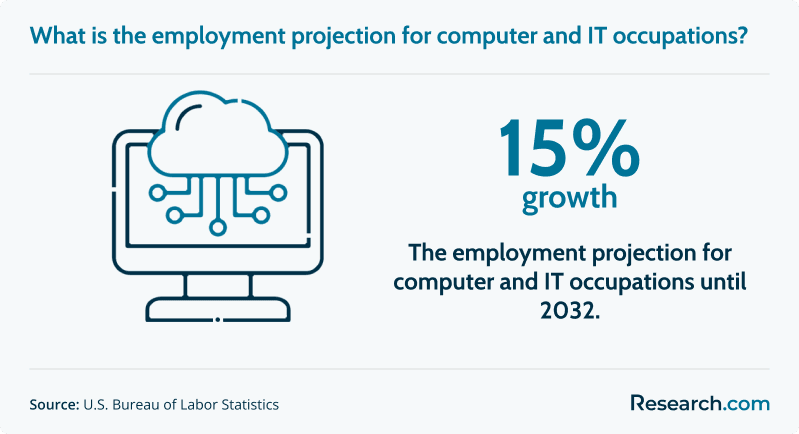
Choosing an online technology degree is no longer only about finding a convenient program. For many learners, the real question is whether they can earn a credible credential quickly, keep costs manageable, and gain skills that employers can verify through projects, experience, and certifications. According to 2023 data from the U.S. Bureau of Labor Statistics, employment in computer and IT occupations is projected to grow 15%, making program quality and career alignment especially important.
This guide is designed for working adults, transfer students, career changers, and first-time college students comparing fast online technology degrees for 2027. It explains what these programs cover, how long they can take, what they may cost, which schools offer accelerated options, and how to evaluate whether a program fits your career goals.
Quick Answer: Are Fast Online Technology Degrees Worth Considering?
Fast online technology degrees can be a practical choice if you want a structured path into fields such as information technology, cybersecurity, software development, data analytics, or IT management without relocating or leaving work. The best options are accredited, offer strong technical coursework, include hands-on projects or virtual labs, and make it possible to transfer credits or move at an accelerated pace.
They are not automatically the right choice for everyone. Students who need extensive in-person lab access, close campus networking, or a slower academic pace may prefer a traditional or hybrid program. The strongest decision is based on accreditation, total cost, completion timeline, transfer policies, career services, and how well the curriculum matches the job you want.
What are the benefits of getting an online technology degree?
- Career flexibility: An online technology degree can support entry into software development, cybersecurity, data analysis, IT support, systems administration, and technology management roles across many industries.
- Strong earning potential: Technology roles often offer competitive pay, with commonly cited median salary ranges from $80,000 to $120,000 per year for many in-demand positions, depending on role, experience, location, and specialization.
- Schedule control: Online programs can help students study while working, caregiving, serving in the military, or changing careers. Asynchronous courses and competency-based formats may make acceleration possible for prepared learners.
- Faster credential completion: Accelerated degree plans, generous transfer credit policies, and self-paced coursework can shorten the time to graduation for students who already have college credit or professional experience.
- Access to applied learning: Many online technology programs use virtual labs, coding assignments, simulations, capstone projects, and cloud-based tools to help students demonstrate practical skills.
What can I expect from online technology degrees?
Online technology degrees usually combine technical foundations with applied projects. Depending on the program, students may study programming, networking, databases, cybersecurity, systems analysis, cloud computing, IT project management, or data analytics. Associate programs tend to focus on entry-level technical skills, while bachelor’s programs usually add deeper theory, specialization options, and management or systems coursework.
Accelerated online technology degrees are designed for students who want to finish faster than a traditional timeline. Program lengths vary, but accelerated options may allow completion in as little as 1.5 to 2 years, while non-accelerated bachelor’s programs may take closer to 4 years of full-time study. Cost also varies by school, with average tuition costs often ranging from $10,000 to $20,000 per year, depending on tuition rate, fees, transfer credits, and program structure.
| What to compare | Why it matters | What to look for |
| Accreditation | It affects credit transfer, financial aid eligibility, employer recognition, and graduate school options. | Institutional accreditation from a recognized accreditor and, when relevant, program alignment with industry standards. |
| Program pace | Fast programs can save time, but the workload can be intense. | Accelerated terms, competency-based options, transfer credit policies, and realistic weekly time expectations. |
| Curriculum | The degree should match the jobs you are targeting. | Courses in programming, networking, cybersecurity, databases, data analytics, cloud tools, and project-based learning. |
| Total cost | Tuition is only one part of affordability. | Fees, books, technology costs, exam fees, transfer credit savings, and financial aid availability. |
| Career support | Online students still need help turning coursework into job opportunities. | Resume reviews, portfolio guidance, employer connections, internships, career coaching, and certification preparation. |
Where can I work with an online technology degree?
Technology graduates are hired by more than technology companies. Startups, software firms, cloud providers, cybersecurity vendors, hospitals, schools, banks, government agencies, manufacturers, retailers, and consulting firms all depend on technical talent.
In technology companies, graduates may pursue roles such as software developer, IT specialist, network administrator, help desk analyst, cybersecurity analyst, or systems support specialist. In healthcare, technology professionals may support healthcare information technology systems, manage electronic health records, and help protect sensitive data. In education, they may support learning platforms, instructional technology, information systems, and campus networks.
How much can I make with an online technology degree?
Earnings depend on the job title, location, employer, experience, certifications, and portfolio strength. Software developers typically earn around $110,000 annually, while cybersecurity analysts earn approximately $99,730 per year. Data scientists earn about $98,230 annually. Leadership roles, such as IT managers, can have median salaries of approximately $151,150 per year.
Some specialized sectors may also offer strong pay. Healthcare IT professionals can earn between $90,000 and $100,000 annually, depending on their specific responsibilities in medical data systems. Fintech salaries vary widely, but compensation can be strong because financial technology systems are central to modern banking, payments, risk management, and digital finance.
- Fastest Online Technology Degrees for 2027
- How long does it take to complete an online technology degree?
- Online technology degrees vs. on-campus programs
- Average cost of online technology degrees
- Financial aid options for online technology students
- Prerequisites for online technology degrees
- Common courses in online technology degrees
- Technology degree specializations
- How to choose the best online technology degree
- Career paths for online technology degree graduates
- Accreditation and employer recognition
- Challenges of earning an online technology degree
- Trends shaping online technology educationOnline learning challenges to review
- Hands-on learning in online technology programs
- Do employers value online technology degrees?
- Interdisciplinary study and technology degrees
- Health informatics and online technology degrees
- Job market for online technology degree graduates
- Long-term career growth and advancement
- How to stay competitive after graduation
- Return on investment for online technology degrees
- Certifications to pair with online technology degreesAdditional credential planning
Fastest Online Technology Degrees for 2027
How do we rank schools?
Because a technology degree can require a major investment of time and money, our ranking process emphasizes practical student decision factors. We review data points such as program availability, completion options, tuition, graduation indicators, and institutional information using sources that include the IPEDS database, Peterson's database, the College Scorecard database, and the NCES.
For a fuller explanation of how Research.com evaluates schools and programs, review our ranking methodology.
| School and program | Fastest listed timeline | Best fit for |
| Southern New Hampshire University Associate of Science in Information Technology | 18 months | Students seeking a shorter associate pathway into IT support or related entry-level roles. |
| Capella University Bachelor of Science in Information Technology | 22 months | Self-directed learners who can move quickly through competency-based or familiar material. |
| Colorado State University Global Bachelor of Science in Information Technology | 2 to 4 years | Working adults who want an online bachelor’s degree with applied IT coursework. |
| Liberty University Bachelor of Science in Computer Science Cybersecurity | 2.5 years | Students who want computer science foundations with cybersecurity emphasis. |
| University of Arkansas Grantham Bachelor of Science in Information Systems | 38 Months | Learners interested in the business side of information systems and IT operations. |
| Western Governors University Bachelor of Science in Information Technology | 3 to 4 years | Students who prefer competency-based progress and certification-aligned coursework. |
| Thomas Edison State University Bachelor of Science in Information Technology | 4 years with accelerated options available | Adult learners with prior credit who want flexible transfer options. |
| Regent University Bachelor of Science in Cybersecurity | 4 years | Students focused on network security, digital forensics, and ethical hacking. |
| Indiana Wesleyan University Bachelor of Science in Business Information Systems | 4 years | Students who want to combine business processes with technology systems. |
| Drexel University Bachelor of Science in Computing and Security Technology | 4 years | Learners who want computing, security, and applied experience through a co-op model. |
1. Southern New Hampshire University Associate of Science in Information Technology
Southern New Hampshire University offers an Associate of Science in Information Technology that can be finished in as little as 18 months. The program introduces students to core IT subjects, including networking, programming, and database management. It may suit learners who want a shorter credential that can support entry-level work or serve as a stepping stone toward a bachelor’s degree.
- Program Length: 18 months
- Tracks/Concentration: N/A
- Cost: $330 per credit unit
- Required Credits to Graduate: 60 credits
- Accreditation: New England Commission of Higher Education (NECHE)
2. Capella University Bachelor of Science in Information Technology
Capella University offers a Bachelor of Science in Information Technology that can be completed in as little as 22 months through its FlexPath learning format. The self-paced structure can benefit students who already understand some course material and want to spend more time on unfamiliar or difficult topics. Coursework includes areas such as information security, network technology, and IT project management.
- Program Length: 22 months
- Tracks/Concentration: N/A
- Cost: $20,000 flat tuition fee per 12-week billing session
- Accreditation: Higher Learning Commission (HLC)
- Required Credits to Graduate: 180 credits
3. Colorado State University Global Bachelor of Science in Information Technology
Colorado State University Global offers a Bachelor of Science in Information Technology that may be completed in 2 to 4 years. The curriculum emphasizes applied technology skills, including cybersecurity, data analytics, and IT management. Its online structure may work well for students who need to keep working while completing a bachelor’s degree.
- Program Length: 2 to 4 years
- Tracks/Concentration: N/A
- Cost: $375 per credit hour
- Required Credits to Graduate: 120 credits
- Accreditation: Higher Learning Commission (HLC)
4. Liberty University Bachelor of Science in Computer Science Cybersecurity
Liberty University offers a Bachelor of Science in Computer Science Cybersecurity that can be completed in just 2.5 years. The program combines computer science principles with cybersecurity practices, preparing students to understand software, systems, and defensive security concepts. Graduates may pursue roles where protecting digital assets is central to the work.
- Program Length: 2.5 years
- Tracks/Concentration: N/A
- Cost: $390 per credit unit
- Required Credits to Graduate: 121 credits
- Accreditation: Southern Association of Colleges and Schools Commission on Colleges (SACSCOC)
5. University of Arkansas Grantham Bachelor of Science in Information Systems
The University of Arkansas Grantham offers a Bachelor of Science in Information Systems that can be completed in 38 Months. The program is built around the connection between business needs and technology systems, making it relevant for students interested in IT management, systems analysis, and operational technology roles.
- Program Length: 38 Months
- Tracks/Concentration: N/A
- Cost: $305 per credit unit
- Required Credits to Graduate: 120 credits
- Accreditation: Distance Education Accrediting Commission (DEAC)
6. Western Governors University Bachelor of Science in Information Technology
Western Governors University offers a competency-based Bachelor of Science in Information Technology. Students progress by demonstrating mastery rather than simply spending a fixed amount of time in class. The curriculum covers areas such as network and security, software development, and data management, and it is designed to align with industry certifications.
- Program Length: 3 to 4 years
- Tracks/Concentration: N/A
- Cost: $3,625 per 6 months term
- Required Credits to Graduate: Competency based learning
- Accreditation: Northwest Commission on Colleges and Universities (NWCCU)
7. Thomas Edison State University Bachelor of Science in Information Technology
Thomas Edison State University offers a Bachelor of Science in Information Technology for adult learners and working professionals. The program can be completed in 4 years, with accelerated options available. Its transfer-friendly structure may help students with prior college coursework move more quickly through degree requirements.
- Program Length: 4 years (accelerated options available)
- Tracks/Concentration: N/A
- Cost: $427 per credit unit
- Required Credits to Graduate: 120 credits
- Accreditation: Middle States Commission on Higher Education (MSCHE)
8. Regent University Bachelor of Science in Cybersecurity
Regent University offers a Bachelor of Science in Cybersecurity focused on network security, digital forensics, and ethical hacking. This option may appeal to students who want a dedicated cybersecurity degree rather than a broader IT program with only a few security courses.
- Program Length: 4 years
- Tracks/Concentration: N/A
- Cost: $395 per credit unit
- Required Credits to Graduate: 120 credits
- Accreditation: Southern Association of Colleges and Schools Commission on Colleges (SACSCOC)
9. Indiana Wesleyan University Bachelor of Science in Business Information Systems
Indiana Wesleyan University offers a Bachelor of Science in Business Information Systems that combines technical and business coursework. Students study topics such as data management, information systems strategy, and IT project management, which can support roles in business analysis, systems administration, or technology project coordination.
- Program Length: 4 years
- Tracks/Concentration: N/A
- Cost: $455 per credit hour
- Required Credits to Graduate: 124 credits
- Accreditation: Higher Learning Commission (HLC)
10. Drexel University Bachelor of Science in Computing and Security Technology
Drexel University offers a Bachelor of Science in Computing and Security Technology that covers computing systems, network security, information assurance, and secure software development. Drexel’s co-op model can add practical experience, which may help students connect academic work with workplace expectations.
- Program Length: 4 years
- Tracks/Concentration: N/A
- Cost: $1438 per credit
- Required Credits to Graduate: 185 credits
- Accreditation: Middle States Commission on Higher Education (MSCHE)
What Graduates Say About Earning Technology Degrees Online
-
: "
Learning computer science online helped me keep my full-time job while completing my coursework. The ability to study on my own schedule and use digital course materials from anywhere made the degree manageable. I also gained technical skills that helped me pursue better opportunities in the technology field. - Farah
"
-
: "
My online computer science program gave me access to classmates from different locations and backgrounds. Discussion boards, shared projects, and virtual labs made the coursework feel more practical than I expected. The experience strengthened my coding skills and made larger technical projects feel less intimidating. - Henry
"
-
: "
I chose an online computer science degree because I was changing careers and needed a flexible format. The structured courses and faculty support helped me stay on track, and I was able to apply new problem-solving skills in my current job almost immediately. - Louise
"
Key Findings
- Online technology degree graduates may pursue software development, cybersecurity, data analysis, IT support, systems administration, and IT management roles.
- Commonly cited salaries for roles such as software developers, cybersecurity analysts, and IT managers range from $80,000 to $120,000 annually, though actual earnings vary by job, employer, location, and experience.
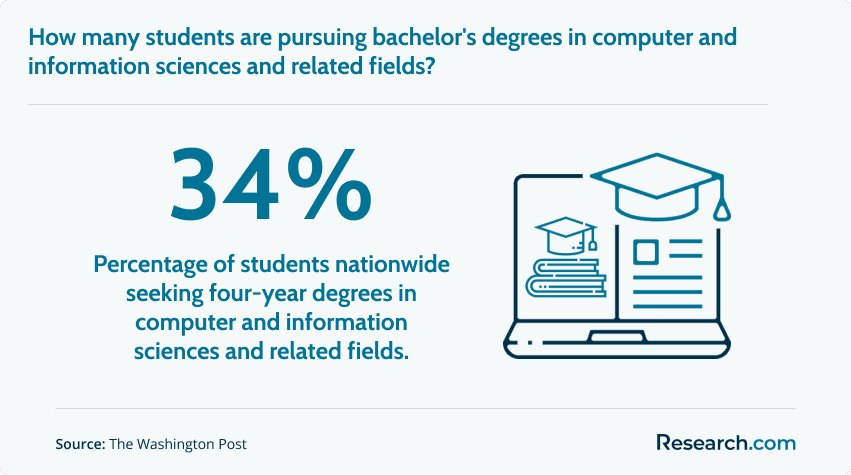
- 34% of students nationwide are seeking four-year degrees in computer and information sciences and related fields.
- Accelerated online technology programs can allow completion in 1.5 to 3 years, while average tuition costs may range from $10,000 to $20,000 per year, depending on the institution.
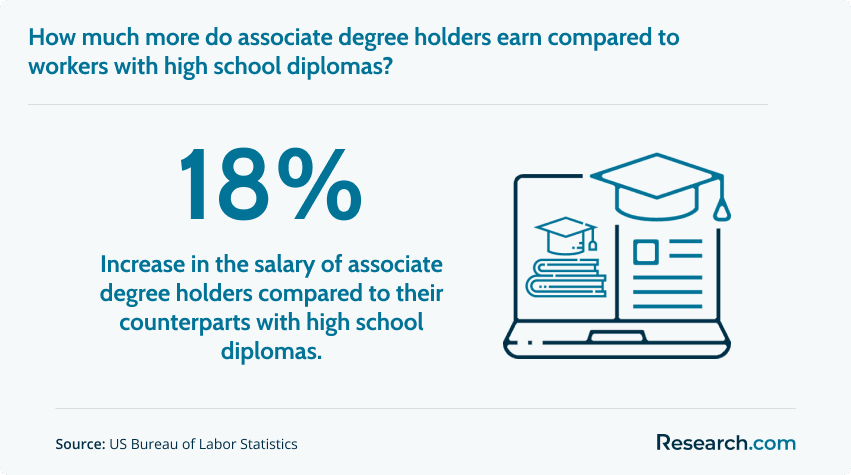
- Associate degree holders see an 18% increase in salary compared with workers whose highest credential is a high school diploma.
- 34,800 associate’s degrees were awarded by degree-granting postsecondary institutions in computer and information sciences and support services.
How long does it take to complete online technology degrees?
Accelerated online bachelor’s degrees in technology fields are often designed for students who want to finish in 1.5 to 3 years. This may be possible when students transfer previous credits, take heavier course loads, use self-paced formats, or receive credit for prior learning where allowed. Traditional online bachelor’s programs may still take up to 4 years of full-time study.
Associate degrees are usually shorter than bachelor’s programs and may be a good fit for students seeking quicker entry into IT support, help desk, or junior technical roles. However, bachelor’s degrees may offer broader long-term options in software development, cybersecurity, systems analysis, data, and management.
| Timeline factor | How it can speed up completion | What to verify before enrolling |
| Transfer credits | Prior college coursework may reduce the number of required credits. | Maximum transfer limit, accepted courses, minimum grades, and credit evaluation process. |
| Accelerated terms | Shorter course sessions may allow students to complete more classes per year. | Weekly workload, course availability, and whether required courses are offered frequently. |
| Competency-based learning | Students with existing skills may move faster by proving mastery. | Assessment format, tuition model, faculty support, and pacing expectations. |
| Professional or military credit | Some schools award credit for documented training or experience. | Portfolio requirements, ACE credit policies, and whether credits apply to major requirements. |
| Part-time enrollment | Part-time study can make school manageable but usually extends graduation. | Financial aid rules, course rotation, and maximum time to completion. |
How do online technology degrees compare to on-campus programs?
Online and on-campus technology degrees can both be credible when they come from accredited institutions and include rigorous coursework. The right format depends on how you learn, how much structure you need, and whether your career goals require in-person labs, local networking, or campus recruiting.
| Factor | Online technology degree | On-campus technology degree |
| Flexibility | Best for students who need to study around work, family, military service, or location limits. | Best for students who want fixed class times and a campus routine. |
| Pace | May offer accelerated, asynchronous, or self-paced options. | Often follows a traditional semester or quarter schedule. |
| Cost considerations | May reduce commuting and housing costs, though tuition and fees vary by school. | May include campus fees, housing, transportation, and local living expenses. |
| Hands-on learning | Uses virtual labs, simulations, cloud platforms, coding projects, and remote collaboration. | May offer physical labs, in-person tutoring, student clubs, and campus-based research opportunities. |
| Networking | Requires more intentional effort through online communities, LinkedIn, internships, and employer events. | Can provide easier access to campus events, faculty offices, clubs, and peer groups. |
Technology-related programs, including computer and information sciences, help prepare students for fields that rely on technical problem-solving and digital infrastructure. Fast-track online options can be especially useful for adults who need to gain marketable skills while continuing to work.
The chart below shows a breakdown of the number of associate’s degrees awarded by degree-granting postsecondary institutions.
What is the average cost of online technology degrees?
The average cost of accelerated online bachelor’s degree programs in technology commonly ranges from $10,000 to $20,000 per year. Actual cost depends on the school, tuition model, residency policy, transfer credits, course load, books, technology fees, certification exam costs, and whether the program charges by credit, term, or subscription period.
Students should compare total program cost rather than tuition alone. A program with a higher per-credit cost may still be affordable if it accepts many transfer credits. A flat-rate or term-based program may save money for students who can complete courses quickly, but it can become less efficient if progress is slow.
| Cost item | Why students overlook it | How to evaluate it |
| Tuition | Schools may list per-credit, per-term, or flat-rate tuition differently. | Calculate the full degree cost based on required credits or expected terms. |
| Fees | Online, technology, graduation, and course fees may not appear in headline tuition. | Ask for an itemized cost of attendance before applying. |
| Books and software | Some technical courses require paid platforms, software, or materials. | Confirm whether materials are included in tuition. |
| Certification exams | Some programs prepare students for certifications but may not include exam fees. | Ask whether vouchers are included or separate. |
| Time away from work | Accelerated programs can require significant study hours each week. | Estimate whether the schedule affects income, overtime, or family obligations. |
What are the financial aid options for students enrolling in online technology degrees?
Students in accredited online technology programs may be eligible for several types of financial aid. Availability depends on the institution, enrollment status, student eligibility, and whether the program meets aid requirements.
- Federal financial aid: Students in eligible accredited programs can apply for federal aid by completing the Free Application for Federal Student Aid (FAFSA). Aid may include grants such as the Pell Grant and Direct Subsidized Loans.
- Scholarships: Colleges and outside organizations may offer scholarships for online students, technology majors, adult learners, transfer students, or students with financial need.
- Employer tuition assistance: Some employers reimburse tuition or pay part of the cost for job-related degrees. Students should ask HR about covered programs, grade requirements, annual limits, and repayment obligations if they leave the company.
- Military benefits: Active-duty service members, veterans, and eligible dependents may qualify for tuition assistance, GI Bill benefits, or other education benefits through the Department of Veterans Affairs (VA).
- Private loans: Private loans can help cover remaining costs, but they should usually be considered after grants, scholarships, federal aid, employer assistance, and military benefits because terms and borrower protections vary.
What are the prerequisites for enrolling in online technology degrees?
Admission requirements vary by school and degree level. Associate programs may require a high school diploma or equivalent, while bachelor’s programs may ask for transcripts, a minimum GPA, placement information, transfer credit evaluations, or proof of English proficiency for some applicants. Technology programs usually do not require advanced coding experience for admission, but students benefit from comfort with computers, math, problem-solving, and independent study.
| Program level | Common prerequisites | Good preparation before starting |
| Associate degree | High school diploma or equivalent and basic admissions documents. | Basic computer literacy, algebra review, and familiarity with online learning platforms. |
| Bachelor’s degree | High school or transfer transcripts, general education requirements, and possible placement review. | Introductory programming, spreadsheet skills, writing skills, and time management planning. |
| Accelerated bachelor’s degree | Prior credits may be helpful or required depending on the school. | Transfer credit review, weekly study schedule, and realistic workload assessment. |
| Cybersecurity-focused program | General admissions requirements plus readiness for networking and systems concepts. | Introductory networking, operating systems, and security fundamentals. |
What courses are typically in online technology degrees?
Coursework depends on the degree type, specialization, and college major. Most online technology programs combine technical fundamentals with applied assignments so students can show what they know through code, configurations, analysis, documentation, or projects.
- Programming fundamentals: Introductory work in languages such as Python, Java, or C++, with emphasis on logic, syntax, debugging, and problem-solving.
- Cybersecurity: Study of network security, cryptography, ethical hacking, risk management, and security controls used to protect systems and data.
- Data analytics: Courses in statistics, data visualization, and tools such as R or Python for interpreting data and supporting decisions.
- Software engineering: Training in development methods, requirements, testing, documentation, and project management practices.
- Networking: Courses covering network protocols, configuration, troubleshooting, and performance optimization.
What types of specializations are available in online technology degrees?
Specializations help students connect a broad technology degree to a more specific job market. Before choosing one, compare the courses, tools, projects, and certifications connected to that track.
| Specialization | What it focuses on | When it makes sense |
| Cybersecurity | Protecting networks, systems, applications, and data from cyber threats. | Choose this if you are interested in security operations, digital forensics, risk, or ethical hacking. |
| Software development | Programming, application development, software design, testing, and deployment. | Choose this if you want to build web, mobile, enterprise, or cloud-based applications. |
| Web development | Designing and building websites and web applications using HTML/CSS, JavaScript, and frameworks such as React or Angular. | Choose this if you want portfolio-driven work in front-end, back-end, or full-stack development. |
| Database management | Designing, querying, securing, and administering SQL and NoSQL databases. | Choose this if you want to work with data storage, reporting, systems, or analytics infrastructure. |
| Digital marketing and E-commerce | Using technology to support digital campaigns, SEO, analytics, and online sales platforms. | Choose this if you want a role connecting business growth, platforms, data, and customer behavior. |
How to choose the best online technology degrees?
The best online technology degree is not always the fastest or cheapest. It is the program that helps you reach a specific career goal at a cost and pace you can manage. Students comparing easiest college majors should be careful not to confuse convenience with career fit; technology programs require consistent practice, troubleshooting, and applied learning.
- Start with the job you want. Decide whether you are aiming for IT support, cybersecurity, software development, data analytics, network administration, systems analysis, or IT management. Then check whether the curriculum supports that path.
- Verify accreditation first. Confirm institutional accreditation before comparing cost, speed, or reputation. Accreditation can affect financial aid, transfer credits, employer acceptance, and graduate study.
- Compare transfer credit policies. If you have previous college credit, military training, certifications, or professional experience, ask how much can apply to the degree and whether it reduces major requirements.
- Review the learning format. Decide whether you need weekly deadlines, live meetings, asynchronous courses, or self-paced competency-based work. The wrong format can slow you down even if the program advertises acceleration.
- Evaluate total cost and aid. Compare tuition, fees, books, technology expenses, certification costs, and financial aid. Estimate ROI based on realistic career outcomes rather than best-case salaries.
- Check student outcomes and support. Review graduation rates, career services, advising access, internship support, and whether graduates can continue into advanced options such as a cheap masters in computer science online.
- Ask about hands-on work. Look for virtual labs, coding projects, cloud environments, simulations, capstones, or employer-connected assignments.
| Question to ask the school | Why it matters |
| How many credits can I transfer into this specific program? | Transfer acceptance can dramatically change cost and completion time. |
| Are courses asynchronous, live, self-paced, or cohort-based? | The format determines whether the program fits your schedule and learning style. |
| What hands-on projects will I complete before graduation? | Employers often want evidence of skills, not only completed courses. |
| Are certification exam fees included? | Certification costs can affect the true price of the degree. |
| What career support is available to fully online students? | Online learners need access to advising, resume support, interview preparation, and job search help. |
| What percentage of students finish within the advertised accelerated timeline? | Advertised timelines may not reflect the experience of every student. |
What career paths are available for graduates of online technology degrees?
Online technology degree graduates can pursue technical, analytical, security, and management pathways. Entry-level roles may require a degree plus projects, internships, certifications, or prior work experience, especially in competitive markets.
- Software developer: Designs, builds, tests, and maintains applications and systems. Graduates may focus on web development, mobile development, enterprise software, or internal tools.
- Cybersecurity analyst: Helps protect systems and networks by monitoring threats, reviewing risk, investigating incidents, and supporting security controls. Students exploring this area may also compare online cybersecurity courses.
- Data scientist: Uses statistics, programming, machine learning, and visualization to analyze large datasets and support business decisions.
- Network engineer: Designs, configures, monitors, and troubleshoots network infrastructure to support reliable connectivity and performance.
- IT project manager: Coordinates technology projects, manages timelines and budgets, communicates with stakeholders, and helps teams deliver systems that meet business needs.
| Career direction | Skills to build during the degree | Helpful proof of readiness |
| IT support or systems administration | Operating systems, networking, troubleshooting, documentation, customer support. | Lab work, ticketing examples, CompTIA A+, and home lab projects. |
| Cybersecurity | Networking, security controls, scripting, incident response, risk analysis. | Security labs, capture-the-flag practice, certifications, and documented projects. |
| Software development | Programming, version control, testing, databases, APIs, software design. | GitHub portfolio, deployed applications, internships, and code samples. |
| Data analytics or data science | Statistics, Python or R, SQL, visualization, data cleaning, modeling. | Portfolio dashboards, analytics projects, and business-focused case studies. |
| IT management | Project management, systems planning, budgeting, vendor communication, leadership. | Team projects, business systems coursework, and progressive work experience. |
If you are still comparing career paths, a technology degree is only one route to a faster credential or higher-paying work. Depending on your goals, timeline, and budget, you may also want to explore these alternatives:
- quick trade jobs that can be learned relatively fast
- accelerated online DNP programs
- short online MSN pathways for non-nurses
- quick medical certifications with strong pay potentialdirect-entry MSN alternativesfast DNP alternativestrade career alternatives
Are online technology degrees accredited and recognized by employers?
Online technology degrees can be recognized by employers when they come from accredited institutions and produce graduates with demonstrable skills. Accreditation is important because it signals that the institution has been reviewed against established quality standards. It can also influence financial aid eligibility, transfer credit acceptance, and admission to future programs.
Employer recognition increasingly depends on more than the diploma format. Hiring teams often review the school, coursework, projects, technical assessments, certifications, internships, and work history. If you are aiming for security leadership or specialized graduate study, it may also help to understand what you can do with a master's in cybersecurity.
What are the potential challenges of pursuing an online technology degree?
Online learning can be flexible, but it is not effortless. Technology students often need to practice coding, configuration, troubleshooting, and documentation outside of class. Without a campus schedule, it is easy to fall behind if you do not set a weekly routine.
- Self-discipline: Students must manage deadlines, labs, readings, and projects without daily in-person reminders.
- Limited informal networking: Online students may need to work harder to build relationships with classmates, faculty, alumni, and employers.
- Hands-on access: Some programs rely heavily on virtual labs, which can be effective, but students should confirm that the tools match career expectations.
- Workload intensity: Accelerated terms can compress difficult technical material into shorter sessions.
- Technology requirements: Students need reliable internet, appropriate hardware, and comfort using learning platforms and technical tools.
Students who want a faster computer science route should compare program design carefully, including options such as a computer science degree accelerated pathway.
What emerging trends are driving innovation in online technology education?
Online technology education is becoming more applied, specialized, and skills-focused. Programs increasingly use virtual labs, simulated environments, remote collaboration platforms, and AI-supported learning analytics to help students practice technical tasks rather than only read about them.
Another important trend is interdisciplinary learning. Technology now connects with healthcare, biotechnology, finance, education, logistics, and public services. Students who want to combine technical skills with life sciences, for example, may compare options such as the best online biotechnology master's degree programs after building a strong technology foundation.
How do online technology degree programs provide hands-on learning?
Strong online technology programs create practice opportunities through virtual machines, cloud labs, coding platforms, simulations, group projects, case studies, capstones, and sometimes remote internships or employer projects. These experiences matter because employers often want to see evidence that graduates can solve problems, document work, collaborate, and use current tools.
Students should ask whether labs are included in tuition, whether they can access environments outside class hours, and whether final projects can be used in a portfolio. Applied models are also common in related fields, including most affordable HIM degree online programs that blend technical systems with healthcare data workflows.
Do employers value online technology degrees as much as traditional ones?
Many employers focus on whether the degree is accredited, relevant, and supported by real skills. For technical roles, the strongest candidates can show projects, certifications, internships, work experience, and the ability to communicate technical decisions clearly. Degree delivery format matters less when the graduate can demonstrate competence.
This is especially important for competitive roles among the best paying information technology jobs, where employers may evaluate candidates through technical interviews, portfolio reviews, coding tests, security scenarios, or systems design discussions.
Can advanced interdisciplinary studies complement your online technology degree?
Yes. Interdisciplinary study can make a technology background more valuable when it connects technical skills to a specific industry problem. A student with programming, data, or systems knowledge may increase career options by adding domain expertise in healthcare, biotechnology, business analytics, finance, or research.
For example, bioinformatics master's programs combine computing and life sciences, which can help graduates work with biological data, research systems, healthcare analytics, and scientific computing.
How can interdisciplinary studies like health informatics elevate an online technology degree?
Health informatics shows how a technology degree can become more targeted. Students who understand databases, security, analytics, and systems can apply those skills to healthcare records, patient data, regulatory compliance, clinical workflows, and decision support tools.
If you want to connect technology with healthcare operations and data, compare the best online health informatics degree programs as a possible complement to a broader IT, cybersecurity, data, or information systems background.
What is the job market for graduates of online technology degrees?
According to the U.S. Bureau of Labor Statistics (BLS), employment in computer and information technology occupations is projected to grow 15%, which is much faster than the average for all occupations. The BLS attributes this growth to areas such as cloud computing, big data collection and storage, and information security.
Graduates from programs such as the cheapest online cyber security degree options, as well as degrees in data science, software development, and information technology, may find opportunities in industries that rely heavily on digital systems. Still, job outcomes are never guaranteed; internships, projects, certifications, networking, and local market conditions can strongly affect employment prospects.
Here is an overview of selected tech-related occupations and median salaries:
What are the long-term career growth and advancement options of an online technology degree?
An online technology degree can support advancement from entry-level technical positions into specialized, senior, or managerial roles. Over time, graduates may move toward positions such as IT director, chief technology officer (CTO), data science lead, senior software developer, security engineer, or systems architect, depending on experience and specialization.
- Higher responsibility and pay potential: Senior technical and management positions often involve more complex decisions, larger systems, and team leadership, which can increase earning potential.
- Continuous skill development: Technology changes quickly, so long-term growth usually requires certifications, advanced coursework, workshops, independent projects, and regular tool updates.
- Specialized expertise: Focus areas such as cloud computing, cybersecurity, machine learning, artificial intelligence, and blockchain can help professionals move into more advanced roles.
- Industry mobility: Technology skills can transfer across healthcare, finance, education, government, manufacturing, retail, and consulting.
- Leadership preparation: Students who want to combine technical expertise with business strategy may consider the cheapest online MBA in Information Technology options as a later step.
- Long-term adaptability: The degree can be a foundation, but career growth depends on staying current and building evidence of applied skill.
How to stay competitive as a professional with an online degree?
Earning the degree is only the starting point. Technology professionals need to keep learning because tools, frameworks, security risks, infrastructure models, and employer expectations change frequently.
- Build a public or shareable portfolio. Include coding projects, security labs, dashboards, documentation samples, cloud deployments, or capstone work that shows how you solve problems.
- Pursue certifications strategically. Choose credentials that match your target role rather than collecting unrelated badges. Cloud, security, networking, and analytics certifications can strengthen a degree when they align with job postings.
- Network intentionally. Use LinkedIn, professional groups, alumni communities, virtual events, and industry forums to learn about roles and meet people doing the work you want.
- Contribute to open-source or community projects. Practical collaboration can help you gain experience, receive feedback, and show employers how you work with others.
- Track employer requirements. Review job descriptions regularly to identify tools, languages, frameworks, certifications, and soft skills that appear often in your target roles.
- Consider advanced education when it fits your goals. A master’s degree or specialization may help for research, leadership, AI, cybersecurity, data science, or technical management roles.
If you want a shorter credential to add to your degree, online certification programs may help you build targeted skills for a specific technology role.
Does an online technology degree offer a good return on investment?
An online technology degree can offer a strong return on investment when the program is affordable, accredited, career-aligned, and completed in a realistic timeframe. ROI depends on total cost, lost income while studying, financial aid, transfer credits, job market conditions, and whether the degree helps you move into higher-paying or more stable roles.
Students should compare the cost of the degree with expected career outcomes, but they should avoid assuming that advertised salary figures are guaranteed. A better approach is to compare job postings in your region, review alumni outcomes when available, calculate monthly loan payments, and compare related options such as online information technology degree programs.
| ROI question | Why it matters |
| How much will I pay after transfer credits and aid? | Net cost is more useful than the published tuition rate. |
| Can I keep working while enrolled? | Maintaining income can reduce the opportunity cost of earning the degree. |
| Does the curriculum match real job postings? | Relevant coursework improves the chance that the degree supports your target role. |
| Will I graduate with projects or certifications? | Employers often want proof of practical skill. |
| What happens if I need to slow down? | Program pace affects cost, aid, graduation date, and workload. |
What certifications and credentials should you pursue alongside online technology degrees?
Certifications can strengthen an online technology degree by validating specific skills in support, networking, cybersecurity, cloud computing, or systems administration. The best credential depends on your target role, not simply on popularity.
- CompTIA A+ Certification: A common entry-level credential for IT support roles that covers hardware, software troubleshooting, networking basics, and security fundamentals.
- Cisco Certified Network Associate (CCNA): Useful for students interested in networking, systems administration, troubleshooting, and network security concepts.
- Certified Information Systems Security Professional (CISSP): A respected cybersecurity credential associated with information security, risk management, and cloud security knowledge.
- Microsoft Certified: Azure Fundamentals: A cloud-focused credential that can help students demonstrate introductory knowledge of Microsoft Azure services and cloud concepts.
- Certified Ethical Hacker (CEH): A cybersecurity credential focused on understanding offensive techniques so professionals can better defend systems.
- Amazon Web Services (AWS) Certified Solutions Architect: A cloud computing credential that demonstrates knowledge of designing and deploying scalable, secure applications on AWS infrastructure.
Pairing a degree with certifications can help signal commitment to ongoing learning. If your longer-term goal is IT leadership, you may also be asking what can I do with an MBA in Information Technology? Combining technical education with business training can support roles that involve managing teams, systems, budgets, vendors, and technology strategy.
Common Mistakes to Avoid When Choosing an Online Technology Degree
| Mistake | Why it can hurt you | Better approach |
| Choosing the fastest program without checking accreditation | An unrecognized credential may limit financial aid, transfer, employment, or graduate school options. | Verify institutional accreditation before comparing timelines. |
| Comparing only tuition rates | Fees, books, certification exams, and transfer credit policies can change the real cost. | Request a complete cost estimate for your personal credit situation. |
| Assuming online means easier | Accelerated technical courses can be demanding and require steady practice. | Ask about weekly time expectations and sample course schedules. |
| Ignoring hands-on learning | A degree without projects may leave you with limited evidence of job-ready skills. | Look for labs, simulations, portfolios, internships, capstones, and cloud-based assignments. |
| Picking a broad degree without a career plan | You may graduate with scattered skills that do not align with specific jobs. | Choose electives, certifications, and projects based on target job descriptions. |
| Relying only on rankings | A highly ranked program may not fit your schedule, budget, transfer credits, or goals. | Use rankings as a starting point, then evaluate fit using your own career and cost criteria. |
Key Insights
- Fast online technology degrees are best for students who need flexibility, can manage independent study, and want a quicker route into IT, cybersecurity, software, data, or systems roles.
- Accreditation should be checked before cost, speed, or brand recognition because it affects aid, transferability, employer trust, and future education options.
- Completion time depends heavily on transfer credits, course load, competency-based formats, and whether the student can realistically handle accelerated work.
- Online and on-campus technology degrees can both be valuable; the stronger option is the one that provides relevant coursework, applied projects, career support, and a format you can complete.
- Salary potential is strong in many technology roles, but outcomes depend on experience, location, specialization, certifications, and proof of skill.
- The best ROI comes from choosing a program with manageable net cost, strong career alignment, hands-on learning, and a clear plan for certifications or portfolio development.
References:
- Bureau of Labor Statistics. (2023). Computer and Information Technology Occupations. BLS.
- Bureau of Labor Statistics. (2023). Data on display: Education pays. BLS.
- CBT College. (2023). How much does information technology school cost? CBT College.
- National Association of Colleges and Employers. (2022). Class of 2022 employment rate matched pre-pandemic level. NACE.
- National Center for Education Statistics. (2023). Fast facts: Degrees conferred by degree-granting institutions. NCES.
- Washington Post. (2023, May 19). The most and least valuable college majors, in one chart. Washington Post.
Other Things You Should Know About Online Technology Degrees
To enroll in a 2027 fastest online technology degree program, students typically need a high school diploma or equivalent. Some programs might also require prior coursework in math or computer science, depending on the specialization.
Yes. Employers typically accept accredited accelerated online technology degrees for entry-level roles when the program is regionally accredited and the curriculum includes standard skills such as networking, coding, cybersecurity, or systems support. Many hiring managers also look for internships, certifications, or a capstone project to verify job readiness.
In 2027, the fastest online technology degree programs can typically be completed within 12 to 18 months, depending on factors such as course load and prior credits. These accelerated programs are designed to quickly equip students with essential skills for the evolving tech industry.


