
2027 Quick-to-Learn Trade Jobs That Pay Well

Co-Founder and Chief Data Scientist
Choosing a trade career is usually a practical question: which path can help you start working sooner, avoid excessive debt, and build stable earning power without committing to a four-year degree? Trade schools, apprenticeships, and short-term certificate programs can prepare students for hands-on careers in construction, healthcare support, transportation, manufacturing, repair, animal care, culinary work, and technical services.
This guide explains which quick-to-learn trade jobs pay well, how long training can take, what trade school may cost, how online and campus programs compare, and how to evaluate whether a trade path is worth it for your goals. It is designed for high school graduates, career changers, working adults, and anyone comparing trade school with college, apprenticeships, or short-term credentials.
Quick Answer: Are Trade Jobs a Good Path to Strong Earnings?
Yes, trade jobs can be a strong option for people who want practical training, faster workforce entry, and lower education costs than many traditional degree routes. A 2023 report indicates that around 34.7 million individuals work in trade professions in the United States, and 2024 ZipRecruiter data lists the average annual salary for trade jobs in the United States at $67,149. Actual pay varies widely by occupation, location, licensing, overtime, union status, experience, and employer demand.
- Trade school graduates may qualify for roles such as medical assistant, electrician, technician, paralegal, machinist, flight attendant, HVAC technician, welder, dental assistant, or automotive technician, depending on the program completed.
- Many trade programs are shorter than bachelor’s degrees, with certificate options taking months and apprenticeships lasting several years.
- Online trade programs can be more flexible and accessible, but hands-on trades often still require labs, in-person training, clinical practice, or apprenticeship hours.
What can I expect from trade jobs that pay well?
Well-paying trade jobs usually involve practical work that applies a specific technical skill. Instead of spending most of the day in lectures or office meetings, trade professionals often diagnose problems, install systems, repair equipment, operate tools, follow safety codes, and interact directly with clients, patients, supervisors, or project teams.
- Trade work is typically hands-on and skill-specific, using the tools, procedures, safety standards, and equipment taught during training.
- Many trades offer dependable career demand because homes, vehicles, medical offices, factories, transportation systems, buildings, and infrastructure need ongoing maintenance and repair.
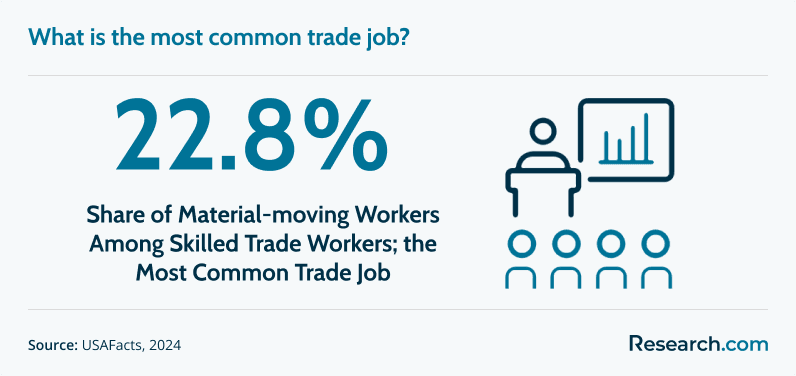
- Common trade careers in the U.S. include electricians, plumbers, welders, HVAC technicians, machinists, automotive technicians, and healthcare support workers.
- Trade school tuition may range from $3,000 to $25,000, depending on the school, program length, credential type, location, and required equipment.
- Program length varies: some certificates take 3 to 12 months, while diploma programs may take up to 18 months to complete.
- Some careers require an apprenticeship after or alongside classroom training; apprenticeships may last from 1 to 5 years.
Where can trade school graduates work?
Trade credentials can lead to employment in many settings. The right workplace depends on the occupation, licensing requirements, and whether the job is service-based, project-based, clinical, technical, or production-oriented.
- Construction sites: Carpenters, electricians, plumbers, HVAC technicians, remodelers, and other skilled workers help build, repair, and maintain residential, commercial, and industrial structures.
- Manufacturing facilities: Welders, CNC machinists, industrial maintenance workers, and machine operators support production, quality control, and equipment uptime.
- Healthcare facilities: Medical assistants, dental hygienists, licensed practical nurses, veterinary technicians, and dental assistants work in clinics, hospitals, dental offices, long-term care facilities, and animal hospitals.
- Automotive repair shops: Automotive technicians, collision repair specialists, and engine repair professionals work for dealerships, independent shops, fleets, and specialty garages.
- Service companies: Electricians, plumbers, HVAC technicians, locksmiths, and home repair workers often travel to homes and businesses for installation, maintenance, and emergency repairs.
- Restaurants and hospitality businesses: Culinary workers, chefs, bakers, and pastry professionals work in restaurants, hotels, catering companies, bakeries, and institutional kitchens.
- Transportation companies: Freight brokers, commercial drivers, aviation maintenance technicians, and logistics support workers may work for carriers, airlines, warehouses, and shipping companies.
- Beauty and personal care businesses: Cosmetologists, barbers, estheticians, pet groomers, and related professionals commonly work in salons, spas, clinics, and independent service businesses.
- Technical support centers: IT support workers, cybersecurity support staff, and equipment technicians help organizations troubleshoot technology, maintain systems, and protect data.
How much can you make in trade jobs?
According to 2024 ZipRecruiter data, trade jobs in the United States have an average annual salary of $67,149. Compensation typically ranges from $62,500 to $62,999. Skillwork research also reports that starting pay for trade jobs is above $40,000.
These figures should be treated as benchmarks, not guarantees. Pay can rise with experience, licensure, overtime, union membership, geographic demand, specialization, supervisory responsibility, and business ownership. Some trade workers later use their income and experience to pursue college credentials, management roles, or specialized certifications.
- Quick-to-learn trade jobs that pay well in 2026
- How long does it take to complete trade school?
- Online vs. on-campus trade school programs
- What does trade school cost?
- Financial aid options for trade school students
- Trade school admission requirements
- Skills employers want in trade professionals
- Benefits of apprenticeship programs
- How to choose a trade school program
- Most in-demand jobs for trade school graduates
- Job market outlook for trade school graduates
- Can supplementary online courses improve a trade career?
- How can you verify accreditation and school quality?
- Is trade school worth it? Long-term value and ROI
- Soft skills needed in trade careers
- Emerging trends affecting trade careers
- Certifications and upskilling for trade workers
- Trade jobs vs. traditional college degrees
- Other opportunities for trade school graduates
- Can a short-term online associate degree help?
- Is a master’s degree useful for trade professionals?
- Moving from trade school to a bachelor’s degree
- Potential challenges of trade school education
Quick-to-learn Trade Jobs That Pay Well for 2026
The jobs below can be entered through trade school, vocational training, apprenticeships, employer training, licensing preparation, or a combination of these pathways. Salary and time-to-learn figures are the figures provided for each occupation; verify requirements in your state before enrolling because licensing rules and employer expectations can differ by location.
Automotive and Engine Repair
Automotive and engine repair technicians inspect, diagnose, maintain, and repair cars and light trucks. They work with engines, transmissions, brakes, steering, suspension, electrical systems, emissions systems, and computerized diagnostic tools. The role suits people who like mechanical problem-solving, customer service, and technology-assisted troubleshooting.
- Time to Learn: 6 months to 2 years
- Median Annual Salary: $47,770
Carpenter
Carpenters build, install, repair, and finish structures and fixtures made from wood and other materials. Their work may include framing, cabinetry, doors, stairs, trim, forms, decks, and remodeling projects. Carpentry can be physically demanding and detail-heavy, making it a good fit for people who enjoy measuring, cutting, planning, and seeing tangible results from their work.
- Time to Learn: 1 to 2 years, plus apprenticeship
- Median Annual Salary: $56,350
CNC Machinist
CNC machinists operate computer numerically controlled machines that cut, shape, and finish metal or composite parts. They may read blueprints, set up equipment, monitor production, adjust machine settings, inspect finished parts, and use precision measuring instruments. This trade is especially relevant in manufacturing, aerospace, automotive, medical device production, and industrial supply chains.
- Time to Learn: 36 weeks to 2 years
- Median Annual Salary: $48,750
Construction Trades
Construction trades include many specialized occupations that build and maintain the physical environment, from plumbing and electrical systems to ironwork, masonry, drywall, roofing, and equipment operation. These careers often combine classroom training, safety instruction, jobsite experience, and apprenticeships. People who succeed in construction trades tend to be safety-minded, reliable, physically capable, and comfortable working as part of a crew.
- Time to Learn: 1 to 4 years, including apprenticeship
- Median Annual Salary: $49,100
Culinary & Pastry
Culinary and pastry workers prepare food, baked goods, desserts, and plated dishes in restaurants, hotels, bakeries, catering companies, and institutional kitchens. Chefs and head cooks may supervise kitchen teams, plan menus, manage ingredients, and maintain food safety standards, while bakers and pastry professionals focus on breads, pastries, cakes, and desserts that require technical precision and presentation skills.
- Time to Learn: 2 to 4 years
- Median Annual Salary: $44,780 (chefs and head cooks); $67,638 (bakers)
Dog Obedience Training
Dog obedience trainers teach dogs and owners how to build better behavior, follow commands, and manage common challenges such as pulling, jumping, reactivity, and poor recall. Trainers may work in training centers, pet stores, shelters, private homes, or specialty programs. The role requires patience, communication skills, animal behavior knowledge, and strong client coaching abilities.
- Time to Learn: 6 months to 1 year
- Median Annual Salary: $44,910
Electrician
Electricians install, maintain, inspect, and repair electrical wiring, panels, lighting, control systems, and related equipment in homes, businesses, industrial facilities, and construction projects. Because electrical work carries safety risks, training usually emphasizes electrical code, safe work practices, troubleshooting, blueprint reading, and hands-on installation. Many states require licensing.
- Time to Learn: 9 months to 2 years, plus apprenticeship
- Median Annual Salary: $60,040
Facilities Maintenance
Facilities maintenance workers keep buildings and grounds operating safely and efficiently. Depending on the employer, they may repair plumbing issues, replace fixtures, maintain heating and cooling systems, perform minor electrical tasks, respond to work orders, inspect equipment, and coordinate with outside contractors. This path is useful for people who want broad repair skills rather than one narrow specialty.
- Time to Learn: up to 2 years
- Median Annual Salary: $45,392
Floor Installer
Floor installers prepare surfaces and install materials such as carpet, tile, laminate, hardwood, vinyl, and other floor coverings. The work requires accurate measuring, cutting, leveling, adhesive use, subfloor preparation, and finishing. It can be physically demanding, but skilled installers can find work in residential remodeling, commercial construction, restoration, and specialty flooring companies.
- Time to Learn: 6 to 12 months, plus apprenticeship
- Median Annual Salary: $48,690
Freight Broker
Freight brokers coordinate shipments by connecting shippers that need goods moved with carriers that can transport them. They negotiate rates, track loads, manage paperwork, communicate with clients and drivers, and use logistics software. This career is less physically hands-on than many trades, but it requires strong organization, sales ability, problem-solving, and licensing knowledge.
- Time to Learn: 30 to 45 days, plus licensure
- Median Annual Salary: $43,610
Gunsmith
Gunsmiths repair, clean, inspect, customize, and maintain firearms. Their work requires knowledge of firearm mechanics, safety procedures, machining, parts fitting, finishing, and legal compliance. Because regulations can be strict, students should research federal, state, and local requirements before choosing a gunsmithing program.
- Time to Learn: 1 to 2 years, plus training
- Median Annual Salary: $38,270
Home Remodeling & Repair
Home remodeling and repair workers update, restore, and maintain residential properties. Depending on their specialization, they may handle carpentry, drywall, painting, flooring, plumbing support, electrical coordination, cabinetry, exterior repairs, or general renovation work. This field can lead to employment with contractors or self-employment for workers who develop strong business and customer service skills.
- Time to Learn: depends on specialization (general contractors, plumbers, painters, etc.)
- Median Annual Salary: $50,590
HVAC
HVAC technicians install, maintain, and repair heating, ventilation, air conditioning, and refrigeration systems. They use electrical knowledge, refrigeration principles, pressure testing, diagnostics, and safety procedures to keep indoor environments comfortable and equipment efficient. HVAC can be a strong option for people who like troubleshooting and are comfortable working in homes, businesses, mechanical rooms, rooftops, and tight spaces.
- Time to Learn: 6 months to 2 years
- Median Annual Salary: $50,590
Jewelry Design & Repair
Jewelry design and repair professionals create, restore, resize, clean, polish, and repair jewelry. Designers may sketch concepts or use CAD tools, while repair specialists work with soldering, stone setting, clasps, rings, chains, and precious materials. This trade combines artistic judgment, fine motor control, material knowledge, and careful customer handling.
- Time to Learn: 1 to 2 years
- Median Annual Salary: $44,552
Landscaping Technology
Landscaping technology professionals design, install, and maintain outdoor spaces using knowledge of plants, irrigation, grading, drafting software, hardscaping, water management, and sustainable landscaping practices. The field may involve residential landscapes, commercial properties, parks, campuses, and environmental design projects.
- Time to Learn: 6 to 12 months
- Median Annual Salary: $79,320
Locksmith & Home Security Technician
Locksmiths and home security technicians install, repair, open, replace, and maintain locks, safes, keys, access systems, electronic entry devices, and home security components. They may respond to emergency lockouts, advise customers on security upgrades, and work with both mechanical and electronic systems. Licensing requirements can vary by state.
- Time to Learn: 2 to 6 months
- Median Annual Salary: $53,384
Pet Grooming
Pet groomers bathe, brush, trim, clip, clean, and style pets according to breed standards, owner preferences, and animal comfort. They may also trim nails, clean ears, identify skin or coat issues, and handle anxious or difficult animals safely. This path can lead to salon employment, mobile grooming, or small business ownership.
- Time to Learn: a few weeks to a year
- Median Annual Salary: $26,080
Veterinary Technician
Veterinary technicians support veterinarians by assisting with exams, surgeries, lab work, x-rays, dental cleanings, medication administration, patient monitoring, and animal care. This career requires technical skill, compassion, attention to detail, and the ability to work with both animals and owners during stressful situations.
- Time to Learn: 2 years
- Median Annual Salary: $43,740
Welding
Welders join metal parts using processes such as arc welding, MIG welding, and TIG welding. They may read blueprints, prepare materials, set welding equipment, inspect joints, follow safety procedures, and work in construction, manufacturing, shipbuilding, repair, energy, or transportation. Certification can matter for specialized work.
- Time to Learn: 3 weeks to 18 months
- Median Annual Salary: $48,940
Woodworker
Woodworkers use tools and machinery to shape lumber and wood products into furniture, cabinets, flooring, fixtures, and architectural components. The work may involve cutting, sanding, joining, finishing, blueprint interpretation, and machinery operation. Precision, safety awareness, and craftsmanship are central to this trade.
- Time to Learn: 6 months to 2 years, plus apprenticeship
- Median Annual Salary: $39,390
What Trade School Graduates Say About Their Careers
"As a licensed electrician, I earn enough to support my family comfortably. Trade school gave me the hands-on foundation I needed before facing real jobsite problems. I enjoy the responsibility, the problem-solving, and the stability that comes with doing essential work." - Harry
"I have always liked working with machines, so welding made sense for me. After completing my program, I found steady work in manufacturing. The biggest surprise was the pay. I expected a decent job, but the income has helped me save for a house and feel financially secure." - Liam
"HVAC training gave me a practical skill set that I use every day. The work changes from call to call, so I am rarely bored. I like troubleshooting equipment, helping customers, and knowing that the field offers long-term demand." - Zayn
Key Findings
- Trade school can often be completed in eight months to years, depending on the credential and occupation.
- Annual tuition and fees for trade school programs can cost around $3,863 to $15,636.
- When room, board, and other costs are included, the annual cost of education for trade school programs can range from $9,800 to $33,600.
- The best trade school choice depends on career interests, program quality, total cost, reputation, employer connections, licensing alignment, and hands-on training access.
- The Bipartisan Infrastructure Law (BIL) is expected to peak around 2027–28, potentially creating 345,000 new jobs and increasing competition for entry-level skilled trades talent.
How long does it take to complete a trade school program?
Trade school timelines are usually shorter than bachelor’s degrees, but they vary by occupation. Some certificates can be completed in months, while apprenticeships and licensed trades may take several years because students need supervised work experience in addition to classroom training.
| Training option | Typical length stated | Best for |
| Short-term certificate programs | A few weeks to several months | Students who want focused training in a specific job skill or entry-level occupation. |
| Certificate programs | 3 to 12 months | Careers that require practical preparation but not a full associate degree. |
| Diploma programs | Up to 18 months | Students who want broader technical training than a short certificate provides. |
| Associate degree programs | 18 to 24 months, or about 2 years | Fields where academic coursework, general education, clinical training, or transfer options matter. |
| Apprenticeship programs | 1 to 6 years | Licensed or complex trades that require paid supervised work and classroom instruction. |
| Advanced certifications and licensing | A few months to several years | Workers who need credentials for advancement, compliance, or specialized tasks. |
How does an online trade school program compare to an on-campus trade school program?
Online and campus trade programs may cover similar concepts, assessments, and career outcomes, but the learning experience can differ significantly. The key question is whether the trade can be learned safely and credibly online. Some subjects work well in a virtual format, while careers involving tools, labs, equipment, patients, vehicles, or regulated practice usually require in-person components.
This distinction is similar to what students evaluate when comparing affordable human services degree online programs with campus-based options: flexibility matters, but so do fieldwork, accreditation, and employer expectations.
| Factor | Online trade program | On-campus trade program |
| Flexibility | Often better for working adults, parents, and students who need asynchronous coursework. | Usually follows fixed schedules and requires attendance at labs, shops, or classrooms. |
| Access | Can make niche programs available to students who live far from a trade school. | Limited to schools within commuting distance unless the student relocates. |
| Hands-on training | May use simulations, videos, remote assignments, or local externships, but tool practice can be limited. | Provides direct practice with equipment, instructors, classmates, and safety supervision. |
| Networking | Can be more limited unless the program offers live sessions, employer connections, or local placements. | Often stronger for peer relationships, instructor access, employer visits, and apprenticeship referrals. |
| Cost | May be cheaper because of lower facility costs, though technology, equipment, or materials fees can apply. | May cost more due to labs, shops, tools, facilities, and equipment maintenance. |
| Best fit | Good for theory-heavy, administrative, business, coding, logistics, or continuing education topics. | Best for trades requiring supervised tool use, clinical work, safety practice, or physical skill mastery. |
What is the average cost of trade jobs that pay well?
According to 2023 research from Indeed, annual tuition and fees for trade school programs can cost around $3,863 to $15,636. When expenses such as room and board are included, the annual cost of education becomes $9,800 to $33,600.
Program price should be compared with credential value, licensing eligibility, job placement support, completion rates, tools and supplies, commuting costs, exam fees, and whether the school has employer relationships. A lower sticker price is not always better if the program lacks accreditation, lab quality, apprenticeship connections, or state approval.
Students considering a legal support trade may also compare certificate options such as a cheap paralegal certificate online, especially if they want a lower-cost credential that can lead to office-based work rather than a physical trade.
| Cost category | Figures stated | What to ask before enrolling |
| Tuition and fees | $3,863 to $15,636 annually | Does this include registration fees, lab fees, books, uniforms, software, and exam preparation? |
| Total annual education cost with room and board | $9,800 to $33,600 | Will you need housing, transportation, meals, childcare, or reduced work hours while enrolled? |
| Trade school tuition range | $3,000 to $25,000 | Is the full program cost clear in writing before you sign an enrollment agreement? |
What are the financial aid options for students enrolling in a trade school?
Trade school can cost less than many four-year college pathways, but students should still plan carefully. Financial aid may be available, but eligibility depends on the school, program, accreditation status, enrollment intensity, and federal or state rules. Some students who can pay out of pocket still use aid to preserve savings and reduce financial pressure.
The same planning mindset applies to advanced academic programs, including online doctoral programs in psychology, where students often compare tuition, aid eligibility, and long-term return before enrolling.
- Federal grants and loans: Pell Grants and federal student loans, including subsidized, unsubsidized, and PLUS options, may be available through the FAFSA application if the school and program qualify.
- Work-study: Some schools offer part-time work opportunities that help students earn income while enrolled.
- State grants: Many states offer support for vocational and technical training. Students should check state aid websites and ask the school’s financial aid office about trade-specific programs.
- Scholarships: Industry groups, unions, employers, community foundations, nonprofits, and private organizations may offer awards based on need, merit, occupation, background, or location.
- Employer tuition assistance: Some employers help pay for training when the credential supports workforce needs, advancement, or retention.
Trade school students often end up with $10,000 or less in student loan debt, which is significantly lower than the average federal student loan debt of $37,853 per borrower. Even so, students should borrow cautiously and compare expected monthly payments with realistic entry-level pay.
What are the prerequisites for enrolling in trade school?
Trade school admission requirements vary, but most programs ask for evidence that applicants can complete the coursework, meet safety standards, and satisfy licensing or clinical placement rules. These requirements are not unique to vocational education; selective programs such as the best online MFA programs also use applications, eligibility checks, and academic readiness standards.
- High school diploma: Many programs require high-school-level education so students have baseline reading, writing, math, and communication skills.
- Minimum age requirement: Applicants often need to be at least 18 years old, although some programs admit younger students with parental consent.
- Basic skills or aptitude: Programs in mechanical, electrical, medical, or technical fields may expect basic math, spatial reasoning, science, computer, or mechanical ability.
- Entrance exams or placement assessments: Some schools test reading, math, problem-solving, or program readiness before admission.
- Application form and fee: Most schools require a completed application and may charge an application fee.
- Background check: Programs involving healthcare, security, firearms, vulnerable populations, or clinical placements may require background screening.
- Drug screening or health requirements: Some clinical, transportation, construction, or safety-sensitive programs may require health documentation, immunizations, or drug testing.
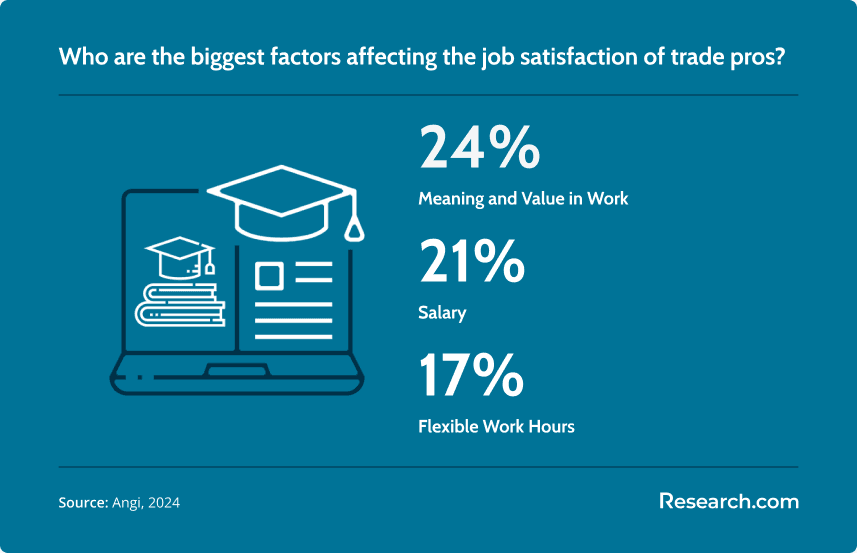
The chart below shows what trade professionals want students to understand before entering the field.
What are the most sought-after skills for trade professionals?
Employers hire trade workers for technical ability, but they keep and promote workers who are safe, reliable, communicative, and adaptable. A strong skill set matters in nearly every career path, including technical trades and academic programs such as affordable online MPA programs.
- Technical proficiency: Ability to use the tools, procedures, equipment, software, and methods required by the trade.
- Problem-solving: Skill in diagnosing issues, comparing possible causes, and choosing safe, efficient fixes.
- Attention to detail: Accuracy when measuring, reading plans, documenting work, following codes, or handling customer needs.
- Communication: Ability to explain technical issues clearly to supervisors, clients, patients, vendors, and team members.
- Physical stamina and strength: Capacity to stand, lift, bend, climb, crawl, or work in demanding environments when the occupation requires it.
- Safety awareness: Consistent use of protective equipment, safe procedures, hazard recognition, and regulatory compliance.
- Customer service: Professionalism when entering homes, handling complaints, explaining costs, or working with anxious customers.
- Time management: Ability to complete jobs, meet appointments, coordinate with crews, and reduce delays.
- Adaptability: Readiness to handle changing jobsite conditions, new technologies, weather, emergencies, or unexpected repairs.
- Technical documentation: Skill in reading manuals, completing service records, interpreting diagrams, and maintaining accurate logs.
What are the benefits of enrolling in an apprenticeship program for trade jobs that pay well?
Apprenticeships combine paid work experience with structured training. They can be especially valuable in licensed trades because students learn from experienced workers while building hours, habits, and employer relationships. Although apprenticeship length can be substantial, more than half of tradespeople say that these programs are "extremely successful" overall.
- Earn while learning: Apprentices can build skills while receiving wages, reducing the need to rely only on loans or savings.
- Practical skill development: Supervised work helps students move from theory to real tasks, tools, customers, materials, and safety conditions.
- Credential preparation: Many apprenticeships include classroom instruction tied to certifications, licenses, or industry standards.
- Clear career progression: Apprentices often move from entry-level helper duties to higher-responsibility work as competence grows.
- Professional network: Working with experienced tradespeople can lead to mentorship, job referrals, union connections, and employer recommendations.
- Stronger employability: Employers often value candidates who have already worked in the field and understand jobsite expectations.
- Stable employment pathway: Many trades provide essential services, which can support long-term demand.
- Structured learning: Apprenticeships usually have milestones, documented competencies, classroom hours, and supervised practice.
- Soft skill growth: Apprentices learn teamwork, punctuality, communication, conflict resolution, and professional judgment.
- Mentorship: Experienced workers can help apprentices avoid unsafe habits, understand industry norms, and plan advancement.
How to choose the best trade school program for trade jobs that pay well?
The best trade school is not simply the cheapest, fastest, or most heavily advertised option. It is the program that matches your target occupation, meets licensing or certification requirements, provides enough hands-on training, has credible instructors, and offers a realistic path to employment. This type of comparison also matters when evaluating online masters programs, where speed must be balanced with accreditation, outcomes, and fit.
| Selection factor | Why it matters | Questions to ask |
| Accreditation and approval | Affects aid eligibility, credit transfer, licensure, and employer trust. | Is the school accredited? Is the specific program approved for licensing in your state? |
| Program fit | Training should match the occupation you actually want. | Does the curriculum prepare students for your target job, exam, license, or apprenticeship? |
| Hands-on training | Many trades cannot be learned fully through lectures or videos. | How many lab, shop, clinical, externship, or apprenticeship hours are included? |
| Employer relationships | Strong industry ties may help with internships, interviews, apprenticeships, and job placement. | Which employers hire graduates? Are job placement claims documented? |
| Total cost | Tuition is only one part of the price. | What is the full cost including tools, uniforms, books, exams, transportation, and fees? |
| Instructor experience | Students benefit from teachers who know current workplace standards. | Do instructors have relevant licenses, certifications, and recent industry experience? |
| Outcomes | Completion, licensure, and employment data help evaluate risk. | What are the completion rates, exam pass rates, and job placement rates? |
| Scheduling | Students may need to balance work, family, and transportation. | Are evening, weekend, online, hybrid, or part-time options available? |
According to a recent survey, 47% of young adults are interested in becoming professionals in the trades. Reasons cited for preferring trade jobs over traditional office jobs include flexible schedules, faster educational programs, less expensive education, and financial security.
What are the most in-demand jobs available for graduates of trade school?
Demand varies by region and occupation, but many fields that rely on skilled trades continue to need trained workers. According to 2024 data from the United States Bureau of Labor Statistics (BLS), the growth of the following jobs from 2022 to 2032 is at least 6%, which is twice the national average:
- Wind turbine technicians, with the highest employment growth of 45%
- Medical assistants
- Industrial machinery workers
- Dental hygienists
- Dental assistants
- Electricians
- HVAC installers
The chart below shows projected growth for these in-demand occupations through 2032.
What is the job market for trade school graduates?
The job market for trade school graduates remains strong in many sectors, although conditions differ by location and specialty. A 2024 McKinsey report notes that as the number of skilled workers in the United States declines, demand remains high in construction, manufacturing, and renewable energy because of infrastructure projects, real estate redevelopment, and the push for net-zero emissions.
The Bipartisan Infrastructure Law (BIL) is expected to peak around 2027–28, potentially creating 345,000 new jobs and increasing competition for entry-level skilled trades talent.
McKinsey also points to the shift from commercial to residential real estate and the need for 2.8 million workers in the renewables sector by 2030 as additional demand drivers. As labor markets tighten and wages rise, employers may face greater difficulty finding and retaining qualified workers. Trade schools, apprenticeships, and employer training programs help supply the skilled workers needed to close those gaps.
Alternative Fast Education Paths to Consider
Trade school is not the only short or career-focused route. If you are still comparing healthcare, nursing, graduate study, or other accelerated credentials, these related options may help you evaluate whether a trade program is the best fit:
- top accelerated DNP degrees
- accelerated MSN programs online
- quick healthcare certifications that pay well
- quickest RN to MSN online programs
Can Supplementary Online Courses Enhance Your Trade Career?
Supplementary online courses can help trade professionals expand into adjacent skills, prepare for administrative roles, or stay current with changing tools and regulations. For example, a healthcare support worker or office-based trade professional may use a low-cost medical coding and billing online program to move toward healthcare administration. The best use of online learning is targeted: choose courses that directly support your current trade, licensing goals, supervisory ambitions, or business plans.
How Can You Verify a Trade School's Accreditation and Quality?
Before enrolling, confirm that the school is legitimate, the program fits your intended occupation, and the credential will be recognized by employers or licensing boards. Accreditation can affect financial aid, transfer credit, and credibility. Program approval is especially important in licensed or regulated fields.
- Check whether the institution is accredited by a recognized regional or national accrediting body.
- Ask whether the specific program has industry approval, state approval, or exam eligibility where required.
- Review instructor credentials, licenses, certifications, and recent field experience.
- Tour labs, shops, clinics, kitchens, or training facilities when possible.
- Ask for completion rates, job placement rates, exam pass rates, and employer partners in writing.
- Search official accreditation databases and state licensing board resources instead of relying only on school marketing.
Students who may later pursue academic credentials can also compare technical training with graduate pathways, including resources such as What is the easiest master's degree to get?, but only after confirming that the trade credential itself has value.
What Are the Potential Challenges of Trade School Education?
Trade school can be a smart investment, but it is not risk-free. Program quality can vary, and some schools may be better at marketing than delivering employer-ready training. Students should evaluate risks before signing an enrollment agreement.
| Common mistake | Why it can hurt you | Better approach |
| Choosing a school without checking accreditation | You may lose access to aid, transfer options, licensing eligibility, or employer recognition. | Verify accreditation and program approval through official sources. |
| Looking only at tuition | Tools, uniforms, books, exams, commuting, and lost work hours can change the real cost. | Request a full cost breakdown before enrolling. |
| Assuming online training is enough | Hands-on trades may require labs, clinical placements, apprenticeships, or supervised hours. | Confirm how practical training is delivered and documented. |
| Ignoring licensing rules | A program may not qualify you for work in your state. | Check state licensing boards before choosing a program. |
| Relying only on rankings or ads | Rankings may not reflect local employer demand or program quality. | Talk to employers, graduates, instructors, and apprenticeship sponsors. |
| Assuming salary outcomes are guaranteed | Pay depends on location, experience, overtime, credentials, and labor demand. | Use salary data as a planning tool, not a promise. |
If you are unsure whether vocational training or a college pathway makes more sense, comparing trade schools with quick degree programs can help you weigh time, cost, credential value, and career flexibility.
Is Trade School the Right Choice for You? Assessing the Long-Term Value and Return on Investment
Trade school is usually worth considering when your target occupation values hands-on skill, licensure, certification, or apprenticeship experience more than a bachelor’s degree. It may be less suitable if your long-term goal requires a four-year degree, graduate school, or a profession such as law, medicine, research, or certain management tracks.
Estimate realistic earnings and job security
Start by researching wages and demand in your specific trade and region. Some fields, including construction, healthcare support, manufacturing, installation, maintenance, and technical repair, may offer stable demand because the work cannot be fully outsourced or automated. Recent statistics indicate that the average salary for trade workers can range from $40,000 to $70,000 annually, depending on industry and experience.
Strong examples of durable demand include plumbing, electrical work, welding, HVAC, and related skilled trades. However, local labor markets matter. A trade with excellent demand in one metro area may be slower in another.
Compare education cost with likely income
Trade school can offer a faster route to earnings because programs are often shorter and tuition can be lower than traditional college pathways. To evaluate ROI, compare total program cost with expected entry-level wages, required tools, licensing fees, apprenticeship pay, and the time it will take to reach full earning capacity.
If your chosen occupation allows you to begin earning quickly and advance through experience or certification, trade school may provide strong practical value. If your desired future role requires a degree, evaluate whether trade school credits can transfer or whether an academic route is more efficient from the start.
Think about advancement and career longevity
Many trade workers advance into lead technician, supervisor, inspector, trainer, contractor, business owner, estimator, project manager, or operations roles. Others specialize in high-demand systems, safety, renewable energy, diagnostics, compliance, or advanced equipment. The long-term value of trade school improves when the occupation offers a clear ladder beyond entry-level work.
If you are comparing multiple education paths, reviewing today’s easiest majors can help you understand how college options differ from hands-on vocational training.
What Soft Skills Are Essential for Excelling in Trade Careers?
Technical skill gets you hired, but soft skills often determine whether customers request you again, supervisors trust you with difficult work, and employers promote you. Trade workers regularly communicate with clients, explain repairs, coordinate with crews, document work, and solve problems under time pressure.
- Communication: Explain issues, options, safety concerns, and costs clearly.
- Reliability: Show up on time, finish assigned work, and follow through.
- Professionalism: Treat homes, worksites, patients, animals, tools, and coworkers with respect.
- Critical thinking: Troubleshoot problems instead of guessing.
- Organization: Track parts, appointments, job notes, invoices, and compliance records.
- Teamwork: Coordinate safely with other trades, supervisors, apprentices, and contractors.
Some trade workers who want broader leadership, communication, or business training later pursue an affordable online bachelors degree while continuing to work.
What Emerging Trends Are Impacting Trade Careers?
Trade careers are changing as employers adopt digital tools, automation, smart systems, and sustainable technologies. The trades are still hands-on, but many workers now use diagnostic software, mobile work-order systems, building automation tools, energy-efficient equipment, digital blueprints, and advanced materials.
- Automation and digital diagnostics: Technicians increasingly need comfort with software, sensors, scanners, and connected systems.
- Renewable energy and sustainability: Demand for green infrastructure, energy efficiency, and renewables can create new specialization opportunities.
- Infrastructure investment: Large projects can increase demand for construction, electrical, welding, equipment, and maintenance workers.
- Credential-based hiring: Employers may prefer workers who can document specific competencies, safety training, certifications, and licensure.
- Hybrid learning: More programs blend online theory with in-person labs, externships, or apprenticeships.
Workers aiming to combine technical expertise with broader academic credentials may explore an accelerated bachelors degree online accredited program, especially if they want management or operations roles later.
Certifications and Upskilling: Elevating Your Trade Career
Certifications can help trade workers demonstrate specialized knowledge, meet employer requirements, qualify for certain job assignments, or move into higher-responsibility roles. The best certification depends on the trade. An electrician might add renewable energy training, an HVAC technician might pursue advanced refrigeration skills, and a welder might seek process-specific credentials.
Upskilling can happen through apprenticeships, union training centers, manufacturer workshops, employer-sponsored courses, online modules, community colleges, or industry associations. The goal is not to collect random credentials; it is to build skills that employers, clients, or licensing boards actually value.
Trade professionals who need a broader academic credential for advancement can compare options such as the easiest online degrees that pay well, especially if they want to move toward supervision, business ownership, estimating, compliance, or training roles.
Trade Jobs vs. Traditional College Degrees: Key Differences
Trade school and college are not interchangeable. They serve different goals. Trade school is usually best for students who want practical, occupation-specific training and faster workforce entry. A traditional degree may be better for careers requiring broad academic preparation, professional licensure tied to college education, research, management pipelines, or graduate school.
| Comparison point | Trade school | Traditional college degree |
| Typical completion time | Most programs take 6 months to 2 years; apprenticeships may take longer. | A bachelor’s degree usually takes 4+ years. |
| Training style | Hands-on, job-specific, tool-based, and skills-focused. | Academic, broader, and often includes general education requirements. |
| Cost profile | Tuition can range from $3,000 to $25,000. | Often higher, with average student loan debt reaching $37,853. |
| Career access | Good for trades such as electricians, HVAC technicians, welders, automotive technicians, dental assistants, and machinists. | Good for professions requiring a degree, graduate study, or broad academic preparation. |
| Earning timeline | Can lead to paid work sooner, especially with apprenticeships or short certificates. | May delay full-time earnings but can support long-term access to certain professional fields. |
| Best fit | Students who want practical work, lower education cost, and a defined occupation. | Students who want broader career flexibility or careers requiring degrees. |
Some trade careers, such as electricians or HVAC technicians, may reach $50,000 to $60,000 annually depending on occupation, location, experience, and credentials. Students should compare realistic local wages rather than assuming any credential guarantees a specific salary.
What Other Opportunities Are Available for Trade School Graduates?
Trade school graduates can expand their careers by adding related technical skills, pursuing licensure, starting a business, becoming trainers, moving into inspection, or specializing in emerging fields. For example, someone interested in security services could research a locksmith school to build skills in locksmithing and home security. Other options may include solar panel installation, wind turbine maintenance, HVAC repair, logistics, equipment maintenance, or specialty construction work.
Can a Short-Term Online Associate Degree Enhance Your Trade Career?
An online associate degree can help some trade professionals add academic, business, communication, and project management skills while continuing to work. This can be useful for workers who want to move beyond hands-on roles into estimating, supervision, technical sales, operations, or entrepreneurship. A flexible option such as the shortest associate degree program may appeal to workers who already have practical training and want a faster credential path.
Is a Master’s Degree Beneficial for Trade Professionals?
A master’s degree is not necessary for most hands-on trade roles. It may become useful for trade professionals who move into senior management, business leadership, operations strategy, workforce training, construction management, education, or consulting. If graduate study supports a specific career target, options such as the best 6 month master's programs online may be worth comparing for flexibility and time commitment.
Transitioning from Trade School to a Bachelor’s Degree Program
Some trade school graduates later pursue a bachelor’s degree to qualify for management, engineering technology, construction management, business, education, or specialized administrative roles. This path can make sense if the degree builds on your trade experience instead of replacing it.
Advantages of moving into a bachelor’s program
- More advancement options: A bachelor’s degree can support movement into supervisory, project management, operations, or technical leadership roles.
- Potentially higher earning power: According to the U.S. Bureau of Labor Statistics, workers with a bachelor’s degree earn significantly more on average than workers with only a trade school certification.
- Broader transferable skills: Degree programs can strengthen writing, communication, leadership, analysis, and business skills.
Flexible options for earning a bachelor’s degree
Trade school graduates may benefit from accelerated bachelor’s programs that recognize previous learning, certifications, or work experience. Many schools offer transfer credit options that can shorten completion time. For example, the fastest bachelor's degree programs allow students to finish in as little as 12 to 18 months, depending on prior education and field of study.
Steps to transition successfully
- Check transfer credit: Ask colleges whether they accept trade school credits, certifications, apprenticeships, or prior learning assessments.
- Choose a related major: Match your trade background with a degree such as construction management, engineering technology, business, healthcare administration, or operations.
- Consider online study: Online programs may make it easier to keep working while completing academic requirements.
- Plan financing: Review scholarships, grants, employer tuition assistance, and federal aid before borrowing.
- Prepare academically: Some bachelor’s programs may require prerequisite courses, placement testing, writing skills, or college-level math readiness.
Careers that can benefit from a bachelor’s degree
- Project manager: Experienced trade workers may oversee schedules, budgets, crews, materials, and client communication.
- Engineering technician: A degree can support more advanced technical roles in engineering-related workplaces.
- Operations manager: Business or management training can help trade professionals lead teams, improve processes, and manage service operations.
Key Insights
- Trade school can be a strong alternative to a four-year degree if your goal is a hands-on occupation with faster training and lower education costs.
- Average trade pay is listed at $67,149 in 2024 ZipRecruiter data, but actual earnings depend on trade, location, experience, licensure, overtime, and employer demand.
- Program length can range from a few weeks to several years; licensed trades often require apprenticeships in addition to classroom instruction.
- Do not choose a trade school based only on speed or tuition. Verify accreditation, licensing alignment, hands-on training, employer ties, total cost, and outcomes.
- Online trade education works best for theory, administration, logistics, or continuing education; physical trades usually require in-person labs, supervised practice, or apprenticeships.
- Apprenticeships are valuable because they combine paid work, mentoring, classroom instruction, and documented skill growth.
- Trade careers are being shaped by automation, digital diagnostics, green technologies, infrastructure demand, and credential-based hiring.
- The best trade path is the one that connects your interests, physical work preferences, local labor market, training budget, and long-term advancement plan.
References
- Angi (2024). Angi’s skilled trades report 2024. Angi
- Bester, N. (2023, July 15). How much does trade school cost? (And how to pay for it). Indeed
- Greenberg, E., Schaefer, E., & Weddle, B. (2024, April 9). Tradespeople wanted: The need for critical trade skills in the US. McKinsey
- Held, J. (2024, February 21). New survey results—Top trends in apprenticeship programs. IFEBP
- Skillings, Z. & Gilmore, C. (2024, March 5). Trade and vocational schools: Everything you need to know. Scholarships360
- Steckel, D. (2023, August 24). Young people want skilled trades Careers — So what’s stopping them? Thumbtack
- USA Facts (2024, January 25). How many people work in the trades? USA Facts
- ZipRecruiter (2024, July 4). Trade salary. ZipRecruiter
- Zoloth, S. (2024, March 7). The financial benefits of going to trade school. NSHSS
Other Things You Should Know About Trade Jobs That Pay Well
Many quick-to-learn trade jobs, like HVAC technicians and commercial truck drivers, require certification in 2027. Certification programs can last a few months and involve passing specific exams recognized by industry bodies like the EPA for HVAC or the FMCSA for truck driving.
Yes, many do. Apprenticeships and employer training programs in fields like plumbing, electrical work, and HVAC usually require a high school diploma or GED, and some programs also ask for basic math skills, a valid driver’s license, and a drug screening before placement.





