
2027 Best Online Biology Degree Programs

Co-Founder and Chief Data Scientist
Choosing an online biology degree is usually a decision about flexibility, lab access, cost, and career direction. Biology can lead to healthcare, biotechnology, environmental science, education, research support, public health, and graduate study, but not every online program is built for the same goal. Some degrees are broad liberal arts programs, while others include heavier chemistry, lab, research, or pre-professional preparation.
This guide is for students comparing online biology bachelor’s programs, working adults returning to school, transfer students, and learners who want a science degree without relocating. You will learn what online biology programs include, how lab work is handled, what programs cost, which careers may be available, and how to decide whether an online biology degree fits your long-term plans. According to the U.S. Bureau of Labor Statistics, there were 3,524,740 U.S. workers with biology degrees in 2022 (U.S. Bureau of Labor Statistics, 2024a), which shows how widely the degree is used across industries.
Quick answer: Is an online biology degree worth considering?
An online biology degree can be a strong option if you need scheduling flexibility and want a foundation in life sciences for healthcare support roles, environmental work, biotechnology, education, research assistance, or graduate study. It is most useful when the school is accredited, the curriculum includes the science and lab requirements you need, and the program matches your career target. It may be less suitable if your goal requires extensive in-person lab training, fieldwork, state licensure, or a highly structured pre-medical pathway.
| Best fit | Use caution if | What to verify before enrolling |
| You need an accredited science degree that can be completed mostly online. | You plan to apply to medical, dental, veterinary, pharmacy, or graduate research programs with strict lab prerequisites. | Confirm accreditation, lab format, transfer policy, graduate school prerequisites, and total cost. |
| You are interested in biology-related careers in healthcare, biotech, environmental science, education, or public health. | You learn best through face-to-face lab instruction and frequent in-person faculty interaction. | Ask how the program provides labs, internships, research, advising, and career support. |
| You are a working adult, parent, military learner, or transfer student seeking a flexible route to a bachelor’s degree. | You assume an online degree automatically qualifies you for licensure or advanced professional programs. | Check professional requirements early, especially for teaching, clinical laboratory, and healthcare pathways. |
What are the main benefits of earning a biology degree online?
- Career flexibility: Biology graduates may move into healthcare, biotechnology, research support, environmental services, education, public health, pharmaceutical work, or management-related roles depending on experience and additional credentials.
- Schedule control: Online programs often let students complete lectures, assignments, discussions, and some labs around work or family obligations.
- Technology-supported science learning: Many online biology programs use virtual labs, simulations, digital datasets, and, in some cases, at-home lab kits or short campus residencies.
- Graduate school preparation: A biology bachelor’s degree can support later study in areas such as public health, biomedical sciences, genetics, pharmacy, teaching, environmental science, or healthcare administration if prerequisites are met.
- Earning potential: The median annual salary of biology graduates is $71,000, though pay varies widely by occupation, location, employer, experience, and graduate education.
What can I expect from an online biology program?
An online biology program teaches how living systems work, from molecules and cells to organisms, populations, ecosystems, and human health. Students usually complete general education courses, core sciences, math or statistics, biology electives, and lab-based requirements. The academic workload can be demanding because biology relies heavily on chemistry, data interpretation, scientific writing, and problem-solving.
The biggest difference from a campus program is not usually the subject matter. It is the way students complete lectures, labs, collaboration, and advising. Online biology students often learn through a course management platform, recorded or live lectures, readings, discussion boards, remote experiments, simulations, and scheduled assessments.
| Program feature | What it means for students | Questions to ask |
| Online coursework | Lectures, assignments, quizzes, and discussions are delivered through a digital learning platform. | Are courses asynchronous, live, or a mix of both? |
| Laboratory requirements | Labs may use virtual simulations, home kits, local placements, transfer credits, or short on-campus sessions. | Which labs are required in person, and where can they be completed? |
| Science sequencing | Biology, chemistry, physics, statistics, and upper-division courses often must be taken in a specific order. | Will prerequisites delay graduation if I study part time? |
| Research and internship options | Some programs offer remote data projects, faculty research, industry partnerships, field experiences, or local internships. | Are internship placements guaranteed, optional, or student-arranged? |
| Graduate school preparation | Programs differ in how well they meet prerequisites for medical, dental, veterinary, pharmacy, or research graduate programs. | Does this degree meet the admission expectations for my intended graduate program? |
Where can I work with an online biology degree?
Biology graduates work in many settings because the degree develops scientific literacy, data analysis, lab awareness, communication, and problem-solving skills. A BLS report (2024a) states that among workers with a biology degree, 34% worked in healthcare, 12% in management, 11% in life, physical, and social sciences, and 9% in education.
| Work setting | Examples of employers | Common responsibilities |
| Healthcare and medical services | Hospitals, clinics, diagnostic labs, public health organizations, and healthcare systems | Support testing, patient education, medical research, disease prevention, documentation, or operations. |
| Biotechnology | Biotech companies, agricultural firms, bioinformatics employers, startups, and research labs | Assist with product development, genetic analysis, data interpretation, or biological process improvement. |
| Environmental and conservation organizations | Environmental consulting firms, national parks, water authorities, government agencies, and nonprofits | Study ecosystems, monitor compliance, support sustainability projects, and help manage wildlife or natural resources. |
| Government agencies | Agencies such as the Centers for Disease Control and Prevention (CDC) or the Food and Drug Administration (FDA) | Work on public health, policy, environmental regulation, safety review, scientific support, or research programs. |
| Education and research institutions | Schools, universities, private labs, and government-funded research organizations | Teach, support experiments, manage data, prepare reports, or help coordinate scientific projects. |
| Pharmaceutical and chemical industries | Pharmaceutical companies, chemical manufacturers, vaccine developers, and biomedical employers | Contribute to testing, quality control, research, documentation, or development of drugs and biological products. |
How much can I make with an online biology degree?
Biology salaries depend on the job title, industry, region, employer, experience, and whether the role requires a graduate degree or certification. The degree alone does not guarantee a specific salary, but it can qualify graduates for a wide range of science, healthcare, environmental, and education-related pathways.
According to BLS data, life scientists earn $101,520 on average, while all other biological scientists earn $99,060 on average each year. Many early-career biology roles, including laboratory technician and research assistant positions, begin around $45,000 to $55,000. Pay can rise with technical specialization, leadership responsibility, graduate education, or movement into regulated industries.
| Role or occupation | Reported annual pay | Career note |
| Food scientists | $76,400 | Often work in food safety, product development, quality control, or agricultural science. |
| Microbiologists | $85,470 | Study microorganisms in healthcare, environmental, food, pharmaceutical, or research settings. |
| Epidemiologist with a master’s degree | $81,390 | Usually requires graduate training in public health, epidemiology, or a related field. |
| Biochemist | $107,460 | Often involves advanced research, molecular analysis, and laboratory-based work. |
| Food industrial managers | $116,970 | Combines science knowledge with operations, production, and management responsibility. |
| Natural science managers | $157,740 | Typically requires substantial professional experience and leadership of scientific teams or projects. |
The strongest salary outcomes generally come from pairing a biology degree with marketable skills such as statistics, computational biology, laboratory methods, regulatory knowledge, scientific writing, teaching credentials, or graduate-level specialization.
- Best online biology degree programs for 2027
- How long does an online biology degree take?
- Online biology degree vs. on-campus biology degree
- Average cost of an online biology program
- Financial aid options for online biology students
- Admission requirements and prerequisites
- How online biology programs handle labs
- Why accreditation matters
- Challenges of earning a biology degree online
- Typical online biology courses
- Current trends in online biology education
- How to succeed as an online biology student
- Is an online biology degree cost-effective?
- Do employers recognize online biology degrees?
- Research and internship opportunities
- Online biology specializations
- How to choose the right online biology program
- Career paths for biology graduates
- Can an online biology degree support advanced study?
- Job market for biology degree holders
List of the Best Online Biology Degree Programs for 2027
How Research.com ranks online biology programs
Research.com evaluates online biology programs by looking for academic quality, value, credibility, and student-relevant program information. Our ranking process follows a structured methodology and uses sources such as the Integrated Postsecondary Education Data System, Peterson’s database and its Distance Learning Licensed Data Set, College Scorecard, and the National Center for Education Statistics (NCES). Rankings are useful as a starting point, but students should still compare lab requirements, transfer policies, cost, advising, and fit for graduate or professional goals.
| Rank | School and program | Format and focus | Cost per credit | Credits | Accreditation |
| 1 | University of Florida Online, BA in Biology | Broad biology program for students interested in education, healthcare, and interdisciplinary careers; not designed for medical, dental, or veterinary school preparation. | $129.18 (resident), $552.62 (non-resident) | 120 | Southern Association of Colleges and Schools Commission on Colleges (SACSCOC) |
| 2 | Wilmington University, BS in Biology | Fully online program using at-home lab kits, with tracks in Biotechnology and Forensic Science. | $419 | 120 | Middle States Commission on Higher Education (MSCHE) |
| 3 | Florida International University, BA in Biological Sciences | Fully online biological sciences curriculum emphasizing critical thinking, scientific knowledge, and problem-solving. | $235.57 (resident), $648.87 (non-resident) | 120 | SACSCOC |
| 4 | Washington State University Global Campus, online BS in Biology degree completion program | Degree completion pathway covering molecular and cell biology, physiology, genetics, ecology, and disease biology. | $583.90 (resident), $651 (non-resident) | 120 | Northwest Commission on Colleges and Universities (NWCCU) |
| 5 | University of Arizona Online, BS in Biology | Online core coursework with two required Organic Chemistry labs completed in a hybrid format with short on-campus sessions; tracks in Biomedical Sciences and Organismal Biology. | $525 | 120 | WASC Senior College and University Commission (WSCUC) |
| 6 | Logan University, BS in Human Biology | Trimester-based program with many accelerated seven-week courses and a focus on anatomy, physiology, genetics, microbiology, and health-related sciences. | $375 | 122 | Higher Learning Commission (HLC) |
| 7 | Louisiana State University Online, BS in Biology with a concentration in Modern Biology | Most coursework online, with lab requirements completed through a one-week summer residency or transfer credit from another institution. | $325 | 120 | SACSCOC |
| 8 | Arizona State University Online, BS in Biological Sciences | Online program with five concentrations, at-home lab kits, internships, research projects, and a required one-week organic chemistry lab at ASU’s Tempe campus. | $683 | 120 | HLC |
| 9 | University of Alaska Fairbanks, BA in Biological Sciences | Online program with hands-on research opportunities and an optional Environmental Change concentration. | $289 | 120–128 | NWCCU |
| 10 | Life University, BS in Biology | Biology curriculum with courses such as Cell Biology, Anatomy and Physiology, and Biochemistry, plus opportunities for independent research and interdisciplinary learning. | $301 | 120 | SACSCOC |
How long does it take to complete an online biology program?
Most online bachelor’s degrees in biology require about four years of full-time study. Students who attend part time may need longer, especially because science courses often follow prerequisite sequences. For example, a student may need to complete general chemistry before organic chemistry, and foundational biology before upper-division electives.
Some accelerated options can shorten the timeline. These programs may use shorter terms, heavier credit loads, transfer credits, or credit for prior learning. In certain cases, students can complete a bachelor’s degree in as little as three years. This pace can be demanding because lab sciences, writing assignments, and quantitative coursework require consistent weekly time.
Graduate study adds more time. A master’s degree in biology typically takes two to three years, while a doctoral program such as a PhD in Biology can take four to six years depending on research expectations, dissertation progress, and program structure.
| Path | Typical timeline stated | Best for |
| Full-time bachelor’s degree | Four years | Students who can carry a standard course load each term. |
| Accelerated bachelor’s pathway | As little as three years | Students with transfer credits, strong time management, and the ability to handle intensive terms. |
| Part-time bachelor’s study | Longer than four years | Working adults, caregivers, military students, and learners balancing major outside commitments. |
| Master’s degree in biology | Two to three years | Students pursuing specialization, research preparation, or advancement into roles requiring graduate education. |
| PhD in Biology | Four to six years | Students planning for advanced research, university teaching, or scientific leadership roles. |
How does an online biology program compare to an on-campus program?
Online and campus-based biology programs can cover similar academic content, and online students may learn from the same faculty who teach on campus. The real differences are delivery, lab access, interaction style, networking, and the amount of in-person scientific practice built into the degree.
| Factor | Online biology program | On-campus biology program | Decision tip |
| Class delivery | Lectures and assignments are accessed through an online platform, often with flexible timing. | Students attend scheduled classes in physical classrooms. | Choose online if flexibility is essential; choose campus if structure helps you stay engaged. |
| Faculty and peer interaction | Communication usually happens through email, video meetings, discussion boards, and virtual office hours. | Students can meet professors and classmates face to face more frequently. | Online learners should plan to be proactive about asking questions and building relationships. |
| Laboratory learning | Labs may use simulations, at-home kits, local options, transferred lab credits, or short residencies. | Students typically use campus laboratories regularly. | If your career goal requires extensive lab experience, examine this section carefully. |
| Resources | Digital libraries, virtual advising, online tutoring, remote databases, and technical support are common. | Students can use campus labs, libraries, events, tutoring centers, and department spaces in person. | Compare not only resources offered, but how easy they are to access as an online student. |
| Networking | May include virtual career events, online clubs, remote research groups, and digital mentoring. | Often includes in-person career fairs, faculty labs, student organizations, and department events. | Online students may need to create more deliberate networking routines. |
The better format depends on your situation. Online study can work well if you are disciplined, need flexibility, and can meet lab expectations. Campus study may be better if you want daily in-person scientific practice, easier access to faculty labs, or a traditional college environment.
The National Center for Education Statistics (2023) reports that biology and biomedical sciences continue to be among the most popular fields in higher education. Since the 2012–2013 academic year, bachelor’s degrees awarded in these fields have consistently exceeded 100,000. Master’s degrees granted passed 13,000 in 2014–2015 and continued increasing afterward, reflecting sustained interest in biology-related education.
This chart displays the undergraduate and graduate biology degrees awarded in the U.S.
What is the average cost of an online biology program?
Online biology tuition varies by school, residency status, public or private control, program format, and lab requirements. On average, tuition and fees at public four-year institutions cost $11,610 in-state and $30,780 out-of-state. At private universities, tuition and fees cost $43,350 (Ma et al., 2024).
Online students may save on housing, commuting, parking, and relocation, but they should not assume online always means cheaper. Programs may charge technology fees, online course fees, lab kit costs, proctoring fees, textbooks, software, residency travel, or graduation fees. Some schools charge online students the same tuition regardless of residency, while others maintain separate resident and non-resident pricing.
| Cost category | Why it matters | How to compare programs |
| Tuition per credit | The largest direct cost for most students. | Multiply tuition by required credits rather than looking only at semester estimates. |
| Residency pricing | Out-of-state students may pay more at some public universities. | Ask whether online learners receive in-state, resident, non-resident, or special online rates. |
| Lab materials | Biology courses may require lab kits, software, or in-person lab sessions. | Request a list of lab fees and any travel expectations before enrolling. |
| Transfer credits | Accepted transfer credits can reduce both time and cost. | Ask for an official transfer credit review before committing. |
| Indirect expenses | Books, technology, internet, travel, childcare, and lost work hours can affect affordability. | Build a total budget, not just a tuition budget. |
Students comparing science-related fields may also want to review lower-cost alternatives in adjacent areas, such as the cheapest online masters in nutrition, if their long-term goal is connected to health, food science, or nutrition rather than general biology.
What are the financial aid options for students enrolling in an online biology program?
Online biology students may qualify for many of the same aid options as campus students, provided they attend an eligible accredited institution and meet enrollment requirements. Aid can come from the federal government, states, schools, employers, private organizations, or field-specific foundations.
- University scholarships: Schools may offer awards based on academic achievement, financial need, transfer status, major, or student background.
- Private scholarships and grants: Professional organizations, community foundations, healthcare groups, environmental organizations, and STEM-focused programs may fund biology students.
- Work-study programs: Eligible students may work part time through federal or institutional work-study arrangements to help cover educational costs.
- Employer tuition reimbursement: Some employers help pay for coursework when the degree supports current or future job responsibilities.
- Federal and private loans: Federal student loans are available to qualifying U.S. citizens and permanent residents; private loans may be available through banks and other lenders but can have different interest rates and repayment terms.
Students evaluating other healthcare leadership paths can also compare affordability and aid options in affordable MHA online programs. Whatever field you choose, review net price, loan repayment, scholarship renewal rules, and satisfactory academic progress requirements before accepting aid.
What are the prerequisites for enrolling in an online biology program?
Admission requirements vary by institution, degree level, and student type. First-year applicants usually need proof of high school completion, while transfer students must submit college transcripts. Because biology is a science-intensive major, schools may look closely at prior coursework in biology, chemistry, math, and related subjects.
| Requirement | What schools may request | Why it matters |
| Transcript or GED | High school transcript, GED documentation, or college transcripts for transfer students. | Shows completion of prior education and helps determine placement or transfer credit. |
| Science and math preparation | Prior coursework in biology, physics, chemistry, and mathematics. | Prepares students for general biology, chemistry, statistics, and upper-level science courses. |
| Minimum GPA | Common expectations may range from at least 2.5 to 3.0, especially for competitive programs. | Helps schools assess readiness for rigorous science coursework. |
| ACT/SAT scores | Some institutions may request standardized test results. | May be used for admission, placement, or scholarship review depending on school policy. |
| Letters of recommendation | Recommendations from teachers, professors, employers, or mentors. | Can support applicants by documenting academic habits, work ethic, or scientific interest. |
| Personal statement or essay | An explanation of academic goals, career plans, and interest in biology. | Helps the admissions team understand why the program fits your plans. |
Before applying, check whether the school has separate requirements for online students, transfer students, lab science placement, or selective admission into the biology major after general education coursework.
How do online biology programs ensure practical laboratory experiences?
Online biology programs handle labs in several ways. Some use virtual simulations to teach experimental design and scientific reasoning. Others mail at-home lab kits for selected experiments. Hybrid programs may require a short campus visit, a one-week residency, local lab coursework, or transferred lab credits from another institution.
| Lab model | How it works | Best for | Potential drawback |
| Virtual simulations | Students complete digital experiments and analyze results online. | Learning concepts, safety procedures, and data interpretation. | May not provide the same tactile experience as physical lab work. |
| At-home lab kits | Students receive materials and complete approved experiments from home. | Introductory lab experience and flexible learners. | Not all advanced techniques can be replicated safely at home. |
| Hybrid residencies | Students travel to campus for concentrated lab sessions. | Programs that need verified hands-on lab exposure. | Requires travel planning, time off work, and possible added costs. |
| Local or transfer labs | Students complete approved labs at another institution or transfer prior lab credits. | Transfer students and those living near a partner institution. | Approval policies can be strict and should be confirmed in writing. |
Because lab costs can add up, students should also check whether they can use federal aid at eligible institutions. Research.com’s guide to online colleges with financial aid can help students understand how online enrollment and aid eligibility may intersect.
Why is accreditation important for online biology programs?
Accreditation is one of the first things to verify before enrolling. It signals that a college or university has been reviewed for academic quality, institutional stability, faculty qualifications, student services, and curriculum standards. Accreditation can affect financial aid eligibility, transfer credits, graduate school admission, employer recognition, and professional credibility.
Students should confirm that the institution is recognized by an appropriate accreditor and should be cautious of schools that make vague claims about approval or recognition. A useful next step is to compare programs with Research.com’s resource on accredited online schools.
What are the challenges of pursuing an online biology degree?
An online biology degree can be convenient, but it is not easier than an on-campus science degree. The flexibility can help students stay enrolled, yet it also requires discipline, planning, and comfort with independent learning.
- Lab limitations: Some online labs rely on simulations or short residencies, which may not satisfy every graduate or professional school requirement.
- Self-paced pressure: Flexible courses still require weekly study time, deadlines, readings, lab reports, and exams.
- Less spontaneous networking: Online students may need to intentionally attend virtual events, contact faculty, and seek mentorship.
- Technology dependence: Reliable internet, software access, video tools, and digital lab platforms are essential.
- Transfer and prerequisite complexity: Science courses must often be taken in order, so missing one prerequisite can delay progress.
If you are comparing biology with other flexible programs, review how it differs from shorter or more career-direct options such as degrees you can get online that pay well. Biology can be versatile, but it may require additional credentials for many specialized roles.
What courses are typically in an online biology program?
Online biology programs usually combine general education, core biology, chemistry, math, statistics, physics, upper-division electives, and labs. The exact mix depends on whether the degree is a BA, BS, general biology major, human biology program, biological sciences degree, or specialized concentration.
| Course area | What students learn | Why it matters |
| Principles of Biology | Core ideas about organisms, cells, evolution, genetics, and ecosystems. | Creates the foundation for advanced biology coursework. |
| General Chemistry | Chemical structure, reactions, bonding, solutions, and laboratory concepts. | Supports understanding of metabolism, physiology, biochemistry, and molecular biology. |
| Statistics | Probability, hypothesis testing, data visualization, and interpretation of scientific results. | Helps students evaluate research evidence and work with biological datasets. |
| Physics | Forces, energy, motion, and physical principles that affect living systems. | Supports physiology, biomechanics, instrumentation, and scientific reasoning. |
| Cell Biology | Cell structure, signaling, division, energy production, and cellular regulation. | Prepares students for molecular biology, genetics, medicine-related study, and research support. |
| Local Flora | Identification and classification of native plant species and their ecological roles. | Supports environmental biology, botany, conservation, and field-based work. |
| Environment, Food, and Society | Connections among agriculture, climate change, resource use, food systems, and communities. | Builds context for sustainability, public policy, food science, and environmental careers. |
Students planning graduate study in genetics should make sure their undergraduate program includes relevant coursework in molecular biology, genetics, statistics, and laboratory methods. Research.com’s guide to a masters in genetics can help students understand how undergraduate preparation connects to later specialization.
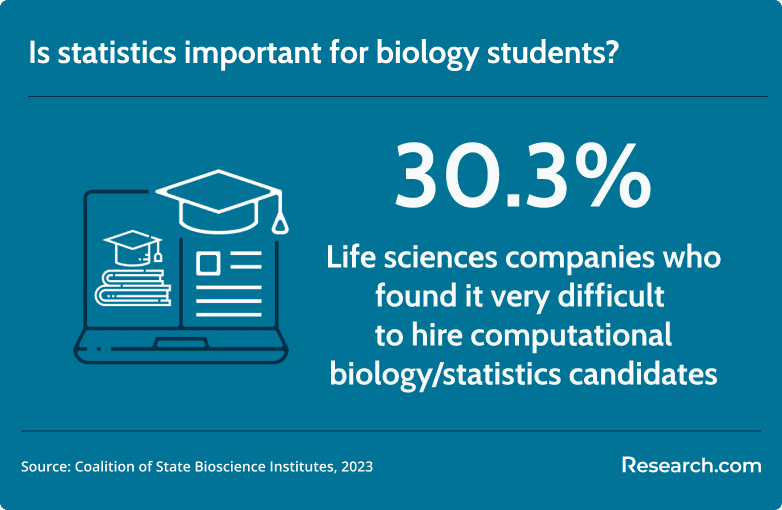
A report from the Coalition of State Bioscience Institutes (CSBI) found that 30.3% of life sciences companies struggled to find candidates proficient in computational biology and statistics. That skills gap makes quantitative training especially important for biology students who want to compete for roles in biotechnology, research, health data, or life sciences analytics.
What are the emerging trends in online biology programs?
Online biology education is changing as science work becomes more digital, data-driven, and interdisciplinary. Programs increasingly use virtual lab platforms, AI-enhanced simulations, remote collaboration tools, digital microscopy, bioinformatics exercises, and real-world datasets. These tools do not replace every type of physical lab work, but they can help students practice experimental reasoning, data interpretation, and scientific communication from a distance.
Another important trend is the closer connection between biology, computing, public health, environmental sustainability, and biotechnology. Students who add statistics, coding, data analysis, regulatory awareness, or scientific writing may be better positioned for roles that require more than basic biological knowledge. Some learners also use an online biology degree as a foundation for graduate education, including cost-conscious pathways such as cheapest doctoral programs.
How can you maximize success in an online biology program?
Success in an online biology program depends on structure. Biology courses require steady effort because concepts build on one another, lab reports take time, and quantitative assignments often cannot be rushed the night before they are due.
- Create a weekly science schedule: Reserve separate time for lectures, readings, problem sets, lab work, discussion posts, and exam review.
- Use office hours early: Contact instructors before you fall behind, especially in chemistry, statistics, genetics, and physics.
- Build lab documentation habits: Keep organized notes, data files, screenshots, calculations, and lab reflections.
- Develop quantitative skills: Take statistics seriously and seek extra support if you are new to data analysis.
- Connect with classmates: Form online study groups, share accountability check-ins, and participate in discussion forums.
- Use advising strategically: Ask advisors to map prerequisites, transfer credits, lab requirements, and graduation timing.
- Seek applied experience: Look for internships, research assistantships, volunteer roles, field projects, or local lab experiences.
Students still exploring academic direction can compare biology with other college programs to see which major best matches their interests, skill profile, and career goals.
Is an online biology degree a cost-effective investment?
An online biology degree is cost-effective when the total price is manageable, the program is accredited, credits transfer efficiently, and the degree supports a realistic career or graduate school plan. It is less cost-effective if students borrow heavily without a clear target, choose a program that lacks needed lab experiences, or discover too late that their courses do not meet advanced program requirements.
| ROI factor | What to examine | Better decision |
| Total cost | Tuition, fees, lab materials, books, technology, travel, and time away from work. | Compare total program cost, not only advertised tuition. |
| Credit transfer | How many prior credits count toward the major and graduation. | Get an official credit evaluation before enrolling. |
| Career alignment | Whether the degree leads directly to your target job or mainly prepares you for graduate study. | Match the curriculum to specific roles, not a general interest in science. |
| Graduate prerequisites | Required chemistry, physics, biology, statistics, and lab courses. | Ask graduate or professional schools what they accept before choosing courses. |
| Debt level | Expected borrowing compared with realistic entry-level earnings. | Limit loans where possible and pursue scholarships, employer aid, and transfer credits. |
Students who want a lower-cost starting point may also compare bachelor’s programs with shorter credentials or transfer-oriented options, including Research.com’s overview of associate degree online cost.
Are online biology degrees recognized by employers?
Employers are most likely to respect an online biology degree when it comes from an accredited institution and the graduate can show relevant skills. The diploma format matters less than accreditation, coursework, lab exposure, internships, research experience, technical ability, and how well the candidate explains their preparation.
For research-heavy, clinical, or regulated jobs, employers may look for more than a bachelor’s degree. They may ask about laboratory methods, certifications, licensure eligibility, graduate education, data analysis, or specific industry experience. Some students use the degree as a bridge into further study, including options such as the easiest masters degree to get when their career path requires additional credentials.
What research or internship opportunities do online biology programs offer?
Research and internship options vary widely. Some online programs include remote research projects using public datasets, virtual lab assignments, faculty-supervised literature reviews, industry collaborations, or capstone projects. Others encourage students to arrange local internships with hospitals, environmental organizations, biotech companies, schools, or laboratories.
Students interested in research should ask whether online learners can join faculty projects, attend research seminars, complete independent study, present at student conferences, or receive support finding local placements. Those considering advanced research careers can also explore longer-term pathways, including accelerated doctoral options such as a 1 year doctorate program, while verifying whether the format fits their field and goals.
What types of specializations are available in online biology programs?
Specializations help students focus their biology education on a career direction or graduate school pathway. Not every online program offers formal concentrations, but many allow students to choose electives that function like a specialization.
| Specialization | Focus | Career or graduate study connection |
| Molecular Biology | DNA, RNA, proteins, gene regulation, and cellular processes. | Useful for biotechnology, genetics, biomedical research, and medicine-related study. |
| Ecology and Environmental Biology | Biodiversity, ecosystems, conservation, environmental change, and organism-environment relationships. | Supports work in conservation, environmental consulting, wildlife agencies, and sustainability. |
| Microbiology | Bacteria, viruses, fungi, disease, environmental microbes, and microbial processes. | Connects to healthcare, pharmaceuticals, food safety, environmental monitoring, and research. |
| Biotechnology | Application of biological systems to products, processes, genetic engineering, agriculture, and medicine. | Prepares students for biotech, product development, research support, and life sciences companies. |
| Marine Biology | Ocean organisms, marine ecosystems, conservation, and environmental pressures on marine life. | Relevant for conservation, environmental research, marine agencies, and wildlife protection organizations. |
| Forensic Biology | Biological evidence, DNA analysis, identification methods, and criminal investigation support. | Can support forensic science, law enforcement, laboratory work, or related criminal justice careers. |
Students drawn to forensic work may also consider interdisciplinary graduate options such as forensic psychology masters programs, depending on whether their interest is biological evidence, criminal behavior, investigation, or the justice system.
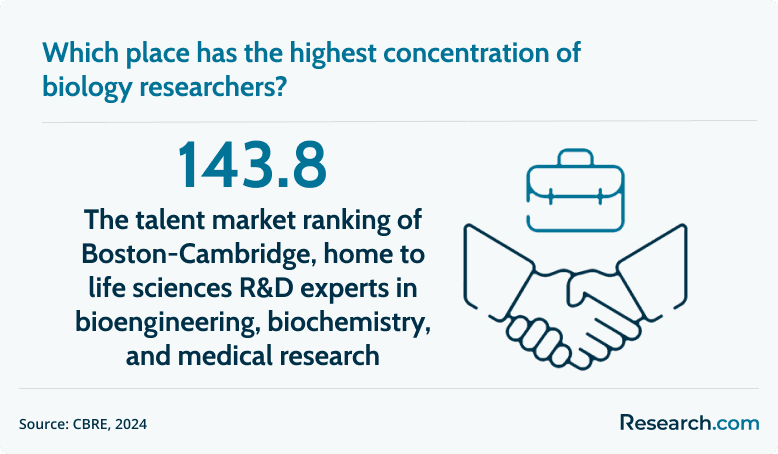
Specialization can matter geographically as well as academically. A CBRE Life Sciences R&D Talent report (2024) identifies major life sciences talent markets such as Boston-Cambridge with a 143.8 market ranking, the San Francisco Bay Area with 128.1, and Washington, D.C.-Baltimore with 127.6. These hubs include concentrated expertise in areas such as bioengineering, biochemistry, and medical research, which shows why targeted skills can matter in competitive life sciences markets.
How to choose the best online biology program?
The best online biology program is the one that fits your career goal, learning style, budget, and lab needs. A low tuition rate is helpful, but it should not outweigh accreditation, prerequisite alignment, student support, or graduate school compatibility.
| Selection factor | What to check | Red flag |
| Accreditation | Institutional accreditation from a recognized accrediting body. | The school is unclear about accreditation or uses misleading approval language. |
| Curriculum | Required biology, chemistry, physics, statistics, labs, electives, and capstone work. | The program lacks courses required for your intended job or graduate program. |
| Lab format | Virtual labs, at-home kits, hybrid residencies, local options, and transferred lab credits. | You learn about required travel or lab fees only after enrollment. |
| Faculty access | Instructor office hours, advising availability, research interests, and mentorship options. | Online students have limited access to biology faculty or advisors. |
| Student support | Career services, tutoring, technical help, library access, disability services, and transfer advising. | Support exists on paper but is not designed for online learners. |
| Cost and aid | Total price, net price, scholarships, employer aid, loans, and transfer savings. | The advertised tuition excludes major fees or residency travel costs. |
| Career outcomes | Internship support, alumni pathways, graduate school placements, and employer connections. | The school makes broad salary claims without explaining role differences or additional requirements. |
Questions to ask before enrolling
- Is the institution accredited, and will credits transfer to other accredited schools?
- Which biology, chemistry, physics, statistics, and lab courses are required?
- Are any labs, exams, orientations, or residencies required in person?
- Does the curriculum meet prerequisites for medical, dental, veterinary, pharmacy, teaching, or graduate programs I may pursue?
- How many of my previous credits will count toward the degree and the biology major?
- What is the full cost, including fees, lab kits, textbooks, technology, and travel?
- What research, internship, fieldwork, or capstone options are available to online students?
- How do online students access tutoring, advising, faculty office hours, and career services?
Common mistakes to avoid
- Choosing a program without checking accreditation: This can affect aid, transfer, graduate school, and employer recognition.
- Focusing only on tuition: Lab fees, travel, technology, books, and lost work time can change the true cost.
- Assuming all online labs are accepted everywhere: Some graduate and professional programs may have specific lab expectations.
- Ignoring transfer credit policies: A generous transfer policy can save time, while a restrictive one can extend the degree.
- Relying only on rankings: Rankings are helpful, but fit depends on your goals, schedule, prerequisites, and support needs.
- Assuming salary outcomes are guaranteed: Biology pay varies by role, location, credentials, experience, and industry.
What career paths are available for graduates of online biology programs?
A biology degree can lead to many occupations, but some roles require graduate education, certification, licensure, or specialized experience. Students should treat the bachelor’s degree as a foundation and build targeted skills through labs, internships, research, teaching preparation, data tools, or graduate study.
| Career path | Reported salary | What the role does |
| Data Scientists | $119,040 | Use statistical models and algorithms to interpret complex datasets, including genomic, medical, or environmental data. |
| Clinical Trial Managers | $108,722 | Coordinate clinical trial planning, compliance, research teams, data collection, and study progress. |
| Genetic Counselors | $98,130 | Help patients and families understand genetic conditions, testing results, and family planning implications. |
| Microbiologists | $93,380 | Study bacteria, viruses, fungi, and other microorganisms in health, food, environmental, or research contexts. |
| Environmental Specialists | $86,710 | Analyze environmental problems, monitor compliance, evaluate pollution or waste issues, and support sustainability strategies. |
| Pharmaceutical Scientists | $80,974 | Contribute to drug and treatment development, safety testing, experiments, and research documentation. |
| Wildlife Biologists | $75,740 | Study animals, habitats, ecosystems, population trends, and effects of human activity on wildlife. |
| High School Teachers | $73,800 | Teach biology topics such as cells, ecosystems, genetics, and anatomy, often with experiments and demonstrations. |
| Health Education Specialists | $69,790 | Teach communities about health promotion, disease prevention, nutrition, and wellness practices. |
| Clinical Laboratory Technologists and Technicians | $62,870 | Perform tests on patient samples and provide laboratory data used in diagnosis, treatment, and disease monitoring. |
Students interested in teaching should confirm state requirements for licensure, student teaching, exams, and approved educator preparation programs. Research.com’s guide to online teaching programs can help prospective biology teachers compare education-focused pathways.
This chart displays the average salaries of some careers biology graduates can pursue.
Can an online biology degree accelerate your advanced studies?
An online biology degree can support advanced study if the program includes the prerequisites required by the graduate or professional school you want to enter. Students commonly use biology as preparation for public health, biomedical sciences, pharmacy, genetics, environmental science, education, healthcare administration, or research-focused graduate programs.
Acceleration is possible when students choose a school with transfer-friendly policies, bridge pathways, combined degree options, or graduate courses that can apply later. Some professionals also compare flexible graduate routes such as 1-year master's programs. Before choosing an accelerated option, verify admissions requirements, accreditation, field expectations, and whether the shorter timeline provides enough depth for your career goal.
What is the job market for graduates with a biology degree?
The job market for biology graduates is broad rather than single-track. Biology degree holders may work in healthcare, life sciences, education, environmental science, management, research support, pharmaceutical settings, or data-oriented science roles. Opportunities tend to improve when graduates add technical skills, internships, certifications, graduate education, or specialized lab experience.
BLS reports (2024b) list the following annual job openings for selected biology-related careers:
- Clinical Laboratory Technologists & Technicians: 24,200
- Data Scientists: 20,800
- Pharmacists: 14,200
- Environmental Specialists: 8,500
Most life, physical, and social science occupations are projected to grow faster than the average for all occupations, generating 148,400 job openings annually from 2023 to 2033 (BLS, 2024c). Healthcare remains especially important for biology graduates, including paths connected to clinical research, laboratory testing, public health, and advanced pharmacy education such as an online doctor of pharmacy program.
Still, students should be realistic. A biology bachelor’s degree can open doors, but many higher-paying or specialized roles require graduate degrees, licensure, certification, or direct experience. The strongest candidates usually combine academic biology with data skills, communication, research exposure, and applied training.
This chart displays the job outlook of some biology careers.
References:
- Ma, J., Pender, M., & Oster, M. (2024). Trends in College Pricing and Student Aid 2024. College Board. https://research.collegeboard.org/media/pdf/Trends-in-College-Pricing-and-Student-Aid-2024-ADA.pdf
- National Center for Education Statistics. (2023, September). Bachelor's degrees conferred by postsecondary institutions, by field of study: Selected academic years, 1970-71 through 2021-22. Digest of Education Statistics. https://nces.ed.gov/programs/digest/d23/tables/dt23_322.10.asp?current=yes
- U.S. Bureau of Labor Statistics. (2024a, August 29). Field of Degree: Biology. Occupational Outlook Handbook. https://www.bls.gov/ooh/field-of-degree/biology/biology-field-of-degree.htm
- U.S. Bureau of Labor Statistics. (2024b, August 29). Occupational projections, 2023–33, and worker characteristics, 2023 (Numbers in thousands). Employment Projections. https://www.bls.gov/emp/tables/occupational-projections-and-characteristics.htm
- U.S. Bureau of Labor Statistics. (2024c, April 3). Life, Physical, and Social Science Occupations. Occupational Outlook Handbook. https://www.bls.gov/ooh/life-physical-and-social-science
Key Insights
- An online biology degree is most valuable when it is accredited, includes the lab and science prerequisites you need, and aligns with a specific career or graduate school plan.
- Biology is versatile, but it is not always a direct job-training degree. Higher-level roles in research, healthcare, pharmacy, genetics, teaching, and management may require additional education, certification, licensure, or experience.
- Lab format is the most important online biology issue to investigate. Ask whether labs are virtual, at home, local, transferred, or completed through campus residencies.
- Cost comparisons should include tuition, fees, lab materials, books, technology, travel, residency requirements, and transfer credit savings.
- The median annual salary of biology graduates is $71,000, but salary outcomes vary widely by role, location, employer, education level, and specialization.
- Students who build statistics, computational biology, research, scientific writing, and internship experience may be better positioned in a labor market that increasingly values data-driven life science skills.
Other Things You Should Know About Online Biology Degrees
Yes. Most accredited online biology degrees require at least some hands-on lab experience, often completed through local lab kits, virtual simulations, or short on-campus intensives. Programs commonly include 8 to 12 laboratory courses, and schools usually specify whether labs are synchronous, asynchronous, or hybrid.
In 2027, top online biology degree programs commonly offer specializations like molecular biology, environmental biology, and biotechnology. These focus on in-demand skills and knowledge critical for careers in research, conservation, and healthcare industries.


