2027 Online MBA Rankings: Top Accredited Programs in America

Co-Founder and Chief Data Scientist
An online MBA can be a smart career move if you need graduate business training without leaving your job or relocating. The harder decision is choosing a program that will be respected by employers, fit your schedule, justify its cost, and support the career outcome you want—promotion, career change, entrepreneurship, consulting, finance, operations, healthcare leadership, or general management.
The online MBA market is crowded, and rankings can help narrow the field. Still, a high ranking should not be the only reason to apply. Accreditation, total tuition, admissions requirements, faculty quality, career services, alumni reach, program format, and employer recognition all matter. A program that ranks highly but does not match your goals, budget, or availability may not be the best choice.
This guide explains how to evaluate top accredited online MBA programs in America. It covers the accreditations that matter, how rankings are built, what ranking factors actually signal quality, how cost and salary outcomes should be interpreted, and what to expect from admissions at ranked programs.
Key Benefits of Learning About Top Accredited Online MBA Programs in America
- Understanding top online MBA rankings helps identify programs that open doors to high-demand roles in management, finance, marketing, operations, and leadership positions.
- Graduates from highly ranked, accredited online MBA programs often report higher median salaries, giving insight into which programs may provide the best return on investment.
- Knowing the top programs allows students to choose online MBAs that fit their schedules, enabling them to work full-time while earning a prestigious degree.
- Rankings highlight accredited programs with strong faculty, comprehensive curricula, and recognized credentials, ensuring the degree carries value with employers and industry networks.
What accreditation should you look for in top online MBA programs in America?
For an online MBA, the strongest signal is a regionally accredited university with recognized business-school accreditation. Accreditation does not make every program equally valuable, but it helps confirm that the school has been reviewed for academic quality, institutional stability, student support, and curriculum standards.
AACSB (Association to Advance Collegiate Schools of Business)
AACSB is widely viewed as the most selective business accreditation. Fewer than 6% of business programs hold this credential. It reviews areas such as faculty qualifications, curriculum quality, research activity, strategic planning, and student outcomes. For applicants comparing competitive online MBAs, AACSB accreditation is often the preferred benchmark because many employers, ranking organizations, and peer institutions recognize it as a strong quality marker.
ACBSP (Accreditation Council for Business Schools and Programs)
ACBSP places more emphasis on teaching quality, student learning, and continuous improvement. It can be a strong fit for students who want applied business education and practical management training rather than a research-heavy academic environment. Many regional universities and career-focused business schools hold ACBSP accreditation.
IACBE (International Accreditation Council for Business Education)
IACBE reviews whether business programs meet stated educational goals and demonstrate student learning outcomes. It is generally less prestigious than AACSB in ranking and employer-reputation contexts, but it still indicates that the program has gone through a formal business-accreditation review process.
Regional Institutional Accreditation (e.g., HLC, SACSCOC, MSCHE, WSCUC, NECHE, NWCCU)
Regional institutional accreditation is essential. It applies to the university as a whole, not just the business school, and it affects federal financial aid eligibility, credit transfer, graduate-school recognition, and employer confidence. A reputable online MBA should come from a regionally accredited institution.
How to use accreditation when comparing programs
| Accreditation type | What it tells you | Why it matters for an online MBA |
| AACSB | The business school meets a highly selective global standard | Often strongest for reputation, rankings, faculty quality, and employer confidence |
| ACBSP | The program emphasizes teaching quality and student learning | Useful for applied, professionally oriented MBA programs |
| IACBE | The program is reviewed for outcomes and continuous improvement | Can support credibility, especially when paired with strong institutional accreditation |
| Regional institutional accreditation | The university meets broad academic and administrative standards | Important for financial aid, transferability, employer recognition, and degree legitimacy |
Here are five highly ranked AACSB-accredited online MBA programs in the U.S., based on recent data:
- Indiana University – Kelley School of Business (Kelley Direct MBA)
- University of North Carolina – Kenan–Flagler Business School (MBA@UNC)
- Carnegie Mellon University – Tepper School of Business (Online Hybrid MBA)
- University of Florida – Warrington College of Business (Online MBA)
- University of Michigan – Ross School of Business (Ross Online MBA)
How does AACSB accreditation impact online MBA rankings?
AACSB accreditation can strongly affect online MBA rankings because it aligns with several categories ranking organizations commonly measure: academic quality, faculty credentials, admissions strength, student outcomes, and institutional reputation. It does not automatically make a program top-ranked, but it often gives a school a meaningful advantage.
Ranking organizations such as U.S. News, Poets & Quants, and The Princeton Review use different formulas, but AACSB-accredited schools tend to perform well because accreditation supports the underlying evidence those rankings value.
- It signals a high quality threshold: AACSB is often treated as the highest business-school accreditation standard. Only about 6% of business schools worldwide have it, so programs with this credential are more likely to be viewed as academically rigorous.
- It supports faculty-quality measures: AACSB schools must maintain qualified faculty and demonstrate scholarly or professional engagement. Rankings that consider faculty credentials, research activity, and instructional strength often reward this.
- It reinforces student-outcome reporting: AACSB-accredited schools are expected to track learning outcomes and institutional effectiveness. That can support stronger reporting on graduation, retention, employment, and salary measures.
- It can act as a screening factor: Some rankings focus heavily on accredited business schools, and AACSB programs are more likely to appear in competitive ranking pools.
- It improves reputation scores: Peer institutions, employers, and recruiters often recognize AACSB as a trusted signal. Reputation surveys can therefore favor schools with this accreditation.
The practical takeaway: AACSB accreditation should be treated as a strong positive, especially if you want a ranked online MBA with broad employer recognition. It should still be weighed alongside price, format, specialization options, admissions fit, and career support. For those seeking quality programs with a strong return on investment, you might want to explore affordable MBA programs.
How does accreditation affect salary outcomes?
Accreditation can influence salary outcomes indirectly. It does not guarantee a raise, promotion, or specific job offer, but it can improve how employers, recruiters, and graduate admissions offices evaluate the degree. For online MBA students, that credibility matters because hiring managers may look closely at the reputation and quality controls behind an online program.
AACSB accreditation is especially relevant because employers often associate it with rigorous faculty standards, structured assessment, stronger business curricula, and established institutional resources. Graduates from accredited programs may also benefit from better career services, larger alumni networks, employer partnerships, and recruiting pipelines.
The salary impact depends on several personal and market factors:
- Your pre-MBA experience: Students with management experience, technical expertise, or industry credentials often see stronger returns than those using the MBA as an early-career credential.
- Your industry and function: Salary growth can vary significantly across finance, consulting, technology, healthcare, operations, nonprofit leadership, and entrepreneurship.
- Your location and employer market: Regional labor markets and employer demand affect compensation as much as degree prestige.
- Your program’s network: Accredited programs with active alumni, employer access, and career coaching can make it easier to reach higher-paying roles.
- Your ability to use the MBA strategically: The degree has more value when paired with a clear career plan, targeted networking, and measurable leadership results.
Data from recent surveys show that graduates from top AACSB-accredited online MBA programs typically report higher median salaries and faster salary growth than peers from non-accredited programs. The safer way to interpret that finding is that accreditation improves the probability of stronger outcomes; it does not create the outcome by itself. If you're looking for high quality without the high price tag, consider exploring affordable online MBA programs.
Regional and national accreditation differ in recognition, transferability, and long-term academic value. For most online MBA applicants, regional accreditation is the safer and more widely accepted institutional standard.
Regional accreditation is granted by accrediting agencies such as SACSCOC, MSCHE, and HLC. It applies to the university as a whole and is commonly expected by employers, graduate schools, licensing-related pathways where relevant, and other accredited universities. Credits from regionally accredited schools are generally easier to transfer, though transfer is never automatic and depends on the receiving institution.
National accreditation is often associated with career-focused, vocational, religious, or fully online institutions. Organizations such as ACICS or DEAC may accredit these schools. Nationally accredited institutions can be legitimate, but their credits may be harder to transfer, and some employers or universities may view the degree as less competitive than one from a regionally accredited school.
| Factor | Regional accreditation | National accreditation |
| Recognition | Broadly recognized across U.S. higher education | Recognition may be more limited depending on the school and accreditor |
| Credit transfer | Usually stronger transfer potential | Credits may be less likely to transfer to regionally accredited schools |
| Employer perception | Generally stronger for graduate business degrees | May require more explanation, especially for competitive roles |
| Best use case | Most online MBA students seeking broad career mobility | Students with a specific reason to choose a career-focused institution |
For an online MBA, regional accreditation plus AACSB or another recognized business accreditation usually offers the strongest combination of credibility, transferability, and career impact.
Online MBA rankings are usually built from a mix of school-reported data, surveys, public information, and reputation measures. Organizations such as U.S. News, Poets & Quants, and The Princeton Review do not all use the same formula, so one school may rank differently across lists. That is why rankings are useful as a starting point, not as a final decision tool.
Common ranking inputs include:
- Graduation and retention rates – strong completion patterns can suggest student support, academic fit, and program quality.
- Employment outcomes and salaries – ranking groups may consider job placement, salary growth, or reported compensation after graduation.
- Faculty credentials – schools may be evaluated on instructor qualifications, academic expertise, research engagement, and professional experience.
- Accreditation – AACSB or another recognized business accreditation may be required or heavily favored.
- Student experience and engagement – class size, live sessions, online platforms, group work, advising, and networking opportunities can affect scores.
- Admissions selectivity – applicant quality, work experience, academic background, and test-score policies may be considered.
- Reputation – peer assessments and employer perceptions can influence how programs are positioned.
Some rankings also incorporate cost and return on investment (ROI). Others emphasize student satisfaction or technology-supported learning. Before relying on any list, check the methodology and ask what it rewards. A program may rank highly because of selectivity and reputation, while another may be better for affordability, flexibility, or a specific specialization. If you are exploring admission options, you might be interested in the best online MBA without GMAT.
The best online MBA programs tend to rank well because they combine academic credibility with measurable student value. Rankings usually reward programs that are selective, well-resourced, career-oriented, and respected by employers and peer institutions.
- Accreditation – AACSB-accredited programs are often favored because they meet rigorous business-school standards.
- Faculty quality – Rankings may evaluate faculty credentials, teaching effectiveness, professional background, and research output.
- Student outcomes – Graduation rates, job placement, promotion outcomes, and post-MBA salaries can strongly affect rank.
- Admissions selectivity – Programs with stronger applicant pools, higher average GPAs, substantial work experience, and competitive standardized test profiles may score higher.
- Curriculum and specializations – Relevant electives, STEM tracks, leadership development, analytics, finance, healthcare, entrepreneurship, and technology-focused options can improve program appeal.
- Student support and resources – Career coaching, academic advising, online learning technology, networking events, and access to alumni can separate stronger programs from basic online offerings.
- Reputation – Peer assessments from other business schools and employer perceptions influence overall rank.
What rankings may not show clearly
Rankings can miss factors that matter to working adults. Before applying, look beyond the published rank and confirm whether the program’s schedule, live-session requirements, residency expectations, pacing options, and workload match your life. A highly ranked program can still be a poor fit if it requires more synchronous participation than your job allows or lacks the specialization you need.
The cost of a top-ranked online MBA program in the U.S. varies widely by institution, program length, and public or private status. On average, tuition for highly ranked programs ranges from $40,000 to $120,000 for the entire program. Public universities often offer lower rates for in-state residents, while private institutions typically charge the same tuition for all students.
Tuition is only one part of the total cost. Students should also check technology fees, course materials, graduation fees, travel for residencies or immersion experiences, and the opportunity cost of time spent away from work or family responsibilities. Even fully online programs may include required in-person components, so read the cost page and program handbook carefully before committing.
| Cost item | Why it matters |
| Tuition | The largest expense and the main basis for comparing programs |
| Fees | Technology, student services, and graduation fees can add to the final bill |
| Residency or travel costs | Hybrid or immersion requirements can increase total cost |
| Books and materials | Business cases, simulations, and digital platforms may carry additional costs |
| Financing terms | Loans, scholarships, employer reimbursement, and payment plans affect affordability |
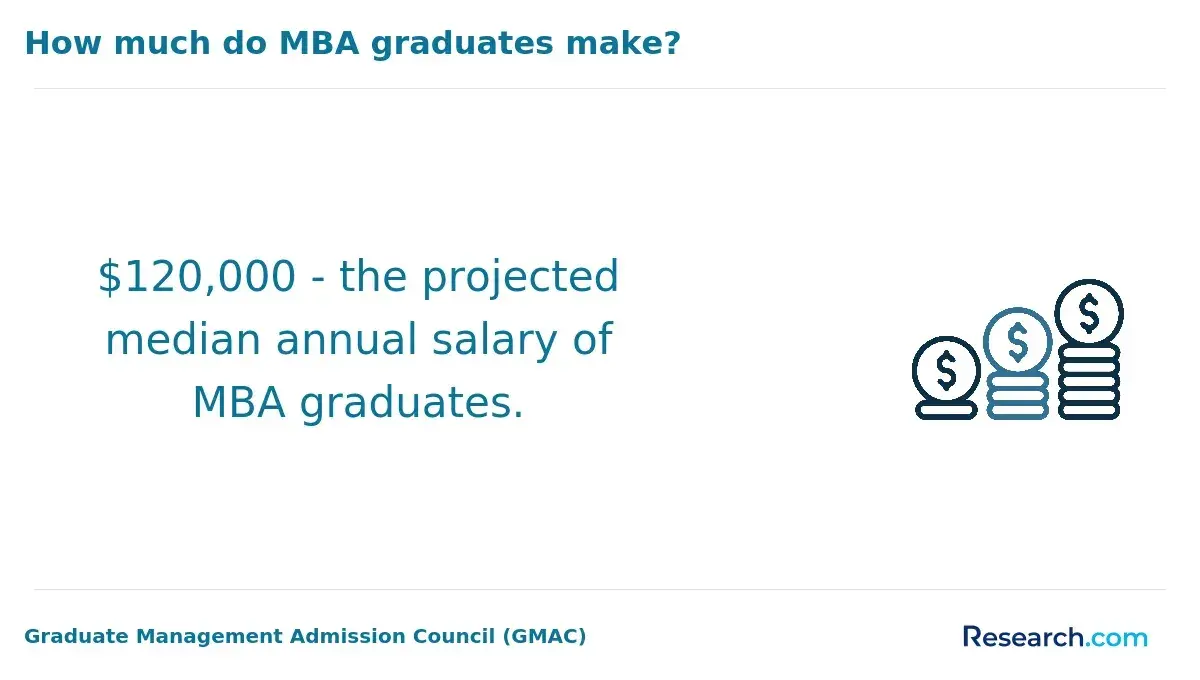
Despite the high upfront cost, many students view a top-ranked online MBA as a worthwhile investment because of the strong career outcomes and earning potential. Graduates from these programs often report median starting salaries between $90,000 and $120,000, and the programs provide access to extensive alumni networks, career services, and employer connections. Many schools also offer financial aid, scholarships, and employer tuition reimbursement to help offset costs.
Yes. Some affordable online MBA programs are AACSB-accredited and still offer strong value, especially for students who prioritize total cost, flexibility, and practical career advancement over brand prestige alone. Affordable does not mean low quality, but it does require careful verification of accreditation, curriculum, student support, and total tuition.
Examples and cost references include:
- According to College Consensus, there are 40 very affordable AACSB-accredited online MBA programs, including several under $15,000 in total tuition.
- Georgia Southwestern State University offers an online MBA for around $9,500 total, and it’s AACSB-accredited.
- University of Texas Permian Basin has a 12-month, AACSB-accredited program with total tuition in the ballpark of $11,700–$15,000, depending on credits.
- Florida Gulf Coast University offers an accelerated online MBA that’s fully AACSB-accredited and costs about $12,300 total.
How to evaluate an affordable ranked MBA
- Confirm total program cost: Look at tuition, fees, books, residency travel, and graduation charges rather than cost per credit alone.
- Check accreditation first: Regional institutional accreditation and AACSB accreditation are especially important for credibility.
- Review the format: Accelerated programs can save time but may be demanding for full-time professionals.
- Compare career support: Lower tuition is less valuable if the program offers limited advising, networking, or employer access.
- Look at course availability: Make sure required courses and concentrations are offered often enough for your desired graduation timeline.
If cost is a major factor, there are ranked, high-quality online MBAs that do not carry the six-figure price tag. Just make sure to compare total tuition, accreditation, format, and career services side by side. You may also want to compare these to affordable EMBA programs.
Higher-ranked online MBA programs often lead to better salary outcomes, but the relationship is not automatic. Rankings tend to reflect factors that can support stronger compensation: employer reputation, faculty quality, career services, alumni networks, admissions selectivity, and graduate outcomes. Those advantages can help students access higher-paying roles, but individual results still depend on experience, industry, geography, performance, and career strategy.
Graduates from top-ranked programs typically have stronger access to alumni networks, recruitment pipelines, and well-known employers. That access can matter most for students trying to switch industries, move into leadership, or compete for roles where school reputation is considered alongside work history.
However, a higher-ranked program is not always the best financial choice. A less expensive accredited online MBA may produce a better personal return if you are already employed, have employer tuition support, plan to stay in the same industry, or need the degree mainly for promotion eligibility. The best question is not “Which program ranks highest?” but “Which program gives me the strongest career outcome for the cost and time I can commit?”
How competitive are admissions for ranked online MBA programs?
Admissions for ranked online MBA programs are generally moderately to highly competitive, though usually less competitive than elite full-time, on-campus MBA programs. Most ranked programs look for applicants who can show academic readiness, meaningful professional experience, leadership potential, and clear career goals.
Acceptance rates vary by school but typically range from 30% to 60% for highly ranked programs. Competitiveness depends on the school’s reputation, cohort size, applicant demand, and admissions model. Some programs admit students in multiple starts throughout the year, while others use more structured cohorts.
What admissions committees usually evaluate
- Work experience: Career progression, management exposure, project leadership, and measurable business impact can strengthen an application.
- Academic record: Undergraduate GPA, quantitative coursework, and prior graduate study may be reviewed for readiness.
- GMAT or GRE profile: Standardized tests are often optional, but strong scores can help if your academic record is uneven or you are applying to a highly selective program.
- Essays or personal statements: Programs want to see why you need the MBA, why now, and why that specific school fits your goals.
- Recommendations: Strong letters should speak to leadership, judgment, teamwork, communication, and growth potential.
- Interview performance: Some programs use interviews to assess motivation, professionalism, and fit with the online cohort.
Applicants can improve their chances by showing a clear connection between past experience, MBA coursework, and future goals. A focused application with specific career plans is usually stronger than a generic statement about wanting leadership skills or higher pay.
Other Things You Should Know About Online MBA Rankings: Top Accredited Programs in America
Yes. Many accredited online MBA programs use proctored midterms, final exams, or timed case assessments to verify student identity and academic integrity. Common proctoring methods include live remote proctoring or approved test centers, and schools typically spell out these rules in the course syllabus before enrollment.
The minimum GMAT score for Online MBA programs ranked in 2027 typically varies, but many top-tier programs require a score of at least 550. Specific requirements can differ by institution, so it's important to check the admission criteria for each ranked program.
Accreditation for Online MBA programs in 2027 primarily requires recognition by bodies like the AACSB, ensuring quality and consistency. Programs must meet specific educational and operational standards, including curriculum rigor and faculty qualifications, to be listed in the latest rankings.
- Accredited Online College. (n.d.). Affordable online AACSB accredited MBA programs. https://www.accredited-online-college.org/affordable-online-aacsb-accredited-mba-programs/
- College Consensus. (2024). The 40 most affordable AACSB-accredited online MBA programs for 2025 [Press release]. PR Newswire. https://www.prnewswire.com/news-releases/college-consensus-announces-the-40-most-affordable-aacsb-accredited-online-mba-programs-for-2025-302270861.html
- EDsmart. (n.d.). Cheapest online MBA programs. https://www.edsmart.org/online-degrees/cheapest-online-mba-programs/
- Vinappam. (n.d.). What is the total cost of an AACSB accredited online MBA program in the US? https://vinappam.com/what-is-the-total-cost-of-an-aacsb-accredited-online-mba-program-in-the-us-2/