2027 Best Online MBA Programs in the U.S. Ranked & Reviewed

Co-Founder and Chief Data Scientist
Choosing an online MBA is no longer a backup option for professionals who cannot attend campus. In the U.S., 58% of all MBA enrollments were in online formats as of fall 2023, which means many working adults now see online study as a practical path to management, career change, or higher earning potential.
The challenge is deciding which program is worth the time and cost. Tuition, accreditation, employer recognition, flexibility, networking, specializations, and career outcomes can vary widely. A low-cost MBA may be a smart investment if it is credible and aligned with your goals; a well-known program may not be worth the premium if it lacks the support or schedule you need.
This guide is for business graduates, early-career professionals, and mid-career workers evaluating whether an online MBA fits their next move. Developed by career-planning experts with over 10 years of experience, it explains how to compare online MBA programs, assess return on investment, avoid common selection mistakes, and choose a degree that supports real career growth.
Key Benefits of a U.S.-Ranked & Reviewed Online MBA
- It allows you to step into roles such as management consultant, operations director or strategic business lead—with opportunities to contribute to social‑good initiatives like nonprofit strategy or sustainable business transformation.
- According to ZipRecruiter, the average annual salary for professionals holding an MBA in the U.S. is about $165,372 per year.
- An online format gives you the flexibility to continue working full‑time, apply lessons as you go and avoid relocation or commuting constraints.
What makes an online MBA worth it for career growth?
An online MBA is worth considering when it helps you move into better roles, build leadership credibility, and gain business skills without leaving the workforce. The degree is most valuable when the program is accredited, career-focused, affordable for your budget, and connected to the roles you want next.
- Access to managerial roles: Online MBA coursework typically covers strategy, finance, operations, marketing, analytics, and leadership. These skills can support advancement into roles such as operations director, strategy manager, management consultant, product leader, or department head.
- Strong job market demand: U.S. employment in management occupations is projected to grow faster than average, with around 1.1 million annual openings between 2024–2034.
- Ability to keep earning: Many online MBA programs are designed for full-time professionals, allowing you to continue working while studying. This can reduce the opportunity cost compared with leaving your job for a full-time campus program.
- Immediate workplace application: Working students can often apply class projects to real business problems, which may help them show value to managers before graduation.
- Flexible pacing and delivery: Online formats can make it easier to balance coursework with work travel, family responsibilities, and changing schedules.
- Career momentum: For professionals who already have technical or functional experience, an MBA can add broader business judgment, financial fluency, and leadership language that may be expected for senior roles.
The key question is not simply whether an online MBA is “worth it.” It is whether a specific program improves your odds of reaching a specific career goal at a cost you can justify.
How do online MBAs compare to on‑campus programs?
Online and on-campus MBAs can cover similar academic content, but they differ in format, networking style, cost structure, and student experience. The better choice depends on your work situation, learning preferences, location, and career goals.
Enrollment trends
As of fall 2023, 58% of MBA students in the U.S. were enrolled online. That shift shows that online MBA delivery is now a mainstream option rather than a niche alternative. Employers are also more accustomed to seeing online graduate business degrees, especially from accredited and established institutions.
Flexibility and cost
Online programs usually offer more scheduling flexibility than campus programs. They may also reduce or eliminate relocation, commuting, parking, and housing costs. However, tuition varies widely, and some programs require residencies, travel, technology fees, or in-person intensives. Always compare total program cost, not just advertised tuition.
Learning experience
Campus programs may offer more spontaneous interaction, in-person team building, and access to local recruiting events. Online programs require more self-direction and comfort with digital collaboration. Strong online MBAs compensate with live sessions, structured cohorts, faculty access, virtual office hours, group projects, career coaching, and active alumni networks.
Career integration
Online MBA students often stay employed while studying, which lets them connect coursework to current responsibilities. This is useful for professionals seeking promotion with their current employer. Students aiming for a major career pivot should look closely at internship access, employer partnerships, recruiting support, alumni engagement, and whether the program has a record of helping students change industries or functions.
Which format may fit you best?
- Choose online if you need schedule flexibility, want to keep working, cannot relocate, or plan to use the degree to advance from your current professional base.
- Choose on campus if you value daily in-person networking, want an immersive student experience, or are making a career pivot that depends heavily on campus recruiting.
- Consider hybrid if you want online flexibility but still benefit from periodic in-person residencies, networking events, or leadership workshops.
Which online MBA programs are the most affordable?
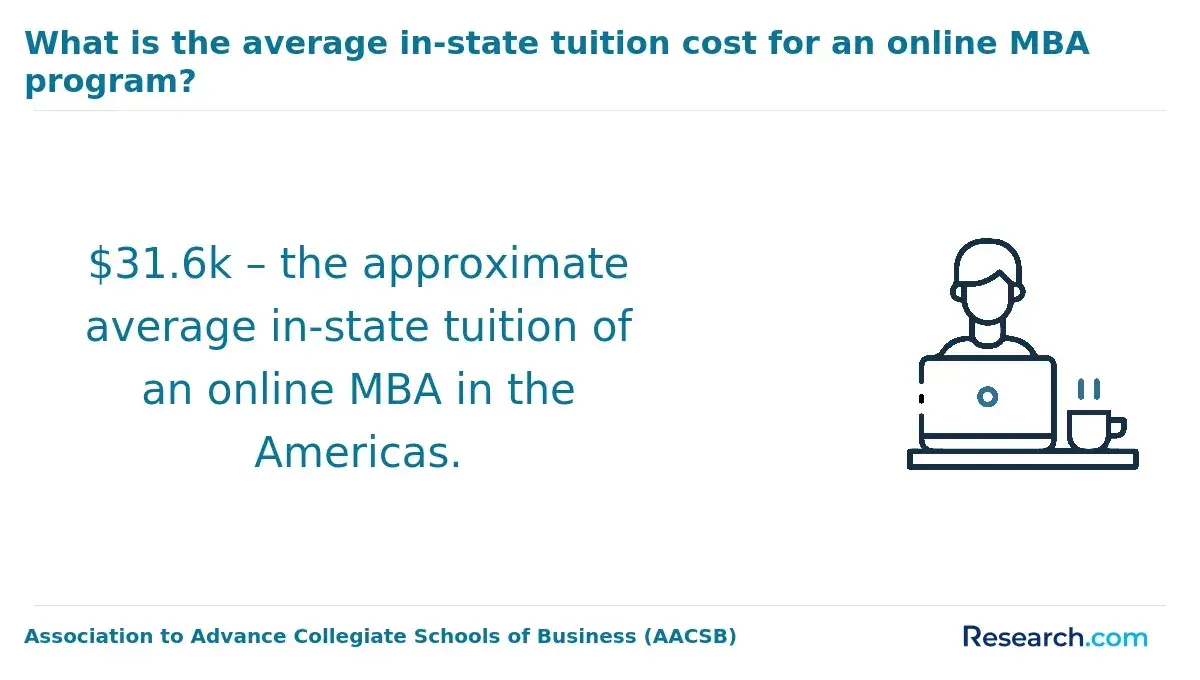
The most affordable online MBA is not always the cheapest one. A strong low-cost option should combine manageable tuition with recognized accreditation, useful concentrations, adequate student support, and a format you can complete while working.
For students focused on value, Cheapest AACSB online MBA no GMAT programs can be especially attractive because they pair lower tuition with business-school accreditation. Before enrolling, confirm current tuition, fees, residency requirements, transfer-credit policies, and whether the listed rate applies to your state or student status.
Examples of affordable online MBA options include:
- Eastern University (Pennsylvania): Out-of-state tuition is about $9,900, making it one of the most affordable AACSB-accredited programs in the U.S.
- University of Texas Permian Basin (Texas): Tuition is approximately $11,729 for out-of-state students, with AACSB accreditation.
- Northeastern State University (Oklahoma): The online MBA costs about $11,540 for out-of-state students, offering 36 credit hours in a format suited for working professionals.
- University of North Georgia (Georgia): Tuition is around $13,732, AACSB-accredited, with specializations in innovation, entrepreneurship, cybersecurity, and ethics.
- Fitchburg State University (Massachusetts): Tracks start at about $13,080 with flexible, accelerated formats.
- Georgia Southwestern State University: Total tuition is approximately $9,900 for the full online program.
- Arkansas Tech University: Online MBA tuition is around $9,400, one of the most budget-friendly options.
- Florida Gulf Coast University: Tuition is roughly $12,322, offering a strong balance of cost and flexibility.
How to compare affordable programs
- Check accreditation first: Lower tuition is less compelling if the degree lacks employer-recognized quality signals.
- Calculate the full cost: Include tuition, fees, books, technology charges, travel, residencies, and any prerequisite courses.
- Review completion flexibility: A program that looks inexpensive may become harder to finish if courses are offered infrequently or required live sessions conflict with work.
- Compare career services: Ask whether online students receive the same advising, resume support, networking access, and employer connections as campus students.
- Look for fit, not just price: The best-value MBA is the one you can complete, afford, and use in your target career path.
The best online MBA specialization depends on the work you want to do after graduation. A concentration should help you signal relevant expertise, build marketable skills, and choose electives that support your next role. Avoid selecting a specialization only because it sounds popular; choose one that matches your industry, strengths, and target job titles.
Finance and financial management
Finance is a strong option for students interested in corporate finance, investment analysis, financial planning, banking, consulting, or executive decision-making. This specialization is especially relevant because roles like financial manager report a median annual salary of about $156,100 in 2023. Review financial manager salary context.
Consider finance if you enjoy quantitative analysis, budgeting, risk evaluation, capital decisions, and performance measurement. It can be useful for professionals moving toward CFO-track roles, finance leadership, or consulting.
Technology management and business analytics
Technology management and business analytics are strong choices for professionals who want to lead digital transformation, data-driven strategy, product operations, systems implementation, or analytics teams. These programs can help bridge the gap between technical specialists and executive leadership.
Look for coursework in data interpretation, digital strategy, information systems, AI applications, analytics tools, cybersecurity management, and decision modeling. This path is often a fit for IT professionals, engineers, analysts, product managers, and operations leaders who want broader business authority.
Operations, supply chain and sustainability
Operations, supply chain, and sustainability concentrations are valuable for students interested in process improvement, logistics, procurement, manufacturing, service operations, or responsible business strategy. Supply-chain resilience and sustainability remain major concerns for organizations, making this path practical for professionals in companies with complex operations.
This specialization may fit you if you like systems thinking, efficiency, vendor management, risk planning, quality improvement, and measurable performance outcomes.
How to choose the right specialization
- Start with target roles: Identify job postings you want and note the skills, tools, and credentials they request.
- Match your background: A specialization can deepen your existing expertise or support a pivot, but a major pivot may require extra projects, certifications, or networking.
- Check course availability: Some concentrations sound strong but offer limited elective choices or infrequent scheduling.
- Evaluate employer value: Ask whether the specialization is recognized in your industry or mainly useful within the school’s curriculum.
- Keep flexibility in mind: A general MBA with carefully selected electives may be better than a narrow concentration if your career plans are still changing.
Online MBA programs are often built for working adults, but flexibility varies by school. Some programs are fully asynchronous and self-paced within course deadlines, while others require live classes, group meetings, residencies, or lockstep cohort schedules. The right fit depends on how predictable your work and personal commitments are.
- Work while you study: Most online MBAs allow you to keep your full-time job while completing coursework, helping you maintain income, benefits, and professional momentum.
- Digital and hybrid delivery: AACSB-accredited schools increasingly offer fully online or hybrid formats, reducing the need to relocate. Hybrid programs may still require travel, so confirm all in-person expectations before enrolling.
- Flexible scheduling: Evening, weekend, and asynchronous classes can help you balance work, study, and family commitments. Asynchronous courses offer the most scheduling freedom, while synchronous courses may provide more real-time interaction.
- Immediate application of learning: You can apply MBA concepts directly in your current role, which may strengthen your performance reviews, internal mobility, or promotion case.
- Program considerations: Check cohort vs. asynchronous formats, employer tuition support, required residencies, course load expectations, exam proctoring rules, and group-project intensity before committing.
Questions to ask before enrolling
- Are classes live, asynchronous, or a mix of both?
- How often are required courses offered?
- Can you slow down or pause enrollment if work demands increase?
- Are there mandatory residencies, orientations, or international trips?
- Do group projects require frequent evening or weekend meetings?
- Are online students eligible for the same career services as campus students?
A flexible program should not simply let you log in from anywhere. It should be structured so a working professional can realistically complete the degree without sacrificing job performance or personal obligations.
An online MBA can support advancement, career change, or broader leadership responsibility across many industries. Its impact depends on your prior experience, program reputation, specialization, network, and how actively you use the degree while enrolled.
Finance and business management
An MBA can help prepare professionals for roles in financial planning, corporate finance, budgeting, performance management, business operations, and internal consulting. Roles like financial manager and management analyst are in high demand, with business and financial occupations projected to have about 942,500 annual openings between 2024–2034.
This path may fit professionals with backgrounds in accounting, finance, sales operations, consulting, or business analysis who want to move into higher-level decision-making.
Technology and IT leadership
Professionals with technical experience may use an online MBA to move toward IT-systems manager, technology strategy lead, product leadership, digital transformation, or business operations roles in technology-focused organizations.
The MBA can be especially useful for technical workers who need stronger finance, leadership, strategy, and communication skills to manage teams or influence executives.
Operations and strategy
For professionals aiming to move from specialist roles to general management, an online MBA can provide tools for operations planning, process improvement, organizational strategy, and cross-functional decision-making. This path may lead to roles in operations management, supply chain leadership, business development, strategy, or general management.
Career paths commonly supported by an online MBA
- Promotion within your current employer: Useful when your organization values graduate business education for leadership tracks.
- Function change: Helpful for moving from technical, analytical, or specialist roles into management, strategy, finance, or operations.
- Industry change: Possible, but usually requires targeted networking, projects, and a strong explanation of transferable skills.
- Entrepreneurship: Useful for founders who need stronger grounding in finance, marketing, operations, and organizational growth.
- Consulting: Stronger outcomes are more likely when the program offers case-based learning, alumni access, and employer connections.
An online MBA does not automatically guarantee a new job or promotion. It works best when paired with a clear career plan, relevant experience, strong networking, and evidence that you can apply business concepts in real settings.
Accreditation and rankings both matter, but they serve different purposes. Accreditation is a quality-control signal. Rankings are reputation and comparison tools. Accreditation should be a baseline requirement; rankings should be one input among many.
Importance of accreditation
Accreditation signals that a business school has met external standards for curriculum, faculty qualifications, academic processes, and outcomes. As of May 2025, about 1,053 institutions globally held AACSB accreditation, the gold standard in business education.
For online MBA students, accreditation can affect employer perception, transferability, access to certain forms of aid, and long-term credibility. It is especially important if you plan to change employers, work in a competitive industry, or pursue future graduate or professional education.
Role of rankings
Rankings can help you identify programs with strong reputations, student outcomes, faculty resources, alumni networks, and online learning infrastructure. However, rankings use different methodologies, and a highly ranked program is not automatically the best choice for your budget, schedule, or career goals.
When reviewing rankings, look beyond the number. Compare graduation outcomes, student support, online student engagement, class size, faculty access, career services, alumni activity, and whether the online MBA has the same academic standards as the school’s campus-based options.
How to use both in your decision
- Start with accreditation: Confirm the institution and business school meet credible standards.
- Use rankings as a filter: Rankings can help you build a shortlist, but they should not override fit or affordability.
- Verify online quality: Ask whether online students learn from the same faculty, access the same career resources, and earn the same diploma wording as other MBA students.
- Review outcomes: Look for transparent information on graduation, retention, job placement, promotions, alumni satisfaction, and salary reporting where available.
- Consider employer recognition: A program with strong regional employer ties may be more useful than a distant program with a slightly higher ranking.
An online MBA can be manageable for working professionals, but it is not easy. The main challenges are time pressure, self-discipline, limited in-person networking, variable employer support, and the risk of choosing a program that does not match your needs.
- Completion rates and discipline: Some online MBA programs report six-year graduation rates of 85–100%, but success depends on self-motivation, time management, and consistent progress.
- Balancing work and study: Managing a full-time job while keeping up with coursework, virtual cohorts, group projects, exams, and leadership activities can be demanding.
- Limited employer support: Some professionals may receive little tuition assistance, schedule flexibility, or recognition for graduate study. Discuss expectations with your manager before enrolling if employer support matters to your plan.
- Networking barriers: Online students may need to be more intentional about building relationships with classmates, faculty, alumni, and career staff.
- Technology and communication demands: Online learning requires reliable technology, comfort with virtual collaboration tools, and clear written communication.
- Choosing the right program: Programs with strong student services, active cohort interaction, and transparent graduation and retention data can help reduce obstacles and improve the likelihood of success.
Common mistakes to avoid
- Choosing a program based only on tuition without checking accreditation or outcomes.
- Underestimating weekly study time and group-project demands.
- Assuming online students receive the same career support without verifying it.
- Ignoring required residencies or live-session schedules until after admission.
- Selecting a specialization before clarifying target roles.
- Borrowing for a program without estimating total cost and realistic career payoff.
The best way to handle these challenges is to choose a program that matches your schedule, learning style, finances, and career plan before you enroll.
Financing an online MBA starts with knowing the full cost and identifying funding sources before you apply. Tuition is only one part of the budget. Fees, books, technology requirements, travel, residencies, and time away from work can also affect affordability. Choosing Affordable online MBA programs no GMAT can make the degree easier to finance, but you should still compare total costs carefully.
- Employer tuition assistance: Many companies offer partial or full reimbursement for MBA programs, which can significantly lower your total cost. Ask about annual limits, grade requirements, repayment clauses, approved-school lists, and whether the benefit applies to online programs.
- Scholarships and grants: Check the school’s financial aid offerings for merit-based or need-based scholarships specifically for online MBA students. Also ask whether admitted students are automatically considered or must submit a separate application.
- Student loans: Federal or private loans can help cover tuition, fees, and related expenses, with repayment plans often starting after graduation. Borrow only what you need and compare repayment obligations against realistic career outcomes.
- Personal savings: Using savings allows you to avoid debt but requires careful budgeting and planning. This may be a strong option if you can pay gradually while enrolled.
- Cost-benefit analysis: Evaluate total tuition, cost per credit, required residencies, program length, lost time, employer support, and potential salary increase to assess return on investment.
Financing checklist
- Request a complete cost estimate from each school.
- Confirm whether tuition differs for in-state, out-of-state, online, or international students.
- Ask whether the program has additional fees beyond tuition.
- Compare accelerated programs with part-time options to understand cash-flow impact.
- Find out whether you can pay by course or term instead of upfront.
- Review employer reimbursement rules before registering for classes.
A financially smart MBA plan limits unnecessary borrowing while preserving enough flexibility to finish the program successfully.
What trends are shaping online MBA education in 2025?
Online MBA education is changing as business schools respond to working professionals, digital transformation, and employer demand for practical leadership skills. Cheapest Executive MBA programs are also adapting as experienced professionals look for flexible, lower-cost ways to build executive skills.
- Growing enrollment and digital delivery: At AACSB-accredited schools, master’s enrollment grew by 30% over the past decade, with most programs shifting to online or hybrid formats.
- Increase in online programs: The number of online MBA programs in the U.S. rose from 555 in 2018 to 732 by 2023, reflecting growing demand from working professionals.
- Emerging specializations: Business analytics, artificial intelligence, sustainable business, and remote leadership are increasingly integrated into curricula.
- More emphasis on applied learning: Programs are increasingly expected to connect coursework with real business problems, team projects, simulations, consulting-style assignments, and measurable skills.
- Greater focus on online student experience: Strong programs are investing in virtual networking, online career coaching, faculty interaction, and cohort engagement to make remote learning more connected.
- Program selection: Choosing programs that reflect current business trends and practical skills can help your MBA remain relevant and useful in a rapidly changing market.
For prospective students, the main takeaway is to look for an online MBA that is not just convenient, but current. The strongest programs combine credible accreditation, flexible delivery, relevant specializations, active career support, and coursework that reflects how business is actually changing.
Other Things You Should Know About U.S.-Ranked & Reviewed Online MBA
Most online MBA programs do not require prior mastery of specific software. Some expect students to use Excel for coursework, and many include training in Tableau, SQL, or financial modeling during the first term. Admission committees usually focus on transcripts, GMAT or GRE scores, and work experience instead.
Admission requirements for the top-ranked online MBA programs in 2027 typically include a bachelor's degree, GMAT or GRE scores, professional work experience, and letters of recommendation. Some programs may waive test scores based on prior academic performance or relevant work experience.
- A Walker. (2023). Application trends survey – 2023 summary report. Graduate Management Admission Council. Retrieved November 12, 2025 from https://www.gmac.com/-/media/files/gmac/research/admissions-and-application-trends/2023_gmac_ats_report_regionalprofile_us.pdf
- Martin, F., & Bolliger, D. U. (2022). Developing an online learner satisfaction framework in higher education through a systematic review of research. International Journal of Educational Technology in Higher Education, 19(50). https://doi.org/10.1186/s41239-022-00355-5 Retrieved November 12, 2025 from https://educationaltechnologyjournal.springeropen.com/articles/10.1186/s41239-022-00355-5
- National University. (2025, June 5). 71 MBA statistics and trends for 2025. Retrieved November 12, 2025 from https://www.nu.edu/blog/mba-statistics/
- U.S. Bureau of Labor Statistics. (n.d.). Management occupations. Occupational Outlook Handbook. Retrieved November 12, 2025 from https://www.bls.gov/ooh/management/
- U.S. Bureau of Labor Statistics. (n.d.). Business and financial operations occupations. Occupational Outlook Handbook. Retrieved November 12, 2025 from https://www.bls.gov/ooh/business-and-financial/
- The Association to Advance Collegiate Schools of Business. (2024). Master’s enrollment trends at AACSB schools. Retrieved November 12, 2025 from https://www.aacsb.edu/insights/reports/2024/masters-enrollment-trends-at-aacsb-schools
- PR Newswire. (2024, October 9). College Consensus announces the 40 most affordable AACSB‑accredited online MBA programs for 2025. Retrieved November 12, 2025 from https://www.prnewswire.com/news-releases/college-consensus-announces-the-40-most-affordable-aacsb-accredited-online-mba-programs-for-2025-302270861.html
- ZipRecruiter. (n.d.). MBA salary. Retrieved November 12, 2025 from https://www.ziprecruiter.com/Salaries/Mba-Salary