2027 Signs an Online MBA Program May Not Be Worth the Cost

Co-Founder and Chief Data Scientist
Many working professionals with unrelated undergraduate degrees consider enrolling in an online MBA program to advance or switch careers. However, faced with high tuition costs and uncertain returns on investment, they question if the program's expense justifies the potential career benefits. The challenge lies in evaluating the actual value of these programs amid varied accreditation standards and market perceptions.
This article examines critical factors affecting the cost-effectiveness of online MBA programs and offers insights to help prospective students make informed decisions aligned with their career goals and financial situations.
Key Things You Should Know
- Average online MBA graduates in 2025 face a 15% lower salary increase compared to traditional MBA programs, raising questions about return on investment.
- Rising tuition costs now average over $40,000, while 40% of online MBA students report inadequate career support services.
- Data shows 30% of online MBA programs lack accreditation by major bodies, affecting degree recognition and employer perceptions.
What are red flags in an online MBA program's accreditation?
Red flags in an online MBA program's accreditation often suggest the degree may lack recognition and value. Legitimate online MBA programs in the U.S. should be accredited by agencies recognized by the U.S. Department of Education or the Council for Higher Education Accreditation (CHEA). Common red flags in accrediting online MBA degrees include programs accredited only by unrecognized or for-profit diploma mills, which offer little assurance of academic rigor or credit transferability.
Beware of programs claiming accreditation from organizations with names similar to reputable agencies. Always verify the accrediting body's status on official government or CHEA sites. Another concern is accreditation that covers only the institution but not the specific online MBA program; students should confirm the accreditation specifically applies to the MBA curriculum, not just the university overall.
Increased tuition costs amplify the importance of spotting signs of accreditation issues in online MBA programs. For example, some of the priciest programs exceed $149,000, such as Carnegie Mellon University's Tepper School charging $149,088 in 2026. Paying six figures for a non-accredited or poorly accredited MBA risks limited career opportunities and financial loss.
When evaluating programs, ask:
- What agency accredits the program?
- Is it recognized by the U.S. Department of Education or CHEA?
- Does the accreditation apply to the MBA program itself?
- Have graduates gained professional recognition and career advancement?
Prospective students can also explore the least expensive online MBA options to find quality programs that fit their budget.
How can you spot low-quality online MBA programs?
Careful evaluation of online MBA program accreditation issues is essential to avoid low-quality offerings. Accreditation from recognized bodies such as the AACSB MBA, ACBSP, or IACBE confirms a program meets established standards. Programs lacking proper accreditation often have substandard curricula and poor career outcomes.
Tuition cost can be a key sign of low-quality MBA programs. Encoura's data shows online MBA tuition ranges from under $10,000 to over $149,000, with the middle 50% between $20,000 and $35,000 and a median of $25,380. Programs priced far outside this range may reflect inadequate resources or inefficiency-extremely low costs may indicate poor quality, while exorbitant fees do not guarantee better outcomes.
Faculty credentials and student-to-faculty ratios also matter. Low-quality programs commonly use adjuncts without relevant expertise, which diminishes learning depth. A robust curriculum features current business trends, updated coursework, and practical opportunities like live projects or internships. Generic or outdated syllabi are warning signs.
Graduation and job placement rates offer crucial insights; transparency is key, and weak or missing data suggests issues. Student support services such as academic advising, career counseling, and networking are vital; without these, students may be ill-prepared.
Finally, peer reviews and alumni feedback should be considered, as negative reports about program administration, delivery, or value are red flags.
What hidden costs make online MBAs overpriced?
Hidden fees of online MBA programs often make the true cost much higher than advertised tuition, leading some options to be overpriced. These additional expenses in online MBA courses can include mandatory technology fees, course materials, and proctored exam costs not always disclosed upfront.
Limited interaction formats and fewer experiential learning opportunities impact both knowledge retention and professional networking. Career support services in some online MBA s also fall short of traditional programs, affecting job placement, internships, and alumni connections that are critical for long-term success. Students should evaluate how online delivery influences access to these essential resources.
Time investment is another hidden cost. Fully asynchronous courses offer flexibility but demand more self-discipline and often extend program duration without live feedback. This can delay career advancement despite a lower sticker price.
Prospective candidates need to look beyond headline tuition figures by carefully assessing fees, learning structures, and career support quality. Exploring resources like the least expensive executive MBA programs can also help locate affordable options with fewer surprises.
Online MBA career outcomes compared to campus programs often show varied results. While online degrees provide flexibility and sometimes lower upfront costs, the average total cost still exceeds $16,000 per year for part-time and $26,110 for full-time students. Employers typically favor graduates from traditional on-campus programs because of perceived advantages in networking, brand recognition, and hands-on experience.
Data from the Graduate Management Admission Council indicates that on-campus MBA graduates generally experience higher employment rates and larger salary increases within months after graduation compared to online graduates. Companies tend to value face-to-face interaction and the immersive environment, which can foster stronger professional connections and career advancement.
The value of online MBA degrees in the job market varies, especially for working professionals who already have established careers. These degrees can still drive promotions and salary growth, particularly if the program is from a well-recognized institution. Prospective students need to evaluate how well an online program supports live interaction, mentorship, and alumni networking.
Key considerations include:
- Employer preferences differ by industry; finance and consulting often favor on-campus degrees.
- Online students may miss informal networking and internship opportunities impacting career progress.
- Top-tier universities now offer hybrid models that enhance outcomes for remote learners.
Those seeking affordable pathways might explore programs like the cheapest MBA no GMAT options to balance cost and flexibility.
Salary outcomes for online MBA graduates vary greatly depending on program prestige, cost, and graduate results. Top programs such as the University of Michigan charge tuition between $120,000 and $130,000, while Carnegie Mellon has a higher tuition of $149,088. Indiana University, ranked #1, offers its online MBA at a notably lower cost of $94,944 according to the 2026 OMBA rankings.
Graduates from higher-cost, prestigious schools tend to earn higher starting salaries. For instance, Tepper alumni report starting salaries above $140,000, whereas Kelley graduates generally make between $100,000 and $110,000. This $30,000 to $40,000 gap reflects factors like brand recognition and strong alumni networks.
When assessing an online MBA, pay close attention to return on investment since tuition exceeding $130,000 can diminish net benefits if salary gains remain moderate. Lower-cost programs might require a longer payoff period but reduce financial risk upfront.
Industry and geographic location usually impact salary more than the MBA program itself. Seasoned professionals often see smaller salary jumps than early-career individuals after an online MBA. Certifications or specialized master's degrees sometimes deliver better salary improvements in niche areas.
Prospective students should carefully review salary data and total costs from specific programs before committing. Accessing industry-specific salary information and verified alumni earnings reports can help set realistic expectations on MBA salary outcomes.
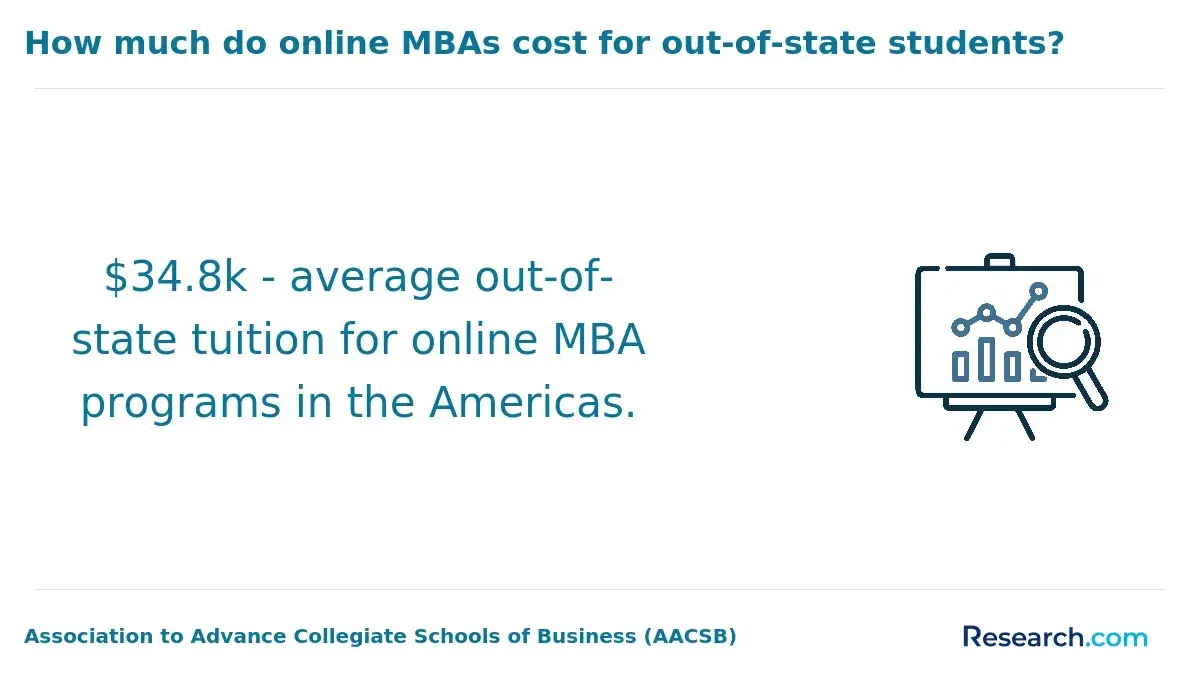
Employers increasingly accept reputable online MBA programs, especially those with strong rankings like the University of Texas at Dallas, which is ranked #2 nationally by Poets and Quants' 2026 OMBA Ranking. However, tuition differences-$58,198 for in-state versus $95,697 for out-of-state students-highlight regional cost variations that may affect accessibility and perceived value.
Hiring managers typically evaluate candidates based on their school's reputation, work experience, and skills rather than solely on whether the degree was earned online or on campus. Graduates from accredited and well-ranked online MBA programs benefit from solid curricula and valuable alumni networks, which support positive job prospects. Conversely, degrees from lesser-known or unaccredited online programs may be less valued by employers.
Key factors affecting job outlook include:
- Program reputation and rankings greatly impact employer acceptance of online MBA degrees.
- Online formats may provide fewer networking opportunities, possibly limiting connections crucial for job placement.
- In-state tuition savings can improve return on investment, especially where salary growth following an MBA is modest.
- Certain industries may still favor traditional MBAs for leadership roles, affecting job access for online MBA graduates.
The overall job outlook depends more on program quality and individual qualifications than delivery mode. Prospective students should verify program accreditation, networking availability, and alumni outcomes before committing.
Online MBA programs accredited by bodies such as the Association to Advance Collegiate Schools of Business (AACSB) uphold academic standards comparable to those of traditional on-campus programs. Core curriculum and credit requirements typically align, ensuring consistent rigor. However, the learning experience can differ significantly due to delivery methods.
Traditional MBA programs often emphasize in-person activities like case discussions, group projects, and networking, which present challenges when replicated online. Effective online programs use synchronous classes, small cohorts, and interactive platforms to engage students actively. For instance, Indiana University's Kelley Direct and Carnegie Mellon's Tepper online MBA offer live video case studies and team assignments to mirror on-campus expectations.
Experiential learning is an area where differences become more apparent. On-campus students may participate in real-time consulting projects or internships, while online students need to confirm if similar virtual opportunities exist. Hands-on experience remains a vital component for skill development and career readiness.
Key factors for prospective students to consider include how programs facilitate interaction, mentorship, and practical learning. Accreditation alone does not guarantee a challenging experience; reviewing course design and alumni outcomes is essential to gauge program rigor effectively.
Admission standards revealing a subpar online MBA program often include low or no requirements for work experience, academic credentials, and standardized test scores. Strong programs generally expect at least two to three years of professional experience, while weaker programs may accept applicants without prior work history, potentially impacting academic rigor and networking opportunities.
Additionally, lax academic prerequisites such as admitting students without a bachelor's degree or from unaccredited schools weaken program credibility and employer recognition. The absence of the Graduate Management Admission Test (GMAT) or Graduate Record Examination (GRE) without alternative measures to assess academic readiness is another warning sign.
Programs offering instant admission decisions, sometimes within 24 to 48 hours, with no interviews, essays, or recommendation letters, often prioritize enrollment over quality. This process limits personalized evaluation and may reduce student support.
The Financial Times and U.S. News & World Report highlight that rigorous admission standards align with higher graduate satisfaction and better career outcomes. In contrast, low-standard programs frequently report poor graduation rates and minimal post-graduation career assistance.
Prospective students should carefully review admission criteria, accreditation, and alumni success to ensure their MBA holds genuine value in the professional market.
Online MBA programs often advertise completion within 18 to 24 months, but many students face delays, with nearly 40% taking six months or more beyond their target. This gap results from balancing professional and personal commitments, course availability, and additional program requirements.
Accelerated paths exist, typically 12 to 18 months for full-time study, though most online learners study part-time. Part-time students often need three to four years to graduate, reflecting the challenge of combining work and education.
Limited course offerings and inflexible schedules can cause waiting periods when courses are not available every semester. Additionally, hidden requirements such as capstone projects or internships may extend completion times, a factor sometimes overlooked during enrollment.
Students should consider these factors before starting their program:
- Assess whether full-time or part-time study fits your lifestyle.
- Verify how frequently required courses are offered online.
- Confirm if experiential components add extra months to your timeline.
- Ask about support services that promote on-time graduation.
Being aware of these aspects helps set realistic expectations and avoid unexpected costs. Reliable insights from the Graduate Management Admission Council (GMAC) and industry forums highlight these common delays, emphasizing the importance of thorough research before investing in an online MBA degree.
When should you avoid an online MBA entirely?
You should avoid an online MBA if your career depends heavily on in-person networking and on-campus recruitment. Many leading employers in consulting, investment banking, and private equity still favor candidates from traditional MBA programs, which build stronger employer connections and offer better internship and job placement opportunities.
Accreditation and reputation are critical when considering online MBA programs. Degrees from schools without recognized accreditation such as AACSB, EQUIS, or AMBA may hold less value in the job market. Programs lacking rigorous curriculum standards often fail to cultivate key skills like leadership, critical thinking, and quantitative analysis that employers seek.
Cost is another important factor. Online MBA programs charging over $70,000 without clear salary bump pathways might not justify the investment. According to the Graduate Management Admission Council's 2023 Corporate Recruiters Survey, 45% of MBA graduates reported salary increases under 20%, suggesting expensive programs don't always lead to proportional financial rewards.
For professionals with established careers and no urgent need for change, pursuing an MBA may offer limited benefit compared to targeted certifications or executive education, which often require less time and money.
Other Things You Should Know About MBA
Online MBAs from accredited institutions generally carry the same recognition as traditional MBAs among employers. However, the reputation of the granting school and its network can influence employer perceptions more than the program's delivery mode. Candidates from well-established universities typically experience little to no disadvantage in hiring processes.
Yes, many online MBA programs offer a wide range of specializations similar to their on-campus counterparts. Common areas include finance, marketing, management, and entrepreneurship. The availability of specific concentrations depends on the school's curriculum offerings rather than the format of study.
While online MBAs may lack the spontaneous in-person interactions of traditional programs, they often include virtual networking events, group projects, and alumni forums to foster connections. The quality of networking depends largely on program structure and student engagement rather than being inherently limited by the online format.
- Five concerns you might have about an Online MBA – and how these are tackled in the MSM Online MBA https://www.msm.nl/news-events-and-blogs/blog/five-concerns-about-an-online-mba
- Navigating the MBA admissions process: Tips from experts https://online.mbs.edu/resources/mba-admission-tips
- How Long Does It Take to Get an MBA? Full Timeline https://www.scu.edu/business/blog/mba/how-long-does-it-take-to-get-an-mba/
- Online vs regular MBA cost: A Complete Cost Analysis https://ebsedu.org/blog/online-vs-regular-mba-cost/
- Mistakes to Avoid While Choosing an Online MBA https://www.dypatilonline.com/blogs/mistakes-to-avoid-choosing-online-mba
- MBA Salaries, Cost, “Bad” MBAs, Online MBAs, and Diversity in Business School https://mbaprotocol.com/articles/profile-building/career-gameplan/mba-salary-and-cost/
- GPA Impact on MBA Admissions | My MBA Path https://www.mymbapath.com/insights/gpa-mba-admissions
- Online MBA vs Traditional; Pros, Cons, Employer Outlook - The Quantic Blog https://quantic.edu/blog/2020/05/07/online-mba-vs-traditional-pros-cons-employer-outlook/
- How to Choose a Quality MBA Program | OnlineMBA.com https://www.onlinemba.com/resources/how-to-choose-mba-program/
- The Online MBA Job Outlook is Rebounding in the Post-Covid World | FIND MBA Online https://findmbaonline.com/articles/the-online-mba-job-outlook-is-rebounding-in-the-post-covid-world