2027 No-Residency Online MBA Programs: What to Know

Co-Founder and Chief Data Scientist
Many professionals seek to advance their careers without relocating or interrupting their current jobs. However, finding a flexible, fully online MBA program that does not require residency can be challenging. Prospective students often struggle to verify accreditation, assess program quality, and understand the practical implications of a no-residency format.
This article explores the key factors to consider, including program credibility, curriculum relevance, and career outcomes. It aims to guide readers through the complexities of selecting an accredited, flexible MBA that fits their goals without the need for on-campus attendance.
Key Things You Should Know
- No-residency online MBA programs enable U.S. students to earn degrees from top schools without relocating, increasing access and flexibility while often reducing overall costs.
- Most accredited programs require little to no campus visits, supported by advances in virtual collaboration tools and asynchronous coursework as of 2025.
- Enrollment in online MBA grew by over 15% in 2024, reflecting rising employer acceptance and better networking opportunities through digital platforms.
What are no-residency online MBA programs?
No-residency online MBA programs in the US enable students to earn their degree entirely online with no required campus visits. These fully online MBA programs without residency requirements offer flexible schedules through digital platforms, accommodating working professionals, caregivers, and those distant from campuses. Some programs provide live, synchronous classes, while others allow self-paced, asynchronous learning.
Key features often include project work, virtual teamwork, and online networking events that mimic real business environments. Students should consider factors like accreditation, faculty expertise, curriculum relevance, and student support to ensure a quality experience. Robust technology platforms are essential for seamless remote learning.
Networking and career services, common concerns with no-residency models, are addressed by many programs via virtual career fairs, dedicated online alumni networks, and remote career counseling. These resources are designed to support career advancement despite the lack of physical presence.
The popularity of no-residency MBA options is evident. During the 2020-21 academic year, full-time online MBA enrollments surpassed residential ones for the first time, demonstrating growing acceptance of remote education. Prospective students can explore a variety of affordable choices by researching online MBA programs.
How do no-residency online MBAs differ from traditional programs?
No-residency online MBA program differences from traditional MBA programs mainly lie in how education is delivered and where students participate. Unlike campus-based degrees that require physical presence for lectures, networking, and group projects, no-residency options allow students to complete all coursework remotely. This flexibility benefits working professionals, parents, and international students for whom relocation or travel costs may be prohibitive.
The key benefits of no-residency online MBA compared to campus-based degrees include asynchronous learning through pre-recorded lectures, digital assignments, and online discussions, enabling students to study on their own schedule. While some programs offer optional live virtual sessions or brief on-campus intensives to foster interaction, these are not mandatory components.
Academic rigor remains unchanged, with many no-residency MBAs accredited by AACSB, ensuring quality comparable to traditional programs. Enrollment numbers reflect this acceptance-over 47,000 students attended fully online MBA programs at 288 AACSB-accredited schools during the 2021-22 academic year. Students should consider technology requirements and platform usability since their entire experience depends on smooth online access, and assess networking opportunities as virtual formats can limit peer and faculty connections.
For those exploring high-quality remote MBA options, reviewing the best AACSB online MBA programs can provide useful guidance toward well-regarded, affordable options.
Which U.S. schools offer accredited no-residency online MBA programs?
Several U.S. institutions offer accredited no residency online MBA programs in the United States designed for professionals who need flexibility without visiting campus. Notable examples include the University of Illinois Gies College of Business, with its iMBA program ranked #20 in the US News 2026 Online MBA rankings and featuring tuition around $23,000.
Graduates report an average starting salary of $95,000, demonstrating strong career outcomes (US News & Gray Group Intl, 2026). Other AACSB-accredited programs with no residency requirements are available at Arizona State University and University of North Carolina's Kenan-Flagler Business School.
When exploring accredited online MBA programs without residency requirements, it's important to verify accreditation-preferably AACSB-and confirm there are no campus visits if zero residency is essential. These programs vary in length and specialization options. Prioritize schools that offer robust career services, networking opportunities, and live interaction to reduce remote learning challenges.
Address practical considerations early, such as time zone coordination, technology needs, and access to digital resources. Programs with fully asynchronous or flexible synchronous sessions help professionals manage scheduling conflicts.
For those comparing options, tuition cost versus potential salary gains is key; the University of Illinois' MBA stands out for its balance. For more information and comparison, see most affordable executive MBA programs.
The essential accreditation for no-residency online mba programs is the Association to Advance Collegiate Schools of Business (AACSB). This accreditation signals that a program meets rigorous standards of quality, including faculty qualifications, curriculum relevance, and student outcomes. Prospective students should prioritize AACSB accreditation because it directly influences employer recognition and credit transferability.
Regional accreditation for no-residency online V programs is critical to ensure academic rigor and program legitimacy. AACSB-accredited programs maintain strict criteria, guaranteeing students receive high-value education despite the remote delivery model. For instance, the University of Nebraska-Lincoln College of Business offers an AACSB-accredited online MBA with approximately $21,000 tuition; it ranks #28 in US News and an average graduate starting salary of $85,000.
Other accreditations such as ACBSP and IACBE exist but generally lack the same prestige or employer respect as AACSB. Students aiming for competitive industries or leadership roles should avoid programs without AACSB accreditation. Key considerations include verifying accreditation status directly on the accreditor's official website and confirming that the online MBA itself is accredited, as some schools hold AACSB accreditation only for campus-based degrees.
Accreditation also affects eligibility for federal financial aid and professional certifications, impacting long-term career mobility. For those seeking affordable options, some online MBA programs no GMAT low cost combine quality with accessibility, but accreditation remains paramount.
Choosing an AACSB-accredited no-residency online MBA program ensures academic rigor, industry respect, and a stronger foundation for professional growth.
Admission criteria for no-residency online MBAs typically require a bachelor's degree from an accredited institution, a competitive GPA, and two to three years of professional experience, often with leadership roles. Candidates must submit official transcripts, a resume, letters of recommendation, and personal essays outlining their career goals and motivations.
Many programs request GMAT or GRE scores, though waivers may be granted based on experience or academic history. For instance, Indiana University Kelley School of Business, ranked the top online MBA, has seen its acceptance rate decline from 65.9% to 23% in recent cycles, reflecting increasing selectivity and competition.
International applicants usually need proof of English proficiency via exams like TOEFL or IELTS. Reliable internet and suitable technology are essential for remote learning. Some programs also include live or recorded interviews to assess communication skills and fit.
Tips for applicants include:
- Emphasizing measurable achievements on your resume.
- Writing focused essays aligned with clear career objectives.
- Securing recommendations from supervisors who know your professional impact.
- Preparing to explain how the online setting complements your learning style and goals in interviews.
No-residency online MBA programs generally require 18 to 36 months to complete, depending on curriculum structure and student pace. Full-time students often finish within 18 to 24 months, while part-time learners or working professionals may extend their studies up to three years.
Program duration is influenced by credit requirements, usually ranging from 36 to 60 credit hours. For example, a 48-credit hour program with two courses per term of 8 to 10 weeks each typically takes about two years. Accelerated options allow students to finish sooner by taking shorter terms or multiple courses simultaneously.
These programs offer flexibility, ideal for students balancing work, family, and education. Part-time enrollment enables steady progress without sacrificing career income or personal obligations. Online MBA curricula accommodate diverse schedules and remove geographic barriers.
Notably, 71% of employers now consider online business degrees equal or superior in quality to traditional degrees, a 10% increase since 2019 (Northeastern University Center for the Future of Higher Education and Talent Strategy, 2022 via Inside Higher Ed). This growing acceptance makes no-residency degrees viable even with longer completion times.
When selecting a program, candidates should assess the length alongside curriculum quality, accreditation, and flexibility to support their professional goals and timely completion.
The cost of no-residency online MBA programs varies widely, generally ranging from $30,000 to over $130,000 in total tuition. This variation reflects differences in institutional prestige, curriculum rigor, and included resources. Highly ranked programs like the University of Michigan Ross Online MBA, ranked #5 by US News, charge around $130,000 but boast average starting salaries near $135,000, indicating strong employer recognition and return on investment (Gray Group Intl, 2026). Mid-tier options typically fall between $40,000 and $80,000, offering solid coursework though often with less brand prestige.
It's vital for prospective students to examine what tuition covers. Some programs bundle career services, technology fees, and optional residencies into the cost, while others bill separately, affecting total expenses. Exploring payment plans, scholarships, and employer tuition reimbursement can improve affordability.
Considering salary outcomes alongside tuition is critical. Programs with higher costs but strong compensation results may yield faster returns than cheaper alternatives with limited employer perception.
Key considerations include:
- Tuition ranges from $30,000 to $130,000+ depending on program prestige and features.
- Top programs report starting salaries near or exceeding tuition costs.
- Additional fees can notably increase total investmentEmployer perceptions greatly influence long-term value.
No-residency online MBA programs deliver comprehensive education in core business disciplines such as finance, marketing, accounting, operations management, and strategy. They also cover emerging areas like data analytics, digital transformation, and global business practices to meet industry needs. Practical case studies, simulation exercises, and real-world projects help students develop strategic thinking and decision-making skills.
Many programs offer electives including entrepreneurship, supply chain management, and sustainability, allowing customization based on career goals. Leadership development is emphasized throughout the curriculum, focusing on communication, negotiation, and team management. Students benefit from diverse perspectives critical for leading in multicultural environments, as illustrated by the Gies iMBA's growth from 116 to over 4,600 students, creating a global learning community (Inside Higher Ed, 2022).
Common challenges in no-residency online MBA programs include effective time management and maintaining engagement without on-campus interaction. Schools address this with interactive platforms, regular group activities, and live sessions. Prospective students should confirm curriculum alignment with their objectives, accreditation status, faculty quality, and availability of experiential learning opportunities to ensure high educational standards.
The blend of rigorous academics and practical experience prepares graduates to lead diverse teams and adapt to evolving global markets, equipping them for success in complex business environments.
No-residency online MBA programs provide flexible education for professionals aiming to advance in diverse business careers without the need to attend campus. Graduates commonly move into leadership roles across finance, marketing, operations, and human resources. Typical positions include financial analyst, marketing manager, operations director, and HR business partner.
These programs support career growth by enabling students to apply newly acquired skills directly in their current professions. This practical advantage helps many reach senior management and executive roles such as product manager, business development manager, and management consultant.
Specialized fields benefit from focused MBA training as well. Careers in healthcare administration, supply chain management, and technology management are accessible with targeted electives. This opens paths to roles like healthcare project manager, supply chain analyst, or IT program manager, strengthening leadership and strategic skills.
The North Carolina State University Poole Online MBA, ranked #18 by US News, highlights the value of no-residency formats. It offers a 70.6% acceptance rate and tuition around $42,000, with graduates reporting average starting salaries near $100,000 (Poets&Quants & Gray Group Intl, 2026). Such figures underline strong employer demand and promising salary trajectories for online MBA holders.
Decision-making, analytical thinking, and leadership remain essential skills across sectors. Prospective students should seek programs with robust employer networks and career support tailored to their goals to optimize outcomes.
What salary and job outlook come with online MBA degrees?
Online MBA degrees offer strong salary prospects and steady job growth, particularly for professionals aiming for promotion or career shifts. In the U.S., the median salary for MBA graduates typically ranges from $90,000 to $130,000 annually, with specialized experience or top-tier program graduates often earning over $150,000. The U.S. Bureau of Labor Statistics projects an 8% increase in jobs requiring or benefiting from an MBA by 2026, driven by demand in managerial, financial, and strategic roles.
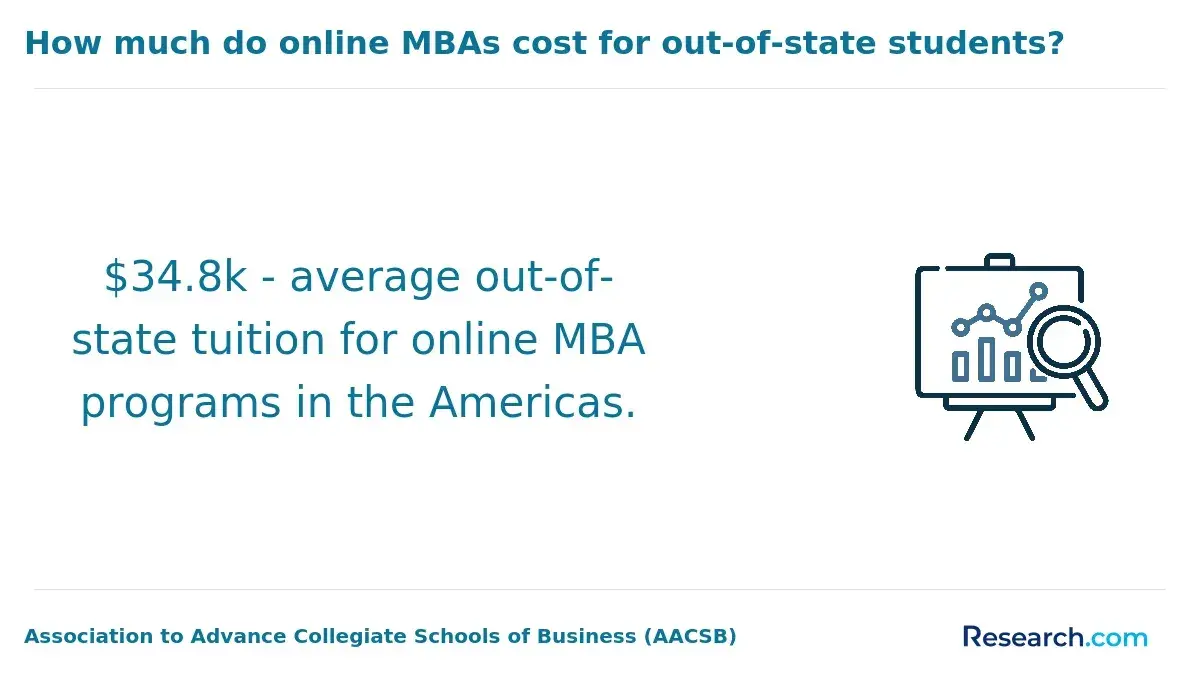
The Indiana University Kelley online MBA exemplifies market relevance, enrolling 1,652 working students in 2026. Charging $1,635 per credit for out-of-state students, this program remains competitive compared to traditional on-campus MBA costs. Many students pursue it to accelerate existing careers rather than to reenter the workforce.
Graduates in fields like finance, consulting, healthcare administration, and technology often see better promotion prospects, salary increases, and expanded professional networks. Recruiters value MBA skills in leadership, analytics, and strategic thinking, making it essential for candidates to demonstrate their tangible business impact and problem-solving abilities.
Professionals should also prepare for competitive advanced roles and commit to continuous skill development alongside their MBA credentials.
Other Things You Should Know About MBA
Most programs use live or recorded remote proctoring through approved platforms, along with a government-issued ID check and a webcam-enabled device. Some require a quiet room scan before the exam starts. Violations can trigger a failed attempt, disciplinary review, or course penalties.
In 2027, no-residency online MBA programs utilize digital platforms to create networking opportunities. Interactive webinars, virtual career fairs, and alumni networks foster connections among students, faculty, and industry professionals, ensuring robust professional relationships despite the absence of physical meetings.
Programs typically require a reliable computer with specific software, such as Microsoft Office. High-speed internet is essential for attending virtual classes and accessing resources. Some programs may also need specific applications or platforms like Zoom for interactive sessions and exams.
- Cost of an Online MBA | OnlineMBA.com https://www.onlinemba.com/resources/online-mba-cost/
- Online MBA Programs and Hybrid MBA Programs that Don’t Require a GMAT, GRE or EA Test Score https://www.clearadmit.com/mba-programs-that-dont-require-gmat-gre-or-ea-test-scores/online-mba-programs-and-hybrid-mba-programs/
- How Much Does An MBA Cost? | Affordable Colleges Online https://www.affordablecollegesonline.org/degrees/mba-programs/online-mba-cost/
- How to spot an unaccredited MBA program: Advice https://www.zdnet.com/education/mba/how-to-spot-unaccredited-online-mba-programs/
- Best Online MBA Programs https://www.princetonreview.com/business-school-rankings
- How Long Does It Take to Get an MBA? Full Timeline https://www.scu.edu/business/blog/mba/how-long-does-it-take-to-get-an-mba/
- What can you do with an online MBA? | edX https://www.edx.org/resources/what-can-you-do-with-an-online-mba
- How to Choose an Accredited Fully Online MBA: A Practical Guide for Working Professionals https://www.nexford.edu/insights/how-to-choose-an-accredited-fully-online-mba
- Accredited vs. Non-Accredited MBA: What's Right for You? https://www.ukstudyonline.com/accredited-vs-non-accredited-mbas/
- Online MBA Specialisations 2025 – Scope, Jobs & Salary Insights https://www.tmuonline.ac.in/blog/online-mba-specialisations-scope-jobs-industry-demand