2027 Top-Rated Online MBA Programs for Career Advancement

Co-Founder and Chief Data Scientist
An online MBA is often a serious career investment, not just another graduate credential. For working professionals, the key question is whether a program can help them move into management, change industries, build stronger business judgment, or qualify for more competitive leadership opportunities without leaving the workforce.
The best online MBA programs combine academic credibility, flexible delivery, practical coursework, employer-relevant specializations, and career support. Cost, accreditation, admissions requirements, time commitment, and alumni reach also matter because each affects the value of the degree after graduation.
This guide reviews top-rated online MBA programs for career advancement and explains how to compare them based on your goals, schedule, budget, and target industry.
Key Benefits of Enrolling in a Top-Rated Online MBA Program for Career Advancement
- Gain a competitive edge through reputable programs recognized by employers across industries.
- Access flexible learning formats that let you upskill without pausing your career.
- Build valuable connections through strong alumni networks and industry partnerships.
- Increase earning potential by acquiring advanced business skills aligned with leadership roles.
List of Top-Rated Online MBA Programs for Career Advancement
An online MBA can require a major commitment of tuition, time, and professional energy. The strongest choice is not always the most famous school or the lowest-cost option; it is the program that best fits your career target, preferred learning format, industry interests, and expected return on investment.
Research.com reviewed reliable education datasets and program information to identify online MBA options that may support career advancement. You can learn more about the Research.com methodology. The data used to rank academic programs come from the Integrated Postsecondary Education Data System, Peterson’s database (including its Distance Learning Licensed Data Set), College Scorecard, and the National Center for Education Statistics.
Use the following list as a starting point for comparison. Before applying, confirm current tuition, residency requirements, admissions criteria, course delivery format, and graduation requirements directly with the school.
1. Indiana University Kelley School of Business
Indiana University (IU) Kelley School of Business offers the Direct Online MBA, a fully online program taught by full-time Kelley faculty. It is a strong fit for professionals who want a recognized business school brand, structured live engagement, and the option to shape the degree through multiple majors. The program includes synchronous classes, in-person immersion experiences such as “Kelley On Campus” and “Kelley On Location,” and a flexible curriculum with 7 majors including Business Analytics, Digital Technology Management, Finance, Marketing, and more.
- Program Length: Two years
- Tracks/Concentrations: Business Analytics; Digital Technology; Management; Entrepreneurship and Corporate Innovation; Finance; Marketing Strategy and Leadership; Supply Chain and Operations
- Program Cost: $88,320.17 (with a three-year lock-in rate starting from the term in which the student first enrolls in courses)
- Required Credits to Graduate: 54 (27 credits of required core courses and 27 credits of electives)
- Accreditation: Association to Advance Collegiate Schools of Business (AACSB)
2. Georgia Southwestern State University
Georgia Southwestern State University offers a 100% online MBA grounded in ethics, international business, management, marketing, and finance. The program may appeal to working professionals who want an AACSB-accredited business education with a straightforward general MBA structure rather than multiple concentration choices. Its curriculum emphasizes leadership competencies, strategic thinking, and applied decision-making.
- Program Length: Two Years
- Tracks/concentrations: N/A
- Cost per Credit/Tuition: $263
- Required Credits to Graduate: 36
- Accreditation: Association to Advance Collegiate Schools of Business (AASCB)
3. Texas A&M International University A.R. Sanchez, Jr. School of Business
Texas A&M International University offers several online MBA options through its A.R. Sanchez, Jr. School of Business, including Management, International Business, and International Banking & Finance. These programs combine core business coursework with specialized electives and emphasize global business perspectives. The 12-month structure may be attractive to students who want a faster path, but applicants should carefully consider whether the accelerated pace fits their work schedule.
- Program Length: 12 months
- Tracks/concentrations: human resource development, leadership and decision-making, and entrepreneurship.
- Cost per Credit/Tuition: $367
- Required Credits to Graduate: 30
- Accreditation: AACSB
4. University of Southern California Marshall School of Business
The University of Southern California Marshall School of Business offers an online MBA (OMBA) designed around a two-year, cohort-based experience. The format blends asynchronous coursework with live, twice-weekly online sessions, which can help students build stronger peer relationships than programs with limited live interaction. The program also includes an integrated curriculum, leadership development, and a required one-week on-campus residency delivered by Marshall faculty.
- Program Length: 21 months
- Tracks/Concentrations: Master of Business Administration
- Program Cost: $112,072 (for five semesters)
- Required Credits to Graduate: 51
- Accreditation: Association to Advance Collegiate Schools of Business (AACSB)
5. Carnegie Mellon University Tepper School of Business
Tepper School of Business at Carnegie Mellon University offers an Online Hybrid MBA with live online classes two evenings per week and in-person “Access Weekends” on campus. This option is well suited to professionals seeking a quantitatively rigorous, analytics-oriented MBA with structured interaction. Students complete the same rigorous, STEM-designated MBA curriculum as full-time students, with emphasis on analytics, leadership, and teamwork.
- Program Length: Six semesters in 24 months
- Tracks/Concentrations: STEM-designated MBA
- Cost per Credit: $758
- Required Credits to Graduate: 144
- Accreditation: AACSB
6. University of Washington Foster School of Business
The University of Washington (UW) Foster School of Business offers a hybrid MBA structured for working professionals. The program blends live online classes with quarterly in-person immersion sessions on campus, so it may work best for students who want mostly online coursework but still value periodic face-to-face learning. The curriculum emphasizes leadership, strategy, and evidence-based decision making, and about 95% of the coursework is online.
- Program Length: 21 months
- Tracks/Concentrations: Master of Business Administration
- Program Cost: $93,000
- Required Credits to Graduate: 62
- Accreditation: AACSB
7. Rice University Jesse H. Jones Graduate School of Business
The Rice University Jesse H. Jones Graduate School of Business offers MBA@Rice, a 100% online MBA delivered through live online classes and required on-campus residencies. It is designed for working professionals who want interactive online learning, a broad general management foundation, and concentration options tied to industries such as energy and healthcare. The program requires 54 credit hours and can be completed in about 24 months.
- Program Length: 24 months
- Tracks/Concentrations: General Management Approach; Corporate Strategy; Corporate Finance; Investment Management; Marketing; Entrepreneurship; Energy; Healthcare
- Cost per Credit: $2,130
- Required Credits to Graduate: 54
- Accreditation: AACSB
8. Fayetteville State University
Fayetteville State University offers a fully online MBA with up to 12 concentrations, including Data Analytics, Health Informatics, and International Business. The program is AACSB-accredited and offers broad pacing flexibility, which may benefit students who need to balance coursework with changing professional or family obligations.
- Program Length: 12 to 72 months
- Tracks/concentrations: business intelligence and data analytics, health informatics, digital enterprise and cloud management, entrepreneurship, finance, general business, international business, and many more.
- Cost per Credit/Tuition: $560 (in-state), $887 (out-of-state)
- Required Credits to Graduate: 36
- Accreditation: AACSB
9. University of North Carolina- Kenan Flagler Business School
The University of North Carolina (UNC) Kenan Flagler Business School offers MBA@UNC, an online MBA program with both synchronous and asynchronous course options. The program may be a strong match for professionals who want a well-known business school network, a flexible completion window, and concentration options aligned with finance, consulting, entrepreneurship, marketing, and analytics. Students can complete the program in about 18–36 months.
- Program Length: 18 to 36 months
- Tracks/concentrations: Data Analytics and Decision Making; Entrepreneurship; Finance; Marketing Management and Leadership; Strategy and Consulting
- Program Cost: $125,589.06
- Required Credits to Graduate: 62
- Accreditation: AACSB
10. Arizona State University W.P. Carey School of Business
Arizona State University (ASU) W.P. Carey School of Business offers a 100%-online, STEM-designated MBA for working professionals. The program includes flexible start dates, online coursework taught by the same faculty as on-campus programs, elective and concurrent degree options, and a case-based, team-oriented learning environment. It may be especially relevant for students seeking business training with analytics, technology, and operations applications.
- Program Length: 21 months
- Tracks/Concentrations: Business Data Analytics; Finance; Entrepreneurship; International Business Leadership; Marketing; Supply Chain Management
- Program Cost: $66,266
- Required Credits to Graduate: 49
- Accreditation: AACSB
What makes an online MBA program “top-rated” for career growth?
A top-rated online MBA for career growth is one that can credibly improve your leadership skills, business judgment, professional network, and access to better opportunities. Reputation matters, but it should not be the only factor. A program with strong career services, relevant concentrations, employer recognition, and flexible scheduling may deliver more practical value than a higher-profile program that does not match your goals.
Core indicators of a career-focused online MBA
- Recognized accreditation: Accreditation from respected bodies, especially AACSB, signals that the business school meets established academic and faculty standards.
- Employer-relevant curriculum: Strong programs teach leadership, strategy, analytics, finance, operations, marketing, innovation, and communication in ways that reflect current business problems.
- Qualified faculty: Career-focused programs use experienced faculty and often mirror the academic quality of on-campus MBA courses.
- Career support: Look for coaching, resume reviews, interview preparation, job search strategy, employer events, and mentorship opportunities.
- Alumni network strength: A large, active alumni base can help with referrals, informational interviews, industry insight, and long-term mobility.
- Flexible design: Programs should allow working adults to continue building professional experience while completing coursework.
- Effective online learning technology: High-quality platforms support live discussion, teamwork, simulations, case analysis, and collaboration.
- Specializations and electives: Concentrations can help students align the MBA with roles in analytics, finance, marketing, supply chain, healthcare, technology, entrepreneurship, or general management.
Warning signs to check before enrolling
- The school does not clearly state accreditation, tuition, graduation requirements, or residency expectations.
- Career services are limited to a job board with little coaching or employer engagement.
- The curriculum appears generic and does not include current business topics such as analytics, digital transformation, or strategic leadership.
- The program format does not fit your schedule, travel limitations, or preferred level of live interaction.
How do online MBA programs support career advancement compared to traditional formats?
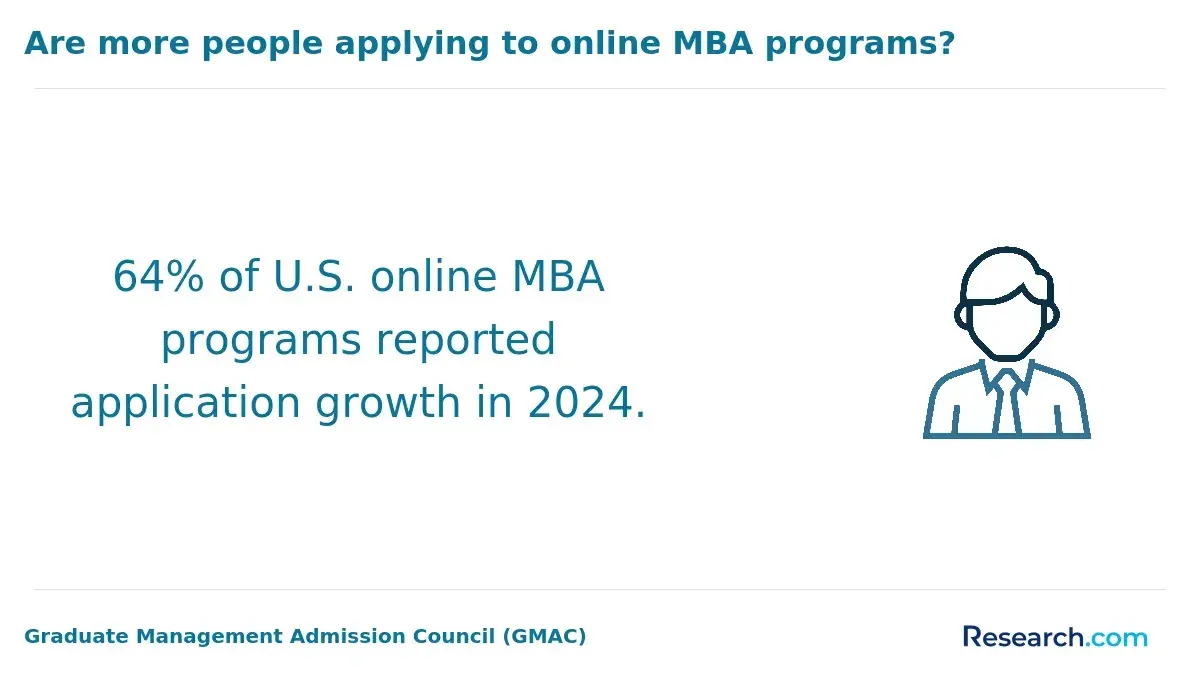
Online MBA programs can support career advancement by allowing students to keep working while earning the degree. That matters because many MBA students are not trying to pause their careers; they want to apply new skills immediately, pursue internal promotions, or prepare for a strategic career move while maintaining income and work experience.
Traditional in-person MBA formats can still offer advantages, especially for students who want a campus-centered experience, frequent face-to-face networking, or access to local recruiting pipelines. Online programs, however, have become more competitive because they combine flexibility with increasingly interactive coursework and virtual career support.
Career advantages of online MBA programs
- Work continuity: Students can remain employed, continue earning experience, and apply classroom concepts directly to current workplace challenges.
- Broader peer exposure: Online cohorts often include professionals from different regions, industries, and functions, which can strengthen strategic and cross-cultural thinking.
- Technology-enabled learning: Virtual simulations, team platforms, live online sessions, and asynchronous modules reflect how many modern organizations operate.
- More cost-conscious options: Some students compare flexible and low cost MBA programs to reduce debt while still gaining graduate-level business training.
- Remote career support: Online coaching, resume feedback, employer webinars, and virtual networking events can help students manage a job search without relocating.
- Customizable pathways: Concentrations, certificates, and electives allow students to connect the MBA to a specific role, industry, or skill gap.
When a traditional format may be better
- You want a highly immersive campus experience with daily in-person interaction.
- You plan to use full-time recruiting for a major career pivot and can afford to step away from work.
- Your target employers recruit heavily from a specific campus-based MBA program.
- You learn best in face-to-face classrooms and structured campus environments.
The best online MBA specialization depends on your target role. A concentration should not be chosen only because it sounds popular; it should help you build evidence of skill in the area where you want to compete. Professionals considering an executive MBA often evaluate similar concentration areas, especially when they want to move from functional management into broader leadership.
High-value online MBA specialization areas
- Business Analytics: Useful for roles involving data-driven decision-making, operations analysis, forecasting, performance measurement, and strategic planning.
- Finance: Relevant for corporate finance, investment banking, financial analysis, fintech, budgeting, and capital planning roles.
- Marketing or Digital Marketing: Strong for professionals pursuing brand strategy, customer experience, growth marketing, marketing analytics, or product-related leadership.
- Supply Chain Management: Valuable for logistics, procurement, operations, global distribution, inventory planning, and process improvement roles.
- Information Systems or Technology Management: Appropriate for professionals targeting IT strategy, digital transformation, product operations, systems leadership, or technology-enabled business roles.
- Healthcare Management: Useful for roles in hospitals, healthcare networks, medical technology organizations, and healthcare administration.
- Entrepreneurship or Innovation: Beneficial for launching ventures, leading innovation teams, developing new products, or moving into growth-focused leadership roles.
How to choose a specialization
- Review job descriptions for roles you want and identify repeated skill requirements.
- Choose a concentration that fills a real gap in your resume, not one that duplicates experience you already have.
- Consider whether the program offers applied projects, analytics tools, cases, or industry-specific electives in that area.
- If you are unsure of your direction, a general management path may be more flexible than a narrow specialization.
Accreditation is one of the most important quality checks when comparing online MBA programs. It does not guarantee a promotion, salary increase, or job offer, but it helps confirm that the program meets recognized academic standards. For career advancement, accreditation can affect employer confidence, graduate school credibility, transferability, and the long-term legitimacy of the degree.
Many students specifically look for an AACSB accredited online MBA because AACSB accreditation is widely recognized in business education. Still, students should evaluate the full program, not accreditation alone.
Why accreditation matters
- Academic quality: Accreditation reviews curriculum, faculty qualifications, learning outcomes, and institutional standards.
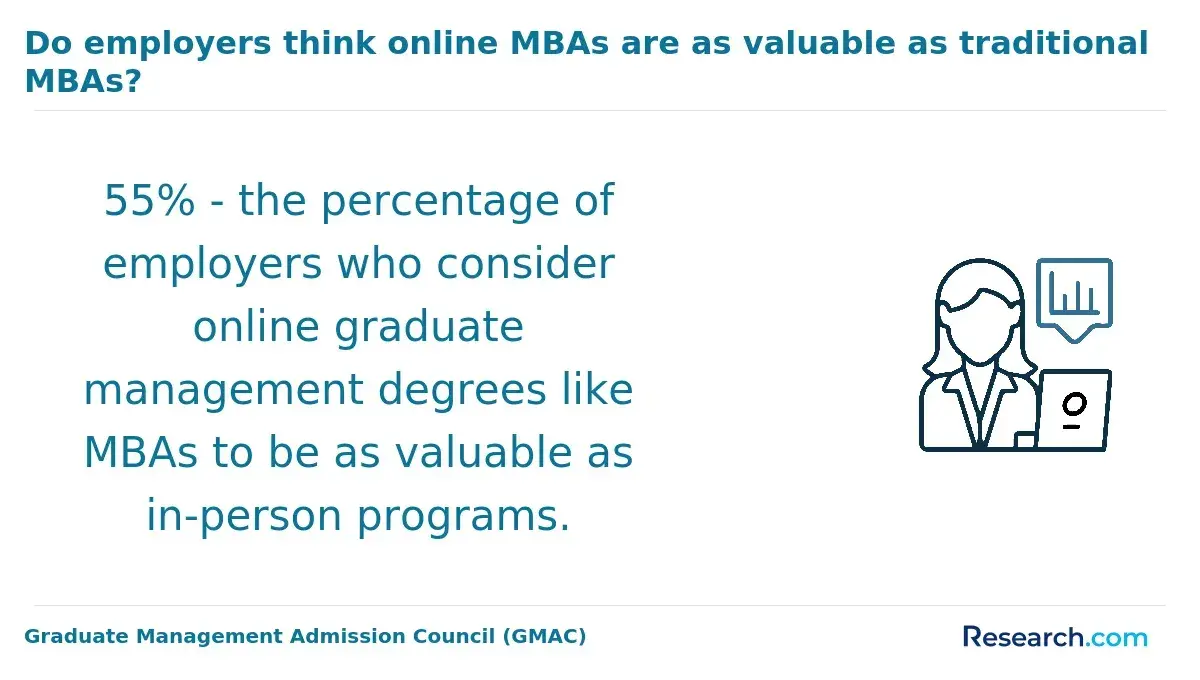
- Employer confidence: Employers are more likely to trust degrees from schools with recognized accreditation.
- Transfer and future study: Accredited credits are generally more useful if you later pursue additional education or credentials.
- Career mobility: Some organizations prefer or require degrees from accredited institutions or business schools.
- Investment protection: Accreditation reduces the risk of spending time and tuition on a program with limited recognition.
What accreditation cannot do
- It cannot guarantee admission, graduation, employment, or a specific salary outcome.
- It does not automatically mean the program has strong career services or alumni engagement.
- It does not replace the need to compare cost, curriculum, format, faculty, and student support.
Alumni networks can be one of the most valuable parts of an MBA, especially for professionals seeking promotions, industry changes, leadership opportunities, or entrepreneurial connections. A strong network gives students access to people who understand the degree, know the school’s reputation, and may be willing to share advice, referrals, or hiring insights.
For online MBA students, alumni engagement is especially important because relationship-building does not happen automatically through daily campus life. The best programs create structured opportunities for online students to connect with classmates, graduates, faculty, and employers.
How alumni networks support career growth
- Referrals and introductions: Alumni may help identify openings, introduce students to hiring teams, or provide context about organizations.
- Mentorship: Experienced graduates can offer guidance on promotions, career pivots, executive communication, and leadership development.
- Industry insight: Alumni can explain what skills, credentials, and experiences matter in specific sectors.
- Networking events: Virtual and in-person events can help students build relationships beyond their immediate cohort.
- Entrepreneurial opportunities: Alumni communities may support consulting projects, startup ideas, partnerships, or investment conversations.
- Lifelong professional community: A useful network continues to matter years after graduation, not just during the job search.
Questions to ask about an alumni network
- Do online MBA students have the same alumni access as campus-based students?
- Are there alumni groups by industry, location, or function?
- Does the school offer formal mentorship or only informal networking?
- How often do online students interact with alumni through events, panels, or career programming?
Professionals should look for an online MBA that connects coursework to measurable career goals. A convenient format is important, but flexibility alone is not enough. The program should help you build marketable skills, expand your network, gain leadership credibility, and show employers that you can solve complex business problems.
This also applies to students comparing no GMAT online MBA programs. Test-optional or no-GMAT admissions can make applying easier, but students should still evaluate academic quality, outcomes, accreditation, faculty, and career support.
Features that can increase career value
- Current curriculum: Look for coursework in analytics, leadership, strategy, finance, operations, communication, innovation, and digital transformation.
- Career services: Strong programs provide coaching, resume support, mock interviews, employer connections, salary negotiation guidance, and job search resources.
- Experienced faculty: Faculty with academic and industry expertise can connect theory to practical business decisions.
- Relevant concentrations: Specializations should match your intended role or industry rather than simply adding electives with little career focus.
- Flexible scheduling: Consider live session times, asynchronous requirements, course load, residency obligations, and total program length.
- Experiential learning: Capstone projects, consulting assignments, simulations, and case studies can help you demonstrate applied skills.
- Peer quality: A cohort of experienced professionals can improve discussions, team projects, and networking value.
- Transparent costs: Review tuition, fees, travel costs for residencies, books, technology expenses, and financial aid options.
Common mistakes to avoid
- Choosing a program only because it is fast or inexpensive without checking fit and credibility.
- Ignoring residency requirements that may add travel time and cost.
- Assuming all online MBAs provide the same level of career support.
- Selecting a specialization before defining the roles you want after graduation.
The right online MBA is the one that aligns with your intended career move and your real-life constraints. Start by defining the outcome you want: promotion, management readiness, career change, entrepreneurship, technical business skills, or broader executive preparation. Then evaluate each program against that outcome.
A practical decision framework
- Clarify your career direction: Decide whether you are pursuing leadership roles, a new industry, entrepreneurship, consulting, finance, analytics, healthcare, technology, or general management.
- Match specializations to target roles: Review whether the program offers concentrations or electives that support your preferred career path.
- Compare curriculum depth: Look for courses that build the skills employers repeatedly request in your field.
- Check flexibility: Consider pacing, weekly workload, live class times, residency requirements, and whether you can continue working full time.
- Review faculty background: Faculty with strong academic and practical experience can make coursework more relevant to career advancement.
- Assess career services: Compare coaching, employer access, mentorship, alumni engagement, and job search support.
- Evaluate cost and financing: Consider tuition, fees, travel, employer tuition assistance, scholarships, loans, and the likely long-term value of the degree.
- Confirm accreditation and reputation: Make sure the school and business program have the recognition you need for your target employers or industry.
Questions to ask admissions before applying
- What career services are available specifically to online MBA students?
- Are online students included in employer events and alumni networking opportunities?
- How many live class sessions are required each week?
- Are there required campus visits or residencies?
- Can students change concentrations after enrolling?
- What is included in the published tuition, and what costs are separate?
Employer partnerships can increase the practical value of an online MBA by connecting coursework to real business needs. These partnerships may give students access to industry speakers, applied projects, recruitment events, case competitions, or hiring pipelines. They can also help schools keep curricula aligned with current workplace expectations.
Not every employer partnership leads directly to a job, so students should look for evidence of meaningful engagement rather than relying on a list of company logos. Strong partnerships are active, visible, and connected to student learning or career development.
Ways employer partnerships add value
- Internship and job access: Partnerships may create direct channels to organizations seeking MBA-level talent.
- Industry-informed curriculum: Employer input can help programs address current tools, technologies, leadership challenges, and market trends.
- Guest lectures and workshops: Industry experts can provide practical insight into real business decisions and career paths.
- Corporate-sponsored projects: Students may solve business problems for organizations and build portfolio-worthy experience.
- Networking with decision-makers: Events with hiring managers, executives, and industry leaders can increase visibility.
- Employer tuition support: Some students may be able to connect MBA study with workplace development or tuition assistance policies.
How to evaluate employer connections
- Ask whether partnerships are available to online students, not just campus-based students.
- Look for recurring employer events, project opportunities, and career fairs.
- Ask how often students interact with companies during the program.
- Review whether employer relationships match your target industry or geographic market.
Is pursuing an online MBA worth it for your career?
An online MBA can be worth it if the program helps you reach a specific career goal that would be difficult to achieve with work experience alone. The degree may strengthen leadership credibility, expand business knowledge, improve strategic decision-making, and provide access to a broader professional network. It can also allow students to continue working while studying, which reduces career disruption.
The value is not automatic. A strong return depends on choosing an accredited, reputable program that fits your goals, using career services actively, building relationships with classmates and alumni, and applying new skills at work. Students should compare total cost with realistic career benefits rather than assuming any MBA will deliver the same outcome.
An online MBA may be worth it if you want to:
- Move into management, senior management, or broader leadership roles.
- Build skills in strategy, analytics, finance, marketing, operations, and organizational leadership.
- Change industries while keeping your current job during the transition.
- Strengthen your network through classmates, faculty, alumni, and employer events.
- Earn a respected graduate business credential without relocating or leaving full-time employment.
It may not be the right move if:
- You do not have a clear reason for earning the degree.
- The program’s cost would create debt that your target career path is unlikely to justify.
- You need a campus-based recruiting experience for your intended career pivot.
- You are choosing a program without checking accreditation, career services, curriculum, and employer recognition.
For many professionals, the best online MBA is not simply the highest-ranked option. It is the program that offers the right balance of credibility, flexibility, specialization, network strength, and long-term career value.
Other Things You Should Know About Top-Rated Online MBA Programs for Career Advancement
Many top-rated online MBA programs in 2027 require GMAT or GRE scores for admission, but some offer waivers based on professional experience or other academic qualifications. It's important to check the specific requirements of each program to understand their policies.
Most top-rated online MBA programs require 30 to 60 credit hours to graduate. Accelerated tracks can finish in as little as 12 to 18 months, while part-time formats often take 2 to 3 years. Programs may also require a capstone, internship, or applied business project.
- Accreditation Council for Business Schools and Programs. (n.d.). ACBSP accreditation Overview - Accreditation Council for Business Schools and programs. acbsp.org.
- Association to Advance Collegiate Schools of Business. (n.d.). Accreditation. aacsb.edu.
- Association to Advance Collegiate Schools of Business. (n.d.). Why Accreditation Matters. aacsb.edu.
- Gary W. Rollins College of Business. . (2024, January 12). Top Questions to Ask About Online MBA Programs - Gary W. Rollins College of Business. blog.utc.edu.
- Michigan State University. (2024, October 24). The Importance of AACSB Accreditation for Business Schools. michiganstateuniversityonline.com.
- University of Kansas School of Business. (2025, January 23). MBA accreditation: What it is and why it’s important for your career. onlinemba.ku.edu.