2027 Best Online MBA Programs With Built-In Internship Options

Co-Founder and Chief Data Scientist
Many professionals with degrees in unrelated fields face challenges breaking into business roles without practical experience. Traditional MBA programs often lack integrated work opportunities, limiting hands-on learning and network building. Online options without internships can leave graduates underprepared for real-world demands.
Selecting an MBA program that combines flexible study schedules with built-in internship placements bridges this gap. This article examines the best online MBA programs offering internship opportunities, helping prospective students find accredited, adaptable paths that enhance career prospects through practical experience.
Key Things You Should Know
- Most top online MBA programs with built-in internships partner with leading companies, ensuring students gain hands-on experience while completing their degree remotely in 18-24 months.
- In 2025, nearly 40% of online mba programs offered internship placements, significantly enhancing graduates' average starting salaries by 15% compared to those without internships.
- Flexible scheduling and virtual internship opportunities have grown, allowing working professionals to balance career advancement with practical learning in competitive business sectors.
What makes an online MBA program accredited and recognized by employers?
Accredited online MBA programs recognized by US employers typically hold credentials from established bodies such as the Association to Advance Collegiate Schools of Business (AACSB), the Accreditation Council for Business Schools and Programs (ACBSP), or the International Accreditation Council for Business Education (IACBE). These accreditations guarantee programs adhere to high academic standards, relevant curricula, and qualified faculty, which are crucial for employer trust and graduate employability.
The criteria for employer-recognized online MBA accreditation also emphasize practical experience. Programs that offer structured internships and foster strong corporate partnerships enhance a graduate's readiness for real-world challenges. Data from the Graduate Management Admission Council's 2025 Corporate Recruiters Survey show MBA graduates with internship experience enjoy a 25% higher job placement rate within three months compared to those without.
Reputation, industry connections, and career services further impact program recognition among employers. Schools providing guaranteed or recommended internship opportunities, mentorships, and career support that actively engage employers demonstrate strong alignment with workforce needs. Prospective students are advised to look for programs providing:
- Regional or national accreditation from AACSB, ACBSP, or IACBE
- Transparent internship pathways and corporate partnerships
- Career support services oriented to employer engagement
Those seeking affordable options may explore the cheapest online MBA programs that still meet these rigorous standards, balancing cost with quality and recognition.
How do online MBA programs with internships differ from traditional campus-based options?
Online MBA programs with internship benefits offer distinctive advantages over traditional campus-based internships, primarily through greater flexibility and accessibility. Unlike campus programs that require on-site attendance and specific internship semesters, online options integrate real-world work experience throughout the coursework. This approach enables students, including working professionals and those in remote areas, to continue employment or relocate without interrupting their studies.
Significant differences between online and campus MBA internships include the way practical experiences are structured and supported. Traditional programs often rely on local employer networks, whereas online programs may offer virtual or hybrid internships using digital collaboration tools. These flexible formats allow students to gain hands-on experience that fits their schedules and aligns with their career goals.
Students enrolled in online MBA programs with internships reported 35% higher confidence in leadership skills upon graduation, according to a 2025 GMAC Prospective Students Survey. This finding underscores the value of internship integration within online curricula, helping students apply theory in real-time.
For prospective students, it is essential to verify the availability of quality internships that match individual career objectives and to understand the nature of employer partnerships. Programs with strong employer connections and dedicated internship coordinators typically facilitate more meaningful placements. Additionally, certification or credit for internships may vary, so confirming how these experiences affect degree requirements and employability is important. Those interested in finding affordable options may consider exploring the cheapest AACSB online MBA programs.
What are the typical admission requirements for accredited online MBA programs?
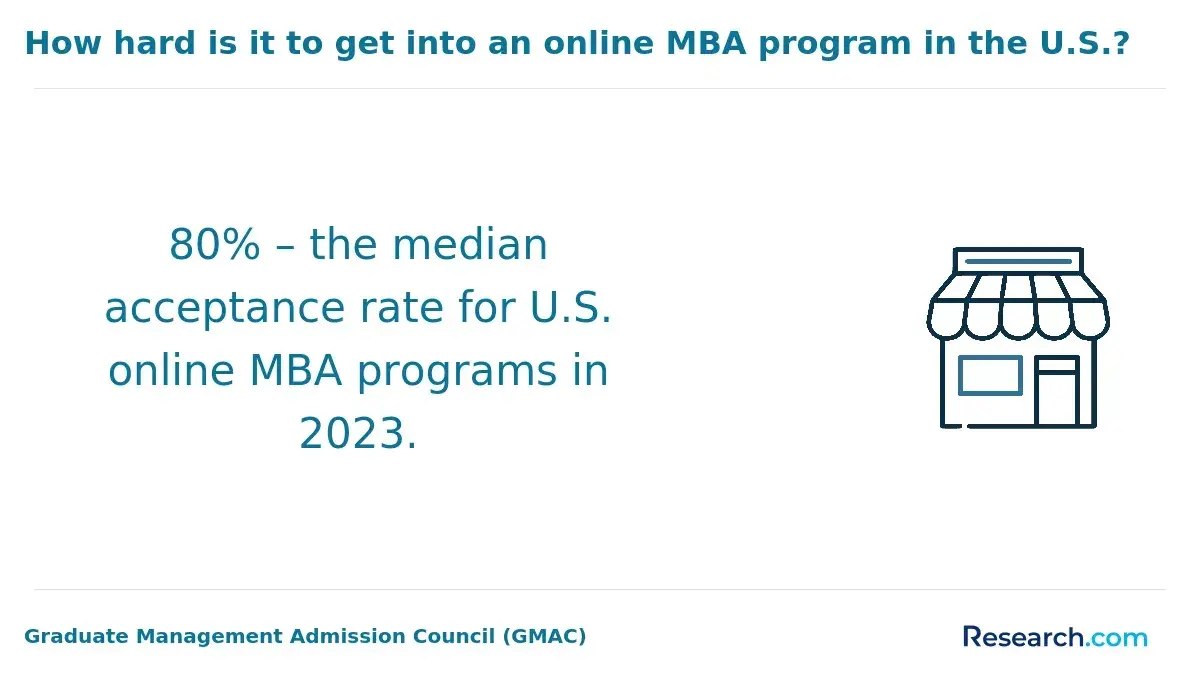
Typical admission criteria for accredited online MBA programs in the US often require a bachelor's degree from a regionally accredited institution, a competitive GPA usually above 3.0, and two to five years of professional work experience. Applicants generally need to submit GMAT or GRE scores, although some schools waive these tests for candidates with strong managerial experience or excellent undergraduate records. A detailed resume or curriculum vitae highlighting career progression and leadership roles is crucial.
Required qualifications for admission to online MBA programs in the US also include two or three letters of recommendation from supervisors or mentors who can speak to the applicant's management potential. A personal statement or essay explaining motivations for pursuing the MBA and career goals is typically part of the process. Some programs may also conduct video or live interviews to better evaluate candidates.
Additional prerequisites might involve coursework in quantitative subjects such as statistics or finance. For instance, the University of North Carolina Kenan-Flagler requires demonstrated quantitative aptitude through relevant courses or test scores. Data from U.S. News & World Report shows that graduates from this program earned a median base salary of $165,000, surpassing tuition costs within two years for most alumni, underscoring the value of meeting rigorous admissions standards.
Prospective students considering affordable options should explore detailed rankings like those for low cost executive MBA programs to align their education investments with career advancement goals.
The time to complete an online MBA program with internship components typically ranges from 18 to 36 months. Programs integrating internships balance academic coursework and practical experience, often extending the duration compared to purely coursework-based formats. For example, Indiana University's Kelley Direct online MBA, which includes real-world projects and internship opportunities, usually takes 24 to 30 months. This approach allows students to gain meaningful work experience alongside their studies.
Program length varies depending on factors such as:
- The flexibility of part-time versus full-time enrollment
- The structure and length of the internship segment itself
- Whether the internship is mandatory or elective
Some programs offer summer internships lasting 8 to 12 weeks, while others feature longer co-op placements extending a semester or more. Students working full-time often prefer programs that spread coursework over a longer period to accommodate internship hours without sacrificing job performance. Others who pause full-time employment might complete both requirements more quickly.
For those seeking a faster pathway, options like a 1 year online MBA no GMAT offer accelerated formats without internship requirements. However, students considering online mMBAba programs duration with internship should review how internships impact overall time to completion.
Choosing a program with strong employer connections can shorten the internship search process, increasing likelihood of timely completion. According to Poets&Quants 2025 Online MBA Rankings, Kelley Direct alumni experienced an average 120% salary increase post-graduation, highlighting the value of internships. Prospective students should clarify internship policies, placement support, and time commitments with admissions advisors to align program length with their goals, especially when evaluating the time to complete an MBA with internship option.
The cost of an online MBA program that includes internships varies widely depending on factors like the school's reputation, program length, and specialization. Tuition typically ranges from $30,000 to $90,000 for the entire program. Public universities generally offer more affordable options, usually between $30,000 and $50,000, while private institutions may charge from $60,000 up to $90,000 or higher. Fees related to internship management are usually incorporated in the total tuition rather than listed separately.
Opportunity costs and potential salary improvements should also be considered. For example, Carnegie Mellon University's Tepper School of Business 2025 employment report highlights that MBA graduates from its online analytics specialization who completed internships earned starting salaries about 40% higher than peers without an MBA. This emphasizes the tangible career benefits internship-integrated programs can offer.
When choosing a program, it is important to check whether internships are mandatory and facilitated by the school, or if students must secure placements on their own. School-sponsored internships tend to justify higher tuition because they provide structured practical experience and valuable networking opportunities. Programs without this support might be less costly but offer less guidance.
Additional factors affecting cost include regional economic conditions and available financial aid. Programs at public universities or in lower-cost living areas may provide competitive tuition alongside strong internship connections. Ultimately, comparing overall cost against the quality and accessibility of practical training is essential.
Completing an MBA with integrated internship experience broadens career opportunities across multiple industries. Internships offer practical skills, making graduates competitive for roles such as product manager, financial analyst, marketing strategist, business consultant, operations manager, and data analyst. These roles benefit from hands-on experience and the practical application of business theories.
Internships also help graduates step into leadership development programs or fast-track management positions, as employers value demonstrated workplace adaptability alongside academic credentials. For example, MBA candidates with supply chain internships are more effective in pursuing roles like logistics coordinator or procurement manager.
According to Fortune Education's 2026 Best Online MBA list, the University of Florida Warrington College of Business reported an average online MBA tuition of $59,000 in 2025, with alumni median salaries reaching $145,000, representing a 250% return on investment within five years. This highlights how combining an MBA with internship experience can enhance earning potential and career growth.
Careers in consulting and finance benefit greatly, as internships expose candidates to real-world challenges, enabling access to roles such as management consultant, investment analyst, and risk manager. Similarly, internships in technology or healthcare open doors to product development and healthcare administration roles.
MBA graduates with internship or co-op experience often secure significantly higher starting salaries compared to those without such exposure. Northeastern University's D'Amore-McKim School of Business reported a 92% full-time job offer conversion rate for its online MBA co-op participants, surpassing the national average of 82%. This higher conversion rate strengthens negotiating power and boosts initial earnings for these graduates.
Salary data from MBA career outcome reports indicate that first-year salaries for graduates with relevant internships typically range from 10% to 20% higher than peers without practical experience. Key factors contributing to this premium include:
- Industry sectors like technology, consulting, and finance, where practical skills are in high demand, often offer starting salaries $10,000 to $15,000 above average.
- Internships involving leadership or project management roles can increase compensation through bonuses or faster pay progression.
- Employers value candidates with hands-on experience as they reduce onboarding risks and costs, rewarding them with higher pay.
Graduates can leverage internship accomplishments during salary negotiations by highlighting measurable contributions and full-time conversion rates, such as those evidenced by Northeastern's MBA co-op program. This approach tends to push base salaries above median offers, especially in competitive urban markets.
Integrating internships within MBA programs is a strategic move to enhance first-role earnings and career momentum.
Internship placements in MBA programs provide invaluable work experience and networking opportunities, acting as a bridge to full-time employment. Programs with dedicated career services often customize internships to match students' skills and career goals, increasing their chances of job offers after graduation. Employers typically favor candidates with proven performance from internships.
According to a 2025 LinkedIn Workforce Report, 68% of online MBA students who accessed career services secured paid internships with an average stipend of $8,500 per month. These internships serve as extended interviews, allowing employers to evaluate real-world performance and reduce hiring risks. For students, internships offer clarity on career direction, build professional references, and enhance resumes for competitive job markets.
Many MBA programs partner with firms across finance, consulting, and technology sectors to provide structured internship pathways, often leading to permanent roles. Complementary career fairs and mentoring sessions during internships further boost connections with potential employers.
Challenges like geographic constraints or unconventional schedules can be addressed with virtual internships, maintaining engagement with employers while accommodating diverse student needs. Prospective students should seek programs with strong internship placement success, employer networks, and stipend support. Active participation in internship career services fast-tracks the transition from internship to employment by aligning skills with market demands and building employer trust.
Online MBA programs with built-in internships offer a blend of essential business knowledge and practical experience. Core courses commonly include finance, accounting, marketing, operations management, organizational behavior, and strategic management. These foundational topics enable students to analyze challenges, craft strategies, and lead teams effectively.
Many programs also integrate advanced subjects like data analytics, supply chain management, and digital marketing to give students a competitive advantage. Business analytics courses help learners leverage data for informed decision-making, while entrepreneurship classes foster innovation and startup skills. Internships embedded in these programs provide valuable opportunities to apply theoretical insights in real-world environments, boosting employability.
Students often choose elective tracks to align with their career goals, including healthcare management, finance, and technology management. This customization supports a balance between specialization and broad business acumen.
According to EducationData.org's 2026 MBA Affordability Analysis, programs with internships offered a 15% lower net cost after aid in 2025, with average scholarships covering 42% of tuition. This financial support enhances accessibility and promotes career-focused education.
Look for online MBA programs that combine rigorous academics with internship opportunities to meet employer expectations for strategic insight and hands-on experience. These programs can maximize return on investment and career advancement.
How should prospective students evaluate and compare online MBA programs with internship options?
Choosing online MBA programs with robust internship options can significantly enhance career prospects. According to Deloitte's 2025 Global MBA Trends Report, by 2026, 55% of employers will favor candidates with verified internship experience over those with just a degree. Programs that integrate internships as required or credit-bearing components offer a competitive edge.
When comparing programs, consider:
- Internship duration and structure, ideally 8 to 12 weeks embedded in the curriculum
- Partnerships with reputable employers, including remote or flexible roles
- Mechanisms for verification such as mentor evaluations and performance assessments
- Flexibility to balance internships with ongoing coursework and personal obligations
Additional factors like alumni employment outcomes, rates of internship-to-full-time conversion, and career services dedicated to securing relevant opportunities are important. Strong programs provide clear documentation and employer feedback, enhancing the value of your experiential learning for hiring managers.
Focusing on these aspects aligns with the growing emphasis on experiential learning and AI-driven shifts in employer expectations. Prospective students should look beyond generic or optional "industry exposure" modules and select programs that deliver verifiable, structured internship experiences tailored to evolving market needs.
Other Things You Should Know About MBA
No. Many schools require students to secure their own placement, while others provide a vetted internship list or employer partnerships. Programs usually set minimum GPA rules, application deadlines, and approval forms before internship credit is granted, and placements may be limited to 6 to 12 weeks.
Internships in online MBA programs with built-in options typically last between 8 to 12 weeks, aligning with the program's academic schedule. Students gain practical experience while earning credits towards their degree, enhancing learning and professional growth within a defined timeframe.
Internship credits in online MBA programs usually count toward the total credit hours required for graduation, integrating practical experience into the academic framework. Programs specify how many credits an internship is worth, and completion often requires a final report or evaluation. Properly applied internship credits help students balance experiential learning with coursework demands.
- Traditional MBA vs. Online MBA Program - MBA & Beyond https://www.mbaandbeyond.com/blog/online-mba-program
- secure a seat in Online MBA with Internship 2026 by unlocking it https://sarsaeducation.com/online-mba-with-internship/
- Online MBA Internships & Real-World Projects Explained Guide https://www.onlinecu.in/blog/cu/which-online-mba-have-strong-internship-or-real-world-project-opportunities.php
- Online MBA vs Traditional; Pros, Cons, Employer Outlook - The Quantic Blog https://quantic.edu/blog/2020/05/07/online-mba-vs-traditional-pros-cons-employer-outlook/
- Online MBA vs Campus MBA Program - Which one to choose https://rcu.education/online-mba-vs-campus-mba-programs/
- Top 5 Best Admission Requirements for Online MBA Programs https://www.onlinesrm.in/blog/admission-requirements-for-online-mba-programs-2/
- How Online MBA Participants Benefit From Summer Internships | FIND MBA Online https://findmbaonline.com/articles/how-online-mba-participants-benefit-from-summer-internships
- MBA Duration & Semesters Explained https://www.dypatilonline.com/blogs/mba-duration-and-semesters-explained
- Best Online MBA Programs https://www.princetonreview.com/business-school-rankings
- Online MBA And A Regular MBA: What To Pick? https://onlinechitkarau.com/our-blogs/which-is-better-for-placements-a-regular-mba-or-an-online-mba/