2027 Exercise Science Degrees Explained: Are They Classified as Professional Degrees?

Co-Founder and Chief Data Scientist
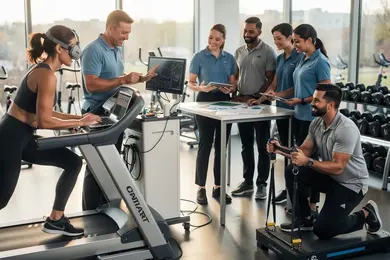
An exercise science degree can support careers in fitness, rehabilitation, wellness, sports performance, and allied health, but it does not automatically function like a professional license. The important question is not simply whether a program is “exercise science,” but whether it prepares you for the credential, licensure pathway, clinical role, or graduate program you actually want.
This distinction matters because students often choose programs based on broad career promises instead of verifying accreditation, supervised training, certification eligibility, and employer expectations. Only about 25% of exercise science graduates pursue advanced certifications or degrees that meet professional standards in healthcare and fitness industries, so planning early can prevent expensive detours.
This guide explains how professional exercise science degrees are classified, who they are best for, what programs and training they commonly include, how accreditation and financial aid work, and when the degree may affect career options or salary growth.
Key Benefits of Professional Exercise Science Degrees
- Holder of a professional exercise science degree often access leadership roles, advancing careers within healthcare, fitness management, or rehabilitation sectors.
- These degrees typically yield higher earning potential, with graduates earning 15-25% more than those without advanced qualifications.
- Degree holders qualify for regulated roles such as clinical exercise physiologists, meeting certification standards required for specialized employment.
What Is Considered a Professional Exercise Science Degree?
A professional exercise science degree is a career-focused program designed to prepare students for applied roles that may involve clinical practice, supervised fieldwork, certification eligibility, or progression into regulated allied health pathways. It is different from a general wellness or fitness degree because it usually places more emphasis on scientific assessment, evidence-based exercise programming, client safety, and professional standards.
Employment for exercise physiologists is projected to grow by about 10% over the next decade, but not every exercise science graduate enters that occupation or qualifies for the same credentials. Students should evaluate whether a program’s curriculum, accreditation, and hands-on requirements match the career outcome they want.
Degree Purpose
- Myth: All exercise science degrees directly lead to licensure or certification.
- Fact: Only professional exercise science programs emphasize applied training required for licensure and recognized certifications. A general degree may provide useful science and fitness knowledge, but it may not meet credentialing standards by itself.
Program Focus
- Myth: Exercise science degrees primarily cover general fitness and wellness without regulatory requirements.
- Fact: Professional exercise science degrees include targeted preparation aligned with credentialing standards and clinical applications. Common areas include exercise testing, human physiology, biomechanics, injury prevention, health behavior, and work with specific populations.
Certification Eligibility
- Myth: Any accredited exercise science degree makes one eligible for national certification exams.
- Fact: Eligibility is reserved for graduates of professional exercise science programs that integrate supervised clinical experiences. Students should confirm exam eligibility directly with the certification body before enrolling.
For students comparing healthcare pathways beyond exercise science, reviewing related options such as pharmacy school programs can help clarify how different health fields handle licensure, clinical training, and professional credentials.
Who Should Pursue a Professional Exercise Science Degree?
A professional exercise science degree is best for students who want structured preparation for applied health, fitness, performance, or rehabilitation-related roles. It is especially useful for learners who need science-based coursework, supervised practice, or a stronger academic foundation for future credentials.
Enrollment in exercise science programs has surged, reflecting an increasing demand for specialized knowledge in the field. Still, the degree is not the right choice for every person interested in fitness. The best fit depends on career goals, tolerance for science-heavy coursework, and whether the target job requires a degree, certification, graduate study, or licensure.
Program Suitability
- Myth: A professional exercise science degree is suitable for everyone interested in fitness.
- Fact: This degree is best suited for early-career professionals aiming for licensure or certification in regulated roles such as clinical exercise physiologists or physical therapy assistants. Students who only want entry-level personal training may be able to start with certification instead of a full degree.
Career Transition
- Myth: Career changers do not benefit from professional exercise science degrees.
- Fact: Individuals switching into health and fitness fields often gain valuable clinical and practical skills through these programs, enhancing their competitiveness in the job market. A degree can be particularly helpful when a career changer lacks prior coursework in anatomy, physiology, exercise testing, or movement science.
Best-Fit Students
- Students who want to work in clinical, community health, rehabilitation support, sports performance, or wellness programming roles.
- Applicants planning to pursue graduate study in a related allied health field.
- Working adults who need a more formal credential to move beyond entry-level fitness positions.
- Learners who are comfortable with laboratory work, client assessment, and science-based decision-making.
Those considering a professional exercise science degree should carefully evaluate how their career goals align with licensure and specialized roles. For some, exploring related options like a medical coding school might be advantageous, especially for students who prefer administrative allied health work over direct exercise assessment or client training.
What Are the Most Common Professional Exercise Science Degree Programs?
Professional exercise science programs vary by title, career focus, and required practical training. Knowing the difference helps students avoid choosing a program that sounds relevant but does not match their intended credential or job market. Enrollment in these programs continues to rise, with related job openings projected to grow nearly 11% over the next decade.
Below are common programs that prepare students for different roles within exercise science fields:
- Kinesiology: This program centers on human movement, biomechanics, and motor learning, offering foundational scientific principles critical for many exercise science applications. It can be a strong option for students interested in movement analysis, coaching, rehabilitation support, or graduate study.
- Exercise Physiology: Focused on how the body responds to physical activity, this program teaches the development of safe and effective exercise regimens based on physiological data. It is often the most direct fit for students interested in clinical exercise testing, cardiac rehabilitation support, wellness programming, or work with people managing chronic conditions.
- Athletic Training: Combining clinical practice with anatomy and physiology, this degree prepares students to prevent and manage sports-related injuries, addressing the growing emphasis on safety and injury prevention. Students considering this path should pay close attention to accreditation, supervised clinical requirements, and credentialing rules.
How to Compare Program Types
- Choose kinesiology if you want a broad foundation in movement science and may later specialize through graduate study or certification.
- Choose exercise physiology if you want deeper preparation in fitness assessment, exercise prescription, and applied physiological testing.
- Choose athletic training if your goal is injury prevention and care in sport or physically active settings and you are prepared for clinical requirements.
Students should review course catalogs, internship expectations, certification exam alignment, and graduate school placement data before deciding which program title best fits their plans.
Are Professional Exercise Science Degree Programs Accredited?
Many professional exercise science degree programs are accredited, but accreditation is not automatic and not all types of accreditation serve the same purpose. Accreditation is a crucial concern because it can affect program credibility, eligibility for licensure, access to federal financial aid, employer recognition, and certification exam pathways. Studies show that approximately 75% of students prefer enrolling in accredited programs.
Students should verify accreditation before applying rather than relying on marketing language such as “career-ready,” “professional,” or “industry aligned.” The most important questions are whether the institution is accredited, whether the specific program has relevant programmatic accreditation when needed, and whether the program satisfies the requirements of the credentialing body tied to the student’s intended career.
Types of Accreditation
- Myth: All exercise science degree programs that claim to be professional are accredited by the same authority.
- Fact: Accreditation can be institutional, covering an entire college or university, or programmatic, targeting specific programs like exercise science. Programmatic accreditation is more specialized and relevant for meeting industry standards and licensure requirements.
National Authority
- Myth: Professional exercise science degrees must be accredited by a single national body.
- Fact: Multiple recognized accreditation bodies oversee exercise science degree program accreditation organizations, varying by region and institutional affiliation to ensure curricula meet rigorous quality benchmarks and licensure eligibility.
Beyond Financial Aid
- Myth: Accreditation only affects a student's ability to access financial aid.
- Fact: Accreditation is necessary for federal financial aid but also influences employer recognition and eligibility to take certification exams, which are essential for career advancement.
Accreditation Checks Before Enrolling
- Confirm the institution’s accreditation status through official sources, not only the school website.
- Ask whether the exercise science program itself has programmatic accreditation when that matters for your target role.
- Request written confirmation that the curriculum supports any certification or licensure pathway you plan to pursue.
- Check whether internships, labs, or clinical placements meet the standards expected by employers or credentialing bodies.
For those also exploring related health fields, programs from nursing schools with high acceptance rates may provide useful comparisons because nursing and exercise science differ significantly in licensure structure, clinical expectations, and professional regulation.
What Are the Admission Requirements for a Professional Exercise Science Degree?
Admission requirements for a professional exercise science degree typically test whether applicants are prepared for science-heavy coursework, applied labs, and field-based learning. Requirements vary by institution and degree level, but competitive applicants usually show academic readiness, clear career goals, and some exposure to health, fitness, coaching, rehabilitation, or community wellness settings.
Enrollment in exercise science programs has grown by more than 20% over the last five years, increasing competition for spots. Applicants should start early, especially if they need prerequisite science courses, recommendation letters, or documented experience.
Below are common admission mandates that applicants should be prepared for:
- Academic prerequisites: Completion of foundational science and math courses, such as biology and chemistry, is necessary to provide the essential knowledge base for understanding human physiology and movement mechanics. Some programs may also expect prior coursework in anatomy, physiology, statistics, or psychology.
- Standardized test scores: Many programs use test results to objectively evaluate applicants' analytical skills and academic readiness, helping to screen candidates effectively. Applicants should confirm whether scores are required, optional, or waived for their intended entry term.
- Letters of recommendation: These attest to an applicant's character, work ethic, and potential for success in a demanding, healthcare-related field. Strong letters often come from instructors, supervisors, coaches, or healthcare professionals who can speak to reliability and professionalism.
- Personal statements: Written essays offer insight into candidates' motivations, goals, and commitment to the profession, emphasizing their fit with program values. The strongest statements connect the program’s training model to a specific career plan.
- Relevant experience: Volunteer or work involvement in fitness, rehabilitation, or health settings can demonstrate practical understanding and enthusiasm beyond academics. Experience also helps applicants confirm whether they enjoy direct client interaction and applied health work.
When asked about his experience, a recent graduate shared that navigating these requirements was challenging but clarifying. “Gathering strong recommendations and articulating my passion in the personal statement forced me to reflect deeply on why I wanted this career,” he said.
He recalled feeling anxious about meeting high standards yet found that the process helped him build confidence and a clearer sense of purpose. “It wasn't just about getting in; it was about proving I was ready to commit fully to the profession.”
What Courses and Practical Training Are Required in a Professional Exercise Science Degree?
A strong professional exercise science curriculum combines classroom science, laboratory assessment, and supervised practice. The goal is not only to understand exercise and movement, but to apply that knowledge safely with real people, including athletes, older adults, clients recovering from injury, and individuals managing health conditions.
Students comparing campus-based options with exercise science online programs should look closely at how labs, practicums, internships, and local field placements are handled, since hands-on training can be essential for certification readiness and employer confidence.
Below is an overview of key courses and practical training commonly included in these degrees:
- Foundational Science Courses: Core subjects such as human anatomy, physiology, kinesiology, biomechanics, and nutrition provide a comprehensive understanding of how the body moves and adapts to exercise. These courses build essential scientific knowledge critical for assessing and enhancing physical performance.
- Exercise Physiology and Testing: Coursework focused on exercise physiology emphasizes how various systems respond to physical activity, while practical training develops skills in exercise testing and interpretation. This component is vital for roles involving personalized program design and performance measurement.
- Biomechanics and Movement Analysis: Students learn to analyze human movement patterns and apply mechanical principles to improve function and reduce injury risk. This area enhances technical skills needed for rehabilitation and sports performance careers.
- Nutrition and Wellness: Nutrition classes teach the impact of diet on health and athletic performance, preparing students to incorporate dietary guidance in holistic wellness programs. Understanding nutrition supports effective client assessments and individualized interventions.
- Clinical and Field Practicums: Practical training often includes internships, lab work, or clinical placements where students work with varied populations-such as athletes, seniors, or injury survivors. These experiences foster interpersonal skills and real-world application, integral to professional competence.
What to Look for in Practical Training
- Supervised experience with clearly defined learning outcomes.
- Access to exercise testing equipment and movement assessment tools.
- Placements that match your career interests, such as rehabilitation, strength and conditioning, community health, or clinical wellness.
- Faculty or site supervisors with relevant professional experience.
- Preparation for documentation, ethics, safety screening, and client communication.
For those exploring pathways that may intersect with healthcare roles, reviewing specialized options such as affordable NP programs can offer adjacent career possibilities in advanced practice.
How Much Do Professional Exercise Science Degrees Cost?
The cost of a professional exercise science degree depends on school type, residency status, delivery format, program length, fees, and whether clinical or field placements create additional expenses. On average, annual tuition ranges widely, with total expenses that can exceed $40,000 depending on the institution and program length.
Below are key cost factors associated with pursuing a professional exercise science degree program:
- Tuition and Fees: Tuition is the largest expense, varying significantly between public and private institutions. In-state public universities may charge around $7,000 per year, while private colleges often exceed $30,000 annually, influencing overall affordability.
- Textbooks and Materials: These costs add several hundred dollars each semester for specialized books, lab supplies, and study materials that complement coursework.
- Certification and Equipment Fees: Some programs require additional costs for specialized equipment or certification preparation, which are essential for professional practice but increase total expenses.
- Clinical Placement and Internship Costs: Practical experience may involve unpaid internships with travel and time commitments, adding indirect costs such as transportation and accommodation.
- Lost Income During Study: The typical two to four years required to complete the degree represent a period when students might forgo full-time earnings, which should be factored into the total financial commitment.
- Program Accreditation: Accredited programs tend to align better with licensure and employment requirements but may entail higher tuition and fees.
- Financial Aid and Scholarships: Exploring scholarships focused on exercise science and other financial aid options can substantially reduce the cost burden. Prospective students might also compare costs with other fields by reviewing resources like the cheapest online DNP programs, particularly for post-graduate learners.
How to Judge Affordability
- Compare total program cost, not only annual tuition.
- Ask whether required internships are paid, unpaid, local, or competitive to secure.
- Factor in certification exam preparation and any professional membership costs required by the program.
- Consider whether the degree is necessary for your intended role or whether a lower-cost credential could meet your short-term goal.
- Estimate debt in relation to realistic entry-level earnings in your preferred location and setting.
Do Professional Exercise Science Degrees Qualify for Financial Aid?
Professional exercise science degrees can qualify for financial aid when the institution and program meet the relevant eligibility requirements. Financial aid eligibility is a key concern for students because program costs can vary widely, and over half of graduate students in health-related fields reportedly rely on some form of financial aid.
The most important step is to confirm the school’s accreditation and Title IV eligibility through the financial aid office. Students should also ask whether their specific program, enrollment status, and degree level qualify for the aid types they plan to use.
Loan Eligibility
- Myth: Professional exercise science degrees are ineligible for federal loans because they are not recognized as traditional graduate programs.
- Fact: Accredited exercise science programs can qualify for federal financial aid such as Direct Unsubsidized and Grad PLUS loans if they meet Title IV criteria, though specifics vary by institution and program type.
Scholarships Access
- Myth: Exercise science students have limited scholarship opportunities due to the specialized nature of their studies.
- Fact: Numerous scholarships specifically target exercise science students, alongside general health-related awards, providing diverse funding options beyond loans.
Employer Support
- Myth: Employer tuition assistance programs rarely apply to exercise science degrees.
- Fact: Many employers, especially in healthcare and fitness sectors, offer tuition reimbursement that can support professional degree completion.
Public Service Forgiveness
- Myth: Public service loan forgiveness isn't available for exercise science graduates.
- Fact: Graduates working in qualifying public or nonprofit health roles can often benefit from loan forgiveness programs, reducing long-term debt burdens.
Financial Aid Questions to Ask
- Is the institution eligible for federal financial aid?
- Does my specific program qualify, or only certain degree tracks?
- Will part-time enrollment affect my aid package?
- Are scholarships available through the department, college, professional associations, or employers?
- Can unpaid internship periods affect my ability to work while enrolled?
When I spoke with a graduate of a professional exercise science degree about her financial aid experience, she described initial uncertainty about navigating aid options. She recalled, “I wasn't sure if I would qualify for any federal loans since my program wasn't a traditional graduate degree, which was stressful.”
However, after confirming her program's accreditation, she successfully secured a Direct Unsubsidized Loan and found a scholarship specifically for exercise science students. She also received employer tuition support once employed in a community health role.
Reflecting on this, she emphasized the importance of persistently researching all funding avenues and consulting financial aid advisors early. This experience highlights the nuanced reality: while financial aid eligibility can seem complicated, many professional exercise science students do qualify for meaningful assistance that helps manage education costs effectively.
Are Professional Exercise Science Degrees Required for Certain Careers?
Professional exercise science degrees are required for some career paths, strongly preferred for others, and unnecessary for certain entry-level fitness roles. Students should identify the exact job title they want, then work backward from employer postings, certification rules, state requirements, and graduate school prerequisites.
Certification vs Degree
- Myth: All fitness careers require a professional exercise science degree.
- Fact: Many roles like personal trainers often need certification but not necessarily a formal degree. However, a degree can still help with credibility, advancement, and work with more specialized populations.
Licensure Requirements
- Myth: Clinical exercise roles never demand accredited degrees.
- Fact: Positions such as physical therapy assistants or clinical exercise physiologists usually require degrees from accredited programs to obtain licensure. Requirements can vary, so students should verify rules before choosing a program.
Advanced Credentials
- Myth: Graduate degrees are optional for career growth in exercise science fields.
- Fact: Advanced clinical or research roles often need graduate-level education combined with specialized certifications for advancement.
Career Planning Guidance
- For personal training or general fitness coaching, certification may be enough to start.
- For clinical exercise, rehabilitation support, or healthcare-adjacent roles, an accredited degree may be expected or required.
- For physical therapy, occupational therapy, physician assistant, or other advanced healthcare pathways, exercise science may serve as a foundation but not the final professional credential.
- For academic, research, or leadership roles, graduate education and specialized experience may become important.
Do Professional Exercise Science Degrees Lead to Higher Salaries?
A professional exercise science degree can improve qualifications, but it does not automatically guarantee a higher salary. Earnings depend on the role, setting, location, experience, certifications, supervisory responsibility, and whether the job is clinical, performance-based, wellness-focused, or administrative.
The degree is most valuable financially when it unlocks a role you could not otherwise enter, strengthens eligibility for respected credentials, or supports advancement into specialized responsibilities. It is less likely to pay off quickly if the target job does not require a degree or if program costs are high relative to expected earnings.
Earning Potential
- Myth: Professional exercise science degrees guarantee significantly higher salaries.
- Fact: While these degrees can improve qualifications, salary increases depend more on experience, certifications, job responsibilities, and location than the degree alone.
Career Advancement
- Myth: Holding a professional exercise science degree ensures faster promotions and leadership roles.
- Fact: Advanced degrees may help qualify for supervisory positions, but career progression also hinges on skills, networking, and ongoing professional development.
Long-Term Outcomes
- Myth: Graduates with professional exercise science degrees always achieve better financial success over time.
- Fact: Financial gains depend on factors such as program costs, time invested, and demand for specialized qualifications rather than the degree alone.
Value Considerations
- Professional exercise science degrees are most beneficial for roles requiring licensure or specialized certification.
- Job responsibilities and additional credentials usually influence salary more than the degree itself.
- Evaluating program accreditation and alignment with career goals is critical before committing to advanced study.
- Students should compare projected earnings with tuition, fees, unpaid fieldwork, and lost income during study.
- The best return often comes from combining the degree with practical experience, recognized certifications, and a clear target role.
What Graduates Say About Their Professional Exercise Science Degree
- : "The flexibility of the professional exercise science degree program was a game-changer for me. Balancing work and study was manageable due to the adaptable course schedules. Choosing this path, despite the average cost of attendance being around $15,000 per year, was one of the best career decisions I've made, leading to a rewarding role as a fitness program coordinator. — Ted"
- : "Reflecting on my journey, pursuing a professional exercise science degree provided me with invaluable knowledge that enhanced my approach as a physical therapist. The program's structure allowed me to continue working while studying, which was essential given the cost considerations. This degree has undeniably broadened my career prospects in clinical settings. — Juno"
- : "Enrolling in a professional exercise science degree program was a strategic move to deepen my expertise in sports performance. The online format offered the flexibility I needed without compromising quality, and the tuition was a reasonable investment considering the career advancement it enabled. Now, I confidently consult with elite athletes, applying what I learned daily. — Adrienne"
Other Things You Should Know About Exercise Science Degrees
Most professional exercise science degree programs integrate coursework designed to prepare students for certification exams such as the Certified Strength and Conditioning Specialist (CSCS) or the American College of Sports Medicine (ACSM) certifications. These certifications are important for professional credibility and employment in clinical or athletic settings. Degree programs often align their curriculum with certification requirements to streamline the certification process.
Exercise science degrees in 2027 may not necessarily be recognized by licensing bodies as standalone qualifications for professional practice. Recognition often requires additional certifications like the American College of Sports Medicine (ACSM) Certified Exercise Physiologist. Verification with specific licensing bodies is essential.
References
- Exercise Science Degree Programs Lead to Rewarding Careers in Health and Fitness https://www.carrollcc.edu/articles/exercise-science-degree-programs-lead-to-rewarding-careers-in-health-and-fitness/
- Exercise Science Jobs | Career Information https://www.nutritioned.org/exercise-science-jobs/
- Health and Exercise Science BSc (Hons) with professional placement https://www.bath.ac.uk/courses/undergraduate-2026/sport-exercise-and-health/bsc-health-and-exercise-science-with-professional-placement/
- 11 Exercise Science Degree Jobs | The University of Olivet https://www.uolivet.edu/what-can-you-do-with-an-exercise-science-degree/
- What Can You Do with an Exercise Science Degree? https://www.cune.edu/news/what-can-you-do-exercise-science-degree
- Fighting for Professional Relevance: Programmatic Accreditation Must Lead the Way https://acsm.org/fighting-for-professional-relevance/
- Exercise Science, B.S. - Brooklyn College https://www.brooklyn.edu/academics/programs/exercise-science-bs/
- Exercise Science (M.S.) Admission Requirements https://www.kean.edu/academics/nathan-weiss-graduate-college/exercise-science-ms-admission-requirements