2027 Is Exercise Science a Hard Major? What Students Should Know

Co-Founder and Chief Data Scientist
Choosing exercise science means choosing a science-based major that connects the classroom to human movement, health, fitness, rehabilitation, and performance. It is not usually considered as mathematically intense as engineering or physics, but it is not an “easy fitness major.” Students study anatomy, physiology, chemistry, biomechanics, statistics, nutrition, assessment methods, and evidence-based exercise programming, often while completing labs, practicums, internships, or research projects.
The major can feel very different depending on your academic strengths. Students who enjoy biology, hands-on learning, and applied problem-solving often find the workload manageable and engaging. Students who expect mostly gym-based coursework may be surprised by the amount of science, writing, lab work, and data interpretation involved. In the U.S., enrollment in exercise science programs has grown by over 15% in the past decade, which reflects both stronger interest in health-related careers and higher expectations for preparation in the field.
This guide explains how hard an exercise science major is, where it tends to rank among challenging college majors, what makes the coursework demanding, who is most likely to succeed, and how program format, admissions, jobs, and salary outcomes should affect your decision.
Key Benefits of Exercise Science as a Major
- Exercise science offers practical skills in anatomy, physiology, and kinesiology, benefiting career changers seeking relevant expertise in health and wellness fields.
- Its flexible coursework supports full-time workers by blending online and in-person learning, facilitating academic progress alongside professional commitments.
- Traditional undergraduates gain confidence through hands-on labs and research opportunities, fostering critical thinking and resilience in managing complex, interdisciplinary subjects.
Where Does Exercise Science Rank Among the Hardest College Majors?
Exercise science usually falls in the middle of college major difficulty rankings. It is more science-heavy and time-intensive than many general social science or humanities majors, but it is typically less mathematically demanding than engineering, physics, or chemistry. The challenge comes from combining classroom science with applied labs, movement analysis, assessments, and field experience.
Unlike majors that are difficult mainly because of abstract theory or advanced calculations, exercise science is difficult because students must understand the body and then apply that knowledge to real people, injuries, performance goals, health risks, and exercise prescriptions. Some programs require 15 to 20 hours weekly on research and practica alone, which can make the schedule feel heavier than the credit count suggests.
In practical terms, exercise science is often comparable in difficulty to psychology, kinesiology, nutrition, or some allied health pathways. It is generally considered easier than engineering, physics, and nursing, but harder than many students expect if they are not prepared for college-level biology, anatomy, physiology, and statistics.
The difficulty also depends on the credential level. Associate degree programs are usually the least challenging because they focus on introductory concepts and entry-level preparation. Bachelor’s programs are more rigorous because they include advanced science courses, labs, research methods, internships, and sometimes preparation for graduate study or certification exams.
Your background matters. Students who have already done well in biology, chemistry, anatomy, or sports science may adjust quickly. Students who struggle with memorization, lab reports, time management, or scientific reading may find the major demanding from the first year.
What Factors Make Exercise Science a Hard Major?
Exercise science is hard because it blends scientific content, technical application, physical assessment skills, and professional preparation. Students are not just learning terms; they are learning how body systems respond to exercise, how to evaluate movement, and how to design safe, evidence-based programs for different populations.
- Science-heavy foundational coursework: Most programs require anatomy, physiology, chemistry, statistics, and related lab sciences before students move into advanced subjects such as biomechanics, kinesiology, exercise testing, and research methods. Programs such as Endicott College require up to 127 credits, including lab sciences and a senior thesis.
- Large credit and time requirements: Many exercise science majors require over 120 credit hours, plus labs, internships, practicums, or fieldwork. These requirements can create long weeks, especially when students must schedule clinical or fitness-related experiences outside normal class hours.
- Technical and analytical work: Students must interpret physiological data, assess movement patterns, understand research findings, and apply scientific principles to exercise prescriptions. This is where the major becomes more than general fitness knowledge.
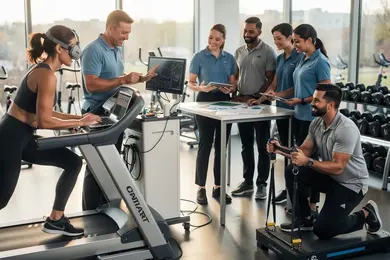
- Hands-on performance expectations: Labs may require students to conduct assessments, use equipment correctly, communicate with participants, and document findings. Students who are comfortable with exams but uncomfortable in applied settings may need time to adjust.
- Progression standards: Maintaining a minimum GPA-typically between 2.0 and 3.0-can be necessary for staying in good standing, moving into internships, or meeting certification-related expectations. Some students also prepare for professional exams through organizations like the American College of Sports Medicine.
A common mistake is underestimating the reading and review time needed for anatomy and physiology. Another is treating labs as add-ons rather than core learning experiences. Students who stay current each week usually have a much easier time than students who try to memorize large amounts of material right before exams.
Students who want an additional short credential may compare a 6-month certification program with their degree plan, but certifications should support—not replace—the academic and professional preparation required in exercise science.
Who Is a Good Fit for a Exercise Science Major?
A strong fit for an exercise science major is someone who enjoys science, health, movement, and working with people. The best students in this field are not only athletic or fitness-minded; they are also curious about how the body works and willing to study complex material in a structured way.
- Students who like applied science: Exercise science is ideal for students who want biology and physiology to connect to real-world questions such as injury prevention, athletic performance, chronic disease management, and wellness.
- Strong communicators: Many courses and field experiences require explaining assessments, giving instructions, working with peers, and eventually communicating with clients, athletes, patients, or supervisors.
- Analytical thinkers: Students need to understand concepts such as biomechanics, metabolism, cardiovascular response, and training adaptation. The major rewards people who ask why a movement, test result, or exercise plan works.
- Organized time managers: Labs, projects, exams, and practicums can overlap. Students who plan ahead are less likely to fall behind during intensive science courses or field placements.
- Collaborative learners: Group labs, partner assessments, research projects, and internship environments are common. Students who can learn from feedback and work well with others tend to adapt more smoothly.
- Health-conscious but realistic students: Personal interest in fitness can help motivation, but the major also requires professionalism, evidence-based thinking, and respect for clients or patients with different abilities and goals.
Students who are mainly looking for the easiest possible major may want to compare expectations carefully. A resource on the easiest college degrees can help clarify how exercise science differs from less lab-intensive academic paths.
How Can You Make a Exercise Science Major Easier?
You can make an exercise science major easier by treating it like a structured science program from the beginning. The students who struggle most are often those who wait until upper-level courses to build study systems, lab skills, or advising relationships.
- Master the prerequisites early: Biology, chemistry, anatomy, and physiology are the foundation for later courses. If these subjects are weak, use tutoring, review videos, flashcards, and office hours before advanced classes begin.
- Study consistently instead of cramming: Anatomy terms, physiological processes, and biomechanics concepts build on each other. Weekly review is more effective than trying to relearn several chapters before an exam.
- Build a realistic weekly schedule: Include lectures, labs, commute time, workouts, meals, work shifts, and dedicated study blocks. Labs and practicums often take more time than students expect.
- Use office hours before you are in trouble: Professors can help clarify difficult concepts, explain expectations for lab reports, and recommend study strategies. Waiting until after a failed exam limits your options.
- Join or form a focused study group: The best groups quiz each other, explain concepts aloud, review lab procedures, and practice applying material. Avoid groups that become social meetings with little academic value.
- Connect coursework to practice: Internships, labs, and observation hours make abstract concepts easier to remember. When you see how biomechanics or physiology affects real decisions, the material becomes less intimidating.
- Meet with an advisor regularly: Advising helps prevent prerequisite bottlenecks, missed internship requirements, and delayed graduation. This is especially important in programs with strict course sequences.
One graduate described the first year as overwhelming because the science courses moved faster than expected. The turning point came when she stopped cramming and started scheduling dedicated weekly review sessions. She also found that study groups and office hours made biomechanics and physiology less intimidating.
Her biggest lesson was that internships helped the coursework “click.” Seeing theory applied in a real setting made the major feel more purposeful and easier to retain. That approach—steady review, active help-seeking, and practical application—is often the difference between surviving the major and doing well in it.
Are Admissions to Exercise Science Programs Competitive?
Admissions to exercise science programs are usually moderately competitive, but selectivity varies widely by school. Many programs are accessible if you meet GPA and prerequisite requirements, while highly ranked or capacity-limited programs may be much more selective.
Demand has grown because many students use exercise science as a pathway to health, fitness, rehabilitation, athletic training, occupational therapy, physical therapy, physician assistant studies, or other graduate programs. As a result, meeting the minimum requirements may not always guarantee admission to the most competitive options.
Typical admission factors may include GPA, completion of foundational credit hours, prerequisite courses, and evidence that the student understands the science-based nature of the field. Some public universities expect at least a 2.5 GPA, completion of foundational credit hours, and success in courses like statistics or introductory exercise science. Highly competitive programs may admit fewer than 20% of applicants and require stronger standardized test scores.
Applicants should look beyond the headline admission rate. Important questions include whether the program has a secondary admission process after the first year, whether internships require a separate application, whether clinical or practicum placements are guaranteed, and whether students must maintain a certain GPA to continue in the major.
A graduate who went through the process described it as challenging but manageable. He said careful course planning and maintaining a solid GPA were stressful at times, but the selectivity helped him stay focused. His advice was simple: complete prerequisites early, avoid weak grades in science courses, and show consistent commitment rather than relying on a last-minute application push.
Is an Online Exercise Science Major Harder Than an On-Campus Program?
An online exercise science major is not automatically harder or easier than an on-campus program. The academic content is often similar, but the format changes how students experience the workload. Online students need stronger self-direction, while on-campus students may have easier access to labs, faculty, equipment, and peer support.
Both formats commonly include anatomy, physiology, chemistry, biomechanics, sports nutrition, research methods, and applied learning. Academic expectations often align with 120 to 128 credit hours over four years for full-time students. The biggest difference is how labs, internships, assessments, and faculty interaction are delivered.
- Academic workload: Online and on-campus programs can require similar reading, exams, projects, and credit hours. A legitimate online program should not be assumed to be easier simply because it is flexible.
- Flexibility: Online programs may work better for students with jobs, family responsibilities, or limited access to a campus. However, flexibility requires discipline because deadlines can be easier to overlook without a fixed classroom routine.
- Lab and practical requirements: On-campus students often complete labs with university equipment and direct supervision. Online students may need at-home lab kits, virtual simulations, intensive campus sessions, or approved local placements.
- Support and interaction: Campus students may get faster informal help before or after class. Online students need to be proactive with email, discussion boards, video meetings, tutoring, and advising.
- Internships and placements: Online students should ask whether they must find their own local placements and whether the school helps verify approved sites.
Students comparing exercise science degrees online should confirm accreditation, lab delivery, internship expectations, faculty access, and whether the program supports their career goal, especially if they plan to pursue graduate study or certification.
For students considering return on investment, exercise science may fit within a broader review of a bachelor's degree with strong earning potential, but salary outcomes depend heavily on job type, credentials, location, and graduate education.
Are Accelerated Exercise Science Programs Harder Than Traditional Formats?
Accelerated exercise science programs are generally harder than traditional formats because they compress the same or similar requirements into a shorter timeline. The content may not be more advanced, but the pace leaves less room for review, recovery, work, electives, and schedule changes.
- Course pacing and content density: Accelerated programs may compress foundational coursework into three years instead of four. This can mean heavier terms, summer sessions, and fewer breaks between difficult science courses.
- Workload management: Students must keep up with lectures, labs, assignments, and exams without falling behind. A weak week in an accelerated course can be harder to recover from than in a traditional semester.
- Grade pressure: Some accelerated tracks expect students to maintain a high GPA, often 3.5 or above, and consistently earn grades of B or higher. This can be stressful when science courses and clinical or field experiences overlap.
- Retention of complex material: Anatomy, physiology, biomechanics, and research methods require repeated practice. Faster pacing can make long-term retention harder if students rely on short-term memorization.
- Reduced flexibility: Traditional programs often leave more room for electives, campus involvement, part-time work, or changing direction. Accelerated schedules are more structured and less forgiving.
An accelerated format may be a strong option for students who have excellent study habits, few outside obligations, and a clear career plan. It may be a poor fit for students who need to work many hours, are still deciding on a career path, or have struggled in prerequisite science courses.
Students who need flexibility should compare program calendars, course sequencing, transfer policies, and fees before committing. For broader online options, they can also review accredited online colleges with no application cost.
Can You Manage a Part-Time Job While Majoring in Exercise Science?
Many students can manage a part-time job while majoring in exercise science, but the safest answer depends on credit load, lab schedule, commute time, financial need, and study habits. The major often requires more out-of-class time than students expect because labs, reports, group projects, and practicums add hours beyond lectures.
Students typically devote 15-20 hours weekly to coursework outside of class. A part-time job is most manageable when work hours are predictable, supervisors are flexible, and the student avoids stacking too many difficult science courses in the same term.
Campus jobs, tutoring, recreation center roles, front-desk fitness positions, remote work, and weekend shifts may fit better than jobs with late-night hours or constantly changing schedules. Work related to fitness, wellness, coaching, or rehabilitation can also help build experience, but it should not interfere with required labs or internships.
A practical approach is to reduce work hours during semesters with anatomy, physiology, biomechanics, capstone projects, or internship requirements. If that is not possible, students should consider a lighter course load, summer courses, or additional advising support. The goal is not simply to stay enrolled; it is to protect grades, health, and progress toward graduation.
What Jobs Do Exercise Science Majors Get, and Are They as Hard as the Degree Itself?
Exercise science graduates enter a wide range of roles, and the difficulty of the job depends on the setting. Some positions are scientifically demanding and require continuing education, while others are less academic but more physically, emotionally, or commercially demanding. The degree can also serve as preparation for graduate programs, but some healthcare careers require additional degrees, licensure, or certification.
- Exercise Physiologist: Designs and monitors exercise programs for people with chronic diseases, injuries, or health risks, often in hospitals, clinics, or wellness settings. This role can be as demanding as the major because it requires strong scientific knowledge, assessment skills, and ongoing professional development.
- Personal Trainer: Works with clients to improve fitness, health, and performance in gyms, studios, private practice, or online settings. The work is usually less academically intense than the degree, but it can be physically demanding and requires communication, sales, motivation, and client retention skills.
- Strength and Conditioning Coach: Develops training plans for athletes to improve performance and reduce injury risk. This role can be demanding because coaches must apply science in fast-paced, high-pressure environments where results matter.
- Wellness Coach: Helps clients build healthier habits related to exercise, lifestyle, and prevention. The academic demands may be lower, but the interpersonal demands are high because behavior change requires trust, patience, and adaptability.
- Rehabilitation Specialist: Supports people recovering from injuries or surgeries, often under or alongside licensed healthcare professionals. This work can closely match the major’s demands because it combines anatomy, movement, safety, documentation, and patient interaction.
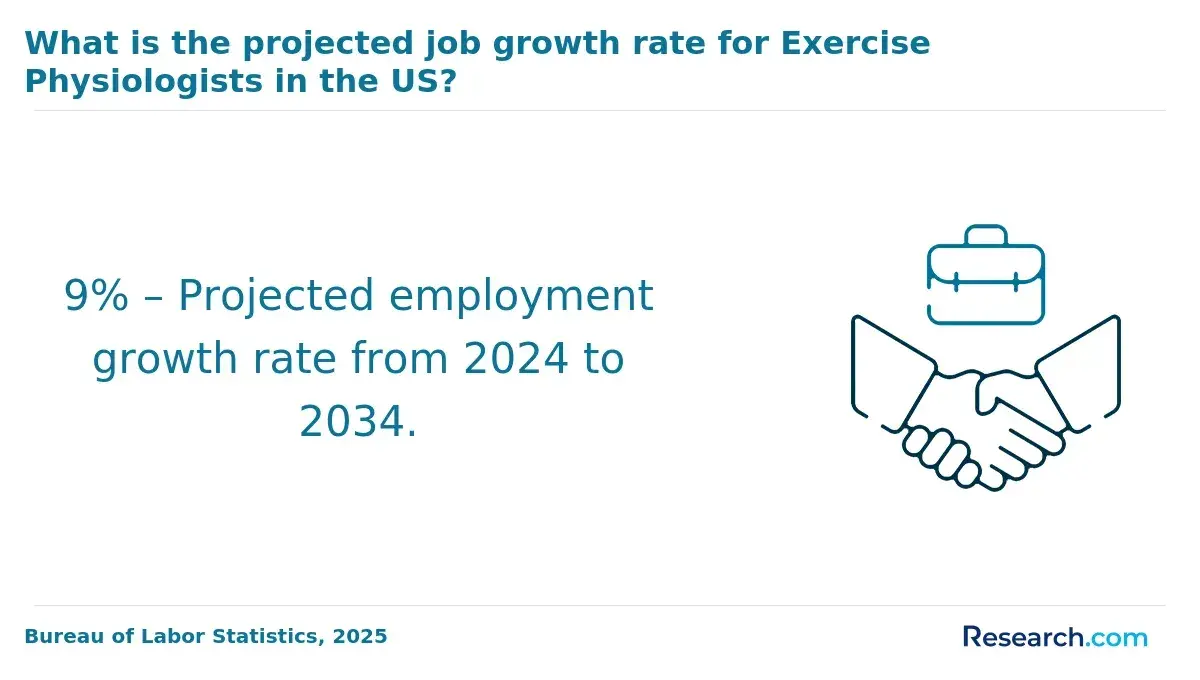
According to the U.S. Bureau of Labor Statistics, employment for exercise physiologists is projected to grow 9% from 2024 to 2034, with about 1,700 openings annually, reflecting demand for professionals who can apply exercise science in health-related settings.
Students comparing schools should also consider accreditation, transfer options, graduate school preparation, and internship quality. A list of nationally accredited colleges can be a starting point, but students should verify whether a specific program fits their career path and any credentialing requirements.
Do Exercise Science Graduates Earn Higher Salaries Because the Major Is Harder?
No. Exercise science graduates do not automatically earn higher salaries because the major is hard. Employers usually pay for job responsibilities, credentials, experience, location, specialization, and market demand—not for how difficult a student’s undergraduate coursework was.
The major can still support strong career outcomes when students use it strategically. Higher earnings are more likely when graduates add advanced certifications, gain supervised experience, choose higher-paying settings, move into management, or pursue graduate education for licensed healthcare roles.
Salary differences can be significant across career paths. For example, physical therapists with doctoral degrees earn a median annual wage around $91,000, while fitness trainers with associate degrees average about $40,000. This comparison is important because physical therapy requires additional graduate education and licensure; an exercise science bachelor’s degree alone does not qualify someone to practice as a physical therapist.
Location also matters. Exercise specialists in California make nearly $89,000 compared to roughly $57,000 in Oregon. Entry-level salaries typically range near $50,000 but can exceed $78,000 in specialized healthcare or corporate roles.
The takeaway is that difficulty may build useful knowledge, but it does not guarantee pay. Students who want stronger earnings should plan early for certifications such as ACSM credentials, internships, graduate school prerequisites, and career paths with clear advancement opportunities.
What Graduates Say About Exercise Science as Their Major
- : "Pursuing exercise science was definitely challenging but incredibly rewarding. The coursework involved a lot of hands-on learning and understanding complex body mechanics, which kept me engaged throughout. Despite the average costs being a bit steep, the knowledge I gained has been invaluable in shaping my career as a fitness coach. — Emily"
- : "Studying exercise science pushed me beyond my limits academically, but it was well worth it in the end. The major gave me practical skills that I apply daily in my role as a physical therapist, making the investment in tuition and fees feel justified. Considering the price, it's a tough road but with meaningful personal and professional growth. — Dina"
- : "Exercise science was a solid choice that combined my passion for health with scientific rigor, though it wasn't without its difficulties. The financial aspect was something I carefully managed since the cost of attendance can add up quickly, but the comprehensive education opened doors for me in wellness consulting. Reflecting on it all, it made a lasting impression on both my career path and lifestyle. — Ezra"
Other Things You Should Know About Exercise Science Degrees
In 2027, the exercise science curriculum is increasingly integrating technology and data analytics due to the job market's shift towards personalized fitness solutions and health data management. This trend demands students gain proficiency in relevant software and tools alongside traditional science courses.
Key core subjects in a 2027 exercise science program typically include anatomy, physiology, kinesiology, biomechanics, and nutrition. These subjects provide foundational knowledge essential for understanding human body movement and health, forming the backbone of the degree's curriculum.
References
- Exercise Science Degree Programs & Career Guide 2025 https://www.nutritioned.org/exercise-science-degree/
- Careers in Exercise Science – United States Sports University https://ussu.edu/news/careers-in-exercise-science/
- What Can You Do with an Exercise Science Degree? - Troy Today https://today.troy.edu/news/what-can-you-do-with-an-exercise-science-degree/
- Exercise Science Is NOT An Easy Major https://www.theodysseyonline.com/exercise-science-is-not-an-easy-major
- Kinesiology vs. Exercise Science vs. Sport Performance https://www.pointloma.edu/resources/health-sciences/kinesiology-vs-exercise-science-vs-sport-performance
- Exercise Science Degree | Otterbein University in Ohio https://www.otterbein.edu/programs/bachelor-of-science-exercise-science/