2027 Best Online MBA Programs for Supply Chain Management Careers

Co-Founder and Chief Data Scientist
Many professionals with backgrounds outside business struggle to find flexible, credible options for advancing their careers in supply chain management. Balancing work, life, and education makes pursuing an MBA challenging, especially without clear guidance on which programs offer relevant curricula and robust industry connections.
Selecting the wrong program can delay career growth or fail to provide the specialized skills needed for leadership roles in logistics, procurement, and operations. This article evaluates top online MBA programs tailored for supply chain management careers, helping readers identify accredited, adaptable pathways that align with their goals and enhance their marketability in a competitive field.
Key Things You Should Know
- Top online MBA programs for supply chain management in 2026 integrate advanced analytics and sustainability, reflecting industry demand for data-driven, eco-friendly logistics solutions.
- Graduates from accredited online MBA programs report a 15% average salary increase within two years, highlighting strong ROI and career advancement potential.
- Flexible online formats and experiential learning cater to working professionals, with 70% of students balancing jobs and studies according to 2024 enrollment data.
What are the best online MBA programs for supply chain management?
Top online MBA degrees specializing in supply chain management in the United States combine solid business fundamentals with focused courses in logistics, procurement, and global operations. Leading programs like Arizona State University's W. P. Carey School of Business, University of Michigan's Ross School of Business, and Pennsylvania State University's Smeal College of Business emphasize skills in supply chain analytics and strategy.
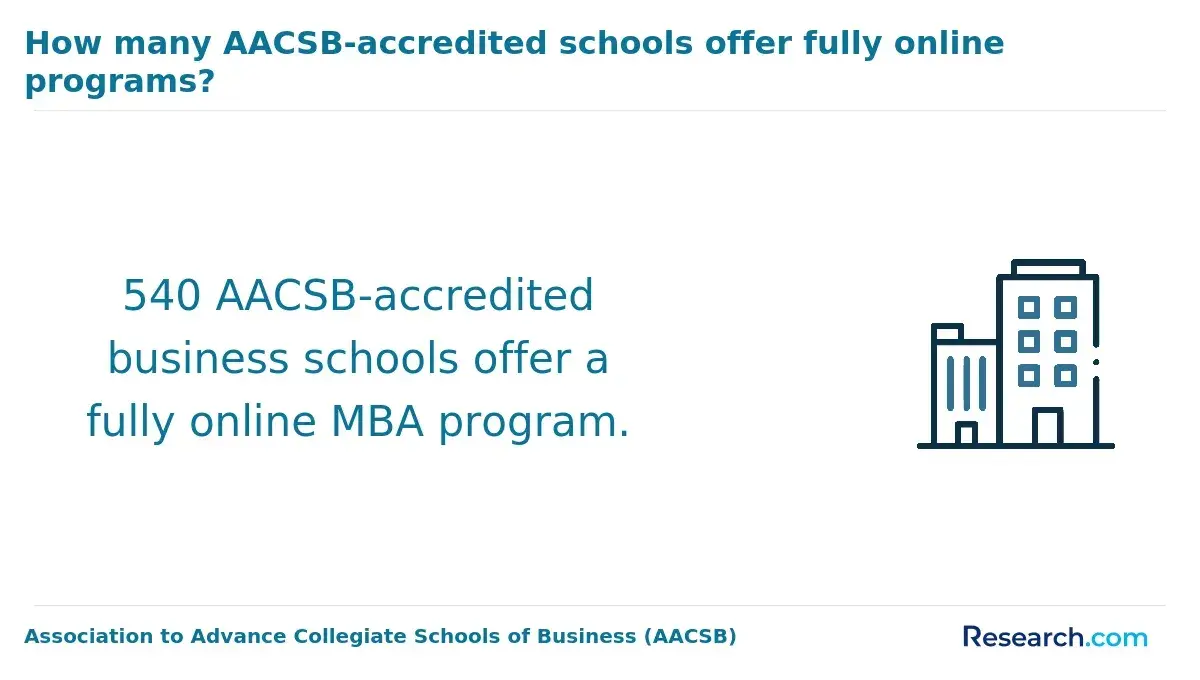
Accreditation by the Association to Advance Collegiate Schools of Business (AACSB) is a critical factor for quality assurance and employer recognition.
Applicants seeking the best online MBA programs for supply chain management careers in the United States should consider programs offering flexible pacing and advanced technology training, including enterprise resource planning (ERP) and supply chain management software. Such programs often provide connections to industry through internships, capstone projects, and networking, all valuable for career development.
Supply chain management roles are increasingly lucrative, with the U.S. Bureau of Labor Statistics reporting an 8.2% salary increase year-over-year, reaching a median of $132,000 due to global disruptions. Specialization options like Global Supply Chain Management or Operations Management concentrations help tailor education to specific career goals.
For those balancing budget concerns, exploring the least expensive online MBA programs can provide affordable pathways without sacrificing quality.
Why pursue an online MBA in supply chain management?
Pursuing an online MBA supply chain management career path enhances job prospects by providing specialized skills and strategic knowledge vital in today's global market. Graduates from online MBA programs with a supply chain focus saw a 25% higher job placement rate within six months than traditional MBA holders in 2025, according to the Graduate Management Admission Council's 2025 Corporate Recruiters Survey.
This highlights employers' preference for flexibility combined with targeted expertise.
These programs prepare students to tackle complex logistics, procurement, and inventory challenges using advanced analytic tools. Graduates learn to optimize supply chains, reduce costs, and ensure timely delivery in industries like manufacturing, retail, and healthcare.
- Application of real-world case studies through virtual simulations and project-based coursework.
- Access to industry software and technologies that remote learners can master independently.
- Development of leadership skills required to coordinate cross-functional teams and vendor relations.
- Networking opportunities with peers and professionals offering mentorship and job referrals.
For working professionals, the online MBA format offers flexibility without compromising rigor or interaction with expert faculty. Many programs feature synchronous sessions and collaborative tools for immediate feedback.
Employers increasingly seek candidates who combine supply chain technical skills with broader business knowledge, including finance and marketing. The best online MBA programs for supply chain management deliver this integrated curriculum, enabling graduates to confidently fill roles such as supply chain analyst, operations manager, or logistics director.
Prospective students interested in affordable, quality options can explore AACSB accredited MBA programs online for reputable supply chain management degrees.
What accreditation should online supply chain MBA programs have?
The Association to Advance Collegiate Schools of Business (AACSB) accreditation is the most critical for online MBA program accreditation for supply chain management. It ensures rigorous standards in faculty qualifications, curriculum quality, and continuous improvement, signaling to employers that graduates possess a strong business education tailored for competitive supply chain roles.
Regional accreditation, such as from the Higher Learning Commission or Middle States Commission, verifies institutional quality but may not guarantee industry-relevant supply chain MBA curriculum or recognition by top recruiters. Additional specialized accreditations like the Accreditation Council for Business Schools and Programs (ACBSP) can imply solid career-focused training, though they lack the prestige of AACSB accreditation with global employers.
When evaluating the best accredited supply chain MBA programs, consider alumni outcomes. For instance, Indiana University Kelley School of Business Kelley Online MBA graduates in supply chain roles reported a 62% average salary increase post-graduation. This highlights the value of choosing programs with strong market recognition and relevant alumni success.
Prospective students should seek programs combining AACSB accreditation with specialized supply chain coursework and practical experience opportunities, maximizing both education and career growth. For options beyond traditional schools, reviewing the most affordable executive MBA offerings can also help balance cost with accreditation quality.
Admission requirements for online supply chain MBA programs typically include a bachelor's degree from an accredited institution and relevant professional work experience, usually between two and five years. A competitive GPA of around 3.0 or higher is often expected. Applicants must submit official transcripts, a resume highlighting supply chain or management roles, and letters of recommendation from supervisors or academic mentors.
Standardized tests such as the GMAT or GRE are frequently required, though many programs provide waivers based on work experience, undergraduate GPA, or prior graduate coursework. For example, some schools waive the GMAT for candidates with five or more years of leadership experience in supply chain fields or advanced degrees in related disciplines.
Candidates exploring options may find valuable information on online MBA no GMAT programs that fit their profiles.
Essays or personal statements are essential to evaluate applicants' career goals, leadership potential, and alignment with supply chain management MBA online curriculum. Interviews-either online or in person-may also be conducted to assess communication and professional motivation.
International candidates need to prove English proficiency through exams like the TOEFL or IELTS if their previous education was not in English. Meeting these prerequisites for enrollment in supply chain management MBA online programs can pave the way for strong career advancement.
Notably, graduates from top online supply chain MBA programs, such as the University of Maryland Robert H. Smith School of Business, have recorded a 3.5x return on tuition within five years, boosted by an average starting salary of $145,000.
Online MBA programs in supply chain management blend core business knowledge with specialized subjects such as operations management, logistics, procurement, and global supply chain strategy. Students learn quantitative techniques like demand forecasting, inventory control, and data analytics to enhance supply chain efficiency.
Advanced coursework often includes supply chain finance, risk management, and sustainability, equipping students to tackle real-world supply chain challenges. Programs may also cover emerging topics such as blockchain technology and supply chain software tools that improve transparency and operational performance. Leadership development prepares graduates for managerial roles overseeing complex supply networks.
Many programs offer electives in areas like supplier relationship management and manufacturing systems, allowing students to tailor their education to career ambitions. Practical learning is emphasized through case studies and capstone projects, fostering skills in strategy formation and operational improvements.
Graduates from reputable programs, including Arizona State University's W.P. Carey School of Business, have shown significant career acceleration, with supply chain MBA alumni reaching director positions faster than peers. This underscores the value of a curriculum integrating analytics, strategic management, and technology.
Prospective students should prioritize programs that combine these elements while offering hands-on project experience and relevant coursework to align with evolving industry demands and professional growth.
Online supply chain MBA programs generally take between 18 and 36 months to complete, with some accelerated tracks allowing students to finish in as little as 12 months. These faster paths suit those with flexible schedules or prior graduate credits. More traditional routes typically last about two years, enabling students to balance coursework with work or personal commitments.
Part-time formats can stretch up to three years, providing working professionals with a manageable pace. Full-time online MBAs often wrap up in approximately 18 months, appealing to students eager for quicker career advancement in supply chain management.
For example, Penn State World Campus Smeal College of Business offers a supply chain MBA program that usually requires 24 months, combining analytics and management coursework rigorously. Demand for analytics-savvy supply chain managers increased 12% after recent disruptions, leading to an 18% rise in Penn State's online MBA graduate hires. This reflects the importance of timely degree completion for career momentum.
When selecting a program, consider your job status, career goals, and preferred learning style. Ask about course load flexibility, credit transfers, and opportunities to specialize in supply chain analytics or leadership to optimize your timing and outcomes.
Tuition for top online supply chain MBAs in 2026 varies significantly, typically ranging from $35,000 to over $100,000. Mid-tier programs generally cost between $40,000 and $70,000, offering a balance of affordability and reputation. Elite programs, especially those focused on supply chain analytics and boasting strong industry ties, may exceed $90,000 in total tuition.
Purdue University Krannert School of Management provides a notable example, charging around $73,000 for its supply chain analytics MBA track. Graduates of this program earned an average salary of $148,000 in 2025, which is 22% higher than their general MBA counterparts (Purdue Krannert School of Management, 2025 Employment Report).
When evaluating costs, professionals should factor in additional expenses such as technology fees, course materials, and potential travel for residencies. Financing options vary widely and include scholarships, employer tuition assistance, and federal student loans. Comparing net costs after financial aid is key to making informed decisions.
Higher tuition often correlates with enhanced alumni networks, specialized curriculum, and career services. However, affordable programs can still provide strong value if they offer rigorous content and flexible schedules. Prospective students should assess return on investment based on career goals and salary benchmarks in supply chain management roles.
Transparency in tuition and awareness of total financial commitments, including hidden fees, are essential when pursuing an online MBA that supports career advancement.
Graduates with an online MBA in supply chain management pursue careers that blend strategic planning, operations, and technology integration. Common roles include supply chain analyst, procurement director, logistics coordinator, operations manager, and demand planner. These professionals manage supplier relationships, optimize inventory, and ensure efficient product flow to meet customer needs.
With experience and advanced training, leadership positions such as supply chain director or chief operations officer become attainable. These roles involve designing resilient supply chains, mitigating risk, and implementing cost-saving technologies.
The adoption of artificial intelligence (AI) in supply chains continues to grow. McKinsey & Company's 2025 Supply Chain Resilience Report highlights that AI adoption has reduced operational costs by 17% for companies led by MBA-trained professionals. This underscores the demand for candidates skilled in data analytics and AI tools to enhance forecasting and automate procurement processes.
Additional career paths include:
- Analytics positions interpreting big data to drive strategic decisions
- Supplier quality management, ensuring compliance and performance standards
- Project management, overseeing technology implementations and process improvements
- Consulting roles focusing on supply chain transformation and digitalization
To stay competitive, professionals should develop strong technical skills in ERP software and AI integration, alongside leadership capabilities. This skill set helps address challenges like supply disruptions and fluctuating global trade conditions.
Graduates with an online supply chain MBA can expect salaries ranging from $80,000 to over $140,000 annually, influenced by factors such as experience, location, and employer size. Entry-level positions like supply chain analyst or logistics coordinator typically start near $80,000, while advanced roles such as supply chain manager, procurement director, or operations manager often command between $110,000 and $140,000.
Senior executives, including supply chain vice presidents or directors at Fortune 500 companies, frequently earn over $150,000, often supplemented by bonuses and profit-sharing. Industry variations affect compensation, with technology and pharmaceuticals generally offering higher salaries compared to retail or manufacturing sectors.
The financial return of a supply chain MBA is notable. According to the Financial Times 2025 Online MBA Value Index, the return on investment (ROI) for online supply chain MBAs reached 250% over 10 years, outperforming many other business specializations by 40%. This highlights the degree's impact on boosting earning potential relative to education costs.
Evaluating these salary benchmarks helps professionals align their MBA investment with realistic career and financial goals.
What is the job outlook for supply chain managers?
The job outlook for supply chain managers is exceptionally strong, with employment projected to increase by 28% by 2033. This growth will add around 20,000 new jobs each year starting in 2025, driven by global trade expansion, advances in logistics technology, and higher demand for effective inventory management.
Supply chain managers coordinate procurement, production, distribution, and logistics processes. Their expertise in handling international regulations and streamlining global supply chains is increasingly valuable, especially as e-commerce drives the need for last-mile delivery and warehouse automation.
Opportunities for supply chain professionals are available across manufacturing, retail, healthcare, and technology sectors. Graduates with an MBA specializing in supply chain management often pursue roles such as logistics director, operations manager, or procurement manager, which are both in demand and offer competitive salaries.
Key skills that enhance employability include:
- Advanced data analytics
- Artificial intelligence applications
- Supply chain software proficiency
- Green logistics and sustainability practices
- Risk management strategies
Professionals who stay current with industry trends and earn certifications related to supply chain leadership and technology will be well-positioned for career advancement. Pursuing an MBA with a focus on supply chain management represents a smart pathway to entering a high-growth, secure field.
Other Things You Should Know About MBA
Admission requirements for online MBA programs in supply chain management typically include an undergraduate degree, a minimum GPA of 3.0, GMAT or GRE scores, and relevant work experience. Some programs may also require a statement of purpose and letters of recommendation.
An MBA in supply chain management equips students with strategic thinking and analytical skills needed to manage complex global supply chains. Programs emphasize risk management, international trade regulations, and technology integration, which are critical for overseeing supply networks across borders. Graduates are trained to make data-driven decisions that optimize supply chain efficiency and resilience worldwide.
Yes. Many online MBA programs with a supply chain concentration require a capstone in the final term, usually worth 3 credit hours. Students often complete a case analysis, consulting project, or operations strategy report and must earn a minimum 3.0 GPA to pass the course and graduate.
In addition to supply chain technical skills, online MBA programs emphasize leadership, communication, and strategic decision-making capabilities. Students learn to manage teams, negotiate with stakeholders, and lead projects under tight deadlines. These soft skills are essential for advancing into executive roles and driving organizational success beyond operational tasks.
- 2026 Supply Chain Job Market: What Job Seekers Need to Know https://www.scoperecruiting.com/blog/supply-chain-job-market-2026-job-seekers
- Top Online MBAs for Accreditations | FIND MBA Online https://findmbaonline.com/lists/top-10-online-mbas-with-the-best-accreditations
- Top 5 Online MBAs in Supply Chain Management | OnlineMBA.com https://www.onlinemba.com/rankings/best-online-mba/supply-chain-management/
- Top Career Options After Online MBA in Logistics and Supply Chain Management https://www.careers360.com/courses-certifications/articles/top-career-options-after-online-mba-in-logistics-and-supply-chain-management
- Top Online MBAs in Supply Chain Management and Logistics with Specialty Business Accreditation – AACSB, ACBSP, IACBE | OnlineMBAPage.com https://onlinembapage.com/mba-supply-chain-management-list/
- MBA in Logistics & Supply Chain: Curriculum & Learning Outcomes https://www.dypatilonline.com/blogs/mba-logistics-supply-chain-curriculum-overview
- Top 7 Reasons To Enroll In An MBA In Logistics & Supply Chain Management - Britts Imperial 2026 https://brittsimperial.com/top-7-reasons-to-enroll-in-an-mba-in-logistics-supply-chain-management/
- Is Supply Chain Management a Good Career in 2025? Pros & Outlook https://clinstitute.co.uk/blog/management-training/is-supply-chain-management-a-good-career-pros-outlook