2027 Top Easy-Admission Online MBA Programs (No GMAT)

Co-Founder and Chief Data Scientist
An online MBA with no GMAT requirement can be a practical route if you want graduate business training without spending months preparing for a standardized test. For working professionals, the bigger question is not simply whether a program is “easy” to enter, but whether it is credible, affordable, flexible, and aligned with the career outcome you want.
No-GMAT online MBA programs vary widely. Some waive the test for applicants with strong work experience or prior academic performance. Others have test-optional admissions for all applicants. The strongest options still evaluate your readiness through transcripts, professional experience, essays, interviews, recommendations, and evidence of leadership potential.
This guide explains how easy-admission online MBA programs work, why many schools no longer require the GMAT, what admissions committees review instead, and how to compare programs by accreditation, cost, pacing, specialization, and employer credibility.
Key Benefits of Enrolling in a Top Easy-Admission, No-GMAT-Requirement Online MBA Program
- Allows professionals to apply immediately without months of test prep or scheduling delays.
- Reduces stress and financial costs associated with GMAT review courses and exam fees.
- Focuses admissions decisions on real-world experience, academic history, and career potential rather than a single test score.
- Makes it easier for working adults, career changers, and nontraditional students to qualify and start their MBA sooner.
List of Top Easy-Admission Online MBA Programs (No GMAT)
Choosing an online MBA is a major financial and professional decision. A no-GMAT policy can make the application process faster, but it should not be the only reason you choose a school. Accreditation, curriculum quality, tuition, pacing, student support, and employer recognition matter more over the long term.
The programs below were reviewed using reliable education datasets and institutional information. Research.com evaluates programs using data from sources such as the Integrated Postsecondary Education Data System, Peterson’s database including its Distance Learning Licensed Data Set, College Scorecard, and the National Center for Education Statistics. You can learn more about the Research.com methodology.
Admissions policies can change, so applicants should confirm each school’s current GMAT waiver, test-optional, or no-test policy before applying.
| Program | Typical Length | Approximate Tuition | Accreditation | Best Fit |
| Indiana University – Kelley School of Business Online MBA | ~ 2 years | approx. $95,000 total tuition | AACSB | Professionals seeking a highly recognized online MBA with broad elective flexibility |
| University of North Carolina – Kenan‑Flagler Business School Online MBA | ~ 18-36 months | approx. $126,000 total tuition | AACSB | Students prioritizing national brand recognition and a rigorous online format |
| University of Michigan – Ross School of Business Online MBA | ~ 2 years | approx. $118,000 | AACSB | Professionals who want a strong business school reputation and leadership-focused coursework |
| William & Mary – Raymond A. Mason School of Business Online MBA | ~ 21-27 months | approx. $73,000 total tuition | AACSB | Students looking for a flexible online MBA from an established public institution |
| Kent State University – Ambassador Crawford College of Business and Entrepreneurship Online MBA | ~ 24-36 months | approx. $32,000 total tuition | AACSB | Cost-conscious applicants who still want AACSB accreditation |
| Xavier University – Williams College of Business Online MBA | ~ 2-4 years | $942 per credit | AACSB | Working professionals who need a part-time path with flexible pacing |
| University of Arizona – Eller College of Management Online MBA | ~ 24-30 months | approx. $56,000 total tuition | AACSB | Applicants who want multiple start dates and career-aligned electives |
| Syracuse University – Martin J. Whitman School of Management Online MBA | ~ 2 years | approx. $109,000 total tuition | AACSB | Professionals seeking a structured online MBA with a recognizable private university brand |
| Florida Atlantic University – College of Business Online MBA | ~ 23 months | approximately $32,000 total tuition | AACSB | Applicants seeking a more cost-efficient AACSB-accredited online MBA |
| Old Dominion University – Strome College of Business Online MBA | ~ 18-24 months | example approx. $13,000 | AACSB | Students looking for one of the more affordable flexible online MBA options |
1. Indiana University – Kelley School of Business Online MBA
Indiana University’s Kelley School of Business offers an online MBA designed for professionals who want flexibility without giving up access to a well-known business school network. The program is a strong fit for students who want broad management training plus the ability to pursue electives in areas such as analytics and global business.
- Length: ~ 2 years (part-time)
- Tracks/Concentrations: multiple options, including business analytics and global business
- Cost (tuition): approx. $95,000 total tuition (per 2025 data)
- Required credits: ~ 45-60 credits (varies)
- Accreditation: Association to Advance Collegiate Schools of Business (AACSB)
2. University of North Carolina – Kenan‑Flagler Business School Online MBA (MBA@UNC)
The University of North Carolina - Kenan-Flagler Business School offers an online MBA that follows the same core academic expectations as its in-person program. It may appeal to applicants who value a selective business school brand, flexible pacing, and access to a broad alumni network.
- Length: ~ 18-36 months depending on pace
- Tracks/Concentrations: wide range of specializations and electives
- Cost (tuition): approx. $126,000 total tuition (2025 data)
- Required credits: ~ 38-55 credits (varies by option)
- Accreditation: AACSB
3. University of Michigan – Ross School of Business Online MBA
The University of Michigan’s Ross School of Business offers an online MBA for working professionals who want a recognizable business school credential and applied management training. The program is best suited for students who can manage a demanding curriculum while continuing to work.
- Length: ~ 2 years
- Tracks/Concentrations: general MBA with electives in analytics, leadership, and related areas
- Cost (tuition): approx. $118,000 (2025 data)
- Required credits: ~ 54-60 credits
- Accreditation: AACSB
4. William & Mary – Raymond A. Mason School of Business Online MBA
William & Mary’s Raymond A. Mason School of Business offers a flexible online MBA with several start opportunities during the year. It can work well for students who want a reputable public university program with a leadership and general management focus.
- Length: ~ 21-27 months
- Tracks/Concentrations: leadership, general management, and related areas
- Cost (tuition): approx. $73,000 total tuition (2025 data)
- Required credits: ~ 36-45 credits
- Accreditation: AACSB
5. Kent State University – Ambassador Crawford College of Business and Entrepreneurship Online MBA
Kent State University’s Ambassador Crawford College of Business and Entrepreneurship offers an AACSB-accredited online MBA that may be more accessible for students comparing tuition-sensitive options. Its format is geared toward working professionals who want practical business training without a premium-level tuition commitment.
Applicants comparing external rankings may also consult resources such as online MBA rankings, while remembering that rankings should be weighed alongside cost, curriculum, accreditation, and personal fit.
- Length: ~ 24-36 months
- Tracks/Concentrations: business analytics, finance, and related areas
- Cost (tuition): approx. $32,000 total tuition (2025 data)
- Required credits: ~ 30-36 credits
- Accreditation: AACSB
6. Xavier University – Williams College of Business Online MBA
Xavier University’s Williams College of Business offers an online MBA with flexible pacing for professionals who may need to balance coursework with full-time employment, travel, or family responsibilities. Its per-credit tuition structure makes it important to calculate the total cost based on required credits before enrolling.
- Length: ~ 2-4 years (part-time)
- Tracks/Concentrations: general management, healthcare management, and related areas
- Cost (tuition): $942 per credit
- Required credits: ~ 36 credits
- Accreditation: AACSB
7. University of Arizona – Eller College of Management Online MBA
The University of Arizona - Eller College of Management offers an online MBA with multiple start dates, which can help applicants avoid waiting a full academic year to begin. It is a strong consideration for students who want a flexible schedule and career-focused electives.
- Length: ~ 24-30 months
- Tracks/Concentrations: business analytics, management, and related areas
- Cost (tuition): approx. $56,000 total tuition (2025 data)
- Required credits: ~ 48-54 credits
- Accreditation: AACSB
8. Syracuse University – Martin J. Whitman School of Management Online MBA
Syracuse University’s Martin J. Whitman School of Management offers an accredited online MBA for professionals seeking advancement in management, marketing, finance, or related business functions. Because tuition is a significant investment, applicants should compare career support, alumni access, and specialization options before committing.
- Length: ~ 2 years
- Tracks/Concentrations: general management, marketing, finance
- Cost (tuition): approx. $109,000 total tuition (2025 data)
- Required credits: ~ 45-50 credits
- Accreditation: AACSB
9. Florida Atlantic University – College of Business Online MBA
Florida Atlantic University College of Business offers an AACSB-accredited online MBA that may appeal to applicants seeking a more cost-efficient program. Its concentration options can support students targeting roles in finance, marketing, analytics, and other business areas.
- Length: ~ 23 months
- Tracks/Concentrations: finance, marketing, analytics, and related areas
- Cost (tuition): approximately $32,000 total tuition (2025 data)
- Required credits: ~ 30-36 credits
- Accreditation: AACSB
10. Old Dominion University – Strome College of Business Online MBA
Old Dominion University - Strome College of Business offers an online MBA with flexible pacing and no strict GMAT requirement for many applicants. It is worth considering for students who want AACSB accreditation and a lower-cost path than many private or flagship business school options.
- Length: ~ 18-24 months (depending on pace)
- Tracks/Concentrations: business analytics, finance, international business, and related areas
- Cost (tuition): example approx. $13,000 (one of the more affordable options)
- Required credits: ~ 40-45 credits
- Accreditation: AACSB
What makes an online MBA an “easy admission” program?
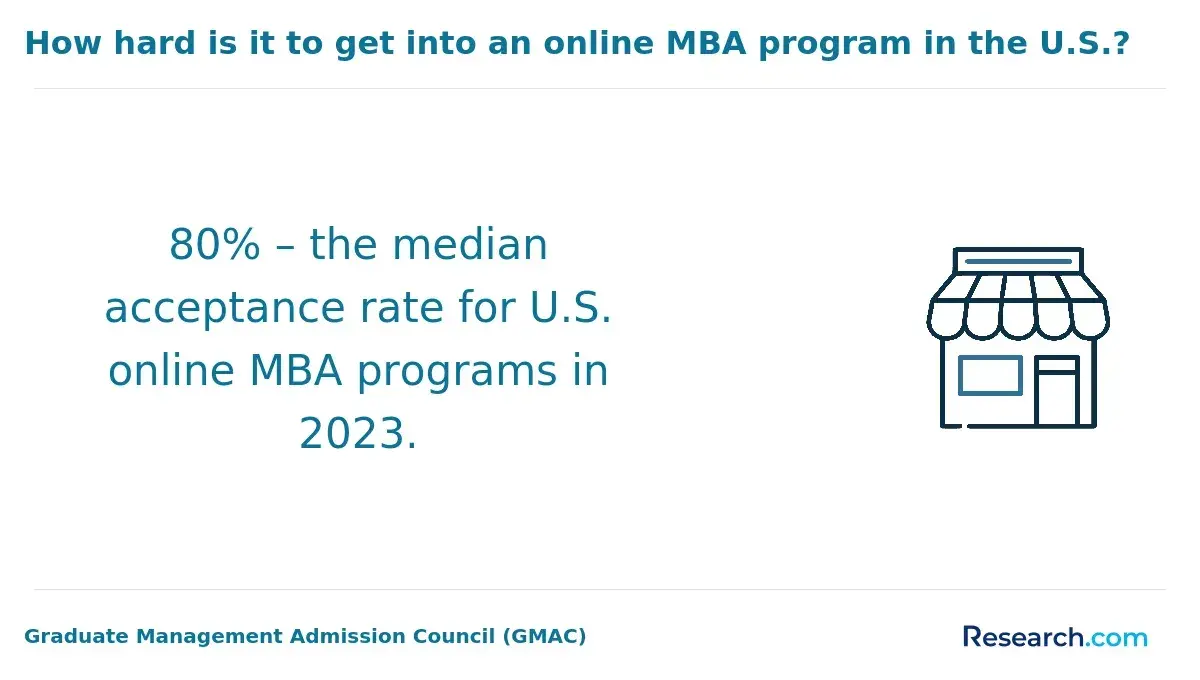
An “easy admission” online MBA usually means the program has removed or reduced common barriers to applying, not that it has low academic standards. The best versions of these programs make admissions more efficient while still checking whether applicants are ready for graduate-level business work.
In practice, many MBA online programs are considered easier to enter when they offer several of the following features:
- No GMAT or GRE requirement: Applicants can avoid the time, cost, and stress of standardized test preparation.
- Test waivers or test-optional review: Some schools waive testing for applicants with qualifying work experience, prior graduate study, or strong academic records.
- Flexible GPA review: A lower undergraduate GPA may be balanced by professional achievements, leadership, certifications, or strong recent coursework.
- Simplified application materials: Programs may require fewer essays, optional recommendations, or a shorter application process.
- Rolling admissions and multiple start dates: Applicants can often begin sooner instead of waiting for a once-a-year intake.
- Recognition of professional experience: Admissions teams may place substantial weight on career progression, management responsibilities, and applied business skills.
The main caution is that “easy admission” should not mean “choose the fastest approval.” A reputable program should still be accredited, transparent about costs, clear about graduation requirements, and honest about student outcomes and support services.
Why do many online MBA programs no longer require the GMAT?
Many online MBA programs no longer require the GMAT because their applicant pool is often made up of working adults who already have years of professional experience. For these students, career history, leadership exposure, quantitative responsibilities, prior grades, and communication skills can give admissions committees a fuller picture than one standardized exam score.
This trend is especially visible among top ranked online MBA programs no GMAT required, although each school sets its own policy. Some programs are fully test-optional, while others offer waivers only when applicants meet specific academic or professional criteria.
- Work experience can be highly relevant: Management roles, budget responsibility, client work, analytics experience, and project leadership can demonstrate readiness for MBA coursework.
- Holistic admissions are more useful for adult learners: Schools can evaluate transcripts, résumés, essays, recommendations, and interviews together.
- GMAT preparation can delay enrollment: Busy professionals may postpone applying because of test preparation time and testing costs.
- Online programs compete on access and flexibility: Removing unnecessary barriers helps schools reach qualified applicants who cannot follow a traditional full-time MBA path.
- Academic readiness has multiple indicators: Prior coursework, professional certifications, quantitative job duties, and recent academic performance can all help predict preparedness.
A no-GMAT policy does not mean admissions are automatic. Strong programs still look for evidence that applicants can handle accounting, finance, statistics, strategy, leadership, and other core MBA subjects.
No-GMAT online MBA programs usually streamline the application, but they still require documentation that proves academic and professional readiness. Requirements vary by institution, so applicants should review each school’s admissions page carefully before assuming the GMAT is fully waived.
- A bachelor’s degree from an accredited institution: Most programs require an undergraduate degree and may state a minimum GPA, often around 2.5–3.0.
- Professional work experience: Many programs prefer applicants with 2–5 years of experience, especially when the GMAT is not required.
- Official transcripts: Schools typically require records from all previously attended colleges or universities.
- A current résumé or CV: This should show job history, promotions, leadership responsibilities, technical skills, and measurable accomplishments.
- Letters of recommendation: Recommendations often come from supervisors, managers, professors, or colleagues who can speak to your performance and potential.
- A personal statement or essay: The essay should explain your career goals, why you want an MBA, and why the program fits your plans.
- An admissions interview: Some schools use interviews to evaluate communication skills, motivation, professionalism, and fit.
Applicants with weaker academic records should pay special attention to the résumé, essay, and recommendations. These materials can help explain career growth, maturity, and readiness in ways a transcript alone may not show.
Without GMAT scores, admissions committees rely on a broader review of academic history, professional maturity, communication ability, and evidence of leadership. The goal is to answer one practical question: can this applicant succeed in a graduate business program while contributing meaningfully to classmates?
| Evaluation Factor | What Schools Look For | How Applicants Can Strengthen It |
| Work experience | Career progression, leadership, problem-solving, business exposure, and responsibility | Use specific examples with measurable results, such as revenue impact, cost savings, team size, or project scope |
| Academic history | Undergraduate GPA, quantitative coursework, writing ability, and consistency | Address weak grades honestly and highlight stronger recent coursework or relevant training |
| Résumé quality | Clear accomplishments, promotions, skills, certifications, and scope of responsibility | Replace task lists with achievement-focused bullets and current business skills |
| Essays or personal statements | Career goals, motivation, self-awareness, and program fit | Connect the MBA to specific goals rather than using generic statements about advancement |
| Recommendations | Work ethic, leadership potential, judgment, collaboration, and readiness | Choose recommenders who know your work well and can provide concrete examples |
| Interview performance | Professionalism, communication, clarity of goals, and maturity | Prepare concise answers about your background, goals, challenges, and reasons for choosing the program |
This holistic process can benefit experienced applicants whose professional records are stronger than their test-taking profiles. It can also make admissions more competitive, because every part of the application must work together to show readiness.
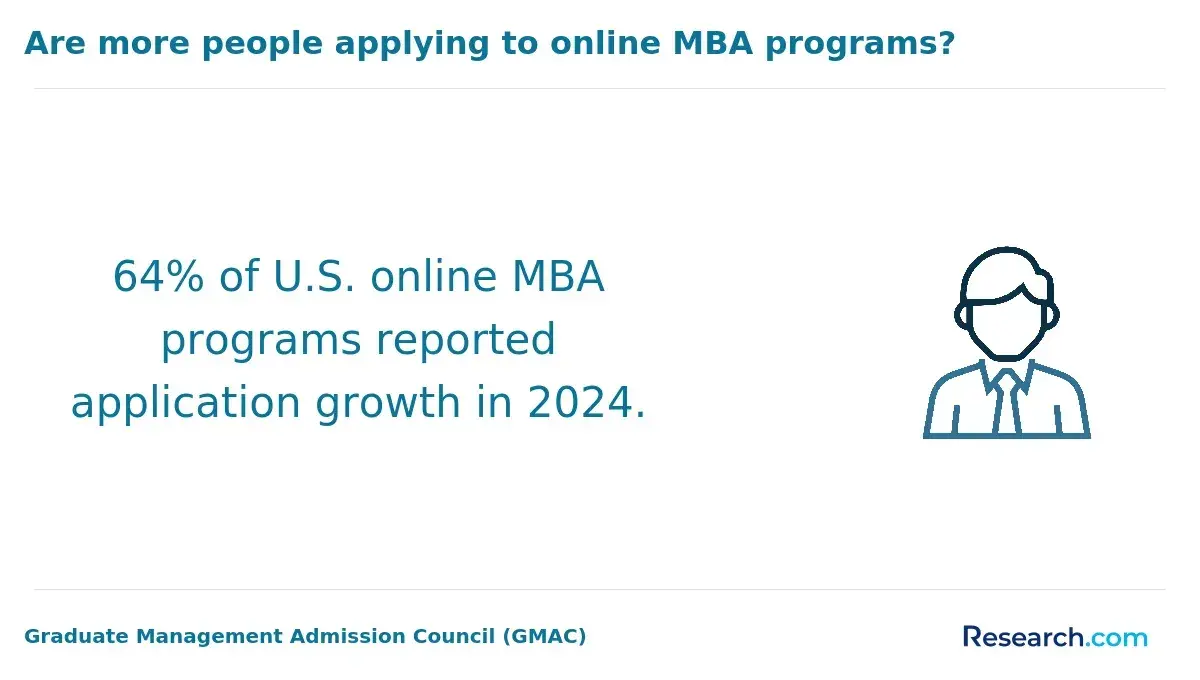
Yes, many no-GMAT online MBA programs are reputable and respected by employers, especially when they are offered by accredited, established institutions. Employers generally care more about the school’s reputation, accreditation, curriculum quality, student experience, and your demonstrated skills than whether you submitted a GMAT score during admission.
An online MBA accredited by AACSB can carry strong credibility because AACSB accreditation signals that the business school meets recognized academic and quality standards. Regional institutional accreditation also matters, particularly for transferability, employer reimbursement, and eligibility for certain financial aid options.
To judge reputation, look beyond the phrase “no GMAT.” Ask these questions:
- Is the business school accredited by a recognized accreditor?
- Is the online MBA taught by qualified faculty connected to the business school?
- Does the diploma or transcript distinguish between online and campus formats?
- Does the program provide career services, networking, alumni access, or employer connections?
- Are tuition, fees, graduation requirements, and student expectations clearly disclosed?
- Do alumni outcomes and student support services match your career goals?
A no-GMAT policy alone does not weaken a degree. The risk comes from choosing a program with unclear accreditation, weak student support, poor transparency, or limited employer recognition.
Most no-GMAT online MBA programs offer specialization options similar to traditional MBA programs. Common areas include finance, marketing, business analytics, entrepreneurship, healthcare management, and supply chain management. In many cases, the admissions policy has little to do with the academic menu; the available concentrations depend more on the business school’s faculty strengths, curriculum design, and market demand.
Specializations matter most when they connect directly to your career plan. A general MBA may work well for broad management advancement, while a concentration can be useful if you are targeting a more defined path such as analytics, healthcare administration, finance, or marketing leadership.
- Choose a specialization if: you want to build credibility in a specific function or industry, change career direction, or gain technical knowledge beyond general management.
- Choose a general MBA if: you want broad leadership training, already have industry expertise, or are pursuing roles where management range matters more than technical depth.
- Review electives carefully: Two programs may use the same concentration name but offer very different courses.
- Check scheduling: Some online programs rotate electives, which can affect how quickly you complete a concentration.
Some no-GMAT programs may also offer stackable certificates or industry-aligned micro-credentials. These can be useful if they add recognized skills, but applicants should confirm whether they are included in tuition, require extra credits, or extend time to graduation.
Many easy-admission online MBA programs offer accelerated paths that can be completed in as little as 12–18 months, while part-time formats often take 24–36 months. The right pace depends on your work schedule, family responsibilities, prior academic preparation, and how much time you can realistically devote to coursework each week.
Speed is not always the best measure of value. An accelerated MBA can reduce time away from career momentum, but it may also require heavier course loads and less flexibility. A part-time MBA can be easier to manage while working full time, but it may extend the period during which you are paying tuition and balancing school with other obligations.
| Format | Typical Timeline | Advantages | Trade-Offs |
| Accelerated online MBA | 12–18 months | Fast completion and quicker return to career goals | Heavier workload and less room for schedule disruption |
| Standard online MBA | ~ 18-24 months | Balanced pace for many working professionals | Still requires consistent time management |
| Part-time online MBA | 24–36 months | More manageable for demanding jobs or family responsibilities | Longer time to graduation |
Completion time can also depend on transfer credits, course availability, prerequisite requirements, cohort structure, and the number of start dates offered each year. Some programs are structured similarly to online EMBA programs, allowing experienced professionals to move efficiently through applied business coursework.
Because there is no standardized test score to support the application, the rest of your materials need to show that you are prepared, focused, and likely to complete the program. A strong no-GMAT MBA application tells a coherent story: where you have been professionally, why you need the MBA, and how the specific program helps you reach the next step.
- Show meaningful work experience: Emphasize leadership, decision-making, project ownership, promotions, and measurable results.
- Update your résumé carefully: Use accomplishment-based bullets and include current responsibilities, certifications, technical skills, and managerial experience.
- Write a specific personal statement: Explain your career goals, why now is the right time for an MBA, and why this school fits your goals.
- Choose recommenders strategically: Select supervisors or colleagues who can describe your performance, judgment, initiative, and growth potential with examples.
- Address academic weaknesses directly: If your undergraduate GPA was uneven, point to stronger recent performance, relevant coursework, certifications, or professional evidence of discipline.
- Complete optional prerequisites or certificates: Courses in accounting, statistics, finance, analytics, or business fundamentals can help demonstrate readiness for quantitative MBA work.
- Prepare for the interview: Be ready to discuss your goals, leadership experience, time-management plan, and reasons for choosing online study.
Avoid generic applications. Admissions teams can usually tell when an essay could have been sent to any school. Strong applicants connect their background and goals to the program’s format, curriculum, faculty, concentrations, and support services.
What factors should applicants consider when choosing a no-GMAT online MBA?
The best no-GMAT online MBA is not automatically the cheapest, fastest, or easiest to enter. It is the program that fits your career goals, budget, schedule, learning style, and need for employer-recognized credibility.
- Accreditation: Prioritize recognized institutional accreditation and consider business school accreditation such as AACSB when reputation and employer recognition are important.
- Total cost: Compare tuition, fees, books, technology costs, residencies, travel, and the number of required credits. Per-credit tuition can be misleading if programs require different credit totals.
- Program reputation: Look at the university, business school, faculty qualifications, alumni network, and employer awareness in your target region or industry.
- Specializations and electives: Make sure the curriculum supports your goals in areas such as analytics, finance, marketing, healthcare management, entrepreneurship, or supply chain management.
- Learning format: Check whether courses are asynchronous, live online, hybrid, cohort-based, self-paced, or tied to required residencies.
- Program length and workload: Decide whether an accelerated, standard, or part-time pace is realistic based on your work and personal responsibilities.
- Admissions policy details: Confirm whether the GMAT is waived for all applicants, optional, or waived only under certain conditions.
- Career support: Review coaching, résumé help, interview preparation, employer connections, alumni access, and networking opportunities.
- Student support: Strong online programs should provide advising, technical support, library access, tutoring, and clear communication.
- Return on investment: Consider how the degree may support promotion, career change, salary growth, business ownership, or skill development, but avoid assuming outcomes are guaranteed.
Before applying, shortlist programs that meet your accreditation and budget standards, then compare curriculum, flexibility, support, and admissions requirements. A no-GMAT policy can make getting started easier, but the right program should also help you finish and use the degree effectively.
Other Things You Should Know About Top Easy-Admission Online MBA Programs (No GMAT)
Many 2027 easy-admission online MBA programs without the GMAT include an admission interview to assess candidates' goals and fit. The interview may be conducted virtually and typically lasts 30-60 minutes. Check specific program websites for details.
Yes. Many no-GMAT online MBA programs accept applicants from any accredited bachelor’s degree field, including liberal arts, engineering, and science. Admissions offices usually look for a minimum 2.75 to 3.0 GPA, official transcripts, a résumé, and a statement of purpose rather than a business major.
- Accreditation Council for Business Schools and Programs. (n.d.). ACBSP accreditation Overview - Accreditation Council for Business Schools and programs. ACBSP.
- Association to Advance Collegiate Schools of Business. (n.d.). Accreditation. AACSB.
- Gary W. Rollins College of Business. . (2024, January 12). Top Questions to Ask About Online MBA Programs - Gary W. Rollins College of Business. blog.utc.edu.
- GMAC. (2025). Demand for Graduate Business Degrees. GMAC.
- Leckrone, B. (2025, January 27). Don’t Want to Take the GMAT? You Probably Want an Online MBA. Best Colleges.
- London School of International Business, U.K. (n.d.). What are the benefits of choosing online MBA schools with no GMAT requirement? LSIB.