2027 Best Online MBA Degrees for Leadership & Management

Co-Founder and Chief Data Scientist
Choosing an online MBA for leadership and management is a career investment, not just a degree decision. The right program can help you move from functional expertise into broader responsibility: leading teams, managing change, setting strategy, interpreting business data, and making decisions with financial and operational consequences. The wrong program may add debt without improving your credibility, network, or promotion prospects.
This guide explains how to compare online MBA programs with a leadership and management focus in 2027. It covers program quality, cost, executive MBA options, no-GMAT pathways, online versus full-time formats, specialization choices, completion timelines, ROI, admissions requirements, and likely career outcomes. Salary results are never guaranteed, but industry surveys report MBA median starting salaries of around $120,000 per year, which is why careful program selection matters.
Key Benefits of Getting Online MBA Degrees for Leadership & Management
- You could move into jobs such as operations manager, director of management, business unit leader, or executive roles by earning this degree.
- Median salary benchmarks for MBA graduates are significantly higher than bachelor’s degree holders, often around six‑figures (for example, ~$120,000 per annum) which reflects the increased earning potential.
- Completing your MBA online offers flexibility with scheduling, allowing you to continue working while you study, and can reduce commuting or relocation requirements.
What are the best online MBA degrees for leadership & management?
The best online MBA degrees for leadership and management are accredited programs that combine a strong general MBA core with practical training in strategy, organizational behavior, decision-making, people management, operations, and change leadership. A strong program should not simply label itself “leadership-focused.” It should show that leadership development is built into the curriculum, projects, coaching, cohort design, faculty expertise, and alumni outcomes.
Start by checking accreditation, then compare cost, flexibility, employer reputation, alumni roles, and the depth of the leadership curriculum. If affordability is a priority, compare these programs with the most affordable online MBA options so you can weigh price against brand value, curriculum fit, and long-term career utility.
What separates a strong leadership MBA from a general online MBA?
- Recognized accreditation. Look for business-school accreditation such as AACSB, ACBSP, or EQUIS, along with institutional accreditation.
- Leadership-centered coursework. Strong programs include strategic management, organizational leadership, change management, negotiation, ethics, and executive communication.
- Applied learning. Capstones, consulting projects, simulations, leadership labs, and employer-based projects help you prove skills beyond exams.
- Flexible delivery. Working professionals should compare asynchronous courses, live sessions, residency requirements, and expected weekly workload.
- Career and alumni outcomes. Review graduate job titles, promotion patterns, employer connections, alumni engagement, and reported salary outcomes.
- Total value. A lower-cost program can be a better choice if it is accredited, flexible, and aligned with your target role.
Selected Best Online MBA Degrees for Leadership & Management
- University of Texas at Dallas – Naveen Jindal School of Management (Online MBA)
- University of Michigan – Ross School of Business (Online MBA)
- Indiana University – Kelley School of Business (Kelley Direct Online MBA)
- University of North Carolina at Chapel Hill – Kenan-Flagler Business School (Online MBA)
- University of Florida – Warrington College of Business (Online MBA)
- Jack Welch Management Institute (Online MBA)
- Carnegie Mellon University – Tepper School of Business (Online/Hybrid MBA)
- University of Southern California – Marshall School of Business (Online MBA)
- Hofstra University – Frank G. Zarb School of Business (Online MBA)
- New York University – Stern School of Business (Online MBA)
Use rankings and program lists as a starting point, not the final answer. The best choice depends on your current experience, target industry, budget, preferred learning format, and whether you need a broad management credential or a more executive-oriented pathway.
How much does an online MBA for leadership & management cost?
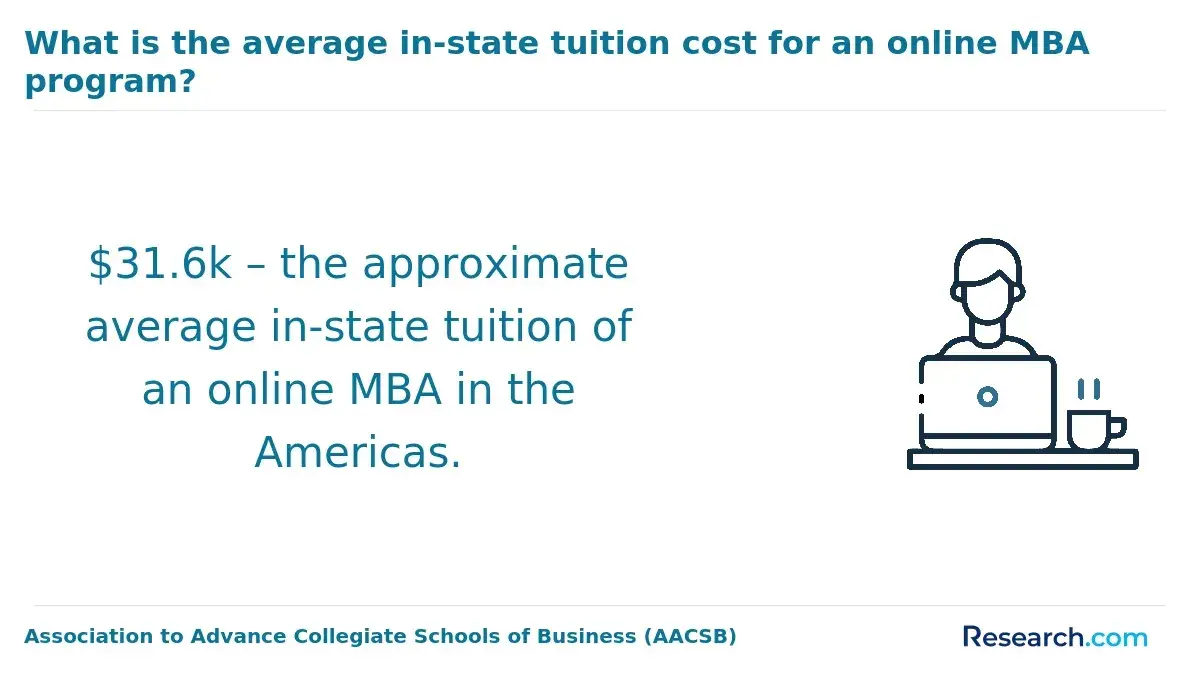
The cost of an online MBA for leadership and management depends on the institution, accreditation, program length, residency requirements, and fee structure. Some highly ranked or AACSB-accredited programs cost more, but higher tuition does not automatically mean better ROI. Conversely, lower-cost programs can be strong choices when they offer credible accreditation, relevant leadership coursework, and solid student support.
If you are comparing AACSB-accredited options, review the cheapest online AACSB MBA programs alongside higher-cost schools. This helps you see whether a premium program offers advantages that matter to your goals, such as stronger employer recognition, in-person networking, executive coaching, or a deeper alumni base.
Costs to include in your calculation
- Tuition and required fees. Ask for the full program cost, not only the per-credit rate.
- Technology and platform fees. Online programs may charge additional fees for learning systems or remote services.
- Books, cases, and materials. Business courses often use case studies, simulations, and digital resources that may add to the total cost.
- Residency or travel expenses. Some online MBAs include optional or required campus visits, global immersions, or leadership residencies.
- Time cost. A program that disrupts work performance, overtime opportunities, or family responsibilities can carry hidden costs.
- Financing costs. If you borrow, evaluate repayment obligations before enrolling.
How to judge whether the price is reasonable
Compare cost against career fit. A leadership and management MBA should help you build skills that are useful for promotions, broader team responsibility, and strategic decision-making. Courses in organizational behavior, strategic management, leadership communication, and change management are especially relevant if your goal is to move into senior management.
Also ask about scholarships, employer tuition reimbursement, payment plans, military or veteran benefits, and part-time options. Staying employed while studying can reduce opportunity cost, but only if the program’s schedule is realistic for your workload.
Which online MBA programs offer an affordable executive MBA pathway for current managers?
Current managers who already supervise people, budgets, projects, or business units may benefit from an executive-style online MBA rather than a traditional early-career MBA. These programs are often designed for professionals who need to sharpen strategic thinking, enterprise leadership, change management, and executive communication instead of revisiting only introductory business fundamentals.
When reviewing affordable executive MBA options, focus on whether the program is built for experienced managers. A lower-cost executive MBA pathway is valuable only if the cohort, curriculum, and support services match the needs of working leaders.
What current managers should look for
- Experienced cohorts. Peer learning is stronger when classmates bring substantial management, industry, and leadership experience.
- Executive-level curriculum. Look for strategic decision-making, change leadership, corporate governance, global management, innovation, and advanced leadership communication.
- Flexible scheduling. The format should respect the demands of managers who cannot pause their careers.
- Applied assignments. Strong programs let you use your current organization as a context for projects, analysis, and leadership practice.
- Senior-level network. Alumni and classmates should be relevant to your desired next step, whether that is director, VP, general manager, or C-suite preparation.
An executive-style program may require a larger upfront commitment, but it can be worthwhile if it accelerates readiness for broader responsibility. Before enrolling, ask for evidence of graduate outcomes, including promotion patterns, salary growth, and the types of roles alumni entered after completing the degree.
No-GMAT online MBA programs can be a good fit for experienced professionals whose work history, academic record, and leadership achievements show readiness for graduate business study. However, “no GMAT” should not mean lower academic standards. A reputable program should use other evidence to assess analytical ability, communication skills, managerial maturity, and leadership potential.
If you are comparing top online MBA programs no GMAT required, confirm whether the test is truly not required or simply waived for applicants who meet certain criteria. Some schools offer waivers based on prior academic performance, professional experience, graduate coursework, certifications, or demonstrated quantitative skills.
How to evaluate a no-GMAT leadership MBA
- Admission standards. Review what the school requires instead of the GMAT, such as essays, recommendations, interviews, transcripts, or a detailed resume.
- Accreditation. Do not compromise on institutional and business-school quality just to avoid a test.
- Leadership fit. Confirm that the program includes management, strategy, organizational change, and team leadership coursework.
- Quantitative support. If you have been away from statistics, accounting, or finance, ask whether the program offers preparatory modules or academic support.
- Career outcomes. Strong no-GMAT programs should still be able to discuss alumni advancement, employer recognition, and career services.
This pathway is especially useful for mid-career professionals who have already proven themselves at work. Your application should make the case that your professional record is a better indicator of MBA readiness than a standardized test score.
Online MBA degrees and traditional full-time MBAs can both support leadership and management careers, but they serve different types of students. A full-time MBA is often best for people who want an immersive campus experience, intensive networking, or a career pivot that requires stepping away from work. An online MBA is often better for professionals who want to keep earning income, apply lessons immediately, and build leadership skills without leaving their current role.
Key differences to compare
- Flexibility and work integration. Online programs allow you to remain employed and test leadership concepts in real workplace situations. This can be valuable if you already manage teams or projects.
- Networking format. Full-time programs typically offer more in-person interaction, clubs, recruiting events, and campus-based relationship building. Online programs may offer virtual cohorts, live sessions, residencies, and alumni events, but the intensity varies by school.
- Opportunity cost. A full-time MBA can require leaving or reducing work, which adds lost income to the total cost. Online study can reduce that risk, although it requires disciplined time management.
- Career services. Some full-time programs have stronger on-campus recruiting pipelines. Online students should ask whether they receive equal access to coaching, employer events, alumni databases, and job-search support.
- Employer perception. Many employers focus on school reputation, accreditation, curriculum quality, and candidate performance. Still, you should confirm whether the diploma or transcript distinguishes the delivery format.
- Salary and advancement. MBA graduates can expect median starting salaries in the ~$120,000 range, but individual outcomes depend on industry, experience, geography, school brand, and prior career trajectory.
For working professionals focused on leadership and management, an online MBA can be the stronger value if it preserves income, fits a demanding schedule, and provides credible leadership development. A traditional full-time MBA may be better if you need a concentrated network, structured recruiting, or a major career reset.
The best specialization depends on the kind of leader you want to become. Some students need broad people-management skills. Others need expertise in transformation, analytics, global operations, or strategic growth. Choose a specialization that supports your target role rather than one that simply sounds impressive.
Leadership and management specializations to consider
- Organizational Leadership or Strategic Leadership. Best for professionals who want to lead teams, departments, or business units and improve decision-making at a higher level.
- Change Management or Organizational Development. Useful for managers involved in restructuring, digital transformation, process improvement, culture change, or post-merger integration.
- Business Analytics for Leaders. Valuable for managers who need to use data in planning, performance measurement, resource allocation, and executive reporting.
- Global Management or International Business. Relevant for professionals working across regions, cultures, supply chains, or multinational teams.
Why Specialisation Matters
A specialization helps shape your academic work, project portfolio, and career narrative. For example, a change management track can support roles in transformation and consulting, while a strategic leadership track may better fit general management or executive advancement.
Look beyond the specialization title. Review the actual course descriptions, faculty backgrounds, capstone options, and whether assignments involve real leadership problems. Strong tracks often include case studies, simulations, team projects, mentorship, executive coaching, or employer-based consulting work.
Also compare alumni outcomes by specialization when available. If graduates are moving into senior manager, director, VP of operations, strategy, consulting, or transformation roles, the specialization may have practical market value.
Online MBA programs focused on leadership and management typically take 18 months to 36 months, depending on course load, format, transfer policies, and whether you study full-time or part-time. The right timeline depends on your work schedule, family responsibilities, learning style, and career urgency.
How to choose the right pace
- Accelerated completion. Programs in the 18–20 month range can help you finish faster, but they may require heavier weekly workloads and less flexibility during busy work periods.
- Standard part-time pacing. Timelines in the 24–30 month range may be more manageable for working professionals who need time for leadership duties, travel, or unpredictable job demands.
- Longer flexible pathways. A 36 month timeline can make sense if you are balancing a demanding management role with personal obligations.
- Career timing. If you are preparing for a near-term promotion, a faster program may be attractive. If your goal is gradual growth into senior leadership, a slower pace may allow deeper application at work.
- Learning application. Online students often benefit from applying course concepts immediately. A longer timeline can give you more opportunities to test leadership frameworks in your current organization.
Before enrolling, ask how often courses are offered, whether you can pause or reduce your load, and what happens if work obligations interfere with a term. The best timeline is one you can complete successfully without damaging your job performance.
ROI for an online MBA in leadership and management should be measured in both financial and career terms. Salary growth matters, but so do promotions, leadership scope, job mobility, network access, confidence in executive decisions, and the ability to compete for roles that previously felt out of reach.
ROI Evaluation Checklist
- Alumni salary outcomes. For many MBA programs, graduates report median or average starting salaries around $120,000. Ask whether the school reports outcomes specifically for online MBA students.
- Promotion timing. Find out how graduates move into leadership and management roles after graduation, including director, VP, general manager, or strategy roles.
- Cost vs. earnings. Compare total program cost, fees, financing costs, and opportunity cost against expected salary increases, bonuses, and promotion potential.
- Leadership relevance. Review whether the curriculum includes team leadership, organizational change, strategy, decision-making, communication, and management practice.
- Employer support. Tuition reimbursement, schedule flexibility, and internal promotion pathways can significantly improve ROI.
- Network quality. A strong network of managers, executives, faculty, and alumni can improve access to opportunities that are not visible through job boards.
- Career services. Look for coaching, resume support, interview preparation, alumni access, and employer engagement for online students.
- Work integration. If you remain employed while studying, you may reduce opportunity cost and build evidence of impact before graduation.
A practical ROI test is simple: identify your target role, estimate the realistic salary and promotion benefit, then compare that benefit with the total cost and time commitment. If the program does not clearly support the move you want to make, keep comparing options.
Admission requirements for online MBA programs in leadership and management vary by school, but most programs want evidence that you can handle graduate business coursework and contribute meaningfully to a professional cohort. For leadership-focused programs, your experience, judgment, communication skills, and career goals often matter as much as your academic record.
Typical Admission Profile
- Work experience. Many programs expect 3–10 years, and sometimes more, of professional experience. Management, supervisory, project leadership, or cross-functional responsibility can strengthen your application.
- Bachelor’s degree. An accredited undergraduate degree in any discipline is typically required.
- Leadership potential. Essays, interviews, and recommendations often ask for examples of leading teams, improving processes, influencing stakeholders, or driving results.
- Standardised tests or waivers. Some programs require the GMAT or GRE, while others offer waivers or GMAT-optional admission for qualified applicants.
- Letters of recommendation. Strong letters usually come from supervisors, senior colleagues, clients, or professionals who can assess your management potential.
- Statement of purpose / essays. Your essays should connect your past experience, the MBA curriculum, and your future leadership goals.
- Resume / CV. Highlight promotions, team leadership, budget responsibility, strategic projects, measurable results, and organizational impact.
How to strengthen your application
Build a clear story. Admissions teams should understand why you need an MBA now, what leadership responsibilities you have already handled, and how the degree will help you move into broader management. Avoid vague claims about wanting to “be a better leader.” Use concrete examples of decisions, teams, outcomes, and lessons learned.
If your academic record has weaknesses, emphasize recent professional achievements, quantitative readiness, certifications, or relevant coursework. If your work experience is strong, show how it will add value to classroom discussion and cohort learning.
What are the career outcomes you can expect after earning an online MBA in leadership & management?
An online MBA in leadership and management can support advancement into roles that require broader decision-making, people leadership, strategic planning, and cross-functional coordination. It is not a guaranteed promotion, but it can strengthen your qualifications when paired with relevant experience and a clear career strategy.
Potential Career Outcomes
- Operations Manager / Director of Operations. Oversees daily operations, process improvement, resource allocation, and alignment between teams and business goals.
- Business Unit Leader / Senior Manager. Leads a department or business unit, manages people and performance, and may carry responsibility for strategy, budgets, or P&L.
- Management Consultant or Strategy Manager. Uses analytical, leadership, and communication skills to solve business problems and guide organizational decisions.
- Director of Strategic Initiatives. Leads cross-functional projects, transformation efforts, growth initiatives, or organizational change programs.
- Vice President or Executive roles, such as VP of Operations or Chief Operating Officer. These roles generally require substantial experience in addition to graduate business training.
Salary outcomes vary by industry, location, employer, prior experience, and role. MBA graduates report median starting salaries around $120,000, and roles such as financial manager ($161,700) and marketing manager ($159,660) are common. The strongest outcomes usually come from matching the MBA with a realistic target role, building a leadership track record while enrolled, and using the program’s network and career services consistently.
Other Things You Should Know About Online MBA Degrees for Leadership & Management
Key skills include strategic thinking, communication, emotional intelligence, and digital literacy. Many 2027 programs emphasize data-driven decision-making and adaptability to technological advancements. Courses often incorporate practical leadership exercises, case studies, and simulations to enhance these competencies.
Most online MBA programs in leadership and management require 30 to 48 semester credits for graduation. AACSB-accredited programs often include core business courses plus 9 to 15 credits in leadership or management electives, and part-time students usually finish in about two to three years.
- All Business Schools. (2025, June 10). MBA accreditation: Why it Matters (Explained). allbusinessschools.com.
- BLS. (2025, August 28). Management occupations. bls.gov.
- BLS. (2025, August 28). Top executives. bls.gov.
- GMAC. (2024). Corporate Recruiters Survey 2024. gmac.com.
- Vena, L. (2025, September 5). How much can you earn with an MBA? Salary insights by industry. YSU. online.ysu.edu.