2027 How to Compare Online MBA Concentrations

Co-Founder and Chief Data Scientist
Choosing an online MBA concentration can be overwhelming when balancing career goals, industry demands, and personal interests. Many prospective students worry about which specialization offers the best return on investment or aligns with their future ambitions. Differences in course content, flexibility, and career outcomes complicate decision-making. Selecting an unsuitable concentration may lead to limited job prospects or require additional education.
This article examines key factors to consider when comparing online MBA concentrations, providing insights into accreditation, curriculum focus, and career alignment to help readers make informed, strategic decisions for their professional advancement.
Key Things You Should Know
- Online MBA concentrations vary widely, influencing career outcomes; finance and technology-focused tracks report 15-20% higher median salaries post-graduation in 2025 data.
- Flexibility and course delivery methods differ; some concentrations offer asynchronous learning suited for working professionals, while others require synchronous sessions enhancing peer interaction.
- Accreditation and faculty expertise directly impact program quality-87% of top-ranked programs in 2025 hold AACSB accreditation and feature industry-experienced instructors.
What are the main MBA concentrations and how do they differ in career focus?
The main MBA concentrations and career focus differences impact career trajectories and skill development. Popular concentrations include finance, marketing, operations, business analytics, human resources, and entrepreneurship. Each specialization corresponds to distinct career paths and professional strengths.
Finance centers on investment strategies, corporate finance, and financial management, leading to roles like financial analysts or corporate treasurers. Marketing emphasizes consumer behavior, brand management, and digital marketing, preparing graduates for careers in advertising agencies or product management. Understanding career paths by MBA concentration specialization helps candidates align their choices with industry needs.
Operations focuses on supply chain management, logistics, and process improvement, suited for jobs in production planning and quality control. Business analytics employs data-driven decision-making and predictive modeling; for instance, Indiana University-Bloomington's Kelley online MBA in business analytics has a 30% acceptance rate, an 87% graduation rate, and charges $1,758 tuition per credit for out-of-state students (Fortune Education, 2024). This concentration is ideal for aspiring data analysts or business intelligence specialists.
Human resources covers talent acquisition, organizational behavior, and labor relations, typically leading to roles as HR managers or training coordinators. Entrepreneurship trains students in startup creation, innovation management, and venture financing, essential for launching or managing new businesses.
To choose the right path, consider how each concentration matches your skills and goals. Some programs emphasize quantitative abilities, while others favor creativity and strategic thinking. Prospective students seeking affordable options may explore the cheapest accredited online MBA programs to find a concentration that fits their needs.
What accreditation standards should you verify when comparing online MBA programs?
When selecting an online MBA concentration, verify both institutional and program-specific accreditation to ensure the program meets quality and recognition standards. The Association to Advance Collegiate Schools of Business (AACSB) remains the prime accreditation for business schools in the U.S., assuring rigorous academic and faculty criteria that employers value. Equally important is the regional accreditation for MBA programs, such as from the Middle States Commission on Higher Education or the Higher Learning Commission, which confirms the institution's overall legitimacy.
Specialized concentrations like business analytics may have additional endorsements. For example, the University of Massachusetts-Lowell provides a business analytics degree with a 95% acceptance rate, a 76% graduation rate, and among the lowest out-of-state tuition at $655 per credit compared to other top-ranked programs. This data highlights both affordability and program strength.
Key questions to ask include:
- Is the curriculum regularly updated to reflect current industry trends and technologies?
- Do faculty possess relevant academic and professional expertise?
- Are the online delivery methods accredited by recognized distance education bodies?
- What are the graduation and career placement rates?
- Does the program support preparation for certifications related to the concentration?
Prioritize programs with clear accreditation status and measurable outcomes to protect your investment. For a comprehensive list of affordable accredited options, explore the online AACSB MBA programs ranked for value and quality.
How do online MBA concentrations compare to campus-based options in curriculum and delivery?
Online MBA concentrations largely replicate the curriculum rigor and specialization breadth found in campus programs, yet they differ in delivery and flexibility. Both formats cover core business fundamentals paired with specialized courses, but online options often use asynchronous lectures, interactive assignments, and virtual collaboration tools to suit professionals managing work and geographic constraints. This difference highlights how online MBA concentrations differ from campus programs in structure and student experience.
Campus-based concentrations provide immersive, face-to-face interactions that enhance networking and real-time case discussions. In-person group projects and access to campus resources such as career centers add value to this traditional format. Meanwhile, online students rely on self-discipline and digital communication platforms, which may challenge those accustomed to classroom dynamics but offer greater schedule flexibility.
The curriculum and delivery comparison of online and campus MBA concentrations reveals consistent academic standards enforced by accreditation bodies. For instance, finance specialization includes corporate finance, investment analysis, and risk management equally across both formats. Notably, graduates with a finance concentration from online MBA programs report median salaries 25% higher than general MBA holders, averaging $142,000 three years post-graduation (Graduate Management Admission Council, 2025).
When deciding between these options, students should consider:
- Learning style preference, choose between self-paced digital vs. in-person interaction.
- Networking goals and access to professional communities.
- Schedule flexibility needed to balance work and study.
- Technology proficiency to engage effectively in virtual environments.
For working professionals, online concentrations often offer the adaptability needed, while recent graduates might prefer campus programs for direct mentorship and resource access. To explore cost-effective options for experienced leaders, consider the online EMBA programs available.
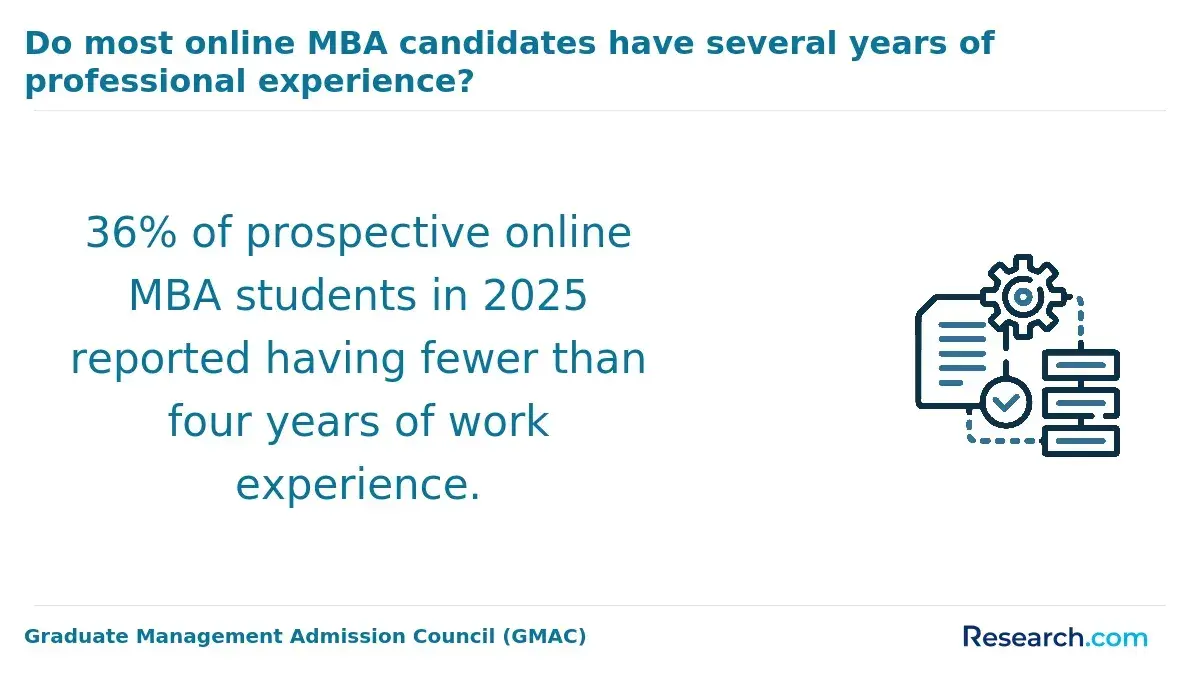
Competitive online MBA programs typically require a bachelor's degree from an accredited institution. Applicants must submit official transcripts showing a solid academic record, usually with a minimum GPA of 3.0 on a 4.0 scale, although some programs may accept lower GPAs if paired with strong work experience. Most programs expect a current resume reflecting at least two to three years of full-time professional experience, as practical background is essential for advanced business studies.
Standardized tests such as the GMAT or GRE are common but are often waived for candidates with significant work experience, a graduate degree, or a high undergraduate GPA. Essays or personal statements help admissions committees evaluate candidates' goals, leadership potential, and fit with the culture of specific programs. These are typical admission requirements for competitive online MBA programs.
Letters of recommendation from supervisors or academic mentors can also impact admission decisions by emphasizing professional achievements and interpersonal skills. Some programs require interviews-via video or phone-to assess communication abilities and motivation. International students must provide proof of English proficiency through exams like TOEFL or IELTS unless they hold degrees from English-speaking institutions.
Admissions committees look for clear career progression and objectives aligned with MBA specializations. For instance, applicants aiming for marketing concentrations may highlight strategic marketing roles or certifications. Research shows marketing MBA concentration alumni earn promotions to director-level roles 18% faster than non-specialized peers. To explore options for candidates seeking less emphasis on standardized tests, consider online MBA programs no GRE.
Prospective students should carefully review specific program requirements and leverage their work history, academic strengths, and career goals to succeed under these online MBA admission criteria for top programs.
Completion time for an online MBA concentration generally ranges from 12 to 24 months, depending on program design and student pace. Accelerated options enable finishers in as few as 10 to 14 months by taking heavier course loads or attending year-round classes. Part-time tracks may extend duration beyond two years, a flexible choice for working professionals. Many programs offer asynchronous coursework, allowing students to tailor progress based on personal schedules.
Tuition costs vary widely. Public universities typically charge between $15,000 and $35,000 for the entire MBA program, while private institutions often range from $40,000 to $90,000 or more. Additional fees may apply for specific concentrations due to resource or material requirements. Expenses such as textbooks, technology, and possible residency visits should also be considered.
Entrepreneurship concentrations often demonstrate strong returns on investment: 42% of online MBA entrepreneurship graduates launch ventures within two years, and 15% achieve $1 million or more in revenue by year five (Kauffman Foundation, 2024). Such outcomes underscore the career potential associated with certain specializations.
When evaluating concentrations, key factors include:
- Program length options that accommodate work and learning preferences.
- Full tuition and any concentration-related fees.
- Career success of alumni from the specialization.
- Availability of financial aid or employer tuition assistance.
Careful consideration of these elements helps align MBA studies with both professional goals and financial realities.
Healthcare management concentration in MBA programs demonstrates one of the strongest job placement rates and career outcomes. Graduates with a healthcare MBA experience a 22% higher placement rate in hospital administration roles compared to other concentrations. This is backed by a 12% projected growth in the healthcare management sector through 2030, according to the U.S. Bureau of Labor Statistics (2025). The concentration fits well with the expanding healthcare needs and administrative demands, offering stable and rewarding career opportunities.
Other MBA concentrations with notable career prospects include technology management, finance, and supply chain management. Technology management benefits from rapid digital transformation, increasing demand for project managers and IT strategists. Finance graduates often pursue roles in investment banking, corporate finance, and risk management but face stiff competition. Supply chain management offers opportunities due to globalization and complex logistics dynamics.
Prospective students should consider placement statistics and sector growth projections when selecting a concentration. Prioritizing job security and growth is advisable for those leaning toward healthcare management or technology management. Additionally, gaining practical experience through internships or residencies significantly enhances career outcomes.
Graduates with an MBA concentration in technology management typically earn a median base salary of $165,000 in IT leadership roles, representing a 30% premium over general MBA holders, according to the Robert Half Salary Guide. This reflects strong demand for professionals who blend business strategy with technical expertise in fields like software development, cloud computing, and cybersecurity.
Finance-focused MBA graduates see median salaries between $110,000 and $140,000, often supplemented by bonuses. Skills in financial modeling and regulatory compliance help boost earning potential in investment banking, private equity, and corporate finance.
Healthcare MBA specializations offer salaries ranging from $120,000 to $150,000. Opportunities exist in hospital administration, biotech, and consulting, driven by growing digitization and complex regulation in the sector.
Those concentrating in marketing can expect salaries from $90,000 to $125,000, with digital marketing experts benefiting from increased demand for data analytics and e-commerce skills. Supply chain and operations MBAs command median salaries between $95,000 and $130,000, with stronger growth for those skilled in lean management and process optimization, particularly in manufacturing and logistics.
Choosing an MBA concentration wisely can align your salary expectations with industry needs and skill shortages. Prospective students should consider their career goals alongside market data to enhance earning potential.
Employers value MBA concentrations that directly align with industry demands and provide measurable skills and outcomes. Graduates specializing in areas such as supply chain management are increasingly attractive due to ecommerce growth. The Deloitte Global Supply Chain Report 2025 notes a 28% post-degree salary increase for supply chain MBA alumni alongside 9% industry job growth, demonstrating employer preference for concentrations grounded in current economic trends.
Recruiters focus on how well a specialization fits specific job functions-finance concentrations are favored in banking and investment, while technology management suits IT and product development roles. Employers often probe practical knowledge during interviews, assessing coursework relevance to real-world challenges.
When comparing MBA concentrations, employers considerIndustry growth projections linked to the specialization.Salary improvements among alumni indicating market demand.Project experience or case studies completed in the program.Certifications or skills that complement the MBA curriculum.
Some roles require versatile general management skills for leadership, while others demand technical expertise. Candidates should emphasize how their MBA concentration prepares them to solve problems, optimize processes, or innovate rather than relying solely on the MBA credential. Prospective students are advised to research employer priorities, select concentrations tied to growing sectors, and focus on practical skills that provide a competitive advantage in the job market.
Certifications and professional credentials significantly enhance the value of specific MBA concentrations by signaling advanced skills and improving employability. For finance, certifications like the Chartered Financial Analyst (CFA) or Certified Public Accountant (CPA) complement the degree, often required for senior roles in financial analysis and corporate finance.
Marketing MBA students gain an edge through digital marketing certifications such as Google Analytics Individual Qualification (GAIQ) or HubSpot Content Marketing. These prove proficiency in data-driven strategies that employers increasingly seek in competitive markets.
In human resources, earning the Professional in Human Resources (PHR) or Senior Professional in Human Resources (SPHR) boosts career prospects. According to the Society for Human Resource Management, HR MBA concentrations yield a 20% higher retention in executive roles, with median pay around $148,000 amid talent shortages.
Information technology management concentrations benefit from credentials like Certified Information Systems Security Professional (CISSP) or Project Management Professional (PMP), which validate expertise in IT governance, cybersecurity, and project execution.
Operations or supply chain MBA pathways are strengthened by certifications such as Certified Supply Chain Professional (CSCP) or Lean Six Sigma Green Belt, demonstrating process optimization skills valued by employers.
How should you evaluate program reputation and peer rankings when choosing an MBA concentration?
When selecting an MBA concentration, examine program reputation and peer rankings from credible sources like the Financial Times, U.S. News & World Report, or The Economist. Focus on how specific concentrations rank rather than general MBA rankings alone. For instance, business analytics MBA programs show a 5-year ROI of 285%, significantly higher than the 210% for general MBA tracks (Financial Times MBA Ranking, 2025), highlighting the financial impact of specialization.
Rankings may be based on employer surveys, graduate salaries, research output, or peer assessments, each reflecting different program strengths. Consider peer rankings from industry groups or alumni networks, which often indicate value and connections in your field. For careers in finance, prioritize concentrations rated highly by financial employers; for technology roles, seek programs emphasizing STEM and analytics skills.
Look for consistency in rankings over several years and recognition within professional communities. Programs with rising reputations tend to offer stronger faculty, better resources, and networking opportunities. Investigate alumni career paths and salary increases specific to your concentration for tangible benefits beyond brand prestige.
Align rankings and reputation with your career goals. A concentration with moderate peer rankings but strong ROI in your target industry may provide better value than a widely prestigious but less relevant program. Thoroughly evaluating reputation ensures your MBA concentration maximizes professional opportunities and financial returns.
Other Things You Should Know About MBA
Yes, many online MBA programs are designed specifically to accommodate working professionals. They typically offer flexible schedules, including asynchronous coursework and part-time enrollment options, allowing students to balance work and study effectively.
Internship requirements vary by program and concentration. Some online MBA programs include optional internships, while others integrate practical projects or consulting experiences instead of traditional internships to provide hands-on learning.
In 2027, when comparing online MBA concentrations, check if the curriculum aligns with your industry and career objectives. Consider faculty expertise, networking opportunities, and technical skills offered. Review alumni outcomes and employer partnerships to ensure the program meets professional aspirations.
Most online MBA programs prefer candidates with professional work experience, often recommending two to five years. This experience enhances learning by allowing students to apply practical insights and participate meaningfully in discussions.
- Online MBA Admissions Requirements by Program [Chart] https://www.bschools.org/blog/online-mba-admissions-requirements
- MBA Concentrations: Types, Skills, and Career Paths https://www.scu.edu/business/blog/mba/mba-concentrations/
- Online MBA vs Campus MBA Program - Which one to choose https://rcu.education/online-mba-vs-campus-mba-programs/
- Online MBA Degree vs. On-Campus Global MBA Degree: Which Format Suits Your Needs? https://www.gisma.com/blog/online-vs-on-campus-global-mba-which-format-suits-your-needs
- Why You Need to Consider MBA Specialization Rankings https://www.stacyblackman.com/blog/mba-specialization-rankings/
- Why On-Campus MBA is Better than Online MBA? https://www.universalai.in/why-on-campus-mba-is-better-than-online-mba/
- MBA Salary by Industry: Jobs, Careers & Earning Potential https://online.uwa.edu/news/average-mba-salary-expectations-what-you-can-earn-by-industry/
- 6 Popular MBA Specializations https://www.allbusinessschools.com/mba/types-of-mba/
- Top 10 High Paying MBA Specialisations for Future https://gmatpoint.com/top-10-high-paying-mba-specialisations-for-future/
- How to Choose a Quality MBA Program | OnlineMBA.com https://www.onlinemba.com/resources/how-to-choose-mba-program/