2027 Best Hybrid + Online MBA Programs in the U.S.

Co-Founder and Chief Data Scientist
If you are comparing MBA options while working full time, the key question is not simply “online or on campus?” It is how much flexibility you need, how much in-person access you value, and whether the format will help you reach your next career goal without forcing you to step away from work. Hybrid + online MBA programs are built for that middle ground: most coursework is completed online, while selected residencies, workshops, or campus sessions provide face-to-face learning, networking, and career engagement.
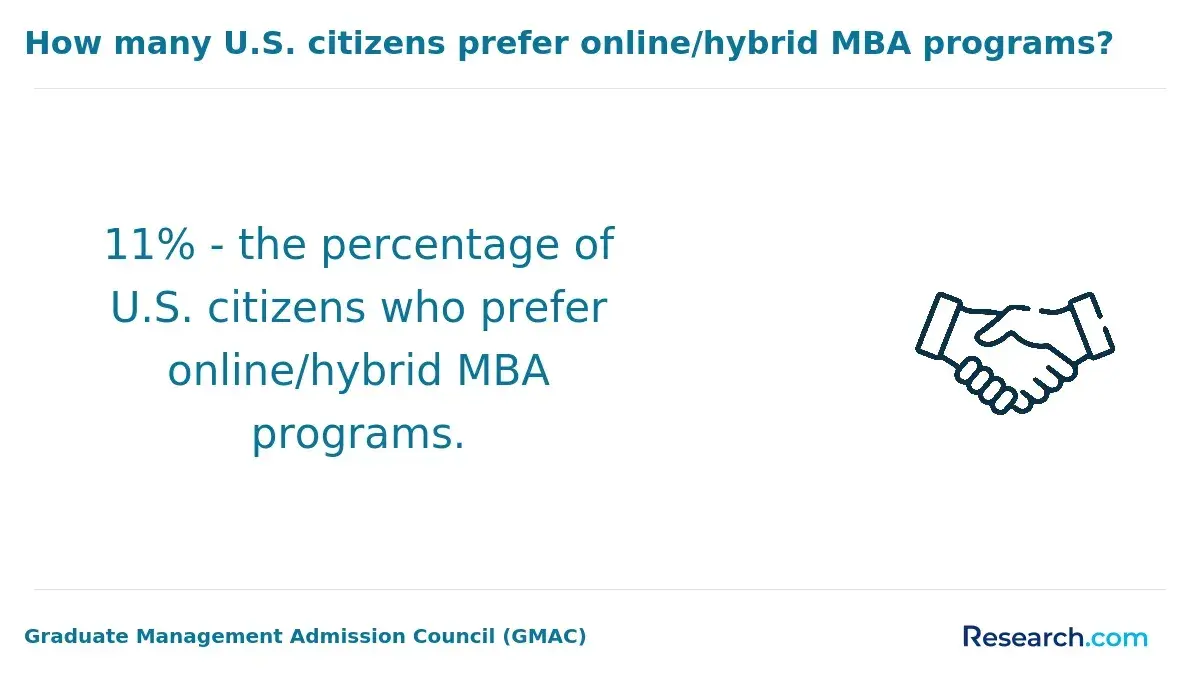
This format matters because MBA candidates increasingly want mobility without giving up the relationship-building that often makes business school valuable. 56% of prospective MBA students in the U.S. now prefer flexible or hybrid formats over traditional on-campus programs. For working professionals, managers, entrepreneurs, and career changers, a hybrid online MBA can offer a practical path to graduate business education—provided the program is accredited, affordable, well structured, and aligned with your target industry.
This guide explains what qualifies as a hybrid + online MBA, who benefits most from the format, what admissions teams usually expect, how costs and ROI should be evaluated, and how to compare programs before enrolling.
Key Benefits of Getting Into Hybrid + Online MBA Programs
- Career advancement opportunities – A hybrid + online MBA can prepare you for senior-level roles such as business development director, operations manager, or marketing executive by combining strategic management knowledge with practical leadership experience.
- Strong earning potential – The U.S. Bureau of Labor Statistics (BLS) reports that MBA holders in management occupations earn a median salary of around $122,090 per year, which is significantly higher than the national average for all occupations.
- Learning flexibility with networking access – Hybrid programs allow you to complete coursework online while attending in-person residencies or workshops, providing flexibility without sacrificing the collaborative experience and professional connections that traditional MBA students enjoy.
What qualifies as a hybrid + online MBA program?
A hybrid + online MBA program is a graduate business degree that combines online coursework with required in-person learning experiences. The online portion may include recorded lectures, live virtual classes, discussion boards, exams, group projects, and case analyses. The in-person portion may include campus residencies, weekend intensives, leadership workshops, consulting projects, networking events, or global and domestic immersions.
The defining feature is that the in-person component is required, not merely optional. A program that is fully online but offers optional networking events is not usually considered a true hybrid MBA. Likewise, a traditional campus MBA that occasionally uses online materials is not the same as a hybrid online MBA.
How hybrid MBAs compare with other formats
| Format | How it works | Best fit |
| Fully online MBA | Coursework is completed 100% online, with no required campus attendance. | Students who need maximum location flexibility and cannot travel for residencies. |
| Hybrid + online MBA | Most coursework is online, with required on-campus or in-person components. | Working professionals who want flexibility plus structured networking and face-to-face collaboration. |
| Traditional on-campus MBA | Students attend classes and activities primarily in person on a regular schedule. | Students who can relocate or commute frequently and want a campus-centered experience. |
Hybrid programs can be especially useful for students who want online convenience but do not want to lose the interpersonal side of business education. In-person sessions often support team-based projects, leadership exercises, faculty access, and peer networking. Some cheap online MBA programs also include hybrid or low-residency options, which may help students control costs while still gaining some campus-based experience.
Why should you choose a hybrid online MBA program in the U.S.?
You should consider a hybrid online MBA program in the U.S. if you want the flexibility of online study but still value in-person access to classmates, faculty, alumni, recruiters, and applied learning opportunities. The format is designed for professionals who cannot attend campus every week but want more connection than a fully online program may provide.
The main advantage is balance. Online coursework helps you continue working while studying. Required residencies or campus sessions create focused time for collaboration, leadership development, and networking—activities that are often harder to replicate entirely online.
Potential benefits of the hybrid format
- More flexibility than a campus MBA: Students can complete much of the academic work from home, work, or while traveling.
- More personal connection than a fully online MBA: Residencies and workshops make it easier to build trust with peers and faculty.
- Applied learning opportunities: In-person sessions may include case competitions, simulations, consulting projects, and executive presentations.
- Continued employment: Many students can keep earning income while completing the degree, which can reduce the opportunity cost of graduate study.
- Access to campus resources: Depending on the school, hybrid students may use career centers, alumni networks, libraries, speaker events, and employer connections.
Hybrid MBAs often carry the same institutional accreditation and may use the same faculty as related on-campus programs, although students should verify this with each school. Accreditation is especially important because it signals that the business school has gone through external quality review. Students comparing a cheapest AACSB accredited online MBA should confirm not only tuition and format, but also whether the accreditation applies to the business school and whether the hybrid option is included under the accredited unit.
The format is not automatically better for every student. If travel is difficult, a fully online MBA may be more practical. If you want daily campus involvement, a traditional MBA may be stronger. Hybrid programs are most useful when you can take advantage of both parts of the model.
Who is the ideal candidate for a U.S. hybrid online MBA program?
The ideal candidate for a U.S. hybrid online MBA is a working professional who needs scheduling flexibility but wants more structure, relationship-building, and in-person engagement than a fully online program typically provides. Many students are mid-career professionals, managers, consultants, entrepreneurs, military-connected students, or career changers who want to build broader business leadership skills without leaving the workforce.
Strong candidates usually have these traits
- Professional experience: They can connect MBA concepts to real workplace challenges and contribute meaningfully to class discussions.
- Clear career goals: They know whether they are seeking promotion, industry change, entrepreneurship, leadership development, or stronger business fundamentals.
- Time management skills: They can handle asynchronous assignments, live sessions, group work, and residency travel alongside work and personal obligations.
- Comfort with technology: They can use learning platforms, video meetings, digital collaboration tools, and online research resources effectively.
- Interest in networking: They are willing to participate actively in residencies, team projects, alumni events, and peer discussions.
When the format may be a poor fit
- You cannot travel for required residencies or campus sessions.
- You need a program with no fixed meeting times or synchronous requirements.
- You prefer independent study and do not want frequent team-based assignments.
- Your employer cannot provide flexibility for short in-person sessions, exams, or intensive project periods.
Hybrid MBAs often attract students who want accountability and cohort interaction. That can be a strength if you learn well through discussion, feedback, and applied projects. For senior managers comparing the cheapest executive MBA online, hybrid options may provide executive-level coursework with a schedule designed around experienced professionals, but the travel expectations and workload still need careful review.
Admission requirements for U.S. hybrid online MBA programs are usually similar to those for traditional MBA programs. Schools want evidence that applicants can succeed in graduate-level business coursework and contribute to a professional learning environment. Requirements vary by institution, but most programs evaluate academic background, work experience, leadership potential, communication skills, and career fit.
Common application requirements
- A bachelor’s degree from an accredited institution
- A competitive GPA, typically 3.0 or higher
- Professional experience, usually 2–5 years minimum
- Resume or curriculum vitae showing responsibilities, progression, and achievements
- Letters of recommendation from supervisors, faculty, clients, or professional contacts
- A statement of purpose, personal essay, or career goals essay
- Official transcripts from prior colleges or universities
- Interview, video response, or additional writing sample in some programs
The GMAT or GRE is often optional today, but “optional” does not always mean irrelevant. In some cases, a strong test score can help offset a weaker undergraduate GPA or limited quantitative coursework. In other cases, admissions committees may place more weight on professional experience, leadership responsibilities, prior graduate study, or evidence of quantitative readiness.
If you are comparing online MBA no GMAT options, look closely at waiver rules. Some hybrid programs offer waivers based on work history, previous graduate education, professional certifications, military experience, or high undergraduate GPAs. Before applying, ask the admissions office whether a waiver affects scholarship consideration, admission competitiveness, or placement into prerequisite courses.
How to strengthen your application
- Use your essay to explain why the hybrid format fits your schedule and career plan.
- Choose recommenders who can speak to leadership, analytical ability, teamwork, and professional maturity.
- Quantify workplace achievements when possible, such as revenue impact, cost savings, team size, or project scope.
- Address academic weaknesses directly and show evidence of readiness through recent coursework, certifications, or quantitative work experience.
- Confirm residency dates early so you can show that you understand the program’s time commitments.
Hybrid + online MBA tuition typically ranges between $25,000 and $80,000, depending on the university’s ranking, accreditation, duration, and program design. The total cost, however, is not limited to tuition. Because hybrid programs include in-person components, students should budget for travel, lodging, meals, parking, technology, books, fees, and possible unpaid time away from work.
Costs to include in your MBA budget
| Cost category | Why it matters |
| Tuition and mandatory fees | These are the core program costs and may vary by residency status, credit load, and school policies. |
| Residency travel | Flights, mileage, lodging, meals, and local transportation can add up across multiple in-person sessions. |
| Books and course materials | Some programs use textbooks, cases, simulations, software, or digital access codes. |
| Technology | Students may need a reliable computer, webcam, headset, internet connection, and specific software. |
| Opportunity cost | Even if you keep working, intensive sessions and project deadlines may require time away from paid work or personal obligations. |
Financial aid, scholarships, veterans benefits, payment plans, and employer tuition assistance may reduce out-of-pocket costs. If your employer offers support, confirm whether the benefit requires you to remain employed for a set period after graduation, maintain certain grades, or repay funds if you leave the organization.
How to evaluate ROI
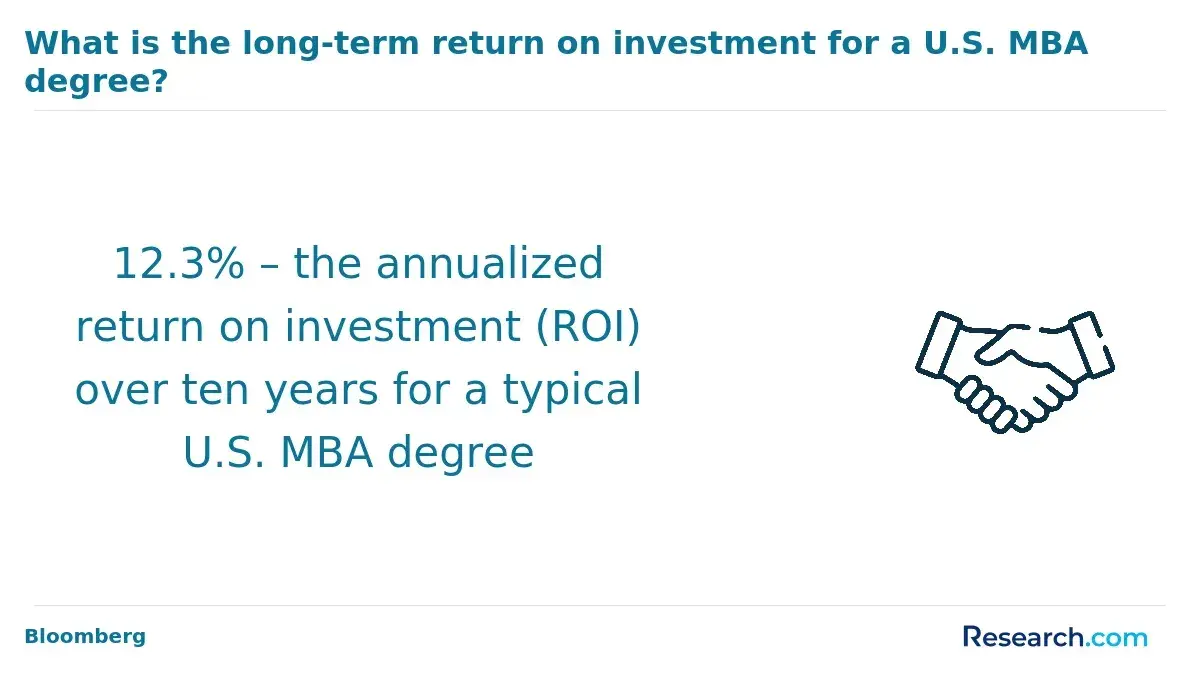
ROI depends on what you need the MBA to do. A good return may mean a salary increase, promotion, career change, stronger leadership credibility, access to a new professional network, or the ability to launch or grow a business. Graduates often report salary increases of 20–50% within two years of completing an MBA, particularly in consulting, finance, and technology roles. That outcome is not guaranteed for every student, so it is important to compare the program’s cost with realistic career outcomes in your field.
- Compare total cost, not just tuition: Add fees, travel, residency costs, and materials.
- Review career outcomes: Look for employment reports, salary data, promotion trends, and employer relationships when available.
- Assess network value: Consider the strength of the alumni base in your target industry and region.
- Consider timing: A part-time hybrid MBA lets many students continue earning income while studying, which can improve affordability compared with leaving work for a full-time program.
- Match the program to your goal: A costly program may be harder to justify if it does not have strong relevance to your target role, industry, or geography.
Hybrid formats can offer comparable ROI to traditional programs when students fully use the career services, alumni network, residencies, and applied learning opportunities. The strongest ROI usually comes from choosing a program that fits both your budget and your career strategy.
Hybrid + online MBAs usually combine online academic work with scheduled in-person sessions across a modular, cohort-based, or flexible part-time structure. Most programs last 18 to 36 months. The exact timeline depends on credit requirements, course load, transfer policies, prerequisite needs, and whether the student chooses an accelerated, standard, or extended pace.
Common program components
- Asynchronous online coursework: Recorded lectures, readings, discussion posts, quizzes, papers, case analyses, and assignments completed within set deadlines.
- Synchronous online sessions: Live virtual classes, faculty office hours, team meetings, presentations, or guest lectures.
- On-campus residencies: In-person sessions lasting 2–5 days per term, often used for team projects, networking events, workshops, leadership exercises, or simulations.
- Core MBA curriculum: Foundational courses in areas such as finance, accounting, marketing, operations, economics, strategy, leadership, and analytics.
- Electives or concentrations: Specialized coursework that lets students align the degree with a target field or role.
- Capstone project: A strategic business challenge, consulting project, business plan, or applied research report that integrates MBA learning.
What the student experience often looks like
A typical week may include watching lectures, completing readings, participating in online discussions, joining a live class, meeting with a project team, and preparing assignments around work obligations. Residency weeks are usually more intensive. Students may spend full days in workshops, presentations, simulations, networking events, or meetings with faculty and peers.
Before enrolling, review the academic calendar carefully. Pay attention to whether residencies are held on weekdays or weekends, whether attendance is mandatory, whether international or domestic immersions are optional or required, and whether exams must be completed at specific times. A program that looks flexible on the surface may still require careful planning during peak project periods.
Hybrid online MBA programs often include specializations or elective tracks that let students tailor the general management degree to a specific career path. The best choice depends on your current experience, target role, industry demand, and whether you want to deepen expertise or pivot into a new field.
Common specialization areas
- Finance and accounting
- Marketing and brand management
- Data analytics and business intelligence
- Entrepreneurship and innovation
- Healthcare management
- Sustainability and global business
How to choose an MBA specialization
| Goal | Specialization to consider | What to check before choosing |
| Move into corporate finance, investment-related roles, or financial leadership | Finance and accounting | Quantitative course depth, faculty expertise, and connections to finance employers. |
| Lead campaigns, customer strategy, or brand growth | Marketing and brand management | Whether the curriculum includes digital marketing, analytics, consumer behavior, and applied projects. |
| Use data to support business decisions | Data analytics and business intelligence | Software tools, statistics requirements, analytics projects, and technical support for nontechnical students. |
| Start a venture or lead innovation inside an organization | Entrepreneurship and innovation | Access to mentors, incubators, pitch events, business planning courses, and entrepreneurial alumni. |
| Advance in hospitals, health systems, insurance, or healthcare services | Healthcare management | Healthcare-specific electives, faculty experience, and relevance to your local or target healthcare market. |
| Work across regions, supply chains, ESG initiatives, or international markets | Sustainability and global business | Global immersion options, sustainability coursework, and employer relationships in relevant sectors. |
Students should avoid choosing a specialization only because it sounds marketable. A track is most valuable when it supports a clear career story. For example, a marketing professional may pair marketing electives with data analytics to prepare for digital leadership roles. A healthcare manager may choose healthcare management while using finance electives to prepare for operational or executive responsibilities.
Hybrid online MBA programs support networking through a combination of in-person residencies, cohort-based learning, digital collaboration, alumni engagement, and career services. This is one of the main reasons students choose the format over a fully online program. The online portion keeps students connected between sessions, while the in-person portion helps relationships develop faster and more naturally.
Common networking and career support features
- Residencies and intensives: Students meet classmates, faculty, alumni, and sometimes employers during structured campus or off-site sessions.
- Team-based projects: Group assignments and consulting projects help students build working relationships across industries and functions.
- Live virtual events: Programs may offer alumni panels, leadership seminars, faculty talks, recruiter sessions, or industry roundtables.
- Career coaching: Students may receive help with resumes, interviews, promotion strategy, career transitions, and salary negotiation.
- Recruiter and employer access: Some schools provide access to university career centers, job boards, employer databases, and recruiting events.
- Alumni networks: Graduates can be valuable contacts for informational interviews, referrals, mentoring, and industry insight.
The quality of networking depends heavily on program design and student participation. A short residency with little structured interaction may not produce the same value as a program with team projects, career programming, alumni events, and repeated cohort touchpoints. Before enrolling, ask how often students interact live, whether career services are available to online and hybrid students on equal terms, and whether alumni engagement is active in your target industry.
Questions to ask about career support
- Are career coaching and employer events available to hybrid students?
- Can hybrid students participate in campus recruiting or alumni networking events?
- Does the school publish career outcomes for MBA or online MBA graduates?
- Are residencies designed around networking, professional development, and applied projects?
- Does the alumni network have strength in your region or target field?
The main trade-off of a hybrid online MBA is that it offers flexibility, but not complete freedom. Students still need to meet deadlines, attend required live sessions or residencies, work with teams, and manage travel. For many working professionals, the format is manageable, but it requires planning and support from employers, family members, and classmates.
Common challenges
- Time pressure: Students must balance work, coursework, group projects, family responsibilities, and residency preparation.
- Residency travel: In-person sessions can require time off work, travel planning, lodging, and additional expenses.
- Scheduling conflicts: Group projects may involve classmates across time zones, industries, and work schedules.
- Cost complexity: Hybrid programs can involve expenses beyond tuition because of in-person components.
- Technology demands: Students need reliable internet, comfort with digital learning tools, and the ability to communicate effectively online.
- Less campus immersion than a traditional MBA: Students who want daily face-to-face activity may find the format too limited.
How to manage the trade-offs
- Review residency dates before applying and confirm whether attendance is mandatory.
- Discuss time-off needs with your employer early, especially if residencies occur during business days.
- Create a weekly study schedule and protect specific blocks for reading, assignments, and group work.
- Budget for travel and fees, not only tuition.
- Use academic advisors to plan course loads around heavy work seasons.
- Set expectations with teammates about communication, deadlines, and time zones at the start of each project.
A hybrid MBA can be one of the most balanced options for professionals who want flexibility without losing in-person engagement. It is less suitable for students who need a completely self-paced degree or who cannot travel for required program activities.
How can you evaluate and select the best hybrid online MBA program for your goals?
To select the best hybrid online MBA program, start with your career goal and work backward. The right program should fit your schedule, budget, learning preferences, target industry, and desired network. Rankings can be useful, but they should not replace a careful review of accreditation, curriculum, cost, career outcomes, residency requirements, and student support.
Key factors to compare
- Accreditation: Look for AACSB, AMBA, or EQUIS accreditation and confirm how it applies to the business school and program.
- Program format: Review the balance of asynchronous coursework, live online sessions, residencies, and group projects.
- Residency requirements: Check frequency, location, duration, cost, and whether attendance is mandatory.
- Curriculum fit: Make sure core courses, electives, and specializations match your career direction.
- Faculty and teaching model: Determine whether courses are taught by full-time faculty, adjunct experts, executives, or a combination.
- Career outcomes: Research graduate employment statistics, promotion outcomes, salary information, and employer connections when available.
- Support services: Evaluate career advising, academic advising, tutoring, technology support, mentoring, and alumni access.
- Total cost: Compare tuition, fees, travel, lodging, materials, and available aid.
- Student experience: Ask about cohort size, class interaction, workload, communication expectations, and support for working professionals.
Decision checklist before enrolling
- Confirm that the program is properly accredited.
- Calculate the full cost, including travel for residencies.
- Compare the residency schedule with your work and personal obligations.
- Ask whether hybrid students receive the same career services as campus students.
- Review specializations and electives for alignment with your target role.
- Speak with admissions, current students, alumni, or faculty if possible.
- Check whether your employer offers tuition assistance or schedule flexibility.
- Decide whether the program’s network is relevant to your industry and location.
The best hybrid online MBA is not necessarily the most expensive or highest ranked option. It is the program that gives you credible academic training, manageable logistics, meaningful networking, and a realistic path toward the career outcome you want.
Other Things You Should Know About Hybrid + Online MBA Programs
Yes. Most U.S. hybrid and online MBA programs accept applicants from any undergraduate major, as long as they hold a regionally accredited bachelor’s degree. Some schools also require a minimum GPA, GMAT or GRE scores, and 2 to 5 years of professional experience.
Admission requirements typically include a bachelor's degree, GMAT or GRE scores, a resume, and letters of recommendation. Some programs may also require a personal statement and relevant work experience. Specifics vary by school, so check individual program details.
- AACSB. (n.d.). Accreditation. aacsb.edu.
- AMBA. (n.d.). AMBA Accreditation. amba-bga.com.
- BLS. (2025, August 28). Management occupations. bls.gov.
- EFMD Global. (n.d.). EQUIS Accredited Schools. efmdglobal.org.
- GMAC. (2024). Application Trends Survey. gmac.com.
- Kedge. (2025, June 6). What salary can you expect with an MBA? | Kedge Business School, Management School. executive.kedge.edu.