2027 Fastest Online Biochemistry Degree Programs

Co-Founder and Chief Data Scientist
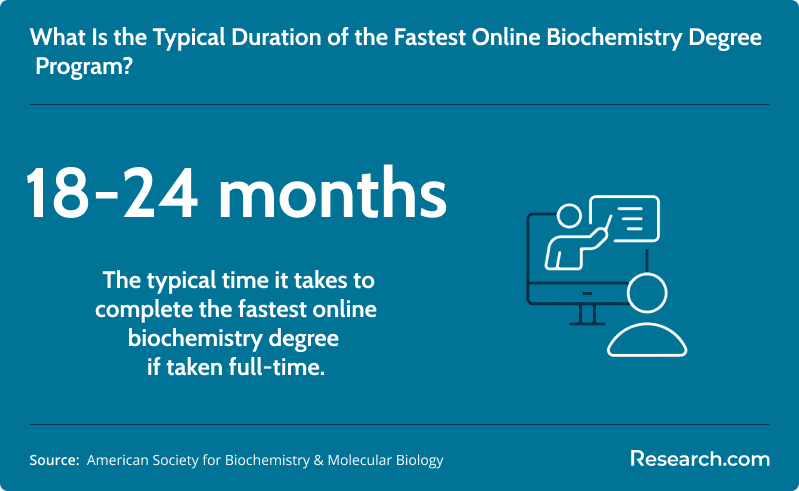
Looking to launch a science career without spending four years on campus? The fastest online biochemistry degree programs offer a flexible, accelerated path to earning a respected science credential. These programs combine rigorous coursework in biology, chemistry, and molecular science with the convenience of online learning—allowing motivated students to graduate in as little as 18 to 24 months. A fast-track biochemistry degree can help you get there sooner.
In this guide, you'll learn what to expect, how to choose the best program, and how to maximize your time, money, and career opportunities.
What are the benefits of getting the fastest online biochemistry degree program?
- Opens doors to careers in healthcare, biotechnology, pharmaceuticals, and lab research—common roles include lab technician, biomedical assistant, and clinical research associate.
- Prepares students for graduate or professional programs like medical, dental, or pharmacy school.
- The median salary for biochemists is $103,810 per year (U.S. Bureau of Labor Statistics, 2023), with strong growth projected in STEM fields.
- Earning the degree online offers flexible scheduling, faster completion, and the ability to balance studies with work or family responsibilities.
What can I expect from the fastest online biochemistry degree program?
A biochemistry degree is an interdisciplinary program that explores the chemical processes and molecular structures that drive life. It blends core concepts from biology and chemistry to help students understand how cells, proteins, enzymes, and DNA function in living organisms. Students typically study topics such as molecular biology, genetics, organic chemistry, and cell biology, often with hands-on or virtual lab components to build technical skills.
The degree provides a strong scientific foundation ideal for careers in research, healthcare, pharmaceuticals, or biotechnology. It also serves as excellent preparation for graduate or professional programs in medicine, pharmacy, or dentistry. With an emphasis on problem-solving, analytical thinking, and lab techniques, a biochemistry degree equips students to investigate biological systems at the molecular level and contribute to advances in science, health, and technology. Whether pursued online or on campus, this degree offers both intellectual challenge and practical career value.
Where can I work with the fastest online biochemistry degree program?
Graduates of a biochemistry degree program often find employment in a wide range of industries that rely on scientific research and innovation. Many work in healthcare and pharmaceutical companies, developing or testing new drugs, analyzing clinical data, or working in quality control and regulatory roles.
Others are employed by biotechnology firms, where they contribute to advancements in genetic engineering, diagnostics, and therapeutic treatments. Academic and government research labs also hire biochemistry graduates as research assistants or lab technicians to support scientific studies in fields like cancer biology, immunology, and environmental science.
Beyond research-heavy roles, biochemistry graduates also work in industries such as:
- Food and beverage companies (ensuring product safety and nutritional content)
- Environmental agencies (monitoring pollutants or studying climate impact on biology)
- Forensics and toxicology labs (analyzing chemical evidence)
- Agricultural science firms (improving crop yield or studying plant biochemistry) This versatility makes biochemistry a strong choice for those seeking diverse job options across both public and private sectors.
How much can I make with the fastest online biochemistry degree program?
Graduates with a biochemistry degree can expect competitive salaries, especially as they gain experience or pursue specialized roles. According to the U.S. Bureau of Labor Statistics (BLS), biochemists and biophysicists earn a median annual wage of $103,650 as of 2024.
Entry-level roles such as laboratory technicians or research assistants typically earn between $45,000 and $65,000 annually, while professionals working in pharmaceutical manufacturing or medical research may earn salaries exceeding $90,000 per year. Those who pursue advanced degrees or supervisory positions often break into six-figure earnings.
Earning potential also varies by industry and job function. For instance, biochemistry professionals in scientific research and development services report some of the highest median wages, while those in colleges and universities may earn slightly less, averaging around $70,000 to $80,000. Geographic location plays a role too—states like California, Massachusetts, and New Jersey tend to offer higher salaries due to the strong presence of biotech and pharmaceutical companies.
- Fastest Online Biochemistry Degree Programs for 2027 List of Programs
- How long does it take to complete the fastest online biochemistry degree program? Completion Time
- How does the fastest online biochemistry degree program compare to an on-campus program? How does the fastest online biochemistry degree program compare to an on-campus program?
- What is the average cost of the fastest online biochemistry degree program? Program Cost
- What are the financial aid options for students enrolling in the fastest online biochemistry degree program? Financial Aid
- What are the prerequisites for enrolling in the fastest online biochemistry degree program? Program Requirements
- What courses are typically in the fastest online biochemistry degree program? What courses are typically in the fastest online biochemistry degree program?
- What types of specializations are available in the fastest online biochemistry degree programs? What types of specializations are available in the fastest online biochemistry degree programs?
- How do you choose the best among the fastest online biochemistry degree programs? How do you choose the best among the fastest online biochemistry degree programs?
- What career paths are available for graduates of the fastest online biochemistry degree programs? Career Paths
- What is the job market like for graduates of the fastest online biochemistry degree program? Career Outlook
- What student support services boost success in the fastest online biochemistry degree programs? What student support services boost success in the fastest online biochemistry degree programs?
- What challenges do students face in accelerated online biochemistry programs? What challenges do students face in accelerated online biochemistry programs?
- How do accelerated online biochemistry programs balance cost efficiency with academic excellence? How do accelerated online biochemistry programs balance cost efficiency with academic excellence?
Fastest Online Biochemistry Degree Programs for 2026
Choosing an online biochemistry degree is usually a speed-versus-depth decision. You may want to finish quickly, but biochemistry is a lab-based science that can affect medical school preparation, graduate admissions, research readiness, and entry-level job options. The right program should help you move faster without weakening the chemistry, biology, laboratory, and quantitative training employers and graduate schools expect.
This guide is for transfer students, working adults, pre-health students, and science majors comparing accelerated online options. You will learn which programs offer faster pathways, how online biochemistry study compares with campus-based study, what the degree may cost, what prerequisites to expect, how lab requirements work, and how to decide whether a fast-track option is a smart fit. If you are also comparing speed-focused programs in other fields, such as an accelerated online sociology bachelor's degree, use the same caution: shorter does not always mean better unless the program still meets your academic and career requirements.
Quick Answer: What Is the Fastest Way to Earn a Biochemistry Degree Online?
The fastest route is usually an online bachelor’s completion pathway for students who already have transferable college credits, an associate degree, or completed science prerequisites. Some accelerated options may allow qualified students to finish in 12 to 18 months, while many fast online biochemistry-related bachelor’s programs take 2 to 3 years for transfer students. Traditional online bachelor’s programs usually require 120 credits and often take about 4 years.
For graduate students, an online master’s in biochemistry may be shorter than starting a bachelor’s degree from scratch, but it requires prior undergraduate preparation in chemistry, biology, or a related science. Before enrolling, confirm accreditation, lab expectations, transfer-credit policies, tuition, and whether the curriculum supports your target path, such as research, biotechnology, healthcare, medical school, pharmacy school, or graduate study.
How do we rank schools?
This ranking uses a transparent methodology built around institutional and program-level data. Research.com draws from established sources including the Integrated Postsecondary Education Data System (IPEDS), Peterson's databases and its Distance Learning Licensed Data Set, the College Scorecard, and the National Center for Education Statistics.
Because “fastest” can mean different things, this guide looks beyond advertised speed. Important factors include program length, transfer pathways, online delivery, required credits, accreditation, cost per credit, and whether the curriculum is directly in biochemistry or in a closely related chemistry, microbiology, or cell science program with a biochemistry focus.
Fastest Online Biochemistry Degree Programs: Comparison Table
| Rank | School | Online Program | Fastest Completion Factor | Cost per Credit | Credits | Accreditation |
| 1 | Arizona State University | BS/BA in Biochemistry | Flexible, 7.5-week courses and accelerated masters program option | $270 | 120 credits | Higher Learning Commission (HLC) |
| 2 | University of Saint Joseph | MS in Biochemistry | 2 years on the non-thesis track | $936 per credit | 30 credits thesis track; 31 credits non-thesis track | New England Commission of Higher Education (NECHE) |
| 3 | LaGrange College | Online BS in Biochemistry | 3-4 years | $375 | 120 credits | Southern Association of Colleges and Schools Commission on Colleges (SACSCOC) |
| 4 | University of Florida Online | BS in Microbiology and Cell Science | Transfer pathways may shorten completion time | $111.92 | 120 credits | Southern Association of Colleges and Schools Commission on Colleges (SACSCOC) |
| 5 | Minot State University | BA in Chemistry with biochemistry-focused study | 2-3 years with applicable credits | $365.05 | 128 semester credits | Higher Learning Commission (HLC) |
| 6 | Mayville State University | BS in Chemistry with biochemistry emphasis | 2-3 years | $150.00 per credit | 120 credits | Higher Learning Commission (HLC) |
| 7 | Dickinson State University | BS in Chemistry with Biochemistry emphasis | 2-3 years | $154.36 | 120 credits | Higher Learning Commission (HLC) |
1. Arizona State University Online - BS/BA in Biochemistry
Arizona State University Online offers both a Bachelor of Science and a Bachelor of Arts in Biochemistry. The bachelor’s degree requires 120 credits, but ASU’s flexible 7.5-week course structure may help students move through requirements efficiently. The school also offers an accelerated masters program option, which can allow students to complete a master’s in as little as one year after finishing the undergraduate degree.
- Best for: Students who want a direct online biochemistry major with both BS and BA options.
- Program Length: 7.5 weeks
- Tracks/Concentrations: Bachelor of Science (BS) and Bachelor of Arts (BA) in Biochemistry
- Cost per Credit: $270
- Required Credits to Graduate: 120 credits
- Accreditation: Higher Learning Commission (HLC).
2. University of Saint Joseph CT - MS in Biochemistry
The University of Saint Joseph offers an online Master of Science in Biochemistry for students who already have the undergraduate science background needed for graduate-level work. The thesis track takes 3 years, while the non-thesis track takes 2 years. This option is most relevant for working professionals who need advanced biochemistry training without relocating or pausing full-time employment.
- Best for: Students with a science bachelor’s degree who want graduate-level biochemistry training online.
- Program Length: 3 years (thesis track); 2 years (non-thesis track).
- Tracks/Concentrations: Biochemistry
- Cost per Credit: $936 per credit
- Required Credits to Graduate: 30 credits (thesis track); 31 credits (non-thesis track)
- Accreditation: New England Commission of Higher Education (NECHE)
3. LaGrange College - Online BS in Biochemistry
LaGrange College offers an online Bachelor of Science in Biochemistry designed for students preparing for research, healthcare, or additional academic study. The 120-credit curriculum can typically be completed in 3-4 years, depending on student pace, transfer credits, and course availability.
- Best for: Students seeking a full online bachelor’s degree specifically titled biochemistry.
- Program Length: 3-4 years
- Tracks/Concentrations: Biochemistry
- Cost per Credit: $375
- Required Credits to Graduate: 120 credits
- Accreditation: Southern Association of Colleges and Schools Commission on Colleges (SACSCOC).
4. University of Florida Online - BS in Microbiology and Cell Science with Biochemistry Focus
University of Florida Online offers a Bachelor of Science in Microbiology and Cell Science that includes substantial biochemistry-related coursework. While the standard timeline is 4 years, students who enter with eligible transfer credits may be able to shorten their path to graduation. This program can be a strong fit for students interested in cell biology, microbiology, biotechnology, healthcare preparation, or graduate study.
- Best for: Students who want a broader life-science degree with meaningful biochemistry preparation.
- Program Length: 4 years, transfer pathways may shorten completion time
- Tracks/Concentrations: Bachelor of Science in Microbiology and Cell Science
- Cost per Credit: $111.92
- Required Credits to Graduate: 120 credits
- Accreditation: Southern Association of Colleges and Schools Commission on Colleges (SACSCOC).
5. Minot State University - Online BA in Chemistry with Biochemistry Focus
Minot State University offers an online Bachelor of Arts with a major in Chemistry that can support biochemistry-focused study. Students with applicable transfer credits may finish in 2-3 years. This route may work well for students considering medicine, forensics, chemical sales, general chemistry roles, or graduate education, but applicants should verify that the coursework matches any specific pre-health or graduate school requirements.
- Best for: Transfer students who want a chemistry foundation with room for biochemistry-related study.
- Program Length: 2-3 years with applicable credits
- Tracks/Concentrations: Bachelor of Arts with a major in Chemistry
- Cost per Credit: $365.05
- Required Credits to Graduate: 128 semester credits
- Accreditation: Higher Learning Commission (HLC).
6. Mayville State University - Online BS in Chemistry with Biochemistry Focus
Mayville State University offers an online Bachelor of Science in Chemistry with a biochemistry emphasis. Qualified transfer students may be able to complete the degree in 2-3 years. The program is intended for students preparing for professional, industrial, or graduate-level chemistry and biochemistry pathways.
- Best for: Students seeking a lower listed cost per credit among the programs in this guide.
- Program Length: 2-3 years
- Tracks/Concentrations: Biochemistry
- Cost per Credit: $150.00 per credit
- Required Credits to Graduate: 120 credits
- Accreditation: Higher Learning Commission (HLC)
7. Dickinson State University - Online BS in Chemistry with Biochemistry Focus
Dickinson State University offers an online Bachelor of Science in Chemistry with a Biochemistry emphasis. The program notes accelerated options for qualified transfer students, making it most appealing to students who already completed general education or early science coursework. It can serve students aiming for science careers or advanced professional programs.
- Best for: Transfer students who want a chemistry degree with a defined biochemistry emphasis.
- Program Length: 2-3 years
- Tracks/Concentrations: Biochemistry
- Cost per Credit: $154.36
- Required Credits to Graduate: 120 credits
- Accreditation: Higher Learning Commission (HLC)
How Long Does It Take to Complete the Fastest Online Biochemistry Degree Program?
The fastest online biochemistry degree programs generally depend on transfer credits, course load, and whether the student is entering a bachelor’s or master’s program. Some accelerated bachelor’s completion pathways may allow students with previous college coursework or an associate degree to finish in 12 to 18 months. Other fast online bachelor’s pathways may take 18 to 24 months or 2 to 3 years.
Students starting with few or no transfer credits should expect a longer timeline. Many online bachelor’s programs in biochemistry or a closely related field require 120 credits and can take about 4 years. Graduate programs may be shorter, but they require prior undergraduate preparation.
| Student Situation | Likely Timeline | What Usually Makes It Faster |
| First-time bachelor’s student | About 4 years | Full-time enrollment, summer courses, efficient advising |
| Transfer student with many credits | 12 to 18 months or 18 to 24 months | Associate degree, accepted science credits, year-round study |
| Transfer student in chemistry or biochemistry focus | 2 to 3 years | Completed general education and introductory lab science courses |
| Graduate student | 2 years or 3 years, depending on track | Non-thesis option, steady course load, strong undergraduate preparation |
To shorten your timeline, look for accelerated course formats, year-round enrollment, generous transfer-credit policies, and clear advising plans. Also confirm that the school is regionally accredited and that the degree supports your long-term goal. This due diligence is just as important in science programs as it is when students compare top ASN online programs for nursing preparation.
How Do Fast Online Biochemistry Programs Compare With On-Campus Programs?
A regionally accredited online biochemistry program can cover the same core academic material as an on-campus program, including chemistry, biology, molecular systems, metabolism, and research methods. The biggest differences are delivery format, lab access, pacing, faculty interaction, and the amount of in-person research exposure available.
Many online programs use accelerated degree programs online structures, such as shorter terms or flexible scheduling. These formats can help motivated students move faster, but they also compress demanding science coursework into a tighter calendar.
| Factor | Fast Online Biochemistry Program | On-Campus Biochemistry Program |
| Flexibility | Often better for working adults, caregivers, and students who cannot relocate | Usually follows a fixed campus schedule |
| Speed | May be faster for transfer students or students taking year-round courses | Often follows a traditional semester sequence |
| Lab experience | May use virtual labs, lab kits, hybrid sessions, or approved local arrangements | Typically provides direct access to campus labs and equipment |
| Research opportunities | Can be more limited and may require extra effort to secure local experience | Often easier to join faculty labs or campus research teams |
| Graduate school preparation | Strong if accredited and lab coursework meets admissions expectations | Strong if curriculum, grades, labs, and recommendations are competitive |
| Best fit | Self-directed students who need flexibility | Students who want frequent in-person lab, faculty, and peer interaction |
Online students should ask detailed questions about labs before enrolling. Some graduate programs, medical schools, dental schools, pharmacy schools, and employers may look closely at whether core science labs were completed in person, online, or through a hybrid model. The safest approach is to match the program format to the requirements of your intended next step.
What Is the Average Cost of the Fastest Online Biochemistry Degree Program?
The total cost of a fast online biochemistry degree often depends on tuition per credit, residency status, accepted transfer credits, lab fees, technology fees, books, and whether you need to retake prerequisite science courses. The average cost typically ranges from $15,000 to $45,000 total, depending on the school, residency status, and transfer credits.
| School Type | Cost per Credit | Total Estimated Cost |
| Public (in-state) | $150 – $350 | $15,000 – $25,000 |
| Public (out-of-state) | $300 – $500 | $20,000 – $35,000 |
| Private | $400 – $700 | $30,000 – $45,000 |
Do not compare programs by tuition alone. A lower per-credit price may not be cheaper if the school accepts fewer transfer credits, requires more total credits, or charges additional lab and technology fees. Before choosing a fast track degree, request a written estimate that includes tuition, fees, transfer-credit evaluation, lab costs, textbooks, proctoring charges, and graduation fees.
What Financial Aid Options Are Available for Online Biochemistry Students?
Biochemistry can lead to entry-level lab, quality control, clinical research, biotechnology, and healthcare-adjacent roles, but many research-intensive and specialized careers require graduate or professional education. A bachelor’s degree may open the first door, while some advanced careers in biology require a master’s, Ph.D., professional degree, or postdoctoral training. Among biochemists, 40% agree that to become one, post-doctoral training is required.
Because the academic pathway can extend beyond the bachelor’s degree, students should plan funding early. The main aid options include:
- Federal Financial Aid: Students generally begin with the Free Application for Federal Student Aid. Eligible students may qualify for Pell Grants, up to $7,395 for the 2024–25 year, as well as subsidized or unsubsidized federal student loans and federal work-study programs.
- State Grants and Aid: Many states provide need-based or residency-based aid that can be used at participating colleges, including some online institutions. Eligibility, award amounts, and school participation vary by state.
- Institutional Scholarships and Discounts: Colleges may offer merit scholarships, need-based grants, military discounts, veteran benefits, or partner-organization tuition reductions.
- Private Scholarships: STEM-focused foundations, nonprofits, and professional groups may fund students in biochemistry, biology, chemistry, biotechnology, or healthcare-related majors. Applications often require transcripts, essays, recommendations, or proof of major.
- Employer Tuition Assistance: Some employers reimburse tuition for job-related education. This can be useful for lab technicians, healthcare workers, quality assurance employees, or biotech staff moving into more advanced roles.
- Payment Plans: Many schools allow students to divide tuition into monthly payments, sometimes with little or no interest. This can reduce the need to borrow large amounts at once.
Students comparing biochemistry with other high-earning fields should look beyond starting salary and consider the cost of graduate education, licensing requirements, and time away from full-time work. Biochemistry may be one of the highest paying degree pathways for some students, but outcomes depend heavily on role, location, experience, and further training.
What Are the Prerequisites for the Fastest Online Biochemistry Degree Programs?
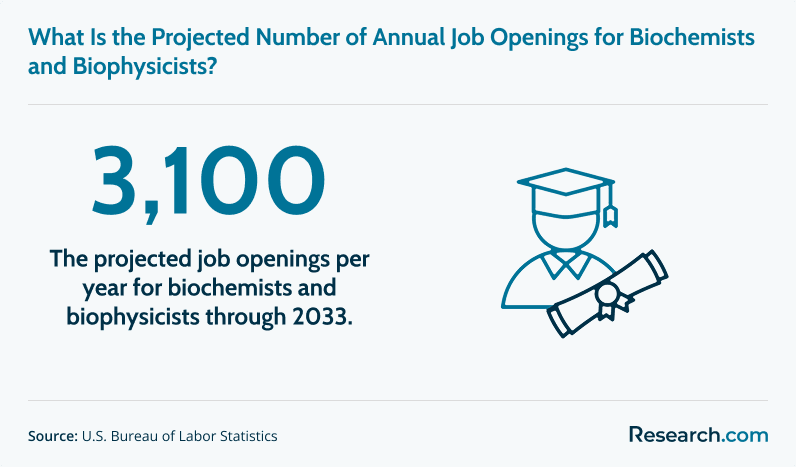
Admissions requirements vary by school, but accelerated biochemistry programs usually expect students to be ready for a science-heavy curriculum from the start. With 3,100 projected job openings per year for biochemists and biophysicists, strong preparation matters whether you plan to enter the workforce after graduation or continue into a professional program such as an online Doctor of Pharmacy program.
- High School Diploma or Equivalent: Bachelor’s applicants typically need a high school diploma or GED.
- Math and Science Preparation: Schools often expect coursework in biology, chemistry, algebra, and sometimes physics. Transfer applicants may need completed college-level science courses.
- Minimum GPA: Many accelerated programs use minimum GPA expectations, typically around 2.5 to 3.0, while more selective options may require stronger academic records.
- Standardized Test Scores: Some programs may request SAT or ACT scores, though many online programs are test-optional, especially for adult learners and transfer students.
- Transfer Credits or Associate Degree: The fastest pathways often favor students who already completed general education and introductory science credits. Some accelerated formats may require a minimum number of previous college credits.
- English Language Proficiency: International applicants or non-native English speakers may need TOEFL, IELTS, or another approved proof of English proficiency.
Before applying, ask the admissions office whether your previous biology, chemistry, organic chemistry, and lab credits will transfer into the major or only count as electives. This one detail can change your graduation timeline significantly.
What Courses Are Typically Included in an Online Biochemistry Degree?
Fast online biochemistry programs usually compress the same foundational science sequence found in traditional programs. Students should expect a demanding mix of chemistry, biology, math, data analysis, and lab-based learning.
| Course Area | What Students Study | Why It Matters |
| General Chemistry I & II | Atomic structure, chemical reactions, stoichiometry, thermodynamics, and lab methods | Builds the foundation for organic chemistry and biochemistry |
| Organic Chemistry I & II | Carbon compounds, reaction mechanisms, molecular structure, and synthesis | Essential for understanding biological molecules and drug development |
| General Biology | Cells, genetics, evolution, ecosystems, and biological systems | Connects chemical processes to living organisms |
| Biochemistry I & II | Proteins, DNA, lipids, enzymes, metabolism, and cellular signaling | Forms the core of the major |
| Physics for Life Sciences | Motion, energy, waves, electricity, and biology-related applications | Supports pre-health and scientific problem-solving skills |
| Calculus and/or Statistics | Mathematical modeling, quantitative reasoning, and data analysis | Prepares students to interpret scientific data |
| Genetics | Heredity, gene expression, DNA replication, and tools such as CRISPR | Useful for biotechnology, medicine, and molecular biology |
| Molecular Biology | DNA/RNA processes, gene regulation, and biotechnology applications | Supports research and graduate-level study |
| Cell Biology | Cell structure, organelles, signaling, and microscopy concepts | Links molecular processes to cellular function |
| Capstone or Research Project | Research paper, applied project, or scientific analysis | Demonstrates integration of program learning |
Electives may include microbiology, pharmacology, biotechnology, environmental science, or healthcare-related topics. Many accelerated courses run in 5- to 8-week terms, which can be intense for subjects like organic chemistry and biochemistry. Students used to fast-paced online healthcare or science programs, such as top communication sciences and disorders degree online options, should still plan extra study time for problem sets, lab reports, and exams.
What Specializations Are Available in Fast Online Biochemistry Programs?
Online biochemistry degrees may offer fewer formal concentrations than campus programs, but students can often shape their pathway through electives, advisor-approved course plans, or related majors such as chemistry, microbiology, or cell science. This matters because 40% of biochemists and biophysicists work in scientific research and development services, where targeted skills can help students compete. Related technical preparation, such as an online forensics degree, can also be useful for students interested in analytical or investigative science roles.
- Pre-Medical or Pre-Health: A good fit for students planning medical, dental, pharmacy, veterinary, or other professional school pathways. Confirm that labs and prerequisites meet each school’s admissions requirements.
- Biotechnology: Focuses on genetic engineering, molecular diagnostics, applied lab methods, and industrial or medical applications.
- Molecular Biology: Emphasizes DNA, RNA, proteins, gene regulation, and cellular mechanisms. This is useful for research and graduate study.
- Environmental Biochemistry: Connects biochemical systems to toxicology, pollution, sustainability, and ecosystem processes.
- Nutritional Biochemistry: Examines metabolism, nutrition, health, and biochemical processes related to diet and disease.
If a program does not list a formal concentration, ask whether electives can be grouped around your goal. A pre-med student, a biotechnology applicant, and a student planning to work in quality control may need different course choices.
How Do You Choose the Best Fast Online Biochemistry Degree Program?
The best program is not automatically the shortest one. A fast program is only valuable if it protects your eligibility for jobs, graduate school, professional school, financial aid, and future credentials. Use the following process when comparing options.
- Verify accreditation first. Confirm regional accreditation and check whether the program has any relevant discipline-specific recognition. Accreditation can affect financial aid, transfer credits, graduate admissions, and employer confidence.
- Request a transfer-credit evaluation. Do not rely on estimates. Ask how many credits will apply to the major, how many will count only as electives, and which science labs must be repeated.
- Check the lab model. Ask whether labs are virtual, hybrid, in person, completed through kits, or arranged locally. Then confirm whether that format is acceptable for your target graduate or professional programs.
- Compare total cost, not just tuition. Include lab kits, technology fees, textbooks, proctoring, residency requirements, and the cost of extra terms if courses are not offered every session.
- Match the curriculum to your goal. Pre-health students should confirm required courses. Research-focused students should look for research methods, capstone work, and faculty support. Biotech students should look for molecular biology, genetics, and applied lab content.
- Look at student support. Fast science courses require advising, tutoring, library access, faculty availability, technical help, and career services.
- Review outcomes carefully. Ask about graduation rates, graduate school placement, alumni employment, internship access, and whether students have entered medical, pharmacy, dental, biotechnology, or research pathways.
These same quality checks apply across online education. Students comparing top online media communication programs, for example, should also weigh cost, outcomes, flexibility, and program structure rather than choosing by speed alone.
Who Should Choose a Fast Online Biochemistry Degree?
| This Path May Fit You If... | Consider Another Option If... |
| You already have transfer credits in science or general education | You are starting from zero and need extensive in-person lab support |
| You are comfortable learning independently in difficult STEM courses | You struggle without frequent face-to-face instruction |
| You need flexibility because of work, family, military, or location constraints | You want daily access to campus research labs and faculty-led experiments |
| You are pursuing entry-level lab, biotech, healthcare, or graduate school preparation | Your target professional school does not accept online lab prerequisites |
| You can commit significant weekly study time during compressed terms | You need a slower pace to succeed in organic chemistry, calculus, or lab reports |
What Career Paths Are Available After a Fast Online Biochemistry Degree?
Graduates of accredited online biochemistry and biochemistry-focused programs can pursue career paths in healthcare, biotechnology, pharmaceuticals, research, quality control, environmental science, and graduate or professional education. An online format does not automatically weaken the degree, but students should be prepared to show strong lab knowledge, research ability, and practical experience. One related role, food scientist, has an average annual salary of $85,638.
| Career Path | Typical Work | Additional Preparation Often Needed |
| Biomedical or Laboratory Technician | Run tests, process samples, maintain lab records, and support experiments | Hands-on lab experience and employer-specific training |
| Research Assistant or Associate | Assist with experiments, collect data, review literature, and prepare reports | Research experience, strong references, and sometimes graduate study |
| Quality Control or Quality Assurance Analyst | Test products, document compliance, and verify safety or manufacturing standards | Knowledge of regulations, documentation, and lab protocols |
| Pharmaceutical or Biotech Sales Representative | Explain scientific products to clinicians, hospitals, or companies | Sales skills, communication ability, and product training |
| Clinical Research Coordinator | Coordinate trials, manage records, and help ensure protocol compliance | Clinical research knowledge and regulatory awareness |
| Environmental or Agricultural Scientist | Study pollutants, soil, water, crops, or environmental health issues | Field experience or specialized coursework |
| Science Educator | Teach biology or chemistry concepts | Teaching certification for K–12 roles |
| Toxicologist or Forensic Scientist | Analyze substances, biological samples, or chemical evidence | Advanced study, certification, or specialized training may be required |
| Pre-Med, Pre-Pharmacy, or Pre-Dental Pathway | Use the degree as academic preparation for professional school | Prerequisite completion, entrance exams, clinical exposure, and strong GPA |
| Regulatory Affairs or Compliance Analyst | Help organizations follow rules for drugs, devices, food, or research | Regulatory knowledge and attention to documentation |
With more training, graduates may also move into medical writing, genetic counseling, graduate research, biotechnology entrepreneurship, or specialized laboratory management. Biochemistry can offer a strong return on investment, especially for students who progress into advanced roles, but salary outcomes are not guaranteed and vary by education level, employer, industry, location, and experience.
What Is the Job Market Like for Online Biochemistry Graduates?
The job market for biochemistry graduates is strongest for students who combine the degree with lab competence, data skills, internships, research experience, or advanced education. Healthcare, pharmaceuticals, biotechnology, clinical labs, environmental science, and scientific research organizations all use biochemical knowledge, but the competitiveness of roles varies.
STEM Demand Supports the Field
According to the U.S. Bureau of Labor Statistics, employment for biological scientists, including biochemists, is projected to grow 9% from 2022 to 2032. Growth is connected to areas such as medicine, drug development, biological research, and environmental concerns.
Healthcare, Pharma, and Biotech Are Common Destinations
Biochemistry graduates may qualify for entry-level or support roles in biotech firms, pharmaceutical companies, hospitals, clinical laboratories, research settings, and quality control departments. Common first roles include lab analyst, research technician, clinical research assistant, and QA/QC specialist.
Salary Depends Heavily on Role and Education
Entry-level positions such as lab technicians or clinical research assistants typically earn $45,000–$65,000 per year. With experience or additional education, roles such as biochemist, toxicologist, or biotech analyst can exceed $90,000 annually. Students should treat salary ranges as planning estimates, not promises.
Graduate and Professional School Remain Important
Many students use biochemistry as preparation for medical, dental, pharmacy, veterinary, or graduate school. If that is your goal, verify prerequisites early, especially lab courses, organic chemistry, physics, calculus, and biology requirements.
Online Degrees Are More Accepted When Accreditation and Experience Are Strong
Employers and graduate schools generally focus on accreditation, academic record, lab readiness, research experience, and fit for the role. A regionally accredited online degree is stronger when paired with internships, undergraduate research, local lab experience, or a strong capstone project.
What Student Support Services Matter Most in Fast Online Biochemistry Programs?
Accelerated science programs are difficult to complete without strong support. Students should look for proactive academic advising, online tutoring in chemistry and math, technical support for lab software, access to digital research libraries, faculty office hours, career coaching, and help finding internships or local lab experience. Cost also matters, so students comparing options may want to review affordable biology degree online pathways if biochemistry-specific programs are too expensive or too limited.
What Challenges Do Students Face in Accelerated Online Biochemistry Programs?
The biggest challenge is pace. Organic chemistry, biochemistry, genetics, physics, and calculus can be difficult in a full semester; compressed online terms leave less time to recover from missed concepts. Students also need reliable technology, strong study habits, comfort with remote collaboration, and the discipline to complete lab simulations, reports, readings, and exams on schedule.
Another challenge is hands-on experience. Virtual labs can support learning, but students aiming for research, clinical labs, or professional school may need additional in-person experience. Some students may decide that a shorter certificate or related credential, such as healthcare certificate programs online, is a better first step before committing to a full accelerated science degree.
How Do Fast Online Biochemistry Programs Balance Cost and Academic Quality?
Fast online programs can reduce total cost when they shorten time to completion, accept transfer credits, and allow students to keep working while enrolled. However, cost efficiency should not come at the expense of lab quality, advising, accreditation, or graduate school preparation. A low-cost program that delays graduation or lacks required science labs may cost more in the long run.
Ask each school how it maintains academic rigor in accelerated courses, how faculty evaluate lab work, whether tutoring is available in difficult subjects, and how often required courses are offered. Students planning long healthcare pathways may also compare related affordable graduate options, including cheap doctor of pharmacy degree online programs, while estimating the full cost of their education.
Common Mistakes to Avoid When Choosing a Fast Online Biochemistry Program
| Mistake | Why It Can Hurt You | Better Approach |
| Choosing the shortest program without checking accreditation | Credits, financial aid, employment options, or graduate admissions may be affected | Verify regional accreditation before applying |
| Ignoring lab requirements | Online or virtual labs may not satisfy every employer or professional school | Ask how labs are completed and confirm acceptability with target programs |
| Assuming all credits will transfer | Some credits may count as electives instead of major requirements | Get an official transfer-credit evaluation in writing |
| Comparing only tuition per credit | Fees, lab kits, textbooks, and extra terms can raise the real cost | Calculate the full estimated cost to graduation |
| Taking too many accelerated science courses at once | Poor grades can damage graduate or professional school applications | Build a realistic course plan with an advisor |
| Assuming salary outcomes are guaranteed | Pay varies by role, location, experience, and education level | Research specific jobs in your target region and industry |
Questions to Ask Before Enrolling
- Is the institution regionally accredited?
- Is the program specifically in biochemistry, or is it chemistry, microbiology, or cell science with a biochemistry focus?
- How many of my credits will transfer into major requirements?
- Are labs virtual, hybrid, in person, kit-based, or locally arranged?
- Will the lab format meet requirements for medical, pharmacy, dental, veterinary, graduate, or employer pathways?
- How often are required courses offered?
- Can I study part time, full time, or year-round?
- What tutoring is available for organic chemistry, biochemistry, physics, calculus, and statistics?
- What is the total cost after tuition, fees, lab materials, and textbooks?
- What outcomes data does the school provide for graduates?
Student Perspectives on Fast Online Biochemistry Study
- Rachelle: "The online format helped me keep working while moving through genetics, metabolism, and biochemistry coursework at a faster pace. The flexibility was valuable, but the science classes still required serious weekly commitment."
- Liam: "The accelerated schedule was demanding, but the structure kept me focused. Faculty access, discussion boards, and virtual lab activities helped me connect the coursework to medical school preparation."
- Lilian: "Transferring 30 credits made a major difference in my timeline. I completed the degree in 18 months, studied from home, and used the program to move toward a lab research position."
References
- American Society for Biochemistry and Molecular Biology. (n.d.). Accreditation information for biochemistry education.
- Nexford University. (n.d.). Guide to highest-paying biochemistry jobs.
- O*NET OnLine. (n.d.). Summary report for 19-1021.00 – Biochemists and Biophysicists.
- U.S. Bureau of Labor Statistics. (2024). Occupational employment and wage statistics for biochemists and biophysicists.
- U.S. Bureau of Labor Statistics. (2024, April). Biochemists and biophysicists profile in the Occupational Outlook Handbook.
- Zippia. (n.d.). Biochemist jobs overview.
- Zippia. (n.d.). Biochemist salary information.
Key Insights
- The fastest online biochemistry pathway is usually a transfer-friendly bachelor’s completion program, not a traditional four-year plan taken from the beginning.
- Speed only helps if the program is accredited, accepts your transfer credits, and includes the science and lab coursework required for your next step.
- Online and campus programs can cover similar academic content, but campus programs may offer stronger direct access to labs and research opportunities.
- Costs vary widely, so compare the full price to graduation rather than only the listed tuition per credit.
- Students aiming for medical, dental, pharmacy, veterinary, or graduate school should confirm prerequisite and lab acceptance before enrolling.
- Biochemistry can support careers in labs, biotechnology, pharmaceuticals, quality control, clinical research, and healthcare preparation, but advanced roles often require graduate or professional education.
- The best fast program is the one that balances time, cost, lab quality, advising, academic rigor, and career fit—not simply the one with the shortest advertised timeline.
Other Things You Should Know About the Fastest Online Biochemistry Degree Programs
To enroll in a fastest online biochemistry degree in 2027, students typically need a high school diploma with a GPA of at least 3.0 and completion of foundational courses in chemistry and biology. Some programs may also require standardized test scores or prior college credits.
Yes, many fast-track online biochemistry programs accept transfer credits, especially from general education and foundational science courses. This can significantly reduce the time and cost of earning your degree. However, schools typically evaluate transfer credits on a case-by-case basis to ensure alignment with their curriculum.
Most accelerated online biochemistry programs use virtual labs, but some require in-person laboratory intensives or approved local lab placements. Programs may also require a lab science sequence with 8 to 12 semester credits in chemistry and biology before upper-level biochemistry coursework.