2027 Most Affordable Online Master’s Degrees in Biotechnology

Co-Founder and Chief Data Scientist
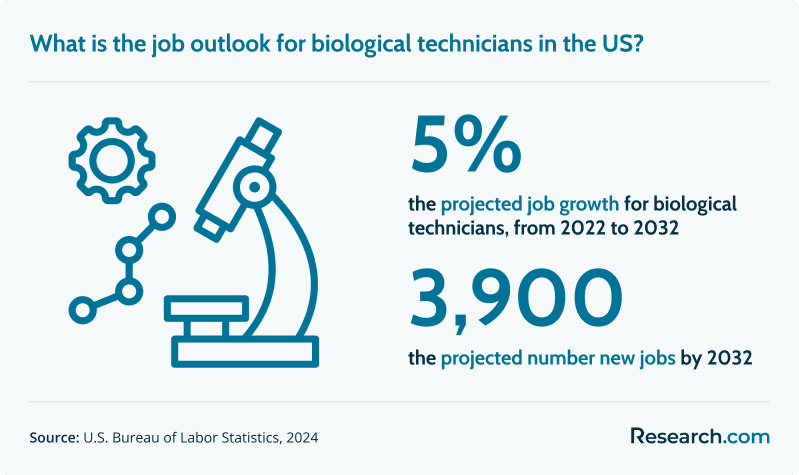
With biological technician roles projected to grow by 5% and an estimated 3,900 new jobs by 2032, pursuing an online master's degree in biotechnology can provide a strategic advantage in a competitive job market.
Drawing from over a decade of experience in career counseling, I aim to address the challenge many students face in finding affordable yet high-quality educational opportunities. In this guide, I will explore some of the most cost-effective online master's programs in biotechnology, equipping readers with the knowledge to make informed career advancements.
What are the benefits of getting an affordable master's degree in biotechnology for 2027?
- Online master's in biotechnology opens doors to roles such as biological technician, biochemist, and research scientist.
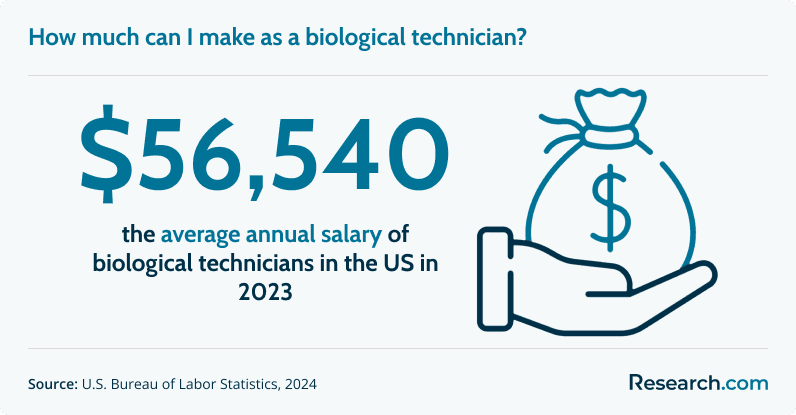
- Graduates can expect an average annual salary of $56,540 as biological technicians in the US. Top earners have an average annual salary of $80,330.
- Pursuing this degree online offers flexibility for working professionals to balance education with existing commitments.
What can I expect from the most affordable online master's degrees in biotechnology?
Affordable online master's degrees in biotechnology provide rigorous training in advanced biological sciences, emphasizing practical applications in research and industry. Students can expect comprehensive coursework covering topics such as genetic engineering, biostatistics, and bioinformatics. These programs often integrate hands-on laboratory experiences and opportunities for collaboration with industry professionals, preparing graduates for careers as biological technicians, laboratory managers, or research scientists. The flexibility of online learning allows students to balance their studies with professional and personal commitments, making it accessible for working professionals aiming to advance their careers in biotechnology.
Where can I work with an affordable online master's degree in biotechnology?
Graduates of affordable online master's programs in biotechnology can find employment in a variety of settings, including research laboratories, pharmaceutical companies, and biotechnology firms. They may also work in academic institutions, government agencies, and healthcare organizations. These roles often involve conducting experiments, analyzing data, and developing new products or technologies. Additionally, graduates can pursue careers in regulatory affairs, quality control, and technical sales, where their expertise in biotechnology is highly valued. The diverse opportunities available reflect the broad applicability of skills gained through these programs.
How much can I make with an affordable online master's degree in biotechnology?
Graduates with an affordable online master's degree in biotechnology can expect varying annual wages depending on their experience and location. At the 10th percentile, salaries start around $36,970. Those in the 25th percentile earn approximately $42,390, while the median salary is $51,430.
More experienced professionals in the 75th percentile can make about $65,510, and those in the 90th percentile earn around $80,330. These figures highlight the potential for substantial earnings in this field.
- Most Affordable Online Master's Degrees in Biotechnology for 2027 List of Programs
- How long does it take to complete the most affordable online master's degrees in biotechnology? How long does it take to complete the most affordable online master's degrees in biotechnology?
- How do the most affordable online master's in biotechnology programs compare to an on-campus program? How do the most affordable online master's in biotechnology programs compare to an on-campus program?
- What is the average cost of the most affordable online master's degrees in biotechnology? Program Cost
- What are the financial aid options for students enrolling in the most affordable online master's degree programs in biotechnology? Financial Aid Options
- What are the prerequisites for enrolling in the most affordable online master's degree programs in biotechnology? What are the prerequisites for enrolling in the most affordable online master's degree programs in biotechnology?
- What courses are typically in the most affordable online master's degree programs in biotechnology? What courses are typically in the most affordable online master's degree programs in biotechnology?
- What types of specializations are available in the most affordable online master's degree programs in biotechnology? What types of specializations are available in the most affordable online master's degree programs in biotechnology?
- How do you choose the best and most affordable online master's degrees in biotechnology? How do you choose the best and most affordable online master's degrees in biotechnology?
- What career paths are available for graduates with the most affordable online master's degrees in biotechnology? Career Paths
- What complementary certifications can boost your expertise after an online master's degree in biotechnology? What complementary certifications can boost your expertise after an online master's degree in biotechnology?
- What is the return on investment for affordable online master's degrees in biotechnology? What is the return on investment for affordable online master's degrees in biotechnology?
- What is the job market for graduates with the most affordable online master's degrees in biotechnology? Job Market
- How do online master's programs in biotechnology ensure practical skill development? How do online master's programs in biotechnology ensure practical skill development?
- How does biotechnology intersect with other disciplines to amplify career opportunities? How does biotechnology intersect with other disciplines to amplify career opportunities?
- How do online master's programs in biotechnology foster career networking and mentorship opportunities? How do online master's programs in biotechnology foster career networking and mentorship opportunities?
- What are the challenges and potential drawbacks of pursuing an online master's degree in biotechnology? What are the challenges and potential drawbacks of pursuing an online master's degree in biotechnology?
- Are online master's programs in biotechnology properly accredited and recognized? Are online master's programs in biotechnology properly accredited and recognized?
- What are the key trends in the biotechnology industry that make a master's degree essential? What are the key trends in the biotechnology industry that make a master's degree essential?
- How do online master's programs in biotechnology integrate practical research and innovation? How do online master's programs in biotechnology integrate practical research and innovation?
- What are the employment outcomes for online master's biotechnology graduates? What are the employment outcomes for online master's biotechnology graduates?
Most Affordable Online Master's Degrees in Biotechnology for 2027
Choosing an online master’s degree in biotechnology is usually a career decision, not just an academic one. You may be trying to move from bench work into higher-responsibility roles, qualify for biotech management positions, strengthen a professional school application, or pivot into areas such as bioinformatics, regulatory affairs, biopharmaceuticals, diagnostics, or biomedical engineering. The challenge is that program names sound similar while costs, lab requirements, specialization options, and career fit can vary widely.
This guide compares affordable online and hybrid master’s programs in biotechnology and closely related fields. It explains how long programs take, what they cost, what courses and specializations to expect, how online programs compare with campus-based options, what financial aid may be available, and how to judge whether a program is worth the investment for your goals.
Quick Answer: What Is the Best Affordable Online Master’s in Biotechnology?
The best affordable online master’s in biotechnology is the one that matches your target role, science background, budget, and need for laboratory or industry experience. Programs focused on biotechnology management are better for professionals moving toward product development, commercialization, regulatory, or leadership roles. Programs in biotechnology, biomedical sciences, biomedical engineering, molecular diagnostics, bioinformatics, or biological data science may be a better fit for students who want technical, research, clinical, or data-focused roles.
Most programs on this list take about one to three years to complete, although some part-time options allow a longer pace. The lowest listed per-credit costs begin at $344 for in-state students, while several private and highly specialized programs cost more than $1,000 per credit. Before enrolling, confirm accreditation, total program cost, online format, lab requirements, transfer policies, and whether the curriculum supports your intended career path.
How We Ranked Schools
This list of online biotechnology master’s programs and closely related graduate degrees was developed using Research.com’s ranking methodology. We reviewed information from the IPEDS database maintained by the National Center for Education Statistics, Peterson's database and Distance Learning Licensed Data Set, and the College Scorecard. Program details should still be verified directly with each university because tuition, fees, delivery format, and admission requirements can change.
Affordable Online Master’s in Biotechnology Programs Compared
| Rank | School and Program | Best Fit | Length | Credits | Cost per Credit | Accreditation |
| 1 | University of Alabama at Birmingham — MS in Biotechnology | Students who want biotechnology fundamentals, product development exposure, and industry-oriented professional skills. | ~2-3 years | 37 | $445 (in-state); $1,108 (out-of-state) | Southern Association of Colleges and Schools Commission on Colleges (SACSCOC) |
| 2 | Marywood University — MS in Biotechnology | Students seeking a Professional Science Master’s format with either a Business or Research track. | 2 years | 32 | $515 | Middle States Commission on Higher Education (MSCHE) |
| 3 | University of Maryland Global Campus — MS in Biotechnology Management | Working adults who want to combine biotechnology knowledge with project evaluation, marketing, financial analysis, and management. | 2 years | 32 | $524 (in-state); $659 (out-of-state) | Middle States Commission on Higher Education (MSCHE) |
| 4 | Claflin University — MS in Biotechnology for Climate Change | Students interested in biotechnology applications related to climate change, agriculture, therapeutics, ethics, and regulation. | 2 years | 32 | $562 | Southern Association of Colleges and Schools Commission on Colleges (SACSCOC) |
| 5 | University of Washington — MS in Pharmaceutical Bioengineering | Engineers, researchers, scientists, and pharmaceutical professionals seeking part-time study in drug discovery, pharmaceutics, and clinical development. | 2 years | ~30 | $626 | Northwest Commission on Colleges and Universities (NWCCU) |
| 6 | University of Georgia — MS in Comparative Biomedical Sciences | Students strengthening preparation for medical, veterinary, dental, biomedical, or health science pathways. | 2 years | 30 | $645 | Southern Association of Colleges and Schools Commission on Colleges (SACSCOC) |
| 7 | Texas Woman's University — Hybrid PSM in Biotechnology | Students who want applied biotechnology, business coursework, and a required industry internship in a hybrid structure. | 1-2 years | 30 | $693 | Southern Association of Colleges and Schools Commission on Colleges (SACSCOC) |
| 8 | Mount St. Mary's University — MS in Biotechnology and Management | Professionals seeking leadership preparation in commercialization, regulation, project management, ethics, marketing, and personnel management. | 1-2 years | 36 | $700 | WASC Senior College and University Commission (WSCUC) |
| 9 | William Paterson University of New Jersey — PSM in Biotechnology | Students who want technical training in areas such as genomics, bioinformatics, gene expression, and structural biology with business development coursework. | 1.5 to 2 years | 30 | $835 | Middle States Commission on Higher Education (MSCHE) |
| 10 | University of Wisconsin-Madison — MS in Applied Biotechnology | Students who want a fully online program with tracks in Quality Assurance and Compliance, Business Management, or Research and Development. | 2-4 years | 31 | $875 | Higher Learning Commission (HLC) |
| 11 | Elms College — MS in Biotechnology | Students looking for practical biotechnology training focused on workplace-relevant scientific and technical skills. | 1-2 years | 32 | $906 | New England Commission of Higher Education (NECHE) |
| 12 | Morehouse School of Medicine — MS in Biotechnology | Students seeking a 12-month program that combines bioscience, biotechnology enterprise knowledge, and entrepreneurial strategy. | 12 months | 35 | $950 | Southern Association of Colleges and Schools Commission on Colleges (SACSCOC) |
| 13 | Colorado State University-Fort Collins — MEng in Biomedical Engineering | Working professionals who want a coursework-only engineering degree addressing biomedical and healthcare technology challenges. | ~1.5 to 2 years | 30 | $964 | Higher Learning Commission (HLC) |
| 14 | Roosevelt University — MS in Biotechnology | Professionals who need afternoon or evening scheduling with remote and in-person options in Chicago and Schaumburg. | ~2-3 years | 36-39 | $1,013 | Higher Learning Commission (HLC) |
| 15 | Keck Graduate Institute — Master of Biotechnology Management | Bioscience professionals who want MBA-level management training for life science organizations. | 1-3 years | 30 | $1,040 | WASC Senior College and University Commission (WSCUC) |
| 16 | University of Illinois Urbana-Champaign — MEng in Bioengineering | Students who want technical bioengineering training paired with business coursework and a consulting project. | ~2 years | 32 | $1,160 | Middle States Commission on Higher Education (MSCHE) |
| 17 | George Washington University — MSHS in Molecular Diagnostic Science | Students pursuing advanced molecular diagnostics training, clinical laboratory rotations, and preparation for ASCP molecular biology exams. | 24 months | 35 | $1,061 | Middle States Commission on Higher Education (MSCHE) |
| 18 | Worcester Polytechnic Institute — MS in Biotechnology | Professionals who want online coursework plus onsite lab sessions at WPI's Worcester, MA, campus. | ~2-3 years | 30 | $1,610 | New England Commission of Higher Education (NECHE) |
| 19 | Johns Hopkins University — MS in Biotechnology | Students who want thesis or non-thesis options, full-time or part-time pacing, and onsite, online, or hybrid study. | 12-36 months | 10 courses | ~$1,807 ($54,200 to $54,200 total) | Middle States Commission on Higher Education (MSCHE) |
| 20 | Northeastern University — MS in Biotechnology | Students who want a broad biotechnology degree with multiple concentrations across enterprise, regulatory science, manufacturing, analytics, and molecular biotechnology. | 2-3 years | 34 | ~$1,862 ($63,300 total) | New England Commission of Higher Education (NECHE) |
| 21 | New York University — MS in Bioinformatics | Students interested in molecular biology, big data, genomics, next-generation sequencing, computational methods, and statistical analysis. | 2-3 years | 30 | $2,021 | Middle States Commission on Higher Education (MSCHE) |
| 22 | Case Western Reserve University — MS in Biomedical Engineering | Students who want biomedical engineering education connected to engineering, medicine, research, and industry training. | ~2 years | 30 | $2,182 | Higher Learning Commission (HLC) |
| 23 | Harvard University — MLA in Biotechnology | Students seeking biotechnology theory, research training, data analysis, scientific writing, and in-person experiences in Cambridge. | ~2-3 years | 12 courses (11 online); 48 credits | $3,340 | New England Commission of Higher Education (NECHE) |
| 24 | Eastern Illinois University — MS in Biological Sciences | Students seeking advanced study across biological sciences rather than a narrowly biotechnology-branded degree. | 1 year | 32 | $344 (in-state); $826 (out-of-state) | Higher Learning Commission (HLC) |
| 25 | Arizona State University — MS in Biological Data Science | Students aiming for computational, analytical, and scientific data roles connected to biotechnology and biological research. | ~2 years | 32 | $393 ($26,496 total) | Higher Learning Commission (HLC) |
| 26 | Alcorn State University — MS in Biology | Students preparing for doctoral study or professional scientific work through advanced coursework and mentored research. | ~2 years | 33 | $405 | Southern Association of Colleges and Schools Commission on Colleges (SACSCOC) |
How to Use This Ranking
Do not choose a biotechnology master’s program by tuition alone. A lower per-credit price is helpful, but the better program is the one that gives you the right mix of scientific depth, applied training, schedule flexibility, faculty support, and career alignment. For example, a student targeting regulatory affairs should evaluate quality assurance, compliance, and commercialization coursework, while a student targeting molecular diagnostics should prioritize clinical laboratory exposure and exam eligibility.
Also consider whether the degree title matters for your goal. An MS in Biotechnology, MS in Applied Biotechnology, PSM in Biotechnology, MS in Biotechnology Management, MEng in Biomedical Engineering, MS in Bioinformatics, or MS in Biological Data Science can lead to different skill profiles. Employers may value the specific competencies more than the label, especially in technical, data, regulatory, and product-focused roles.
What Online Biotechnology Master’s Graduates Say
- Jamie: "Living in a rural community made graduate study in biotechnology feel out of reach. An online format gave me access to challenging coursework without forcing me to move, and the academic expectations were still serious."
- Tom: "Working, raising a family, and completing graduate courses was not easy, but online study made it realistic. Faculty support and interactive assignments helped me stay engaged, and I was able to move toward a new biotechnology role."
- Miranda: "The biggest benefit was control over my schedule. I could keep working as a laboratory manager while building the scientific and professional knowledge I needed for advancement."
Key Findings
- The most affordable listed option begins at $344 per credit for in-state students, while several specialized private programs exceed $1,000 per credit.
- Most online biotechnology-related master’s programs require about 30 to 37 credits, although some use course-based requirements instead of credit totals.
- Program length varies from 12 months to 2-4 years, so students should compare pace, course load, and whether part-time enrollment is supported.
- Biotechnology management, applied biotechnology, bioinformatics, molecular diagnostics, biomedical engineering, and biological data science are related but not identical pathways.
- Online programs may work well for working adults, but students who need extensive wet-lab training should carefully check lab intensives, internships, rotations, or hybrid requirements.
How Long Does It Take to Complete an Affordable Online Master’s in Biotechnology?
Most affordable online master’s degrees in biotechnology take about two to three years, especially for working professionals who enroll part time. Some accelerated options can be completed in 12 months, while programs designed for a slower pace may allow 2-4 years. Completion time depends on the credit requirement, whether courses are offered year-round, whether the program includes labs or internships, and how many courses a student can handle each term.
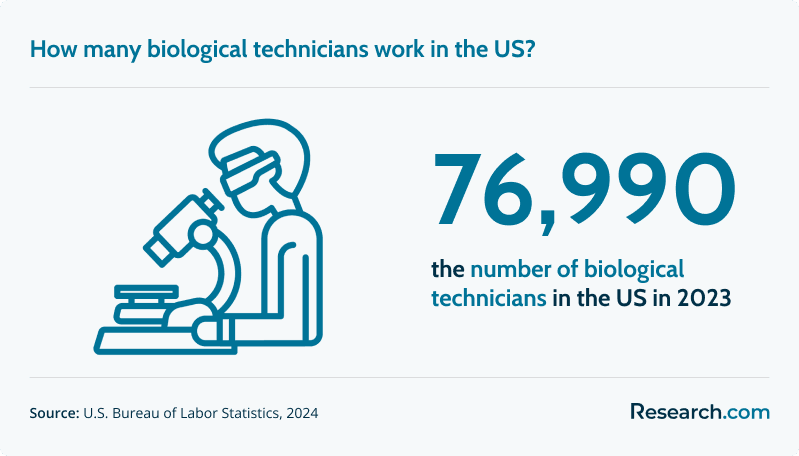
In 2023, there were 76,990 biological technicians working in the US.
How Do Online Master’s in Biotechnology Programs Compare With On-Campus Programs?
Online biotechnology master’s programs can be academically comparable to campus-based programs when they are offered by accredited institutions, taught by qualified faculty, and built around the same learning outcomes. The major difference is delivery: online programs typically reduce relocation and commuting barriers, making graduate study more realistic for working adults and students outside major biotech hubs.
The trade-off is laboratory access. Some online programs use simulations, virtual labs, remote collaboration tools, short campus intensives, or local placements to support applied learning. Others are more management-, data-, or theory-focused and may have fewer hands-on requirements. Students who want roles involving wet-lab work should verify how practical training is delivered before enrolling.
| Factor | Online or Hybrid Biotechnology Master’s | On-Campus Biotechnology Master’s |
| Schedule | Often better for working adults, especially if courses are asynchronous or offered in the evening. | May require fixed class times, commuting, or relocation. |
| Laboratory experience | May use virtual labs, short residencies, internships, or hybrid lab sessions. | Usually offers more immediate access to campus laboratories and equipment. |
| Networking | Depends on virtual events, faculty access, alumni networks, and industry projects. | Often includes more informal in-person networking and campus research activity. |
| Cost control | Can reduce relocation and commuting costs, but tuition varies widely. | May involve housing, transportation, and campus fees in addition to tuition. |
| Best for | Professionals who need flexibility or are pursuing management, regulatory, data, or applied science roles. | Students who need extensive laboratory immersion, research assistantships, or campus-based research access. |
Online learning is also common in other fields, from the easiest business degree pathways to healthcare options such as an accelerated BSN program online. In biotechnology, the key question is not whether the program is online; it is whether the format supports the skills your target role requires.
What Is the Average Cost of an Affordable Online Master’s in Biotechnology?
The average cost of the most affordable online master’s degrees in biotechnology generally ranges from $15,000 to $30,000 for the entire program. Actual cost can be lower or higher depending on the institution, residency status, credit requirement, fees, course materials, lab travel, and whether a student receives scholarships, employer assistance, military benefits, or other aid.
Per-credit tuition is only one part of the cost. Students should ask each school for a full estimated program cost that includes technology fees, graduation fees, books or digital materials, lab kits, campus residency expenses, and any required travel for internships, rotations, or intensives.
What Financial Aid Options Are Available for Online Biotechnology Master’s Students?
Graduate biotechnology students may be able to reduce out-of-pocket costs through several funding sources. Availability depends on the institution, enrollment status, citizenship or residency rules, employer policies, and individual eligibility.
- Federal student loans. Eligible graduate students may use federal loan options such as Direct Loans and Grad PLUS Loans. Borrowers should compare interest rates, fees, repayment terms, and total debt before accepting the maximum amount offered.
- Scholarships and grants. Universities, private foundations, employers, professional associations, and government-related organizations may offer merit-based or need-based awards for science, biotechnology, healthcare, or STEM students.
- Employer tuition reimbursement. Biotechnology, pharmaceutical, healthcare, laboratory, and research employers may help pay for job-related graduate study. Students should ask whether reimbursement requires a minimum grade, manager approval, continued employment, or a service commitment.
- Payment plans and deferred payment options. Some universities allow students to divide tuition into installments or use structured payment arrangements, which can reduce the need to borrow all costs at once.
- Veterans benefits and military tuition assistance. Eligible service members, veterans, and military-affiliated students may be able to use education benefits for approved online graduate programs.
What Are the Prerequisites for an Online Master’s in Biotechnology?
Admission requirements vary, but most online biotechnology master’s programs expect applicants to show readiness for advanced science coursework. A biotechnology master’s is not usually comparable to broad graduate pathways that appear in discussions of what is the easiest master degree to get; students typically need a solid foundation in biology, chemistry, molecular biology, biochemistry, engineering, data science, or a closely related area.
- A bachelor’s degree, often in biology, biochemistry, molecular biology, chemistry, biomedical engineering, biotechnology, or another relevant field.
- A minimum GPA requirement, often ranging from 2.5 to 3.0 on a 4.0 scale.
- Letters of recommendation from academic instructors, research mentors, supervisors, or professional references.
- A statement of purpose explaining career goals, scientific interests, and reasons for pursuing graduate biotechnology study.
- GRE scores for some programs, although many schools vary in whether they require, waive, or do not consider them.
- Relevant coursework or work experience in biology, chemistry, laboratory science, statistics, computation, healthcare, or related disciplines.
What Courses Are Common in Affordable Online Master’s in Biotechnology Programs?
Coursework depends on whether the program emphasizes science, business, diagnostics, data, engineering, or applied biotechnology. However, many programs include a combination of molecular science, quantitative analysis, lab methods, professional communication, ethics, regulation, and commercialization.
- Molecular Biology and Genetics. Students study gene expression, genetic variation, cellular mechanisms, and biotechnology applications. This course often supports roles in research, diagnostics, biomanufacturing, and product development.
- Biostatistics and Bioinformatics. This coursework introduces statistical tools and computational approaches for interpreting biological, genomic, and proteomic data. It is especially valuable for students interested in biological data science, precision medicine, or computational biology.
- Advanced Biochemistry. Students deepen their understanding of enzymes, metabolism, molecular interactions, and biochemical systems that influence biotechnology research and industry practice.
- Biotechnology Laboratory Techniques. Depending on the program format, students may learn or review techniques such as PCR, recombinant DNA methods, protein analysis, and experimental design through labs, simulations, intensives, or project-based work.
- Regulatory Affairs in Biotechnology. Students examine compliance, ethics, approval pathways, quality systems, and regulatory expectations affecting biotechnology and biopharmaceutical products.
Mastering these foundations can support work as a biological technician or in related laboratory and research support roles. In 2023, the states with the most biological technicians employed were California (11,790) and Massachusetts (6,920). See the chart below for more information.
What Specializations Are Available in Online Biotechnology Master’s Programs?
Specializations matter because biotechnology is not a single job market. The right concentration can help students prepare for a specific lane, such as research and development, regulatory affairs, quality assurance, diagnostics, data analysis, biomanufacturing, or environmental applications.
- Genetic Engineering and Bioprocessing. This area focuses on gene manipulation, fermentation, bioreactor systems, and process optimization for pharmaceutical and industrial uses.
- Bioinformatics and Computational Biology. Students learn to analyze biological datasets, interpret genomic or proteomic information, and build computational models for research, medicine, and agriculture.
- Biopharmaceutical Science. This specialization addresses the development, production, quality control, and regulation of biologically derived therapies and products.
- Environmental Biotechnology. Students explore biotechnology tools for pollution remediation, environmental monitoring, sustainability, bioenergy, and resource management.
- Medical Biotechnology. This path connects biotechnology with diagnostics, therapeutics, personalized medicine, molecular testing, and healthcare innovation.
- Regulatory Affairs and Quality Assurance. Students study compliance, FDA-related processes, quality management systems, documentation, and global regulatory frameworks.
Biological technicians, regardless of specialization, earned an average annual salary of $56,540 in 2023.
How Do You Choose the Best Affordable Online Master’s in Biotechnology?
The best program is the one that helps you reach your next role without creating unnecessary cost, time, or credential risk. Use the following decision process before applying.
- Confirm accreditation first. Make sure the institution is accredited by a recognized accreditor. Accreditation can affect financial aid eligibility, transferability, employer perception, and admission to further education.
- Match the curriculum to your target job. Management roles require different preparation from molecular diagnostics, bioinformatics, biomedical engineering, or quality assurance roles.
- Ask how practical skills are taught. Look for internships, clinical rotations, capstones, virtual labs, lab intensives, local placements, or project-based work.
- Compare total cost, not only tuition. Include fees, textbooks, digital resources, travel, laboratory expenses, and the cost of taking fewer work hours if applicable.
- Evaluate flexibility honestly. Asynchronous courses may work best for unpredictable schedules, while synchronous programs may offer stronger real-time interaction.
- Check faculty and industry access. Review faculty backgrounds, advisory boards, alumni outcomes, employer partnerships, career services, and networking opportunities.
- Look at adjacent programs only when relevant. Some institutions strong in life science areas may also appear in resources on colleges with forensic science programs, but your decision should still be based on biotechnology-specific outcomes.
| If Your Goal Is... | Prioritize Programs With... | Be Careful About... |
| Biotech management or commercialization | Product development, finance, marketing, project management, regulatory strategy, and leadership coursework. | Programs that are heavily research-focused but offer little business or management training. |
| Laboratory or research advancement | Strong molecular biology, lab methods, experimental design, research projects, and faculty mentorship. | Fully online programs with limited hands-on laboratory experiences. |
| Bioinformatics or biological data roles | Statistics, programming, data analysis, genomics, computational biology, and bioinformatics tools. | Programs that mention data science but include only one introductory course. |
| Regulatory affairs or quality assurance | FDA-related content, quality systems, documentation, compliance, validation, and industry case studies. | Programs that focus only on general biology without applied regulatory training. |
| Healthcare or diagnostics | Molecular diagnostics, clinical rotations, pathology, laboratory medicine, and exam-aligned preparation if relevant. | Programs that do not meet clinical or certification-related expectations for your target role. |
What Career Paths Are Available With an Online Master’s in Biotechnology?
Graduates may pursue technical, scientific, data, regulatory, quality, management, and healthcare-adjacent roles. Job eligibility depends on prior experience, undergraduate preparation, location, employer requirements, and whether the program includes relevant lab, data, clinical, or management training.
- Biological Technician: Supports experiments, testing, documentation, and research activities under the supervision of scientists or senior laboratory staff.
- Research Scientist: Designs and conducts studies that may support new products, methods, diagnostics, processes, or therapies in industry or research settings.
- Biomedical Engineer: Applies engineering principles to biological and medical problems, including devices, systems, equipment, and healthcare technologies. Students comparing healthcare careers may also review options such as the best online FNP programs.
- Quality Control Analyst: Tests materials, products, and processes to help ensure they meet specifications, quality standards, and regulatory expectations.
- Bioinformatics Specialist: Uses computational tools to analyze biological data, including genomic, proteomic, and other large-scale datasets.
- Regulatory Affairs Specialist: Supports submissions, compliance, documentation, and communication with regulatory bodies for biotechnology, pharmaceutical, or healthcare products. Professionals moving toward organizational leadership may also compare PhD leadership programs.
The top-paying industries for biological technicians in the US in 2023, including those with online biotechnology degrees from online programs, were merchant wholesaling ($95,240) and computer systems design and related services ($80,740). See the chart below for more information.
Biotechnology is a strong option for students who enjoy science, data, laboratory work, product development, or life science innovation, but it is not the right fit for everyone. If you are still comparing affordable online degrees in other fields, you may also review cheap online exercise science degree programs, cheapest online associate's degree in accounting programs, cheap online clinical psychology degrees, and affordable online marriage and family therapy degrees.
What Complementary Certifications Can Strengthen a Biotechnology Career?
Additional credentials can help biotechnology graduates signal specific skills, especially in data analysis, regulatory work, quality systems, clinical laboratory science, project management, or bioinformatics. For example, professionals who want stronger computational biology preparation may compare biotechnology programs with a bioinformatics degree online. The best add-on credential is one that fills a clear gap between your current experience and your target role.
What Is the ROI of an Affordable Online Master’s in Biotechnology?
Return on investment depends on total cost, time to completion, debt, employer tuition support, current salary, target role, local job market, and whether the degree helps you move into higher-responsibility work. A low-cost program can still have weak ROI if it does not align with your career goal, while a higher-cost program may be more defensible if it provides strong lab access, employer connections, or a specialization that directly supports advancement.
Before enrolling, compare your current role with realistic next-step roles, not only ideal senior positions. Ask whether the program has career data, internship options, alumni in your target companies, and coursework tied to jobs you can actually pursue. Students comparing health-related credentials for cost reasons may also find it useful to review the cheapest medical billing and coding program, but biotechnology requires a different science and career preparation profile.
What Is the Job Market for Online Master’s in Biotechnology Graduates?
The biotechnology job market includes research, product development, biomanufacturing, diagnostics, regulatory affairs, quality assurance, data science, pharmaceutical work, and healthcare-adjacent roles. As of 2023, the biotechnology industry in the US employed 431,633 individuals, with 6.30% employment growth from 2018 to 2023. For biological technicians specifically, the projected job growth is 5%, with an estimated 3,900 new jobs by 2032.
These figures suggest opportunity, but they do not guarantee a job after graduation. Outcomes depend on location, experience, technical skills, internships, lab competence, professional network, and how closely the degree matches employer needs.
How Do Online Biotechnology Master’s Programs Build Practical Skills?
Online biotechnology programs use different methods to develop applied skills. Some rely on virtual laboratories, simulations, data analysis projects, and case studies. Others include capstones, practicums, internships, clinical rotations, remote-controlled experiments, or short campus residencies. Hybrid programs may be especially useful for students who need hands-on lab exposure but cannot attend a traditional campus program full time.
Students should ask exactly what “hands-on” means in each program. A simulation may be appropriate for data interpretation or experimental design, but it may not replace physical practice with instrumentation, sample handling, or regulated laboratory workflows. Students interested in broader clinical support credentials may also compare options such as medical assistant certification 6 weeks, although that pathway serves different roles than a biotechnology master’s.
How Does Biotechnology Connect With Other Fields?
Biotechnology overlaps with healthcare, pharmaceuticals, agriculture, environmental science, engineering, computer science, business, and public policy. This interdisciplinary nature is one reason students should choose a program based on the work they want to do after graduation.
In healthcare, biotechnology supports drug development, molecular diagnostics, genetic testing, personalized medicine, and clinical research. Students who want to combine life science expertise with operations or leadership may also explore a healthcare administration degree online accredited.
In data-focused roles, biotechnology increasingly intersects with bioinformatics, computational biology, genomics, and statistical modeling. In environmental and agricultural contexts, biotechnology can support sustainability, crop resilience, biofuels, and remediation work. Students who understand both the science and the adjacent industry context are often better positioned for cross-functional teams.
How Do Online Biotechnology Programs Support Networking and Mentorship?
Strong online programs do more than post lectures. They create structured ways for students to interact with faculty, alumni, employers, and classmates. Useful supports may include virtual networking sessions, industry-sponsored projects, mentorship programs, career coaching, alumni panels, research seminars, and employer-connected capstones.
Because biotechnology hiring often depends on specialized skills and professional contacts, students should ask about career services before enrolling. Find out whether the school has biotechnology-specific employer relationships, internship support, resume help for scientific roles, and alumni working in your target area. Students considering closely related healthcare and pharmaceutical pathways may also review pre pharmacy programs online.
What Are the Drawbacks of an Online Master’s in Biotechnology?
Online biotechnology programs can be flexible and cost-effective, but they are not automatically the best choice for every student. The main risks involve practical training, networking, self-management, and career fit.
- Limited wet-lab access. Some online programs cannot provide the same equipment, supervision, and physical lab repetition available on campus.
- Weaker informal networking. Online students may need to be more intentional about attending virtual events, contacting faculty, and building industry relationships.
- High self-discipline requirements. Asynchronous coursework can be convenient, but students must manage deadlines, readings, projects, and exams without the structure of frequent in-person meetings.
- Possible employer questions. Many employers accept accredited online degrees, but applicants should be ready to explain practical training, projects, and technical competencies.
- Technology dependence. Reliable internet, appropriate software, and comfort with digital collaboration tools are essential for online science coursework.
Are Online Biotechnology Master’s Programs Accredited and Recognized?
Online master’s programs in biotechnology can be properly recognized when they are offered by accredited institutions and meet expected graduate-level academic standards. Accreditation matters because it can affect federal financial aid eligibility, employer confidence, credit transfer, further education, and overall degree credibility.
Students should confirm institutional accreditation directly through the school and accreditor. They should also review curriculum quality, faculty credentials, lab or project requirements, employer partnerships, and graduate outcomes. For career context, compare program claims with labor market information and role-specific resources such as biotechnology salary data.
What Biotechnology Trends Should Students Consider Before Enrolling?
Several trends are shaping biotechnology education and employer expectations. Students do not need to chase every trend, but they should choose programs that build durable scientific, analytical, regulatory, and communication skills.
- Personalized medicine and genetic engineering. Advances in genomics, molecular biology, and gene editing are increasing the need for professionals who understand both biological mechanisms and data interpretation.
- Biotech startups and commercialization. Scientific discoveries must move through funding, product strategy, regulatory review, and market adoption, making business-aware scientists valuable in some roles.
- Global health challenges. Diagnostics, vaccines, therapeutics, antimicrobial resistance, and public health preparedness continue to rely on biotechnology expertise.
- Sustainability and environmental biotechnology. Biotechnology applications in agriculture, biofuels, waste management, and ecological protection create opportunities for students interested in climate and environmental work.
- Bioinformatics and data science. Large biological datasets require professionals who can use statistics, computational tools, and biological reasoning together.
- Interdisciplinary collaboration. Biotech teams often include biologists, chemists, engineers, clinicians, data scientists, regulatory specialists, and business leaders.
Students seeking a broader low-cost graduate search may compare cheapest master's degree online options, but biotechnology applicants should prioritize scientific fit and career relevance over price alone.
How Do Online Biotechnology Programs Integrate Research and Innovation?
Many online biotechnology master’s programs incorporate research through capstones, literature-based projects, virtual experiments, data analysis assignments, product development cases, and industry-linked problem solving. Programs with a stronger technical focus may require experimental design, scientific reporting, and analysis of real or simulated datasets. Programs with a business focus may emphasize commercialization, regulatory strategy, project evaluation, or innovation management.
Students who want broad healthcare context may compare biotechnology coursework with medical degree courses online, but they should remember that a biotechnology master’s is usually designed for life science, industry, research, data, or applied technology roles rather than clinical physician training.
What Employment Outcomes Can Online Biotechnology Master’s Graduates Expect?
Graduates may move into research support, quality assurance, regulatory affairs, bioinformatics, project management, product development, diagnostics, biomedical engineering, or biotechnology management roles. Outcomes vary by previous experience, technical skill level, geography, employer demand, and whether the student completed relevant projects, internships, labs, or rotations.
When comparing programs, ask for employment information specific to the degree, not just the university as a whole. Useful evidence includes alumni job titles, employer examples, internship placement support, career coaching, and whether students have access to industry mentors. Professionals interested in further pharmacy-related study may also compare the best PharmD online programs as a separate career path.
Common Mistakes to Avoid When Choosing an Online Biotechnology Master’s
- Choosing only by the lowest tuition. A cheaper program is not a good value if it lacks the specialization, lab access, or employer relevance you need.
- Ignoring accreditation. Always verify institutional accreditation before applying or borrowing money.
- Assuming all online programs include hands-on training. Some programs are highly applied; others are primarily theoretical, managerial, or data-focused.
- Overlooking total cost. Fees, travel, books, lab materials, and time away from work can change the real price.
- Picking the wrong specialization. A management track may not prepare you for wet-lab research, and a biology-heavy track may not prepare you for regulatory or commercialization work.
- Assuming salary outcomes are guaranteed. A degree can improve qualifications, but pay depends on role, location, experience, employer, and performance.
- Relying only on rankings. Rankings are a starting point. Your final choice should reflect career goals, curriculum, support services, and cost.
Questions to Ask Before You Apply
- Is the institution accredited, and by which accreditor?
- What is the total estimated cost, including fees, materials, and any required travel?
- Is the program fully online, hybrid, synchronous, asynchronous, or a mix?
- How are laboratory, research, internship, clinical, or capstone requirements completed?
- Which specializations are available, and which roles do they best support?
- Do online students receive the same faculty access and career services as campus students?
- Can working professionals enroll part time?
- Are transfer credits accepted?
- What graduate outcomes, alumni job titles, or employer connections can the program document?
- Does the program prepare students for any optional certification, exam, or professional credential relevant to their goals?
Key Insights
- An affordable online master’s in biotechnology can be worthwhile when the program directly supports your target role and does not require more debt than your likely career path can justify.
- Cost per credit varies widely, so compare full program cost rather than relying on tuition alone.
- Students seeking lab-intensive careers should scrutinize practical training more carefully than students targeting management, regulatory, or data-focused roles.
- Biotechnology management, applied biotechnology, bioinformatics, molecular diagnostics, and biomedical engineering are related but lead to different skill sets.
- Accreditation, curriculum fit, faculty expertise, career support, and hands-on learning options are the most important factors after affordability.
- The strongest applicants choose programs based on a clear career plan, not just a recognizable school name or a low advertised price.
References:
- IBISWorld. (2024). Biotechnology in the US - Employment statistics 2006–2029. Retrieved June 28, 2024, from IBISWorld.
- Statista. (2024, June 16). Top biotech companies by R&D expenditure 2022. Statista.
- U.S. Bureau of Labor Statistics. (2024). Biological technicians. Retrieved June 28, 2024, from BLS.
- U.S. Bureau of Labor Statistics. (2024). Occupational employment and wages, May 2023 - 19-4021 Biological technicians. Retrieved June 28, 2024, from BLS.
Other Things You Should Know About the Most Affordable Online Master's Degrees in Biotechnology
Many affordable online master’s programs in biotechnology require no standardized entrance exam. When an exam is required, schools often accept the GRE and may ask for official scores, but minimum cutoffs are set by each university. Some programs also waive the GRE for applicants with strong GPAs or relevant work experience.
In 2027, affordable online Master's Degrees in Biotechnology are offered by several universities, including the University of Florida, Johns Hopkins University, and the University of Maryland Global Campus. These institutions provide quality programs at a lower cost compared to the industry average, making them attractive options for budget-conscious students.