
2027 California Nursing License Requirements

Co-Founder and Chief Data Scientist
Getting a California nursing license is not a single-step process. You must choose the right nursing pathway, complete a Board-approved education program, satisfy clinical and documentation requirements, pass the licensing exam, clear a background check, and keep your license active after approval. The process is worth understanding carefully because California has one of the largest nursing workforces in the country: according to the U.S. Bureau of Labor Statistics, the state employed 332,560 registered nurses (RNs) in 2023.
This guide explains how California nursing licensure works, what requirements apply to RNs and LVNs, how out-of-state nurses can apply, what renewal involves, how much the process may cost, and how to compare nursing education options before committing time and money. It is designed for aspiring nurses, current healthcare workers considering a nursing credential, licensed nurses relocating to California, and RNs planning long-term advancement in the state.
Quick answer: How do you get a nursing license in California?
To become a licensed nurse in California, you generally need to complete a California Board of Registered Nursing-approved nursing program, finish required clinical training, submit an application through the state licensing system, complete fingerprinting and background checks, provide official education records, and pass the NCLEX-RN if you are pursuing RN licensure. California nursing licenses must be renewed every two years, and RNs must complete 30 hours of continuing education to remain eligible for renewal.
Key Things You Should Know About California Nursing Licenses
- The California Board of Registered Nursing (BRN) regulates RN licensure. The BRN sets licensing standards, reviews applications, enforces nursing regulations, and protects the public by ensuring that licensed RNs meet state requirements.
- The NCLEX-RN is required for RN licensure. California candidates must pass the National Council Licensure Examination for Registered Nurses, and the state has reported a pass rate of approximately 87% for first-time test-takers.
- Education must be documented. Applicants must complete an accredited or approved nursing program and submit proof of education, including official transcripts and a completed BRN application.
- The application includes identity and background checks. Applicants submit fingerprints, pay a fee around $300, and provide license verification if they have held a nursing license in another state.
- Licenses are not permanent without renewal. California RNs renew every two years and must complete 30 hours of continuing education during the renewal cycle.
- What is a California nursing license and why do you need one?
- What nursing license types does California offer?
- What are the California nursing license requirements?
- How do you apply for a California nursing license?
- When do California nurses renew their licenses?
- Can a Compact Nurse work in California?
- How can you move up in a California nursing career?
- How much can aesthetic nurses earn in California?
- What career support resources help California nurses find jobs?
- How do out-of-state nurses get licensed in California?
- What employment trends are shaping nursing in California?
- How can you transition to an LPN role in California?
- What continuing education options are available to California nurses?
- What does it cost to become a nurse in California?
- What should you know about nurse midwifery in California?
- Should you choose the LVN or RN pathway in California?
- What scholarships and aid can help pay for nursing school?
- Which California nursing schools can support your goals?
- Which online nursing programs in California offer flexibility?
- How are RNs, LPNs, and CNAs different in California?
- How can you prepare for the California nursing licensing exam?
What is a California nursing license and why do you need one?
A California nursing license is the legal authorization to practice nursing in the state. Without the proper license, an individual cannot legally perform duties reserved for licensed nurses, even if they have completed nursing coursework or worked in healthcare before.
For registered nurses, the California Board of Registered Nursing is the main regulatory authority. The BRN applies the Nursing Practice Act, reviews licensure eligibility, handles discipline and complaints, and defines the legal standards that nurses must follow in California healthcare settings.
A nursing license matters for four practical reasons:
- Patient safety: Licensure confirms that a nurse has met required education, clinical, examination, and background standards before providing care.
- Professional accountability: The BRN can investigate unsafe practice, fraud, misconduct, or violations of nursing regulations.
- Scope of practice: A license helps define what a nurse may and may not do in California, reducing confusion between RN, LVN, CNA, and advanced practice roles.
- Continuing competence: Renewal requirements keep nurses connected to updated clinical knowledge, standards, and patient-care expectations.
Licensure also affects career mobility and compensation. California’s large healthcare system creates many employment settings for nurses, including hospitals, clinics, long-term care facilities, public health organizations, surgery centers, schools, correctional facilities, and telehealth services. The credential can support earnings of $86,070 or more each year, depending on role, employer, location, specialty, experience, and schedule.
Nurses who want to move into advanced practice may eventually consider graduate education. For example, RNs comparing specialty paths often research psychiatric nurse practitioner salary potential before deciding whether a master’s-level nursing route fits their goals.
California has the highest number of employed nurses among states, which indicates a broad labor market. At the same time, the state’s size does not mean every job is easy to obtain. New nurses still need clinical readiness, strong references, flexible job-search strategies, and a realistic view of competition in desirable regions and specialties.
The chart below shows other states with high registered nurse employment levels.
What nursing license types does California offer?
California’s nursing workforce includes several credential levels, but the two most common licensed nursing pathways discussed by prospective students are Registered Nurse and Licensed Vocational Nurse. Each route has a different training timeline, scope of practice, cost, and advancement potential.
| License or role | Typical preparation | Common responsibilities | Best fit for |
| Registered Nurse (RN) | Usually a two- to four-year nursing program, depending on whether the student completes an ADN, BSN, or other approved route | Patient assessment, care planning, medication administration, coordination with providers, patient education, supervision, and complex clinical decision-making | Students who want broader responsibility, more advancement options, and a foundation for graduate nursing roles |
| Licensed Vocational Nurse (LVN) | About one year of focused vocational nursing education and supervised clinical training | Basic nursing care, vital signs, medication support within scope, documentation, and patient assistance under RN or provider supervision | Students who want a faster entry point into nursing and may later bridge into RN education |
| Certified Nursing Assistant (CNA) | Shorter training focused on direct bedside support | Assisting with daily living needs, mobility, hygiene, feeding, and basic patient comfort tasks | People seeking an entry-level patient-care role before committing to LVN or RN education |
Choosing between these options should depend on more than program length. RNs generally have a wider scope of practice and more opportunities for specialization, leadership, and graduate study. LVNs can enter the workforce more quickly, but they work under greater supervision and may have fewer long-term advancement options unless they continue their education.
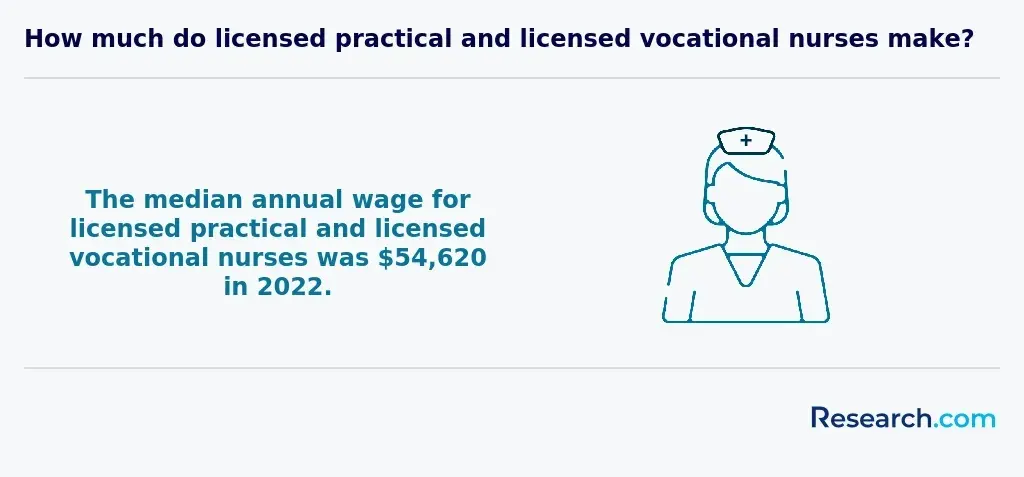
Healthcare workers who already have related experience may be able to use bridge programs to move into nursing more efficiently. For example, medical assistants exploring practical nursing can compare options such as an online medical assistant to LPN bridge program.
What are the California nursing license requirements?
California nursing licensure is built around education, supervised clinical experience, examination, documentation, and public-safety screening. Requirements can differ by route, but RN applicants should expect the following core steps.
- Complete an approved nursing education program: RN candidates must graduate from a nursing program approved by the California BRN or otherwise meet California’s education standards. Students comparing bachelor’s-completion routes may also want to review flexible RN-to-BSN program options.
- Finish required clinical training: Candidates must complete at least 1,000 clinical hours in approved healthcare settings. These experiences help students apply classroom learning to direct patient care, documentation, communication, and safety procedures.
- Pass the required licensing exam: RN candidates must pass the NCLEX-RN, which assesses whether they are ready to provide safe entry-level nursing care.
- Submit official education records: Applicants provide transcripts and other documentation required by the BRN. Missing or incomplete records can delay approval.
- Complete fingerprinting and background review: California requires identity verification and background checks as part of the licensure process.
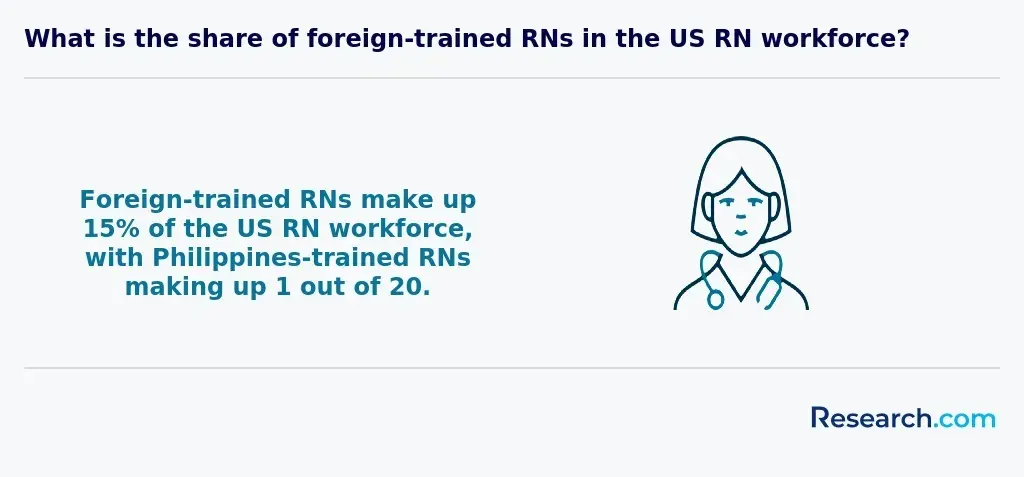
- Meet additional requirements if educated internationally: Applicants educated outside California or outside the United States may need verified transcripts sent directly from the institution. Foreign-trained RNs, who make up 15% of the US RN workforce, must also provide proof of English proficiency when required.
These requirements are intended to protect patients in a high-volume healthcare environment. California healthcare spending, including nursing home care, reached $196.8 billion in 2020, underscoring the scale of the state’s care system and the importance of consistent licensing standards.
| Requirement | Why it matters | What applicants should check |
| Program approval | California must recognize your education for licensure eligibility. | Confirm BRN approval before enrolling, not after graduation. |
| Clinical hours | Hands-on practice builds patient-care judgment and technical competence. | Ask where clinicals occur, who arranges placements, and whether hours meet California expectations. |
| NCLEX-RN | The exam is the national licensing assessment for entry-level RN practice. | Review school pass-rate support, remediation policies, and test-prep resources. |
| Background check | The state evaluates applicant history as part of public protection. | Disclose required information honestly and follow BRN instructions closely. |
| Transcripts | Official records verify that required nursing coursework was completed. | Request documents early, especially if schools are outside California or outside the United States. |
How do you apply for a California nursing license?
Most applicants begin the California nursing license application through the state’s online BreEZe system. The exact form depends on whether you are applying by examination, endorsement, renewal, or another route. Before starting, gather identification details, education information, payment method, and any prior license records.
The application process usually includes these components:
- Online application: Create or use a BreEZe account, select the correct nursing application, and complete every required section carefully.
- Fingerprinting: Applicants complete fingerprinting through Live Scan or fingerprint cards, depending on location and eligibility. This is required for background review.
- Fees: Application fees are non-refundable and vary by licensing route, so applicants should confirm the amount before submitting payment.
- License verification: Nurses who have held a license elsewhere may need a Verification of License form or Nursys® Verification Application if applicable.
- Education records: Official transcripts must show required nursing coursework such as anatomy, physiology, microbiology, and other required content. Internationally educated applicants may need additional documentation.
- Exam registration: RN applicants who have not already passed the NCLEX-RN must register for the exam as instructed by the licensing process.
Applicants with a non-nursing background should pay close attention to prerequisites before enrolling in a program. If a school requires anatomy, physiology, microbiology, or related courses before admission, comparing affordable online nursing prerequisite options may help reduce early education costs.
Step-by-step checklist before you apply
- Confirm that your nursing program is recognized for California licensure.
- Request official transcripts early and verify where they must be sent.
- Create a BreEZe account and select the correct application type.
- Complete fingerprinting according to California instructions.
- Pay the required application fee and save confirmation records.
- Register for the NCLEX-RN if applying by examination.
- Monitor your application status and respond quickly to BRN requests.
When do California nurses renew their licenses?
California nursing licenses must be renewed every two years. Renewal is usually simpler than initial licensure, but it still requires planning because nurses must complete continuing education, submit the renewal application, and pay the required fee before the license expires.
- Continuing education: California RNs must complete 30 hours of continuing education during each renewal cycle. Courses should be relevant, properly documented, and accepted for renewal.
- Online renewal: Nurses can typically renew through BreEZe, update personal information, and submit required attestations or documentation.
- Renewal fee: The renewal fee is non-refundable and should be verified through the BRN before payment.
- Recordkeeping: Nurses should keep certificates and proof of continuing education in case they are asked to verify completion.
Renewal is also a good time to reassess career goals. RNs who want stronger advancement prospects may consider bachelor’s-completion programs, especially if their employer values the BSN credential. Comparing affordable RN-to-BSN online costs can help working nurses plan a realistic education budget.
Can a Compact Nurse work in California?
The Nurse Licensure Compact allows eligible RNs and LPN/VNs to practice in multiple compact states with one multistate license. The NLC was enacted in 2018 and currently includes 42 states. It can make cross-state practice easier for nurses and employers, especially in telehealth, travel nursing, and regional workforce shortages.
California is not part of the NLC. That means a nurse who holds a compact license from another state cannot rely on that license alone to practice in California. The nurse must obtain a California nursing license before working in the state. Likewise, California-licensed nurses do not receive compact privileges from their California license.
Government sources project an 11% outlook for California RNs, equal to around 21,200 annual openings from 2020 to 2030. Even with that demand, California’s nonparticipation in the NLC affects mobility: nurses moving into California must complete the state’s licensing process, and California nurses seeking practice in compact states may need additional authorization.
How can you move up in a California nursing career?
Career growth in California nursing usually comes from a combination of experience, education, specialty certification, leadership exposure, and strategic job changes. New RNs often start in bedside care, outpatient clinics, long-term care, or residency programs. Over time, they may move into emergency care, intensive care, surgery, pediatrics, oncology, informatics, case management, education, administration, or advanced practice.
Graduate study is one major advancement route. RNs interested in diagnosing, prescribing, and managing patients at a higher level can compare nurse practitioner programs in California to understand admissions requirements, clinical expectations, and specialty options.
| Career goal | Possible next step | What to evaluate first |
| Move from entry-level RN to specialty practice | Gain experience in a specialty unit and pursue relevant certification | Employer training support, preceptor availability, and required experience |
| Qualify for leadership or public health roles | Complete a BSN or graduate degree | Tuition cost, schedule flexibility, accreditation, and employer reimbursement |
| Become an advanced practice nurse | Enroll in a nurse practitioner, nurse midwifery, or other graduate nursing program | Licensure implications, clinical placement support, and specialty demand |
| Move away from bedside care | Explore informatics, case management, education, quality, or administration | Required certifications, software skills, and employer expectations |
How much can aesthetic nurses earn in California?
Aesthetic nursing can appeal to California RNs who want to work in cosmetic, dermatology, plastic surgery, or med spa settings. These nurses may assist with minimally invasive cosmetic procedures, patient assessments, treatment education, safety screening, and follow-up care, depending on their scope and employer protocols.
Compensation varies by city, employer type, procedure volume, experience, and whether a nurse works in a private clinic, dermatology office, plastic surgery practice, or medical spa. Nurses considering this specialty should review local employer requirements, supervision rules, training expectations, and malpractice coverage. For a broader salary discussion, see aesthetic and cosmetic nurse pay trends.
What career support resources help California nurses find jobs?
Licensure makes employment possible, but career support often determines how quickly a new nurse transitions into practice. California nursing students and newly licensed nurses should look for schools and employers that offer structured job-search assistance rather than only classroom instruction.
- School career services: Helpful programs may include resume reviews, interview preparation, alumni contacts, employer panels, and job boards.
- Clinical placement networks: Strong clinical partnerships can expose students to potential employers before graduation.
- New graduate residencies: Hospital residency programs can help new RNs transition into acute care with mentorship and structured training.
- Professional associations: Nursing organizations may offer conferences, mentoring, continuing education, and policy updates.
- Employer tuition support: Some healthcare organizations help nurses pay for RN-to-BSN or graduate education after hire.
Students who want a full overview of the pathway from education to employment can use this guide on how to become a nurse in California alongside school-specific advising.
How do out-of-state nurses get licensed in California?
Nurses licensed in another state can apply for California licensure by endorsement. This route is for nurses who already hold a nursing license elsewhere and want authorization to practice in California. Because California is not a compact state, endorsement is especially important for relocating nurses.
- Submit the endorsement application: Applicants provide proof of a current, active nursing license from another state.
- Verify education: Official transcripts must document nursing education. Foreign-educated nurses may need credential review to show that their education meets California expectations.
- Show English proficiency when required: Non-native English speakers may need standardized evidence such as TOEFL or IELTS scores because safe nursing practice depends on clear communication.
- Complete fingerprinting and background checks: Applicants submit fingerprints for Department of Justice and FBI review.
- Document NCLEX-RN completion: Applicants must have passed the NCLEX-RN or otherwise meet California’s examination requirements for RN practice.
The biggest mistake for relocating nurses is assuming that an active license elsewhere automatically permits California practice. It does not. Begin the endorsement process early, especially if you are accepting a job offer with a fixed start date.
What employment trends are shaping nursing in California?
California nursing is being influenced by several broad healthcare trends: an aging population, greater use of telehealth, technology-supported documentation and triage, demand for chronic disease management, staffing pressure in hospitals and long-term care, and growing interest in community-based care. These trends do not remove the need for strong bedside skills. Instead, they raise expectations for nurses to combine clinical judgment with digital tools, patient education, care coordination, and adaptability.
Artificial intelligence and automation are also changing workflows. Nurses may use decision-support tools, electronic health record prompts, remote-monitoring data, automated medication systems, and patient communication platforms. These tools can improve efficiency, but they do not replace licensure, ethical judgment, patient assessment, or accountability.
Healthcare workers comparing different licensed clinical careers may also want to review adjacent pathways, such as how to become a licensed pharmacist in California, before choosing a long-term professional direction.
How can you transition to an LPN role in California?
In California, the equivalent licensed practical nursing pathway is commonly referred to as Licensed Vocational Nurse. This route can be attractive if you want a faster nursing entry point than an RN program, need to start earning sooner, or plan to bridge into RN education later.
LVN programs focus on practical nursing skills, direct patient support, medication-related responsibilities within scope, documentation, and supervised clinical care. They generally take less time than RN programs but also lead to a narrower scope of practice. Before enrolling, confirm that the program is approved, understand clinical placement expectations, and ask whether credits can apply to a future RN bridge program.
For a more detailed route map, review requirements for becoming an LPN in California, including education and practical experience considerations.
What continuing education options are available to California nurses?
California RNs need 30 hours of continuing education for license renewal every two years. Beyond that minimum, professional development can help nurses qualify for specialty units, leadership, teaching, informatics, case management, quality improvement, or non-clinical healthcare roles.
- Continuing education courses: These may cover clinical updates, pharmacology, ethics, patient safety, infection control, cultural competence, and specialty topics.
- Specialty certifications: Certifications can signal expertise in areas such as critical care, emergency nursing, oncology, perioperative nursing, case management, or informatics.
- Employer training: Hospitals and health systems may offer internal education, preceptor development, leadership programs, and residency pathways.
- Academic degrees: RN-to-BSN, MSN, DNP, and certificate programs can support advancement into broader roles.
- Non-clinical credentials: Nurses interested in administrative healthcare work may compare options such as medical billing and coding certification in California.
What does it cost to become a nurse in California?
The cost of becoming a nurse in California depends heavily on the credential, school type, commute, books, equipment, exam preparation, licensing route, and whether you study full time or while working. Tuition is usually the largest expense, but applicants should also budget for licensing and exam costs.
Education expenses
An Associate Degree in Nursing from a community college may cost between $6,000 and $20,000. A Bachelor of Science in Nursing from a public university can range from $30,000 to $70,000. Private schools may cost more. Students should ask whether published tuition includes fees, clinical supplies, uniforms, background checks, health screenings, and simulation lab costs.
If your long-term plan includes advanced practice, factor in future graduate education as well. RNs considering that route may want to review the cost and steps to become a nurse practitioner in California.
Licensing fees
Initial licensure application costs around $350, and fingerprinting and background checks typically add $75–$100. Nurses renewing their license every two years can expect a renewal fee of about $190.
Exam costs
The NCLEX-RN registration fee is $200. Additional charges may apply for scheduling changes, international testing circumstances, or optional preparation resources.
Other school-related expenses
Students should budget for textbooks, uniforms, shoes, stethoscope, clinical supplies, immunizations, health records, transportation to clinical sites, parking, technology, and test-prep materials. NCLEX-RN prep courses may range from $150 to $500.
Living costs
California’s cost of living can significantly affect the true price of nursing school. Housing, food, transportation, childcare, and reduced work hours may matter as much as tuition. Students in high-cost metro areas should build a full budget before choosing a program.
| Cost category | Amount stated | Decision tip |
| ADN tuition at a community college | $6,000 to $20,000 | Ask whether prerequisites, fees, books, and clinical supplies are included. |
| BSN at a public university | $30,000 to $70,000 | Compare total program cost, not only annual tuition. |
| Initial licensure application | Around $350 | Confirm the current fee before submitting because fees are non-refundable. |
| Fingerprinting and background checks | $75–$100 | Plan for this early so background processing does not delay approval. |
| License renewal | About $190 | Budget for renewal every two years. |
| NCLEX-RN registration | $200 | Register only when you understand eligibility and scheduling rules. |
| NCLEX-RN preparation | $150 to $500 | Use school resources first, then decide whether paid prep is necessary. |
What should you know about nurse midwifery in California?
Nurse midwifery is an advanced nursing specialty focused on reproductive health, pregnancy, childbirth, postpartum care, newborn support, and related patient education. It can offer a meaningful path for RNs who want deeper responsibility in women’s health and perinatal care.
This route requires graduate-level preparation, specialized clinical training, certification, and compliance with California practice requirements. Before choosing this path, compare program accreditation, clinical placement support, state authorization, admission requirements, and whether the curriculum aligns with your desired practice setting. A detailed overview is available in this guide to nurse midwife education requirements in California.
Should you choose the LVN or RN pathway in California?
The LVN route can make sense if you want to enter nursing quickly, keep education costs lower at the start, or test whether nursing is the right long-term career. The RN route is usually better if you want broader clinical responsibility, more specialty options, stronger advancement potential, and a direct foundation for graduate nursing education.
| Factor | LVN pathway | RN pathway |
| Time to enter workforce | Typically faster because training is more focused | Usually longer because education and clinical preparation are broader |
| Scope of practice | More limited and generally supervised | Broader responsibility for assessment, planning, coordination, and complex care |
| Advancement potential | May require bridge education for larger career moves | Supports specialty practice, leadership, BSN completion, and graduate study |
| Best for | Students prioritizing faster entry and practical patient-care work | Students seeking long-term flexibility and higher-level nursing roles |
If the LVN route fits your current goals, review the step-by-step guide on how to become an LVN in California before comparing schools.
What scholarships and aid can help pay for nursing school?
Nursing school can be expensive, but California students may be able to combine federal aid, state programs, institutional scholarships, employer support, and professional organization awards. The best approach is to apply early and avoid assuming that one scholarship will cover the full cost.
- State-sponsored scholarships: The Health Professions Education Foundation, managed by the Office of Statewide Health Planning and Development (OSHPD), offers scholarship programs for nursing students who commit to working in underserved California communities after graduation.
- Federal financial aid: Students can file the FAFSA to be considered for federal support, including Pell Grants and low-interest loans.
- College and university scholarships: California institutions, including University of California and California State University campuses, may offer need-based or merit-based awards for nursing students.
- Professional organization awards: Groups such as the California Nurses Foundation and the American Association of Colleges of Nursing (AACN) offer scholarships and may also provide networking and professional development benefits.
- Employer assistance: Working healthcare employees should ask whether their employer offers tuition reimbursement, loan repayment support, or paid education benefits.
Questions to ask before accepting financial aid
- Is the award a grant, scholarship, loan, or work-service obligation?
- Will I need to work in a specific location or shortage area after graduation?
- Does the aid cover tuition only, or can it also pay for supplies, fees, books, and living costs?
- What GPA, enrollment status, or service requirements must I maintain?
- What happens if I withdraw, transfer, or change from RN to LVN or another pathway?
Which California nursing schools can support your goals?
The right nursing school is the one that fits your license goal, budget, schedule, academic preparation, and preferred learning format while meeting California licensure standards. Do not choose a school based only on reputation or location. Ask how the program supports clinical placements, NCLEX-RN preparation, advising, remediation, and employment after graduation.
Students comparing options can review the best nursing schools in California as a starting point, then verify accreditation, approval status, total cost, and outcomes directly with each school.
What to ask nursing schools before enrolling
- Is the program approved for California nursing licensure?
- What is the total estimated cost, including fees, books, supplies, and clinical requirements?
- Where are clinical rotations located, and who secures placements?
- What academic support is available if I struggle in a course?
- How does the program prepare students for the NCLEX-RN?
- Can credits transfer to a BSN, MSN, or bridge program later?
- What job-placement or new graduate support does the school provide?
Which online nursing programs in California offer flexibility?
Online nursing programs can be helpful for working adults, parents, rural students, and licensed nurses completing advanced credentials. However, nursing is not fully online in the same way as many non-clinical degrees. Programs that prepare students for licensure still require clinical experiences, labs, simulations, or in-person competency requirements.
Before choosing an online nursing option, verify accreditation, California authorization, clinical placement arrangements, faculty access, technology requirements, and whether the program fits your license goal. You can compare options through this guide to the top online nursing programs in California.
| Program format | Advantages | Risks to check |
| Campus-based nursing program | More direct access to labs, faculty, classmates, and local clinical networks | Less schedule flexibility and possible commuting costs |
| Hybrid nursing program | Mixes online coursework with in-person skills labs and clinical training | Requires careful scheduling and reliable transportation for required in-person components |
| Online RN-to-BSN or graduate program | Often better for licensed nurses balancing work and study | May still require practicum hours, local site approval, or state authorization checks |
How are RNs, LPNs, and CNAs different in California?
RNs, LPNs/LVNs, and CNAs all support patient care, but they are not interchangeable. They differ in education, legal scope, supervision, and responsibility.
- Registered nurses: RNs assess patients, plan care, administer treatments, educate patients, coordinate with providers, supervise care teams, and manage more complex clinical situations.
- Licensed practical or vocational nurses: In California, LVNs provide practical nursing care under supervision and support routine patient needs within a defined scope.
- Certified nursing assistants: CNAs focus on essential bedside support such as hygiene, mobility, feeding assistance, comfort, and basic observation.
For a deeper role comparison, review this guide to the difference between licensed practical nurses and certified nursing assistants.
How can you prepare for the California nursing licensing exam?
Preparing for the NCLEX-RN requires more than memorizing facts. The exam tests whether you can make safe decisions in realistic nursing situations. A strong preparation plan should begin before graduation and include content review, practice questions, remediation, and test-day strategy.
- Use official licensing guidance: Review the California BRN website for application requirements, exam eligibility steps, and documentation rules.
- Build a study calendar: Set weekly goals for major content areas, including pharmacology, safety, prioritization, delegation, maternal-child nursing, mental health, and medical-surgical care.
- Practice NCLEX-style questions: Focus on rationales, not just right answers. Track patterns in missed questions.
- Join a study group selectively: A good group can improve accountability, but avoid groups that become unfocused or increase anxiety.
- Use school resources: Ask faculty about review tools, predictor exams, tutoring, and remediation plans.
- Prepare for test stress: Practice pacing, sleep routines, and anxiety-management techniques before exam week.
- Consider professional organizations: Groups such as the California Nurses Association and American Nurses Association can provide networking, education, and updates on nursing issues.
In 2022, 79.9% of exam takers were from the U.S., showing the large domestic pipeline of candidates entering nursing licensure. The chart below shows the distribution of passers in 2022.
Related Articles for Nearby States
- 2027 Nevada Nursing License Requirements
- 2027 Oregon Nursing License Requirements
- 2027 Arizona Nursing License Requirements
- 2027 Idaho Nursing License Requirements
- 2027 Utah Nursing License Requirements
- 2027 Washington Nursing License Requirements
- 2027 New Mexico Nursing License Requirements
- 2027 Colorado Nursing License Requirements
- 2027 Montana Nursing License Requirements
- 2027 Wyoming Nursing License Requirements
Common mistakes to avoid when pursuing a California nursing license
| Mistake | Why it can hurt you | Better approach |
| Choosing a program without checking approval or accreditation | Your education may not meet licensure or transfer expectations. | Verify approval status before applying or paying deposits. |
| Looking only at tuition | Fees, supplies, transportation, and living costs can change the real price. | Compare total cost of attendance and expected time to completion. |
| Assuming online means fully remote | Nursing programs often require clinicals, labs, or supervised practice. | Ask exactly where and when in-person requirements occur. |
| Waiting to request transcripts | Application review can be delayed if records arrive late or incomplete. | Request official documents early and follow BRN delivery instructions. |
| Assuming a compact license works in California | California is not part of the NLC. | Apply for California licensure before accepting California nursing work. |
| Ignoring renewal requirements | An expired or inactive license can interrupt employment. | Track renewal deadlines and complete 30 hours of continuing education on time. |
| Expecting salary outcomes to be guaranteed | Pay depends on specialty, geography, experience, shifts, employer, and credentials. | Research local job postings and talk with nurses in your target setting. |
Key Insights
- California nursing licensure is regulated and documentation-heavy. Expect to prove education, clinical training, identity, background clearance, and exam eligibility.
- RN and LVN routes serve different goals. LVN training can be faster, while RN licensure offers broader scope, more specialization, and stronger long-term advancement potential.
- California is not a Nurse Licensure Compact state. Out-of-state and compact-licensed nurses must obtain California licensure before practicing in the state.
- Renewal is part of the career, not an administrative afterthought. California RNs renew every two years and complete 30 hours of continuing education.
- Total cost matters more than tuition alone. Budget for program tuition, fees, fingerprinting, background checks, NCLEX-RN registration, supplies, transportation, and California living expenses.
- School choice affects licensing readiness. Before enrolling, confirm approval status, clinical placement support, NCLEX-RN preparation, transfer options, and job-search resources.
- Advancement requires planning. Nurses who want higher-responsibility roles should consider BSN completion, specialty certification, graduate education, and employer-supported professional development.
References:
- California Board of Registered Nursing. (2024). Information for Applicants. Retrieved July 2024, from https://www.rn.ca.gov/applicants/index.shtml
- Grabowski, D. C., Chen, A., & Saliba, D. (2023). Paying for Nursing Home Quality: An Elusive But Important Goal. Journal of the American Geriatrics Society, 71(2), 342-348. https://agsjournals.onlinelibrary.wiley.com/doi/10.1111/jgs.18260
- National Council of State Boards of Nursing. (2024, June). NCLEX examination statistics. https://www.ncsbn.org/public-files/2023_NCLEXExamStats_Final.pdf
- U.S. Bureau of Labor Statistics. (2024, April 3). Occupational employment and wages, May 2023 - Registered Nurses. Occupational Employment and Wage Statistics. https://www.bls.gov/oes/current/oes291141.htm
Other Things You Should Know About Nursing Licenses in California
To obtain an RN license in California in 2027, candidates must graduate from a board-approved nursing program, pass the NCLEX-RN examination, and undergo a background check. Applicants also need to submit a completed application and pay the necessary fees to the California Board of Registered Nursing.
To obtain a nursing license in California in 2027, applicants whose education was in a non-English language must pass the TOEFL or IELTS exam to demonstrate proficiency in English, ensuring effective communication in healthcare settings.
The California Board of Registered Nursing issues RN licenses and sets the requirements for applicants and renewals in California. It also approves nursing programs, processes applications, and enforces nursing practice rules under the state’s Nursing Practice Act.





