2027 How Much Does a Psychiatric Nurse Practitioner Make?

Co-Founder and Chief Data Scientist
Registered nurses considering psychiatric-mental health practice face a high-stakes career decision: the role can offer strong pay, meaningful clinical work, and growing demand, but it also requires graduate education, national certification, state licensure, and the emotional stamina to care for patients with complex mental health needs. The need is real. Between 2019 and 2020, 20.78% or more than 50 million American adults experienced a mental illness (Mental Health America, 2024), which continues to shape demand for qualified clinicians in psychiatry, psychology, counseling, nursing, and related fields.
This guide explains what psychiatric nurse practitioners can earn, how salaries compare with other nursing specialties, which settings and states tend to pay more, and what career moves may improve long-term prospects. It is written for RNs, nursing students, and advanced practice nurses who want a practical view of psychiatric nurse practitioner salary, job outlook, education options, certifications, negotiation strategies, and career alternatives.
Quick Answer: Psychiatric Nurse Practitioner Salary and Outlook
- Nurse practitioners in the US earned a median annual wage of $126,260 in 2023 [US Bureau of Labor Statistics (BLS), 2024].
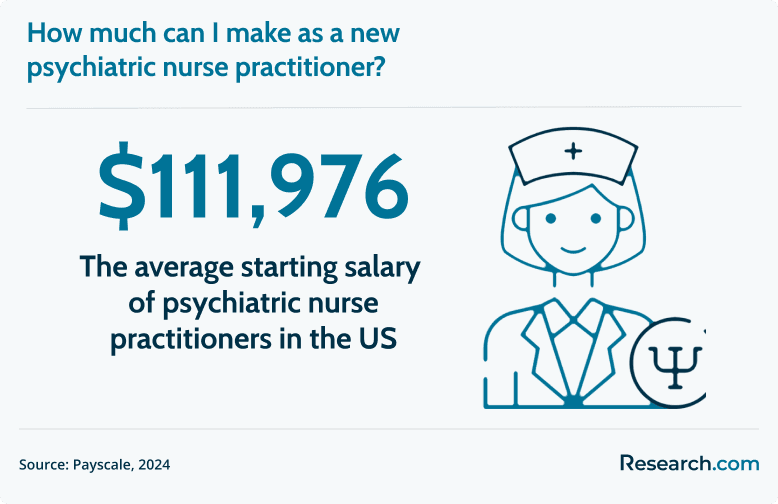
- The average annual psychiatric nurse practitioner salary across the US is $135,025 (Glassdoor, 2024), while the average annual entry-level psychiatric nurse practitioner salary is $111,976 (Payscale, 2024).
- In 2023, 2,250 nurse practitioners worked in psychiatric and substance abuse hospitals (US BLS, 2024).
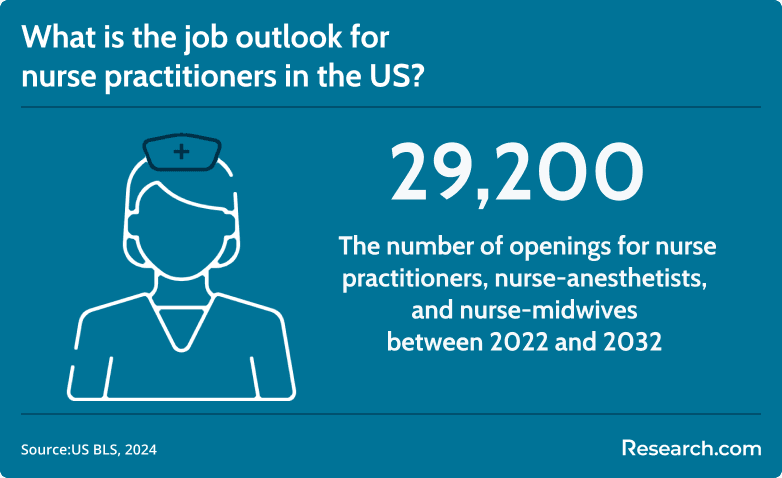
- Between 2022 and 2032, employment for nurse anesthetists, nurse midwives, and nurse practitioners is projected to grow by 38%, much faster than the 3% average job growth rate for all US occupations (US BLS, 2024).
- Pay varies by location, employer type, experience, scope of practice, certification, benefits, and whether the role is in a hospital, outpatient clinic, telehealth organization, residential facility, or private practice.
- What is the starting salary for a new psychiatric nurse practitioner?
- How does psychiatric nurse practitioner pay compare with other nursing specialties?
- Which states pay psychiatric nurse practitioners the most?
- What factors affect psychiatric nurse practitioner salary?
- Do psychiatric nurse practitioners earn more in hospitals or private practice?
- How does gender relate to psychiatric nurse practitioner compensation?
- What is the job outlook for nurse practitioners?
- How can additional degrees change a psychiatric nurse practitioner’s career options?
- Which education pathways can improve career prospects?
- How does professional development support long-term salary growth?
- How can bridge programs help nurses move into advanced practice?
- Can functional medicine training expand psychiatric nurse practitioner practice?
- How can psychiatric nurse practitioners negotiate better pay?
- How can I choose a cost-effective psychiatric nursing degree?
- How is telehealth changing psychiatric nurse practitioner careers?
- What should a competitive compensation package include?
- Which certifications are useful for psychiatric nurse practitioners seeking higher pay?
- What advancement paths are available to psychiatric nurse practitioners?
- What career alternatives can psychiatric nurse practitioners consider?
- What is work-life balance like for psychiatric nurse practitioners?
- How do mental health trends and healthcare policy affect salaries?
What is the starting salary for a new psychiatric nurse practitioner?
The average annual entry-level psychiatric nurse practitioner salary in the US is $111,976 (Payscale, 2024). For context, this is far above the estimated $54,672 median annual wage for the 119.2 million full-time wage and salary workers in the US, based on median weekly earnings of $1,139 in the first quarter of 2024 (US BLS, 2024).
It is also higher than the $86,070 median annual wage reported for registered nurses in 2023 (US BLS, 2024). That gap helps explain why many RNs explore graduate nursing education when they want more clinical autonomy, a mental health specialization, and stronger earning potential. Nursing is already represented among degrees that pay well, but psychiatric-mental health nurse practitioner roles usually require education beyond the bachelor’s level.
Students comparing graduate options should look beyond salary alone. A psychiatric nurse practitioner path typically requires advanced clinical training, supervised practice hours, certification, and state authorization. Candidates weighing speed, affordability, and flexibility may compare one year graduate programs, online accelerated bachelor's degree options, and nursing-specific graduate programs to determine what actually fits their current credentials.
Psychiatric nurse practitioner starting pay may also compare favorably with some mental health roles that require different training routes, including programs such as an online master's degree marriage family therapy program. However, these professions differ in scope of practice, licensure, patient population, and clinical responsibilities, so they should not be evaluated on salary alone.
| Career or worker group | Reported wage figure | What the number means for RNs |
| Entry-level psychiatric nurse practitioner | $111,976 average annual salary (Payscale, 2024) | Shows the earning potential available after advanced psychiatric nursing preparation. |
| Registered nurse | $86,070 median annual wage in 2023 (US BLS, 2024) | Provides a baseline for comparing the financial impact of moving from RN to advanced practice. |
| Full-time US wage and salary workers | $54,672 estimated median annual wage based on $1,139 median weekly earnings in the first quarter of 2024 (US BLS, 2024) | Shows that even entry-level PMHNP pay is high relative to the broader labor market. |
How does psychiatric nurse practitioner pay compare with other nursing specialties?
The average annual psychiatric nurse practitioner salary in the US is $135,025 (Glassdoor, 2024). That is higher than the $126,260 median annual wage for nurse practitioners overall in 2023 (US BLS, 2024), and higher than the $121,769 average annual salary reported for family nurse practitioners (Glassdoor, 2024).
Psychiatric nurse practitioner pay is not the highest in advanced nursing, however. Pediatric nurse practitioners have a slightly higher reported average annual salary of $137,810 (Glassdoor, 2024). Nurse midwives earned a median annual wage of $129,650 in 2023, while nurse anesthetists earned a much higher median annual wage of $212,650 (US BLS, 2024).
The best comparison depends on what you value: psychiatric specialization, scope of practice, schedule flexibility, clinical intensity, income ceiling, or additional education requirements. A CRNA route may offer higher median pay, but it requires a different specialty path and clinical focus. A family nurse practitioner path may be broader, while psychiatric-mental health practice is more specialized.
| Nursing role | Salary figure cited | Decision factor |
| Psychiatric nurse practitioner | $135,025 average annual salary (Glassdoor, 2024) | Strong option for nurses who want advanced practice work focused on mental health. |
| All nurse practitioners | $126,260 median annual wage in 2023 (US BLS, 2024) | Useful benchmark for evaluating PMHNP pay against the broader NP field. |
| Family nurse practitioner | $121,769 average annual salary (Glassdoor, 2024) | May suit nurses who want primary care across the lifespan rather than a mental health specialty. |
| Pediatric nurse practitioner | $137,810 average annual salary (Glassdoor, 2024) | May appeal to nurses who want to specialize in child and adolescent care. |
| Nurse midwife | $129,650 median annual wage in 2023 (US BLS, 2024) | Best aligned with nurses interested in reproductive, prenatal, birth, and postpartum care. |
| Nurse anesthetist | $212,650 median annual wage in 2023 (US BLS, 2024) | Higher reported pay, but the specialty, training, and work environment differ substantially. |
The chart below compares salary figures for selected nursing specialties using 2024 data from the US BLS and Glassdoor.
Which states pay psychiatric nurse practitioners the most?
Psychiatric nurse practitioner salaries vary widely by state. According to Zippia (2024), New Jersey ranks as the highest-paying state for psychiatric nurse practitioners, with an average annual salary of $137,964. Alaska follows at $129,772, a figure that may reflect the challenges of staffing healthcare roles in remote locations. Minnesota is also among the highest-paying states, with an average annual salary of $124,000.
Other top-paying states include Massachusetts at $122,712, Arizona at $118,989, Maine at $118,103, Connecticut at $116,898, New Hampshire at $116,104, Montana at $114,116, and Ohio at $108,721 (Zippia, 2024).
High pay does not always mean high take-home value. Cost of living, taxes, commute time, local scope-of-practice rules, patient demand, and employer benefits can change the real value of an offer. Before relocating, compare expected pay with housing, childcare, transportation, insurance, and other living costs. The living wage calculator developed and regularly updated by Dr. Amy K. Glasmeier and the Massachusetts Institute of Technology can help you estimate location-specific expenses.
| State | Average annual psychiatric nurse practitioner salary | How to use this information |
| New Jersey | $137,964 | Compare salary against cost of living and commuting requirements. |
| Alaska | $129,772 | Consider whether remote or hard-to-staff locations offer incentives or unique practice conditions. |
| Minnesota | $124,000 | Review employer type, benefits, and regional mental health demand. |
| Massachusetts | $122,712 | Evaluate licensing requirements, housing costs, and academic medical center opportunities. |
| Arizona | $118,989 | Assess population growth, healthcare access needs, and practice setting options. |
| Maine | $118,103 | Look at rural access needs and whether employers offer flexible or telehealth roles. |
| Connecticut | $116,898 | Compare offers across private practice, hospitals, and outpatient organizations. |
| New Hampshire | $116,104 | Consider regional demand and cross-border employment possibilities. |
| Montana | $114,116 | Review rural practice expectations and possible travel requirements. |
| Ohio | $108,721 | Use as a benchmark when comparing hospital, outpatient, and community-based roles. |
The chart below shows the top-paying US states for psychiatric nurse practitioners using 2024 data from Zippia.
What factors affect psychiatric nurse practitioner salary?
Psychiatric nurse practitioner salary is shaped by more than a job title. The strongest variables usually include geography, education, experience, practice authority, employer type, patient population, certifications, schedule demands, and the full benefits package.
Location and local labor demand
States and cities with higher living costs, clinician shortages, or hard-to-staff communities may offer higher salaries. However, a larger paycheck can be offset by higher housing costs or heavier workloads, so candidates should compare net value rather than headline pay.
Experience, graduate education, and scope
Employers often pay more for psychiatric nurse practitioners who can manage complex cases, prescribe within their authorized scope, work independently where state law permits, supervise teams, or support program development. Advanced education can also influence competitiveness. In a 2022 survey of over 4,000 psychiatric-mental health advanced practice registered nurses, 17% reported holding a doctor of nursing practice (DNP) degree, while 69% reported the Master of Science in Nursing (MSN) as their highest educational attainment (American Psychiatric Nurses Association, 2022).
The same survey found that, among the 4,288 PMH-APRNs who answered the earnings question, 47% reported annual income between $100,000 and $150,000. Another 11% reported annual income between $150,000 and $200,000, while 13% reported annual income between $75,000 and $99,000 (American Psychiatric Nurses Association, 2022). These figures show why RNs often compare accelerated nurse practitioner programs, affordable online doctoral programs, and affordable online psychiatric nurse practitioner programs before choosing a graduate route.
Work setting and reimbursement model
Salary can differ substantially by employer. In 2023, the mean annual nurse practitioner salary in business support services was $180,570, the highest among US industries reported by the BLS. Nurse practitioners in residential intellectual and developmental disability, mental health, and substance abuse facilities earned a mean annual wage of $158,140 (US BLS, 2024). Higher-paying settings may reflect staffing difficulty, care intensity, business model, or required expertise.
| Salary factor | Why it matters | What to check before accepting an offer |
| State and city | Pay often changes with cost of living, demand, and local workforce supply. | Compare salary with housing, taxes, transportation, and licensing requirements. |
| Experience level | More clinical experience may support higher compensation and greater autonomy. | Ask how raises are tied to years of practice, outcomes, productivity, or leadership. |
| Degree level | MSN and DNP preparation may qualify nurses for different roles or advancement tracks. | Confirm whether a DNP changes pay, title, leadership access, or only credentials. |
| Certification | Specialty credentials can validate psychiatric, addiction, forensic, or trauma expertise. | Ask whether the employer pays certification fees, renewal costs, or continuing education. |
| Practice setting | Hospitals, residential facilities, clinics, telehealth companies, and private practices may pay differently. | Compare base pay, bonuses, patient load, call expectations, and administrative support. |
| Benefits | Total compensation may be stronger even when base salary is lower. | Review retirement contributions, health insurance, paid time off, loan repayment, and tuition support. |
The chart below summarizes 2022 income ranges reported by psychiatric-mental health APRNs in the American Psychiatric Nurses Association survey.
Do psychiatric nurse practitioners earn more in hospitals or private practice?
Hospital employment can provide stable infrastructure, interdisciplinary teams, benefits, and predictable organizational support, but it may not always produce the highest pay. Nurse practitioners employed in general medical and surgical hospitals earned a mean annual wage of $135,610 in 2023 (US BLS, 2024).
By comparison, the five highest-paying industries for nurse practitioners in 2023 were:
- Business Support Services: $180,570
- Residential Intellectual and Developmental Disability, Mental Health, and Substance Abuse Facilities: $158,140
- Business, Professional, Labor, Political, and Similar Organizations: $153,580
- Home Health Care Services: $146,850
- Other Ambulatory Health Care Services: $144,570
Zippia (2024) reports an average annual salary of $147,367 for private practice psychiatric nurse practitioners. That figure is higher than the mean annual wage reported for nurse practitioners in general medical and surgical hospitals, but private practice compensation should be evaluated carefully. A higher salary may come with different expectations for billing, documentation, patient acquisition, schedule management, malpractice coverage, or business operations.
| Setting | Potential advantages | Potential trade-offs |
| Hospital | Team-based care, established systems, benefits, supervision structures, and access to complex cases. | May include shift work, higher acuity patients, call coverage, and less control over scheduling. |
| Private practice | Greater autonomy, possible schedule control, and reported average annual salary of $147,367 (Zippia, 2024). | May require business knowledge, billing awareness, marketing support, or responsibility for overhead. |
| Residential mental health or substance abuse facility | Mean annual wage of $158,140 for nurse practitioners in residential intellectual and developmental disability, mental health, and substance abuse facilities (US BLS, 2024). | Patient needs may be complex, and work can involve crisis management or multidisciplinary coordination. |
| Home health or ambulatory care | May offer flexibility and strong salaries in some organizations. | Independence, travel, documentation systems, and patient volume can vary widely. |
How does gender relate to psychiatric nurse practitioner compensation?
Gender patterns are visible in the psychiatric-mental health advanced practice nursing workforce. In a 2022 American Psychiatric Nurses Association survey, 88% of the 4,364 PMH-APRNs who responded were female, 10% were male, and 0.44% were non-binary or transgender. Although women made up most respondents, male respondents reported higher salary ranges.
The survey does not by itself prove the reason for the difference. Possible contributors can include years of experience, role type, employer setting, negotiation behavior, leadership representation, hours worked, geographic distribution, or other factors not captured by a simple gender comparison. For individual clinicians, the practical takeaway is to use salary benchmarks, document accomplishments, and negotiate based on role scope and measurable value.
Cost-effective ways to prepare for psychiatric nurse practitioner roles
Graduate nursing education can be expensive, so affordability should be part of the career plan from the beginning. Prospective students should compare accredited programs, tuition, fees, clinical placement support, transfer policies, financial aid, and whether the program meets certification and state licensure expectations.
Reviewing the cheapest online PMHNP programs can help cost-conscious students identify lower-priced options, but tuition is only one part of value. A program that is inexpensive but weak on clinical placement support, board preparation, or accreditation can create costly delays.
| Cost factor | Why it matters | Question to ask |
| Tuition and mandatory fees | The advertised tuition may not include technology fees, clinical fees, or graduation costs. | What is the total estimated program cost from enrollment to completion? |
| Accreditation | Accreditation can affect certification eligibility, licensure, employer acceptance, and financial aid access. | Is the nursing program accredited, and does it meet requirements for my state? |
| Clinical placement | PMHNP students need appropriate supervised clinical experiences. | Does the school secure placements, assist with placements, or require students to find their own? |
| Schedule format | Online, hybrid, part-time, and full-time formats affect income while enrolled. | Can I continue working while completing didactic and clinical requirements? |
| Board preparation | Certification readiness can affect how quickly graduates move into practice. | What support is provided for PMHNP certification preparation? |
What is the job outlook for nurse practitioners?
The labor market outlook for advanced practice nursing is strong. Between 2022 and 2032, employment for nurse anesthetists, nurse midwives, and nurse practitioners is projected to grow by 38%, with about 29,200 openings each year for these roles (US BLS, 2024).
Psychiatric nurse practitioners may benefit from several overlapping forces: increased mental health awareness, workforce shortages in behavioral health, telehealth adoption, demand for substance use disorder services, and the need for clinicians who can assess, diagnose, prescribe within authorized scope, and coordinate care. Still, job availability and pay depend heavily on state regulations, payer mix, employer budgets, and local competition.
How can additional degrees change a psychiatric nurse practitioner’s career options?
Additional degrees can broaden what psychiatric nurse practitioners do beyond direct patient care. A PMHNP with further graduate study may move toward clinical leadership, program administration, nursing education, policy work, consulting, research, or interdisciplinary behavioral health initiatives.
For example, an online masters in human services may support career interests in community mental health systems, program design, human services leadership, or policy-related work. This type of degree is not a substitute for PMHNP preparation, but it may complement psychiatric nursing expertise for practitioners who want to influence care delivery at the organizational or population level.
Additional degrees are most valuable when they connect directly to a career goal. Before enrolling, ask whether the credential improves your scope, qualifies you for a specific role, increases leadership eligibility, or simply adds cost without a clear return.
Which education pathways can improve career prospects?
Psychiatric nurse practitioner candidates usually need a nursing foundation, RN licensure, graduate-level psychiatric-mental health preparation, certification, and state authorization to practice. The right path depends on where you are starting.
| Starting point | Possible education path | Best fit |
| Prospective nurse without a nursing credential | Compare entry-level nursing options before moving toward RN licensure and graduate study. | Students who need to enter nursing before specializing. |
| LPN or practical nurse | Use bridge or degree-completion options to move toward RN preparation. | Working nurses who want a staged route into advanced practice. |
| ADN-prepared RN | Consider BSN completion or bridge options that lead toward graduate nursing study. | RNs who want to reduce repeated coursework and move efficiently toward advanced practice. |
| BSN-prepared RN | Pursue an MSN PMHNP or related nurse practitioner graduate program. | RNs ready for psychiatric-mental health advanced practice preparation. |
| MSN-prepared nurse | Consider a post-master’s certificate, DNP, or specialty training depending on goals. | Advanced nurses who want a new specialization, leadership role, or doctoral preparation. |
Some students explore accelerated nursing programs when they already hold college credit or a degree in another field. These programs can shorten the route into nursing, but candidates should verify accreditation, clinical requirements, state eligibility, and whether the timeline is realistic while working.
How does professional development support long-term salary growth?
Continuing education helps psychiatric nurse practitioners stay current with prescribing practices, psychotherapy approaches, trauma-informed care, substance use disorder treatment, telehealth workflows, documentation standards, and changes in state practice rules. It can also prepare clinicians for leadership or specialized service lines.
Professional development is most effective when it is targeted. A random collection of courses may not change compensation, while training tied to employer needs, certification, quality improvement, supervision, or a hard-to-fill specialty may strengthen a salary case. Early-career nurses who still need to build foundational credentials may compare options such as an accelerated LPN program, but PMHNP advancement ultimately requires progressing into RN and graduate-level advanced practice preparation.
How can bridge programs help nurses move into advanced practice?
Bridge programs can help nurses move from one credential level to another without starting over. They are especially relevant for ADN-prepared RNs, LPNs planning to become RNs, or nurses who want a structured route into graduate study.
For example, ADN to FNP bridge online programs are designed for nurses pursuing family nurse practitioner preparation, not psychiatric-mental health specialization. Still, they illustrate how bridge models can reduce duplication and create a clearer route from associate-level nursing education to graduate practice. PMHNP-focused candidates should confirm that any bridge program includes the correct psychiatric-mental health curriculum and clinical experiences for their intended certification.
Can functional medicine training expand psychiatric nurse practitioner practice?
Functional medicine training may interest psychiatric nurse practitioners who want a broader, integrative lens on patient care. In mental health practice, clinicians often consider sleep, nutrition, chronic illness, substance use, trauma history, medications, social stressors, and physical health conditions when developing care plans. Additional education in functional or integrative approaches may help a clinician communicate with patients who are seeking whole-person care.
However, functional medicine training should not replace evidence-based psychiatric assessment, diagnosis, medication management, psychotherapy-informed care, or legally required PMHNP preparation. Nurses considering this direction can review how to become a functional medicine nurse and then compare that route with their state scope of practice and employer expectations.
How can psychiatric nurse practitioners negotiate better pay?
Salary negotiation works best when it is specific, evidence-based, and tied to the employer’s needs. Psychiatric nurse practitioners should enter the conversation with market salary data, a clear understanding of the role, and examples of the value they bring.
- Benchmark the offer. Compare the salary with state averages, local job postings, employer type, and specialty demand.
- Clarify the workload. Ask about patient volume, appointment length, documentation time, call coverage, crisis responsibilities, supervision, and administrative support.
- Quantify your value. Highlight certification, psychiatric experience, prescribing competence, telehealth skills, quality improvement work, leadership, or experience with high-need populations.
- Negotiate total compensation. If base salary is fixed, discuss bonuses, continuing education funds, certification reimbursement, paid time off, retirement contributions, loan repayment, schedule flexibility, or relocation support.
- Get details in writing. Confirm compensation, benefits, productivity expectations, noncompete terms, malpractice coverage, and review timelines before accepting.
Additional credentials can support negotiation when they match the role. Some nurses compare cheap online FNP programs to broaden primary care options, but PMHNPs should choose further training based on their target practice area rather than on credential accumulation alone.
How can I choose a cost-effective psychiatric nursing degree?
A cost-effective advanced nursing program is not simply the cheapest program. It is the program that meets accreditation, clinical, certification, licensure, scheduling, and career goals at a manageable total cost.
| Program feature | Why it matters | Red flag |
| Accreditation and state eligibility | These can affect certification, licensure, employment, and financial aid. | The school cannot clearly explain whether graduates qualify in your state. |
| Clinical placement support | Finding psychiatric clinical sites can be difficult in some regions. | The program leaves all placement responsibility to students without meaningful support. |
| Total cost | Fees, travel, background checks, books, and lost work hours can change affordability. | The advertised tuition is low but excludes major required expenses. |
| Format | Online and hybrid formats can help working nurses, but clinical hours still require planning. | The schedule conflicts with work or clinical availability. |
| Graduate outcomes | Board preparation and employer reputation affect transition into practice. | The program provides little information about certification preparation or student support. |
Nurses who want doctoral-level preparation can compare cheap DNP online programs, but they should verify whether the curriculum is psychiatric-mental health focused, leadership-focused, or designed for already-certified advanced practice nurses.
How is telehealth changing psychiatric nurse practitioner careers?
Telehealth has become an important delivery model in psychiatric care because many mental health services can be provided through secure video platforms when clinically appropriate and legally permitted. For psychiatric nurse practitioners, telehealth can expand access to patients in underserved areas, reduce commute time, and create more flexible job structures.
Telehealth also introduces responsibilities that should not be underestimated. PMHNPs need to understand state licensure rules, prescribing requirements, emergency protocols, privacy standards, documentation, technology workflows, and how to assess risk when the patient is not physically present. Employers may also track productivity, availability, response time, and patient satisfaction differently in virtual care models.
Students at earlier stages of nursing preparation may review cheap online LPN programs, but psychiatric telehealth practice requires advanced nursing preparation and authorization beyond practical nursing.
What should a competitive compensation package include?
Psychiatric nurse practitioners should evaluate the full employment package, not only the base salary. A role with a slightly lower salary may be more valuable if it includes strong benefits, manageable caseloads, protected documentation time, malpractice coverage, and paid continuing education.
| Compensation element | Why it matters | What to ask |
| Base salary | Sets predictable income and affects future raises. | How was this figure determined, and when is it reviewed? |
| Productivity or bonus pay | Can increase income but may create pressure to see more patients. | What metrics are used, and are they realistic for psychiatric care? |
| Health and retirement benefits | These can significantly change total compensation. | What are the employer contributions, deductibles, and vesting rules? |
| Paid time off | Burnout risk is real in mental health roles. | How much PTO is offered, and is coverage available when clinicians are away? |
| Continuing education support | Certification renewal and specialty training cost money and time. | Does the employer pay for CE, conferences, licenses, or certification fees? |
| Malpractice coverage | Advanced practice roles carry clinical responsibility. | What type of coverage is provided, and does tail coverage apply? |
| Schedule flexibility | Control over hours can improve retention and work-life balance. | Are telehealth, hybrid, part-time, or compressed schedules available? |
For nurses still comparing advanced practice options, reviewing the easiest nurse practitioner specialty can help clarify perceived difficulty, but students should choose a specialty based on fit, patient population, clinical responsibilities, and licensure goals.
Which certifications are useful for psychiatric nurse practitioners seeking higher pay?
Certifications can strengthen credibility, support specialized practice, and help clinicians compete for roles that require or prefer advanced expertise. They do not guarantee higher pay, but they can make a stronger case for compensation when aligned with employer needs.
- Psychiatric-Mental Health Nurse Practitioner-Board Certified (PMHNP-BC). Offered by the American Nurses Credentialing Center (ANCC), this certification validates psychiatric-mental health nurse practitioner preparation and is commonly expected for PMHNP roles.
- Certified Addictions Registered Nurse-Advanced Practice (CARN-AP). Offered by the Addictions Nursing Certification Board (ANCB), this credential can be valuable for PMHNPs working with substance use disorder populations or addiction treatment programs.
- Sexual Assault Nurse Examiner-Adult/Adolescent (SANE-A). Offered by the International Association of Forensic Nurses, this credential may support work with trauma, forensic nursing, and care for sexual assault survivors.
If you are at the beginning of the nursing pathway, comparing LPN certificates vs. nursing associate degree options can help you decide how to start building toward RN licensure and eventual advanced practice.
What advancement paths are available to psychiatric nurse practitioners?
Psychiatric nurse practitioners can advance by deepening clinical specialization, taking on leadership, moving into education, or building services in high-need areas. The strongest path depends on whether you want more income, more autonomy, a different schedule, or broader influence.
| Advancement path | What it can involve | Best for PMHNPs who want... |
| Clinical leadership | Serving as lead clinician, nurse manager, clinical director, or department leader. | Influence over care models, staffing, quality, and operations. |
| Specialized practice | Focusing on addiction, child and adolescent psychiatry, geriatric psychiatry, trauma, forensic care, or serious mental illness. | Deeper expertise and differentiation in the job market. |
| Private practice | Providing psychiatric assessment, medication management, therapy-informed care, or collaborative services depending on state rules. | More autonomy and possible control over schedule and patient focus. |
| Academic roles | Teaching nursing students, supervising clinical learning, or contributing to curriculum. | Education, mentorship, and long-term influence on the workforce. |
| Research and quality improvement | Working on patient outcomes, evidence-based practice, care access, or behavioral health program evaluation. | System improvement and data-informed practice. |
| Policy or administration | Contributing to behavioral health strategy, compliance, workforce planning, or public health initiatives. | Broader impact beyond individual patient encounters. |
What career alternatives can psychiatric nurse practitioners consider?
A psychiatric nurse practitioner credential can open several adjacent career paths, but some alternatives require additional education, certification, or a different licensure route. Before switching specialties, compare the scope of practice, time to qualify, cost, salary potential, and day-to-day work.
- Family Nurse Practitioner (FNP). FNPs provide primary care across the lifespan, including health promotion, disease prevention, and chronic condition management. This may appeal to PMHNPs who want a broader clinical scope.
- Nurse Anesthetist (CRNA). CRNAs provide anesthesia care for surgical, diagnostic, and therapeutic procedures. The role has much higher reported median pay, but it requires a different specialty focus and additional preparation.
- Nurse Midwife (CNM). CNMs specialize in reproductive health, pregnancy, birth, and postpartum care. This path fits nurses who want a maternal and women’s health focus rather than psychiatric practice.
- Counseling and psychotherapy-related careers. Nurses who want a non-nursing mental health path may explore counseling. This route is separate from PMHNP practice and can take 2.5 to 7 years depending on the pathway. A starting point is this guide to the fastest way to become a certified counselor.
What is work-life balance like for psychiatric nurse practitioners?
Work-life balance for psychiatric nurse practitioners depends heavily on setting, caseload, patient acuity, documentation burden, schedule control, and emotional support. The work can be deeply meaningful, but it can also involve crisis care, trauma exposure, complex medication decisions, and difficult patient histories.
Flexible work settings
PMHNPs may work in hospitals, private practices, outpatient clinics, residential programs, community health organizations, correctional settings, academic institutions, and telehealth roles. Private practice and telehealth may offer more schedule control, while hospitals and crisis settings may provide more structured teams but higher acuity.
Part-time, per diem, and hybrid work
Some psychiatric nurse practitioners use part-time, per diem, or hybrid schedules to reduce burnout or balance family, teaching, consulting, or doctoral study. These arrangements can be attractive, but clinicians should compare hourly pay, benefits eligibility, malpractice coverage, and schedule expectations.
Emotional resilience and support
Because psychiatric practice involves patients with serious emotional, behavioral, and social needs, PMHNPs benefit from peer consultation, supervision, therapy-informed self-care, clear boundaries, and supportive employers. A high salary may not be worth a role with unsustainable patient volume or no backup for crises.
Workload and patient complexity
Workload is not just the number of appointments per day. It also includes documentation, prior authorizations, coordination with therapists and primary care providers, family communication, medication refills, risk assessment, and crisis follow-up. Candidates should ask detailed workload questions before accepting a job.
How do mental health trends and healthcare policy affect salaries?
Psychiatric nurse practitioner salaries are connected to broader mental health and healthcare trends. When demand for behavioral health services rises and the supply of qualified clinicians remains limited, employers may compete more aggressively for PMHNPs. Policy can also affect what nurse practitioners are allowed to do, how services are reimbursed, and whether telehealth remains financially viable.
- Mental health awareness. As more people seek psychiatric care, demand can increase for clinicians trained to diagnose, treat, prescribe within scope, and coordinate care.
- Telehealth adoption. Virtual care can expand access, especially for rural or underserved patients, but compensation depends on employer model, reimbursement, state rules, and patient volume.
- Practice authority laws. State rules affect whether nurse practitioners can practice independently or must maintain collaborative agreements, which can influence job design and salary potential.
- Substance use disorder treatment needs. PMHNPs with addiction-related expertise may be competitive for roles in behavioral health, residential care, and integrated treatment programs.
- Workforce shortages. Shortages in mental health care can lead employers to offer stronger pay, incentives, or flexible schedules, particularly in underserved areas.
Nurses who are considering other high-demand advanced practice specialties can also compare online acute care nurse practitioner programs, but acute care and psychiatric-mental health practice involve different patient populations, clinical environments, and certification expectations.
Common mistakes to avoid when planning a PMHNP career
- Choosing a program without checking accreditation. Accreditation can affect certification, licensure, financial aid, and employer acceptance.
- Looking only at tuition. Clinical placement support, fees, travel, lost work time, and board preparation can change the true cost.
- Assuming every online program works in every state. State authorization, clinical placement rules, and licensure requirements can vary.
- Ignoring clinical placement logistics. A program that requires students to find their own psychiatric preceptors may delay graduation if placements are scarce.
- Comparing salaries without comparing workload. Higher pay may come with more patients, call coverage, productivity pressure, or less support.
- Assuming certification automatically raises pay. Credentials are most valuable when they match employer needs and role responsibilities.
- Accepting an offer without reviewing total compensation. Benefits, malpractice coverage, PTO, continuing education funds, and retirement contributions can materially change the value of a job.
Questions to ask before becoming a psychiatric nurse practitioner
- Do I want my daily work to focus primarily on psychiatric assessment, medication management, therapy-informed care, and behavioral health coordination?
- Am I prepared for graduate-level nursing coursework, supervised clinical training, certification, and state practice requirements?
- Which patient population interests me most: adults, children and adolescents, substance use disorder patients, trauma survivors, geriatric patients, or community mental health populations?
- Does my target state allow the scope of practice I want?
- Can I complete clinical requirements without leaving my current job, or will I need to reduce work hours?
- How much debt am I willing to take on, and what salary would make the investment reasonable?
- Do I prefer hospital structure, outpatient schedules, private practice autonomy, residential care, or telehealth flexibility?
- What support systems will I need to manage the emotional demands of psychiatric practice?
References
- Glassdoor. (2024, May 30). Family Nurse Practitioner Salaries. https://www.glassdoor.com/Salaries/family-nurse-practitioner-salary-SRCH_KO0,25.htm
- Glassdoor. (2024, April 22). Psychiatric Nurse Practitioner in New York City, NY 2024. https://www.glassdoor.com/Salaries/new-york-city-psychiatric-nurse-practitioner-salary-SRCH_IL.0,13_IM615_KO14,44.htm
- Glassdoor. (2024, May 28). Psychiatric Nurse Practitioner Salaries. https://www.glassdoor.com/Salaries/florida-psychiatric-nurse-practitioner-salary-SRCH_IL.0,7_KO8,38.htm
- Mental Health America. (2024). The State Of Mental Health In America. https://mhanational.org/issues/state-mental-health-america
- Payscale. (2024). Average Entry-Level Psychiatric Nurse Practitioner (NP) Salary. https://www.payscale.com/research/US/Job=Psychiatric_Nurse_Practitioner_(NP)/Salary/6511a8a3/Entry-Level
- US Bureau of Labor Statistics. (2024, April 17). Nurse Anesthetists, Nurse Midwives, and Nurse Practitioners. Occupational Outlook Handbook. https://www.bls.gov/ooh/healthcare/nurse-anesthetists-nurse-midwives-and-nurse-practitioners.htm#tab-5
- US Bureau of Labor Statistics. (2024, April 3). Occupational Employment and Wages, May 2023, 29-1171 Nurse Practitioners. Occupational Employment and Wage Statistics. https://www.bls.gov/oes/current/oes291171.htm
- US Bureau of Labor Statistics. (2024, April 17). Registered Nurses. Occupational Outlook Handbook. https://www.bls.gov/OOH/healthcare/registered-nurses.htm
- US Bureau of Labor Statistics. (2024, January 9). Strong growth projected in mental health-related employment. The Economics Daily. https://www.bls.gov/opub/ted/2024/strong-growth-projected-in-mental-health-related-employment.htm
- US Bureau of Labor Statistics. (2024, April 16). USUAL WEEKLY EARNINGS OF WAGE AND SALARY WORKERS FIRST QUARTER 2024. https://www.bls.gov/news.release/pdf/wkyeng.pdf
- Zippia. (2024, April 5). Best States for a Psychiatric Nurse Practitioner. https://www.zippia.com/psychiatric-nurse-practitioner-jobs/best-states
- Zippia. (2024, April 5). Private Practice Psychiatric Nurse Practitioner Salary. https://www.zippia.com/private-practice-careers-673157/salary/psychiatric-nurse-practitioner
Key Insights
- Psychiatric nurse practitioner roles can offer strong earning potential: the average annual salary is $135,025, and the average annual entry-level salary is $111,976.
- Advanced practice nursing has a strong outlook, with nurse anesthetists, nurse midwives, and nurse practitioners projected to grow by 38% between 2022 and 2032.
- Location matters, but salary should be compared with cost of living, practice authority, employer benefits, and workload expectations.
- Private practice may offer higher reported average pay than hospital employment, but it can also involve business, billing, and administrative responsibilities.
- The best PMHNP program is accredited, state-eligible, clinically supportive, affordable in total cost, and aligned with certification requirements.
- Certifications such as PMHNP-BC, CARN-AP, and SANE-A can strengthen career options when they match a clinician’s patient population and employer needs.
- Do not evaluate offers by base salary alone. A competitive package should include manageable caseloads, malpractice coverage, continuing education support, PTO, retirement benefits, and clear raise criteria.
Other Things You Should Know About the Average Psychiatric Nurse Practitioner Salary
Yes, location significantly affects a psychiatric nurse practitioner's salary in 2027. For example, practitioners in urban areas or regions with a higher demand for mental health services, such as California or New York, tend to earn higher salaries compared to those in rural areas.
Experience raises pay through higher base rates, larger bonuses, and lead roles. New psychiatric nurse practitioners often start around $110,000 to $125,000, while those with 5 or more years commonly earn $140,000 to $160,000. Senior clinicians and managers can exceed $170,000.