2027 Montana Nursing License Requirements

Co-Founder and Chief Data Scientist
Getting a Montana nursing license is the step that gives you legal authority to practice as a nurse in the state. The process is straightforward when you know which pathway applies to you, but delays are common when applicants misunderstand endorsement rules, background check requirements, exam steps, or renewal obligations.
This guide is for nursing students, new graduates, licensed nurses moving to Montana, compact-license nurses, LPN candidates, APRN candidates, and healthcare workers comparing nursing with related licensure paths. It explains the license types available in Montana, how to apply, what documents you need, how renewal works after the November 18, 2023 continuing education change, how the Nurse Licensure Compact affects practice rights, and how to avoid mistakes that slow down approval.
Quick answer: Montana nursing license requirements
To become licensed as a nurse in Montana, you generally need to complete an approved nursing education program, pass the appropriate NCLEX exam, submit an application to the Montana Board of Nursing, complete a fingerprint-based background check, and provide required documentation such as transcripts or license verification. Montana nursing licenses must be renewed every two years. Effective November 18, 2023, Montana no longer requires 24 contact hours for renewal, but nurses should still verify current renewal rules directly with the Montana Board of Nursing before submitting an application.
Key things you should know about Montana nursing licenses
- Licensing exam: RN applicants must pass the National Council Licensure Examination for Registered Nurses, known as the NCLEX-RN. LPN applicants take the NCLEX-PN.
- Licensing authority: The Montana Board of Nursing regulates nursing licensure and practice standards in the state.
- Core eligibility requirements: Applicants typically need an approved nursing education credential, required clinical training, a criminal background check, and any documentation requested by the board.
- Application method: Montana uses an online application process through the Board of Nursing, where applicants submit forms, fees, transcripts, exam results, and other required materials.
- Renewal cycle: Montana nursing licenses are renewed every two years. Nurses should review the current renewal instructions because continuing education rules changed effective November 18, 2023.
- What is a Montana nursing license and why do nurses need one?
- What types of nursing licenses are available in Montana?
- What are the requirements for a Montana nursing license?
- How do you apply for a nursing license in Montana?
- How often do you need to renew your Montana nursing license?
- What are the career advancement opportunities for nurses in Montana?
- What role does nursing informatics play in Montana nursing practice?
- What challenges can delay a Montana nursing license application?
- Can online nursing programs support licensure and career growth in Montana?
- Can nurses pursue additional healthcare licensure options in Montana?
- What are the requirements to become an LPN in Montana?Related healthcare license options
- What alternative healthcare career pathways can complement nursing in Montana?
- What common mistakes should applicants avoid when applying for a Montana nursing license?
- What are the educational requirements for a nurse midwife in Montana?
- How can an LVN secure licensure in Montana?
- Can a Compact nurse practice in Montana?
- How can nurses licensed in other states obtain a license in Montana?
- What is the cost of becoming a nurse in Montana?
- What nursing programs in Montana can help you prepare for licensure?
- What tips and resources can help you prepare for the Montana nursing licensing exam?Additional exam preparation considerations
What is a Montana nursing license and why do nurses need one?
A Montana nursing license is the state-issued credential that allows a qualified person to practice nursing in Montana. It confirms that the nurse has met the education, examination, background check, and professional standards required by the Montana Board of Nursing, which operates under the Employment Standards Division of the Department of Labor and Industry.
The license matters because nursing is a regulated healthcare profession. Nurses make clinical judgments, administer medications, document patient conditions, coordinate care, and perform tasks that directly affect patient safety. Montana uses licensure to make sure only eligible and accountable professionals can provide nursing care within the state’s legal scope of practice.
| Why licensure matters | What it means for nurses and patients |
| Public protection | Licensure helps prevent unqualified individuals from practicing nursing and supports safe patient care. |
| Professional standards | The state sets minimum expectations for education, clinical preparation, examination, and ethical conduct. |
| Legal authority to practice | A nurse may not independently practice as an RN, LPN, or APRN in Montana without the appropriate authorization. |
| Accountability | Licensed nurses are subject to board rules, discipline, and professional conduct expectations. |
| Career mobility | Licensure allows nurses to apply for Montana nursing roles and, when eligible, use compact privileges across participating states. |
Montana recognizes several nursing and nursing-adjacent credentials, including Registered Nurse, Licensed Practical Nurse, Advanced Practice Registered Nurse, Certified Nursing Assistant, and Medication Aide roles. Each credential has a different scope of practice and a different preparation pathway.
What types of nursing licenses are available in Montana?
Montana nursing credentials are organized by level of responsibility, education, and legal scope of practice. Choosing the right path depends on how quickly you want to enter the workforce, how much clinical independence you want, and whether you plan to pursue advanced practice later.
| Credential | Typical preparation | Primary responsibilities | Best fit for |
| Registered Nurse (RN) | Accredited nursing program leading to an Associate's or Bachelor's degree | Patient assessment, care planning, medication administration, patient education, coordination with healthcare teams | Students who want broad bedside, specialty, leadership, or graduate nursing options |
| Licensed Practical Nurse (LPN) | State-approved practical nursing program, generally lasting around one year | Basic nursing care under RN or physician supervision, vital signs, patient support, daily care assistance | Applicants who want a faster entry route into nursing practice |
| Advanced Practice Registered Nurse (APRN) | Master's degree in nursing plus advanced clinical preparation | Advanced assessment, diagnosis, treatment planning, and, where authorized, prescribing medications | Experienced nurses pursuing roles such as Nurse Practitioner, Clinical Nurse Specialist, Nurse Anesthetist, or Nurse Midwife |
| Certified Nursing Assistant (CNA) | State-approved training program and certification | Daily living support, basic patient care, and assistance under nursing supervision | People entering healthcare who want direct patient care experience before or alongside nursing school |
| Medication Aide | Role-specific training for Medication Aide I or Medication Aide II | Medication-related support within the limits of Montana rules | Care workers who need added responsibility in approved settings |
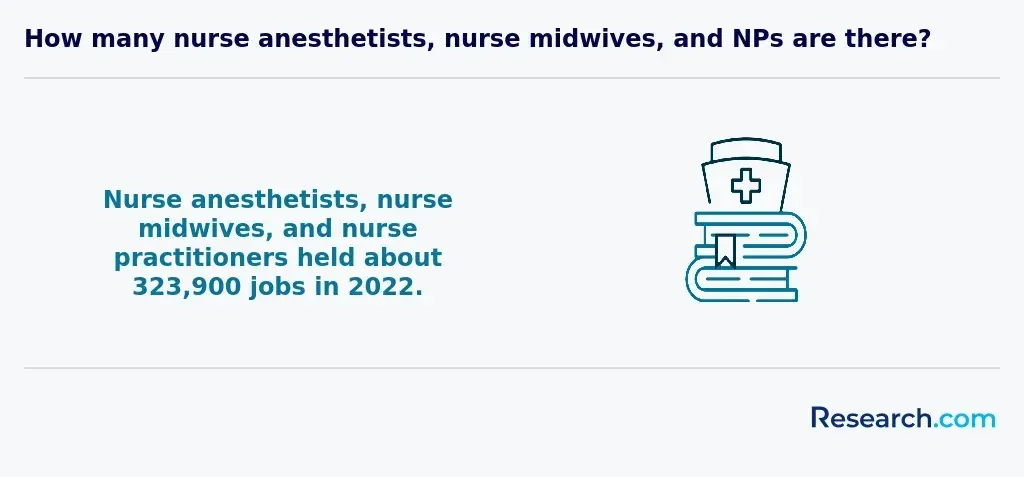
The chart below indicates the number of nurse practitioners in different states in the U.S., with California having the largest population of NPs.
What are the requirements for a Montana nursing license?
Montana nursing license requirements vary by license type and whether you are applying by examination, endorsement, compact privilege, or advanced practice recognition. Most applicants should expect to document education, examination, identity, professional history, and criminal background information.
Core requirements for RN and LPN applicants
- Approved nursing education: Applicants must graduate from an accredited or state-approved nursing program that includes classroom instruction and supervised clinical training. If you are comparing routes from another healthcare role, a paramedic to RN bridge program online may help you evaluate bridge options.
- Clinical preparation: Nursing programs include clinical experience in healthcare environments so students can apply classroom knowledge to patient care.
- NCLEX examination: RN candidates must pass the NCLEX-RN. LPN candidates must pass the NCLEX-PN.
- Application and fee: Applicants submit an online application and required fee. The application process also entails a fee of $200.
- Background check: Montana requires a fingerprint-based background check and submission of a non-criminal notice of rights form.
- Licensure verification when applicable: Nurses already licensed elsewhere must verify their active nursing license and provide required proof of education and exam history.
Requirement checklist by applicant type
| Applicant type | Main route | Documents to prepare | Important caution |
| New Montana RN graduate | Licensure by examination | Application, transcripts, NCLEX-RN eligibility materials, background check | Do not wait until graduation week to gather identity, transcript, and fingerprint materials. |
| New Montana LPN graduate | Licensure by examination | Application, practical nursing program records, NCLEX-PN materials, background check | Confirm your program is approved before enrolling. |
| RN or LPN licensed in another state | Licensure by endorsement or compact privilege | Current license verification, application, background check, education and exam documentation if requested | Endorsement is not the same as compact practice authority. |
| Foreign-educated nurse | Evaluation plus Montana application requirements | Credential evaluation, English proficiency proof, license verification, background check | Credential review can take additional time, so start early. |
| APRN applicant | Advanced practice recognition | Graduate nursing education records, national certification, RN license information, role-specific documents | Confirm that your certification matches the APRN role you intend to practice. |
The best way to avoid delays is to treat the application as a documentation project. Use the Montana Board of Nursing checklist, make sure names match across transcripts and identification, and follow up if third-party verifications have not been received.
How do you apply for a nursing license in Montana?
The Montana nursing license application process depends on whether you are applying for your first license, transferring from another state, or seeking advanced practice authority. The overall sequence is similar: finish the required education, complete the application, submit documentation, clear the background check, and meet the examination or endorsement requirement.
- Complete an approved nursing program. Before applying by examination, finish a nursing education program recognized for the license level you are seeking. Applicants with a non-nursing bachelor’s degree may want to compare online nursing programs for non nurses before choosing a route.
- Create or access your online application. Use the Montana Board of Nursing’s online system and select the correct license type, such as RN, LPN, or APRN.
- Pay the required fees. Application fees vary by credential and application type. For RN applicants, the fee noted in this guide is $200.
- Request official transcripts or education verification. Follow the board’s instructions for how documents must be sent. Some records must come directly from the school or verification agency.
- Complete fingerprinting and the background check. Use the required process and allow enough time for background check results to be processed.
- Register for and pass the appropriate NCLEX exam if applying by examination. RN candidates take the NCLEX-RN; LPN candidates take the NCLEX-PN.
- Track your application status. Monitor missing items and respond quickly if the board requests clarification.
With employment of licensed practical and licensed vocational nurses projected to grow by 5 percent from 2022 to 2032, completing the licensure process correctly matters for applicants who want to enter the workforce without preventable delays.
If you are already an RN and planning long-term advancement, affordable graduate options such as the cheapest RN to MS online programs may be worth comparing after your Montana license is active.
How often do you need to renew your Montana nursing license?
Montana nursing licenses must be renewed every two years. Renewal keeps your authority to practice active and confirms that your professional information remains current with the Montana Board of Nursing.
A major change took effect on November 18, 2023: Montana no longer mandates 24 contact hours for license renewal. That does not mean nurses should ignore professional development. Employers, specialty certifications, APRN credentials, or out-of-state practice privileges may still involve education or competency expectations. Always check the current Montana Board of Nursing renewal instructions before relying on past requirements.
Montana nursing license renewal checklist
- Confirm your renewal deadline: Do not assume all credentials renew on the same date. Check your license record.
- Review current board rules: Continuing education requirements changed effective November 18, 2023, so use current instructions rather than old renewal advice.
- Submit the renewal application: Complete the online renewal form and verify your personal, employment, and disciplinary history information.
- Pay the renewal fee: Review the current fee schedule before submitting.
- Resolve background or disciplinary questions promptly: If your professional status has changed, respond honestly and provide requested documentation.
- Keep proof of professional learning: Even when state renewal rules change, documentation can be useful for employers, certifications, and audits by other organizations.
Renewal is also a good time to reassess your career direction. Nurses considering research, faculty, leadership, or advanced clinical pathways may want to compare options such as the cheapest online nursing PhD programs.
What are the career advancement opportunities for nurses in Montana?
Montana nurses can advance by moving into specialty practice, leadership, advanced practice, informatics, education, quality improvement, case management, public health, or telehealth-supported care. The best option depends on your current license level, preferred patient population, willingness to pursue graduate education, and interest in direct care versus systems-level work.
| Career goal | Common next step | When this path makes sense |
| Move from LPN to RN | Enroll in an approved RN program or bridge pathway | You want broader clinical responsibilities and more long-term advancement options. |
| Become a nurse practitioner | Complete graduate nursing education and role-specific clinical preparation | You want advanced assessment, diagnosis, and treatment responsibilities. |
| Enter leadership | Build experience, pursue management training, and consider graduate study | You enjoy staffing, operations, quality improvement, and team development. |
| Specialize clinically | Pursue specialty experience and certification where appropriate | You want depth in areas such as critical care, community health, maternal care, or geriatrics. |
| Teach or conduct research | Consider graduate-level nursing education | You want to train future nurses, study outcomes, or shape nursing practice. |
For nurses who want to expand scope of practice, nurse practitioner programs in Montana can help identify education options aligned with advanced clinical roles.
What role does nursing informatics play in Montana nursing practice?
Nursing informatics connects clinical care, technology, data, and workflow improvement. In Montana, informatics skills can be especially useful in settings that rely on electronic health records, telehealth, remote coordination, quality reporting, and interdisciplinary care across large geographic areas.
In practical terms, informatics-trained nurses may help improve documentation accuracy, support clinical decision tools, train staff on digital systems, analyze patient safety trends, and reduce workflow friction. These skills do not replace bedside nursing judgment; they strengthen how information moves through the care team.
Nurses who enjoy both patient care and technology may want to compare specialized academic options such as the easiest nursing informatics online programs.
What challenges can delay a Montana nursing license application?
Most Montana nursing license delays come from missing documents, mismatched records, incomplete background check steps, or confusion between endorsement and compact licensure. The application may be simple, but several parts depend on third parties such as schools, other state boards, testing services, and fingerprint processors.
| Potential problem | Why it causes delays | Better approach |
| Unofficial or incorrectly submitted transcripts | The board may require records to come directly from the school. | Request official transcripts using the board’s instructions. |
| License verification sent to the wrong place | Endorsement applications depend on proper verification. | Confirm whether verification must come through a formal system or directly from the other board. |
| Fingerprinting completed late | Background checks can take time and may hold up approval. | Schedule fingerprinting early and keep proof of submission. |
| Name differences across records | Different names can make education, exam, or license records harder to match. | Provide name change documentation when needed. |
| Using outdated renewal or application information | Rules and forms can change, including the November 18, 2023 continuing education update. | Use current Montana Board of Nursing instructions. |
For a broader pathway overview, see how to become a nurse in Montana.
Can online nursing programs support licensure and career growth in Montana?
Online nursing programs can support Montana licensure preparation when they are properly accredited, include required clinical components, and meet the state’s education standards for the license you want. The important point is that “online” does not remove the need for clinical training, board approval, or NCLEX preparation.
Online formats may work well for students who need flexibility because of work, family responsibilities, location, or prior healthcare experience. They may not be the right fit for students who need frequent in-person structure, local lab access, or intensive academic support. Before enrolling, ask where clinical placements occur, whether Montana students are accepted, whether the program meets Montana requirements, and how NCLEX preparation is built into the curriculum.
| Question to ask an online nursing program | Why it matters |
| Is the program accredited and recognized for Montana licensure? | Licensure depends on completing an acceptable education pathway. |
| How are clinical placements arranged? | Nursing programs require hands-on clinical learning, even when coursework is online. |
| Does the program accept students from Montana? | Some online programs have state authorization limitations. |
| What are the NCLEX pass preparation resources? | Exam readiness affects the timeline from graduation to licensure. |
| What is the total cost beyond tuition? | Fees, travel, clinical expenses, technology, books, and testing costs can change affordability. |
If flexibility is a priority, comparing the best online nursing programs can help you identify programs that match your schedule and licensure goals.
Can nurses pursue additional healthcare licensure options in Montana?
Some nurses consider additional healthcare credentials to broaden their career options, move into interdisciplinary roles, or transition to a different profession. This can be useful, but it should be approached carefully because every healthcare license has its own education, examination, supervised practice, and regulatory requirements.
Additional licensure may make sense if you are planning a major career change, moving into a specialized healthcare function, or building expertise that complements nursing. It may not be worth the time and cost if the added credential does not improve your role, pay potential, or long-term career direction.
For an example of a separate healthcare licensure pathway, review how to become a licensed pharmacist in Montana.
What are the requirements to become an LPN in Montana?
To become a Licensed Practical Nurse in Montana, you must complete an approved practical nursing program, pass the NCLEX-PN, submit the state application, complete the required background check, and meet the Montana Board of Nursing’s documentation standards.
An LPN pathway is often shorter than an RN pathway and can be a practical entry point into nursing. However, LPN scope of practice is more limited than RN practice, and many leadership, specialty, and advanced practice opportunities require becoming an RN first. If your long-term goal is RN or APRN practice, compare whether starting as an LPN saves time and money or adds an extra step.
For a more detailed LPN-specific guide, see What are the requirements to become a LPN in Montana?
What alternative healthcare career pathways can complement nursing in Montana?
Nursing is not the only healthcare career path in Montana. Some professionals use related credentials to move into healthcare administration, documentation, reimbursement, compliance, informatics, care coordination, or support roles. These options may be helpful for nurses who want less direct bedside care or for students who want healthcare experience before nursing school.
| Alternative pathway | How it can complement nursing | Best fit for |
| Medical billing and coding | Builds knowledge of documentation, claims, reimbursement, and compliance | Nurses interested in administrative, audit, or revenue-cycle work |
| Healthcare administration | Uses clinical knowledge in operations, staffing, policy, and quality roles | Nurses moving toward management |
| Nursing informatics | Connects clinical workflow with data and technology | Nurses who like systems improvement and digital tools |
| Public health | Applies nursing knowledge to community-level prevention and education | Nurses interested in population health |
For a non-bedside healthcare credential example, review medical billing and coding certification in Montana.
What common mistakes should applicants avoid when applying for a Montana nursing license?
Montana nursing license applicants can reduce stress by avoiding predictable errors. Most mistakes are preventable if you verify requirements before applying and keep a checklist for every document.
- Choosing a program without checking licensure eligibility: Do not assume every nursing program, especially an online program, qualifies you for Montana licensure.
- Focusing only on tuition: Total cost may include fees, books, uniforms, travel, clinical expenses, testing, background checks, and licensure fees.
- Waiting too long to schedule fingerprinting: Background checks can delay approval if started late.
- Confusing compact privilege with Montana licensure: A multistate license can allow practice in Montana, but not every out-of-state nurse automatically has compact authority.
- Submitting incomplete applications: Missing transcripts, license verifications, or exam records can stop processing.
- Relying on outdated continuing education information: Montana no longer mandates 24 contact hours for renewal effective November 18, 2023.
- Ignoring name mismatches: Marriage, divorce, or legal name changes should be documented when records do not match.
- Assuming salary or job outcomes are guaranteed: Licensure creates eligibility to practice, but employment depends on location, experience, specialty, employer needs, and competition.
Students still comparing schools can use top online nursing programs in Montana as one starting point, but accreditation, clinical placement support, cost, and licensure alignment should matter more than rankings alone.
What are the educational requirements for a nurse midwife in Montana?
A nurse midwife pathway in Montana requires advanced nursing education beyond RN preparation. Candidates generally need an accredited master’s degree program with specialized nurse-midwifery coursework, supervised clinical practicum experience, and successful completion of a nationally recognized certification exam.
This path is best for nurses who want to provide advanced care related to pregnancy, birth, reproductive health, and wellness. It requires a significant academic and clinical commitment, so applicants should confirm program accreditation, certification eligibility, clinical placement expectations, and Montana practice requirements before enrolling.
For role-specific guidance, review the educational requirements for a nurse midwife in Montana.
How can an LVN secure licensure in Montana?
Montana commonly uses the LPN designation, while LVN is a term used in some other states for a comparable practical/vocational nursing role. An LVN seeking to practice in Montana should verify how Montana evaluates the credential, whether endorsement is available, and whether the nurse must meet LPN requirements under Montana rules.
In general, the applicant should be prepared to document completion of an approved vocational or practical nursing program, successful licensing examination, current license status, and background check results. Because terminology differs by state, do not assume an LVN credential automatically transfers without Montana Board of Nursing review.
For more detail, see how to become an LVN in Montana.
Can a Compact nurse practice in Montana?
Yes, an eligible nurse with a valid multistate license issued by a Nurse Licensure Compact home state can practice in Montana without applying for a separate Montana single-state license. The Nurse Licensure Compact applies to registered nurses and licensed practical/vocational nurses and is designed to support mobility while maintaining public protection.
The NLC was enacted in 2000. As of October 2023, 39 states are part of the NLC. Montana joined the NLC on July 1, 2017. This means eligible compact nurses can practice in Montana under their multistate license as long as they follow Montana nursing laws and rules while practicing in the state.
Compact practice is not the same as unlimited practice rights. Nurses must maintain a valid multistate license, meet home-state requirements, and understand Montana’s scope-of-practice rules. If you move your primary state of residence to Montana, you may need to apply for Montana licensure rather than continue practicing under another state’s compact license.
To give you a clearer picture of the nurse practitioner workforce in the U.S., I've put together a chart on the most popular specializations among NPs in the country.
How can nurses licensed in other states obtain a license in Montana?
Nurses licensed in another state may be able to practice in Montana through compact privileges or apply for Montana licensure by endorsement. The correct pathway depends on your primary state of residence, whether your current license is multistate or single-state, and whether you are moving to Montana permanently.
Licensure by endorsement steps
- Confirm whether you need endorsement. If you hold a valid compact multistate license and Montana is not your primary residence, you may already have practice authority in Montana.
- Submit the Montana endorsement application. Use the Montana Board of Nursing’s online application system and select the correct license type.
- Provide license verification. Request verification from the state where you are currently licensed, following Montana’s instructions.
- Complete the fingerprint-based background check. Submit fingerprints as required through the appropriate process.
- Provide education and exam documentation if requested. Endorsement may require proof of nursing education and NCLEX history.
- Monitor your application. Respond quickly if the board requests clarification or additional documents.
Additional requirements for foreign-educated nurses
- Credential evaluation: Nursing education may need to be reviewed by a recognized credentialing agency to determine whether it meets U.S. standards.
- English proficiency: Applicants may need to provide proof of English proficiency, often through an exam such as the TOEFL.
- License and education verification: Foreign-educated applicants should allow extra time for international document processing.
The main decision is whether you are using existing compact authority, applying by endorsement, or applying after an international education review. When in doubt, contact the Montana Board of Nursing before submitting the wrong application type.
What is the cost of becoming a nurse in Montana?
The cost of becoming a nurse in Montana depends on the license level, school type, program length, financial aid, transfer credits, exam costs, and licensing fees. Tuition is usually the largest expense, but applicants should budget for several smaller required costs as well.
| Cost category | Amount or range stated | What to consider |
| Associate Degree in Nursing tuition | $6,000 to $15,000 | Costs vary by institution, residency status, fees, and included materials. |
| Bachelor of Science in Nursing tuition | Upwards of $30,000 | BSN programs may cost more but can support broader advancement options. |
| NCLEX-RN exam | $200 | Budget for preparation materials and possible retesting costs if needed. |
| Initial RN license application | $200 | Check the current fee schedule before applying. |
| APRN license | Approximately $50–$100 more | Advanced practice nurses may also pay for national certification exams. |
| Fingerprint-based background check | $30–$50 | Costs can vary depending on processing requirements. |
To reduce costs, compare total program price rather than tuition alone, ask about transfer credits, apply for financial aid early, check whether employers offer tuition support, and confirm that the program leads to Montana licensure before enrolling.
Prospective advanced practice nurses can also review how much does it cost to become a nurse practitioner in Montana for more focused planning.
What nursing programs in Montana can help you prepare for licensure?
The right nursing program should prepare you for both safe practice and licensure eligibility. A strong program is not simply the cheapest, fastest, or highest-ranked option. It should be accredited or approved for your intended license, include required clinical experiences, support NCLEX readiness, and fit your schedule and budget.
How to compare Montana nursing programs
- Verify accreditation and approval: Confirm that the program meets requirements for Montana licensure.
- Review clinical placement support: Ask where clinicals occur and whether the school helps secure placements.
- Ask about NCLEX preparation: Strong programs build exam readiness throughout the curriculum.
- Compare total cost: Include tuition, fees, books, uniforms, travel, technology, and testing expenses.
- Evaluate format: Decide whether campus-based, hybrid, or online coursework fits your learning style.
- Look at student support: Tutoring, advising, simulation labs, faculty access, and remediation policies can affect completion.
- Consider your long-term goal: If you plan to become an APRN, a BSN pathway may support future graduate study.
Students comparing options can begin with best nursing schools in Montana, then verify each program’s licensure alignment directly.
What tips and resources can help you prepare for the Montana nursing licensing exam?
Montana RN candidates must pass the NCLEX-RN, and LPN candidates must pass the NCLEX-PN. Passing the exam requires more than memorizing facts. You need to practice clinical judgment, prioritization, delegation, safety, medication concepts, and patient-centered decision-making.
Practical NCLEX preparation plan
- Start early. Begin review before graduation rather than waiting until your authorization to test arrives.
- Use the test plan. Build your study schedule around the official NCLEX content areas.
- Practice questions daily. Focus on rationales, not just whether you got the answer right.
- Track weak areas. Spend extra time on pharmacology, safety, prioritization, maternal-child care, mental health, or any area where your scores lag.
- Simulate exam conditions. Timed practice helps build stamina and reduces test-day anxiety.
- Complete application steps while studying. Missing transcripts or background check delays can postpone testing or licensure.
- Use professional support. Nursing faculty, mentors, study groups, and professional organizations can help you stay accountable.
Professional nursing organizations, including the Montana Nurses Association, may offer networking, continuing education, and professional development opportunities. Commercial NCLEX resources such as UWorld and Kaplan may also help with structured practice, but no resource can guarantee a passing result.
Questions to ask before you apply or enroll
- Does my education pathway meet Montana Board of Nursing requirements?
- Am I applying by examination, endorsement, compact privilege, or advanced practice recognition?
- Have I completed fingerprinting and the background check exactly as instructed?
- Do my transcripts, identification, and license records use the same name?
- Have I budgeted for tuition, fees, NCLEX costs, application fees, and background check costs?
- If I am using an online program, how will clinical placements work in Montana?
- If I am renewing, am I using the current rules after the November 18, 2023 continuing education change?
Related Articles for Nearby States
- 2027 Idaho Nursing License Requirements
- 2027 Wyoming Nursing License Requirements
- 2027 North Dakota Nursing License Requirements
- 2027 South Dakota Nursing License Requirements
- 2027 Washington Nursing License Requirements
- 2027 Oregon Nursing License Requirements
- 2027 Utah Nursing License Requirements
- 2027 Nebraska Nursing License Requirements
- 2027 Minnesota Nursing License Requirements
- 2027 Colorado Nursing License Requirements
References:
- Michel, A., Ryan, N., Mattheus, D., Knopf, A., Abuelezam, N., Stamp, K., Branson, S., Hekel, B., & Fontenot, H. (2021). Undergraduate nursing students’ perceptions on nursing education during the 2020 COVID-19 pandemic: A national sample. Nursing Outlook, 69, 903 - 912. Nursing Outlook.
- Montana Board of Nursing. (28 Nov 2023). License requirements for RN by endorsement. Montana Board of Nursing.
- U.S. Bureau of Labor Statistics. (2023, September 6). Licensed practical and licensed vocational nurses. Retrieved February 16, 2024, from BLS.
Key Insights
- A Montana nursing license is required for legal nursing practice unless you qualify to practice through a valid compact multistate license.
- RN applicants must pass the NCLEX-RN, while LPN applicants must pass the NCLEX-PN.
- Montana joined the Nurse Licensure Compact on July 1, 2017, so eligible compact nurses can practice in Montana without obtaining an additional single-state license.
- Montana nursing licenses renew every two years, and the state no longer mandates 24 contact hours for renewal effective November 18, 2023.
- The most common application delays involve missing transcripts, license verification problems, late fingerprinting, background check issues, and outdated information.
- Program choice matters. Before enrolling, confirm accreditation, Montana licensure eligibility, clinical placement support, total cost, and NCLEX preparation.
- Costs can include ADN tuition of $6,000 to $15,000, BSN tuition upwards of $30,000, a $200 NCLEX-RN exam fee, a $200 initial RN license application fee, and background check costs of $30–$50.
- For long-term growth, Montana nurses can consider RN bridge pathways, APRN education, nurse practitioner programs, informatics, leadership, nurse midwifery, or complementary healthcare credentials.
Other Things You Should Know About Montana Nursing License Requirements
In 2027, Montana requires aspiring registered nurses to graduate from an accredited nursing program, pass the NCLEX-RN exam, and complete a background check. Applicants must also submit proof of their education, exam results, and pay the applicable licensing fees to obtain a nursing license in Montana.
In 2027, Montana requires registered nurses to complete 24 contact hours of continuing education every two years for license renewal. This ensures nurses maintain their competence and stay updated with the latest in nursing practice.
To become a registered nurse in Montana in 2027, individuals must graduate from an accredited nursing program with either an Associate Degree in Nursing (ADN) or a Bachelor of Science in Nursing (BSN). Following graduation, they must pass the National Council Licensure Examination for Registered Nurses (NCLEX-RN) to obtain licensure.