2027 Best Online Master’s in Human Services Degree Programs

Co-Founder and Chief Data Scientist
If you are considering an online master’s in human services, the real question is not simply whether the degree exists online. It is whether the program will help you move into better roles, qualify for the work you want, meet employer expectations, and fit your budget and schedule. Human services is a people-centered field, but many graduate programs now use online delivery to prepare students for leadership, administration, advocacy, case management, community programming, and related service roles.
This guide explains how online master’s programs in human services work, what they usually cost, how employers view them, what admissions requirements to expect, which courses are common, and how to evaluate program quality. It also covers career outlook, specialization choices, digital skills, accelerated options, financing strategies, and mistakes to avoid before enrolling.
Online Master’s in Human Services Guide: What This Article Covers
- Can you complete a human services master’s degree online?
- Do employers respect online human services degrees?
- Are online degrees recognized internationally?
- Online vs. traditional master’s programs in human services
- How much does an online master’s in human services cost?
- Admission and student requirements
- Common courses in human services graduate programs
- How to choose the right online program
- 2027 best online master’s in human services programs
- Trends changing the human services field
- Digital literacy for human services professionals
- One-year and accelerated online master’s options
- How to prepare for leadership roles
- Why resilience matters in human services work
- Advanced certifications that may strengthen your career
- Career support and job placement services
- Building a professional network online
- How to check online program credibility
- How to pay for an online master’s in human services
- Human services salary outlook
- Whether a psychology focus can help
- Whether to specialize in mental health counseling
Quick Answer: Is an Online Master’s in Human Services Worth Considering?
Yes, an online master’s in human services can be a practical option if you want graduate-level training for leadership, program administration, advocacy, community services, or specialized support roles without relocating or leaving your job. The degree is most useful when it comes from an accredited institution, offers relevant field or applied learning opportunities, and aligns with your career goal. It is not automatically the right choice if your target job requires a different license, such as clinical counseling or social work licensure.
| Best fit | Potential concern | What to check before enrolling |
| Working adults who need flexible graduate study | Some programs still require internships, practicums, or on-site components | Ask whether fieldwork can be completed near your location |
| Professionals seeking leadership or administrative roles | The degree may not qualify graduates for clinical licensure by itself | Confirm licensing rules for your state and target occupation |
| Students interested in service delivery, nonprofit work, family services, or community programs | Costs vary widely by school and residency status | Compare total program cost, not only tuition per credit |
Can you get a degree completely online?
Yes. Fully online graduate degrees are now widely available, including human services programs. According to National Center for Education Statistics data cited for 2024, 53.8% of postsecondary students were enrolled in distance education in 2024. That means online learning is no longer a fringe option; it is part of mainstream higher education.
Online master’s programs in human services may be fully asynchronous, include scheduled live sessions, or combine online coursework with local field experiences. The key distinction is that “online” does not always mean “no in-person requirements.” Before applying, verify whether the program requires campus visits, supervised practice hours, internships, residencies, or proctored exams.
Will employers take my online degree seriously?
Employers are generally more likely to respect an online degree when it is awarded by an accredited, recognized institution and the transcript does not signal a lower academic standard. In most cases, employers care less about whether coursework was delivered online and more about whether the school is legitimate, the program is relevant, and the graduate has the skills required for the position.
That said, employer expectations vary by role. Some human services jobs are available without a degree, and Indeed identified human services jobs that do not require a degree in 2024. Those roles, however, may be entry-level, lower paid, or limited in advancement potential. A graduate degree can help when applying for supervisory, administrative, policy, advocacy, or program management positions.
It is also true that some industries have reduced degree requirements for selected roles. Research.com has covered companies that hire candidates without a formal college degree when skills and experience are strong. Human services is different from many technical fields, though, because client safety, ethical practice, compliance, and public funding rules often make credentials important.
Are online degrees recognized all over the world?
Online degrees can be recognized internationally, but recognition depends on the institution, accreditation, country, employer, and profession. A degree from a respected accredited school usually carries more weight than one from an unknown or unaccredited provider. In 2024, 53.8% of students in postsecondary institutions were enrolled in distance education courses, based on 5,615 institutions, which reflects how common online education has become.
For human services programs in the United States, one important quality marker is whether a program is connected to professional standards such as those associated with the Council for Standards in Human Services Education (CSHSE). Accreditation does not guarantee employment, but it helps confirm that a program has been reviewed against recognized academic or professional criteria.
If you plan to work outside the United States, check the credential evaluation process in the country where you intend to practice. Some regions require additional documentation, supervised experience, or local credentials. In the United States, certain human services positions may also require specific licenses and credentials, especially in specialized practice areas such as mental health, education, or regulated care settings.
Online vs. Traditional Master’s Program in Human Services
Online and campus-based human services master’s programs often cover similar academic content, but the student experience can be very different. Campus programs may offer more immediate face-to-face interaction, while online programs usually provide more scheduling flexibility. For people-centered disciplines, this trade-off matters because communication, trust-building, and collaboration are central to the field.
Students comparing human services with adjacent pathways may also want to review related options such as online social work degrees or an online master’s degree in social work, especially if their career goal involves licensed social work practice.
| Factor | Online master’s in human services | Campus-based master’s in human services |
| Schedule | Often better for working adults, especially when courses are asynchronous | Usually requires fixed class meetings and commuting |
| Interaction | Depends on discussion boards, video meetings, group projects, and faculty access | Offers more in-person peer and faculty contact |
| Fieldwork | May be completed locally if the program permits | Often coordinated through campus or regional partners |
| Technology | Requires comfort with online platforms, digital communication, and file submission | Still uses technology, but less of the experience may depend on remote systems |
| Best for | Self-directed students who need flexibility | Students who prefer structured, face-to-face support |
Coursework: Similar Academic Goals, Different Delivery
Many online programs use the same learning outcomes as their campus equivalents. The main difference is how students access readings, lectures, assignments, discussions, exams, and feedback. A learning management system commonly serves as the central platform for materials, communication, assignment submission, and grading.
Some courses may include live sessions, but many graduate online courses are asynchronous. That format can be useful for students balancing employment, family responsibilities, and study, but it also requires strong planning habits.
Completion Time
A typical online master’s in human services takes about two years and may require 30 to 40 credits. Part-time students may need longer. Some programs include internships or practicums of up to 500 hours, particularly when the curriculum focuses on areas such as gerontology, addictions, recovery, or other applied service settings.
If field experience is required, treat it as more than a graduation requirement. It can function as early on-the-job training, giving you a clearer sense of client needs, organizational realities, documentation standards, and professional boundaries.
Online Community and Professional Presence
Online graduate students need to be intentional about building relationships. Discussion boards, virtual office hours, group assignments, peer feedback, webinars, and student organizations can all help create a professional learning community. This matters because human services work increasingly includes digital outreach, tele-support, electronic records, and cross-agency collaboration.
Is an online degree cheaper?
Online degrees can cost less, but this is not guaranteed. Students may save on commuting, relocation, parking, meals, and housing near campus. Some schools also charge lower online tuition. Others price online and campus programs similarly. For 2025-26, an online credit hour averages $509, compared to $791 for in-person, according to Education Data Initiative data cited for 2025.
Is an online degree as good as a regular degree?
An online degree can be academically comparable to an on-campus degree when it comes from an accredited institution, uses qualified faculty, includes rigorous assessment, and provides meaningful student support. The better question is whether online learning fits you. If you are organized, comfortable communicating digitally, and able to work independently, online study may be effective. If you need frequent in-person accountability, a campus or hybrid format may serve you better.
How much does an online master’s program in human services cost?
Costs vary by institution, residency status, credit requirement, fee structure, and whether the program charges a flat online rate. Some online programs are designed as lower-cost options, while others match campus tuition. Public institutions may charge different rates for in-state and out-of-state students, although some online programs use one tuition rate regardless of residency.
For master’s in human services online programs, per-credit pricing often falls around $300 to $700. College Board data cited for 2024 lists median in-state public tuition at $12,700 and median out-of-state tuition at $29,500. The average 2024-25 in-state tuition for Human Services programs is $11,352 for graduate students.
| Cost item | What it means for online students | Question to ask |
| Tuition per credit | The advertised rate may not reflect total program cost | How many credits are required to graduate? |
| Residency pricing | Out-of-state tuition may be higher unless the program uses a flat rate | Do online students pay in-state, out-of-state, or universal tuition? |
| Online course fees | Technology, platform, library, or registration fees can raise the final bill | What mandatory fees are charged each term? |
| Fieldwork expenses | Practicums can create travel, background check, or placement-related costs | Are internships required, and who arranges them? |
| Technology | Students may need reliable hardware, internet, webcam, headset, and software | What hardware and software are required before classes begin? |
Is an online master’s program in human services worth it?
The degree may be worth it if it helps you qualify for roles that match your goals, increases your competitiveness for supervisory or management positions, and does not require unsustainable borrowing. It may be less worthwhile if your target career requires a different degree or license, or if the program’s total cost is high relative to your expected earnings.
Salary outcomes are not guaranteed. The average wage of social and community service managers is $61,330 per year. Social workers also earn a yearly average of $61,330. Child, family, and school social workers earn $53,940, according to BLS data cited for 2025. Before enrolling, compare the program’s total cost against realistic salaries in your region and target sector.
What are the requirements of an online master’s program in human services?
Admission requirements for online and campus-based human services master’s programs are usually similar. Individual schools set their own standards, so applicants should review each program carefully rather than assuming all requirements are the same.
Common Admission Requirements
- Accredited bachelor’s degree: Applicants usually need a bachelor’s degree from an accredited college or university.
- Minimum GPA: Some programs list a minimum GPA, and 2.5 is a common threshold for an online master’s in human services degree.
- Prerequisite or bridge coursework: Students without a human services-related undergraduate background may need foundational courses before advanced graduate work.
- GRE score: Some programs require GRE results, while others do not.
- Recommendation letters: Many graduate programs ask for three recommendation letters from academic or professional references.
- Personal statement: Applicants may need to explain their career goals, service experience, interest in the program, and readiness for graduate study.
Skills and Knowledge Students Should Bring
A master’s in human services is not only an academic credential. It also prepares students for organizational, supervisory, policy, and service-delivery responsibilities. Based on Bureau of Labor Statistics occupational skill categories cited for 2024, students benefit from entering the program with a strong foundation in the following areas:
- Service orientation: A consistent commitment to helping individuals, families, groups, and communities access support.
- Social perceptiveness: The ability to notice how people respond and to consider the reasons behind their behavior.
- Active listening: Careful attention to what others say, including the ability to ask appropriate questions without disrupting communication.
- Monitoring: The habit of evaluating personal, team, and program performance to improve outcomes.
- Time management: The capacity to balance deadlines, client needs, administrative tasks, and team responsibilities.
- Customer and personal service knowledge: Understanding how services are delivered and what quality service requires.
- Psychology: Familiarity with human behavior, individual differences, motivation, personality, research methods, and treatment-related concepts.
- Speaking and speech clarity: The ability to explain information clearly to clients, colleagues, administrators, and community partners.
- Systems analysis and evaluation: Understanding how programs, policies, and organizational changes affect results.
- Learning strategies: Selecting training and communication methods that fit different people and contexts.
- Instructing: Teaching others how to complete tasks, use resources, or follow procedures.
- Complex problem solving: Defining problems, reviewing evidence, comparing options, and implementing workable solutions.
Digital competence is also important. Students should be comfortable with word processing, spreadsheets, online research, communication tools, and program-specific systems. Depending on the workplace, professionals may also use CRM platforms, medical software, project management tools, accounting systems, or case management databases.
What are the technological requirements of students for online learning?
Online students typically need a reliable internet connection, a laptop or desktop computer, updated browser access, word processing software, and the ability to upload and download files. For live sessions, advising meetings, presentations, or virtual fieldwork discussions, a webcam, microphone, and headphones may also be required.
Courses to Expect in Online Master’s Program in Human Services
Course titles vary, especially when programs offer concentrations in mental health, counseling, criminal justice, gerontology, addictions, leadership, or family services. Most programs, however, include graduate-level work in ethics, systems, advocacy, diversity, leadership, and applied practice.
| Course area | What students usually study | Why it matters |
| Foundations of human services | Major theories, service models, intervention approaches, and research methods | Builds a shared framework for understanding the field |
| Group theories and human systems | How groups function within organizations, families, and communities | Supports work with teams, agencies, and client populations |
| Professional ethics, standards, and law | Ethical decision-making, compliance, professional boundaries, and legal responsibilities | Reduces risk and supports responsible practice |
| Cultural humility and diversity | Working across cultures, addressing inequity, and improving inclusive service delivery | Helps professionals serve diverse communities more effectively |
| Social change, leadership, and advocacy | Program leadership, policy advocacy, organizational strategy, and senior management skills | Prepares graduates for administrative and systems-level work |
Graduates may pursue roles in individual and family services, primary and secondary schools, nonprofits, public agencies, community organizations, and related service settings. The strongest programs connect coursework to real organizational problems, not just theory.
Things to Look for in an Online Master’s Program in Human Services
The best online master’s in human services program for you is the one that fits your career goal, budget, location, learning style, and credential requirements. Rankings can be useful, but they should not replace your own due diligence.
- State and location availability: Confirm that the program accepts students where you live, especially if you are outside the school’s state or outside the United States.
- Fieldwork accessibility: Ask whether internships, practicums, or applied projects are required and whether you can complete them locally.
- Delivery format: Determine whether courses are asynchronous, synchronous, hybrid, or fully online so you can judge whether the schedule is realistic.
- Faculty and reputation: Review faculty backgrounds, alumni outcomes, employer connections, and the program’s record in human services education.
- Accreditation: Look for institutional accreditation and, when relevant, program recognition from the Council for Standards in Human Services Education (CSHSE).
- Hidden costs: Ask about online course fees, technology fees, graduation fees, background checks, software, and field placement expenses.
- Student support: Evaluate advising, library access, tutoring, disability services, technical help, internship support, and career services.
- On-site requirements: Some online programs still require campus visits, residencies, exams, presentations, or proposal defenses. Know this before enrolling.
Common Mistakes to Avoid When Choosing a Program
| Mistake | Why it can hurt you | Better approach |
| Choosing only by tuition per credit | A low credit price may still lead to high total cost if the program requires more credits or fees | Calculate the full cost through graduation |
| Ignoring accreditation | Unaccredited or poorly recognized programs may limit employment or further study options | Verify institutional accreditation and relevant professional recognition |
| Assuming online means no fieldwork | Some programs require internships, practicums, or on-site components | Ask for fieldwork requirements in writing |
| Not checking licensure fit | A human services degree may not meet requirements for clinical counseling, social work, or other regulated roles | Compare curriculum with state licensing requirements before applying |
| Relying only on rankings | A highly ranked program may still be too expensive, too rigid, or unrelated to your goal | Use rankings as one input, not the final decision |
2027 Best Online Master’s in Human Services Programs
The Research.com review team developed these 2024 rankings using public datasets from credible sources. Evaluation factors included academic ratings, accessibility, affordability, enrollment rate, online reliability, and other relevant measures. Use this list as a starting point, then confirm current tuition, admissions rules, accreditation, fieldwork expectations, and state authorization directly with each school.
| School | Program focus | Credits | Cost per credit | Accreditation noted |
| University of Wisconsin-Oshkosh | Human Services Leadership | 30 | $220 at 100 or 200 course levels; $295 at 300 or 400 course levels | Higher Learning Commission (HLC) |
| Purdue University Global | Family & Community Services; Organizational & Social Services | 45 | $420 | Higher Learning Commission (HLC); Accredited by CSHSE |
| University of Illinois Springfield | Child & Family Studies, Social Services Administrationb, Alcohol and Substance Abuse, Gerontology, Nursing Home Administration | 44 | $313 in-state; $631 out-of-state | Higher Learning Commission (HLC); Accredited by CSHSE |
| University of Nebraska-Lincoln | Family & Community Services | 36 | $357 in-state; $676 out-of-state | Higher Learning Commission (HLC) |
| Concordia University, St. Paul | Trauma, Resilience, and Self-Care Strategies; Forensic Behavioral Health | 36 | $475 | Higher Learning Commission (HLC) |
University of Wisconsin-Oshkosh
The University of Wisconsin-Oshkosh Master of Science in Human Services Leadership is built for flexibility. The program uses rolling admission, which lets students begin at the start of a seven-week session rather than waiting for a traditional semester start. There are no required live meetings, and students work around assignment deadlines. Stackable coursework can also help students progress efficiently.
- Program length: Custom stackable courses
- Tracks/concentrations: Human Services Leadership
- Cost per credit: $220 (100 or 200 course levels), $295 (300 or 400 course levels)
- Required credits to graduate: 30
- Accreditation: Higher Learning Commission (HLC)
Purdue University Global
The Purdue University Global online Master of Science in Human Services is intended for students who want to improve service delivery and quality of life in communities. Students can choose family and community services or organizational and social services. The fully online curriculum emphasizes critical thinking, problem solving, and leadership in human services environments.
- Program length: 2 years or less
- Tracks/concentrations: Family & Community Services; Organizational & Social Services
- Cost per credit: $420
- Required credits to graduate: 45
- Accreditation: Higher Learning Commission (HLC); Accredited by CSHSE
University of Illinois Springfield
The University of Illinois Springfield online Master of Arts in Human Services has awarded degrees since 2007. The program is designed for students preparing for management and leadership roles and emphasizes both the history of the profession and current human services practice. Students may complete the degree fully online or through a hybrid format.
- Program length: 2 years
- Tracks/concentrations: Child & Family Studies, Social Services Administrationb, Alcohol and Substance Abuse, Gerontology, Nursing Home Administration
- Cost per credit: $313 (in-state), $631 (out-of-state)
- Required credits to graduate: 44
- Accreditation: Higher Learning Commission (HLC); Accredited by CSHSE
University of Nebraska-Lincoln
The University of Nebraska-Lincoln offers a 100% online Master of Science in Family and Community Services. The curriculum uses a research-based view of individual, family, and community dynamics. Potential career settings include child development centers, army community services, family advocacy programs, and consumer credit counseling. Rolling admissions allow students to begin at different points during the year.
- Program length: 2.5 years
- Tracks/concentrations: Family & Community Services
- Cost per credit: $357 (in-state), $676 (out-of-state)
- Required credits to graduate: 36
- Accreditation: Higher Learning Commission (HLC)
Concordia University, St. Paul
Concordia University, St. Paul offers a fully online master’s in human services through CSP Global. The program includes two emphasis areas and is offered in partnership with the American Institute for the Advancement of Forensic Studies (AIAFS). Students may focus on trauma, resilience, and self-care strategies or forensic behavioral health. The degree is not a licensed clinical or counseling program, so applicants should be careful not to confuse it with a licensure-track counseling degree.
- Program length: 2 years
- Tracks/concentrations: Trauma, Resilience, and Self-Care Strategies; Forensic Behavioral Health
- Cost per credit: $475
- Required credits to graduate: 36
- Accreditation: Higher Learning Commission (HLC)
What are the emerging trends in human services that are reshaping the field?
Human services organizations are being pushed to deliver support more efficiently, document outcomes more clearly, and serve communities with increasingly complex needs. Several trends are especially important for graduate students and working professionals.
- Technology and artificial intelligence: AI-supported tools may help with administrative workflows, case documentation, scheduling, triage, and data review. Professionals still need judgment, ethics, and human-centered communication.
- Telehealth and virtual support: Remote service delivery has expanded access for some rural and underserved populations, but it also requires privacy awareness, digital communication skills, and careful documentation.
- Mental health and trauma-informed care: Programs and agencies are giving more attention to how trauma, stress, and behavioral health needs shape client outcomes.
- Data analytics and evidence-based practice: Funders and agencies increasingly expect programs to measure results, evaluate services, and use evidence to guide decisions.
- Cultural competency and diversity work: Human services professionals need cultural humility and practical strategies for serving diverse populations respectfully and effectively.
- Cross-sector collaboration: Human services agencies often coordinate with healthcare, schools, courts, housing providers, nonprofits, and law enforcement to address issues such as homelessness, substance abuse, and family instability.
Building Digital Literacy for Human Services Professionals
Digital literacy is no longer optional in human services. Professionals may need to use telehealth platforms, case management systems, digital intake forms, online referral networks, spreadsheets, reporting dashboards, and virtual communication tools. Graduate students should look for programs that teach not only human behavior and service systems, but also the technology used to manage modern programs.
Strong online programs may incorporate virtual projects, applied data exercises, simulated case documentation, or assignments involving real-time service problems. These experiences help students practice decision-making in the digital environments they are likely to encounter at work.
Before choosing a program, ask whether students receive training in digital communication, privacy, tele-support, data-informed decision-making, and case management technology. You can also review Research.com’s guide on whether online degrees are respected when weighing the credibility and career value of online study.
Can I earn my Master's in Human Services faster with a one-year online program?
Some students want the fastest possible route to a graduate credential. A one-year online master’s in human services may be possible in limited cases, but accelerated programs are not ideal for everyone. A shorter timeline usually means heavier course loads, tighter deadlines, and less flexibility during each term.
Potential Benefits of One-Year Programs
- Faster graduation: Students may be able to complete the credential sooner and apply for advanced roles earlier.
- Possible cost control: A compressed program may reduce some indirect costs, although total tuition depends on the school’s pricing model.
- Focused academic structure: Intensive programs can keep students immersed in core human services competencies.
Important Trade-Offs
- Demanding workload: Accelerated courses can require substantial weekly reading, writing, discussion, and project work.
- Time management pressure: Students balancing employment or caregiving may find a one-year format difficult.
- Limited availability: One-year online master’s programs in human services are less common than standard two-year options.
Other Ways to Move Faster
If a one-year master’s is not realistic, consider a graduate certificate in a focused area such as case management, addiction services, crisis response, or nonprofit leadership. Another route is completing a bachelor’s degree with a human services focus, then working in the field while preparing for graduate study. Research.com also maintains a broader guide to one year online masters degree programs across fields.
Preparing for Leadership in Human Services: Strategies for Success
Leadership in human services requires more than compassion. Supervisors and administrators must understand budgets, staffing, compliance, ethics, policy, community partnerships, data, and program evaluation. A master’s program can help, but students should deliberately build leadership skills throughout their studies.
Students with limited time may want to compare standard programs with the shortest accelerated human services degree options. Speed can be useful, but it should not come at the cost of weak advising, limited applied learning, or poor career alignment.
- Seek applied projects: Choose assignments that connect to real agency problems, grant proposals, needs assessments, or service evaluations.
- Build supervisory communication skills: Practice giving feedback, managing conflict, leading meetings, and writing clear documentation.
- Find mentors: Faculty, alumni, practicum supervisors, and agency leaders can help you understand advancement pathways.
- Study ethics seriously: Leadership decisions affect clients, staff, public trust, and organizational sustainability.
- Learn resource management: Program leaders must often do more with limited funding, staffing, and time.
The Need for Resiliency in Human Services
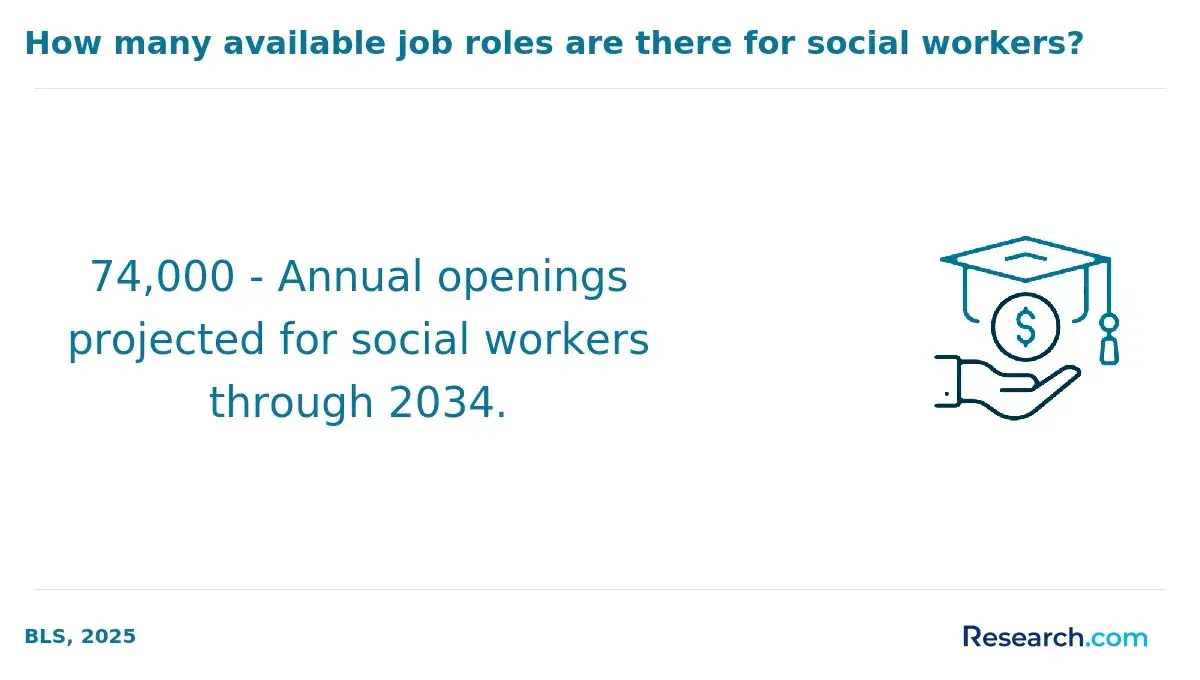
Human services work can be meaningful, but it can also be emotionally and administratively demanding. The economy needs human services professionals, with jobs growing at a rate of a little over 3%. At the same time, agencies are under pressure to improve quality, document outcomes, and serve clients with complex needs.
Professionals may deal with crisis situations, limited resources, difficult organizational politics, secondary trauma, heavy documentation, and pressure from multiple stakeholders. The stress can exceed ordinary student stress, especially for workers in direct service or crisis-facing roles.
Resilience does not mean ignoring burnout. It means developing habits, supervision structures, peer support, ethical boundaries, and organizational practices that help professionals continue doing effective work. Students planning for leadership should also learn how to build resilient teams, not just personal coping strategies.
What additional advanced certifications can boost my career in human services?
Advanced certifications can strengthen a human services career when they match a specific job function. Useful areas may include trauma-informed care, crisis intervention, case management, addictions, nonprofit leadership, gerontology, or program evaluation. The best credential depends on your target role, employer expectations, and state rules.
Some professionals also explore complementary psychology training to deepen their understanding of behavior, assessment, and intervention. For example, Research.com’s guide to 3 year PsyD programs may be relevant for readers comparing advanced psychology pathways, although a PsyD and a human services master’s serve different professional purposes.
What job placement and career support services are available?
Career support can make a major difference for online students, especially those changing fields or seeking promotion. Strong programs may offer career counseling, resume reviews, interview preparation, alumni connections, internship guidance, employer panels, and access to job boards or agency partnerships.
Ask whether career services are available to online graduate students on the same basis as campus students. Also ask whether the program helps students identify practicum sites, prepare for leadership interviews, and translate coursework into employer-ready skills. If you are comparing costs in adjacent behavioral science fields, Research.com’s article on how much a masters in forensic psychology costs may help you think about affordability trade-offs.
How Can I Build a Robust Professional Network During My Online Master’s Program?
Online students should not wait until graduation to network. Join virtual events, attend office hours, participate actively in group projects, connect with alumni, and ask faculty about professional associations or local agencies. A strong network can lead to mentorship, practicum leads, job information, and collaboration opportunities.
Interdisciplinary awareness can also help. Human services professionals often work with psychology, education, health, justice, and public policy systems. Students interested in behavioral science connections may find value in reviewing accelerated psychology programs online while keeping their primary career goal in focus.
How Can I Verify the Credibility of My Online Program?
Start by checking institutional accreditation through recognized accrediting bodies. Then review whether the human services program has relevant professional recognition, such as alignment with CSHSE standards where applicable. Accreditation should be verified directly, not assumed from marketing language.
Also review faculty qualifications, curriculum depth, graduation requirements, fieldwork support, state authorization, student services, and alumni outcomes. If you are comparing broader behavioral health or psychology pathways, Research.com’s guide to cheap PsyD programs online may help you evaluate cost-benefit questions across different graduate credentials.
How can I finance my online master's in human services?
Students can fund an online master’s in human services through several sources, including federal and state aid, institutional scholarships, grants, employer tuition assistance, payment plans, private loans, and service-related awards. Graduate students should complete the required financial aid steps early and ask each school about program-specific scholarships.
Do not compare tuition alone. Compare total cost, fees, expected time to completion, transfer credit policies, employer reimbursement rules, and realistic salary outcomes. Research.com’s broader guide to an online human services degree can also help you compare degree levels and decide whether a master’s is the right next step.
What is the human services degree salary outlook?
A master’s degree may improve access to leadership, administrative, or specialized roles, but it does not guarantee a specific salary. Pay depends on occupation, employer type, location, specialization, experience, budget environment, and whether the role requires licensure.
As noted earlier, the average wage of social and community service managers is $61,330 per year. Social workers earn a yearly average of $61,330, while child, family, and school social workers earn $53,940, based on BLS data cited for 2025. For a broader discussion of compensation by pathway, see Research.com’s guide to human services degree salary.
Could Adding a Psychology Focus Enhance My Human Services Career?
A psychology focus can be useful if your work involves behavior change, family dynamics, crisis response, trauma, assessment, or program design. It can help human services professionals better understand client needs and communicate with mental health providers. However, psychology coursework alone does not necessarily lead to clinical licensure.
If you are considering a stronger psychology component, compare curriculum, career outcomes, and licensing implications carefully. Research.com’s guide to online psychology master programs can help you examine related graduate options.
Should I Specialize in Mental Health Counseling for Enhanced Career Opportunities?
Mental health counseling can be a valuable specialization for professionals who want to work more directly with behavioral health concerns, but it is also a regulated field. If your goal is to become a licensed counselor, make sure the program is specifically designed to meet counseling licensure requirements in your state. A general human services master’s may not be enough.
When comparing options, review supervised practice requirements, faculty expertise, clinical training, state licensure alignment, and practicum placement support. Research.com’s guide to mental health counseling graduate programs is a better starting point if licensure-track counseling is your primary goal.
Key Insights
- An online master’s in human services can be credible: Employers are more likely to value the degree when it comes from an accredited institution with rigorous coursework and relevant student support.
- Online does not always mean fully remote: Some programs require internships, practicums, campus visits, or other in-person components, so verify requirements before applying.
- Cost varies widely: Per-credit costs often fall around $300 to $700, but total cost depends on credits, fees, residency pricing, and fieldwork expenses.
- Career fit matters more than the degree title: Human services is useful for leadership, administration, advocacy, and community support roles, but regulated clinical careers may require different licensure-track programs.
- Accreditation is nonnegotiable: Check institutional accreditation and relevant human services recognition such as CSHSE where applicable.
- Digital skills are now part of professional readiness: Case management systems, tele-support, data reporting, and digital communication are increasingly important in service organizations.
- Salary outcomes depend on role and location: A master’s may support advancement, but no program can guarantee a specific wage or promotion.
- Resilience is essential: Human services work can involve high stress, limited resources, and complex client needs, so students should prepare for both technical competence and sustainable professional practice.
References
- College Board. (2024). Trends in college pricing and student aid 2024. https://research.collegeboard.org/pdf/trends-college-pricing-student-aid-2024.pdf
- Education Data Initiative. (2024). Average cost of college tuition per credit hour. https://educationdata.org/average-cost-of-college-tuition-per-credit-hour
- EducationData.org. (2024). Average cost per credit hour. https://educationdata.org/average-cost-per-credit-hour
- GradSchoolHub. (2024). Master's in human services degree programs online: What to expect. https://www.gradschoolhub.com/masters-in-human-services-online/
- Indeed Career Guide. (2024). 10 entry-level human services jobs that don't require a degree. https://www.indeed.com/career-advice/finding-a-job/human-services-jobs-no-degree
- Psychology.org. (2024). How long does it take to get a Psy.D. degree? https://www.psychology.org/degrees/psyd-programs/how-long-does-it-take-to-get-a-psyd-degree/
- University of Maryland Global Campus. (n.d.). Master's degrees. Retrieved January 24, 2026, from https://www.umgc.edu/online-degrees/masters-degrees
- U.S. Bureau of Labor Statistics. (n.d.). Community and social service occupations. Occupational Outlook Handbook. https://www.bls.gov/ooh/community-and-social-service/home.htm
- U.S. Bureau of Labor Statistics. (2024,). Social and human service assistants. Occupational Outlook Handbook. https://www.bls.gov/ooh/community-and-social-service/social-and-human-service-assistants.htm
- U.S. Bureau of Labor Statistics. (2025). Occupational employment and wage statistics: Social and human service assistants. U.S. Department of Labor. https://www.bls.gov/oes/current/oes_data.htm
Other Things You Should Know About Online Master’s in Human Services Degree Programs
To enroll in an online master's program in human services, prospective students typically need a bachelor's degree, often with a minimum GPA of 3.0. Programs may also require a personal statement, letters of recommendation, and relevant work experience. Some universities might ask for GRE scores, though this is becoming less common.
Most 2027 online master’s programs in human services include fieldwork components like internships or practicums in community organizations. These opportunities allow students to gain practical experience under supervision, ensuring they meet professional standards set forth by the human services field.
In 2027, online and traditional master's programs in human services differ in terms of flexibility, interaction, and accessibility. Online programs offer greater flexibility and geographical accessibility, but may provide less face-to-face interaction compared to traditional programs, impacting networking and hands-on experiences.
Many programs require 300 to 600 supervised internship hours before graduation. Placement sites are usually approved by the program, and students complete a learning contract, regular site supervision, and faculty evaluation. Some states or employers may also expect a background check before placement.
The typical duration for completing an online master’s in human services in 2027 is two years of full-time study. Some programs may offer accelerated options that can be completed in as little as 18 months, depending on the course load and student commitment.