2027 Best Online Master's in Electrical Engineering With Weekend Intensives

Co-Founder and Chief Data Scientist
Choosing an online master's in electrical engineering is harder when you need flexibility but still want hands-on labs, faculty access, or cohort networking. The stakes are real: the U. S. Bureau of Labor Statistics reports a 2024 median pay of $118,780 for electrical and electronics engineers, making program quality and fit important financial decisions. This guide is for working engineers, career changers with engineering backgrounds, and military or technical professionals comparing online programs with weekend intensives, residencies, or hybrid lab experiences.
Key Things You Should Know
- True required weekend-intensive electrical engineering master's programs are uncommon; most accredited options are online or hybrid programs that may offer short residencies, synchronous weekend sessions, campus labs, or optional in-person experiences.
- A typical online electrical engineering master's requires about 30 to 36 graduate credits, so total cost depends heavily on per-credit tuition, engineering fees, travel, employer reimbursement, and whether you study full time or part time.
- The labor market is favorable but specialized: BLS data shows electrical and electronics engineers had a 2024 median pay of $118,780, while outcomes vary by concentration, security clearance, industry, location, and prior experience.
What is an online master's in electrical engineering with weekend intensives?
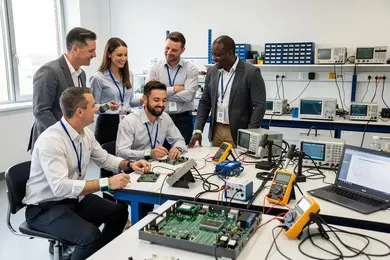
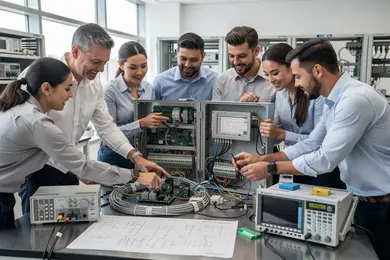
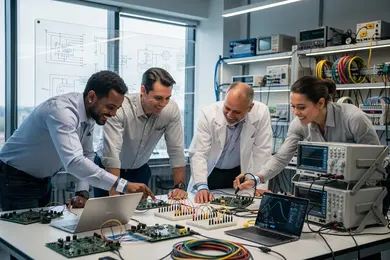
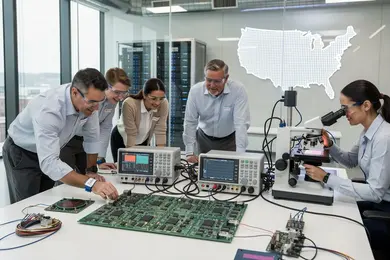
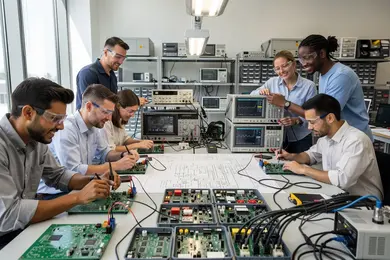
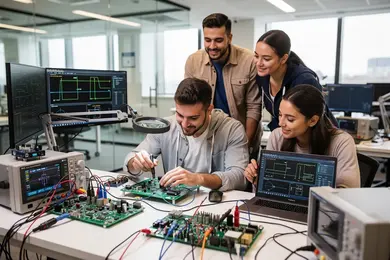
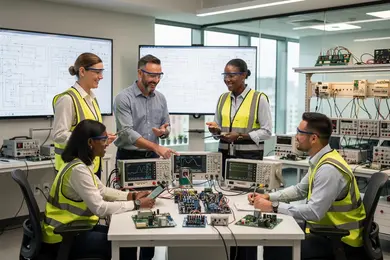
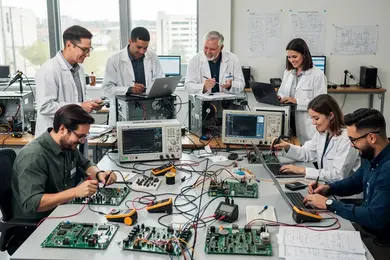
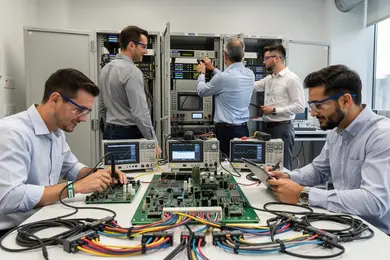
An online master's in electrical engineering with weekend intensives is a graduate engineering program that delivers most coursework online while adding scheduled short-format learning experiences. These may be Friday-to-Sunday labs, live design reviews, simulation workshops, campus residencies, orientation sessions, capstone presentations, or employer-linked project weekends.
The format is designed for students who cannot relocate or attend weekday campus classes but still benefit from structured interaction. In electrical engineering, weekend intensives are most useful in areas where practice matters: power systems, embedded systems, robotics, photonics, communications, controls, semiconductor devices, and hardware prototyping.
It is important to separate three formats that are often grouped together in search results. The table below shows how each option usually works and who is likely to benefit from it.
| Program format | How it usually works | Best fit | Main trade-off |
| Fully online | Courses, exams, projects, and advising are completed remotely | Students who need maximum schedule flexibility or live far from campus | Less in-person lab access and fewer spontaneous networking opportunities |
| Online with weekend intensives | Most content is online, with occasional weekend labs, residencies, or presentations | Working engineers who can travel a few times and want applied experiences | Travel costs and fixed weekend dates can complicate planning |
| Hybrid or low-residency | Online courses are mixed with required campus sessions or local lab components | Students near campus or those needing specialized equipment access | Less flexible than fully online study |
For a student comparing engineering pathways at the undergraduate or graduate level, cost and delivery format should be evaluated together. A guide to the cheapest online engineering degree options can help clarify how tuition, labs, and distance fees affect the total price of technical education.
Which universities offer accredited weekend-intensive electrical engineering programs?
The most accurate answer is that accredited U.S. universities do offer online electrical engineering and electrical/computer engineering master's programs, but few publicly label the degree as a required "weekend-intensive" program. Instead, weekend or short-residency elements may appear at the course, lab, orientation, research, or capstone level. Always confirm the current catalog, residency rules, and lab requirements before applying.
The table below lists respected accredited universities commonly considered by online electrical engineering students. Use it as a shortlist for asking whether weekend labs, short campus sessions, or synchronous weekend experiences are available or required.
| University | Relevant online graduate option | Accreditation point to verify | Weekend-intensive fit |
| Johns Hopkins University | Electrical and Computer Engineering through Engineering for Professionals | Institutional accreditation; confirm school and program policies | Good for working professionals seeking flexible online and applied engineering coursework |
| University of Southern California | Online electrical engineering graduate study through USC Viterbi | Institutional accreditation; review degree requirements and delivery mode | Strong option for students who want a major private research university with online engineering delivery |
| Purdue University | Online electrical and computer engineering graduate programs | Institutional accreditation; confirm concentration and residency requirements | Useful for students comparing research depth, brand recognition, and flexible online courses |
| Columbia University | Electrical engineering and engineering courses through Columbia Video Network | Institutional accreditation; confirm program eligibility and exam rules | Best for students seeking a rigorous online format with access to a major research university curriculum |
| University of Colorado Boulder | Online electrical, computer, and related engineering graduate study | Institutional accreditation; confirm whether the credential is degree, certificate, or pathway-based | Appeals to students who want modular online learning and may not need campus visits |
| Ohio University | Online Master of Science in Electrical Engineering | Institutional accreditation; confirm concentration availability and course schedule | Good for students seeking a structured online MSEE with professional flexibility |
Do not assume that ABET accreditation works the same way at the graduate level as it does for bachelor's programs. For most master's programs, institutional accreditation, faculty expertise, curriculum fit, research access, and employer recognition matter more than a graduate ABET label. If you need licensure as a professional engineer, confirm how your undergraduate engineering degree, state board rules, and experience record affect eligibility.

How do weekend-intensive online programs differ from fully online options?
Weekend-intensive programs differ from fully online programs in one major way: they trade some flexibility for structured interaction. That can be valuable if you learn best through guided labs, team design work, live faculty feedback, or face-to-face networking, but it can be inconvenient if you travel often, work rotating shifts, or live far from campus.
The comparison below helps you decide whether the added residency component is worth it for your situation.
| Decision factor | Fully online program | Online program with weekend intensives |
| Schedule control | Highest flexibility, especially with asynchronous courses | Flexible overall, but fixed intensive dates require planning |
| Hands-on learning | Usually handled through simulation, remote labs, kits, or project work | May include in-person labs, demonstrations, hardware testing, or design reviews |
| Networking | Depends on live sessions, discussion boards, group projects, and alumni access | Often stronger because students and faculty meet in concentrated sessions |
| Cost | Usually avoids travel and lodging | May add transportation, hotel, meals, and time away from work |
| Best use case | Students needing maximum flexibility | Students who want online study but value occasional campus-level engagement |
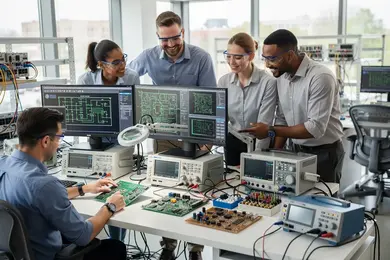
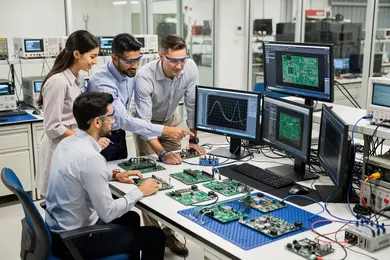
One current trend is the expansion of remote labs, cloud-based simulation, and AI-assisted design tools. These technologies make fully online engineering more practical, but they do not completely replace the value of working with specialized hardware, measurement equipment, or faculty-guided troubleshooting in areas such as power electronics and embedded systems.
Students comparing online STEM programs should notice that hands-on requirements vary by field. For example, an animal science bachelor degree online may handle labs and field experiences very differently from an electrical engineering master's, so program format should always be evaluated within the discipline.
What admission requirements do these electrical engineering programs usually require?
Admissions requirements vary by university, but electrical engineering master's programs usually expect evidence that you can succeed in graduate-level math, circuits, systems, and design coursework. Applicants with a bachelor's in electrical engineering, computer engineering, or a closely related engineering field typically have the most direct path.
Before applying, compare requirements carefully because missing prerequisites can add time and cost. Most programs ask for some combination of the following items:
- A bachelor's degree from an accredited institution, usually in electrical engineering, computer engineering, physics, engineering technology, or a closely related technical field
- Prior coursework in calculus, differential equations, linear algebra, circuits, electronics, signals and systems, programming, and probability or statistics
- Official transcripts showing a competitive undergraduate GPA, often with stronger emphasis on upper-division engineering and math courses
- A resume showing engineering, military, lab, software, manufacturing, power, telecommunications, or technical project experience
- A statement of purpose explaining your concentration interests, career goals, and reason for choosing an online or hybrid format
- Letters of recommendation from faculty, engineering managers, technical leads, or research supervisors
- GRE scores only if required; many online engineering programs have made the GRE optional or waived it for qualified applicants
- English proficiency scores for international applicants when required by the university
A common mistake is applying only to the highest-ranked school without checking prerequisite gaps. If you lack signals and systems, electromagnetics, or advanced math, ask whether the school offers bridge courses and whether those credits count toward the degree. Bridge work can be worthwhile, but it can also delay graduation.
What courses are included in an online electrical engineering master's curriculum?
An online electrical engineering master's curriculum usually combines advanced theory, design-oriented coursework, software tools, and a concentration. Students often choose a thesis, non-thesis project, or coursework-only path depending on whether they want research preparation, applied industry advancement, or a faster professional credential.
The table below summarizes common curriculum areas and why they matter for career planning.
| Curriculum area | Common courses | Career relevance |
| Power and energy systems | Power electronics, smart grids, electric machines, renewable integration, protection systems | Useful for utilities, grid modernization, EV infrastructure, energy storage, and industrial power roles |
| Communications and signal processing | Digital signal processing, wireless systems, information theory, RF systems, radar | Relevant to telecommunications, aerospace, defense, audio, imaging, and sensing |
| Controls and robotics | Linear systems, control theory, autonomous systems, mechatronics, estimation | Supports work in automation, robotics, aerospace, manufacturing, and advanced vehicles |
| Microelectronics and semiconductors | VLSI design, semiconductor devices, integrated circuits, fabrication concepts | Connects to chip design, electronics manufacturing, hardware development, and device testing |
| Computer engineering and embedded systems | FPGA design, real-time systems, computer architecture, embedded software, hardware security | Important for IoT, medical devices, automotive systems, defense electronics, and edge computing |
| Machine learning and data-driven engineering | Optimization, statistical learning, AI for signals, data analytics for systems | Useful where electrical engineers work with sensor data, predictive maintenance, autonomy, or digital twins |
AI is changing the curriculum, but it is not replacing core engineering fundamentals. Employers still value engineers who understand circuits, systems, physics, constraints, safety, and testing. AI and automation tools are most powerful when used by engineers who can verify results and understand failure modes.
If your interests are moving toward analytics, signal intelligence, smart infrastructure, or machine learning, you may also compare electrical engineering with a masters in data science online. The better choice depends on whether you want to design physical and electronic systems or focus primarily on data modeling, software, and analytics.
How long does a weekend-intensive electrical engineering master's take to finish?
Most online electrical engineering master's programs take about one and a half to three years, depending on credit load, prerequisites, capstone or thesis requirements, and whether weekend intensives are scheduled only once or twice per year. Full-time students may finish faster, while working engineers often choose one course per term to avoid burnout.
The table below shows common pacing options. Use it to estimate how the program will fit your work calendar, family responsibilities, and tuition budget.
| Pacing option | Typical course load | Estimated completion time | Best fit |
| Accelerated full time | Three or more courses in a term when allowed | About 12 to 18 months | Students who can reduce work hours or study full time |
| Standard part time | One to two courses per term | About two to three years | Working engineers who need steady but manageable progress |
| Slow part time | One course in selected terms | Three or more years | Students with demanding jobs, deployments, caregiving duties, or prerequisite needs |
| Thesis or research track | Coursework plus research milestones | Often longer than coursework-only paths | Students considering doctoral study, R&D roles, or research-heavy industries |
Weekend intensives can either speed up or slow down completion. A concentrated lab weekend may replace several weeks of remote lab coordination, but required residencies can delay progress if you miss a scheduled session. Before enrolling, ask whether intensives are offered every term, once per year, or only when enough students register.
How much does an online electrical engineering master's with intensives cost?
The cost of an online electrical engineering master's with weekend intensives depends on tuition, credit count, residency expenses, technology fees, textbooks, simulation software, hardware kits, and lost work time. A practical way to compare programs is to calculate the total degree cost rather than focusing only on tuition per credit.
Because many programs require around 30 credits, the per-credit rate has a large effect on the final bill. The examples below are not price quotes from a specific school; they show how quickly the total changes when tuition varies.
- $700 per credit × 30 credits = $21,000 before fees, books, and travel
- $1,200 per credit × 30 credits = $36,000 before fees, books, and travel
- $2,000 per credit × 30 credits = $60,000 before fees, books, and travel
Weekend intensives add costs that fully online students may avoid. Even one required campus weekend can involve airfare or driving, hotel stays, meals, parking, local transportation, and time away from work. If you have employer tuition assistance, ask whether it covers travel and fees or tuition only.
Financing costs also matter. For the 2024-2025 academic year, federal Direct Unsubsidized Loans for graduate students carried an 8.08% fixed interest rate. That makes borrowing strategy important: using employer reimbursement, paying some tuition as you go, or choosing a lower-cost accredited program can reduce long-term repayment pressure.
What careers can you pursue with a master's in electrical engineering?
A master's in electrical engineering can support advancement in design, systems engineering, applied research, technical leadership, product development, and specialized engineering roles. It is most valuable when the curriculum aligns with the technical problems you want to solve.
The table below connects common career paths with the graduate focus areas that tend to support them.
| Career path | Typical responsibilities | Helpful graduate focus |
| Power systems engineer | Design, analyze, and improve electrical power networks, protection systems, and grid equipment | Power systems, power electronics, renewable energy, smart grids |
| Embedded systems engineer | Develop hardware-software systems for devices, vehicles, sensors, and industrial equipment | Embedded systems, computer architecture, real-time systems, FPGA design |
| RF or communications engineer | Work on wireless systems, antennas, radar, signal transmission, and spectrum performance | Communications, electromagnetics, signal processing, RF systems |
| Controls engineer | Design control systems for automation, robotics, aircraft, vehicles, or manufacturing processes | Control theory, robotics, estimation, mechatronics |
| Semiconductor or microelectronics engineer | Support chip design, device testing, integrated circuits, and electronics manufacturing | VLSI, semiconductor devices, microelectronics, verification |
| Systems engineer or technical lead | Coordinate requirements, design trade-offs, testing, integration, and cross-functional engineering decisions | Systems engineering, project-based design, modeling, reliability |
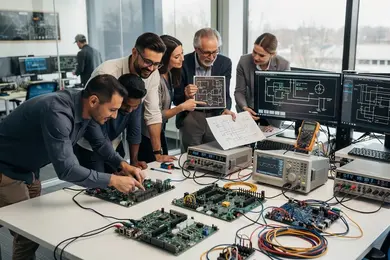
Current hiring trends favor engineers who can work across boundaries: hardware plus software, power plus controls, signal processing plus AI, or electrical design plus cybersecurity. A weekend-intensive format can be especially helpful if it gives you access to labs, team design reviews, or faculty feedback that strengthens your project portfolio.
Not every online master's leads to the same type of career mobility. Some fields use professional accreditation or licensure differently, as seen in a masters in library science, where program recognition may be evaluated through field-specific expectations. For electrical engineering, focus on institutional accreditation, technical curriculum, faculty depth, and employer relevance.
What salary can electrical engineering master's graduates expect?
Salary outcomes depend on role, location, industry, experience, security clearance, management responsibility, and specialization. A master's can improve competitiveness for advanced technical roles, but it should not be treated as a salary guarantee.
The most useful national benchmark is the electrical and electronics engineering occupation group. The U.S. Bureau of Labor Statistics reported a 2024 median annual pay of $118,780 for electrical and electronics engineers. For readers, this means the field has strong earning potential, but your personal outcome will depend on whether the program helps you move into higher-value technical work.
The table below shows how different factors commonly influence salary potential after graduate study.
| Factor | How it can affect salary | What to check before enrolling |
| Specialization | Semiconductors, RF, power electronics, embedded systems, and defense-related work may command different pay levels | Whether the program offers enough advanced courses in your target area |
| Location | Compensation varies by metro area, cost of living, and local industry concentration | Regional employer demand and whether remote or hybrid engineering roles are realistic |
| Experience level | A master's usually has the strongest salary effect when paired with relevant engineering experience | Whether you can apply coursework to current projects or internships |
| Industry | Utilities, aerospace, defense, chip design, telecommunications, manufacturing, and consulting have different pay structures | Whether alumni and faculty connections match your preferred sector |
| Leadership path | Technical lead and engineering management roles may require broader systems and communication skills | Whether the curriculum includes project, systems, or management-oriented electives |
The BLS also projects employment for electrical and electronics engineers to grow 9% from 2024 to 2034. That outlook is stronger than many occupations, but it should be interpreted as a market signal rather than a promise. Graduates still need relevant skills, current tools, and a portfolio or work record that matches employer needs.
How do you choose the best electrical engineering program for your goals?
The best online master's in electrical engineering with weekend intensives is the one that fits your target specialization, schedule, budget, and learning style. A prestigious university is not automatically the best choice if it lacks your concentration, requires travel you cannot manage, or does not support your career goals.
Use the following steps to compare programs before you apply. They are designed to prevent the most common enrollment mistakes.
- Define your target role first, such as power systems engineer, embedded systems engineer, RF engineer, controls engineer, or semiconductor engineer.
- Match the curriculum to that role by checking advanced electives, lab access, software tools, faculty expertise, and capstone options.
- Confirm accreditation, but understand that institutional accreditation and graduate program quality usually matter more than looking for ABET status at the master's level.
- Ask exactly when weekend intensives occur, whether they are required, what they cost, and what happens if you miss one.
- Calculate total cost, including tuition, fees, travel, lodging, equipment, software, books, and interest if you borrow.
- Check whether courses are asynchronous, synchronous, or mixed, because live sessions can be difficult for students in different time zones or shift schedules.
- Review faculty access, advising, career services, alumni outcomes, and employer partnerships rather than relying only on rankings.
- Ask about transfer credits, prerequisite waivers, employer reimbursement documentation, military benefits, and time limits for degree completion.
- Look for evidence of applied learning, such as design projects, remote labs, hardware kits, simulations, research opportunities, or industry-sponsored capstones.
- Compare at least three programs side by side before committing, including one lower-cost option and one program with stronger specialization depth.
Red flags include vague residency language, unclear tuition pages, limited graduate electives, no named faculty in your area, weak advising, and admissions pressure that discourages careful comparison. If a school cannot clearly explain its weekend requirements and total cost, keep looking.
A good final test is simple: would this program help you build the technical proof employers need to see? For electrical engineering, that proof may be a simulation portfolio, design project, published research, lab experience, patent-related work, or measurable impact in your current engineering role.
Other Things You Should Know About Electrical Engineering
Sometimes. Applicants from computer engineering, physics, mechanical engineering, engineering technology, or other technical fields may be considered, but they may need prerequisite courses in circuits, signals, electronics, programming, and advanced math. Ask whether prerequisite credits count toward graduation.
Many programs offer non-thesis or coursework-only options, especially for working professionals. A thesis is more useful if you want doctoral study, research and development roles, or deeper specialization. A capstone or project track may be better for industry-focused students.
Yes. Weekend intensives usually count as required residency or synchronous campus attendance for accreditation records, but they do not replace the program’s online credit hours. Regional accreditors review whether the format still meets faculty, contact-hour, and laboratory requirements, often set at 30 to 36 semester credits.
References
- Explore UM | University of Manitoba - Electrical Engineering (BSc) https://umanitoba.ca/explore/programs-of-study/electrical-engineering-bsc
- Full-time, part-time, online - which study mode is right for you? https://www.studentspace.pl/en/blog/post/studia-stacjonarne-zaoczne-wieczorowe---ktory-tryb-wybrac
- Study Electrical Engineering in Germany: Private studies from 259 https://www.privathochschulen.net/en/courses/engineering-sciences/electrical-engineering
- Is a master’s in electrical engineering worth it for your career and earnings? | edX https://www.edx.org/resources/is-a-masters-in-electrical-engineering-worth-it
- Flexible study options https://www.murdoch.edu.au/study/why-choose-murdoch/flexible-study-options
- Online classes and intensive sessions — What’s the difference? https://hopebibleinstitute.ca/online-classes-and-intensive-sessions-whats-the-difference/
- Electrical Engineering Technology https://www.sait.ca/programs-and-courses/diplomas/electrical-engineering-technology
- Top Electrical Engineering Schools Ranked for 2025 - Delta Wye Electric https://deltawye.com/top-electrical-engineering-schools/
- Best Electrical Engineering Master's Degrees Online 2026 https://www.onlineu.com/degrees/masters-electrical-engineering
- How Long is a Master's in Engineering (MS, MEng) Program? https://www.onlineengineeringprograms.com/faq/how-long-to-earn-masters-in-engineering