2027 Red Flags to Watch for in Online Electrical Engineering Degrees

Co-Founder and Chief Data Scientist
Choosing an online electrical engineering degree is risky if you cannot separate rigorous programs from weak ones. The stakes are high. The U.S. Bureau of Labor Statistics lists the May 2024 median pay for electrical engineers at $111,910, but employers and licensing boards still care about accreditation, labs, and technical depth.
This guide is for prospective students comparing online EE programs, transfer options, and career ROI. You will learn which warning signs matter most, how to verify claims, and what to ask before enrolling.
Key Things You Should Know
- ABET accreditation is the clearest quality signal for U.S. engineering bachelor's programs, especially if you may pursue Engineer in Training or Professional Engineer licensure later.
- Online EE degrees should still include credible hands-on work in circuits, electronics, signals, embedded systems, power, or communications; "100% theory" programs are a major warning sign.
- BLS reports $111,910 as the May 2024 median pay for electrical engineers, while 2024-25 undergraduate federal Direct Loans carry a 6.53% fixed interest rate, so debt can materially change ROI.
What are the biggest red flags in online electrical engineering degree programs today?
The biggest red flags are not simply "online" delivery or a lower tuition price. Strong online electrical engineering programs can be legitimate, but they must prove that students receive the same engineering fundamentals, design practice, lab experience, faculty access, and institutional oversight expected in a campus program.
Electrical engineering, often shortened to EE, is the study and application of electricity, electronics, electromagnetics, circuits, signal processing, power systems, control systems, communications, and embedded computing. Because the field connects directly to public safety, energy systems, medical devices, aerospace, manufacturing, and infrastructure, weak training can have real consequences.
Watch for these warning signs early in your search because they usually affect more than one part of the student experience:
- No recognized institutional accreditation: If the college itself is not accredited by an agency recognized by the U.S. Department of Education, federal aid, transfer credit, employer acceptance, and graduate school options may be limited.
- No programmatic engineering accreditation when it matters: A bachelor's degree marketed as electrical engineering without ABET accreditation may create problems for licensure, government roles, and some employers.
- Vague lab requirements: If admissions staff cannot explain how online students complete circuit labs, electronics labs, instrumentation work, or senior design testing, the program may be too light for engineering practice.
- Unrealistic speed claims: A legitimate EE bachelor's degree typically requires a substantial sequence in calculus, physics, programming, circuits, electronics, and design; "finish in one year from scratch" claims deserve skepticism.
- High-pressure enrollment tactics: Be cautious if representatives push immediate deposits, discourage comparison shopping, or avoid written answers about accreditation, tuition, fees, and outcomes.
- Job guarantees or salary promises: Schools can discuss outcomes, but no program can guarantee an engineering job, PE license, security clearance, or specific salary.
- Little or no faculty visibility: A credible program should identify faculty, credentials, research or industry areas, office-hour access, and who teaches upper-division EE courses.
The table below summarizes common red flags and why they matter. Use it as a quick screening tool before spending time on an application.
| Red flag | Why it matters | Risk level |
| No recognized institutional accreditation | May affect federal aid, transferability, graduate admission, and employer acceptance | Very high |
| No ABET accreditation for an EE bachelor's program | May complicate licensure and reduce confidence in engineering curriculum quality | High |
| Minimal lab or design work | Can leave students underprepared for hardware, testing, troubleshooting, and engineering judgment | High |
| Unclear total cost | Fees, required kits, proctoring, software, and residency travel can change affordability | Medium to high |
| Generic faculty pages | Makes it hard to verify technical expertise in EE subfields | Medium |
| Overly broad credit for life experience | May signal weak academic control in a highly technical discipline | Medium to high |
Current trends make these checks more important. Electrification, semiconductor investment, renewable energy integration, AI-enabled hardware, and grid modernization are increasing demand for engineers who can combine software, systems thinking, and physical testing. A weak online program may advertise those trends without giving students the math, lab, and design foundation needed to participate in them.
How can you verify accreditation and avoid diploma mills in online EE degrees?
Accreditation is the first filter because it tells you whether an outside body has reviewed the institution, and in some cases the specific engineering program. In the U.S., you should distinguish institutional accreditation, which applies to the college or university, from programmatic accreditation, which applies to the engineering degree itself.
For electrical engineering bachelor's degrees, ABET accreditation is often the most important program-level signal. It is especially relevant if you plan to pursue licensure, work in regulated engineering environments, apply to certain graduate programs, or compete for roles where employers specifically screen for ABET-accredited degrees.
Use this sequence before applying or paying a deposit. Each step helps you verify the school's claims from more than one angle:
- Check the college's institutional accreditation through the U.S. Department of Education's recognized accreditation database or the accreditor's own directory.
- Search ABET's public program directory for the exact degree name, campus, delivery format if listed, and accreditation dates.
- Confirm whether the online version is covered, because some schools have accredited campus programs but separate online or degree-completion tracks with different status.
- Ask the program director, not only an enrollment advisor, to provide written confirmation of accreditation status and licensure alignment.
- Review state authorization information if you live outside the school's home state, especially for programs with labs, internships, or professional requirements.
- Look for transparent catalogs, course descriptions, faculty names, academic policies, and graduation requirements before submitting financial documents.
Diploma mills often imitate legitimate universities by using official-sounding names, fake accreditors, or vague international recognition language. A serious engineering program should make verification easy. If you have to chase basic facts, that is itself a warning sign.
Be especially careful with schools that say they are "accredited" but do not identify the accreditor, or that list organizations not recognized by the U.S. Department of Education for institutional accreditation. Also avoid programs that award an engineering bachelor's degree primarily through résumé review or "life experience"; prior learning can sometimes count for general education or technical electives, but core engineering competencies need documented assessment.
Do online electrical engineering degrees meet licensure and professional engineering requirements?
Some online electrical engineering degrees can support licensure, but not all do. In the U.S., Professional Engineer licensure is handled by state boards, and requirements vary by jurisdiction. The usual path includes an accredited engineering degree, passing the Fundamentals of Engineering exam, relevant supervised experience, and passing the Principles and Practice of Engineering exam.
The most important point is that licensure is not automatic. An online degree may be academically legitimate but still create extra steps if it lacks ABET accreditation or if your state board applies stricter rules. If your goal includes power systems, public infrastructure, consulting, utilities, building systems, or signing and sealing engineering work, you should treat licensure alignment as a core decision factor, not an afterthought.
The table below shows how common career goals connect to licensure concerns. It does not replace state board guidance, but it can help you decide how strict your program search needs to be.
| Career goal | How much licensure may matter | Program feature to prioritize |
| Power systems, utilities, public infrastructure, MEP consulting | Often important or strongly preferred | ABET-accredited electrical engineering bachelor's degree |
| Electronics, embedded systems, product design | Varies by employer and industry | Strong labs, design projects, and technical electives |
| Semiconductor, communications, signal processing | Usually less centered on PE licensure, but technical rigor matters | Advanced math, circuits, devices, signals, and faculty expertise |
| Graduate study or research | Licensure may not be the main issue | Accredited institution, strong prerequisites, research-active faculty |
| Engineering management or technical sales | Depends on role and employer | Recognized degree, communication skills, and industry projects |
Before enrolling, ask direct questions and request written answers. The school should be able to explain whether graduates are eligible to sit for the FE exam in your state, whether any graduates have pursued PE licensure, and whether the curriculum meets the engineering science and design expectations used by licensing boards.
A common mistake is assuming that "electrical engineering technology" and "electrical engineering" are interchangeable. Engineering technology degrees can be valuable and practical, but some licensing boards and employers treat them differently from engineering degrees. If a program title includes "technology," "applied engineering," or "electronics engineering technology," read the licensure rules carefully before assuming it matches a traditional EE pathway.
What curriculum gaps or weak lab experiences should you watch for online?
A credible online electrical engineering degree should not be a collection of recorded lectures and quizzes. EE is a quantitative, design-heavy discipline, so the curriculum should build from math and science into circuits, electronics, systems, and open-ended engineering design.
At the bachelor's level, a strong curriculum typically includes calculus through differential equations, calculus-based physics, programming, digital logic, circuit analysis, electronics, signals and systems, electromagnetics, control systems, communication systems, power systems, embedded systems, probability or statistics, and a senior design project. Not every program emphasizes the same subfields, but the core should not be hollow.
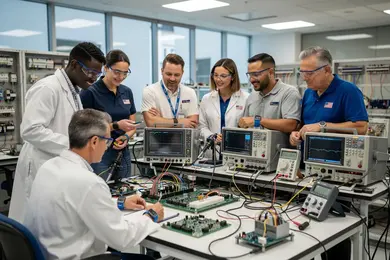
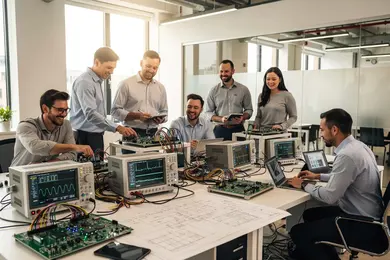
Lab quality is often the hardest part to evaluate online. The best programs are specific about how students use instruments, simulation tools, remote labs, take-home kits, data acquisition, safety procedures, and design verification. Weak programs hide behind vague phrases such as "virtual learning activities" without explaining what students actually build, measure, troubleshoot, or demonstrate.
Use the following curriculum and lab checks when comparing programs. These questions help reveal whether the online format supports real engineering skill development:
- Ask whether students complete hands-on labs using oscilloscopes, multimeters, breadboards, microcontrollers, signal generators, power supplies, or equivalent remote lab equipment.
- Review whether lab reports require measurement, uncertainty, troubleshooting, and design decisions, not just screenshots from simulations.
- Confirm that simulations are used as a supplement rather than a full replacement for physical or remotely controlled experiments.
- Look for a senior capstone or design sequence that includes constraints, prototypes, testing, documentation, teamwork, and faculty evaluation.
- Check whether the program covers current tools used in industry, such as SPICE-based circuit simulation, MATLAB or Python, embedded development environments, HDL or FPGA concepts, and CAD tools relevant to electronics or systems design.
- Ask how group design work is handled for online students across time zones and whether students receive structured feedback from faculty or industry reviewers.
The table below compares stronger and weaker online lab models. It can help you distinguish flexible delivery from inadequate training.
| Lab model | What it can do well | What to question |
| Take-home hardware kits | Supports hands-on circuit building and repeated practice at home | Whether kits are sophisticated enough for upper-division work |
| Remote-controlled labs | Allows students to operate real equipment online | Whether access is reliable and experiments are more than demonstrations |
| On-campus intensive residencies | Can provide concentrated access to advanced equipment | Travel cost, scheduling, and whether residencies are required for graduation |
| Simulation-heavy labs | Useful for modeling, design exploration, and analysis | Whether students also gain measurement and troubleshooting experience |
| Project-based labs with local sourcing | Encourages design independence and practical problem-solving | Whether assessment standards are consistent for all students |
Be cautious if an online EE program has no calculus-based physics, no upper-division electronics, no design sequence, or no clear laboratory assessment. Those gaps can limit your readiness for internships, entry-level engineering roles, graduate study, and licensure-related expectations.
How do online electrical engineering programs compare to campus-based options in quality?
Online and campus-based electrical engineering programs can be similar in academic quality when they share the same curriculum, faculty standards, accreditation, exams, lab expectations, and degree title. The format alone does not determine rigor. The real question is whether online students receive equivalent access to instruction, labs, academic support, design projects, and career preparation.
Online EE can make sense for working adults, military students, parents, students far from an engineering school, or learners completing a bachelor's degree after community college. Campus programs may be better for students who want frequent in-person lab access, traditional student life, undergraduate research, easier networking, or a more structured daily schedule.
The comparison below shows where quality differences usually appear. Focus on the items that affect your learning style and career goal rather than assuming one format is always better.
| Factor | Strong online EE program | Strong campus EE program |
| Lectures | Recorded or live sessions with structured deadlines and faculty interaction | In-person lectures, recitations, and immediate classroom interaction |
| Labs | Remote labs, hardware kits, residencies, or hybrid lab access | Regular access to campus equipment and lab staff |
| Peer learning | Online teams, discussion boards, project meetings, and virtual study groups | Informal study groups, clubs, labs, and campus organizations |
| Flexibility | Often better for working adults and place-bound students | Usually better for full-time immersive study |
| Career access | Depends heavily on virtual recruiting, local internships, and alumni networks | May provide easier access to campus recruiting and faculty-led research |
| Self-management demands | High; students must plan labs, deadlines, and study time carefully | Still demanding, but schedules are often more externally structured |
One useful comparison is to look at how online delivery works in other technical fields. For example, an online data science doctorate can often rely more heavily on software, computation, and remote research workflows, while electrical engineering must still solve the challenge of physical systems, measurement, and hardware validation.
Online EE may be the better choice if you already have discipline, a stable schedule, a good home workspace, and access to internship or project opportunities near you. Campus may be better if you need frequent hands-on supervision, want to join research labs early, or are entering college directly from high school and benefit from structured academic routines.
A common mistake is choosing the most flexible format without considering how hard EE coursework becomes after the first year. Circuits, electromagnetics, controls, and signals require steady practice. If a program is asynchronous, ask how it prevents students from falling behind and how quickly faculty respond when students get stuck.
Which admission requirements and transfer credit policies may signal a low-quality program?
Admissions policies should match the level of the degree. Electrical engineering is not elitist by default, but it is mathematically demanding. A program that admits students without checking readiness for calculus, physics, and technical coursework may be setting them up for frustration, withdrawal, or extra remedial costs.
For a bachelor's program, typical requirements may include a high school diploma or equivalent, transcripts, math placement, prerequisites for transfer students, and sometimes prior college coursework for degree-completion formats. For master's programs, schools usually expect an engineering, physics, mathematics, or closely related technical background, plus prerequisite coursework if the applicant's degree is outside EE.
Transfer policies deserve special attention because many online students enter with community college credits, military training, prior bachelor's coursework, or credits from another engineering program. Generous transfer credit can lower cost and time, but overly broad transfer policies can weaken the degree if they bypass essential technical competencies.
The following policies should prompt deeper questions before you enroll:
- The school accepts nearly all prior credits without evaluating course level, lab content, accreditation, or technical relevance.
- Upper-division EE courses can be replaced by unrelated work experience without a rigorous portfolio or exam process.
- The program does not require calculus readiness before students enter core engineering courses.
- Transfer students are not given a written degree plan showing remaining courses, prerequisites, sequencing, and expected graduation timeline.
- Credits are advertised as transferable to other universities, but the school does not explain that receiving institutions make their own transfer decisions.
- Admissions staff promise fast graduation before reviewing official transcripts.
Students comparing professional online degrees can learn from other fields where transfer and prerequisite rules also shape total cost and time. A librarian degree online, for instance, may have field-specific accreditation and practicum expectations; EE has its own version of that issue through engineering accreditation, labs, and prerequisite chains.
Good transfer advising should be specific. You should know which credits apply to general education, which apply to engineering science, which apply to electives, and which do not count. You should also understand whether repeating a course is academically wise even if credit technically transfers, especially for calculus, physics, circuits, or programming.
What tuition, fees, and financial aid issues commonly indicate online EE program risks?
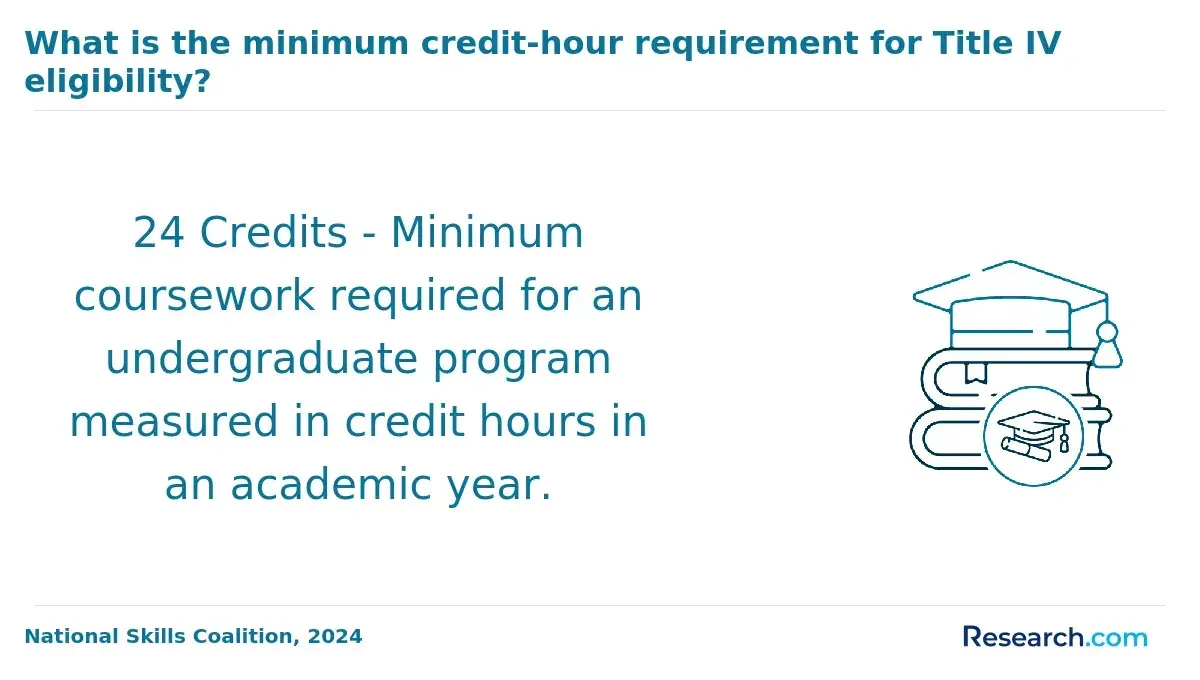
Tuition is only one part of the total cost of an online electrical engineering degree. Engineering students may also pay technology fees, lab kit charges, software costs, exam proctoring fees, graduation fees, residency travel, textbooks, hardware, and additional tuition if prerequisites extend the timeline.
Cost matters because engineering coursework is sequential. Dropping, repeating, or delaying one prerequisite can push back several later courses. For debt-funded students, that can increase both tuition and interest exposure. For federal undergraduate Direct Loans first disbursed in the 2024-25 award year, the fixed interest rate is 6.53%, so borrowing decisions should be tied to a realistic completion plan rather than only to advertised tuition.
The table below lists common cost categories and what they mean for online EE students. Use it to build a full cost estimate before comparing programs.
| Cost category | Why it matters in online EE | Risk signal |
| Tuition per credit | Core cost driver, especially for programs requiring 120 or more credits | Only low tuition is advertised while fees are hidden |
| Lab kits and equipment | May be necessary for circuits, electronics, and embedded systems | Required equipment is not disclosed until after enrollment |
| Software and licenses | Engineering tools may require student licenses or approved platforms | Students must purchase costly software without alternatives |
| Residency or travel | Some online programs require campus lab intensives | Travel dates and costs are unclear |
| Prerequisite coursework | Missing math or science courses can add terms | Advisors quote a graduation date before transcript review |
| Proctoring and exam fees | May apply to technical exams and identity verification | Fees are scattered across multiple policy pages |
When affordability is your main concern, compare total program cost the way you would in other online STEM searches, not just the sticker price. Guides such as the cheapest online environmental science degree can be useful examples of how cost, accreditation, and delivery format should be weighed together instead of separately.
Be wary of programs that emphasize monthly payments without showing the total cost to graduate. Also be cautious if a school pushes private loans before explaining federal aid, scholarships, employer tuition assistance, military benefits, payment plans, or lower-cost transfer pathways.
Before committing, ask for a written cost breakdown. It should include tuition, required fees, estimated books and supplies, lab kits, software, residency costs, transfer credits accepted, remaining credits, and financial aid assumptions. If the school cannot produce that estimate, you do not yet have enough information to judge value.
How can you evaluate faculty expertise and industry connections in online EE programs?
Faculty quality matters because electrical engineering is not a subject students can easily self-teach through slides. You need instructors who can explain difficult concepts, design meaningful labs, evaluate engineering reasoning, and connect theory to current practice.
A credible online EE program should identify the faculty who teach core and upper-division courses. Look for advanced degrees in electrical engineering or closely related fields, professional engineering experience, research or design work, publications, patents, industry projects, or teaching experience in the specific subfields they cover.
Industry connections are also important, but they should be concrete. Strong signals include employer advisory boards, internship pipelines, senior design sponsors, alumni working in relevant engineering roles, research partnerships, professional society involvement, and faculty with current industry projects. Weak signals include vague claims that "our program is industry aligned" without names, examples, or outcomes.
Use these questions to evaluate faculty and industry strength. They are especially helpful if the website has impressive marketing language but limited detail:
- Who teaches circuits, electronics, signals, power, controls, communications, embedded systems, and senior design?
- Are upper-division courses taught by full-time faculty, adjuncts with relevant industry expertise, or a rotating pool of instructors?
- How often do online students meet faculty live, and what is the expected response time for technical questions?
- Do faculty supervise online senior design projects, research experiences, or independent technical projects?
- Which employers, labs, utilities, manufacturers, defense contractors, semiconductor firms, or engineering consultancies interact with the program?
- Are online students eligible for the same career fairs, research opportunities, clubs, competition teams, and alumni networks as campus students?
Do not dismiss adjunct instructors automatically. Many bring valuable industry experience, especially in applied areas such as power, embedded systems, or electronics design. The red flag is not adjunct teaching itself. It is a lack of academic oversight, inconsistent course quality, or no clear lead faculty responsible for the EE curriculum.
AI and automation are changing engineering work, but they make faculty expertise more important, not less. Students need to learn how to use simulation, code generation, and AI-assisted design tools responsibly while still understanding circuit behavior, constraints, safety, and verification. A program that markets AI heavily but lacks faculty depth in core EE may be chasing buzzwords rather than preparing students for durable engineering work.
What career outcomes, salary data, and job placement claims should you scrutinize?
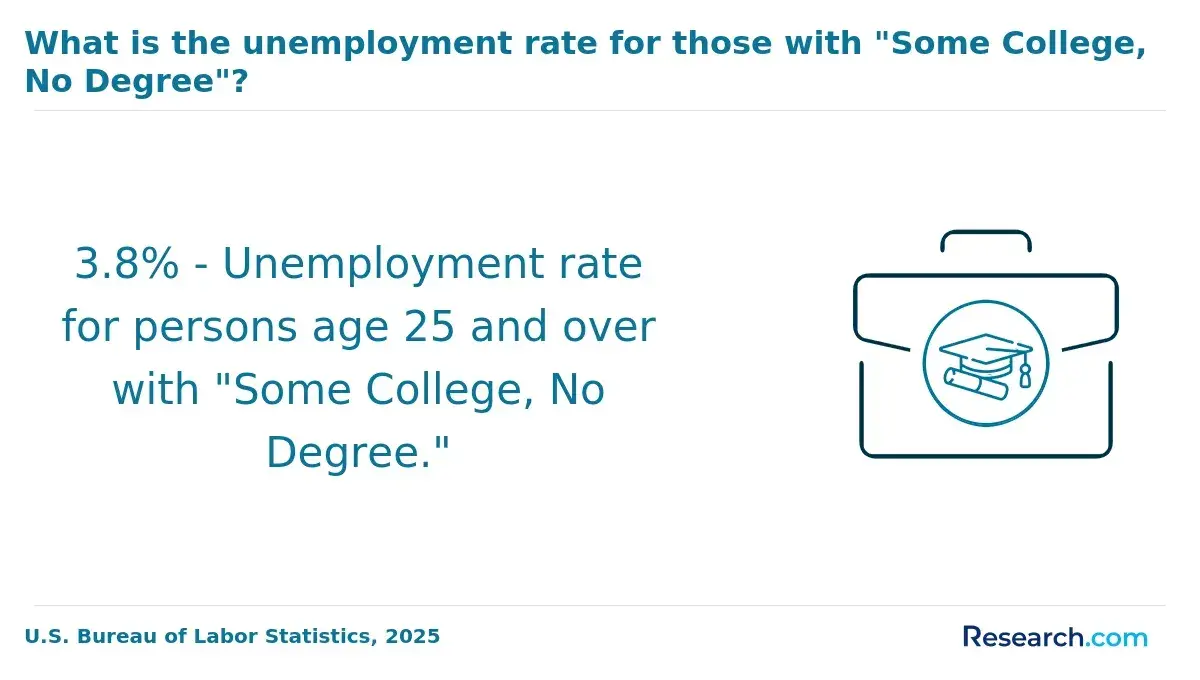
Career outcomes are useful only when they are specific, current, and honest about limitations. Online EE programs may advertise high salaries or strong demand, but you should ask which graduates are included, how outcomes were measured, what roles they entered, and whether the data applies to online students specifically.
According to the U.S. Bureau of Labor Statistics, the May 2024 median annual wage for electrical engineers was $111,910. That number is a helpful national benchmark, but it is not a starting salary guarantee. Pay varies by region, industry, clearance requirements, degree level, internship experience, technical specialization, and whether the role is truly an engineering role or a related technician, analyst, or sales position.
The table below separates common EE-related paths so you can evaluate whether a program's career messaging matches your goal.
| Career path | Typical focus | What to look for in the program |
| Electrical engineer | Design, analysis, testing, and implementation of electrical systems or components | ABET alignment, circuits, electronics, design, labs, and internships |
| Power systems engineer | Generation, transmission, distribution, protection, and grid reliability | Power electives, PE licensure awareness, utility connections, and safety training |
| Embedded systems engineer | Hardware-software integration for devices, controls, sensors, or products | Programming, microcontrollers, digital logic, real-time systems, and projects |
| Electronics design engineer | Analog, digital, PCB, instrumentation, or product electronics | Electronics labs, design tools, measurement skills, and prototyping experience |
| Controls engineer | Automation, robotics, manufacturing systems, and feedback control | Control theory, programming, industrial systems exposure, and applied projects |
| Test or validation engineer | Measurement, reliability, compliance, and product verification | Instrumentation, data analysis, lab reporting, and troubleshooting practice |
Job placement claims deserve careful reading. A high placement rate may include graduates who were already employed before enrolling, graduates working outside engineering, or graduates in any job rather than an engineering-relevant job. If a school publishes placement data, ask whether it is audited, how many graduates responded, whether online students are separated from campus students, and what job titles are counted.
Use these practical checks before relying on career claims:
- Ask for outcomes by degree level, online format, graduation year, and job category.
- Compare reported job titles with the curriculum; a program focused on electronics should show evidence of electronics, embedded, testing, or related roles.
- Look for internship support because practical experience often matters for entry-level engineering hiring.
- Check whether employers recruiting from the program hire online students or mainly campus students.
- Be skeptical of salary averages without sample size, location, work experience, or role details.
- Ask whether career services include technical résumé review, mock interviews, portfolio or project presentation support, and access to engineering-specific recruiters.
Also consider the program's fit with your starting point. Career changers may need more time to build projects and secure internships. Working technicians may benefit from a degree-completion path if it strengthens theory and opens engineering-track roles. Recent high school graduates may need more structure and advising than a highly asynchronous program provides.
What technology, student support, and accessibility problems are warning signs in online study?
Online electrical engineering requires more than a learning management system. Students need reliable platforms for lectures, simulations, exams, labs, collaboration, advising, tutoring, library access, accessibility accommodations, and career services. Technology problems are not minor inconveniences when they interrupt labs, exams, or sequential coursework.
Support quality matters because EE courses are cumulative. If you do not understand circuit analysis, later electronics and signals courses become harder. If advising is weak, you may take courses out of sequence and delay graduation. If accessibility support is slow, students with documented needs may face preventable barriers in timed exams, lab software, or video-heavy instruction.
Evaluate the online learning environment before enrolling. The following signs suggest the program may not be ready to support engineering students at a distance:
- No demo access to the learning platform, lab tools, or online course structure before enrollment.
- Technical support is available only during limited business hours despite evening or weekend student work.
- Faculty office hours are rare, inconvenient, or handled only through generic help tickets.
- Online tutoring does not cover upper-division engineering courses such as circuits, signals, electronics, or controls.
- Required software does not work across common operating systems and the school provides little installation support.
- Accessibility policies are generic and do not address labs, proctored exams, video captions, assistive technology, or technical software.
- Students cannot access the same library databases, career services, academic advising, or student complaint process as campus students.
Other online fields also show why support systems matter. Even when a program is not engineering-focused, such as the best exercise science degree online option, students still need clear practicum expectations, technology access, and advising; in EE, those support gaps can be even more costly because courses build tightly on prerequisites.
Ask how the program handles exam integrity without creating unnecessary barriers. Proctoring should be transparent, privacy-aware, and technically reliable. If students must use webcam monitoring, lockdown browsers, or identity verification tools, the school should explain hardware requirements, privacy policies, appeal processes, and alternatives for documented accessibility needs.
Your next step should be a side-by-side comparison. Request written answers from at least three programs about accreditation, labs, licensure alignment, total cost, transfer credits, faculty access, student support, and outcomes. If a school gives incomplete answers while pressuring you to enroll, treat that as a decision signal, not just a communication issue.
Other Things You Should Know About Electrical Engineering Degrees
In 2027, ensure the online electrical engineering program is accredited by ABET (Accreditation Board for Engineering and Technology). This accreditation ensures the program meets high-quality standards necessary for a meaningful and recognized degree in the industry.
Some people work in related technical roles without a bachelor's degree, such as electronics technician, field service technician, CAD drafter, or test technician. However, most electrical engineer roles require at least a bachelor's degree in electrical engineering or a closely related engineering discipline.
Yes. Many ABET-accredited online electrical engineering programs require hands-on lab work completed in approved campus, partner, or employer labs. A red flag is any program that claims full engineering training with no supervised lab access, because circuits, instrumentation, and testing cannot be verified without it.
Electrical engineering can be a strong path into renewable energy, especially for power systems, grid integration, energy storage, controls, and power electronics. Look for programs with power electives, energy systems projects, lab work, and internship connections with utilities, manufacturers, or energy firms.
References
- The Pandemic Lab Experience Gap in STEM education https://www.learnsci.com/post/recent-practical-science-school-lessons-and-the-challenge-faced-by-first-year-university-stem-teaching-staff
- Transfer Credit Policy - Kettering College https://kc.edu/campus-resources/registrar/transfer-credit-information/transfer-credit-policy/
- Online Electrical Engineering Degrees - BSEE, MSEE https://www.onlineengineeringprograms.com/electrical
- Bridging the Learning Gap: Creating Consistency Across On-Campus & Online Labs https://www.scienceinteractive.com/blog/2024/bridging-the-learning-gap-creating-consistency-across-on-campus-online-labs/