
2027 Master’s in Social Work (MSW) Programs in Pennsylvania (PA) – Online & On-Campus

Co-Founder and Chief Data Scientist
Choosing an MSW program in Pennsylvania is not only a graduate school decision. It affects whether you can qualify for licensure, where you can complete field education, how much debt you may take on, and what kinds of social work roles you can pursue after graduation. Pennsylvania has strong demand for child, family, school, mental health, healthcare, and substance use social workers, but the path depends on choosing a program that matches your licensure goal and budget.
This guide explains how Master of Social Work programs in Pennsylvania work, what to check before enrolling, how the LSW and LCSW licensing routes differ, what programs may cost, and how online, accelerated, and advanced standing options compare. It is written for prospective MSW students, BSW graduates considering advanced standing, career changers, and current human services professionals who want a clearer path into licensed social work practice.
Pennsylvania had the fourth-highest concentration of child, family, and school social worker jobs in the United States (BLS, 2025). If you are asking what degree is needed for social work in Pennsylvania, the short answer is this: a BSW can support entry-level social service work and initial Bachelor of Social Worker licensing, but an MSW from a CSWE-accredited program is typically required for LSW or LCSW eligibility in the state.
Quick answer: What is the best MSW path in Pennsylvania?
The best MSW route in Pennsylvania is usually a CSWE-accredited program that fits your licensure goal, field placement needs, schedule, and total cost. Students who want clinical practice should plan for an MSW, the ASWB exam, LSW licensure, and 3,000 supervised post-graduate clinical hours before applying for LCSW licensure. Students with a CSWE-accredited BSW may qualify for advanced standing, which can shorten the MSW timeline and reduce overall tuition.
| Student goal | Most practical path | What to verify before enrolling |
| Enter social services quickly | BSW or related bachelor’s degree, followed by entry-level case management or community service roles | Whether the role requires licensure, a BSW, or agency-specific credentials |
| Become an LSW in Pennsylvania | Complete a CSWE-accredited MSW or PhD in social work, pass the ASWB master’s exam, and apply through the state board | CSWE accreditation, exam preparation support, field placement quality, and state licensing alignment |
| Become an LCSW in Pennsylvania | Earn the MSW, become an LSW, complete 3,000 supervised clinical hours, pass the clinical exam, and apply for LCSW licensure | Clinical curriculum, supervision opportunities, placement settings, and post-graduate support |
| Finish faster after a BSW | Apply to advanced standing MSW programs | BSW accreditation, GPA requirements, references, field experience expectations, and waived course policies |
| Study while working | Choose an online, hybrid, evening, or part-time MSW | Local field placement support, synchronous class requirements, technology fees, and state authorization |
Master’s in Social Work in Pennsylvania Table of Contents
- Pennsylvania social work licensure steps
- Typical timeline to become a social worker in Pennsylvania
- MSW program costs in Pennsylvania
- Campus MSW programs in PA for 2027
- Online MSW programs in PA for 2027
- Career options with an MSW in Pennsylvania
- How to compare MSW programs
- Whether an MSW is worth the cost
- Networking and professional development opportunities
- High-demand MSW specializations
- Lower-cost alternatives to an MSW
- Advanced standing eligibility
- Policy trends affecting Pennsylvania social work
- Counseling licensure versus social work licensure
- Ways to pay for an MSW
- Accelerated MSW options
- Social worker earning potential in Pennsylvania
- Whether a DSW can help experienced social workers advance
How to become a social worker in Pennsylvania?
Pennsylvania social work licensure is regulated by the State Board of Social Workers, Marriage, and Family Therapists and Professional Counselors. Because licensing rules can change, students should confirm requirements directly with the board before applying to a program, registering for an exam, or counting supervised hours.
For most students, the key distinction is between general licensed social work and independent clinical practice. The LSW route prepares graduates for licensed master’s-level social work roles. The LCSW route adds supervised clinical experience and is designed for professionals who want to provide clinical services within the scope allowed by Pennsylvania law.
- Complete a qualifying graduate degree. Pennsylvania LSW and LCSW applicants generally need an MSW or PhD in social work from a program accredited by the Council on Social Work Education (CSWE).
- Request state authorization for the ASWB exam. Before sitting for the Association of Social Work Boards exam, applicants must receive authorization from the Pennsylvania licensing board. LSW applicants take the master’s exam, while LCSW applicants take the clinical exam.
- Apply for the LSW credential. After passing the ASWB master’s exam, applicants may complete the state LSW application process.
- Complete supervised post-graduate clinical experience. LCSW candidates must complete 3,000 hours of supervised clinical experience as an LSW.
- Submit the LCSW application. After completing the supervised clinical experience requirement, candidates may apply for LCSW licensure.
- Maintain the license. Pennsylvania social workers must complete 30 hours of continuing education through acceptable social work programs and approved providers for renewal.
| Credential goal | Education generally expected | Exam path | Additional requirement |
| BSW-level social work entry point | Bachelor of Social Work | Varies by credential and state board process | Appropriate for some entry-level social service roles |
| LSW | CSWE-accredited MSW or PhD in social work | ASWB master’s exam | State application after exam completion |
| LCSW | CSWE-accredited MSW or PhD in social work | ASWB clinical exam | 3,000 supervised post-graduate clinical hours as an LSW |
How long does it take to become a social worker in Pennsylvania?
The timeline depends on your starting point and your target credential. A traditional path to LSW licensure often includes four years for a bachelor’s degree and about two years for a master’s-level social work program in Pennsylvania. Students who enter an advanced standing MSW after earning a CSWE-accredited BSW may finish faster, while part-time students may take longer.
The LCSW path takes additional time because clinical licensure requires supervised post-graduate practice. Pennsylvania requires 3,000 hours of supervised clinical experience, completed over a minimum of two years, before LCSW candidates can move forward with the clinical licensure process.
| Path | Typical sequence | Estimated time based on stated requirements |
| LSW after a traditional bachelor’s degree | Bachelor’s degree, MSW, ASWB master’s exam, LSW application | Often six years or more |
| LCSW after a traditional bachelor’s degree | Bachelor’s degree, MSW, LSW, 3,000 supervised clinical hours, ASWB clinical exam, LCSW application | Often six to eight years overall |
| Advanced standing MSW route | CSWE-accredited BSW, shortened MSW curriculum, licensure steps | Can reduce graduate study time if the student qualifies |
| Part-time or online MSW route | Graduate coursework and field education completed around work or family obligations | May take longer, but can make enrollment more realistic for working adults |
For students comparing graduate school with other social science careers, it can help to review related jobs and careers in humanities and social sciences before committing to an MSW.
What is the typical cost of an MSW program in Pennsylvania?
MSW tuition in Pennsylvania varies by school, residency status, format, pace, and whether the student qualifies for advanced standing. The sticker price is only part of the decision. Students should also compare fees, field placement travel costs, technology requirements, books, lost work hours, and whether the program’s structure allows them to stay employed.
Examples from Pennsylvania programs show the range. The University of Pennsylvania lists MSW tuition at $58,898 per academic year for full-time students and $7,304 per course unit for part-time students. The University of Pittsburgh lists tuition of $24,962 for in-state students and $34,950 for out-of-state students. Students considering an online master of social work degree in Pennsylvania will commonly see online tuition described in the $600+ to $1,000+ per-credit range.
| Cost factor | Why it matters | Question to ask the school |
| Residency status | Public universities may charge different tuition for in-state and out-of-state students. | Will my residency classification affect every semester or only specific terms? |
| Program format | Online programs may reduce commuting costs, but they can still include technology fees and field placement expenses. | What fees are charged in addition to tuition? |
| Advanced standing | Eligible BSW graduates may complete fewer credits than traditional MSW students. | How many credits will be waived if I am admitted with advanced standing? |
| Field placement | Internship schedules can affect work hours, transportation, and childcare planning. | Does the school find placements, or must I secure my own site? |
| Part-time enrollment | Part-time study can reduce semester-by-semester pressure but may extend total time in school. | Does tuition change by credit load or cohort format? |
Schools Offering MSW Programs in PA for 2027
Pennsylvania offers several campus-based MSW options, including programs in Philadelphia, Pittsburgh, northeastern Pennsylvania, and other regions. Some are designed for full-time study, while others offer part-time tracks. Applicants without a social work bachelor’s degree may still qualify for traditional MSW admission, though programs may require prerequisite coursework or additional foundational classes. Students exploring related undergraduate options can also compare an online behavioral psychology degree and its requirements.
When comparing campus programs, look beyond the name of the university. Field placement access, clinical preparation, faculty expertise, cohort size, and licensure exam support can affect your experience as much as tuition or location.
1. University of Pennsylvania Master of Social Work
The University of Pennsylvania offers one of the long-established MSW programs in Philadelphia. Its roots trace back to 1908, when the Children’s Bureau of Philadelphia introduced training for social workers in the city. The program allows students to shape parts of their graduate study around professional interests.
- Program length: Two to three years
- Tracks/concentrations: Social Work in Health Care, Child Well-Being & Welfare, and Criminal Justice
- Cost: $58,898 per academic year for full-time students; $7,304 per course unit for part-time students
- Required credits to graduate: Varies
- Accreditation: Council on Social Work Education
2. University of Pittsburgh Master’s Degree in Social Work
The University of Pittsburgh offers an MSW through its School of Social Work, with campus options in Pittsburgh, Bradford, and Johnson. Its Field Education office works with over 600 social and human services organizations across the Greater Pittsburgh Metropolitan Area, which can be an important advantage for students seeking varied practicum settings.
- Program length: Two years at Pittsburgh; 3.5 years at Bradford and Johnson
- Tracks/concentrations: Direct Practice with Individuals, Families, & Small Groups and Community, Organization, & Social Action, including Human Services Organization Management and Community Organization
- Tuition: $24,962 for in-state students; $34,950 for out-of-state students
- Required credits to graduate: 60 for the traditional MSW; 39 for the Advanced Standing MSW
- Accreditation: Council on Social Work Education
3. West Chester University Master of Social Work
West Chester University, the largest institution in Pennsylvania’s State System of Higher Education, offers an MSW known for smaller class settings, a diverse student body, and study-abroad opportunities. Applicants should be prepared to submit materials such as a resume, personal statement, and three professional references.
- Program length: Two to four years
- Tracks/concentrations: Advanced Practice with Individuals, Families, & Communities
- Estimated tuition: $1,1329.81 for full-time; $126.89 per credit hour for part-time
- Required credits to graduate: 60
- Accreditation: Council on Social Work Education
4. Marywood University Master of Social Work
Marywood University serves many MSW students in the Wyoming Valley and northeastern Pennsylvania. The program offers flexibility through elective choices, allowing students to align coursework with practice interests.
- Program length: Two to three years
- Tracks/concentrations: Psychosocial Analysis of Human Behavior, Social Work Research, and Ethical Issues in Social Work Practice
- Cost: $850 per credit hour
- Required credits to graduate: 60
- Accreditations: Middle States Commission on Higher Education, Council on Social Work Education
5. Bloomsburg University of Pennsylvania Master of Social Work
Bloomsburg University developed its MSW program with regional workforce needs in mind, including shortages in social work and health-related services in Columbia County and nearby northeastern Pennsylvania areas. Field placements are coordinated with the university’s field office and may include agencies in Bloomsburg, Wilkes-Barre, the Wyoming Valley, and surrounding communities.
- Program length: Two years
- Tracks/concentrations: Foundations of Social Work, Social Identities and Inequalities, Human Behavior in the Social Environment, Social Welfare Policy and Services, and more
- Cost: Varies
- Required credits to graduate: 60
- Accreditation: Council on Social Work Education (pending candidacy)
Online MSW Programs in Pennsylvania for 2027
Online MSW programs in Pennsylvania can be a strong fit for students who need schedule flexibility, live far from campus, or plan to keep working while enrolled. However, “online” does not mean the degree is entirely remote in practice. MSW students still complete field education, usually in an approved agency or health and human services setting.
CSWE’s 2025 Statistics on Social Work Education in the United States highlights the continued expansion of online learning. “Among practice doctorate programs, 73.4% had course delivery options that were at least partially online (66.7% offered entirely online program options) and 66.2% of master’s programs gave students the option of taking at least part of their coursework online (28.9% offered entirely online programs options). In contrast, baccalaureate programs had course delivery options that were at least partially online (6.5% offered entirely online program options).”
| Online MSW factor | Why it affects your decision |
| Field placement coordination | Some schools arrange placements, while others expect students to identify possible sites. |
| Live class requirements | Synchronous evening or weekend classes may be easier for workers, but fixed class times can still create conflicts. |
| State licensure alignment | Students planning to practice in Pennsylvania should confirm that the curriculum and field experience support Pennsylvania licensing expectations. |
| Technology and travel costs | Online students may still pay fees and may need to travel for fieldwork, orientation, or occasional campus activities. |
| Cohort pace | Full-time, part-time, and advanced standing formats can change both timeline and total cost. |
1. Edinboro University of Pennsylvania Online Master of Social Work
Edinboro University offers an online MSW focused on the challenges facing individuals, families, and communities. The curriculum emphasizes trauma and family systems, and students near the university may be able to identify internship options close to campus.
- Program length: Two years or less
- Tracks/concentrations: Ethical and Professional Behavior, Diversity and Difference, Human Rights and Social Justice, Research and Practice, Policy Practice, Individual and Family Assessment, Individual and Family Intervention, and Individual and Family Evaluation
- Tuition: $10,074 for in-state students; $9,984 for in-district students; $10,640 for out-of-state students
- Required credits to graduate: 60
- Accreditation: Middle States Commission on Higher Education, Council on Social Work Education
2. Temple University Online Master of Social Work
Temple University offers an online MSW that connects students to resources associated with its traditional program. The curriculum includes clinical skill development and evidence-informed practice for students interested in serving children, older adults, and communities facing disadvantage.
- Program length: Two to four years
- Tracks/concentrations: Children and Families, Health and Mental Health, and more
- Cost: $1,039 per credit
- Required credits to graduate: 60
- Accreditation: Middle States Commission on Higher Education, Council on Social Work Education
3. Widener University Online Master’s of Social Work
Widener University is a private, nonprofit university in Chester, PA. Its School of Human Services Professions offers a trauma-centered online MSW for students interested in clinical and trauma-informed practice with individuals, families, and communities affected by abuse and adversity.
- Program length: Two to three years
- Tracks/concentrations: Trauma and Clinical Practice
- Cost: $943 per credit
- Required credits to graduate: 64
- Accreditation: Middle States Commission on Higher Education, Council on Social Work Education
4. Shippensburg University Online Master of Social Work
Shippensburg University partners with Millersville University to offer MSW study in Pennsylvania. The program includes foundational curriculum, fieldwork, and second-year electives. Core classes are offered in the evening and may be completed in a hybrid or campus format. Its addiction-related specialization may be relevant for students who want to work in substance use services, especially because PA ranks 7th in the country for deaths due to prescription drug overdose.
- Program length: One to two years
- Tracks/concentrations: Aging/healthcare, Child Welfare, Family Services, Addictions, Mental Health/Clinical Practices, Homelessness, Disabilities, and more
- Cost: $626 per credit for PA residents
- Required credits to graduate: 60
- Accreditation: Council on Social Work Education
What can I do with an MSW degree in Pennsylvania?
An MSW can prepare graduates for roles in healthcare, schools, child welfare, behavioral health, substance use treatment, community agencies, aging services, criminal justice programs, policy organizations, and nonprofit leadership. The specific roles available depend on licensure status, clinical training, experience, and employer requirements.
The National Association of Social Workers reports that social work salary is tied to experience, with pay increasing by approximately $419 for every year of experience. The U.S. Bureau of Labor Statistics projects social worker demand to grow by approximately 12% until 2031. In Pennsylvania, demand is shaped by factors such as an aging population, mental health needs, hospice and gerontology services, and substance use treatment needs.
Pennsylvania also continues to face serious prescription drug abuse concerns, according to the Pennsylvania Department of Health. MSW graduates may find opportunities in behavioral health clinics, hospitals, community mental health agencies, child and family service organizations, schools, and substance use treatment programs. For a broader view of roles, compare common social work jobs before choosing a concentration.
| Practice area | Possible work settings | Useful preparation |
| Clinical mental health | Community mental health agencies, hospitals, outpatient clinics, private or group practice settings | Clinical coursework, supervised experience, LCSW planning |
| Child and family welfare | Child welfare agencies, family service nonprofits, schools, court-connected programs | Child development, trauma-informed care, family systems, policy knowledge |
| Healthcare and hospice | Hospitals, hospice providers, rehabilitation centers, long-term care organizations | Medical social work, care coordination, grief support, ethics |
| Substance use and addiction | Treatment centers, recovery programs, community behavioral health agencies | Addictions coursework, crisis intervention, trauma-informed practice |
| Macro and community practice | Nonprofits, advocacy groups, government agencies, policy organizations | Program evaluation, grant writing, policy analysis, organizational leadership |
How can I choose the best MSW program in Pennsylvania?
The best MSW program is the one that supports your intended license, learning format, budget, and career setting. Do not choose only by prestige or convenience. A less famous program with strong field placement support and clear licensure alignment may be a better fit than a more expensive option that does not match your schedule or career goal.
- Confirm CSWE accreditation first. Pennsylvania licensure pathways depend heavily on completing a qualifying social work degree, so accreditation should be non-negotiable.
- Match the curriculum to your goal. Clinical students should look for assessment, diagnosis, trauma, behavioral health, and direct practice coursework. Macro-focused students should look for policy, leadership, and community practice depth.
- Evaluate field education support. Ask whether the school places students, approves student-identified sites, and has partners in your preferred region or practice area.
- Compare total program cost. Include tuition, fees, transportation, software, books, fieldwork-related expenses, and lost income from reduced work hours.
- Ask about licensure exam preparation. Strong programs help students understand the ASWB process, supervised-hour requirements, and continuing education expectations.
- Check flexibility realistically. Online and part-time programs are helpful, but field placements can still require daytime availability.
If you are earlier in your education planning, an online social work degree may be a more appropriate first step before applying to an MSW.
Is pursuing an MSW degree in Pennsylvania a sound investment?
An MSW can be a worthwhile investment when it is required for the roles you want and when the program cost is reasonable relative to your expected career path. It may be especially valuable for students who want Pennsylvania LSW or LCSW eligibility, clinical practice, healthcare social work, school-linked services, leadership roles, or specialized work in mental health and substance use treatment.
However, the return on investment is not automatic. Tuition, unpaid or low-paid field hours, loan interest, and time away from full-time work can significantly affect affordability. Students should compare the program’s total cost with likely job options, licensing timelines, geographic preferences, and whether they plan to pursue clinical licensure. For a broader decision framework, review whether a social work degree is worth it.
| An MSW may be a good fit if... | You may want another path if... |
| You want to become an LSW or LCSW in Pennsylvania. | You only need an entry-level human services role that does not require graduate training. |
| You are committed to clinical, healthcare, school, or specialized social work practice. | You are unsure about social work and want to test the field before taking on graduate debt. |
| You can access scholarships, employer support, advanced standing, or affordable tuition. | The program requires field placement hours that conflict with your income or caregiving responsibilities. |
| You have identified job settings where an MSW is preferred or required. | You are mainly interested in counseling, psychology, public health, or human services roles with different credential requirements. |
What networking and professional development opportunities are available for MSW students in Pennsylvania?
Professional connections matter in social work because many graduates find jobs through field placements, supervisors, faculty referrals, professional associations, and agency partnerships. A strong MSW program should help students build a network before graduation, not simply complete coursework.
- Professional associations: Students can join groups such as the National Association of Social Workers Pennsylvania Chapter to access events, continuing education, advocacy updates, and contacts across practice areas.
- Conferences and seminars: State and national events, including social work education conferences, can expose students to current practice debates, research, policy changes, and employers.
- Mentorship: Some universities and partner agencies connect MSW students with experienced practitioners who can advise them on licensure, specialization, and early career decisions.
- Career services: Program-specific career fairs, résumé support, interview preparation, and job boards can be especially valuable for students changing careers.
- Field placement relationships: Internship supervisors and agency staff can become references, mentors, and future employers.
- Licensure workshops: Programs that explain ASWB exams, supervised clinical hours, and continuing education requirements can reduce confusion after graduation.
Which MSW specializations are in high demand in Pennsylvania?
Specialization should be chosen with both personal interest and labor market fit in mind. In Pennsylvania, MSW students often consider clinical mental health, substance use and addiction treatment, geriatric care, child and family welfare, healthcare social work, trauma-informed practice, and crisis intervention. These areas align with needs related to behavioral health access, aging services, child welfare, and substance use treatment.
Before choosing a specialization, ask programs where students are placed, which agencies hire graduates, and whether the concentration supports the license or practice setting you want. To compare outcomes across roles, review common MSW career options.
What are the cheapest MSW alternatives to becoming a social worker in Pennsylvania?
If you are not ready for MSW tuition, a BSW can be a lower-cost way to enter the field and gain experience. A CSWE-accredited BSW may lead to roles such as case manager, social services assistant, community outreach coordinator, or family support worker, depending on employer requirements. It can also position you for advanced standing MSW admission later.
Students trying to minimize cost can compare the cheapest online BSW programs. Online BSW options may help working adults balance school with employment and family responsibilities, but students should still verify accreditation, field education requirements, and transfer credit policies.
A BSW-first strategy can also help students test whether social work is the right long-term profession before committing to graduate school. If you later pursue an MSW, advanced standing may reduce both time and tuition if you meet program requirements.
What are the eligibility criteria for advanced standing in MSW programs?
Advanced standing MSW programs are usually designed for applicants who already hold a BSW from a CSWE-accredited institution. These programs recognize prior social work coursework and field education by waiving some foundational MSW requirements. Admission can be competitive and may depend on GPA, field performance, references, a personal statement, and the recency of the BSW degree.
Applicants should not assume that every BSW automatically qualifies. Each school sets its own criteria, and some programs require specific grades in practice courses, strong field evaluations, or additional documentation. For program comparisons, review the top advanced standing MSW selection guide.
Are there emerging policy trends influencing social work practice in Pennsylvania?
Social work practice is shaped by policy, funding, licensure rules, public health priorities, and service delivery models. In Pennsylvania, students and professionals should monitor state board announcements, budget decisions, behavioral health funding changes, child welfare requirements, and continuing education rules. These updates can influence where social workers are hired, how services are delivered, and what documentation or training employers expect.
Professional associations, university workshops, and agency trainings can help practitioners stay current. Students who are interested in community services but not sure they want licensure can also compare related pathways, including what you can do with a human services degree.
Are the licensure requirements for counseling relevant to social work credentials?
Counseling and social work credentials can overlap in some practice settings, especially in behavioral health, but they are not the same license. MSW programs are built around social work competencies, including person-in-environment assessment, advocacy, policy, ethics, and field education. Counseling licensure typically follows a different academic and supervised practice structure.
If your goal is therapy or clinical behavioral health work, compare both pathways carefully before enrolling. Look at degree requirements, supervised hours, exams, scope of practice, and employer expectations. For broader state comparisons, review licensure requirements for counseling by state.
How can you finance your MSW education in Pennsylvania?
Paying for an MSW requires more than finding the lowest tuition. Students should build a full funding plan that includes tuition, fees, field placement costs, transportation, technology, loan interest, and the effect of internship hours on paid work. The goal is to reduce debt while preserving access to a program that supports licensure and career goals.
1. Compare tuition by program type
Online MSW tuition in Pennsylvania is often described in the $600 to $1,000 per credit hour range. Campus-based examples include tuition from $24,962 to $58,898 per year for full-time students, depending on the institution and residency category. These figures do not necessarily include books, fees, travel, materials, or other program-related expenses.
2. Apply for scholarships and grants early
- University scholarships: Schools such as Temple University and the University of Pittsburgh may offer internal awards for eligible social work students.
- CSWE-related opportunities: Students can review Council on Social Work Education funding resources, especially if they are interested in child welfare, healthcare, or mental health services.
- NASW scholarships: The National Association of Social Workers offers scholarship resources for graduate social work students, and membership can also provide professional development benefits.
- Pennsylvania-focused funding: Students committed to public service or underserved communities should review state and regional scholarship or fellowship opportunities, including resources connected to the Pennsylvania Social Work Education Consortium.
3. Use federal aid carefully
Graduate students can complete the FAFSA to determine eligibility for federal aid. Federal Direct Unsubsidized Loans may be available up to $20,500 per year, and Graduate PLUS Loans may help cover remaining eligible costs. Because graduate loans must be repaid with interest, students should borrow only what they need and compare repayment options before accepting aid.
4. Review loan forgiveness options before borrowing
- Public Service Loan Forgiveness: Graduates working for qualifying government or nonprofit employers may pursue forgiveness after 120 qualifying payments on eligible federal loans.
- Income-driven repayment: These plans can base payments on income and may include forgiveness after 20-25 years of qualifying payments.
- State repayment programs: Pennsylvania programs such as the Pennsylvania State Loan Repayment Program may support professionals who commit to qualifying high-need or underserved settings.
5. Consider lower-cost and flexible programs
Advanced standing, part-time enrollment, employer tuition support, and online formats can make an MSW more manageable. Students focused on affordability can start by comparing the cheapest MSW programs, while also confirming CSWE accreditation and field placement support.
Are there accelerated MSW programs available in Pennsylvania?
Accelerated MSW programs can help eligible students finish graduate study faster, often by building on prior BSW coursework. These options are commonly designed for students with a CSWE-accredited BSW and may allow completion in as little as 12 to 18 months. The trade-off is intensity: accelerated students may face a demanding mix of advanced coursework and field education.
Online and hybrid accelerated formats can work well for motivated students who already understand the profession and have strong time-management skills. They may not be ideal for students who need a slower transition into graduate-level practice, plan to work full time, or have limited availability for field placement hours. To compare structures and eligibility rules, review this guide to MSW accelerated programs.
What is the earning potential for social workers in Pennsylvania?
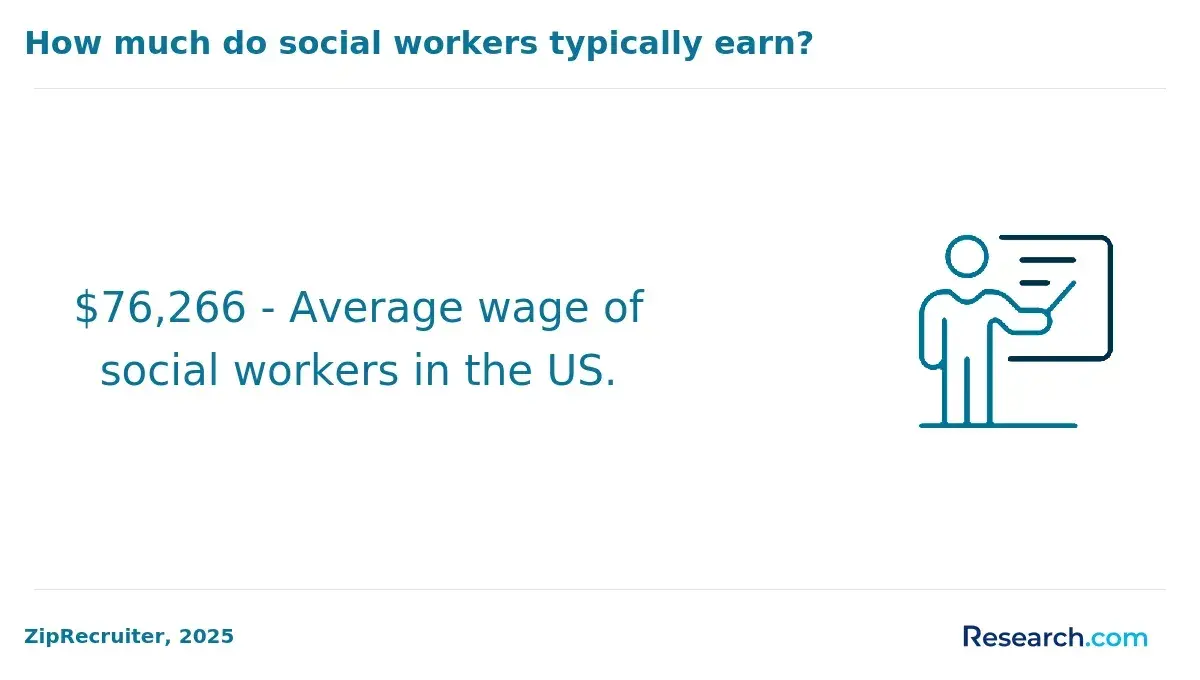
Social worker pay in Pennsylvania varies by role, license level, experience, employer type, region, and specialization. Entry-level roles generally pay less than advanced clinical, healthcare, supervisory, or specialized positions. LCSW credentials and substantial experience can improve access to higher-responsibility roles, but salaries are not guaranteed and should be evaluated by local job postings and employer requirements.
Students should compare salary expectations against program cost before enrolling. For more detailed income comparisons and state-specific context, review how much a social worker makes.
Is pursuing a DSW degree beneficial for advancing social work careers?
A Doctorate in Social Work can be useful for experienced practitioners who want to move into advanced leadership, teaching, policy, program development, or high-level administrative work. It is usually not the first credential students need for Pennsylvania social work licensure, and it may not be necessary for many clinical roles.
A DSW makes the most sense when the degree clearly supports a career move that an MSW and experience alone may not provide. Before enrolling, compare tuition, time commitment, employer value, and whether the program is practice-focused or research-focused. Cost-conscious professionals can review the cheapest CSWE-accredited online DSW programs.
Common mistakes to avoid when choosing an MSW program in Pennsylvania
| Mistake | Why it can hurt you | Better approach |
| Choosing a program before checking CSWE accreditation | Licensure eligibility may be affected if the degree does not meet Pennsylvania requirements. | Verify accreditation directly before applying or enrolling. |
| Looking only at tuition | Fees, travel, field placement costs, and lost work hours can change the real price. | Calculate total cost of attendance and likely debt. |
| Assuming online means fully flexible | Live classes and field education may still require fixed hours. | Ask for weekly schedule expectations and field placement timelines. |
| Ignoring field placement quality | Field education can shape your skills, references, and first job opportunities. | Ask where students are placed and how sites are approved. |
| Assuming all MSW tracks lead to the same career | Clinical, macro, school, healthcare, and community practice preparation can differ. | Match concentrations and electives to your intended practice area. |
| Relying only on rankings | A highly ranked school may not be affordable or practical for your schedule and location. | Use rankings as one input, not the entire decision. |
Fulfilling Social Work Careers in Pennsylvania
Social work can be a meaningful career path for students who want to support individuals, families, and communities through advocacy, counseling, case management, policy work, crisis intervention, and service coordination. In Pennsylvania, the most important early decisions are choosing the right degree level, confirming accreditation, and understanding the licensure steps before investing in graduate school.
If you are exploring careers for social workers in PA, start by deciding whether you want entry-level social services work, LSW eligibility, or eventual LCSW licensure. Then compare program format, field placement support, specialization options, and total cost. Students who need flexible or lower-cost options can also compare MSW online programs that align with their goals.
Key Insights
- CSWE accreditation is the first filter. If your goal is Pennsylvania LSW or LCSW licensure, confirm that the MSW or doctoral social work program meets state expectations before enrolling.
- The LCSW path takes longer than the LSW path. Pennsylvania requires 3,000 supervised post-graduate clinical hours for LCSW candidates after the MSW and LSW steps.
- Advanced standing can reduce cost and time. Students with a CSWE-accredited BSW may qualify for a shorter MSW, but admission requirements vary by school.
- Online MSW programs still require fieldwork. Flexibility helps, but students must plan for approved practicum hours, often in person and sometimes during standard agency hours.
- Program cost should be measured as total cost, not tuition alone. Fees, travel, technology, books, internship scheduling, and reduced work hours can all affect affordability.
- Specialization matters. Clinical mental health, substance use, child and family welfare, aging, healthcare, and trauma-informed practice are important areas to evaluate in Pennsylvania.
- An MSW is most valuable when tied to a clear goal. It is strongest as an investment when it supports licensure, clinical practice, specialized roles, or advancement that would be difficult with a bachelor’s degree alone.
- Do not confuse counseling and social work licensure. The fields may overlap in behavioral health settings, but degree requirements, supervised hours, exams, and scopes of practice differ.
References:
- CareerOneStop. (n.d.). Child, family, and school social workers: Occupation profile. https://www.careeronestop.org/Toolkit/Careers/Occupations/occupation-profile.aspx?keyword=Child%2C+Family%2C+and+School+Social+Workers&location=Gettysburg%2C+PA&onetcode=21102100
- Commonwealth of Pennsylvania. (n.d.). Social workers licensure processing guides. https://www.pa.gov/agencies/dos/resources/professional-licensing-resources/licensure-processing-guides-and-timelines/social-workers-guide
- National Association of Social Workers. (n.d.). Social work salaries. https://www.socialworkers.org/careers/career-center/kickstart-your-job-hunt/social-work-salaries
- SocialWorkDegrees.org. (n.d.). MSW career outcomes and specialties. https://www.socialworkdegrees.org/program/masters/pennsylvania
- U.S. Bureau of Labor Statistics. (2025). Social workers: Occupational Outlook Handbook. https://www.bls.gov/ooh/community-and-social-service/social-workers.htm
Other Things You Should Know About Master’s in Social Work (MSW) Programs in Pennsylvania (PA)
Yes, Pennsylvania offers online MSW programs, blending flexibility with rigorous coursework. Institutions such as the University of Pennsylvania provide online options, allowing students to balance studies with personal commitments while pursuing a comprehensive social work education.
In 2027, most full-time MSW programs in Pennsylvania take around two years to complete. Part-time students may take three to four years, while advanced standing options, for those with a Bachelor of Social Work, can be completed in as little as one year.
MSW programs in Pennsylvania offer various specializations, including Clinical Social Work, School Social Work, and Health Care Social Work. These specializations allow students to focus their education on a specific area of interest, tailoring their skills to meet specific career goals.
Yes, accreditation is crucial. Choosing a program accredited by the Council on Social Work Education (CSWE) ensures the program meets high educational standards and is recognized for licensure eligibility. Accreditation also signifies quality education and training in social work.


