2027 Online General Studies Degrees That Help Build Analytical Thinking Skills

Co-Founder and Chief Data Scientist
Choosing a flexible bachelor's degree is harder when you need both career options and stronger analytical thinking. An online general studies degree can help adults, transfer students, and undecided majors combine courses in communication, data, social science, business, and humanities.
Cost makes the decision important: College Board reported average published in-state tuition and fees at public four-year colleges at $11,610 for 2024-25. This guide explains how these programs work, what they cost, which careers they can support, and how to compare schools before enrolling.
Key Things You Should Know
- Online general studies bachelor's programs are usually 120-credit degrees that let students combine multiple disciplines while strengthening research, writing, quantitative reasoning, and evidence-based decision-making.
- College Board's 2024-25 figures show average published tuition and fees of $11,610 for in-state public four-year colleges, $30,780 for out-of-state public colleges, and $43,350 for private nonprofit four-year colleges.
- Career outcomes depend on the concentrations, internships, work history, and added credentials students choose; BLS May 2024 wage data show analytically focused roles such as market research analyst and management analyst can have median annual wages from the mid-$70,000s to above $100,000.
What is an online general studies degree and how does it develop analytical thinking skills?
An online general studies degree is an interdisciplinary college program, usually offered as a Bachelor of Arts, Bachelor of Science, Bachelor of General Studies, or Bachelor of Liberal Studies. Instead of preparing students for one narrow licensed profession, it lets them build a customized academic plan across areas such as communication, business, behavioral science, humanities, technology, public administration, and data analysis.
The analytical value of the degree comes from how students connect ideas across fields. A well-designed program asks students to compare sources, interpret information, write evidence-based arguments, solve open-ended problems, and explain decisions clearly. That combination is useful in workplaces where problems rarely fit inside a single academic category.
General studies can be a good fit for students who already have transfer credits, adults returning to finish a bachelor's degree, military learners, working professionals who need a broad credential for promotion, or students who want flexibility before committing to a specialized path.
It may not be the best fit for students whose target job requires a specific major, clinical training, teacher certification, engineering accreditation, accounting prerequisites, or state licensure.
Compared with some highly prescribed majors, general studies is often flexible, but flexible does not mean effortless. Students comparing easy degrees to get should look beyond course load and ask whether the curriculum actually builds writing, research, reasoning, and workplace problem-solving skills.
The strongest programs usually include several learning experiences that directly develop analytical thinking. These features matter because they turn a broad degree into a coherent skill-building plan:
- A required interdisciplinary seminar where students analyze a complex issue from more than one field.
- Research and writing courses that teach students to evaluate evidence, cite sources, and build logical arguments.
- Quantitative reasoning or statistics courses that help students interpret data instead of relying on instinct alone.
- Concentration options that let students connect general education with a practical career area such as business, health services, technology, public service, or communication.
- A capstone project that requires students to define a problem, gather evidence, compare solutions, and present a defensible conclusion.
How do online general studies programs compare to campus-based options for building critical thinking?
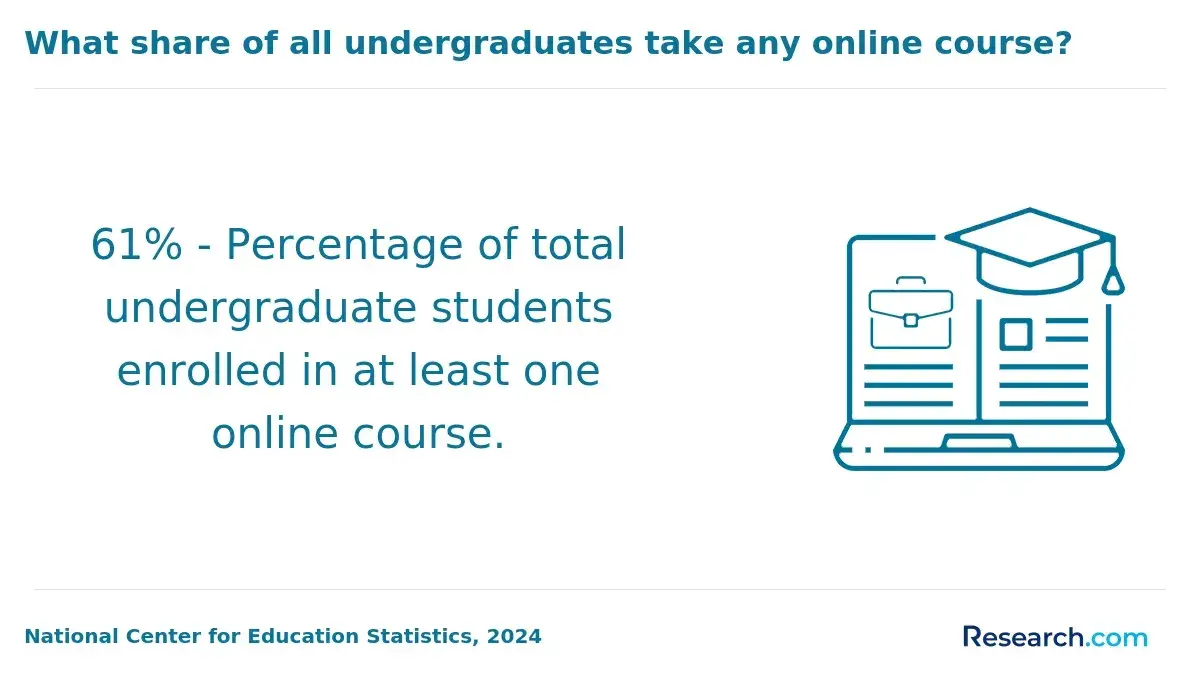
Online and campus-based general studies programs can both build critical thinking, but they do it in different learning environments. The better choice depends on your schedule, learning style, access to campus resources, and need for structure.
The table below compares the main academic trade-offs. Use it to decide which format is more likely to help you stay engaged and practice analytical skills consistently:
| Factor | Online general studies | Campus-based general studies |
| Critical thinking practice | Often built through discussion boards, written analysis, virtual group projects, research papers, and recorded presentations. | Often built through live classroom debate, in-person seminars, labs, group work, and immediate instructor feedback. |
| Flexibility | Best for working adults, parents, military learners, and students who need asynchronous coursework. | Best for students who can attend classes at fixed times and benefit from a physical academic routine. |
| Interaction style | More writing-heavy; students may have more time to reflect before responding. | More spontaneous; students practice verbal reasoning and discussion in real time. |
| Accountability | Requires strong time management and comfort using learning platforms. | Provides more built-in structure through scheduled meetings and campus presence. |
| Access to support | Varies by school; strong programs offer online tutoring, library access, advising, career coaching, and tech support. | Often easier to access in-person tutoring, faculty office hours, student organizations, and campus career events. |
Online programs can be just as academically rigorous when they include substantive assignments, instructor feedback, peer discussion, and proctored or authentic assessments. The main risk is choosing a program that is convenient but passive, with too many multiple-choice assessments and too little writing or applied analysis.
Students who thrive online usually create structure before classes begin. A practical approach is to block weekly study time, use office hours early, save examples of strong writing and analysis for a portfolio, and choose electives that reinforce a career direction rather than picking random courses.
Which accredited schools offer reputable online general studies degrees in the United States?
Many regionally accredited U.S. institutions offer online general studies, liberal studies, interdisciplinary studies, or multidisciplinary studies degrees. Program names differ, so students should compare curriculum structure rather than relying only on the title.
The schools below are examples of established U.S. institutions with reputable online degree options in general studies or closely related interdisciplinary fields.
Availability, tuition, transfer policies, and course formats can change, so students should verify current details with the school and confirm institutional accreditation through the U.S. Department of Education or the Council for Higher Education Accreditation.
| School | Relevant online degree option | Why it may fit analytical-skill goals |
| Arizona State University | Online Bachelor of Liberal Studies or interdisciplinary options | Offers broad coursework that can combine humanities, social sciences, communication, and applied problem-solving. |
| Penn State World Campus | Online Bachelor of Arts or Bachelor of Science in Letters, Arts, and Sciences | Designed for interdisciplinary study and often attractive to transfer students seeking a customizable degree path. |
| University of North Texas | Online Bachelor of Applied Arts and Sciences | Can serve students with prior credits or technical experience who want to connect applied learning with broader analysis. |
| Fort Hays State University | Online Bachelor of General Studies | Known for flexible concentration choices that can help students align a broad degree with career interests. |
| University of Missouri | Online Bachelor of General Studies | Supports individualized study plans across multiple academic areas, useful for students with varied prior coursework. |
| Thomas Edison State University | Online Bachelor of Arts in Liberal Studies or related degree-completion options | Often considered by adult learners because of transfer-friendly policies and flexible pathways. |
A reputable program should be accredited, transparent about total cost, clear about transfer credit rules, and specific about learning outcomes. If a school advertises speed or convenience but gives little information about writing requirements, capstone projects, faculty qualifications, or student support, treat that as a warning sign.
What core courses in general studies most directly strengthen analytical and problem-solving abilities?
The most valuable general studies courses are not always the easiest ones. Courses that require students to read closely, interpret evidence, work with data, and defend conclusions tend to build the strongest analytical foundation.
The table below connects common core courses with the analytical abilities they develop. This can help students choose electives intentionally instead of treating general studies as a loose collection of credits:
| Course area | Analytical skill strengthened | Why it matters in the workplace |
| Research methods | Evaluating sources, designing questions, recognizing bias, and comparing evidence. | Helps employees make recommendations based on credible information rather than assumptions. |
| Statistics or quantitative reasoning | Interpreting numerical information, identifying patterns, and understanding uncertainty. | Useful in operations, marketing, public service, healthcare administration, and management support roles. |
| College writing and argumentation | Building clear claims, organizing evidence, and explaining reasoning. | Supports reports, proposals, policy briefs, business cases, and professional communication. |
| Ethics | Identifying stakeholders, weighing consequences, and defending responsible decisions. | Important when work involves data privacy, public trust, personnel decisions, or resource allocation. |
| Communication theory | Analyzing audiences, messages, persuasion, and conflict. | Helps graduates communicate findings to managers, clients, teams, and community members. |
| Social science courses | Understanding human behavior, institutions, and social patterns. | Useful for roles involving customers, communities, employees, or public programs. |
| Business fundamentals | Connecting data, strategy, finance, operations, and organizational goals. | Helps students translate broad thinking into decisions employers recognize. |
| Capstone seminar | Integrating multiple disciplines to solve a defined problem. | Creates a portfolio-ready example of applied analysis. |
Students who want a stronger employment signal should cluster electives around a theme. For example, a student interested in operations could combine statistics, project management, business communication, and information systems. A student interested in public service could combine policy analysis, sociology, ethics, grant writing, and public administration.
AI is also changing what analytical coursework should include. Students should look for assignments that require source evaluation, data interpretation, ethical reasoning, and clear explanation of how conclusions were reached. As AI tools become common in offices, employers are likely to value workers who can question outputs, check evidence, and communicate judgment.
What are the typical admission requirements for online general studies bachelor's programs?
Admission requirements for online general studies bachelor's programs are usually similar to other undergraduate programs, but degree-completion programs may place extra emphasis on prior college credits. Requirements vary by school, applicant type, and whether the student is applying as a first-year, transfer, military, or returning adult learner.
Most applicants should be prepared to provide the following materials. These items help schools evaluate readiness and determine how many credits can apply toward the degree:
- A high school diploma, GED, or equivalent documentation for first-year applicants.
- Official transcripts from all previously attended colleges for transfer or returning students.
- A minimum GPA that may vary by institution and applicant category.
- An online application and application fee, although some schools waive fees during certain periods.
- Placement information or prior coursework in writing and math, especially if the student has limited college credit.
- Proof of English proficiency for applicants whose prior education was not in English, when required by the institution.
- Military transcripts, professional training records, or prior learning assessment materials if the school accepts them for credit.
Standardized tests are less common for many adult and transfer-focused online programs, but students should still check current admissions policies. Test-optional does not mean admission is automatic; schools may still consider GPA trends, completed college courses, and readiness for upper-division writing.
Transfer credit is one of the biggest decision points. Before enrolling, ask for an official or preliminary transfer evaluation, not just a verbal estimate. A program that accepts more credits can reduce time and cost, but only if those credits apply to degree requirements rather than sitting as unused electives.
How long do online general studies degrees take, and what do they cost to complete?
Most online general studies bachelor's degrees require about 120 credits. First-time college students studying full time often need around four years, while transfer students may finish faster depending on how many credits apply. Part-time students may take longer, but the slower pace can be worth it if it prevents dropped courses or additional debt.
Cost depends on tuition, fees, transfer credits, residency rules, books, technology requirements, and how efficiently the student completes the program. College Board's 2024-25 published tuition and fee averages provide a useful benchmark for comparing school quotes:
- Average published in-state tuition and fees at public four-year colleges: $11,610.
- Average published out-of-state tuition and fees at public four-year colleges: $30,780.
- Average published tuition and fees at private nonprofit four-year colleges: $43,350.
These figures are not the same as net price after grants and scholarships, but they show why students should compare total cost carefully. Online programs may charge separate distance-learning fees, flat-rate tuition, or the same tuition for in-state and out-of-state students.
The table below summarizes common timeline and cost scenarios. It is most useful for estimating trade-offs before requesting official tuition and transfer evaluations from schools:
| Student situation | Typical completion pattern | Cost consideration |
| First-time full-time student | Usually completes about 120 credits over four academic years. | Total cost depends heavily on annual tuition, fees, books, and whether summer courses are used. |
| Transfer student with 60 accepted credits | May need about two years of full-time study. | Transfer acceptance can substantially reduce remaining tuition if credits apply to major and general education requirements. |
| Working adult studying part time | May take three to six years depending on course load and transferred credits. | A slower pace can reduce burnout but may increase total fees if charged per term. |
| Accelerated student | May finish faster through year-round courses, shorter terms, or heavier loads. | Can reduce time away from higher-paying roles but may be difficult for students with full-time jobs or caregiving duties. |
Students comparing flexible general studies programs with a cheap online business degree should consider both price and career alignment. A lower-cost program is not automatically the better investment if it lacks advising, transfer efficiency, writing support, or relevant electives.
To reduce cost, students can complete transferable general education courses at a community college, apply for federal aid through the FAFSA, ask about employer tuition assistance, use military or veteran benefits if eligible, and avoid changing concentrations late in the program.
What career paths can graduates with online general studies degrees pursue?
General studies graduates can pursue many career paths, but the degree works best when paired with a clear concentration, internships, work experience, or technical skills. Employers usually evaluate the whole candidate: degree, communication skills, analytical ability, software skills, experience, and evidence of follow-through.
The table below shows career directions where a general studies background can be relevant. These are not guaranteed outcomes, and some roles may require specialized coursework, experience, certifications, or graduate education:
| Career direction | Common responsibilities | Helpful concentration or add-on skill |
| Business operations coordinator | Tracks processes, prepares reports, coordinates projects, and helps teams solve workflow problems. | Business fundamentals, Excel, project management, data visualization. |
| Market research or consumer insights assistant | Collects information, summarizes trends, supports surveys, and helps interpret customer behavior. | Statistics, research methods, marketing, survey tools. |
| Human resources specialist | Supports recruiting, onboarding, employee records, training coordination, and policy communication. | Psychology, communication, labor relations, HR software. |
| Public service or nonprofit program coordinator | Organizes programs, tracks outcomes, communicates with stakeholders, and supports grant reporting. | Public administration, sociology, grant writing, program evaluation. |
| Communications specialist | Writes content, prepares internal messages, supports campaigns, and analyzes audience response. | Writing, digital media, communication analytics, public relations. |
| Training and development assistant | Helps create learning materials, coordinate workshops, and evaluate training effectiveness. | Education, communication, instructional technology. |
| Customer success or client services analyst | Reviews client needs, resolves issues, identifies patterns, and recommends improvements. | Business communication, data analysis, CRM platforms. |
Students who want a more direct business pathway may compare general studies with an online degree business administration. Business administration is usually more structured for management, finance, marketing, and operations roles, while general studies offers more flexibility for students combining multiple interests or transferring varied credits.
A smart career strategy is to turn the degree into a portfolio. Students can save research papers, data projects, policy briefs, presentations, and capstone work that show how they analyze problems. This is especially helpful for graduates whose major title is broad and needs explanation during interviews.
What salary ranges and earning potential are common for general studies graduates?
Salary potential for general studies graduates varies because the degree can lead to many different fields. The major itself is not usually the salary driver; role, industry, location, experience, technical skills, and graduate education often matter more.
BLS May 2024 wage data provide useful context for occupations that commonly value analytical thinking, communication, and problem-solving. These figures describe occupational medians, not outcomes for every general studies graduate:
| Occupation | Relevant analytical work | Median annual wage from BLS May 2024 data |
| Market research analyst | Studies consumers, competitors, and data trends to support business decisions. | $76,950 |
| Human resources specialist | Analyzes hiring needs, employee information, policies, and workforce processes. | $72,910 |
| Management analyst | Evaluates organizational problems and recommends efficiency improvements. | $101,190 |
| Public relations specialist | Interprets audience needs, prepares messaging, and evaluates communication impact. | $69,780 |
These salaries should be used as comparison points, not promises. A new graduate in a support role may start below the occupational median, while someone with years of experience, strong data skills, or industry knowledge may qualify for higher-paying roles over time.
Students focused primarily on earning potential should compare general studies with more specialized high-ROI majors. A guide to the best 4 year degrees can help show where more technical or professionally aligned bachelor's programs may lead to stronger salary pathways.
For general studies students, the most practical way to improve earning potential is to build a concentration with marketable evidence. Examples include a data analysis certificate, project management coursework, HR preparation, digital marketing experience, grant writing samples, or internship experience in a target field.
How is the job outlook for careers that value analytical skills gained in general studies?
The job outlook is strongest for general studies graduates who can connect broad analytical skills to specific workplace problems. Employers increasingly need workers who can interpret information, communicate across teams, adapt to changing tools, and make sound judgments when information is incomplete.
BLS employment projections released in 2024 show especially strong demand in several analysis-heavy occupations for 2023-33. For example, management analysts are projected to grow 11% over that period, faster than the average for all occupations. This matters for general studies students because it shows demand for problem-solving roles, but applicants still need relevant experience and business or technical fluency.
AI and automation are also reshaping entry-level work. Routine summarizing, basic drafting, and simple data cleanup can increasingly be supported by software. That does not eliminate the value of a broad degree, but it raises the bar: graduates need to show they can ask better questions, validate information, understand context, and communicate decisions responsibly.
Graduates can improve their job outlook by taking deliberate steps while still enrolled. These actions help convert broad academic learning into employer-recognized readiness:
- Choose a concentration tied to a real labor market, such as business operations, data-informed communication, public administration, HR, or health services administration.
- Complete at least one internship, practicum, volunteer project, or work-based capstone before graduation.
- Learn widely used tools such as spreadsheets, presentation software, databases, CRM systems, or basic visualization platforms.
- Build a portfolio that includes writing samples, data summaries, project plans, and presentations.
- Use career services early to translate broad coursework into role-specific resumes and interview examples.
The degree is likely to be less effective for students who complete random electives without a career theme. In a competitive labor market, a coherent story matters: students should be able to explain what they studied, what problems they can solve, and what evidence proves it.
How can students evaluate and choose a high-quality online general studies program?
Choosing a high-quality online general studies program requires more than finding the fastest or cheapest option. The right program should match your credits, budget, schedule, learning style, and career direction.
Start by narrowing programs based on nonnegotiables. These checks help protect your time, money, and future options:
- Confirm institutional accreditation through recognized accreditation databases before applying.
- Request a transfer credit evaluation and ask which credits apply to specific degree requirements.
- Compare total cost, including tuition, fees, books, technology charges, residency rules, and expected remaining credits.
- Review the curriculum for research, writing, quantitative reasoning, and capstone requirements.
- Check whether concentrations align with your target field rather than only your personal interests.
- Ask about online tutoring, library access, writing support, career coaching, disability services, and technical support.
- Look for evidence of student outcomes, such as retention, graduation support, internship access, or career services transparency.
Next, watch for common mistakes. These red flags do not always mean a program is bad, but they are reasons to ask tougher questions before enrolling:
- Choosing a school because it promises speed without explaining academic workload or transfer limits.
- Focusing only on per-credit tuition while ignoring fees, repeated courses, unused transfer credits, or extended time to completion.
- Assuming online means self-paced when many programs still have weekly deadlines and fixed terms.
- Picking a concentration that sounds interesting but does not connect to job postings, internships, or graduate school prerequisites.
- Ignoring whether the program includes enough writing, research, and quantitative work to build real analytical skills.
- Relying only on rankings instead of comparing curriculum fit, advising quality, cost, and credit transfer.
A strong final test is to ask the admissions or academic advisor specific questions. Ask how many credits you still need, what your estimated total cost will be, whether courses are asynchronous or live, how often required courses are offered, what career services are available to online students, and what graduates commonly do after finishing the degree.
The best online general studies degree is not simply the broadest one. It is the program that helps you finish efficiently, build a coherent academic focus, and prove analytical thinking through concrete work samples.
Other Things You Should Know About General Studies
A general studies degree can be a good option for transfer students due to its flexible curriculum, which allows the transfer of a wide range of credits. This flexibility can help students tailor their degree path to align with previous coursework and their future goals.
Yes, in many cases, but it depends on the graduate program. Some programs accept many undergraduate majors, while others require specific prerequisites in areas such as psychology, accounting, education, healthcare, or statistics.
Many 2027 online general studies degrees require a capstone in the final term, usually worth 3 to 6 credits. Students complete a research paper, presentation, or applied problem-solving project, often after finishing core writing, math, and social science courses.
References
- Critical Thinking in Online Vs. Face-to-Face Higher Education - Media Psychology Review https://mprcenter.org/review/derwin-criticalthinkingonlineed/
- Like Solving Problems? Top Jobs For Analytical Thinkers - Careers Event https://www.careersevent.com.au/top-jobs-for-analytical-thinkers/
- General Studies Degree Jobs: 10 Careers + Salaries (2026) | Extern https://www.extern.com/post/general-studies-degree-jobs-career-guide
- Online Degree vs. Traditional: Choosing the Right Path https://beal.edu/online-degree-vs-traditional/
- 2025 Best Accredited Online Colleges and Universities https://www.onlineu.com/online-schools
- Learning Resources: Employability Skills: Problem Solving and Analytical Skills https://libguides.wigan-leigh.ac.uk/c.php
- Online Bachelor's Degree: General Studies https://www.umgc.edu/online-degrees/bachelors/general-studies
- How to Choose an Online College in 10 Easy Steps https://www.straighterline.com/blog/choose-accredited-online-college-10-easy-steps
- Teaching & Assessing Analytical Thinking | Center for Assessment https://www.nciea.org/blog/analytical-thinking-as-a-21st-century-skill/
- Essential Analytical Skills Course | MSU Online https://www.michiganstateuniversityonline.com/programs/course/essential-analytical-skills/