2027 Online General Studies Degrees With Low Total Student Debt Potential

Co-Founder and Chief Data Scientist
Choosing an online general studies degree is often a cost-control decision as much as an academic one. U. S. student loan balances remained around $1.6 trillion in Federal Reserve reporting, so students increasingly need flexible degrees that maximize transfer credit and minimize borrowing. This guide is for adult learners, transfer students, military-connected students, and undecided majors who want a bachelor's degree without overcommitting to a narrow field. You'll learn how to compare accredited programs, estimate total cost, use aid strategically, and judge whether general studies supports your career goals.
Key Things You Should Know
- Low-debt online general studies programs usually combine regionally accredited status, low per-credit or flat-term tuition, generous transfer policies, and limited campus-based fees.
- College Board's 2024 pricing data shows published tuition and fees at public two-year colleges averaged $4,050, making community college transfer credits one of the strongest debt-reduction tools.
- BLS May 2024 data shows several bachelor's-level roles open to broad majors, such as human resources specialist and market research analyst, had median pay above $70,000, but outcomes depend heavily on experience, skills, location, and industry.
What is an online general studies degree, and how can it help reduce student debt?
An online general studies degree is a broad undergraduate program that lets students combine courses from several fields, commonly humanities, social sciences, business, communication, technology, and public service. At the bachelor's level, it is usually designed for students who already have college credits, changed majors, left school before finishing, or need a flexible degree-completion path.
The debt-reduction advantage comes from flexibility. A highly structured major may reject older or unrelated credits, forcing students to retake courses. A general studies program often accepts more electives and applies them toward graduation, which can reduce both time enrolled and the number of credits paid for at the new school.
This degree can be a strong fit if your main goal is to finish a bachelor's credential for career mobility, promotion eligibility, graduate school prerequisites, or public-sector job requirements. It may be less ideal if you need a tightly sequenced major for licensure, such as nursing, engineering, accounting licensure, or teacher certification. Students comparing broad, flexible majors may also want to review easiest online degrees, but "easiest" should not mean "least useful"; the better goal is choosing a program that fits your credits, schedule, and career direction.
General studies can lower borrowing most effectively when students use it as a completion strategy rather than starting from zero at a high-cost institution. The biggest savings usually come from transfer credit, prior learning assessment, military credit, employer tuition assistance, and avoiding unnecessary course duplication.
Which accredited online general studies programs offer the lowest total student debt potential?
The lowest-debt option is not always the school with the lowest sticker tuition. For online general studies students, total debt potential depends on the number of credits accepted, whether tuition is per credit or flat term, fees, textbook costs, and how quickly the student can finish. The examples below are accredited, online-friendly programs or close equivalents that are commonly worth comparing for debt-conscious degree completion.
This table summarizes program models that can reduce borrowing. Always verify current tuition, fees, residency rules, transfer limits, and degree name directly with the school before applying, because online rates and catalogs can change.
| School and program model | Accreditation type to verify | Published cost model to review | Why it may lower debt potential | Best fit |
| Fort Hays State University, online Bachelor of General Studies | Regional accreditation through the Higher Learning Commission | FHSU's online undergraduate tuition has been published around the low-$200s per credit in recent catalogs | Low per-credit pricing and a degree structure built for broad transfer application | Students who want a traditional public-university online bachelor's with many concentration options |
| University of Maine at Presque Isle, YourPace Liberal Studies pathway | Regional accreditation through NECHE | Flat-rate, session-based tuition model, commonly advertised at $1,700 per eight-week session | Competency-based pacing can lower cost for students who complete courses quickly | Self-directed adult learners with transfer credits and strong time-management skills |
| Southern New Hampshire University, online General Studies bachelor's pathway | Regional accreditation through NECHE | Per-credit online undergraduate tuition, commonly listed at $330 per credit before aid | Large transfer-credit capacity and frequent online start dates can reduce delays | Students who value structured online support and predictable course scheduling |
| Oregon State University Ecampus, Liberal Studies option | Regional accreditation through the Northwest Commission on Colleges and Universities | Per-credit Ecampus tuition, commonly listed in the mid-$300s per undergraduate credit plus fees | Public research university online delivery with interdisciplinary curriculum options | Students who want a broad liberal studies degree from a well-known public university |
Programs with the strongest low-debt potential usually share several traits. Look for these before focusing on branding or rankings:
- Regionally accredited institution status, because it affects transferability, graduate school eligibility, and employer acceptance.
- A written transfer evaluation before enrollment, not just a verbal estimate from admissions.
- At least 75 to 90 transferable credits allowed toward a 120-credit bachelor's degree, if you already have substantial coursework.
- Transparent online tuition and mandatory fees, including technology, graduation, proctoring, and course-material charges.
- Flexible elective space that can absorb previous credits without forcing extra semesters.
A common mistake is choosing the lowest per-credit rate without checking how many credits remain after evaluation. A $260-per-credit program requiring 60 new credits can cost more than a $330-per-credit program that accepts enough transfer work to leave only 30 credits.
How do online general studies degrees compare to campus programs for cost and flexibility?
Online general studies degrees usually offer more schedule flexibility than campus programs, especially for working adults. Cost savings can come from avoiding commuting, housing, relocation, parking, and some campus fees. However, online is not automatically cheaper; some schools charge the same tuition online and on campus, while others add distance-learning fees.
College Board's 2024 Trends in College Pricing reported average published tuition and fees of $11,610 for in-state students at public four-year institutions. For online students, that number is useful as a benchmark: if an online program's total annual tuition and fees are far above local in-state options, the convenience must be worth the added cost.
The comparison below shows when each format is more likely to make financial and practical sense.
| Factor | Online general studies | Campus general studies | Decision point |
| Schedule | Often asynchronous or evening-friendly | Usually tied to set class times and campus availability | Online is stronger for full-time workers and caregivers |
| Cost beyond tuition | May reduce transportation, housing, and relocation costs | May include commuting, parking, meal, and housing expenses | Calculate total attendance cost, not tuition alone |
| Academic support | Online advising, tutoring, library access, and career services vary by school | In-person advising and campus offices may be easier to access | Ask how online students receive support before enrolling |
| Networking | Discussion boards, virtual projects, remote career events | Face-to-face clubs, events, and local employer connections | Campus can be stronger if local networking is central to your goal |
| Completion speed | Often multiple start dates and compressed terms | Usually follows semester or quarter calendars | Online may shorten time to completion if credits transfer well |
Students who want speed should compare regular online programs with accelerated programs online. The trade-off is workload: accelerated courses can reduce calendar time, but they are not easier. They work best for students who can protect study time every week.
What admission requirements do most online general studies bachelor's programs have?
Most online general studies bachelor's programs use standard undergraduate or degree-completion admissions requirements. Selectivity varies widely: some public universities and private nonprofit institutions are moderately selective, while many adult-focused programs use open or transfer-friendly admissions for students who meet minimum academic thresholds.
Before applying, gather the documents schools commonly request. Having these ready can speed up admission and transfer evaluation:
- High school diploma, GED, or equivalent if entering without prior college completion.
- Official transcripts from every college previously attended, even if the credits are old or grades were low.
- Minimum college GPA, often around 2.0 for transfer admission, though some schools set higher standards.
- Application form and fee, though some online programs waive the fee during certain enrollment periods.
- Proof of English proficiency for applicants whose prior education was not in English.
- Military transcripts, professional training records, or standardized exam records if seeking credit for prior learning.
Many programs do not require SAT or ACT scores for adult learners or transfer students. The more important question is not whether you can get admitted, but how your previous credits apply to the degree. Ask for a degree audit that shows exactly which requirements are complete, which credits transfer only as electives, and how many courses remain.
A red flag is any school that pressures you to enroll before providing a clear estimate of transfer credit. Without that estimate, you cannot accurately judge time, cost, or borrowing needs.
How long does it typically take to complete an online general studies degree?
A bachelor's degree normally requires about 120 semester credits. A first-time student studying full time usually needs about four years, while a transfer student with an associate degree may finish in about two years. Adult learners with 90 accepted credits may need only one year or less if the program offers frequent start dates and enough course availability.
Completion time depends less on the label "online" and more on transfer credit, course load, term length, and personal availability. The National Student Clearinghouse Research Center reported in 2024 that many students now move across institutions before completing a credential, which makes transfer policy a major factor in graduation timelines.
Use this sequence to estimate your realistic timeline before enrolling:
- Request unofficial transfer reviews from at least three accredited programs before submitting deposits.
- Compare how many credits each school applies to general education, major, concentration, and elective requirements.
- Identify courses offered only once per year, because these can delay graduation even in online programs.
- Decide whether you can sustain full-time enrollment, part-time enrollment, or one accelerated course at a time.
- Build a term-by-term plan with an advisor and confirm that every planned course is available online.
Full-time study can reduce calendar time, but part-time study may reduce borrowing if it lets you keep working and pay some costs out of pocket. The best pace is the one you can complete without repeated withdrawals, because dropped courses can waste both financial aid eligibility and tuition.
What core courses and concentrations are common in online general studies programs?
General studies degrees usually combine a liberal education core with flexible electives or concentrations. The academic goal is to build transferable skills: communication, critical thinking, quantitative reasoning, ethical judgment, information literacy, and problem solving across disciplines.
Common course areas include writing, public speaking, humanities, natural science, math, social science, technology, and upper-division interdisciplinary seminars. Many programs also let students choose a concentration or emphasis that gives the degree clearer career direction.
The table below shows common concentration areas and how they can support career planning.
| Concentration or emphasis | Typical courses | Career relevance | Best for |
| Business or organizational leadership | Management, accounting basics, marketing, organizational behavior | Supports administrative, supervisory, operations, and entry-level business roles | Students seeking broad private-sector or nonprofit career mobility |
| Communication | Professional writing, public relations, digital media, interpersonal communication | Useful for customer success, training, marketing support, and internal communications | Students who want writing-heavy or people-centered roles |
| Social science | Psychology, sociology, political science, research methods | Relevant to human services, public administration support, and community programs | Students considering public service or graduate study |
| Information technology foundations | Computer applications, data literacy, cybersecurity basics, systems concepts | Can strengthen eligibility for tech-adjacent roles when paired with certifications | Students who want digital workplace skills without a full computer science major |
| Public service or nonprofit studies | Public policy, grant writing, ethics, community leadership | Supports government, nonprofit, and social impact roles | Students with service, military, or community leadership experience |
If your goal is business employment, compare a general studies concentration with a dedicated online business degree. A general studies degree may accept more transfer credits, while a business degree may provide a clearer signal for accounting, finance, management, or analytics roles.
How can students estimate total tuition, fees, and borrowing needs for these programs?
To estimate debt, start with remaining credits, not advertised annual tuition. Online general studies students often enter with different transfer totals, so two students in the same program can face very different costs. A student needing 30 credits has a different borrowing outlook than one needing 75 credits.
Use this step-by-step method before committing to a program. It helps separate real affordability from marketing claims:
- Confirm the exact number of credits still required after the school completes a transcript evaluation.
- Multiply remaining credits by the online tuition rate, or calculate the number of flat-rate terms you realistically need.
- Add mandatory fees, including technology, online course, graduation, transcript, proctoring, and program fees.
- Estimate books and materials, especially if the school does not use low-cost or included digital course materials.
- Subtract grants, scholarships, tuition assistance, savings, and cash payments you can make without borrowing.
- Compare the remaining amount with federal loan limits and avoid using private loans unless you fully understand interest, repayment, and cosigner risk.
The table below shows cost factors that commonly change the final borrowing amount. These are the items most likely to make the advertised price different from the real cost.
| Cost factor | Why it matters | Debt impact |
| Transfer-credit acceptance | Determines how many credits you still must buy from the new school | Usually the largest driver of total cost |
| Residency requirement | Some schools require a minimum number of credits taken directly from them | Can limit savings even if many credits transfer |
| Per-credit vs flat-term tuition | Per-credit tuition rewards taking fewer courses; flat-term tuition rewards faster completion | Depends on your pace and available study time |
| Course availability | Delayed courses can add extra terms and fees | Can increase cost without adding credits |
| Withdrawal and repeat policies | Failed or dropped courses may still use aid eligibility | Can increase borrowing and extend the timeline |
A practical affordability test is to calculate expected debt at graduation, then compare the monthly payment under a standard 10-year repayment schedule or an income-driven repayment plan. Do not assume future salary will comfortably cover debt; use conservative estimates and include your existing obligations.
What careers can you pursue with a general studies degree, and what are typical salaries?
A general studies degree can support careers that require a bachelor's degree but do not demand a specific technical major. It is often most useful when paired with work experience, internships, industry certificates, a concentration, or a portfolio of projects. Employers may value the degree as evidence of communication, persistence, analytical thinking, and broad workplace readiness.
BLS May 2024 wage data shows that several broad bachelor's-level career areas offer middle-income to upper-middle-income potential, but salaries vary by employer, region, responsibilities, and experience. Use the table as a labor-market reference, not a promise of earnings.
| Career path | Typical responsibilities | Relevant preparation | BLS May 2024 median pay |
| Human resources specialist | Recruiting, employee records, benefits support, onboarding, policy communication | Communication, psychology, business, HR certificate or internship | $72,910 |
| Market research analyst | Survey design, consumer research, data interpretation, competitor analysis | Statistics, marketing, data tools, writing samples | $76,950 |
| Training and development specialist | Employee training, instructional materials, skills assessments, learning platforms | Communication, education, workplace technology, presentation skills | $65,850 |
| Project management specialist | Project planning, schedules, budgets, stakeholder communication, risk tracking | Operations, leadership, spreadsheet skills, project management coursework | $100,750 |
| Social and community service manager | Program coordination, staff supervision, community partnerships, service evaluation | Social science, nonprofit experience, grant writing, public service background | $78,240 |
If salary maximization is your main priority, compare general studies with more specialized highest paying degrees. General studies is often better for flexibility and degree completion, while fields such as engineering, computer science, nursing, and finance may offer clearer occupational pipelines but usually have stricter prerequisites.
AI and automation are also changing employer expectations. Broad-degree graduates can improve competitiveness by showing tool fluency, data literacy, writing ability, and adaptability. For example, a general studies graduate targeting HR can learn applicant-tracking systems, while one targeting marketing can build analytics and content samples.
How is financial aid, scholarships, and employer tuition assistance used to lower debt?
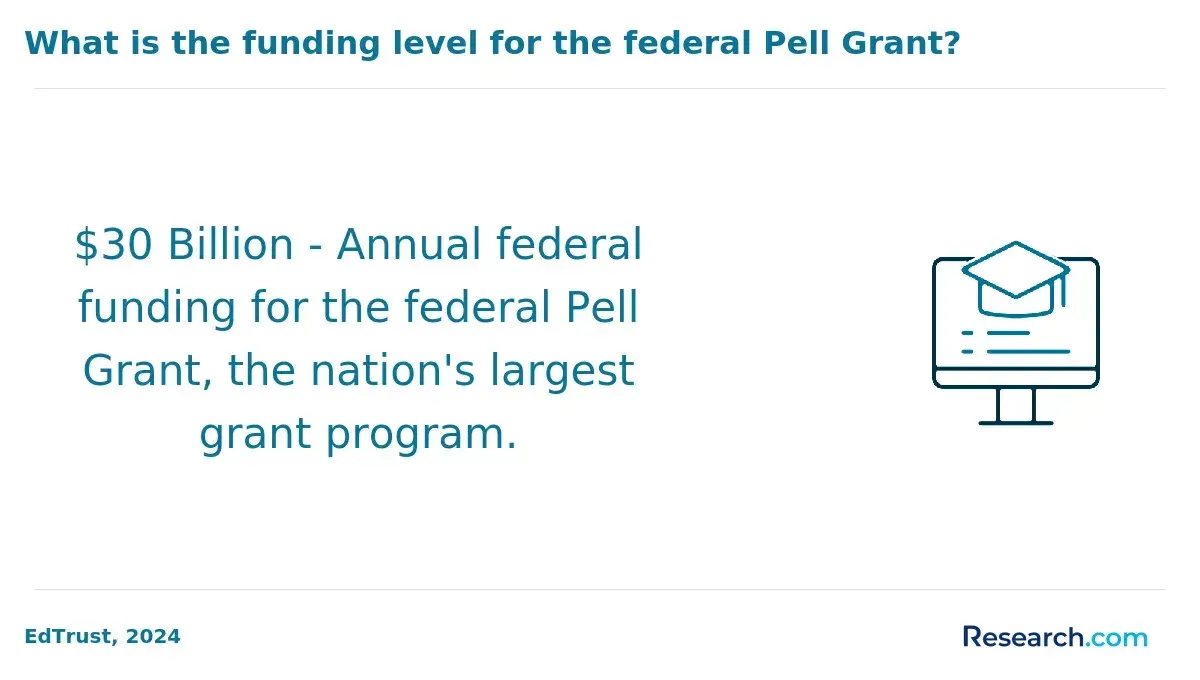
Financial aid can significantly reduce borrowing, but students need to use it in the right order. Start with gift aid and tuition support before considering loans. Federal Student Aid's recent reporting continues to show the Pell Grant as the main federal grant for low- and moderate-income undergraduates, which makes FAFSA completion essential even for online adult learners.
A smart funding strategy usually follows this sequence:
- Submit the FAFSA as early as possible and list every school you are seriously considering.
- Ask each school for a full aid offer that separates grants, scholarships, work-study, federal loans, and private financing.
- Search for adult learner, transfer student, military-connected, first-generation, and major-specific scholarships.
- Use employer tuition assistance if available, but confirm whether you must earn a minimum grade or stay employed after reimbursement.
- Apply military education benefits, veterans benefits, or spouse benefits when eligible, after speaking with a school certifying official.
- Borrow federal subsidized loans before unsubsidized loans when eligible, and treat private loans as a last-resort option.
Employer tuition assistance can be especially valuable for general studies students because the degree is broad enough to align with many roles. However, reimbursement programs often pay after a course is completed, so students may still need a short-term payment plan or savings to cover upfront costs.
One common mistake is accepting the full loan amount offered without calculating the actual gap after grants and cash payments. Aid letters often show maximum eligibility, not the minimum amount you need to borrow.
What criteria should you use to choose a reputable, low-debt online general studies program?
A reputable low-debt program should be accredited, transparent, transfer-friendly, and aligned with your career goal. The right choice is not simply the cheapest school; it is the program that helps you finish with the fewest unnecessary credits, the clearest support, and a credential employers or graduate schools can recognize.
Use these criteria when comparing programs. They focus on the factors most likely to affect cost, completion, and post-graduation usefulness:
- Accreditation: Verify institutional accreditation through a recognized accreditor and be cautious with schools that make vague claims about approval or recognition.
- Transfer policy: Require a written degree audit showing exactly how prior credits apply before you enroll.
- Total cost transparency: Compare tuition, mandatory fees, books, course materials, and graduation fees.
- Student support: Confirm online access to advising, tutoring, library services, disability accommodations, technical help, and career services.
- Course availability: Ask whether all required upper-division courses are offered online often enough to support your graduation timeline.
- Career alignment: Choose electives or a concentration that match job postings you would actually apply for.
- Credit for prior learning: Ask about military credit, professional certifications, exams, portfolios, or workplace training that may count toward the degree.
- Withdrawal policies: Understand refund deadlines, satisfactory academic progress rules, and how dropped courses affect financial aid.
Watch for red flags such as high-pressure enrollment calls, unclear accreditation, no written transfer evaluation, unrealistic promises about salaries, or an unwillingness to disclose full program cost. A trustworthy school should help you understand both the benefits and limitations of the degree before asking you to commit.
The best final step is to compare at least three programs side by side using your own transcript, not generic tuition examples. The program with the lowest debt potential is the one that minimizes remaining credits while still giving you an accredited credential that fits your next career or graduate-school move.
Other Things You Should Know About General Studies
Yes, many employers accept a general studies degree for roles that require any accredited bachelor's degree. It is strongest when paired with relevant experience, a concentration, internships, certificates, or a clear explanation of your skills.
Often, yes. Graduate admission depends on the program's prerequisites, GPA expectations, test policies, recommendations, and fit. Check whether your intended graduate program requires specific undergraduate courses before choosing electives.
Online general studies students at U.S. schools must complete the FAFSA to qualify for Pell Grants, Direct Subsidized Loans, and Direct Unsubsidized Loans. Schools must also be Title IV eligible, and borrowers in 2027 should complete entrance counseling and a Master Promissory Note before funds are disbursed.
Many online general studies programs review military transcripts, workplace training, exams, and certifications for possible credit. Credit awards vary by school, so request an official evaluation before enrolling.
References
- Employer tuition assistance may be available to members of your family https://www.collegefinancinggroup.com/financial-aid-counseling/employer-tuition-assistance-may-be-available-to-members-of-your-family/
- How to Calculate the Real Cost of College | Mid Penn Bank https://midpennbank.com/how-to-calculate-the-real-cost-of-college/
- Reduce Student Loan Debt While in College | Farm Bureau Financial Services https://www.fbfs.com/learning-center/reduce-student-loan-debt-while-in-college
- 2025 Most Affordable Online Bachelor's Degrees https://www.onlineu.com/most-affordable-colleges/bachelors-degrees
- What are General Education Courses? Its Purpose and Benefits https://www.edvisorly.com/student-guides/general-education-courses-overview
- Financial Aid Guide for Students at Online Colleges - OnlineColleges.net https://www.onlinecolleges.net/for-students/financial-aid-online-students/
- What Are the Best General Studies Careers? https://mycollegeguide.org/general-studies-careers/
- Tuition Assistance as a Valuable Employee Benefit - FAME Maine https://www.famemaine.com/affording-education/resources-for/employers/tuition-assistance-a-valuable-benefit-to-your-employee/
- Online Bachelor's Degree: General Studies https://www.umgc.edu/online-degrees/bachelors/general-studies
- Are there any schools that may use employer tuition benefit to reduce family contribution? https://talk.collegeconfidential.com/t/are-there-any-schools-that-may-use-employer-tuition-benefit-to-reduce-family-contribution/3686100