2027 Online General Studies Degrees That Prepare Students for Broad Career Opportunities

Co-Founder and Chief Data Scientist
Choosing a broad online degree can be smart if you need flexibility, transfer-credit value, and career options instead of a narrow major. BLS education data published in 2025 shows bachelor's degree holders had median weekly earnings of $1,543 in 2024, compared with $930 for high school graduates, though outcomes vary by field and role. This guide explains how online general studies degrees work, what they cost, how employers view them, and how to choose a reputable program that fits your career goals.
Key Things You Should Know
- An online general studies degree is usually a flexible associate or bachelor's program that combines general education, electives, transfer credits, and career-focused concentrations rather than one tightly defined major.
- Cost and completion time depend heavily on transfer credits; College Board's 2024 pricing data shows average published tuition and fees of $11,610 for in-state public four-year colleges and $43,350 for private nonprofit four-year colleges.
- The degree can support broad entry-level paths in business, nonprofit work, communications, operations, public service, and graduate preparation, but specialized careers may require a concentration, certification, license, or later degree.
What is an online general studies degree and how does it work?
An online general studies degree is an interdisciplinary college program designed for students who want a broad education across several fields. Instead of completing one traditional major such as accounting, psychology, or biology, students build a degree plan using general education courses, electives, transfer credits, and sometimes a concentration such as business, communications, healthcare administration, public service, or social sciences.
The format is especially useful for adult learners, military students, transfer students, and people returning to college with credits from multiple institutions. Many programs are built to accept prior coursework, standardized exam credit, military training, workplace learning portfolios, or credit for prior learning when the school allows it.
General studies programs commonly appear at two levels. The table below explains how they differ and why the distinction matters when comparing schools.
| Degree type | Typical purpose | Best fit | Decision point |
| Associate in General Studies | Completes lower-division college requirements and can prepare students for transfer | Students starting college, returning after a break, or building credits toward a bachelor's degree | Check whether credits transfer cleanly into a bachelor's program |
| Bachelor's in General Studies | Completes a four-year degree using broad coursework and electives | Adults with previous credits, students seeking promotion eligibility, or learners who want career flexibility | Check whether the concentration matches the intended career path |
| Bachelor's completion program | Helps students finish a degree after earning significant credits elsewhere | Transfer students with 60 or more credits, community college graduates, or working adults | Review transfer-credit limits, residency requirements, and remaining upper-division credits |
Online delivery usually includes asynchronous courses, discussion boards, recorded lectures, digital assignments, and online exams. Some programs also use live evening classes, capstone projects, internships, or portfolio assignments. A general studies degree works best when the student treats flexibility as a planning tool, not as a substitute for direction.
Are online general studies degrees respected and properly accredited by U.S. colleges?
Online general studies degrees can be respected when they come from properly accredited U.S. colleges and when the student can explain the skills, concentration, and career relevance of the program. Employers usually care more about institutional legitimacy, degree level, relevant experience, and job-ready skills than whether the courses were completed online.
The most important quality marker is institutional accreditation. In the U.S., students should look for colleges accredited by recognized institutional accreditors. This matters for federal financial aid, transfer credit, graduate school eligibility, employer tuition assistance, and basic degree credibility.
Before applying, students should verify the following accreditation and legitimacy signals. These checks help avoid schools that sound flexible but may not provide recognized academic value.
- Confirm that the institution is listed as accredited by a recognized institutional accreditor through official U.S. higher education accreditation resources.
- Check whether the online general studies degree appears in the school's official academic catalog, not only on a marketing page.
- Review whether the program is offered by the same college or university that appears on the diploma and transcript.
- Ask whether online students have the same faculty access, library resources, advising, disability services, and career services as campus students.
- Be cautious if a school promises unusually fast completion without evaluating transfer credits, prior learning, or required upper-division coursework.
Programmatic accreditation is usually not required for general studies because the degree is broad rather than tied to a regulated profession. However, if a student plans to move into teaching, nursing, counseling, engineering, accounting, or another licensed field, a general studies degree alone may not meet later professional requirements.
How does an online general studies program compare to a campus-based option?
An online general studies program can be just as academically valid as a campus-based option when the institution is accredited and the curriculum is equivalent. The better choice depends on learning style, schedule, networking needs, budget, and how much structure the student needs to stay on track.
The comparison below summarizes the practical trade-offs. Use it to decide whether online flexibility outweighs the in-person benefits of a campus program for your situation.
| Factor | Online general studies degree | Campus-based general studies degree | Best choice when... |
| Schedule | Often asynchronous or evening-friendly | Usually tied to class meeting times | Online fits working adults, parents, and students with unpredictable schedules |
| Cost control | May reduce commuting, housing, and relocation costs | May include more campus fees and living costs | Online fits students trying to minimize total cost, not just tuition |
| Structure | Requires strong self-management | Provides more built-in routine and face-to-face accountability | Campus fits students who learn better with frequent in-person interaction |
| Networking | Depends on virtual events, career services, faculty contact, and internships | May offer easier access to campus clubs, local employers, and in-person mentoring | Campus may fit students seeking local professional networks |
| Acceleration | Often easier to combine transfer credits, shorter terms, and year-round courses | May follow a more traditional semester pace | Online fits students who want faster completion and can handle condensed courses |
Students comparing completion speed should look carefully at term length and workload. Some accelerated degree programs online can shorten the calendar, but they do not eliminate the need to complete required credits and assignments.
The online path is usually a strong fit for motivated adults who already know why they need the credential. The campus path may be better for first-time students who want a traditional college experience, lab-heavy study, athletics, housing, or frequent in-person advising.
What courses and concentrations are typically offered in online general studies programs?
Online general studies programs usually combine a liberal arts foundation with flexible electives. The goal is to develop communication, analytical thinking, digital fluency, quantitative reasoning, and problem-solving skills that can transfer across industries.
Most bachelor's programs include a mix of the course areas below. The exact requirements vary by school, so students should compare catalogs rather than assume every program uses the same structure.
- General education courses in writing, public speaking, mathematics, natural science, humanities, social science, and U.S. history or government.
- Interdisciplinary core courses that may cover critical thinking, research methods, ethics, diversity, leadership, or professional communication.
- Electives that allow students to apply previous credits or explore fields such as business, psychology, sociology, criminal justice, technology, or healthcare.
- Upper-division coursework required for bachelor's completion, often including advanced writing, organizational behavior, policy, leadership, or applied research.
- A capstone project that asks students to connect learning across disciplines and demonstrate workplace-ready skills.
Concentrations are important because they give a broad degree a clearer employment story. The table below shows common concentration areas and the kinds of roles they may support.
| Concentration | Common course themes | Possible career direction |
| Business or management | Accounting basics, management, marketing, organizational behavior, business communication | Operations coordinator, office manager, sales support, project assistant, management trainee |
| Communication | Writing, public relations, digital media, professional presentations, audience analysis | Communications assistant, content coordinator, public relations support, customer success |
| Social sciences | Psychology, sociology, political science, human behavior, research methods | Human services support, nonprofit program assistant, community outreach, graduate school preparation |
| Public service | Public administration, policy, ethics, emergency management, civic institutions | Government support roles, nonprofit administration, public program coordination |
| Healthcare administration | Healthcare systems, medical terminology, compliance basics, leadership, data use | Healthcare office support, patient services coordination, administrative roles in care settings |
| Technology or information systems | Computer applications, data literacy, cybersecurity basics, systems thinking | Administrative technology support, operations analyst assistant, technical support coordination |
A good concentration should connect to job postings, not just personal interest. Students should search for target roles before enrolling and compare required skills with the courses they plan to take.
What are the admission requirements for online general studies degrees?
Admission requirements for online general studies degrees are usually accessible, but they still vary by degree level and institution. Associate programs may be open admission, while bachelor's programs often require high school completion, transcripts, and minimum academic standing for transfer students.
Applicants should be ready to provide the following materials. These requirements help the school determine eligibility, transfer credit, and placement needs.
- Official high school transcript, GED documentation, or equivalent proof of secondary education for first-time college applicants.
- Official transcripts from every college previously attended, even if the student does not plan to use those credits.
- Minimum GPA documentation if required by the bachelor's program or completion pathway.
- Proof of English proficiency for applicants whose prior education was not completed in English, when applicable.
- Placement information or prior coursework records for writing and mathematics requirements.
- Application form, identification, residency information, and financial aid documents if the student plans to use aid.
Test scores are less common than they used to be for many adult-focused online programs, but some schools still use placement tests or require additional review for selective programs. Students with weak prior grades should ask whether the institution offers conditional admission, academic renewal, or a pathway through an associate program.
Transfer students should pay close attention to deadlines and transcript evaluation timelines. A program may advertise generous transfer policies, but the real value depends on how many credits apply to the degree, whether they count as electives or major requirements, and how many upper-division credits must still be completed at the new institution.
How long do online general studies degrees take and what do they cost?
An associate degree in general studies often takes about two years of full-time study, while a bachelor's degree usually takes about four years for first-time students. Transfer students may finish faster, especially if they enter with an associate degree or a large number of credits that apply directly to the program.
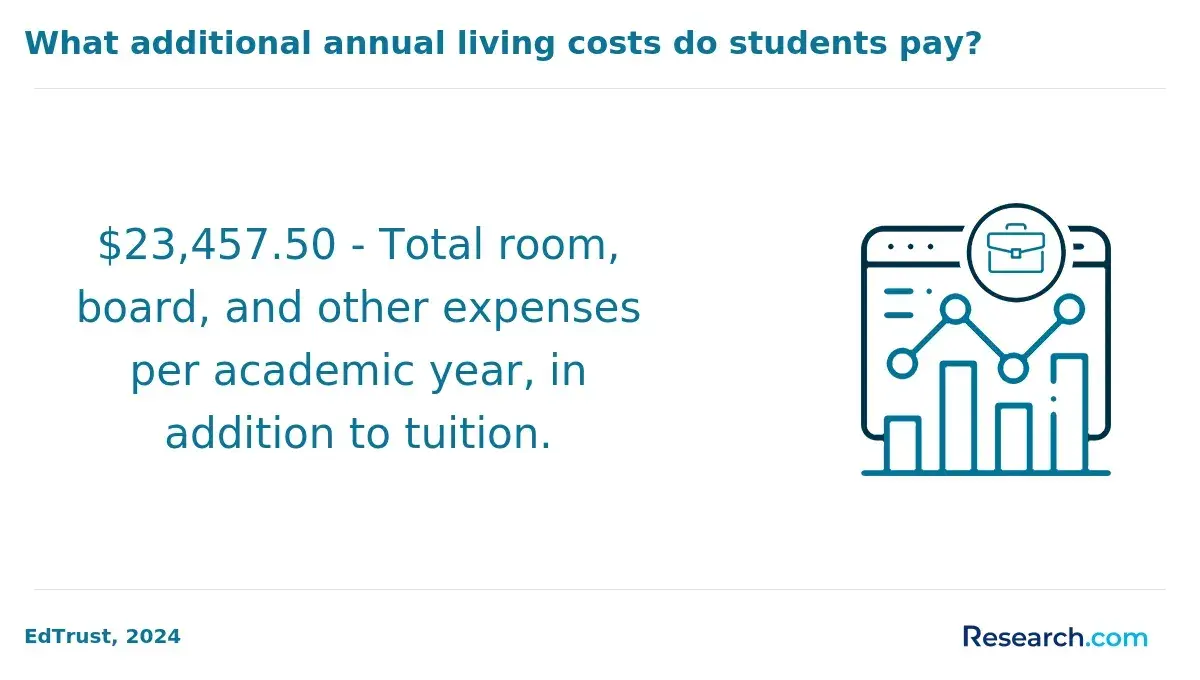
Cost is more variable than the degree name suggests. College Board's 2024 data reported average published tuition and fees of $11,610 for in-state students at public four-year colleges and $43,350 at private nonprofit four-year colleges, before grants, scholarships, housing, books, and other costs. For online students, the better number to compare is total net cost after aid and transfer credit.
The table below summarizes major cost drivers. It helps separate advertised tuition from the full amount a student may actually need to budget.
| Cost factor | Why it matters | What to ask before enrolling |
| Tuition rate | Online programs may charge per credit, per term, or by residency status | Is online tuition the same for in-state and out-of-state students? |
| Transfer credits | Accepted credits can reduce both time and cost | How many credits will apply to this exact degree plan? |
| Fees | Technology, online learning, graduation, transcript, and course fees can add up | What is the total required fee amount per term or per credit? |
| Books and materials | Some courses use open educational resources, while others require paid access codes | Does the program publish estimated book and materials costs? |
| Pace | Full-time, part-time, and accelerated formats affect opportunity cost and workload | How many courses can a working adult realistically take each term? |
| Financial aid | Grants, scholarships, employer tuition assistance, and military benefits can change net price | What is the estimated net price after aid, not just the sticker price? |
Students focused on affordability can compare an online general studies bachelor degree cheap option with public in-state programs, community college transfer pathways, and employer-supported tuition plans.
To reduce cost without weakening degree value, prioritize accredited schools, maximize accepted transfer credits, use community college coursework strategically when allowed, apply for aid early, and avoid paying for credits that will not apply to your final degree plan.
What careers can you pursue with an online general studies degree?
A general studies degree can support broad career opportunities, especially in roles where employers value communication, organization, analytical thinking, customer service, leadership potential, and a completed college credential. It is not usually a direct pipeline into highly specialized professions, but it can help students qualify for roles that require or prefer a bachelor's degree.
The table below connects common career areas with typical responsibilities. It is meant to help readers think in terms of job function rather than assuming the degree title determines the career.
| Career area | Typical responsibilities | Helpful concentration or experience |
| Business operations | Coordinate workflows, track records, support managers, communicate across departments | Business, management, data literacy, project coordination |
| Human resources support | Assist with hiring paperwork, employee records, onboarding, benefits questions, training logistics | Psychology, business, communication, HR internship or certificate |
| Nonprofit and community programs | Support outreach, client services, grant documentation, volunteer coordination, program reporting | Social sciences, public service, writing, community experience |
| Administrative leadership | Manage office systems, supervise support staff, coordinate budgets, improve processes | Management, technology, accounting basics, supervisory experience |
| Communications and customer success | Create written materials, support client relationships, manage inquiries, explain services | Communication, writing, digital media, CRM software experience |
| Public sector support | Process records, support public programs, respond to citizens, prepare reports | Public administration, policy, government internship or service experience |
The degree is often strongest when paired with practical evidence of skill. Students should build a portfolio of writing samples, data projects, presentations, volunteer leadership, internship work, or process-improvement examples. That portfolio can make a broad degree feel concrete to hiring managers.
People who already know they want a highly technical or licensed career should compare alternatives before choosing general studies. For example, someone committed to engineering may be better served by an engineering online degree or another field-specific program that aligns with professional expectations.
What are the salary expectations and job outlook for general studies graduates?
Salary expectations for general studies graduates vary widely because the degree can lead to many different occupations. The most responsible way to evaluate earning potential is to identify target roles, compare their education requirements, and review salary ranges for those roles rather than relying on a single "general studies salary."
BLS education data published in 2025 reported median weekly earnings of $1,543 for bachelor's degree holders in 2024. That figure does not predict what a general studies graduate will earn, but it shows why completing a bachelor's degree can matter in labor markets where employers use degrees as screening tools.
The table below uses national BLS wage data for selected occupations that may align with general studies graduates who also have relevant skills, internships, concentrations, or experience. Actual pay depends on location, industry, seniority, and employer expectations.
| Role | How a general studies background may fit | Median annual wage context |
| Human resources specialist | Fits students with communication, psychology, business, or HR-related coursework | BLS reported a May 2024 median annual wage of $72,910 |
| Market research analyst | Fits students with research, statistics, writing, business, and data interpretation skills | BLS reported a May 2024 median annual wage of $76,950 |
| Public relations specialist | Fits students with communication, writing, media, and presentation experience | BLS reported a May 2024 median annual wage of $69,780 |
| Social and human service assistant | Fits students with social science, community service, and client support experience | BLS reported a May 2024 median annual wage of $44,240 |
| Administrative services and facilities manager | Fits experienced workers who combine the degree with operations and supervisory experience | BLS reported a May 2024 median annual wage of $106,470 |
Job outlook is also role-specific. General studies graduates should look for occupations where their concentration and experience match employer demand, such as operations, HR, customer success, public administration, nonprofit programs, training support, or communications. AI and automation are changing these roles by reducing routine administrative work and increasing demand for workers who can analyze information, use software tools, communicate clearly, and solve ambiguous problems.
The best ROI usually comes from combining the degree with a clear employment plan. A student who graduates with a concentration, internship, software skills, and a targeted resume is in a stronger position than a student who completes only broad electives without career direction.
How can adult learners choose a reputable online general studies program?
Adult learners should choose an online general studies program by starting with the outcome they need: degree completion, promotion eligibility, career change, graduate school preparation, or personal academic fulfillment. The right program is not always the cheapest or fastest; it is the one that gives the most usable value for the student's goal.
Use the following steps before applying. They are designed to prevent common mistakes that can cost time, money, or transfer-credit value.
- Verify institutional accreditation before submitting an application or financial aid documents.
- Request an unofficial transfer-credit review and ask how each accepted course applies to the actual degree plan.
- Compare total net cost, including tuition, fees, books, technology requirements, and the number of remaining credits.
- Ask whether the program offers a concentration that matches your target jobs or graduate program prerequisites.
- Review online student support, including advising hours, tutoring, library access, career coaching, technical help, and disability services.
- Check course rotation so you know whether required classes are available often enough for your intended graduation timeline.
- Ask about capstone, internship, portfolio, or experiential learning options that can help you show employers what you can do.
- Look for transparent policies on withdrawal, repeated courses, satisfactory academic progress, and financial aid eligibility.
Affordability should be part of the decision, especially for students who must borrow. Comparing the cheapest online bachelor's degree options can be useful, but the lowest tuition only helps if credits transfer well, courses are available, and the credential supports the intended next step.
Common red flags include pressure to enroll immediately, vague accreditation claims, unclear tuition pages, unusually large transfer-credit promises before transcript review, limited access to advisors, and programs that cannot explain what graduates typically do with the degree. A reputable school should be able to answer practical questions clearly and in writing.
Do general studies graduates need additional certifications or licenses for certain careers?
General studies graduates may need additional certifications, licenses, or specialized degrees for certain careers. This is one of the most important limitations to understand before enrolling. A broad degree can open doors, but it does not replace professional requirements in regulated fields.
The table below shows where an additional credential may be needed. Requirements vary by state, employer, and professional board, so students should verify rules before choosing courses.
| Career goal | Is a general studies degree enough? | Possible additional requirement |
| K-12 teacher | Usually no, unless paired with an approved teacher preparation pathway | State-approved educator preparation, student teaching, exams, and licensure |
| Licensed counselor or therapist | No | Graduate degree, supervised clinical hours, state license, and exams |
| Registered nurse or allied health clinician | No | Approved clinical program, licensure exam, and state board requirements |
| Accountant or CPA track | Not usually by itself | Accounting coursework, credit-hour requirements, exam eligibility, and state board rules |
| Project coordinator or project manager | Sometimes for entry roles | Experience plus optional credentials such as project management certifications |
| Human resources roles | Often enough for some entry roles with relevant skills | Optional HR certification after meeting experience or education criteria |
| Information technology support | Sometimes with technical coursework | Vendor or industry certifications may be expected for specific systems or security roles |
Students should not assume they can "add a license later" without planning. If the target career is regulated, confirm prerequisite courses, fieldwork, state rules, and approved program status before committing to a general studies plan.
For non-licensed fields, certifications can still improve credibility. Business analytics, HR, project management, digital marketing, bookkeeping, customer success, and IT support credentials may help students translate a broad academic background into a specific job skill set.
Other Things You Should Know About General Studies
Yes, many graduate programs accept applicants with general studies bachelor's degrees if they meet GPA, prerequisite, test, portfolio, or experience requirements. Competitive or specialized programs may require specific undergraduate coursework.
No, most institutions do not distinguish between online and in-person degrees on diplomas. In 2027, completing an online general studies degree will typically result in a diploma identical to those received by on-campus students.
Many online general studies bachelor’s programs require about 30 to 45 elective credits within a 120-credit degree. Schools often allow students to concentrate those credits in one area, but the exact total and approved electives are set by the institution’s academic catalog.
Sometimes. Many adult-focused programs evaluate military transcripts, professional training, exams, or prior learning portfolios, but the number of usable credits depends on school policy and degree requirements.
References
- Online Study Tips for Adult Learners | TUW https://www.tuw.edu/school-news/online-study-tips/
- Choosing the Right Program as an Adult Learner - ReUp Education https://reupeducation.com/blog/choosing-the-right-program-as-an-adult-learner/
- Are Online Courses Better Than Community College? https://www.straighterline.com/blog/online-courses-better-than-community-colleges
- Online Degree vs. Traditional: Choosing the Right Path https://beal.edu/online-degree-vs-traditional/
- Which program type is best for your adult degree completers? https://eab.com/resources/blog/adult-education-blog/program-adult-degree/
- General Studies Degree Jobs: 10 Careers + Salaries (2026) | Extern https://www.extern.com/post/general-studies-degree-jobs-career-guide
- Future Career Outlook: General Studies Degree | ALU https://alu.edu/alublog/future-career-outlook-general-studies-degree-alu/